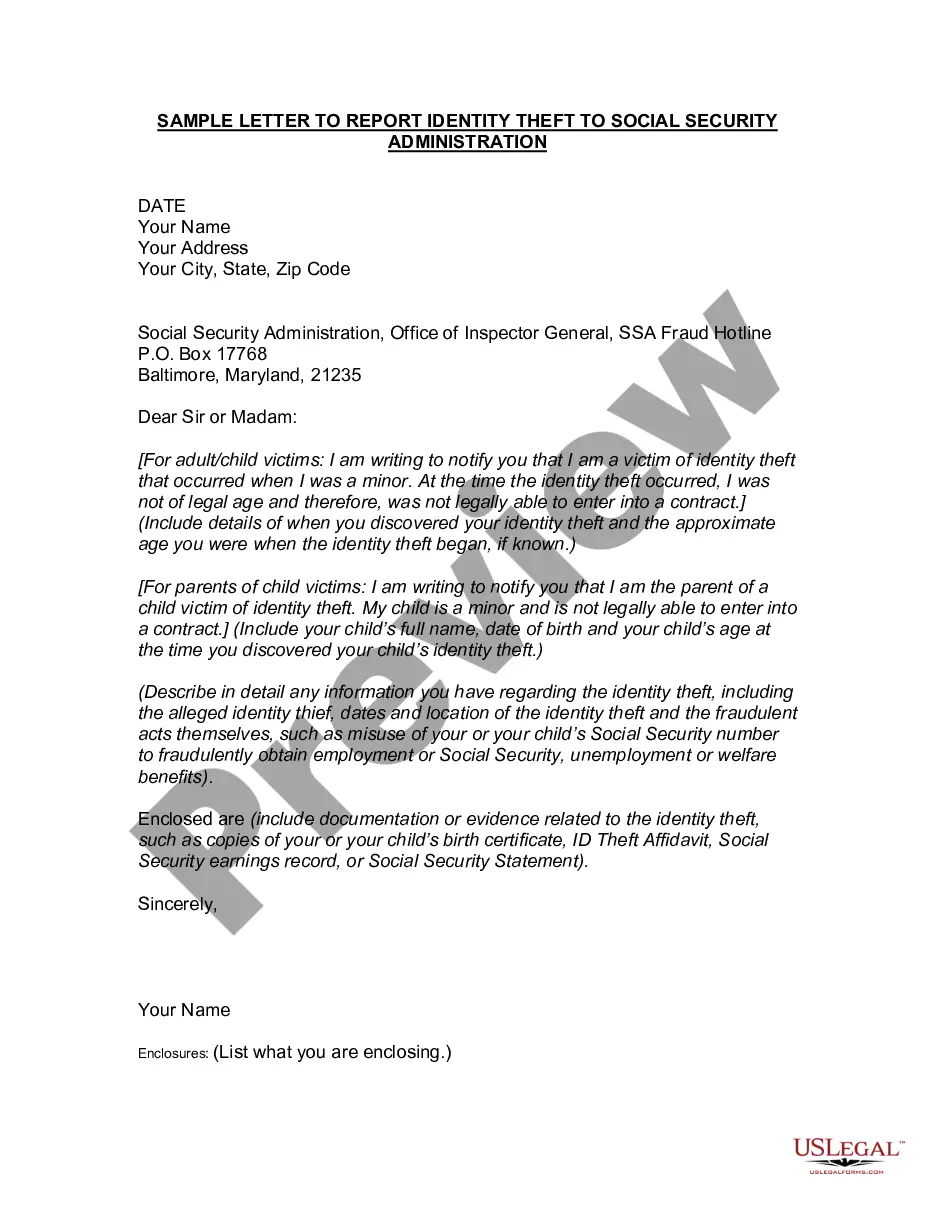
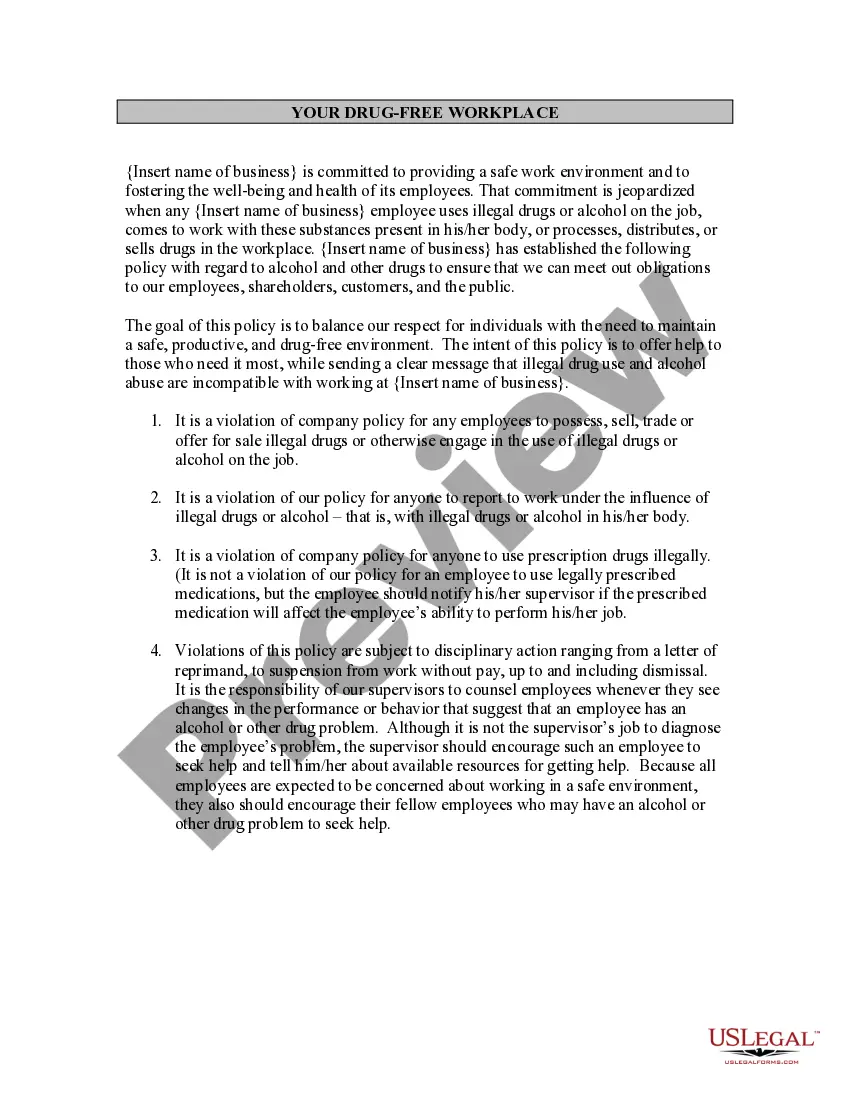
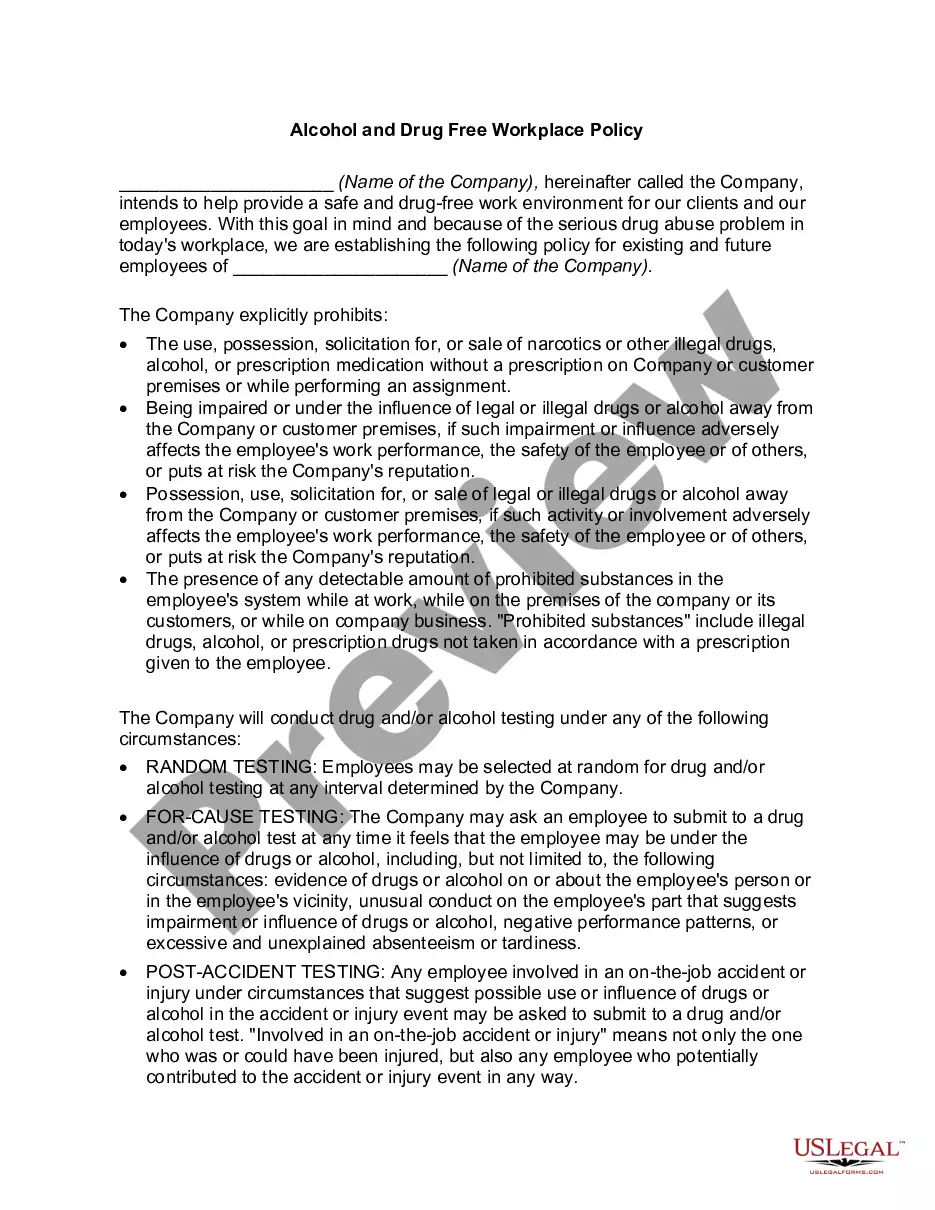
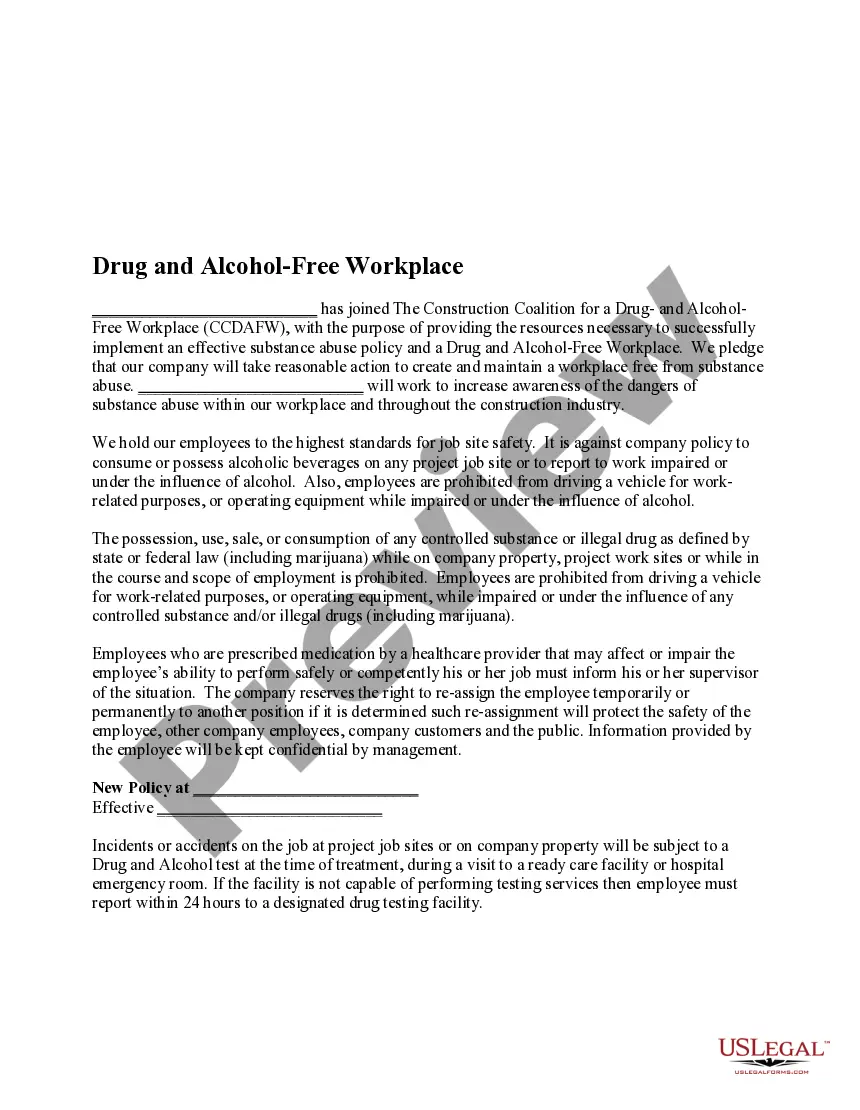
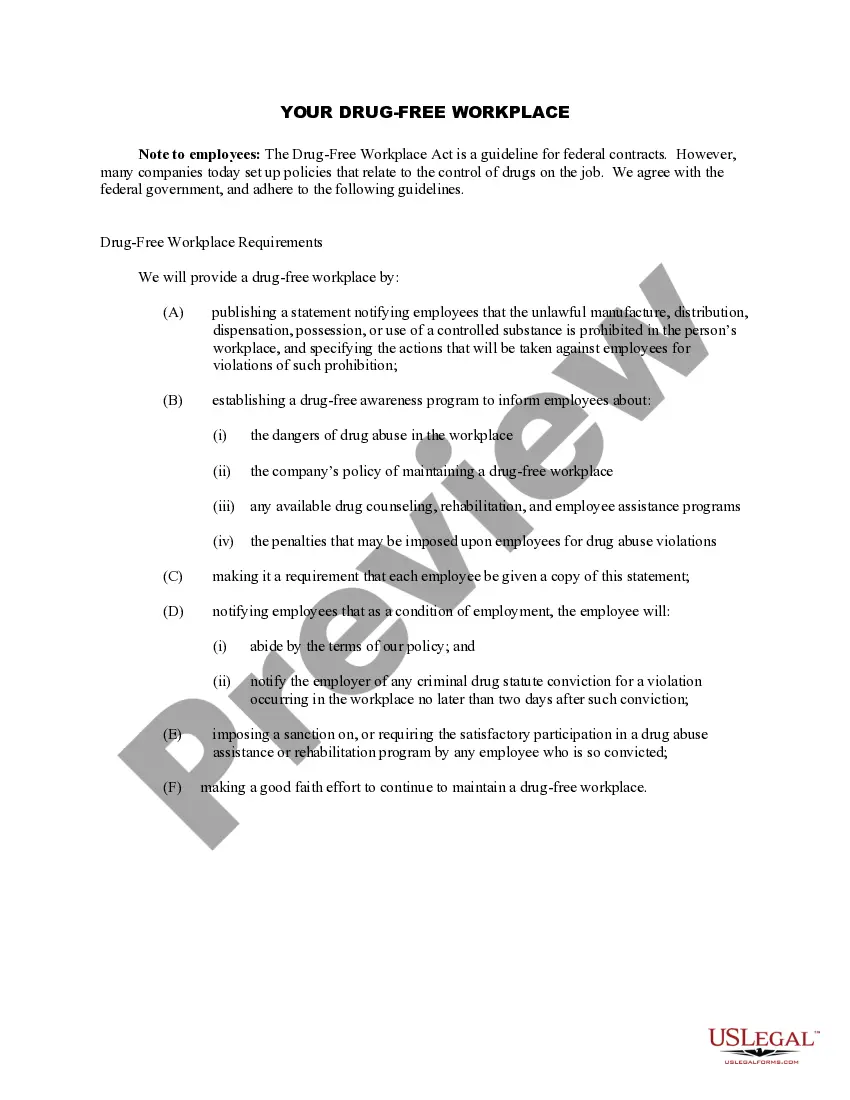
Kansas Your Drug-Free Workplace
Description
Get your form ready online
Our built-in tools help you complete, sign, share, and store your documents in one place.
Make edits, fill in missing information, and update formatting in US Legal Forms—just like you would in MS Word.
Download a copy, print it, send it by email, or mail it via USPS—whatever works best for your next step.
Sign and collect signatures with our SignNow integration. Send to multiple recipients, set reminders, and more. Go Premium to unlock E-Sign.
If this form requires notarization, complete it online through a secure video call—no need to meet a notary in person or wait for an appointment.
We protect your documents and personal data by following strict security and privacy standards.

Make edits, fill in missing information, and update formatting in US Legal Forms—just like you would in MS Word.

Download a copy, print it, send it by email, or mail it via USPS—whatever works best for your next step.

Sign and collect signatures with our SignNow integration. Send to multiple recipients, set reminders, and more. Go Premium to unlock E-Sign.

If this form requires notarization, complete it online through a secure video call—no need to meet a notary in person or wait for an appointment.

We protect your documents and personal data by following strict security and privacy standards.
Looking for another form?

How to fill out Your Drug-Free Workplace?
It is feasible to invest hours online searching for the legal document template that fulfills the federal and state criteria you need.
US Legal Forms provides thousands of legal forms that can be assessed by experts.
You can conveniently download or print the Kansas Your Drug-Free Workplace from the service.
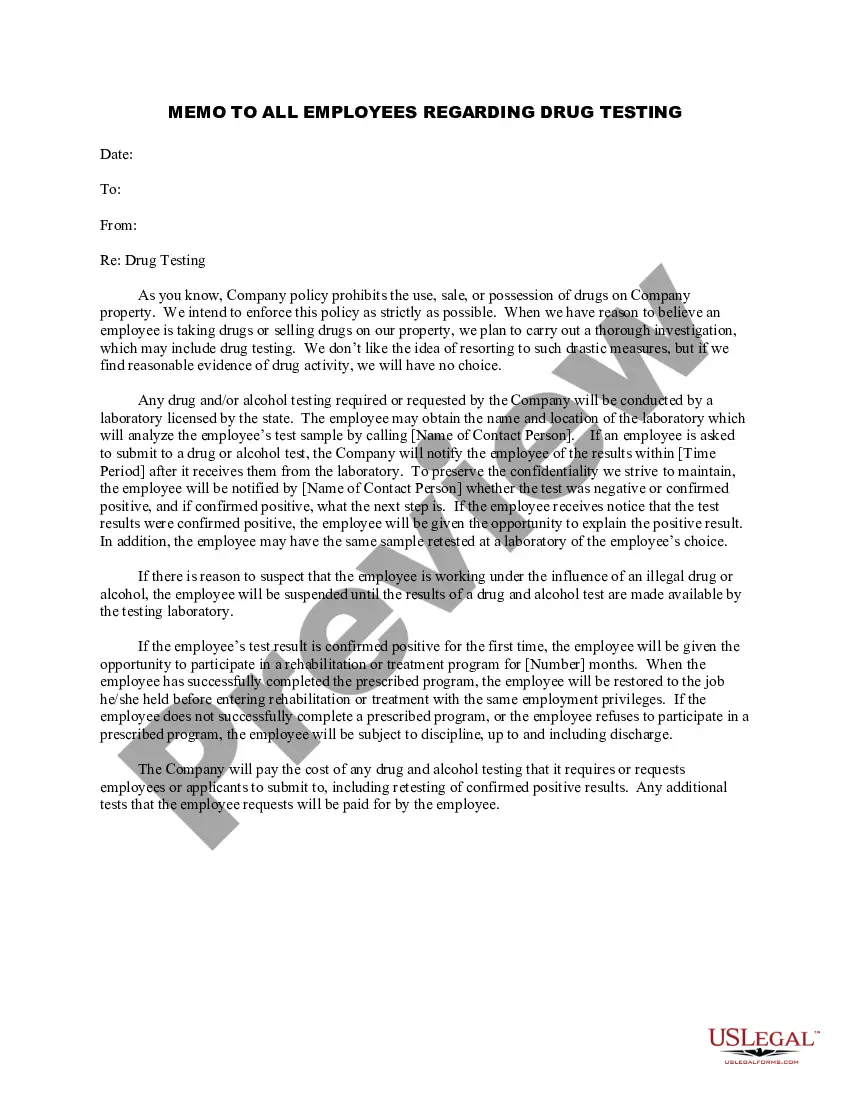
If available, utilize the Preview button to view the document template as well.
- If you already have a US Legal Forms account, you can Log In and then click the Acquire button.
- After that, you can complete, modify, print, or sign the Kansas Your Drug-Free Workplace.
- Each legal document template you acquire is yours indefinitely.
- To obtain another copy of the purchased form, visit the My documents section and click the corresponding button.
- If you are accessing the US Legal Forms website for the first time, follow the straightforward instructions provided below.
- First, ensure that you have selected the correct document template for the region/area of your choice.
- Check the template description to confirm that you have selected the correct form.
Form popularity
FAQ
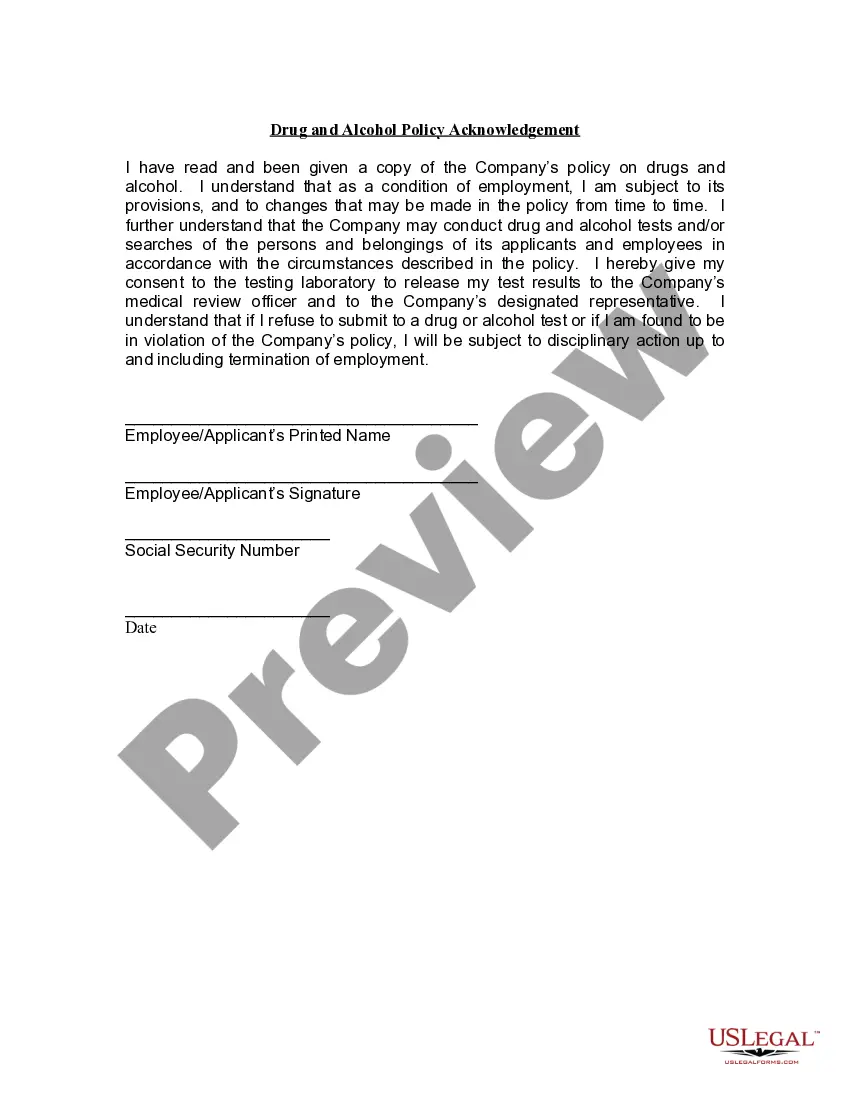
In many cases, you can refuse a drug test at work, but this may have consequences. If your employer has a clear policy under Kansas Your Drug-Free Workplace laws, saying no can lead to disciplinary actions, such as suspension or termination. It is important to understand your rights and your employer's policies regarding drug testing. For a better grasp of your options and to protect your rights, consider consulting with professionals who specialize in workplace regulations.
In Kansas, drug laws are designed to promote a safe and healthy environment, particularly in workplaces. The Kansas Your Drug-Free Workplace program encourages employers to implement strategies to deter drug use among employees. This includes having a clear policy on drug use, conducting regular training, and providing resources for employees struggling with substance abuse. By adhering to these protocols, businesses can foster a more productive and compliant workplace.
If an employee fails a drug test in Kansas, several consequences may follow, often dictated by company policy or state law. This can range from disciplinary action to termination of employment, especially in a setting committed to a Kansas Your Drug-Free Workplace. It's crucial to understand the specific policies of your employer, as many provide options for rehabilitation or appeal following a positive result. For comprehensive guidance, US Legal Forms can aid employees in understanding their rights and options.
In Kansas, the requirements for drug testing can vary based on the type of test and the employer's policies. Typically, employees must be informed about the testing process and the drugs being tested for, which often include common substances like marijuana, cocaine, and opiates. Conducting the drug test in a manner that ensures accuracy and confidentiality is also critical for maintaining a Kansas Your Drug-Free Workplace. Utilizing resources from US Legal Forms can help both employers and employees understand these requirements more fully.
Yes, the state of Kansas allows employers to conduct drug testing on employees under certain circumstances. This policy often aligns with the state’s commitment to maintaining a Kansas Your Drug-Free Workplace. Employers may implement pre-employment testing, random testing, or testing following an accident to ensure a safe working environment. Reviewing company policies and seeking guidance through US Legal Forms can clarify specific protocols.
In Kansas, individuals applying for unemployment benefits may be required to undergo drug testing if they are suspected of drug use. Employers may drug test as part of their policy, particularly in a Kansas Your Drug-Free Workplace environment. It is essential for job seekers to understand this requirement, as it can impact eligibility for benefits. For further clarity, US Legal Forms offers resources to help navigate these requirements.
The policy should be set out in your contract of employment or in the company handbook. Your employer should limit testing to the employees that need to be tested to deal with the risk. If your employer wants to carry out random tests of these employees, bear in mind that the tests should be genuinely random.
Under current Kansas drug testing legislation, there are no laws that prohibit employers from conducting random drug screenings.
What is a "Drug Free Workplace?" It is an employment setting where all employees adhere to a program of policies and activities designed to provide a safe workplace, discourage alcohol and drug abuse and encourage treatment, recovery and the return to work of those employees with such abuse problems.
No Missouri Drug Testing LawsMissouri is one of a small number of states that has no law addressing drug testing in private employment. This means that drug testing is not prohibited or restricted, unless it violates other legal provisions (such as a law prohibiting discrimination; see below).