Kansas Partnership Agreement Re Land
Description
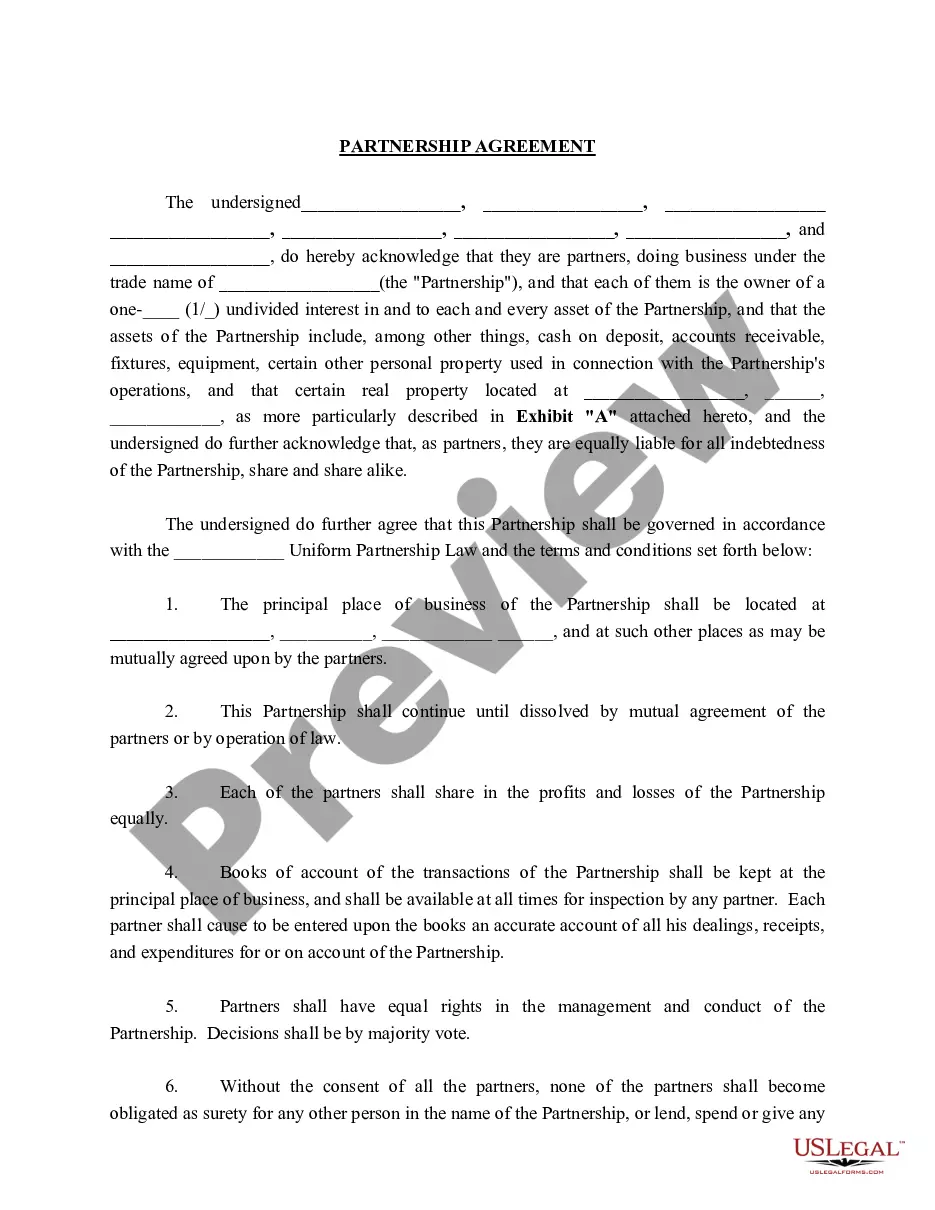
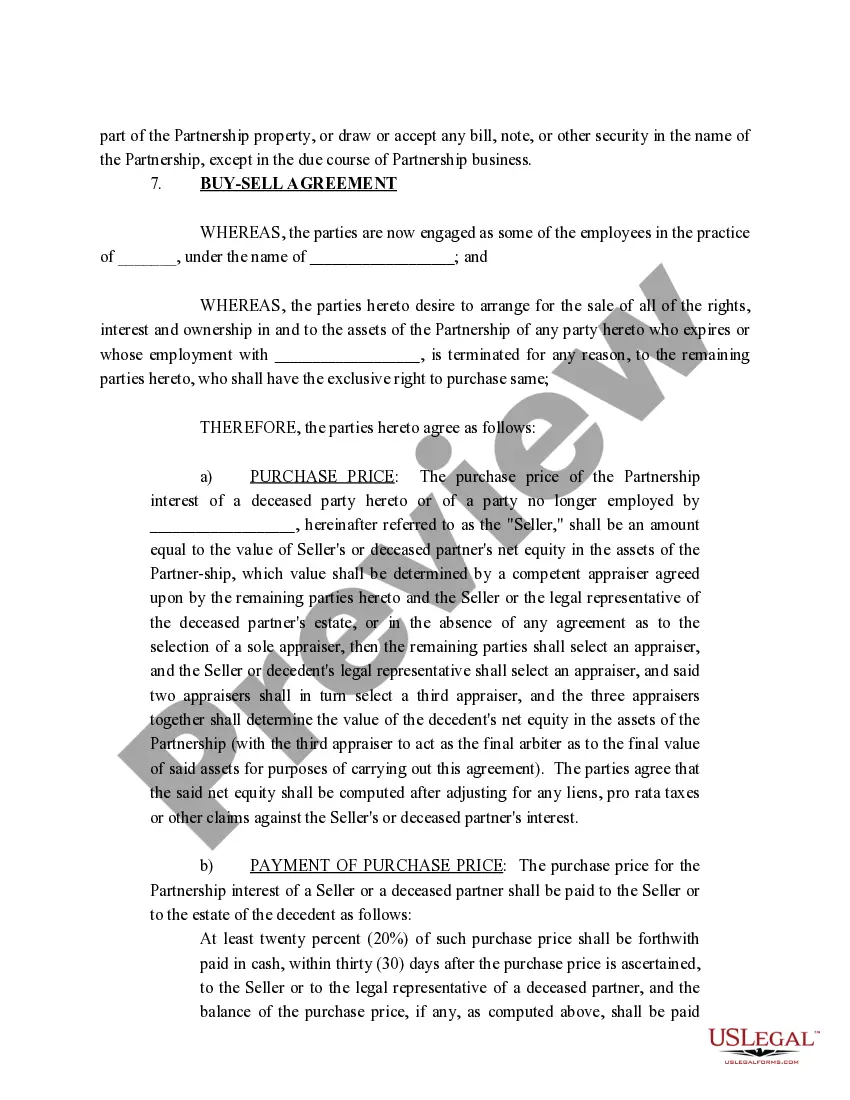
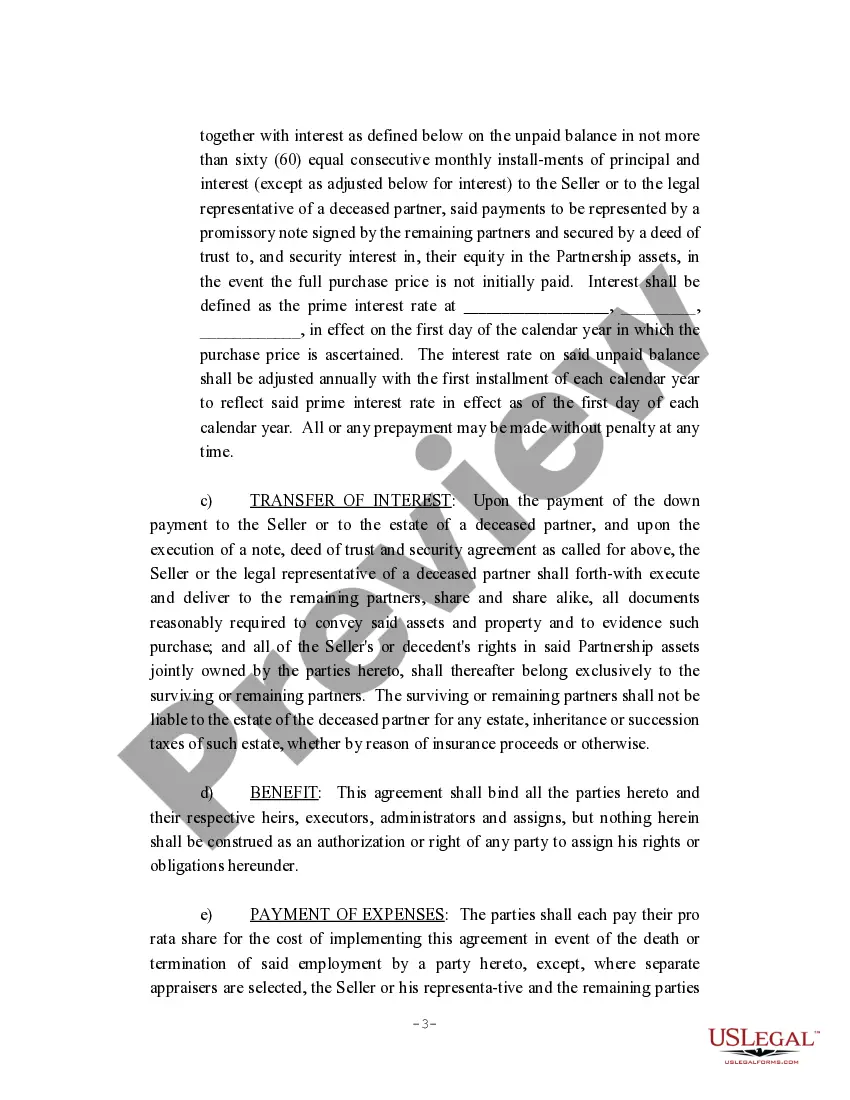
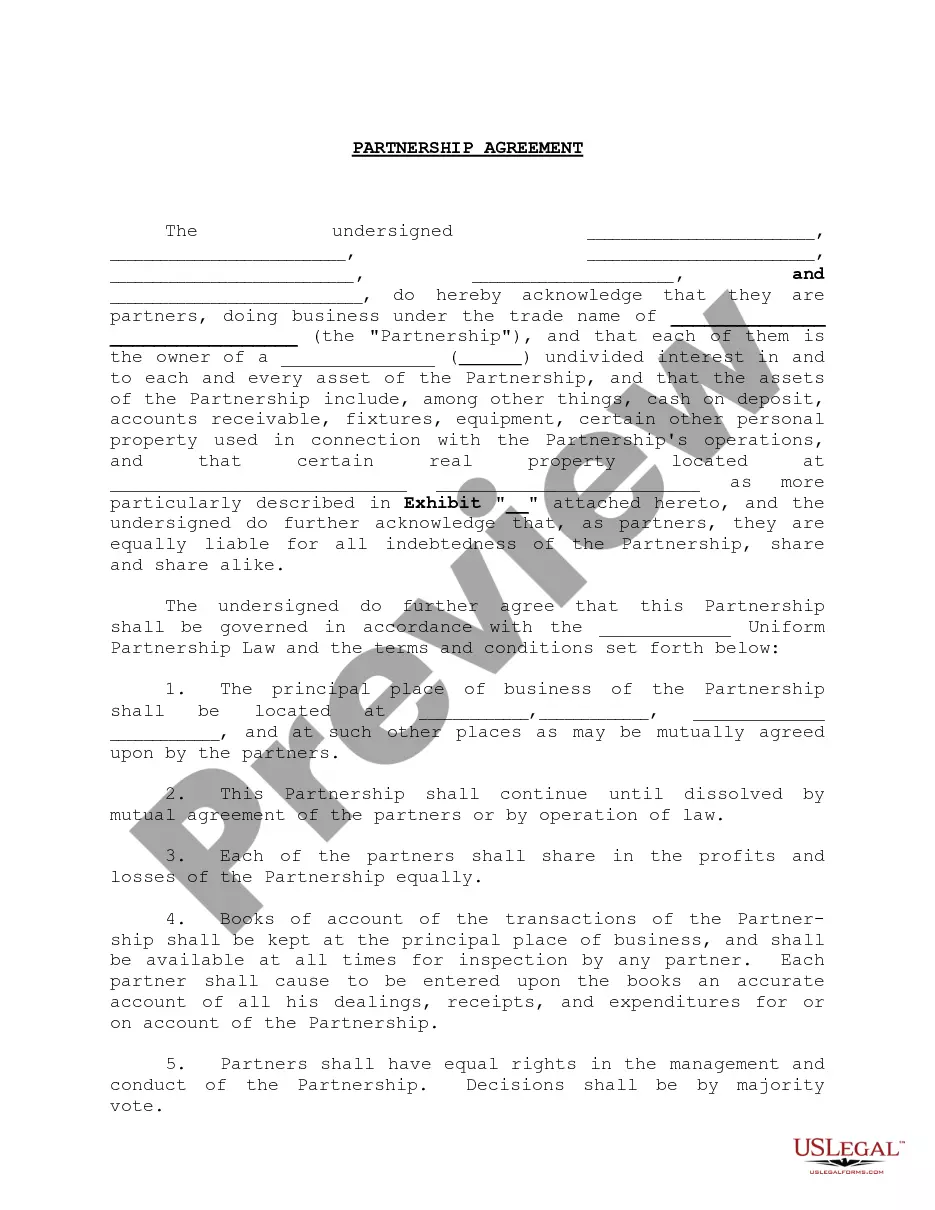
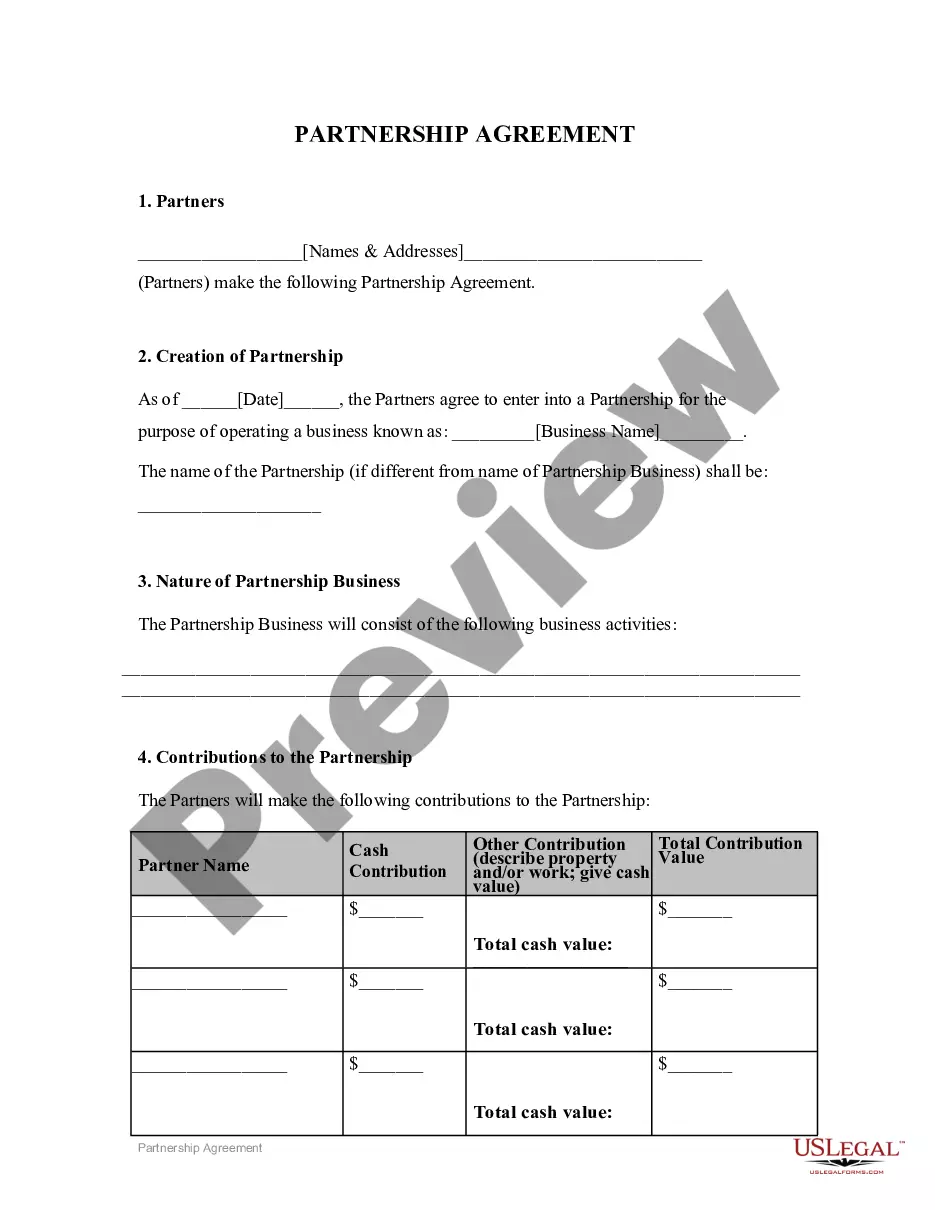
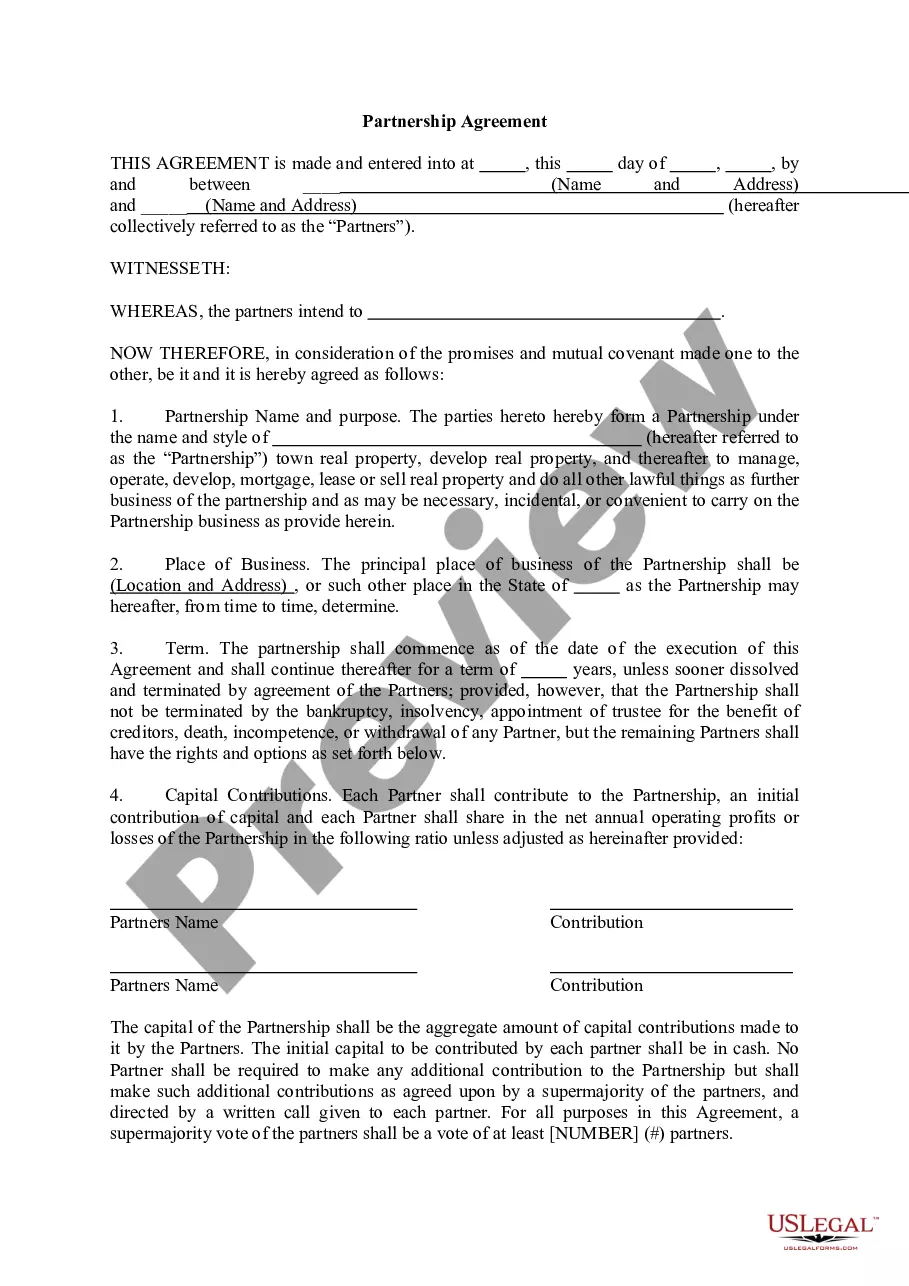
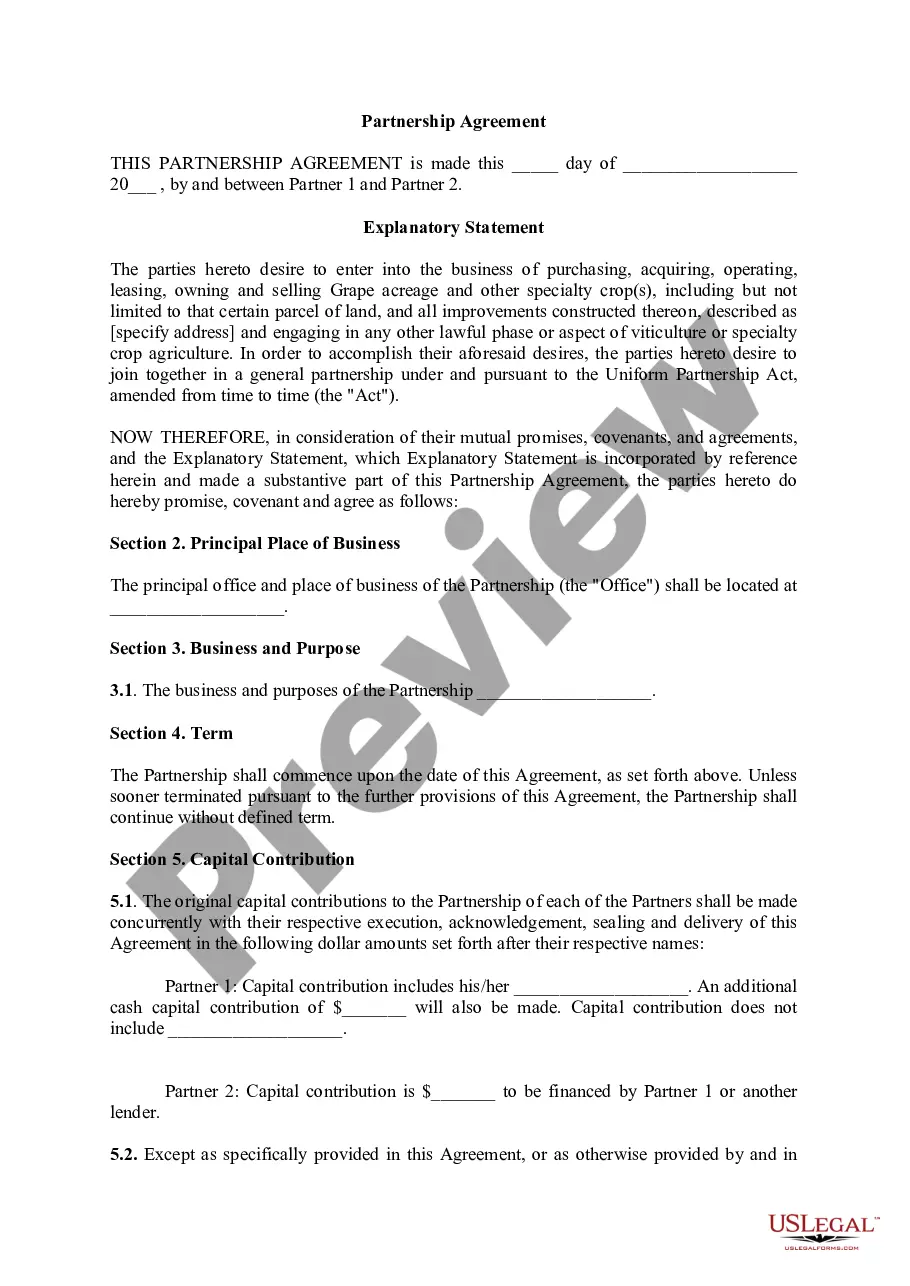
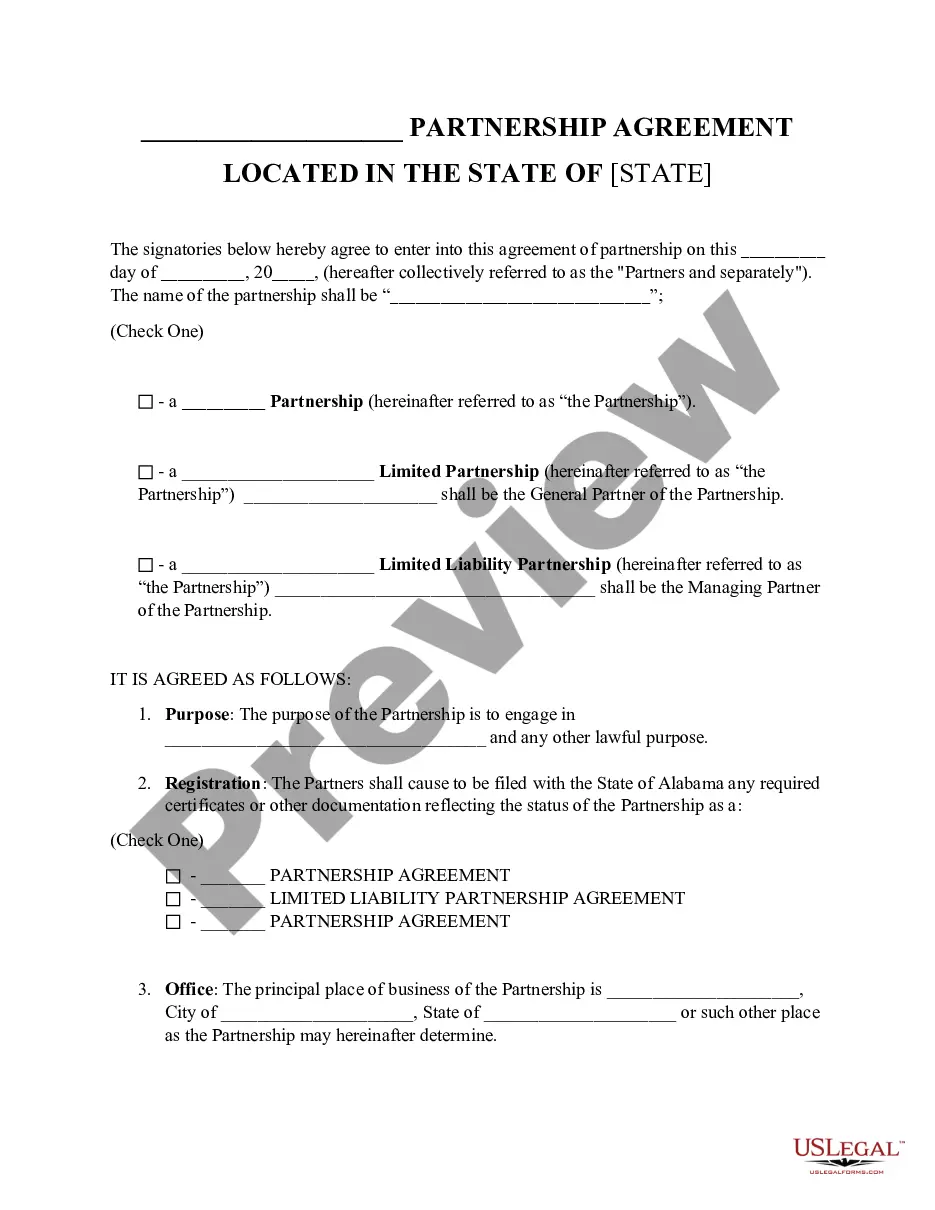

How to fill out Partnership Agreement Re Land?
Finding the correct licensed document template can be a challenge.
Of course, there are numerous templates accessible online, but how do you obtain the official form you seek.
Make use of the US Legal Forms website.
If you are a new user of US Legal Forms, below are simple instructions for you to follow.
- The service provides a multitude of templates, including the Kansas Partnership Agreement Re Land, that can be utilized for both business and personal purposes.
- All of the forms are verified by professionals and comply with federal and state regulations.
- If you are already registered, Log In to your account and hit the Download button to obtain the Kansas Partnership Agreement Re Land.
- Use your account to search for the official forms you have previously acquired.
- Go to the My documents section of your account and retrieve an additional copy of the document you require.
Form popularity
FAQ
A partnership must have two or more owners who share in the profits and losses of a business. Partnerships can form automatically without the submission of formation documents. All partnerships should have a written partnership agreement that spells out the rules and regulations of the business.
A deed of partnership, also known as a partnership agreement or a shareholders' agreement, is just another way of planning for the future of your venture. It removes the sort of doubt that can often cause a sense of aggrievement in business.
Because a partnership is not a legal person, it cannot acquire or hold a registered interest in real property. In order to acquire and hold real property, the partnership requires an individual or corporation to become a registered owner.
Once the decision to form a Kansas partnership has been made, the partners must work with state agencies to properly create the business.Step 1: Select a business name.Step 2: Register the business name.Step 3: Complete required paperwork.Step 4: Determine if you need an EIN, additional licenses or tax IDs.More items...
A partnership has no separate legal personality and it cannot therefore own property and it will be owned by the individual property owning partners. The Land Registry will allow up to four property owning partners to be named at the Land Registry as legal owners.
In community property states, including California, spouses and registered domestic partners take title as community property unless they elect otherwise. Each spouse has a half-interest in the property, and equal control over the property's management and use. To sell the property, both spouses must act together.
However, where it is the penultimate partner who dies or withdraws, courts have held that the buyout provision does not apply because a partnership cannot exist with only one partner. Furthermore, courts have reasoned that, insofar as a partnership cannot continue with a single partner, the dissociation of a partner
Such partnerships have no ownership restrictions, meaning that the owners can be people, corporations, LLCs, or any other kind of business.
Because a partnership is not a legal person, it cannot acquire or hold a registered interest in real property. In order to acquire and hold real property, the partnership requires an individual or corporation to become a registered owner.
The following states have adopted the RUPA: Alabama, Alaska, Arizona, Arkansas, California, Colorado, Delaware, District of Columbia, Florida, Hawaii, Idaho, Illinois, Iowa, Kansas, Kentucky, Maine, Maryland, Minnesota, Mississippi, Montana, Nebraska, Nevada, New Jersey, New Mexico, North Dakota, Oklahoma, Oregon,