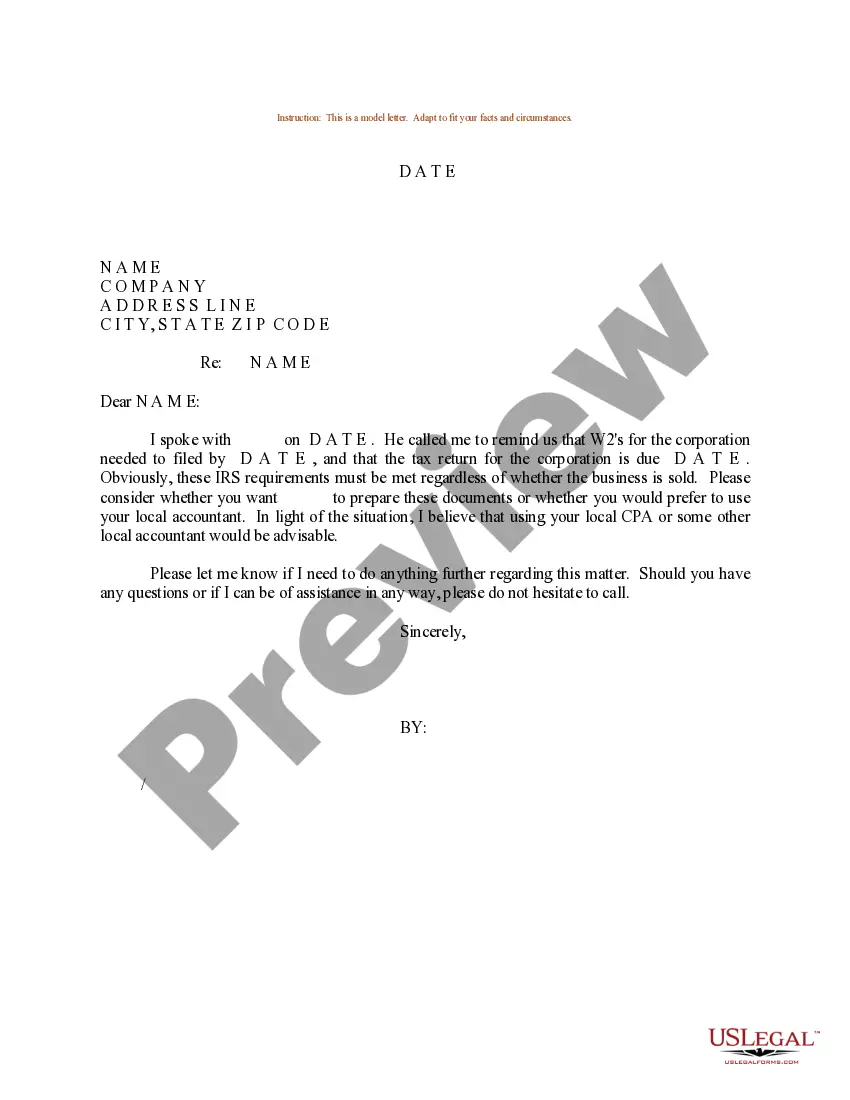
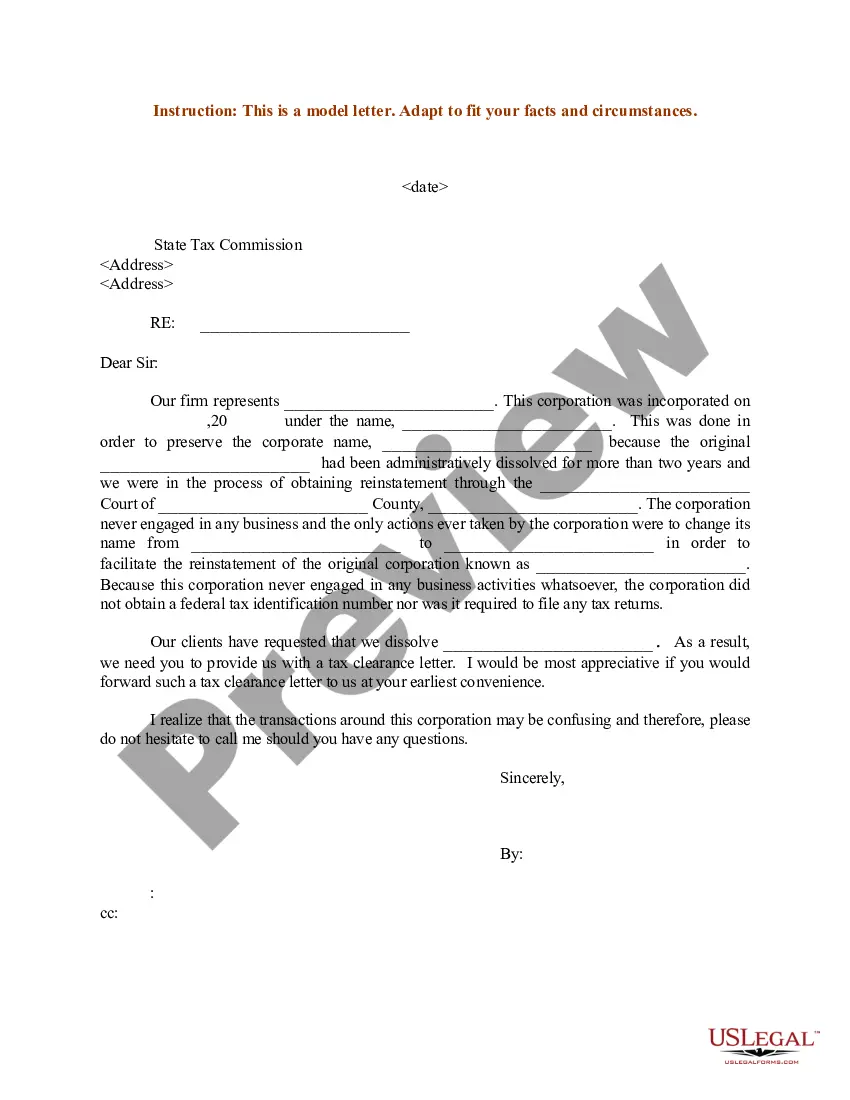
Kansas Sample Letter for Corporation Taxes
Description
Get your form ready online
Our built-in tools help you complete, sign, share, and store your documents in one place.
Make edits, fill in missing information, and update formatting in US Legal Forms—just like you would in MS Word.
Download a copy, print it, send it by email, or mail it via USPS—whatever works best for your next step.
Sign and collect signatures with our SignNow integration. Send to multiple recipients, set reminders, and more. Go Premium to unlock E-Sign.
If this form requires notarization, complete it online through a secure video call—no need to meet a notary in person or wait for an appointment.
We protect your documents and personal data by following strict security and privacy standards.

Make edits, fill in missing information, and update formatting in US Legal Forms—just like you would in MS Word.

Download a copy, print it, send it by email, or mail it via USPS—whatever works best for your next step.

Sign and collect signatures with our SignNow integration. Send to multiple recipients, set reminders, and more. Go Premium to unlock E-Sign.

If this form requires notarization, complete it online through a secure video call—no need to meet a notary in person or wait for an appointment.

We protect your documents and personal data by following strict security and privacy standards.
Looking for another form?

How to fill out Sample Letter For Corporation Taxes?
It is possible to devote hours on-line trying to find the lawful record format that suits the state and federal requirements you want. US Legal Forms provides a huge number of lawful varieties that happen to be analyzed by professionals. It is simple to obtain or produce the Kansas Sample Letter for Corporation Taxes from your support.
If you have a US Legal Forms bank account, you may log in and click the Acquire option. Next, you may total, modify, produce, or signal the Kansas Sample Letter for Corporation Taxes. Each lawful record format you acquire is your own property for a long time. To have one more copy of any purchased type, visit the My Forms tab and click the related option.
Should you use the US Legal Forms internet site for the first time, stick to the straightforward instructions beneath:
- Initial, make sure that you have chosen the best record format for your area/city that you pick. Browse the type description to ensure you have selected the right type. If readily available, make use of the Review option to appear through the record format as well.
- In order to find one more variation from the type, make use of the Research discipline to find the format that meets your requirements and requirements.
- Upon having identified the format you desire, click Buy now to move forward.
- Find the pricing program you desire, type in your qualifications, and sign up for an account on US Legal Forms.
- Complete the transaction. You can utilize your Visa or Mastercard or PayPal bank account to fund the lawful type.
- Find the file format from the record and obtain it to your product.
- Make changes to your record if required. It is possible to total, modify and signal and produce Kansas Sample Letter for Corporation Taxes.
Acquire and produce a huge number of record templates making use of the US Legal Forms web site, that offers the most important variety of lawful varieties. Use professional and state-specific templates to take on your company or personal demands.
Form popularity
FAQ
Kansas Form K-40 ? Personal Income Tax Return for Residents. Kansas Schedule K-210 ? Underpayment of Estimated Tax. Kansas Schedule S ? Supplemental Schedule, Modifications to Federal AGI.
Kansas has a 4.00 percent to 7.00 percent corporate income tax rate. Kansas has a 6.50 percent state sales tax rate, a max local sales tax rate of 4.25 percent, and an average combined state and local sales tax rate of 8.66 percent.
Nevada, South Dakota, and Wyoming have no corporate or individual income tax (though Nevada imposes gross receipts tax. Unlike a sales tax, a gross receipts tax is assessed on businesses and apply to business-to-business transactions in addition to final consumer purchases, leading to tax pyramiding.
Kansas has a 4.00 percent to 7.00 percent corporate income tax rate. Kansas has a 6.50 percent state sales tax rate, a max local sales tax rate of 4.25 percent, and an average combined state and local sales tax rate of 8.66 percent. Kansas's tax system ranks 25th overall on our 2023 State Business Tax Climate Index.
If you have a tax debt, the Kansas Department of Revenue will send you a bill and may contact you by phone, in person or by a recorded message.
Step 1: Name Your Kansas LLC. ... Step 2: Choose a Resident Agent. ... Step 3: File the Kansas Articles of Organization. ... Step 4: Create an Operating Agreement. ... Step 5: File Form 2553 to Elect Kansas S Corp Tax Designation.
In Kansas, the Secretary of the Department of Revenue filed a notice in the Kansas Register announcing that the normal corporate income tax rate will be reduced from 4 percent to 3.5 percent effective January 1, 2024. The rate reduction stems from the APEX legislation enacted in Kansas in 2022.
By default, Kansas LLCs are taxed as pass-through entities, meaning the LLC does not pay federal taxes directly. Pass-through entities have revenue from the business passed to the members, who then pay the state personal income tax rate of 3.5%, 6.25%, or 6.45% on the earnings, depending on the amount of earnings.