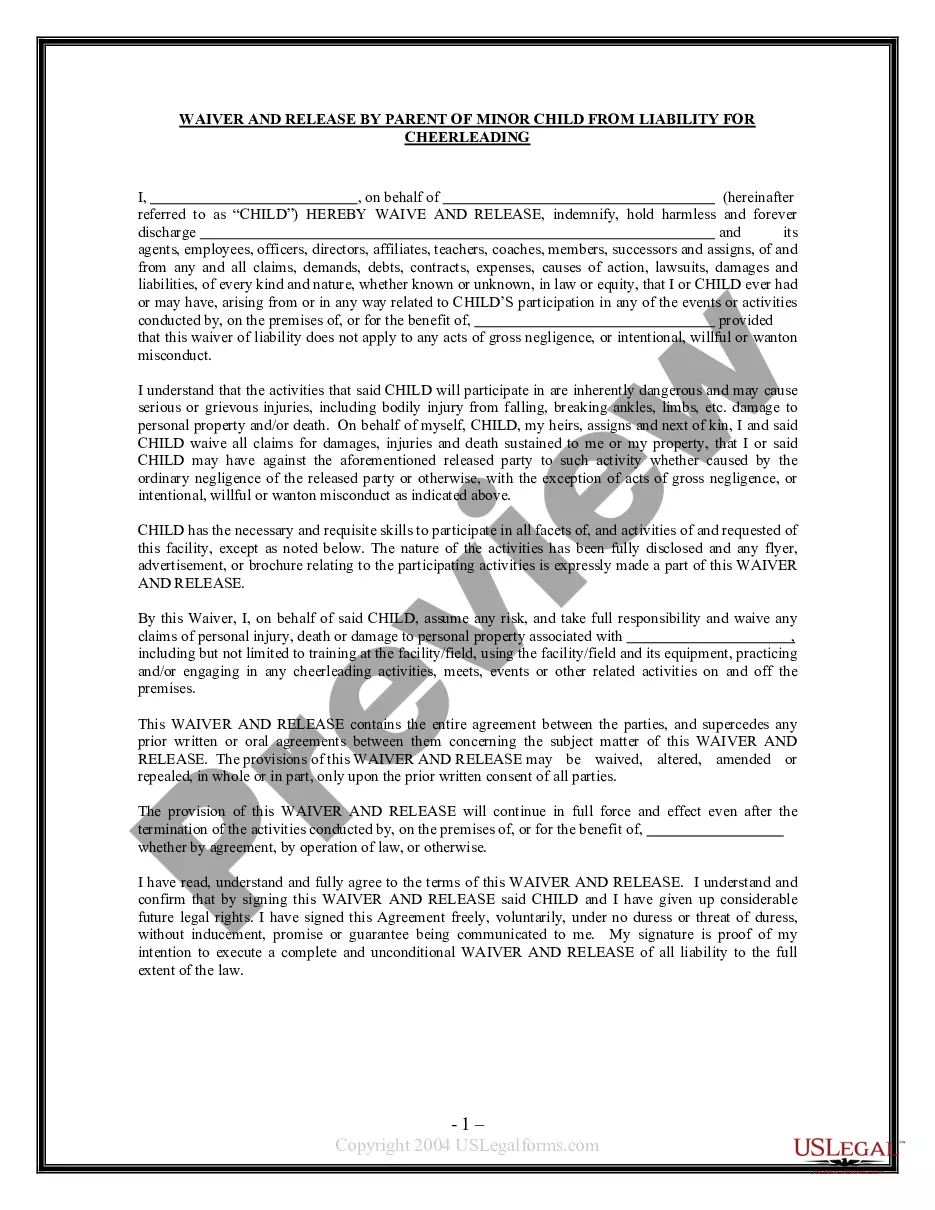
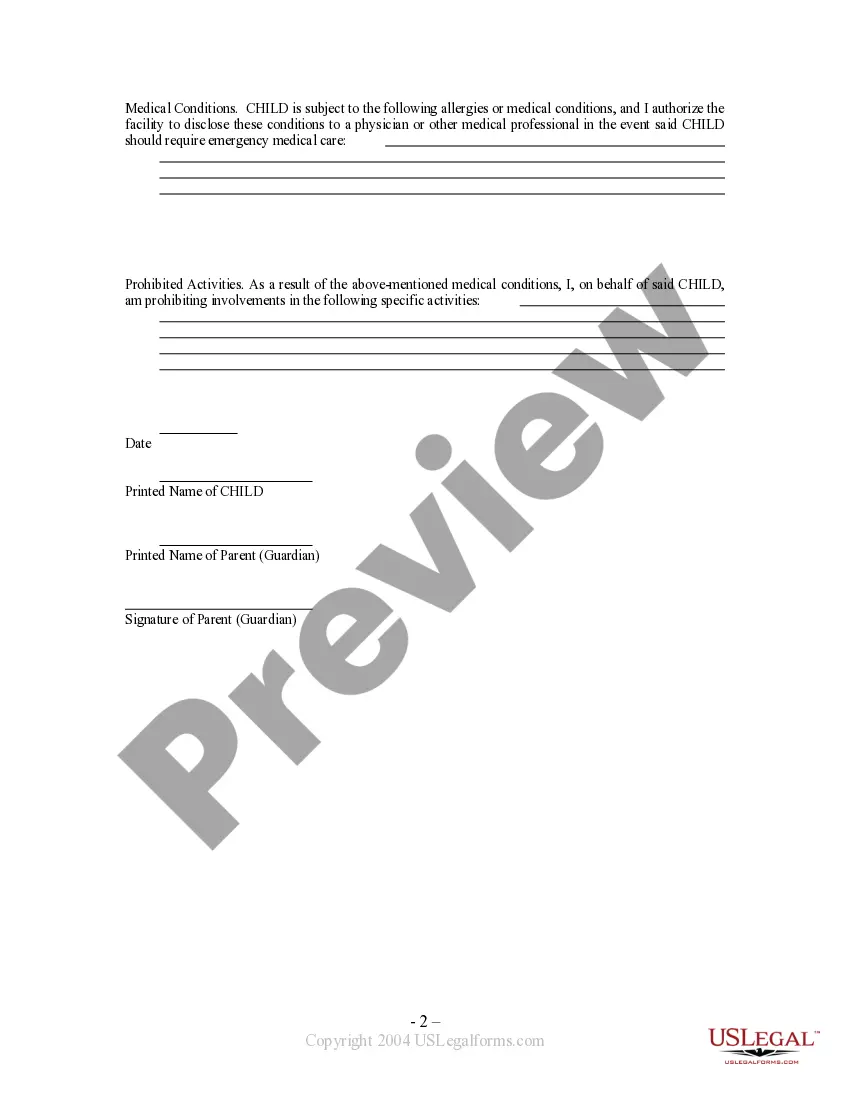
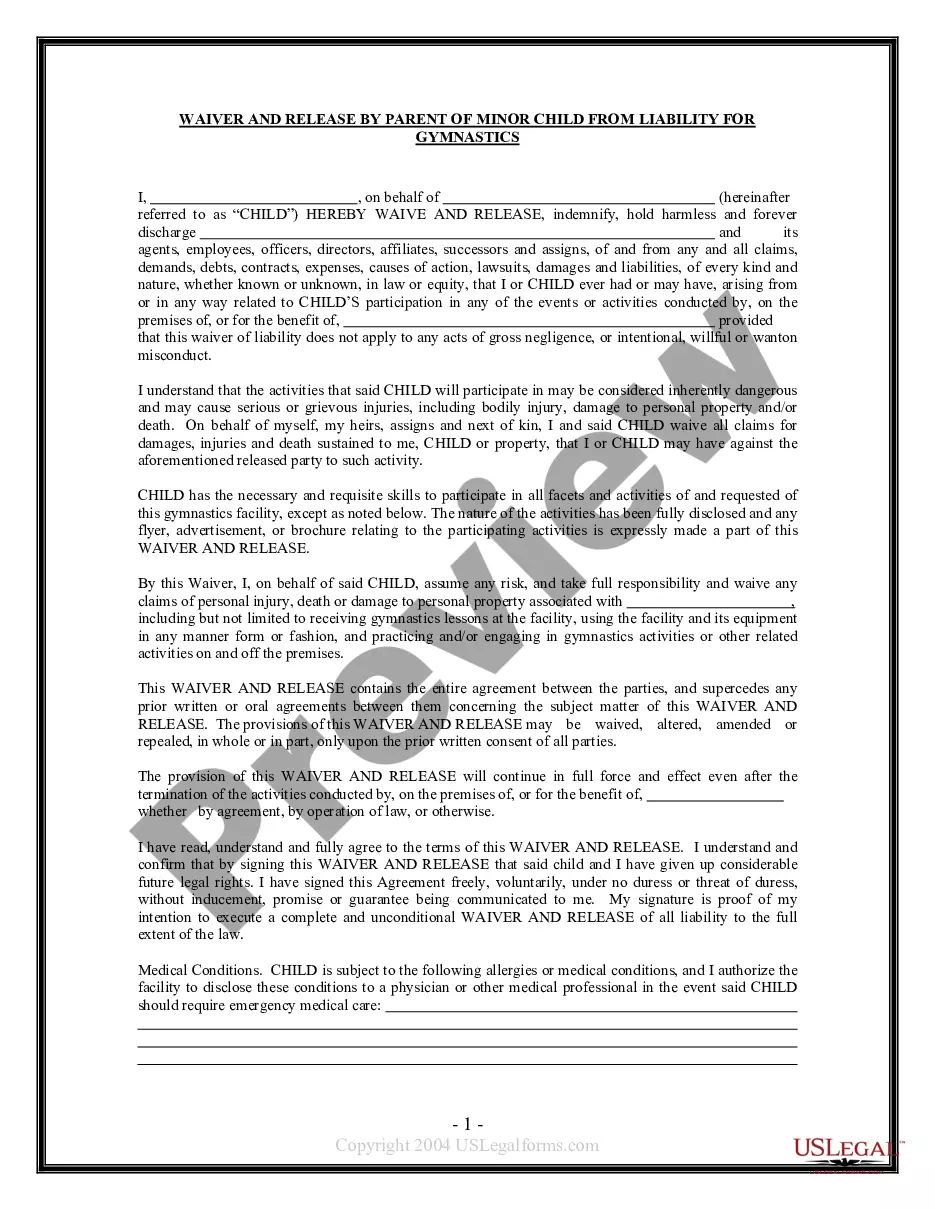
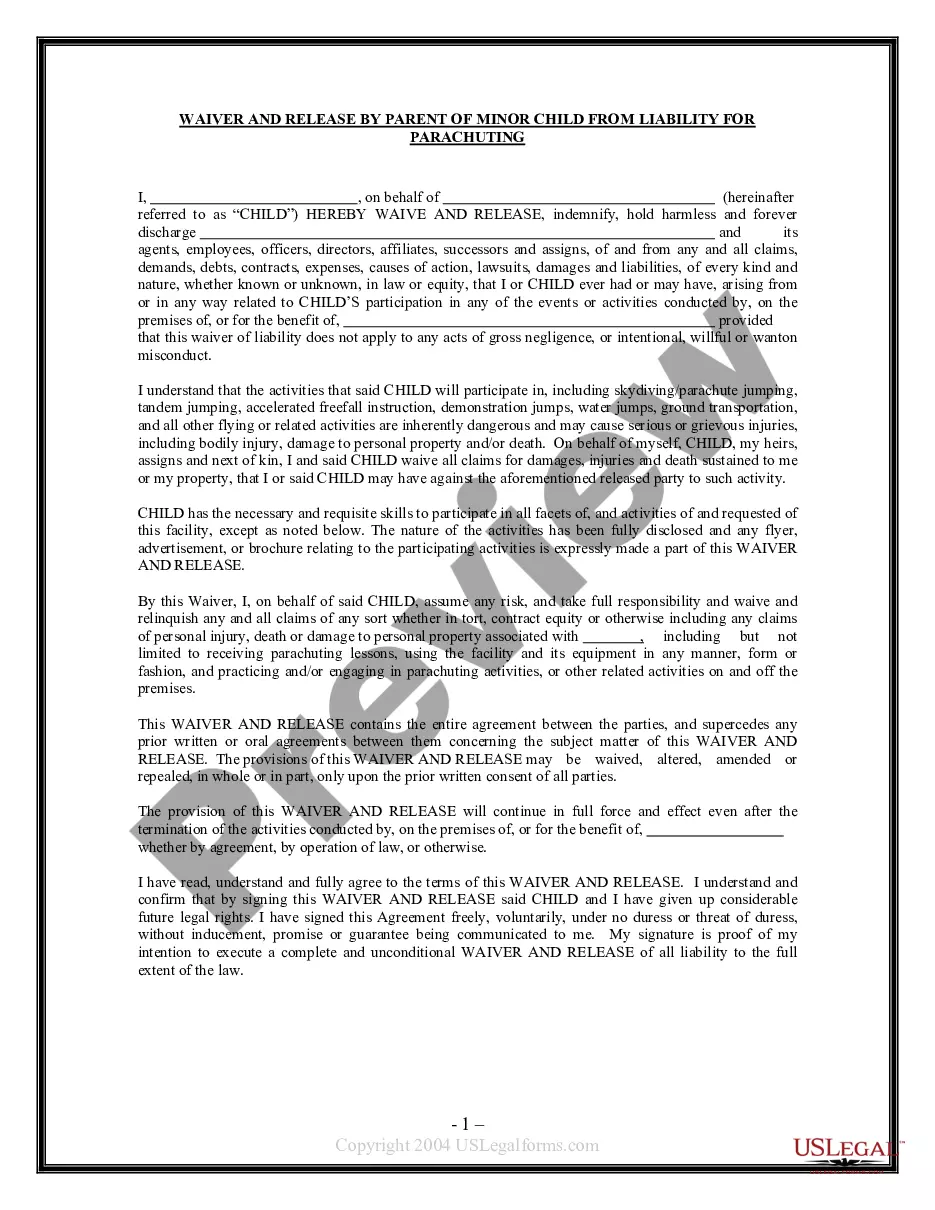
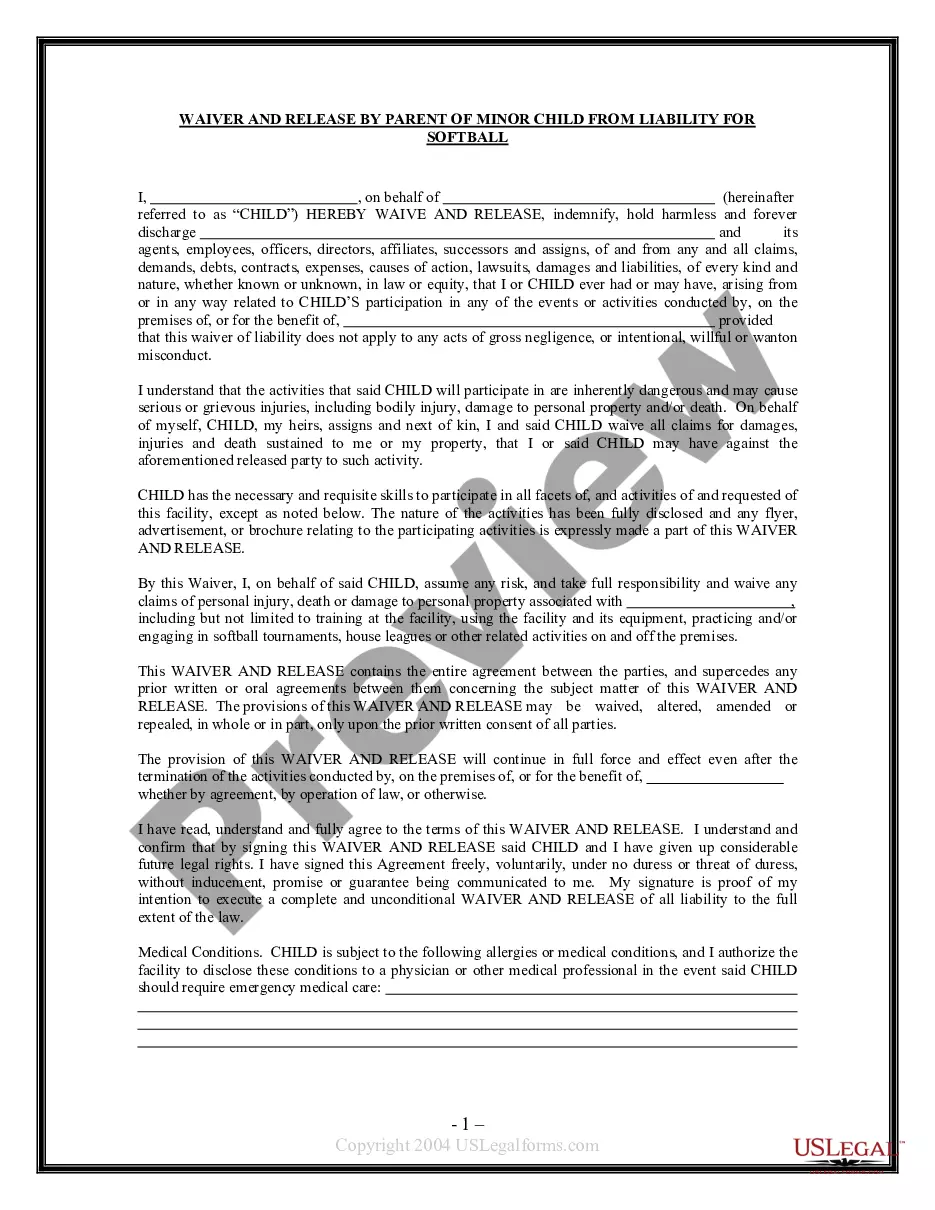
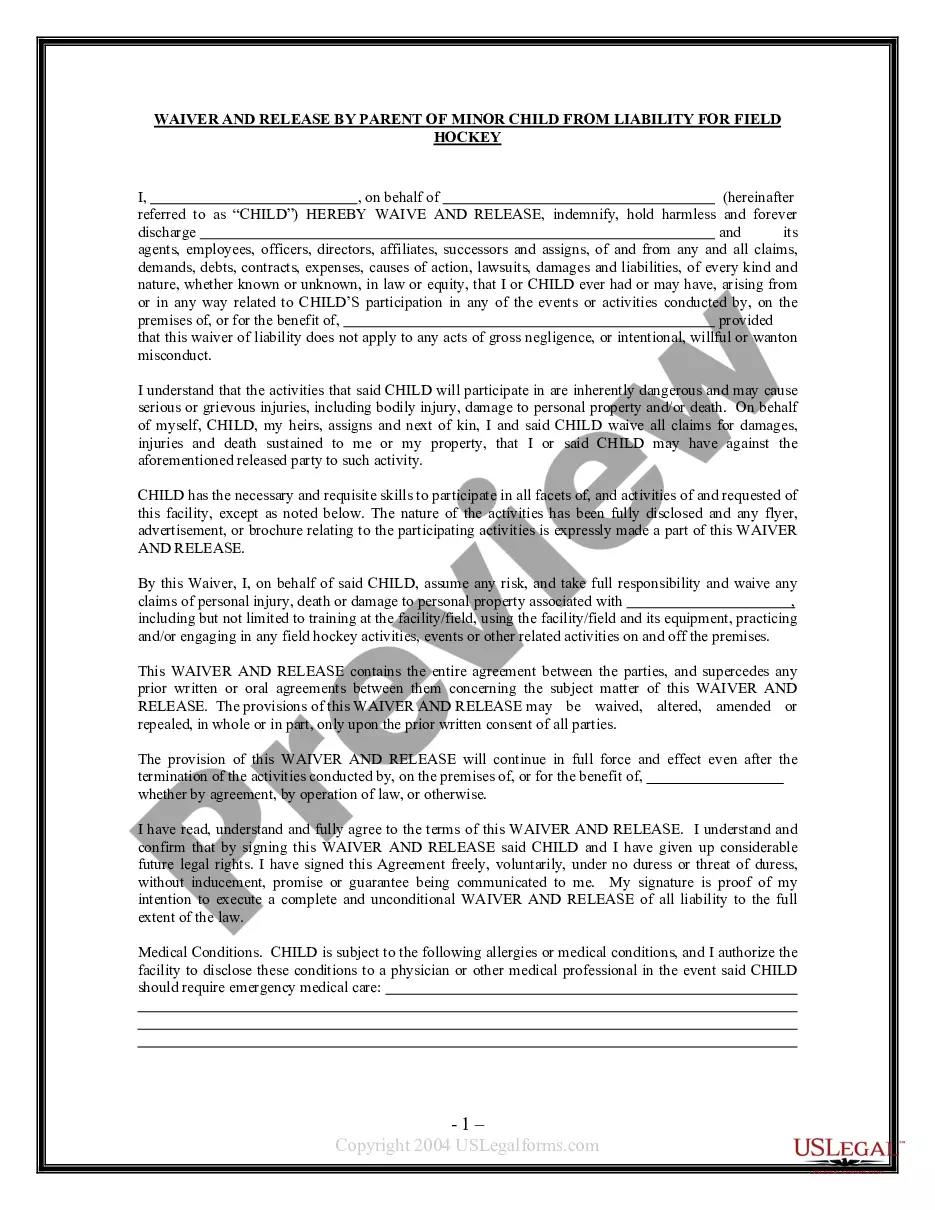
This form allows a parent or guardian to release a minor for cheerleading from liability for injuries which may be incurred by a minor child while on the premises, taking part in activities, etc.
Indiana Waiver and Release From Liability For Minor Child for Cheerleading
Category:
State:
Multi-State
Control #:
US-WAV-93M
Format:
Word;
Rich Text
Instant download
Description
Free preview
How to fill out Waiver And Release From Liability For Minor Child For Cheerleading?
Selecting the top legal documents template can be a challenge. Naturally, there are numerous designs accessible online, but how will you find the legal document you need? Use the US Legal Forms website. The platform offers a vast selection of templates, including the Indiana Waiver and Release From Liability For Minor Child for Cheerleading, that can be utilized for business and personal purposes. All of the documents are reviewed by experts and comply with state and federal regulations.
If you are already registered, Log In to your account and click on the Obtain button to acquire the Indiana Waiver and Release From Liability For Minor Child for Cheerleading. Use your account to search for the legal documents you have previously purchased. Visit the My documents section of your account and download another copy of the document you require.
If you are a new user of US Legal Forms, here are simple steps for you to follow: First, ensure you have selected the correct document for your city/county. You can review the document using the Review button and examine the document description to confirm it is the right one for you. If the document does not meet your needs, use the Search field to find the appropriate document. Once you are confident that the document is correct, click the Purchase now button to obtain the document. Choose the pricing plan you prefer and enter the required information. Create your account and pay for your order using your PayPal account or credit card. Select the submission format and download the legal documents template for your item. Complete, modify, and print, and sign the received Indiana Waiver and Release From Liability For Minor Child for Cheerleading.
Make the most of the diverse legal forms available to address your specific needs.
- US Legal Forms is the largest collection of legal documents that offers various document templates.
- Utilize the service to download well-crafted documents that meet state requirements.
- Ensure you pick the right form for your jurisdiction.
- Review the document description to validate its suitability.
- Employ the search function for better results.
- Download, edit, and print the necessary documents.
Form popularity
FAQ
Yes, you can write your own liability waiver for cheerleading activities, including the Indiana Waiver and Release From Liability For Minor Child for Cheerleading. However, crafting a legally sound document requires understanding specific legal language and requirements. It's essential to ensure that your waiver adequately protects your interests and complies with Indiana laws. For peace of mind, consider using a platform like US Legal Forms, which provides templates and guidance tailored for your needs.
A release of liability is a legal agreement between two parties in which one party waives the right to hold another party responsible for potential damages or injuries.
A liability waiver, or release of liability, is a legal document that a company or organization has you sign in order to protect them from being sued in the event that you are injured.
As tempting as it may be, you should never write your own liability waiver. Unless you're a fully qualified lawyer with experience in this area, it's likely that you'll omit critical language that puts your business at risk for lawsuits.
So, if an accident happens and injury occurs, is a Waiver effective in protecting the institution from liability and preventing a lawsuit from the injured party? The answer is that, if properly worded and signed, the Waiver is likely valid and will preclude legal claims for injuries.
Releases of liabilitysometimes called waiversare legal agreements designed to transfer responsibility for injuries and property damage from one party to another.
Here is all that pertains writing an effective liability waiver:Get help. Writing a waiver should not be complicated.Use the correct structure.Proper formatting.Include a subject line.Include a caution!Talk about the activity risks.Do not forget an assumption of risk.Hold harmless.More items...?
A liability waiver is a legal document that a person who participates in an activity may sign to acknowledge the risks involved in their participation. By doing so, the company attempts to remove legal liability from the business or person responsible for the activity.
What do waivers and releases have in common? both waivers and releases excuse a contracting party for not performing. these result in the discharge of contractual obligations.
The Waiver must be clearly worded and unambiguous in its intent to relieve any and all legal liability, even liability for negligence. The Waiver should be prominent and not hidden in the fine print of a long contract. The Waiver must be signed by the person who it is being used against.