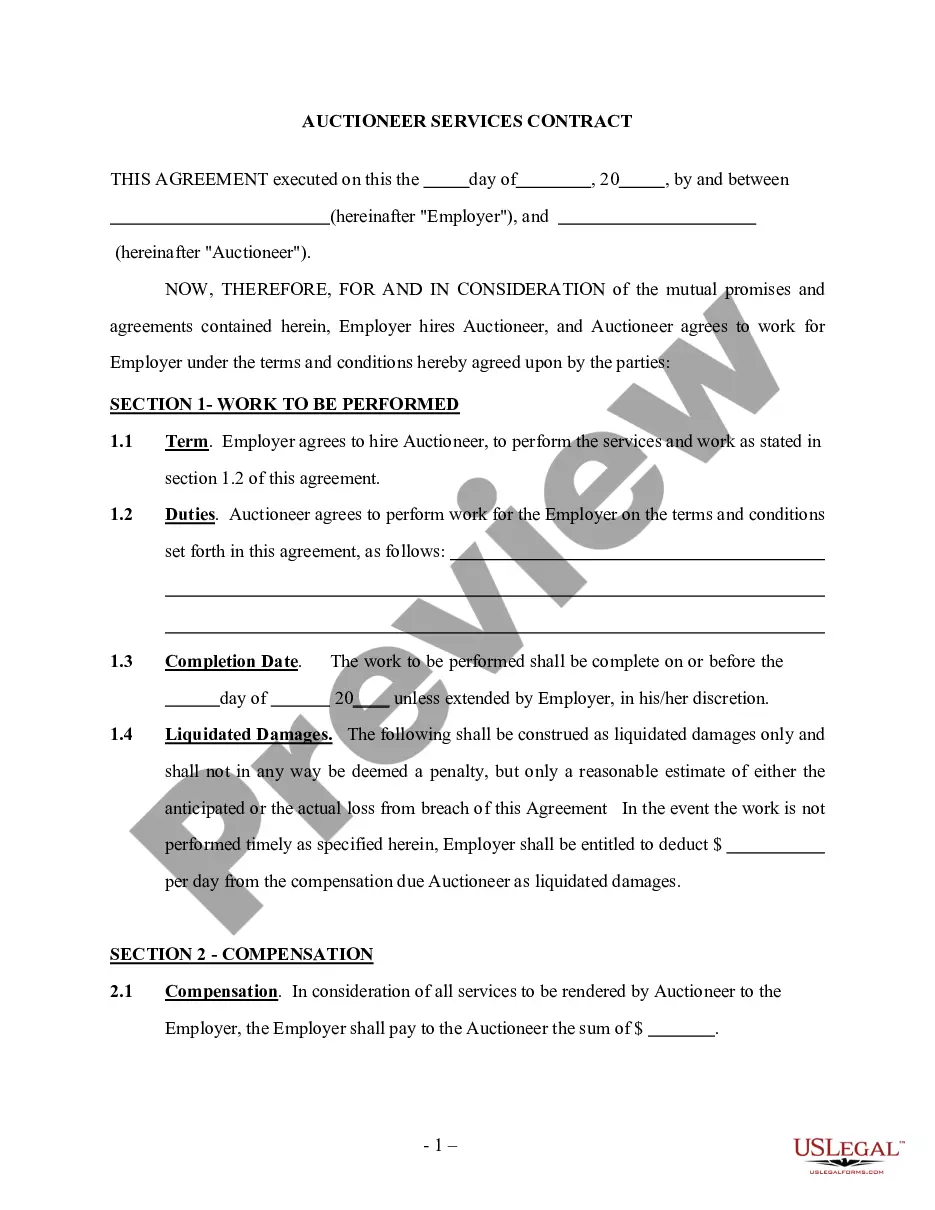
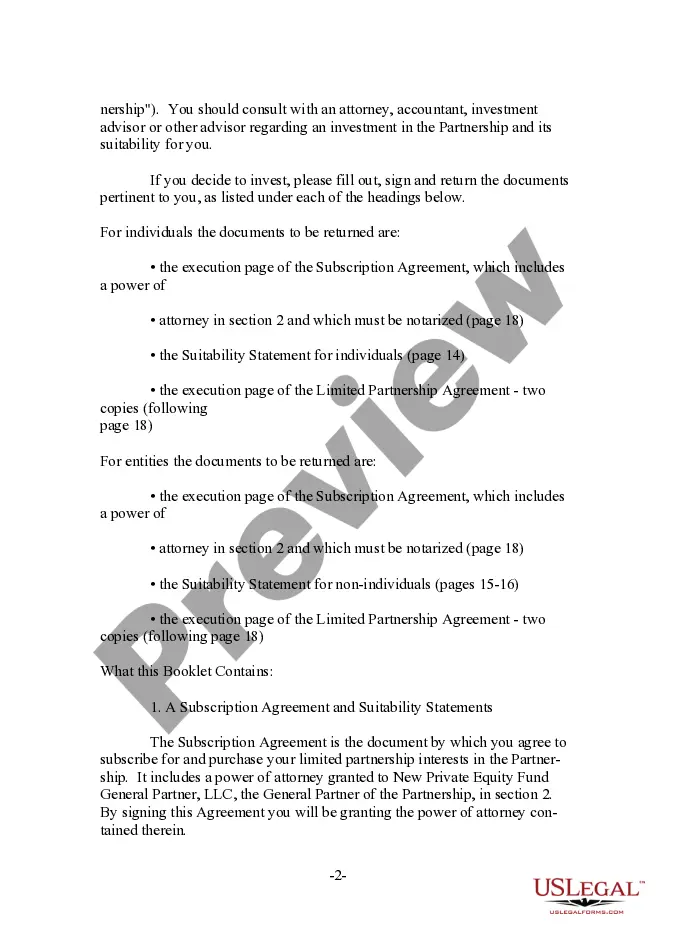
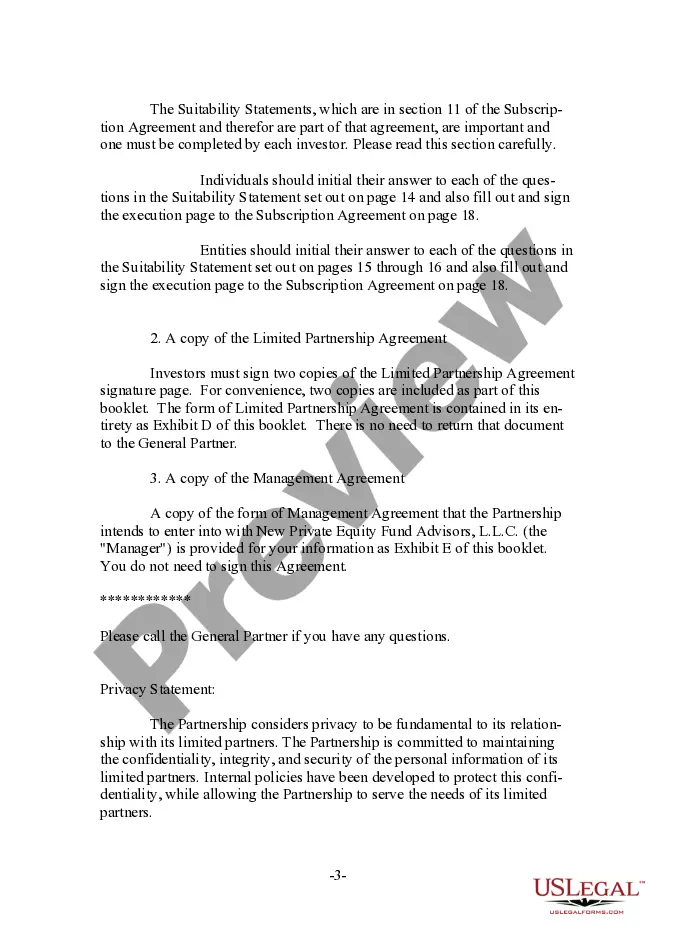
Indiana Subscription Agreement - A Section 3C1 Fund
Description
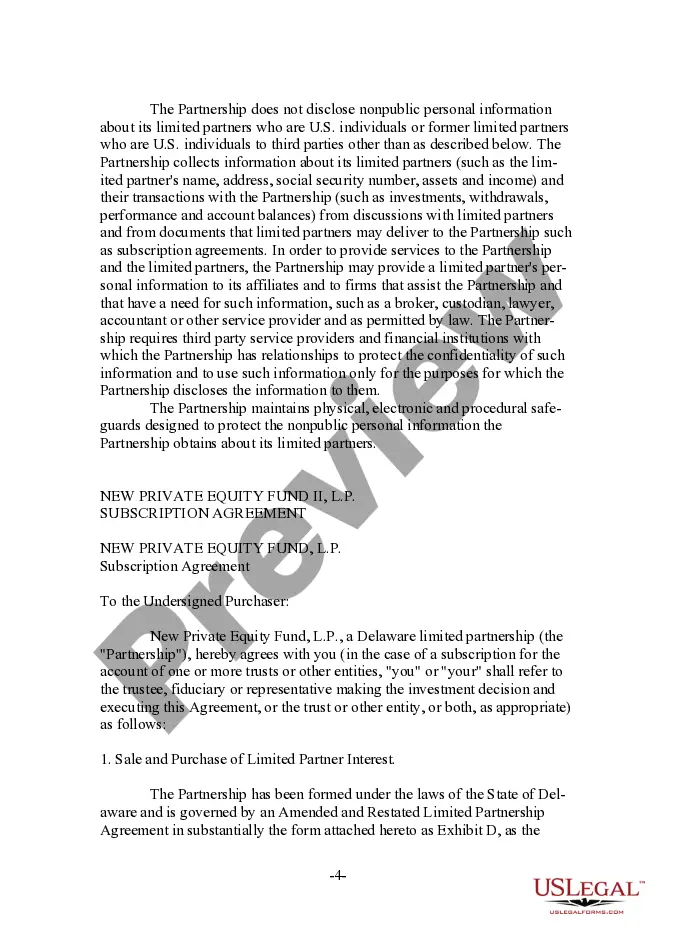

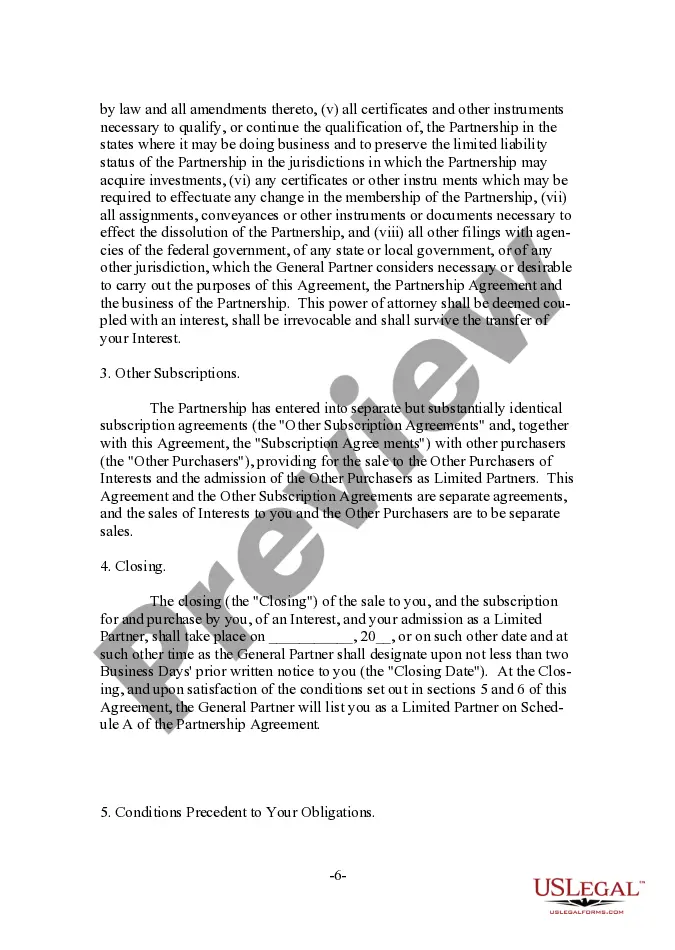
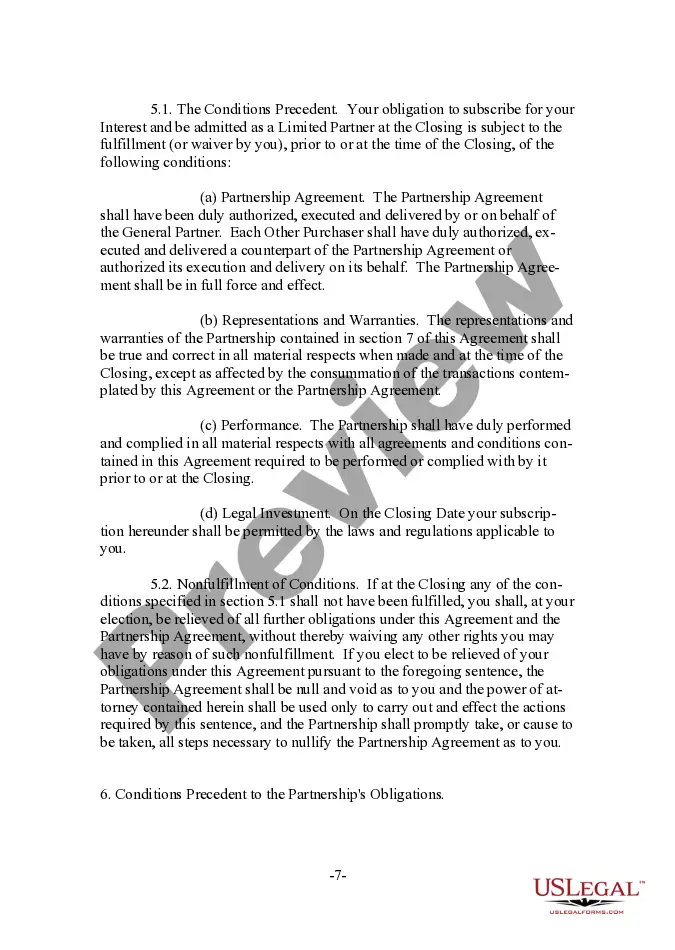

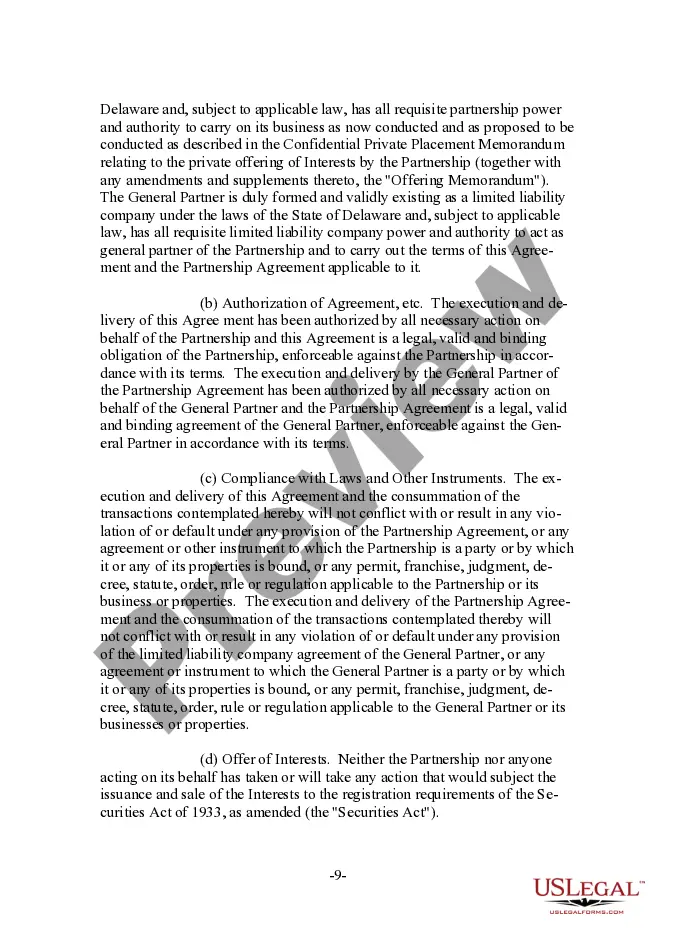
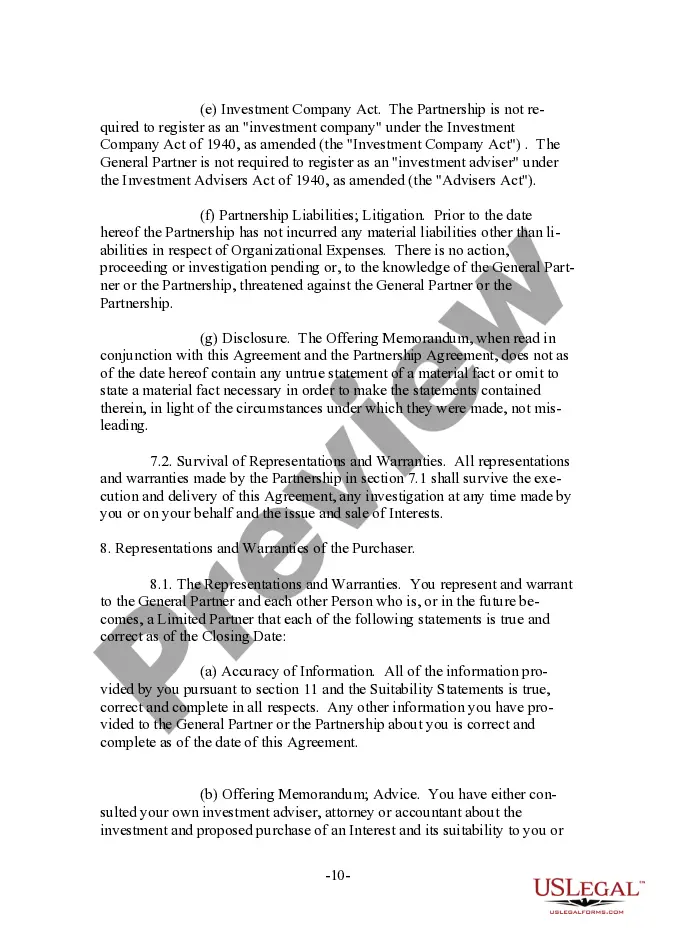

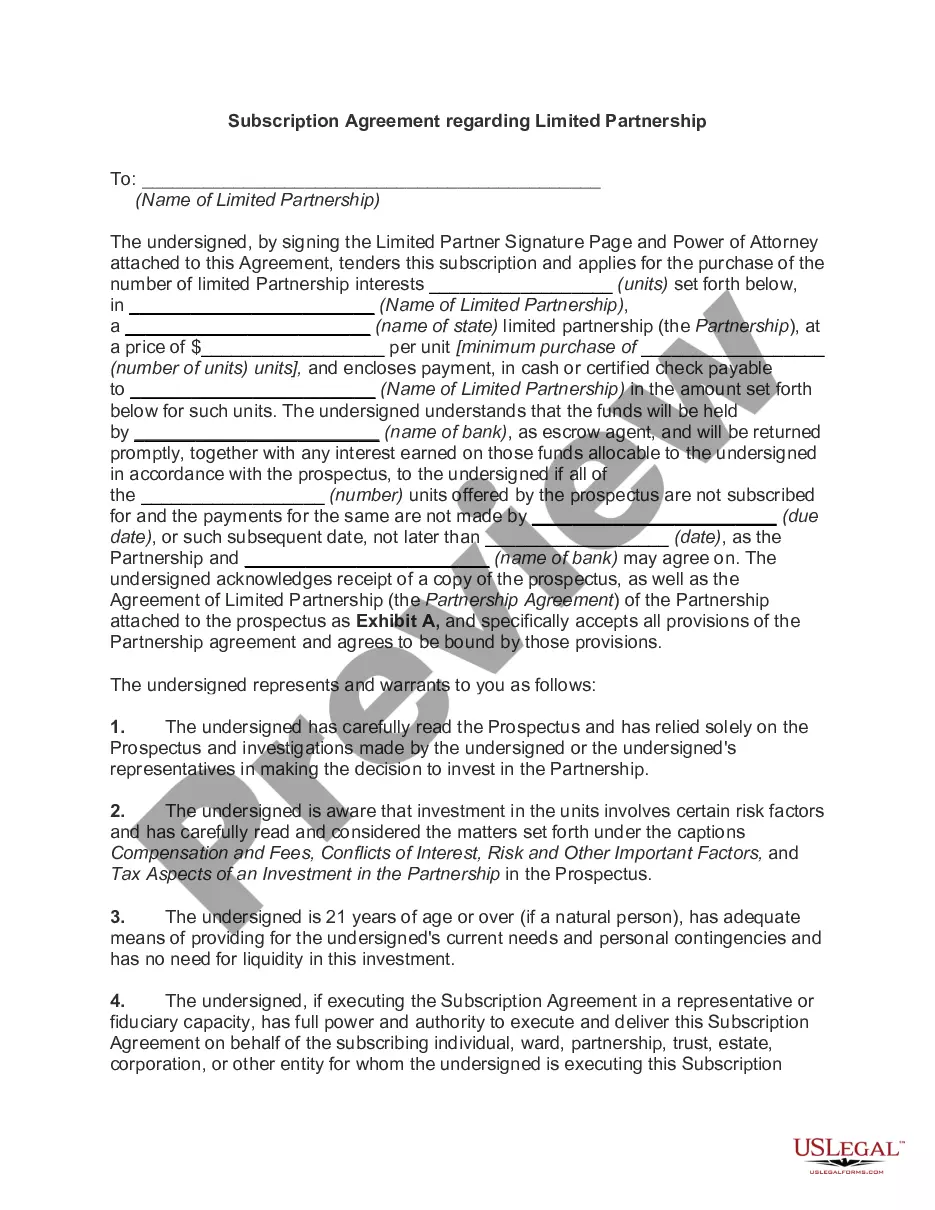
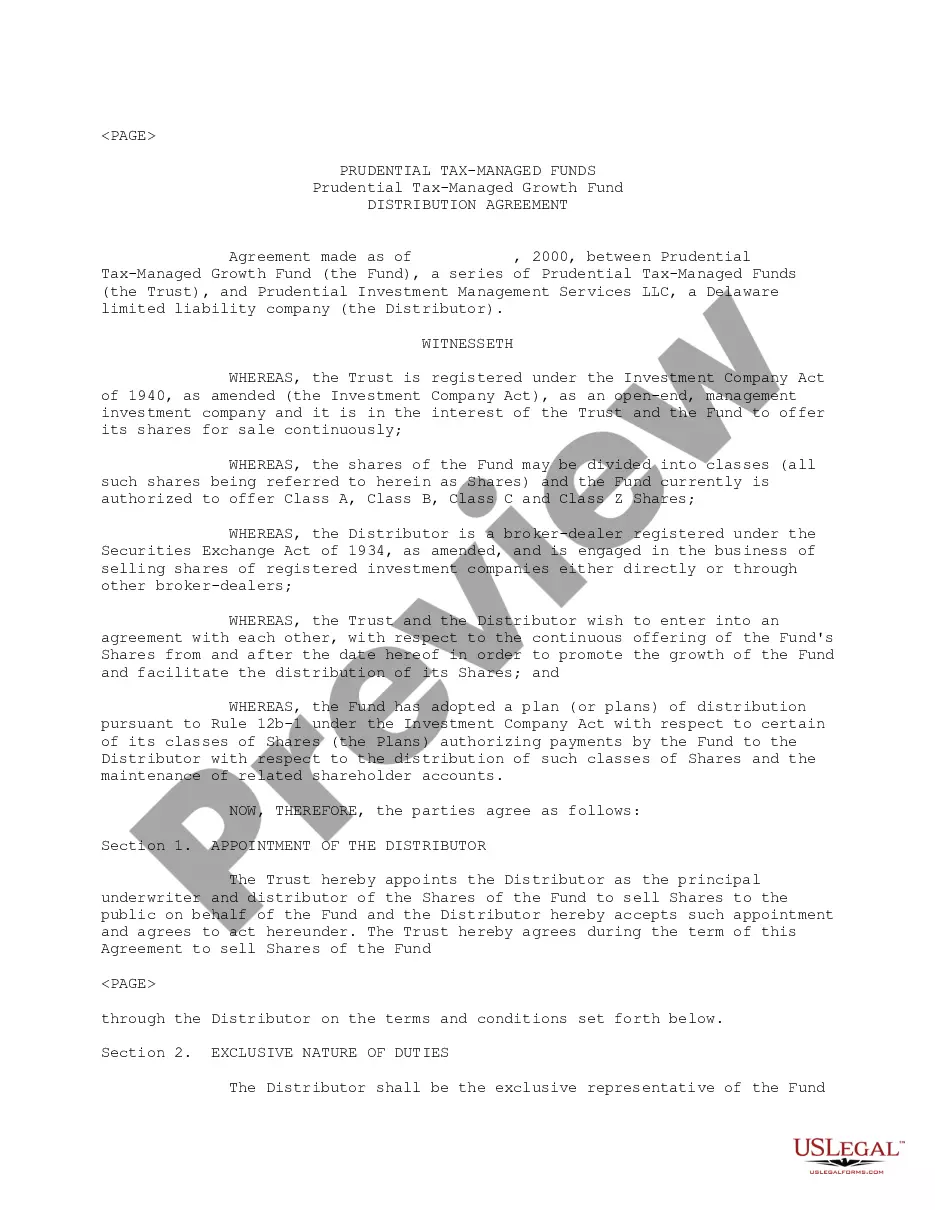
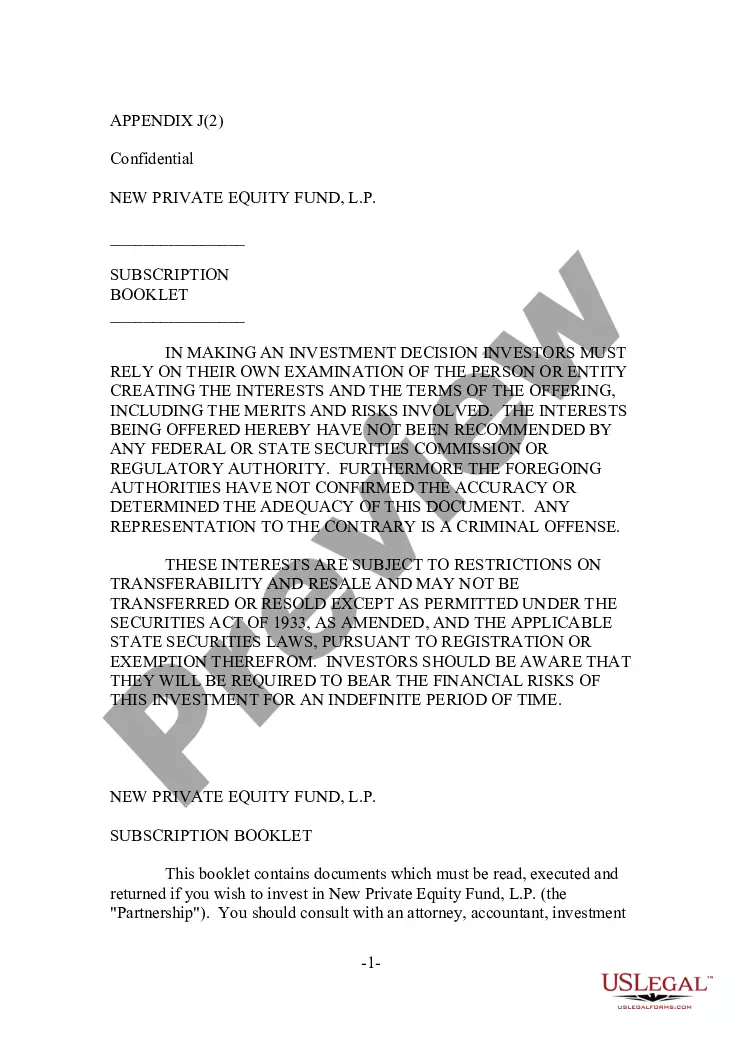
Get your form ready online
Our built-in tools help you complete, sign, share, and store your documents in one place.
Make edits, fill in missing information, and update formatting in US Legal Forms—just like you would in MS Word.
Download a copy, print it, send it by email, or mail it via USPS—whatever works best for your next step.
Sign and collect signatures with our SignNow integration. Send to multiple recipients, set reminders, and more. Go Premium to unlock E-Sign.
If this form requires notarization, complete it online through a secure video call—no need to meet a notary in person or wait for an appointment.
We protect your documents and personal data by following strict security and privacy standards.

Make edits, fill in missing information, and update formatting in US Legal Forms—just like you would in MS Word.

Download a copy, print it, send it by email, or mail it via USPS—whatever works best for your next step.

Sign and collect signatures with our SignNow integration. Send to multiple recipients, set reminders, and more. Go Premium to unlock E-Sign.

If this form requires notarization, complete it online through a secure video call—no need to meet a notary in person or wait for an appointment.

We protect your documents and personal data by following strict security and privacy standards.
Looking for another form?









How to fill out Subscription Agreement - A Section 3C1 Fund?
Finding the right legal document web template can be a have a problem. Naturally, there are plenty of themes available on the net, but how will you obtain the legal type you require? Utilize the US Legal Forms website. The services delivers a large number of themes, for example the Indiana Subscription Agreement - A Section 3C1 Fund, which can be used for enterprise and private requirements. All of the varieties are inspected by professionals and satisfy federal and state demands.
If you are currently listed, log in for your profile and click on the Down load switch to get the Indiana Subscription Agreement - A Section 3C1 Fund. Make use of your profile to look with the legal varieties you have acquired previously. Go to the My Forms tab of the profile and acquire another duplicate from the document you require.
If you are a brand new user of US Legal Forms, here are easy instructions that you can stick to:
- Initial, be sure you have chosen the proper type to your city/county. It is possible to examine the shape utilizing the Review switch and browse the shape outline to make certain it will be the right one for you.
- In case the type is not going to satisfy your preferences, take advantage of the Seach industry to find the appropriate type.
- When you are positive that the shape is suitable, select the Buy now switch to get the type.
- Choose the pricing plan you need and enter in the required info. Make your profile and purchase your order using your PayPal profile or credit card.
- Choose the submit structure and down load the legal document web template for your system.
- Full, modify and produce and signal the received Indiana Subscription Agreement - A Section 3C1 Fund.
US Legal Forms will be the most significant library of legal varieties for which you can find various document themes. Utilize the service to down load appropriately-made paperwork that stick to condition demands.
Form popularity
FAQ
For instance, a qualified purchaser is often allowed to invest in funds that are exempt from the Securities and Exchange Commission (SEC) registration under both Sections 3(c)(1) and 3(c)(7) of the Investment Company Act, whereas an accredited investor would only be allowed to invest in a Section 3(c)(1) fund.
12. Code Section 25202 provides a de minimis exemption from the licensure requirement under Section 25230 to any investment adviser that (1) has no place of business in this state and (2) during the preceding 12-month period has had fewer than six clients who are residents of this state.
For the purpose of section 3(c)(1) of the Act, beneficial ownership by a com- pany owning 10 per centum or more of the outstanding voting securities of any issuer which is a small business in- vestment company licensed to operate under the Small Business Investment Act of 1958, or which has received from the Small ...
Section 3(a)(1) of the 1940 Act defines the term ?investment company.? Specifically, Section 3(a)(1)(A) of the 1940 Act defines ?investment company? to mean ?any issuer which is or holds itself out as being engaged primarily, or proposes to engage primarily, in the business of investing, reinvesting, or trading in ...
A 3(c)(1) fund is a pooled investment vehicle that is excluded from the definition of investment company in the Investment Company Act because it has no more than 100 beneficial owners (or, in the case of a qualifying venture capital fund, 250 beneficial owners) and otherwise meets criteria outlined in Section 3(c)(1) ...
Section 3(c)(1) excepts from the definition of investment company any issuer whose outstanding securities (other than short-term paper) are beneficially owned by not more than one hundred persons and that is not making and does not at that time propose to make a public offering of such securities.
Types of 3(c)(1) Investors Generally speaking investors in Section 3(c)(1) hedge funds will be both accredited investors and qualified clients. A 3(c)(1) fund must limit its investors to qualified clients if it wants to charge a performance fee.
Private funds must not plan to issue an IPO and their investors must be qualified purchases to qualify for the 3C7 exemption. There is no maximum limit for the number of purchasers of 3C7 funds. In contrast to 3C7, 3C1 funds deal with no more than 100 accredited investors.