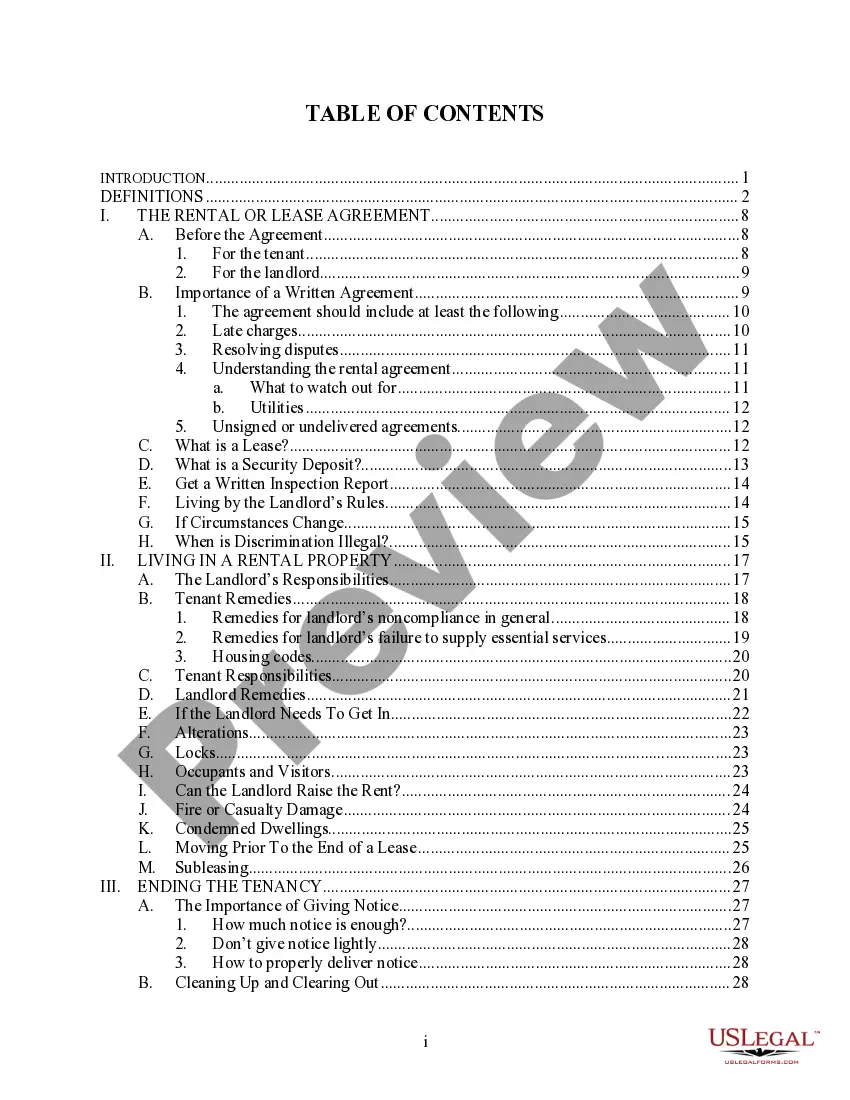
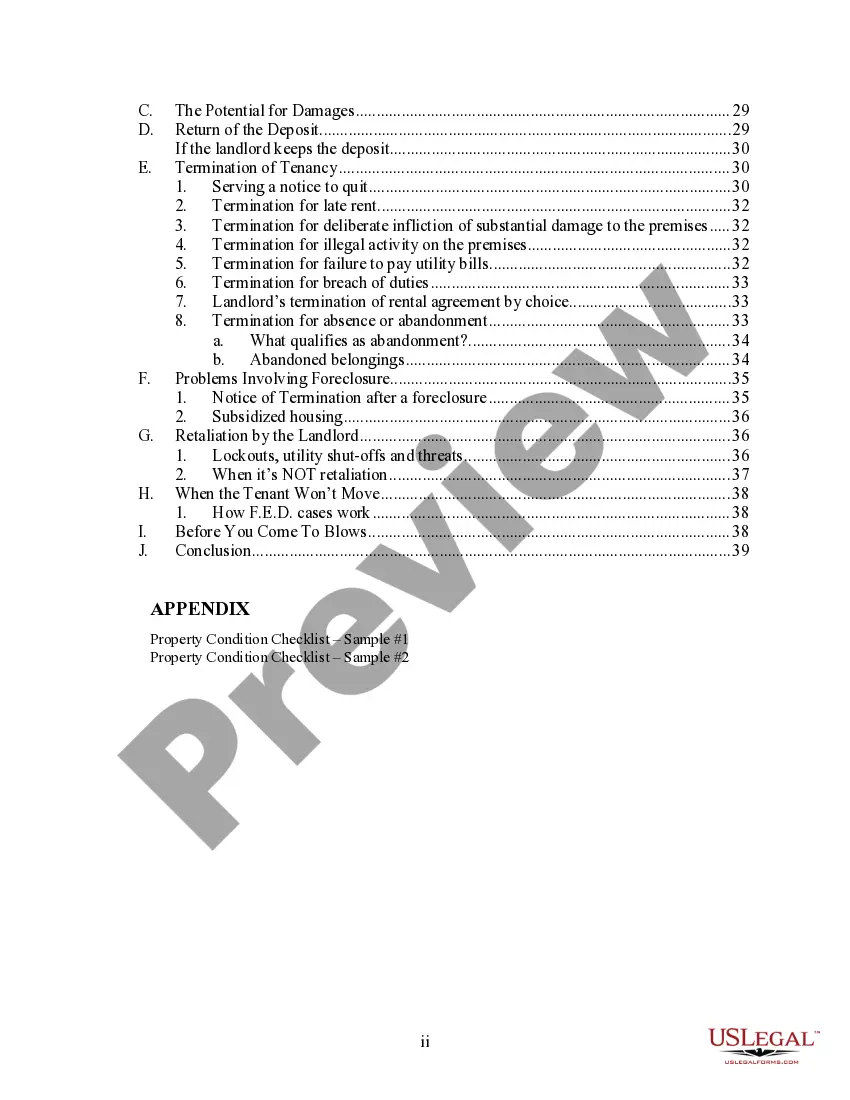
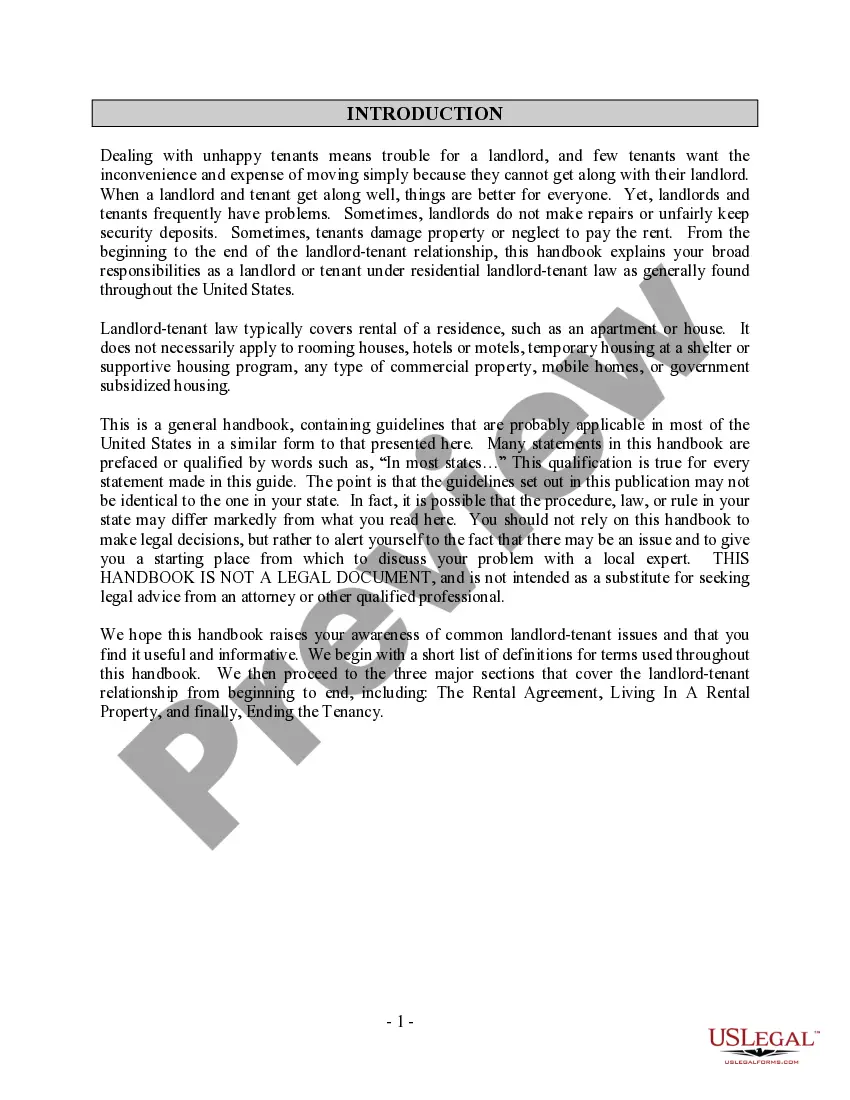
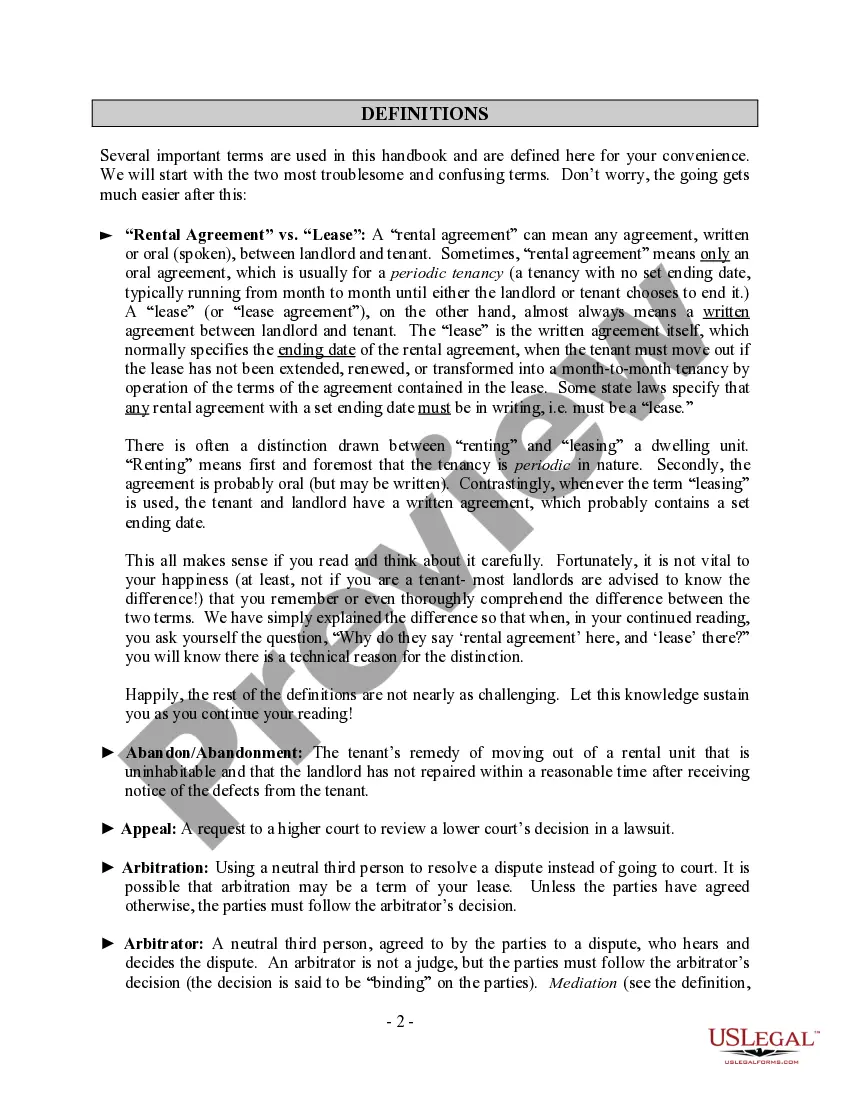
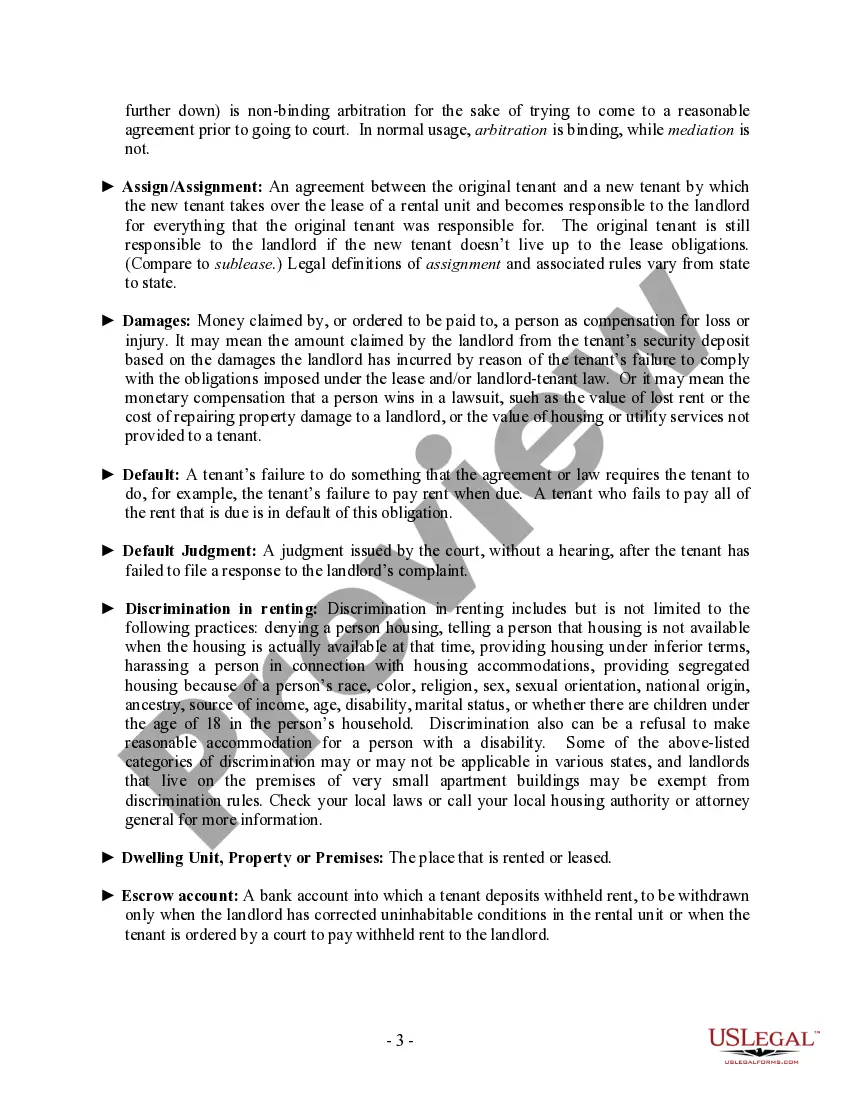
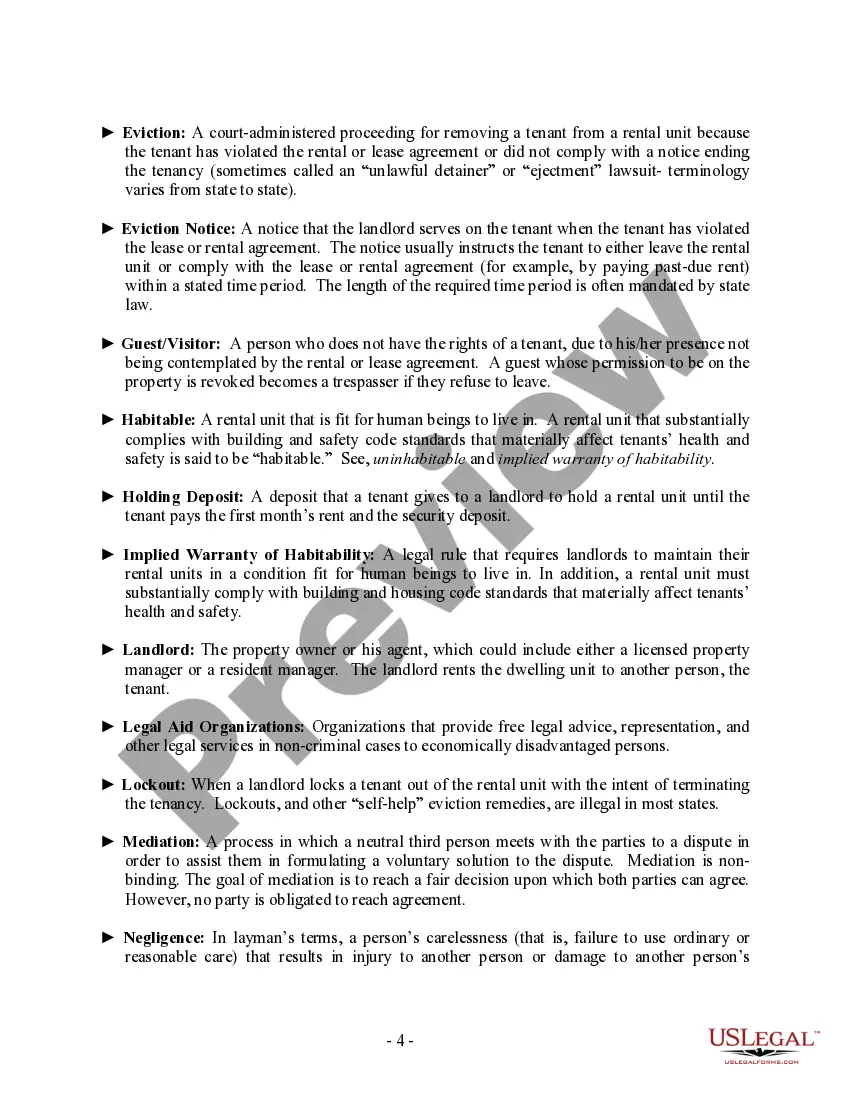
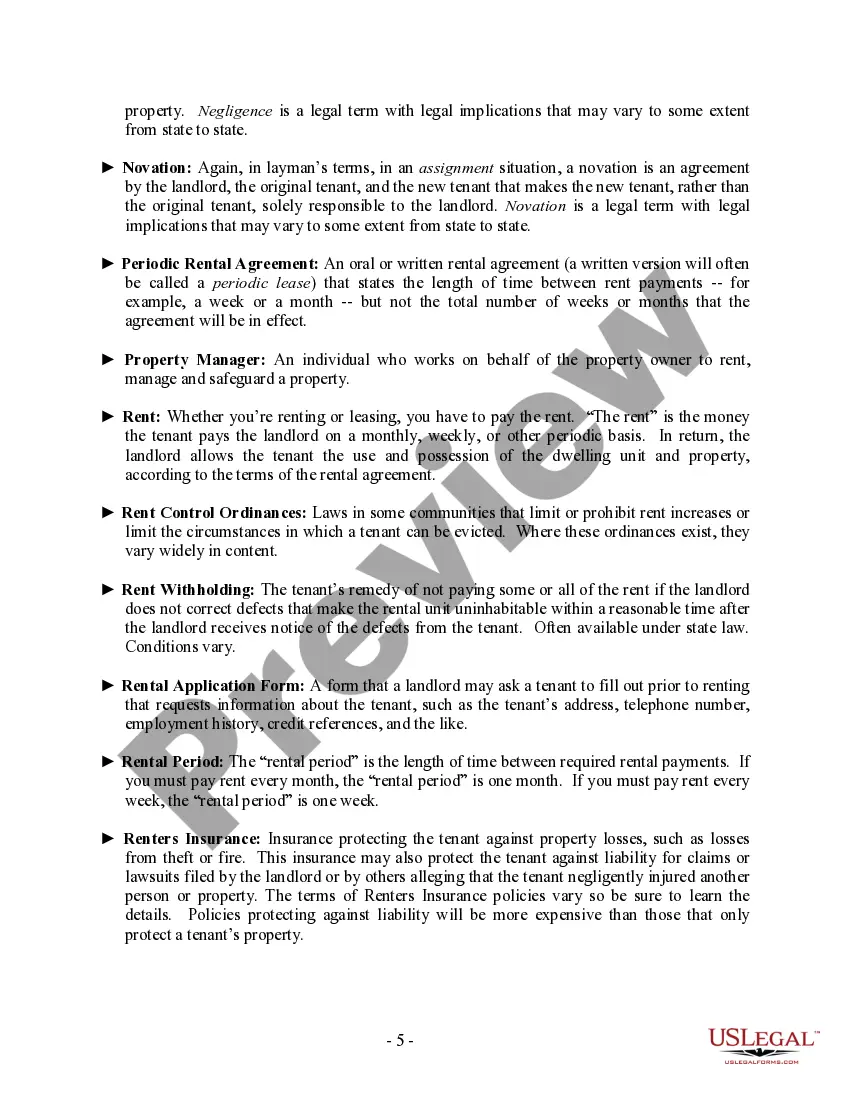
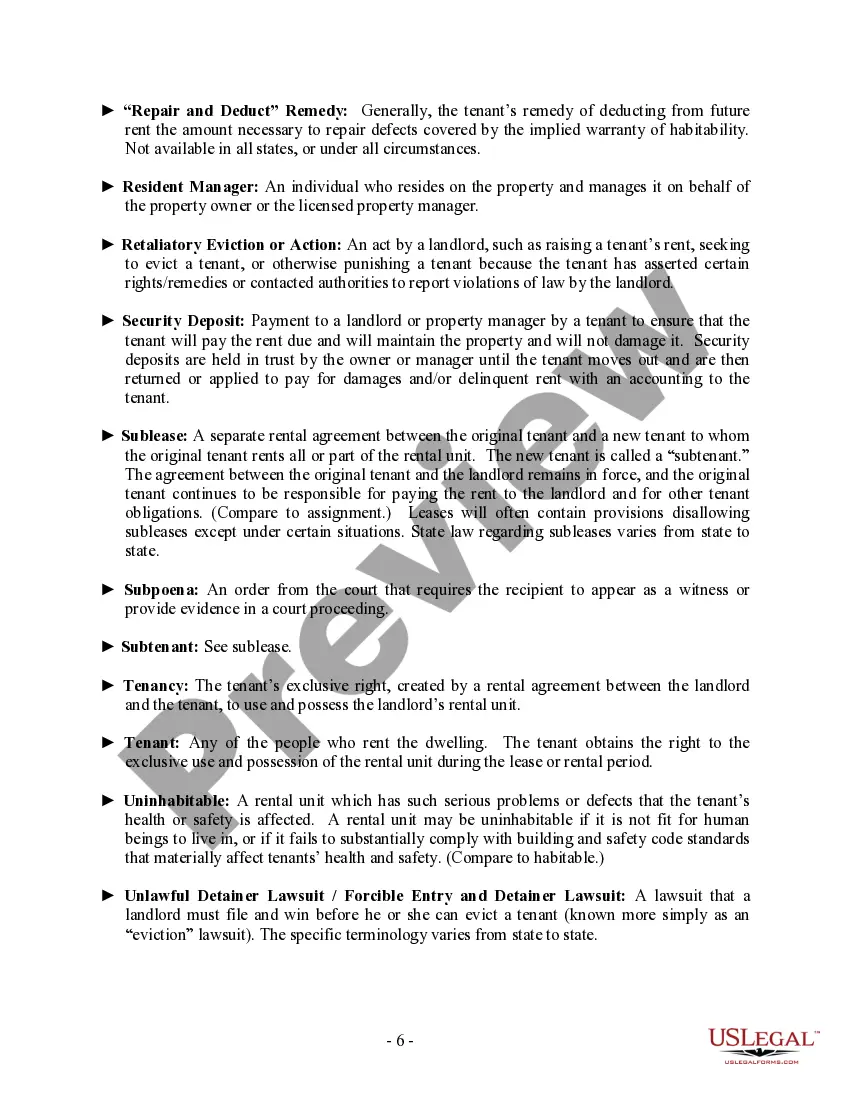
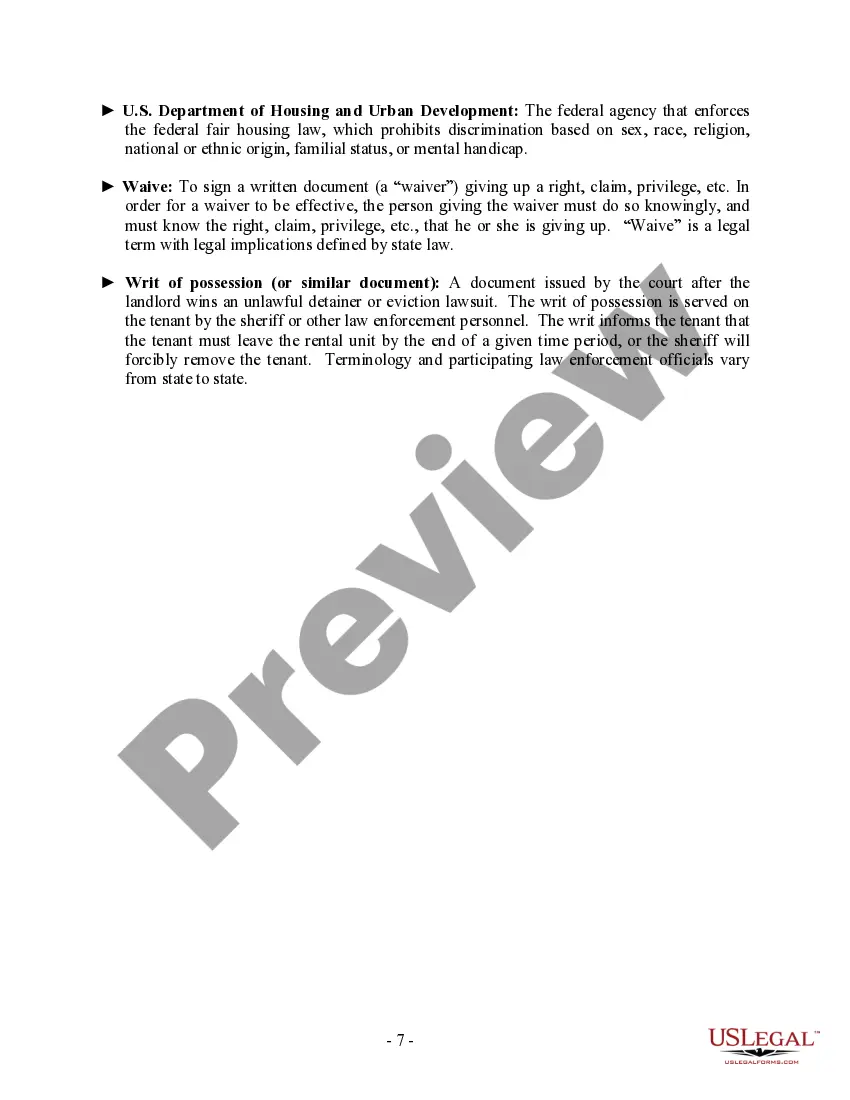
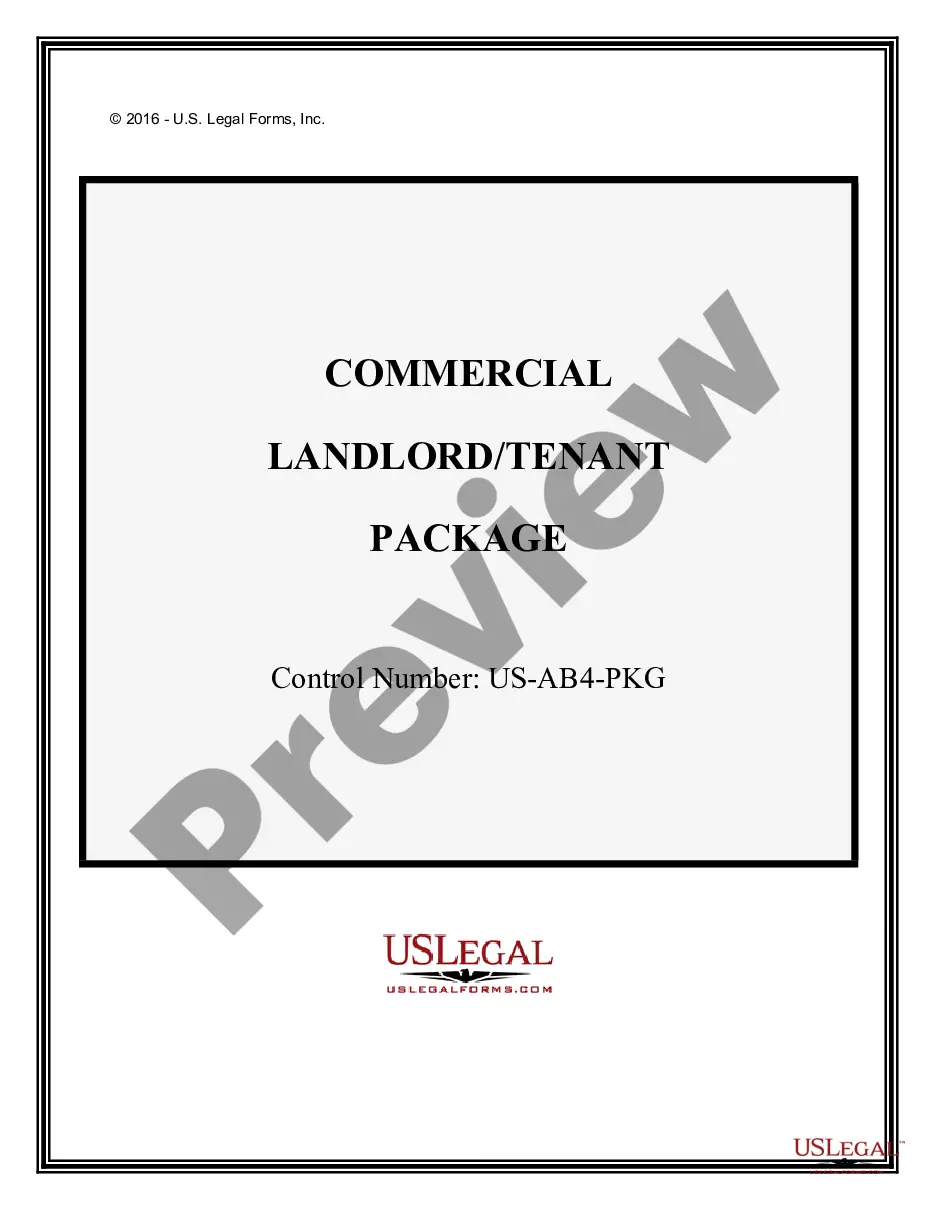
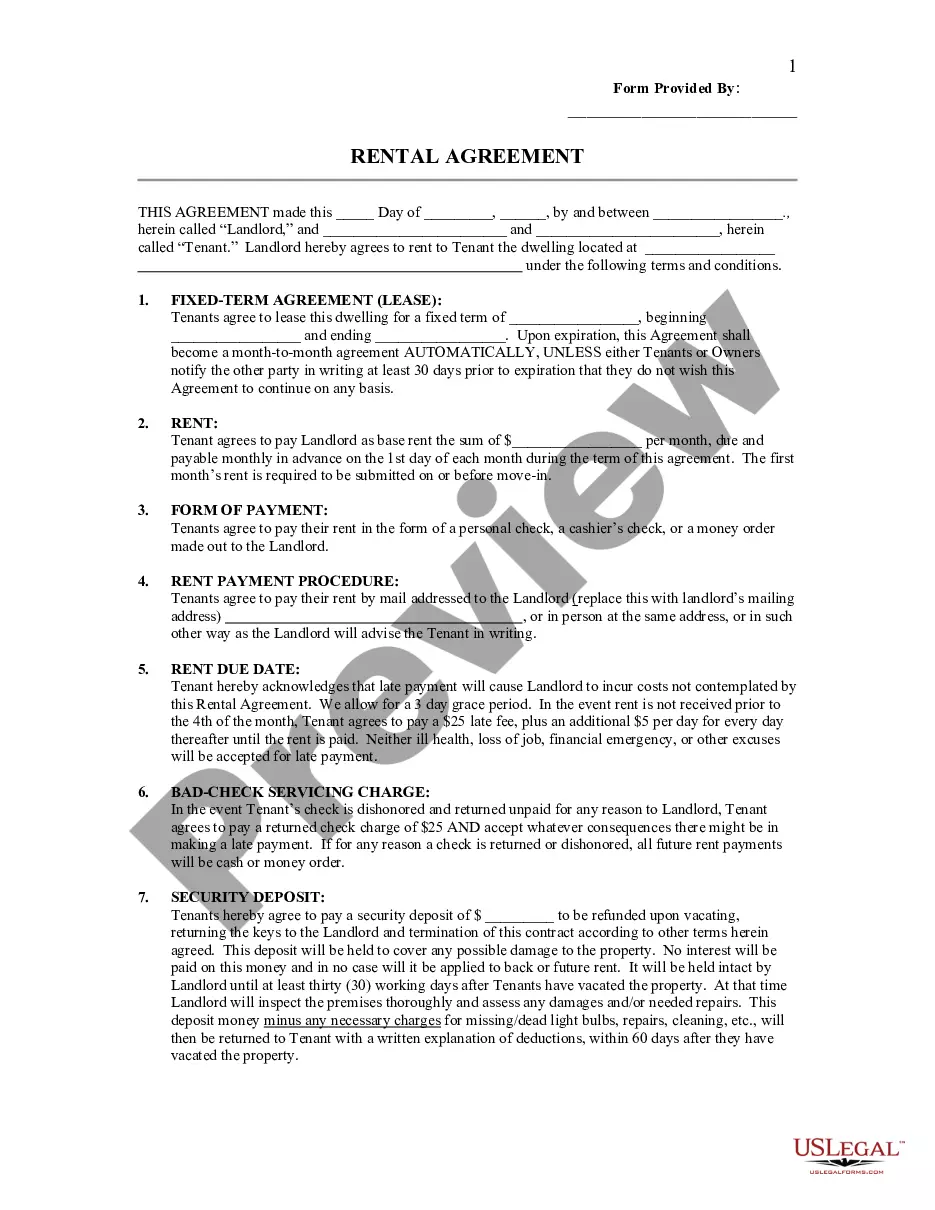
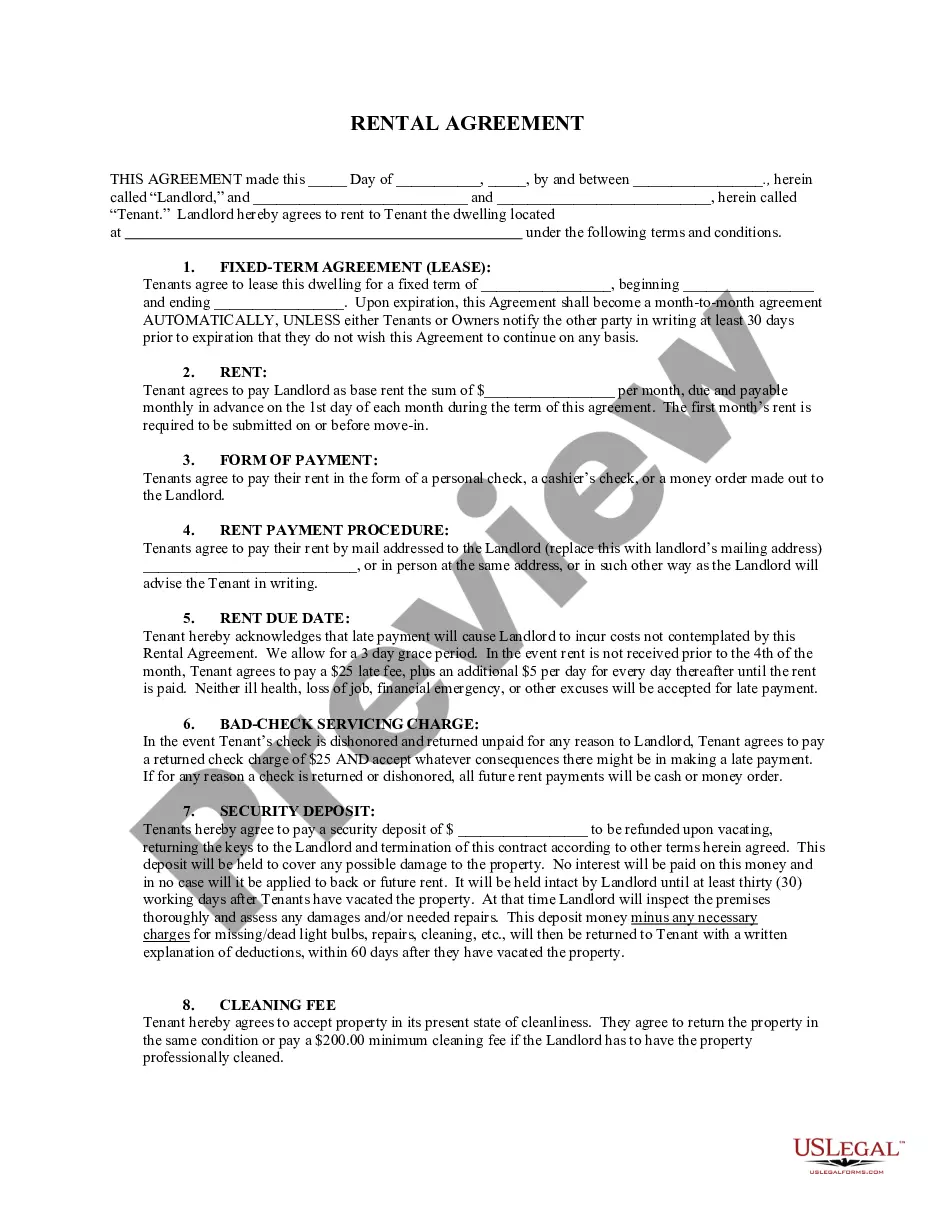
This Handbook summarizes the rights and obligations of landlords and tenants, and is designed to be a helpful guide to both landlords and tenants. Information about rental applications, leases, security deposits, inventory checklists, repair responsibilities, rent increases, termination of leases, eviction notices and much more is included in 40+ pages of materials.
Indiana Multistate Landlord Tenant Handbook - Guide - Laws
188 downloads
Description
Free preview

Get your form ready online
Our built-in tools help you complete, sign, share, and store your documents in one place.
Built-in online Word editor
Make edits, fill in missing information, and update formatting in US Legal Forms—just like you would in MS Word.
Export easily
Download a copy, print it, send it by email, or mail it via USPS—whatever works best for your next step.
E-sign your document
Sign and collect signatures with our SignNow integration. Send to multiple recipients, set reminders, and more. Go Premium to unlock E-Sign.
Notarize online 24/7
If this form requires notarization, complete it online through a secure video call—no need to meet a notary in person or wait for an appointment.
Store your document securely
We protect your documents and personal data by following strict security and privacy standards.

Make edits, fill in missing information, and update formatting in US Legal Forms—just like you would in MS Word.

Download a copy, print it, send it by email, or mail it via USPS—whatever works best for your next step.

Sign and collect signatures with our SignNow integration. Send to multiple recipients, set reminders, and more. Go Premium to unlock E-Sign.

If this form requires notarization, complete it online through a secure video call—no need to meet a notary in person or wait for an appointment.

We protect your documents and personal data by following strict security and privacy standards.
Looking for another form?
How to fill out Multistate Landlord Tenant Handbook - Guide - Laws?
Are you in the situation where you require documents for both corporate or specific objectives nearly every day? There are numerous lawful document templates accessible online, but obtaining forms you can rely on is not simple.
US Legal Forms provides thousands of form templates, such as the Indiana Multistate Landlord Tenant Handbook - Guide - Laws, that are designed to comply with federal and state requirements.
If you are already familiar with the US Legal Forms website and have an account, simply Log In. After that, you can download the Indiana Multistate Landlord Tenant Handbook - Guide - Laws template.
Select a convenient document format and download your copy.
Access all the document templates you have purchased in the My documents section. You can obtain another copy of the Indiana Multistate Landlord Tenant Handbook - Guide - Laws at any time, if necessary. Just click on the necessary form to download or print the document template. Use US Legal Forms, one of the largest collections of legal forms, to save time and avoid mistakes. The service offers professionally designed legal document templates that you can use for various purposes. Create an account on US Legal Forms and start making your life easier.
- If you do not have an account and wish to start using US Legal Forms, follow these steps.
- Obtain the form you need and ensure it is for the correct city/state.
- Use the Review button to inspect the form.
- Check the details to make sure you have selected the correct form.
- If the form is not what you're looking for, use the Search section to find the form that suits your needs and requirements.
- Once you find the right form, click Acquire now.
- Choose the pricing plan you want, enter the required information to create your account, and purchase an order using your PayPal or Visa or Mastercard.
Form popularity
FAQ
In Indiana, landlords are prohibited from discriminating against tenants, entering the rental property without notice, or retaliating against tenants for exercising their rights. The Indiana Multistate Landlord Tenant Handbook - Guide - Laws thoroughly explains these restrictions. Familiarizing yourself with these laws is crucial for maintaining a fair landlord-tenant relationship.
When communicating with your landlord, avoid making accusations or using aggressive language. Instead, focus on presenting your concerns clearly and calmly. The Indiana Multistate Landlord Tenant Handbook - Guide - Laws can offer insights on effective communication strategies with landlords. This guide helps you navigate discussions while maintaining a respectful tone.
Illegal actions by a landlord in Indiana include failing to provide a habitable living environment, unlawfully evicting tenants, or discriminating against tenants based on protected classes. The Indiana Multistate Landlord Tenant Handbook - Guide - Laws details these illegal activities and helps tenants recognize their rights. Knowing this information can protect you and provide guidance on how to address any unlawful actions.
In Indiana, landlords cannot engage in actions like retaliatory eviction, changing locks without notice, or entering your property without permission. The Indiana Multistate Landlord Tenant Handbook - Guide - Laws outlines these prohibited actions clearly. Understanding these laws empowers you to assert your rights and seek legal recourse when necessary.
In Indiana, the amount you can sue your landlord for emotional distress varies based on the specifics of your case. Generally, you must demonstrate that the landlord's actions caused significant emotional harm. The Indiana Multistate Landlord Tenant Handbook - Guide - Laws provides essential information on landlord responsibilities and your rights. Utilizing this guide can help you understand the potential compensation you may seek.
When communicating with your landlord, avoid making demands without providing context, such as saying 'I need this fixed now.' Instead, frame your concerns positively, like 'I appreciate your attention to maintenance issues.' Additionally, refrain from discussing personal financial struggles in detail. Clear communication fosters a better relationship, and the Indiana Multistate Landlord Tenant Handbook - Guide - Laws can help you navigate these conversations professionally.
Red flags when renting include properties that show signs of neglect, such as peeling paint, broken appliances, or unkempt yards. Additionally, if the landlord is evasive about lease terms or refuses to provide documentation, that can indicate potential issues. The Indiana Multistate Landlord Tenant Handbook - Guide - Laws emphasizes the importance of thorough research before signing a lease. This handbook can guide you in identifying and addressing these concerns effectively.
The 1% rule suggests that a landlord should aim for a rental income that equals at least 1% of the property's value each month. For example, if a property is worth $100,000, it should ideally generate $1,000 in rent. This rule helps landlords assess the profitability of their investments. The Indiana Multistate Landlord Tenant Handbook - Guide - Laws provides insights on calculating fair rental prices and understanding market trends.
Landlords can face legal issues for failing to maintain safe living conditions, violating tenant privacy, or improperly handling security deposits. According to the Indiana Multistate Landlord Tenant Handbook - Guide - Laws, landlords must adhere to specific regulations regarding repairs, leases, and eviction processes. Ignoring these responsibilities can lead to lawsuits or fines. Understanding these laws is crucial for landlords to avoid potential pitfalls.
Indiana Code 32-31-5-4 outlines specific obligations for landlords regarding security deposits. This includes how deposits must be handled and returned, as detailed in the Indiana Multistate Landlord Tenant Handbook - Guide - Laws. Understanding this code is vital for both landlords and tenants to ensure compliance and protect their rights. For comprehensive legal guidance, consider using USLegalForms to navigate these regulations effectively.