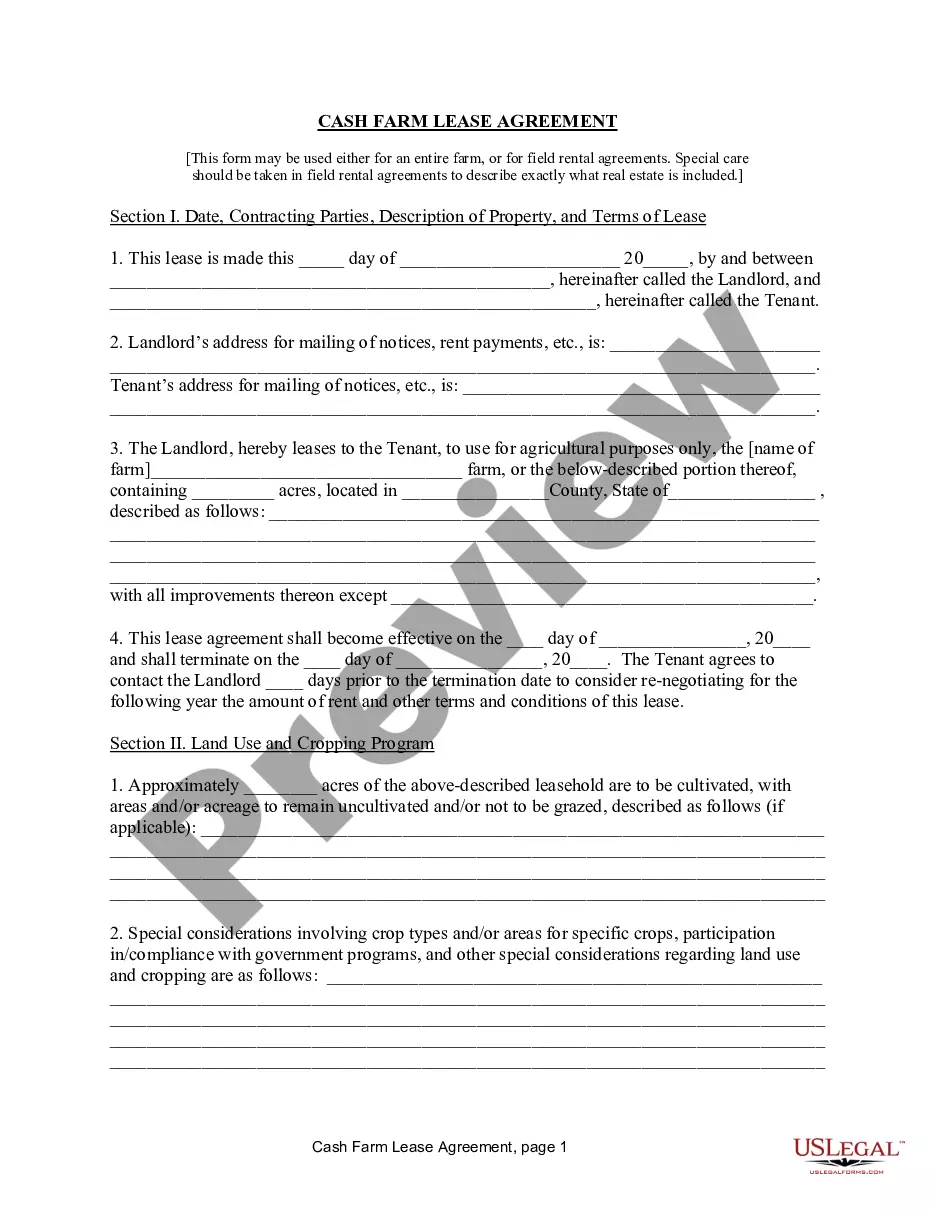
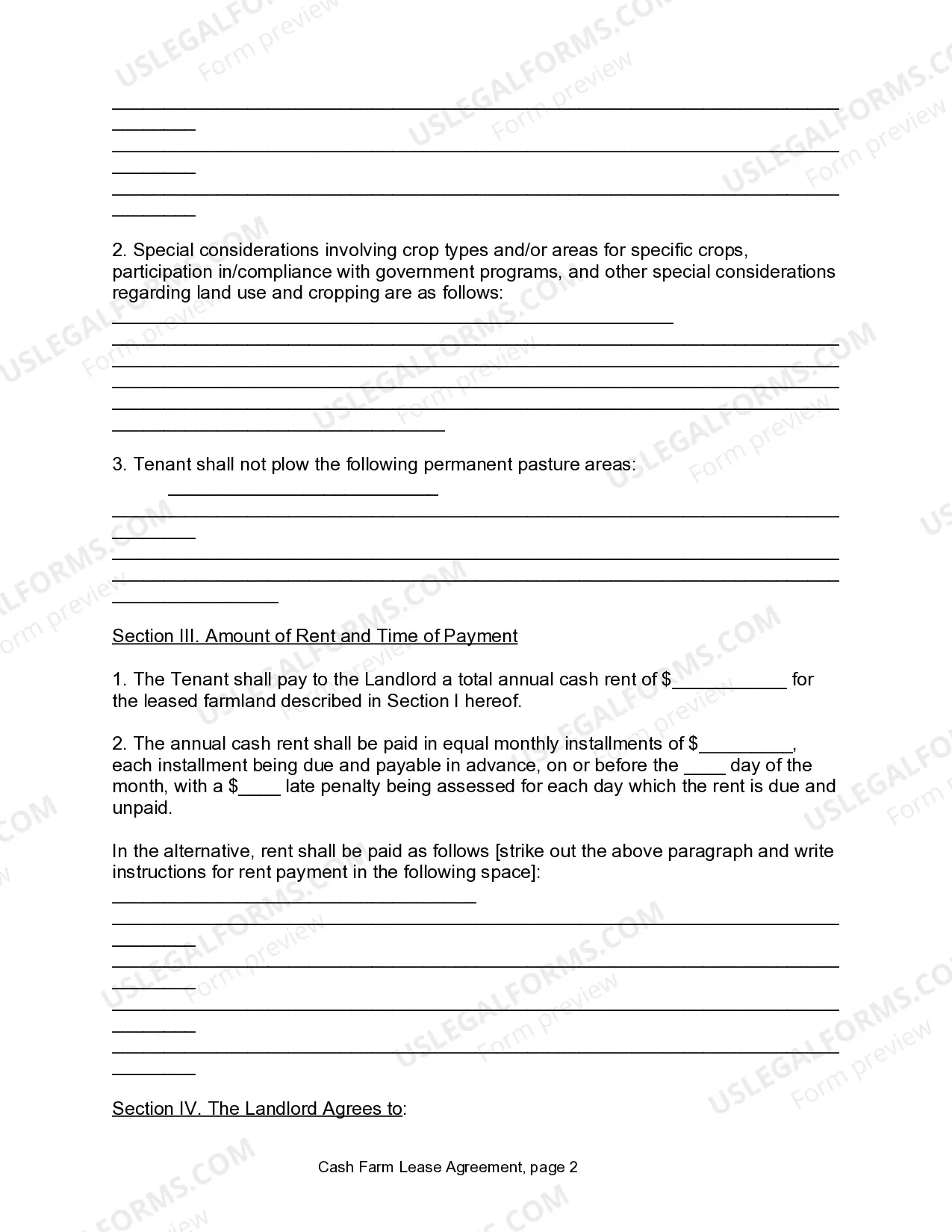
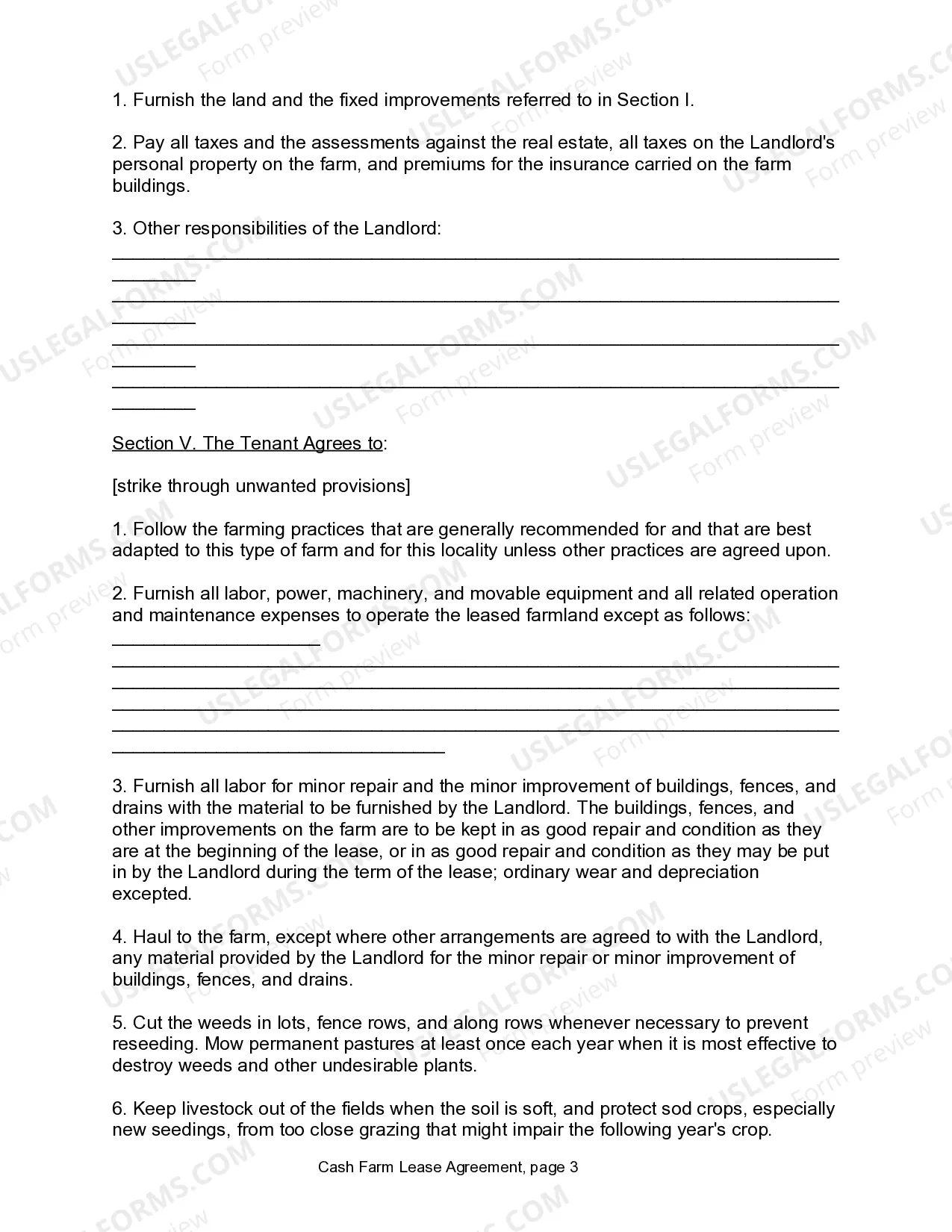
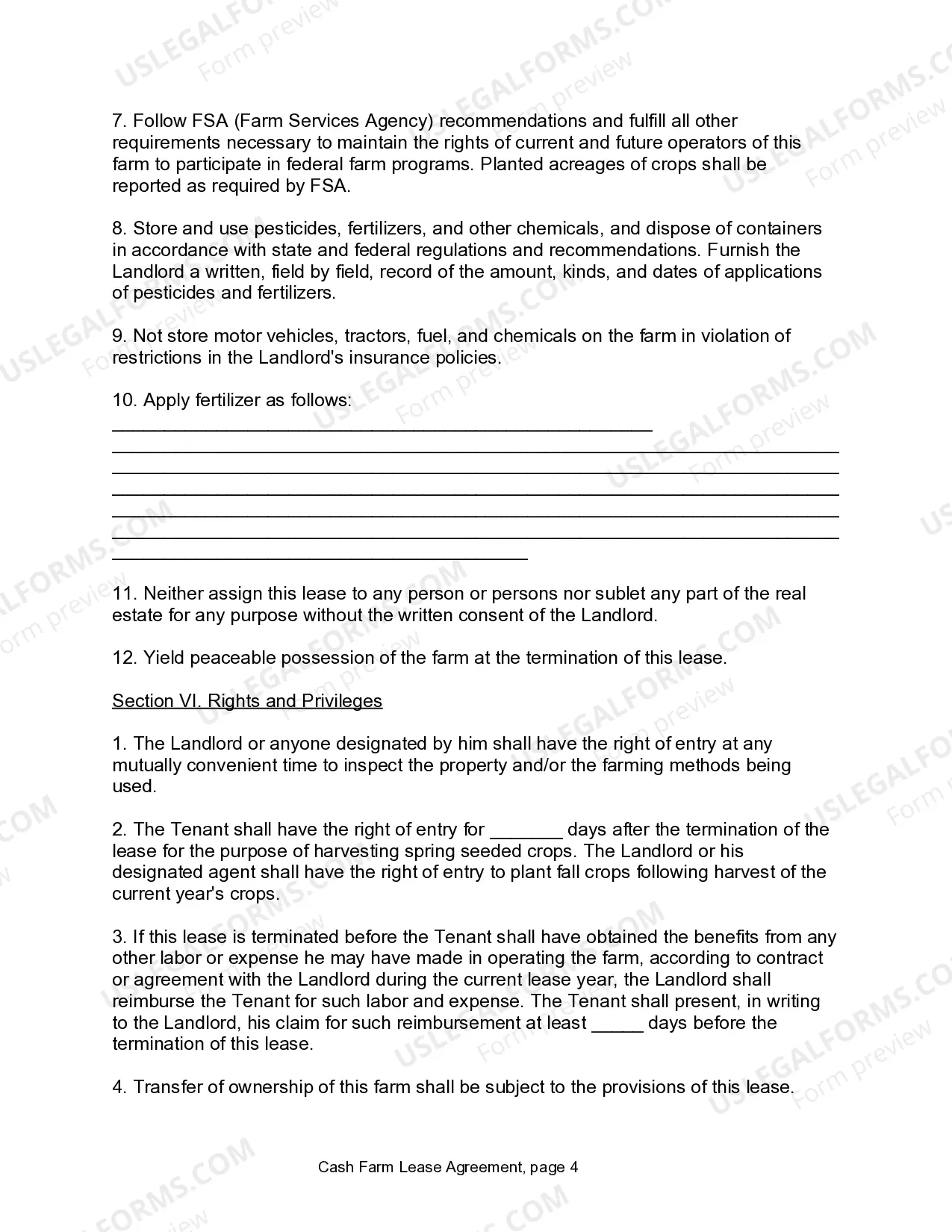
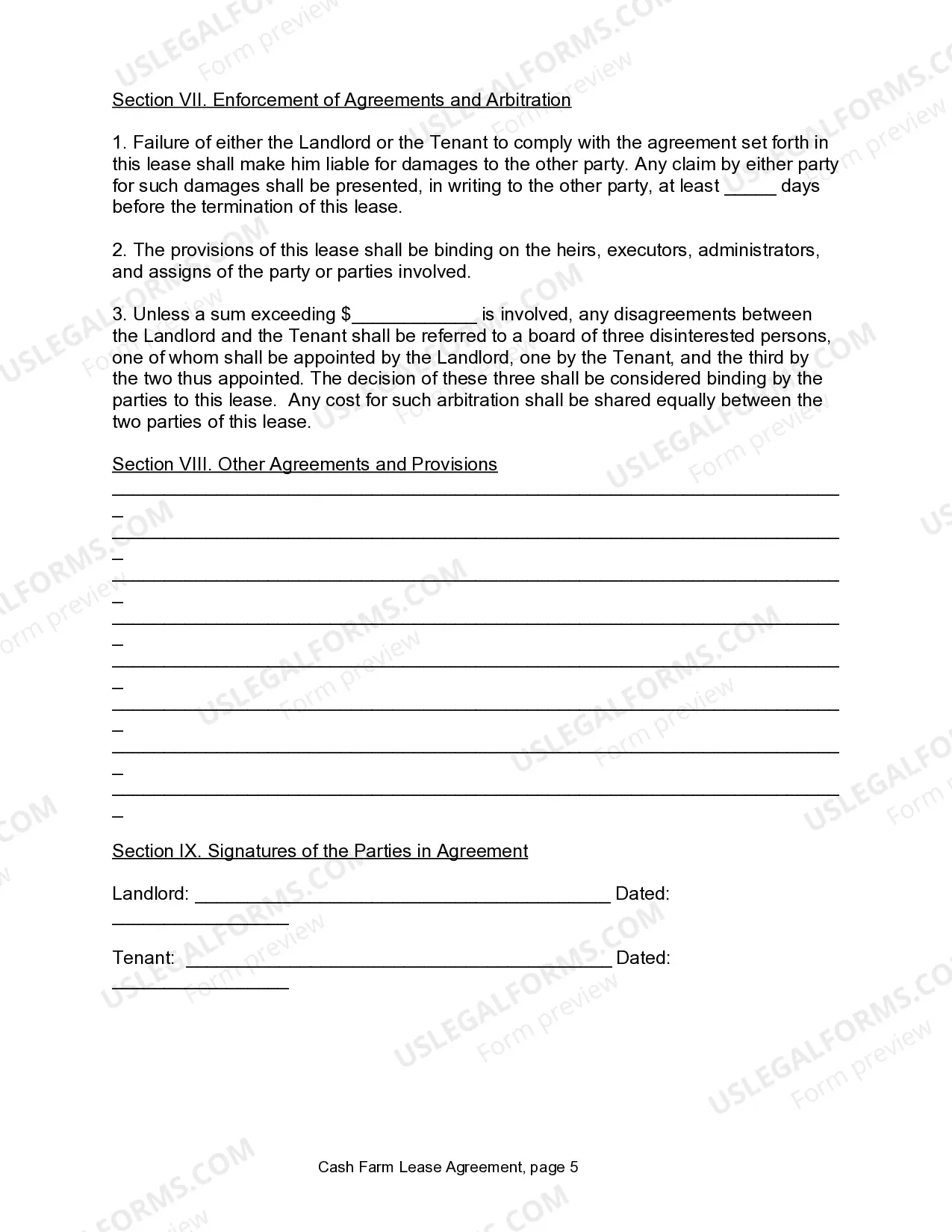
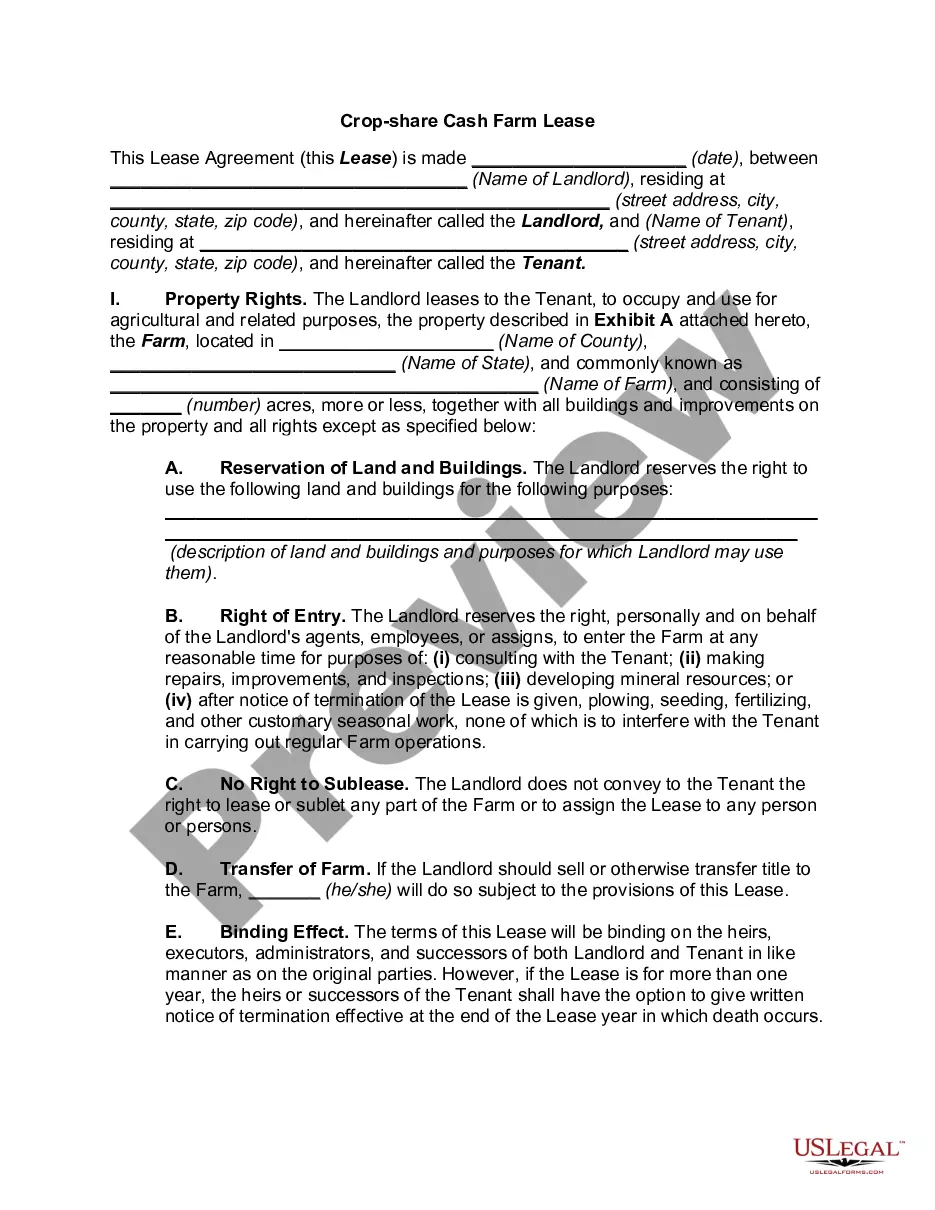
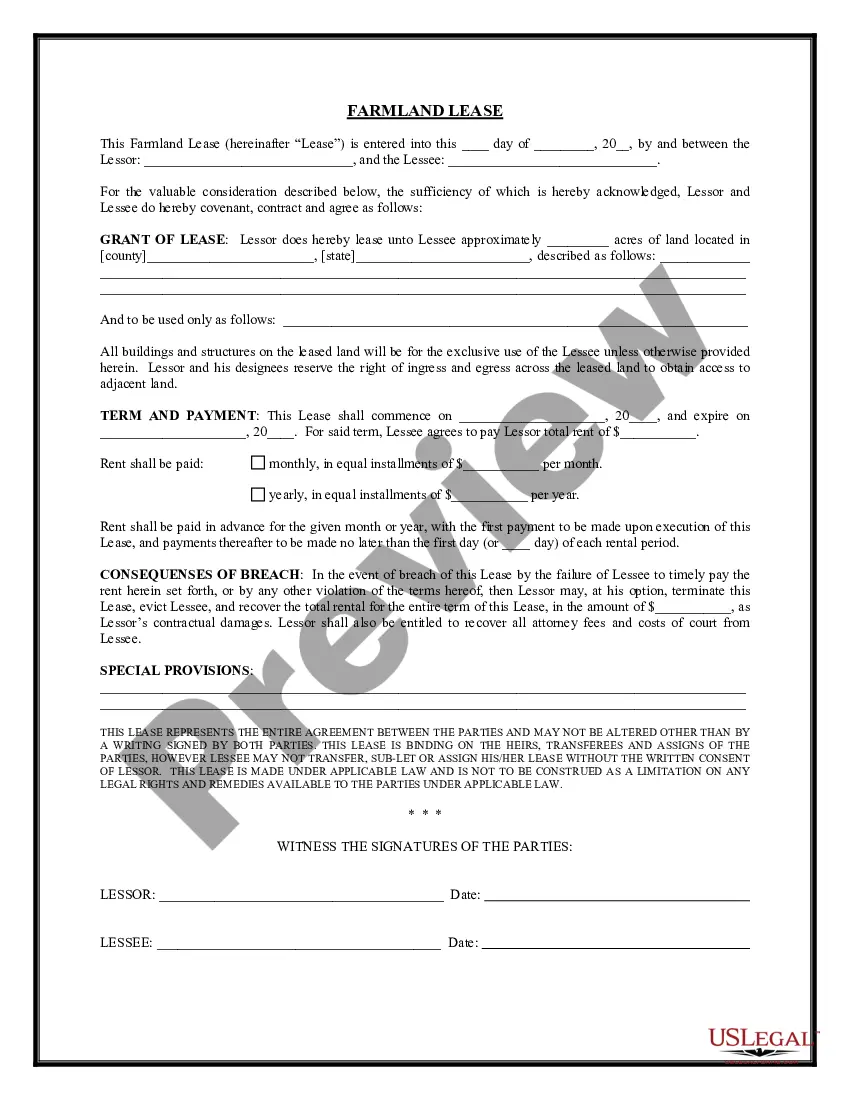
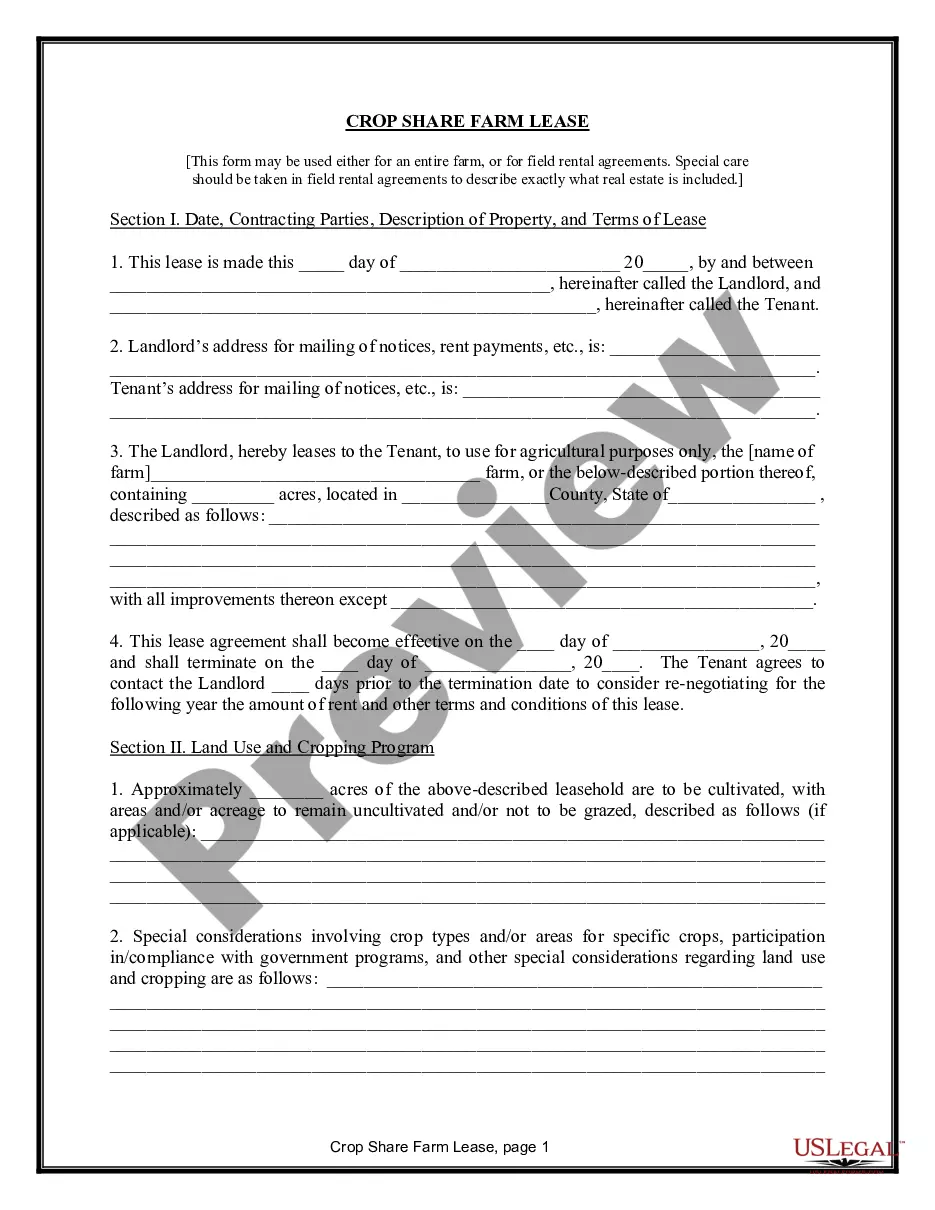
Detailed cash farm lease.
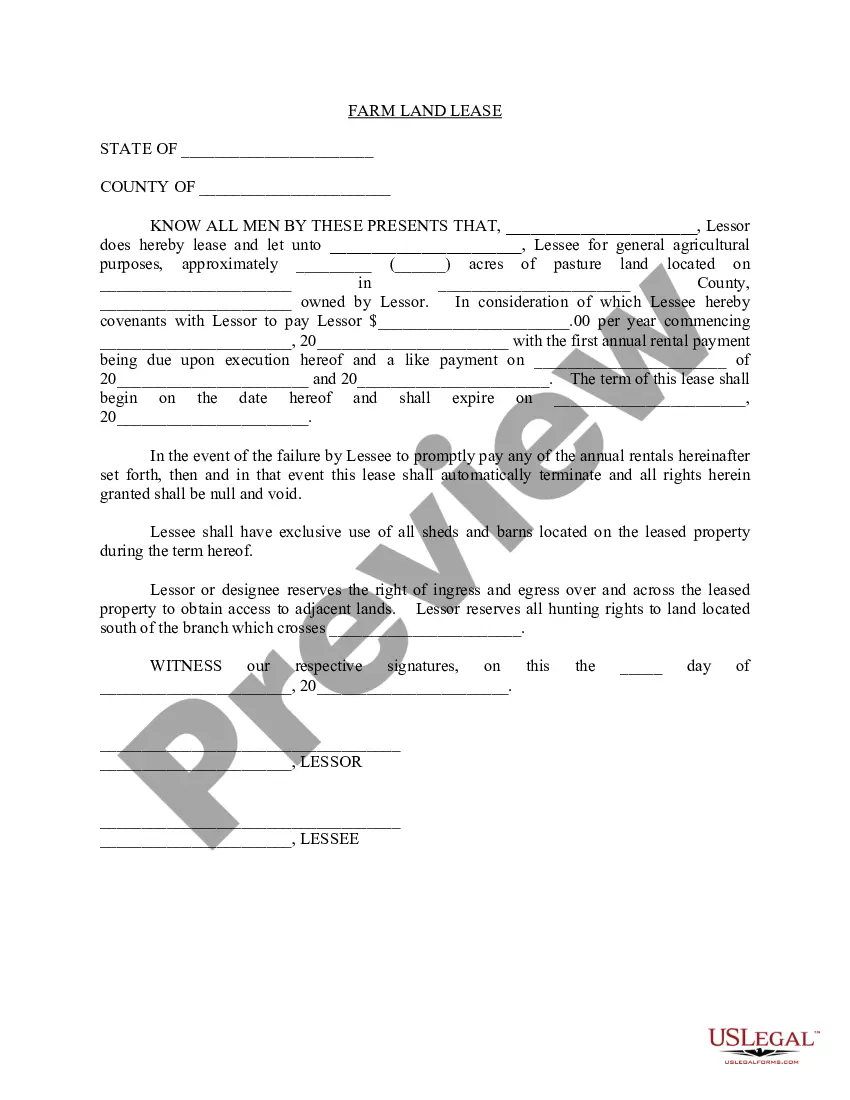
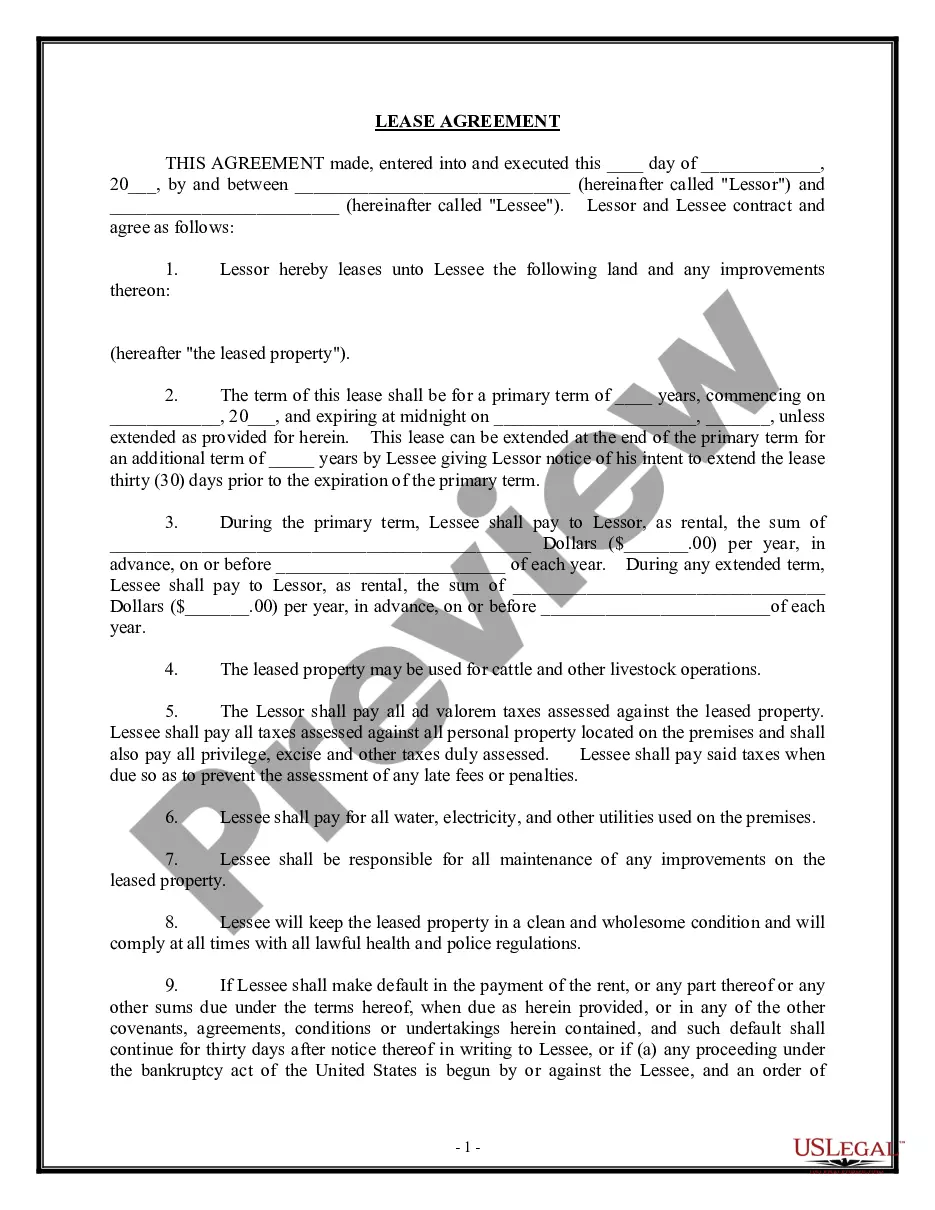
Indiana Farm Lease or Rental - Cash
State:
Multi-State
Category:
Control #:
US-855LT
Format:
Word;
Rich Text
230 downloads
Description
Free preview
Get your form ready online
Our built-in tools help you complete, sign, share, and store your documents in one place.
Built-in online Word editor
Make edits, fill in missing information, and update formatting in US Legal Forms—just like you would in MS Word.
Export easily
Download a copy, print it, send it by email, or mail it via USPS—whatever works best for your next step.
E-sign your document
Sign and collect signatures with our SignNow integration. Send to multiple recipients, set reminders, and more. Go Premium to unlock E-Sign.
Notarize online 24/7
If this form requires notarization, complete it online through a secure video call—no need to meet a notary in person or wait for an appointment.
Store your document securely
We protect your documents and personal data by following strict security and privacy standards.

Make edits, fill in missing information, and update formatting in US Legal Forms—just like you would in MS Word.

Download a copy, print it, send it by email, or mail it via USPS—whatever works best for your next step.

Sign and collect signatures with our SignNow integration. Send to multiple recipients, set reminders, and more. Go Premium to unlock E-Sign.

If this form requires notarization, complete it online through a secure video call—no need to meet a notary in person or wait for an appointment.

We protect your documents and personal data by following strict security and privacy standards.
Looking for another form?
How to fill out Farm Lease Or Rental - Cash?
Selecting the optimal legal document web template can be a challenge.
Of course, there is an assortment of designs accessible online, but how can you find the legal form you require.
Utilize the US Legal Forms website.
First, ensure you have chosen the correct form for your area/region. You can browse the form using the Preview button and read the form description to confirm it is suitable for you.
- The platform provides a vast array of designs, including the Indiana Farm Lease or Rental - Cash, which you can employ for business and personal needs.
- All of the documents are reviewed by professionals and comply with state and federal regulations.
- If you are already registered, sign in to your account and click on the Download button to acquire the Indiana Farm Lease or Rental - Cash.
- Use your account to search for the legal forms you have previously purchased.
- Navigate to the My documents section of your account and obtain another copy of the documents you require.
- For new users of US Legal Forms, here are simple steps to follow.
Form popularity
FAQ
In Indiana, a farm is typically defined as any land used for agricultural purposes. This includes growing crops, raising livestock, or managing other agricultural products. To engage in an Indiana Farm Lease or Rental - Cash, the land often needs to meet specific zoning and size requirements. Understanding these qualifications can help landlords and tenants navigate leasing options effectively.
In Indiana, notarization of leases is not a requirement for the enforceability of an Indiana Farm Lease or Rental - Cash. However, having a lease notarized can provide an extra layer of security and proof of authenticity. This can be particularly beneficial in disputes over terms or agreements. To streamline the process, you might consider using online services like US Legal Forms, which offer templates that aid in complying with local regulations.
The most common type of lease agreement is the cash lease, particularly among agricultural landowners and tenants. This type of agreement provides straightforward payment terms without complicating expenses based on crop yields or production costs. By utilizing a cash lease in your Indiana Farm Lease or Rental - Cash, you establish a clear financial arrangement that benefits both parties. For assistance in drafting these agreements, consider exploring options on legal platforms like uslegalforms.
In Indiana, there is no specific limit on the duration of leases for agricultural property. Most leases range from one to several years, depending on agricultural needs and market conditions. Understanding the length of your lease is crucial, especially in an Indiana Farm Lease or Rental - Cash scenario, as it impacts planning and investment decisions. You can create a lease that reflects your situation using resources available on platforms like uslegalforms.
Common farmland lease agreements include cash leases, crop-share leases, and flexible leases. Each type serves different needs and preferences based on the relationship between the landlord and tenant. In an Indiana Farm Lease or Rental - Cash, cash leases are particularly favorable due to their straightforward nature and fixed payments. Engaging a legal platform like uslegalforms can help you navigate these options and create agreements that suit your specific agricultural business.
In Indiana, a rental agreement does not require notarization to be legally binding. However, having a notarized document can enhance its credibility and may help in enforcing the agreement if disputes arise. For an Indiana Farm Lease or Rental - Cash, formal documentation is critical, even if notarization is not necessary. You may consider using platforms like uslegalforms to create compliant rental agreements that protect your interests.
In the United States, the most prevalent type of farmland rental agreement is the cash lease. This agreement allows farmers to rent land for a fixed amount, making budgeting and financial planning more straightforward. Many landlords and tenants prefer this simple structure in an Indiana Farm Lease or Rental - Cash context, as it fosters transparent relationships and minimizes disputes. This type of lease can lead to efficient operations and fruitful collaborations between landowners and farmers.
The most common type of tenancy agreement for agricultural land is the written lease agreement. This legally binding document outlines the responsibilities and rights of both landlords and tenants. It is essential in ensuring clarity, particularly in an Indiana Farm Lease or Rental - Cash, where stipulations regarding land use, improvements, and payment schedules are vital. A written lease reduces misunderstandings and provides legal protection, benefiting both parties involved.
The most common rental arrangement in field crop production is the cash rental agreement. In this arrangement, the tenant pays a fixed amount per acre to the landlord, providing a clear understanding of costs without variable expenses. This simplicity benefits both parties, making it an appealing choice for an Indiana Farm Lease or Rental - Cash. Additionally, it helps farmers and landowners budget and plan their operational expenses more effectively.
In Indiana, a month-to-month lease is a rental agreement that automatically renews every month until either party decides to terminate it. This flexibility allows you to adjust terms and conditions as your needs change. It's important to provide written notice, typically 30 days in advance, if you want to end the lease. This arrangement can be particularly useful in the context of an Indiana Farm Lease or Rental - Cash, allowing farmers and landowners to adapt to varying agricultural conditions.