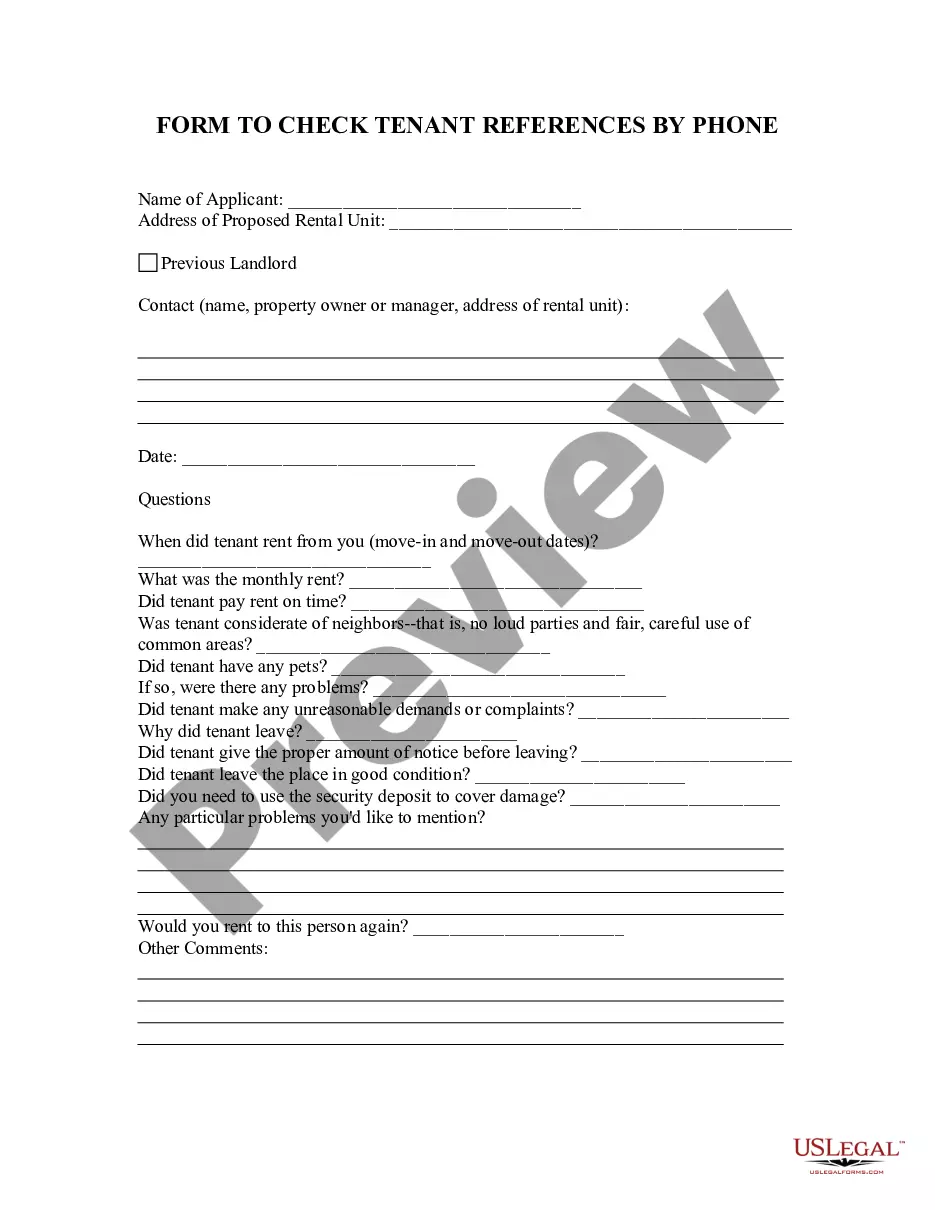
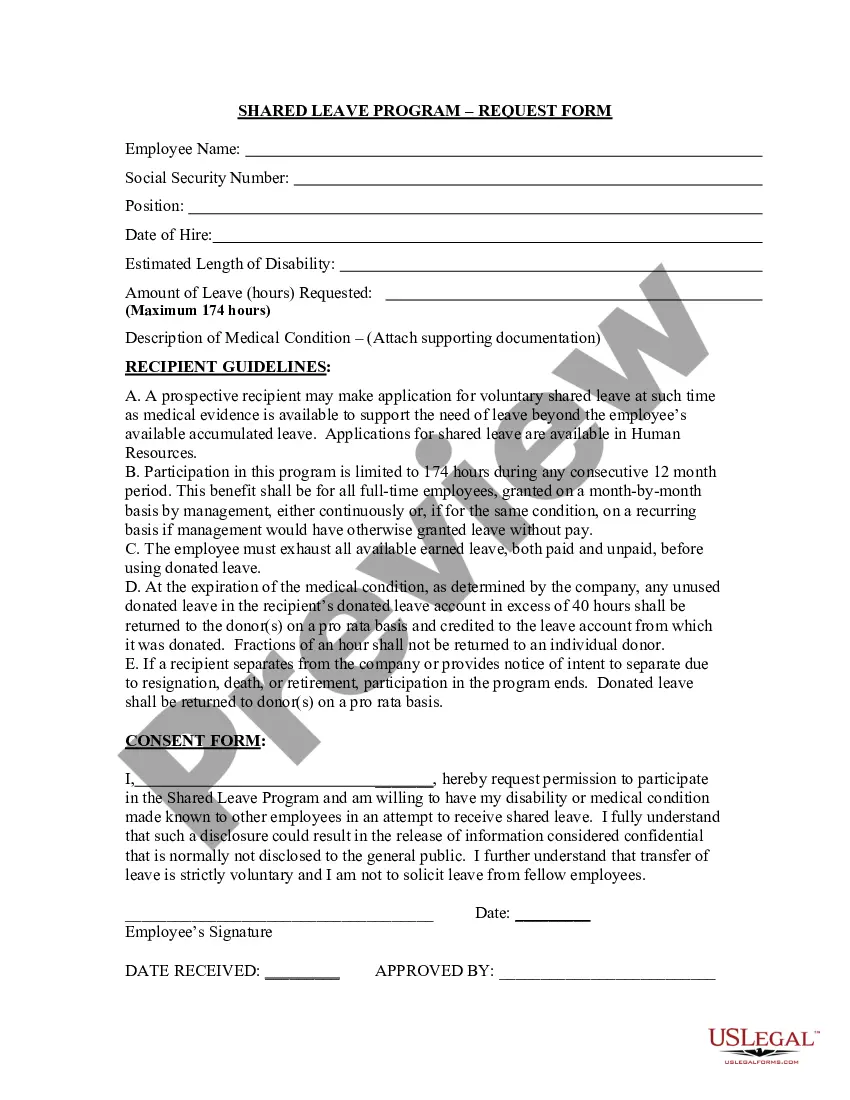
Indiana Shared Leave Request Form
Description



Get your form ready online
Our built-in tools help you complete, sign, share, and store your documents in one place.
Make edits, fill in missing information, and update formatting in US Legal Forms—just like you would in MS Word.
Download a copy, print it, send it by email, or mail it via USPS—whatever works best for your next step.
Sign and collect signatures with our SignNow integration. Send to multiple recipients, set reminders, and more. Go Premium to unlock E-Sign.
If this form requires notarization, complete it online through a secure video call—no need to meet a notary in person or wait for an appointment.
We protect your documents and personal data by following strict security and privacy standards.

Make edits, fill in missing information, and update formatting in US Legal Forms—just like you would in MS Word.

Download a copy, print it, send it by email, or mail it via USPS—whatever works best for your next step.

Sign and collect signatures with our SignNow integration. Send to multiple recipients, set reminders, and more. Go Premium to unlock E-Sign.

If this form requires notarization, complete it online through a secure video call—no need to meet a notary in person or wait for an appointment.

We protect your documents and personal data by following strict security and privacy standards.
Looking for another form?


How to fill out Shared Leave Request Form?
You might spend hours online searching for the appropriate legal document template that meets your state and federal requirements.
US Legal Forms offers a plethora of legal forms that can be reviewed by professionals.
You can easily download or print the Indiana Shared Leave Request Form from your service.
If available, use the Review option to go through the document template as well.
- If you already have a US Legal Forms account, you can sign in and then click the Download button.
- After that, you can complete, modify, print, or sign the Indiana Shared Leave Request Form.
- Each legal document template you purchase is yours forever.
- To obtain another copy of the acquired document, visit the My documents tab and click the relevant option.
- If you are using the US Legal Forms website for the first time, follow the simple instructions provided below.
- First, ensure that you have selected the correct document template for the state/city you choose.
- Check the document description to confirm that you have chosen the right form.
Form popularity
FAQ
Leave donation or leave sharing programs allow employees to donate accrued paid time off (PTO), vacation or sick leave to a general pool to be used by fellow employees who experience medical emergencies or who are affected by major disasters and have exhausted all paid leave available to them.
A PTO donation policy allows employees to donate their unused vacation days to their colleagues who may be needing paid time off but find themselves without any available days. In some instances, organizations may allow employees to donate the dollar amount from PTO to a charity of their choice.
An employer-sponsored leave-sharing program allows an employee to donate accrued hours of paid vacation, or personal and potentially sick leave for the benefit of other employees who are in need of taking more leave than they have available.
FMLA leave is unpaid, but employees may be allowed (or required) to use their accrued paid leave during FMLA leave. When an employee's FMLA leave ends, the employee is entitled to be reinstated to the same or an equivalent position, with a few exceptions.
Compassionate leave is when you take time off work because of something that's happened in your personal life. This includes things like: Life-threatening injury or illness of a relative or dependant. The death of a close relative or dependant.
An employer may deduct these cash payments under the rules of section 170 or the rules of section 162 of the Internal Revenue Code if the employer otherwise meets the respective requirements of either section.
Under the Voluntary Leave Transfer Program (VLTP), a covered employee may donate annual leave directly to another employee who has a personal or family medical emergency and who has exhausted his or her available paid leave. Each agency must administer a voluntary leave transfer program for its employees.
Short-term disability in Indiana sometimes offers partially paid (up to 2/3) maternity leave for mothers working in the private sector. However, they must buy a policy to be eligible to file a claim.
Three statesCalifornia, New Jersey and Rhode Islandcurrently require paid family leave. In 2016, New York passed the Paid Family Leave Benefits Law, which will take effect Jan. 1, 2018. A universal paid family leave measure became law in Washington, D.C., in February 2017, and will take effect on July 1, 2020.