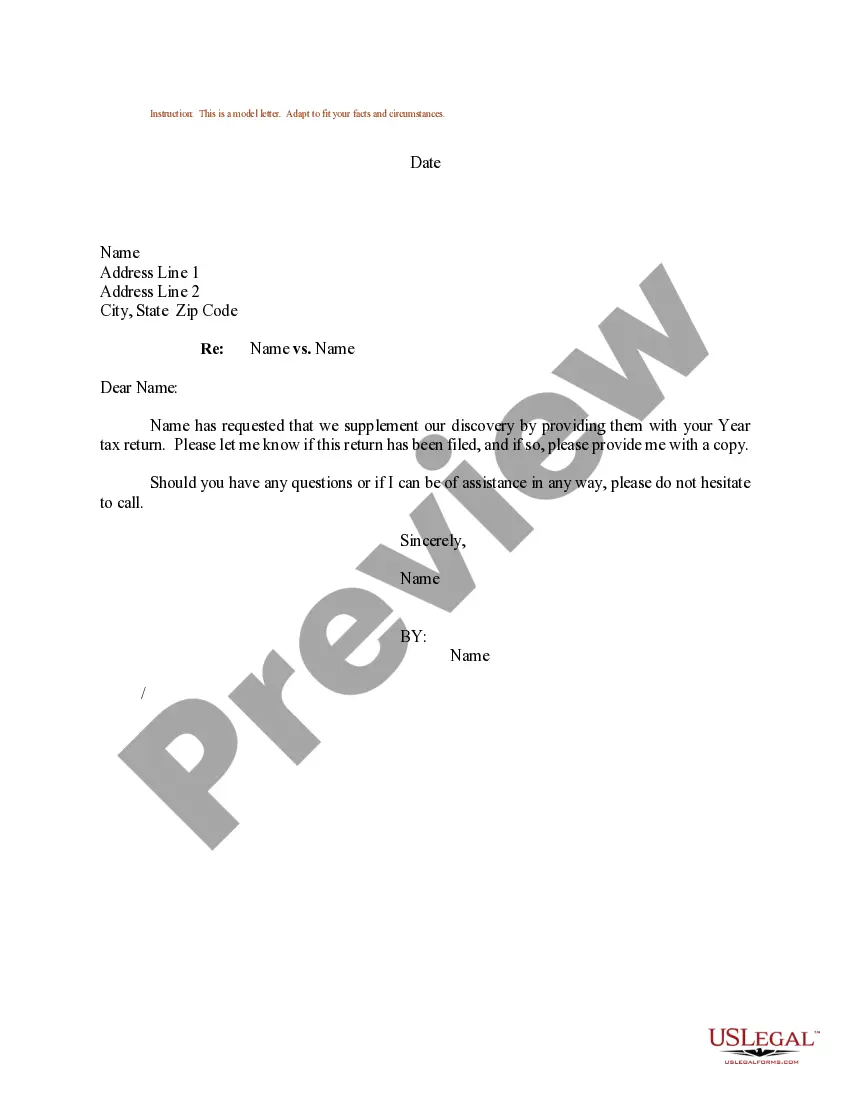
Indiana Sample Letter for Tax Return for Supplement
Description
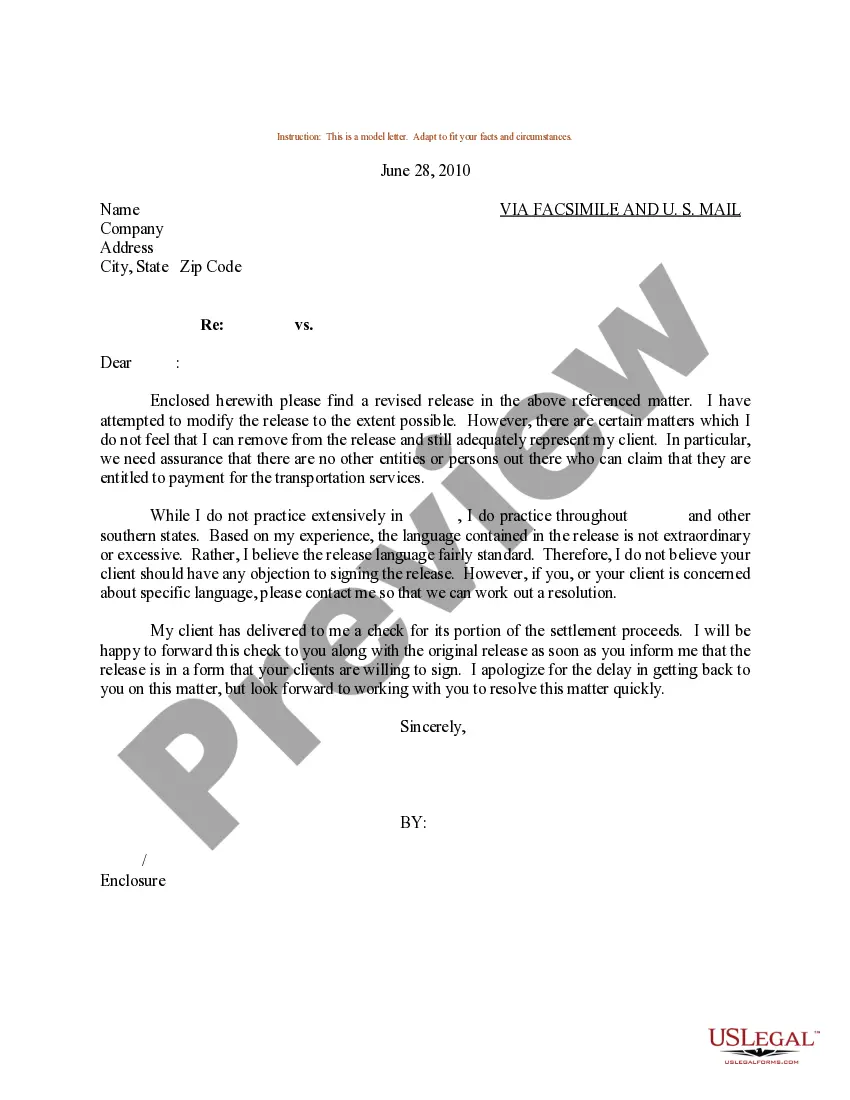
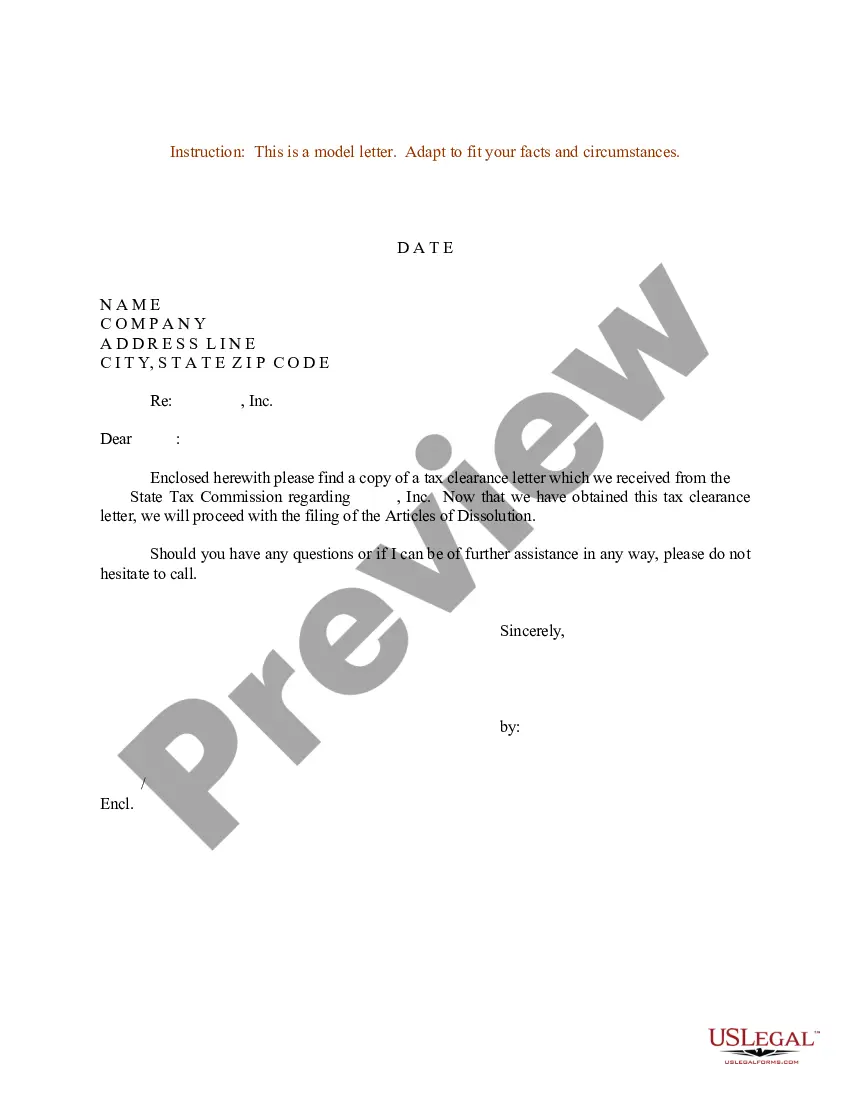
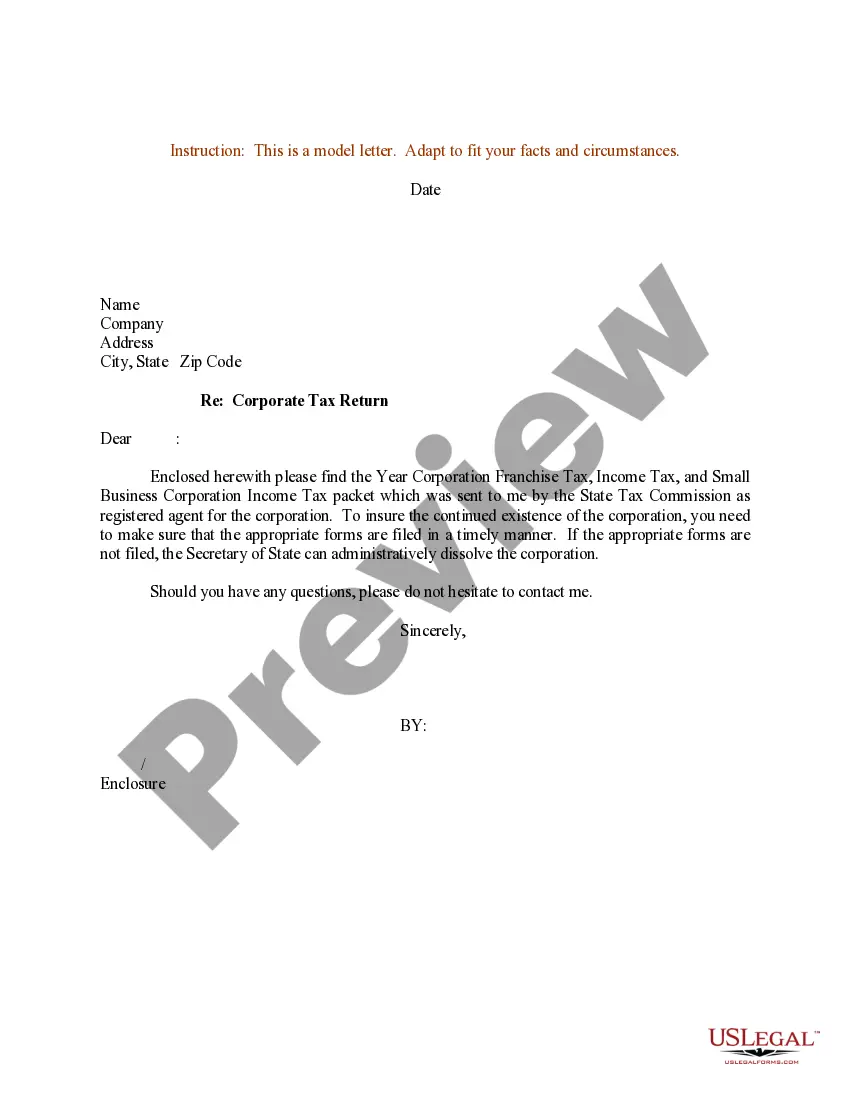




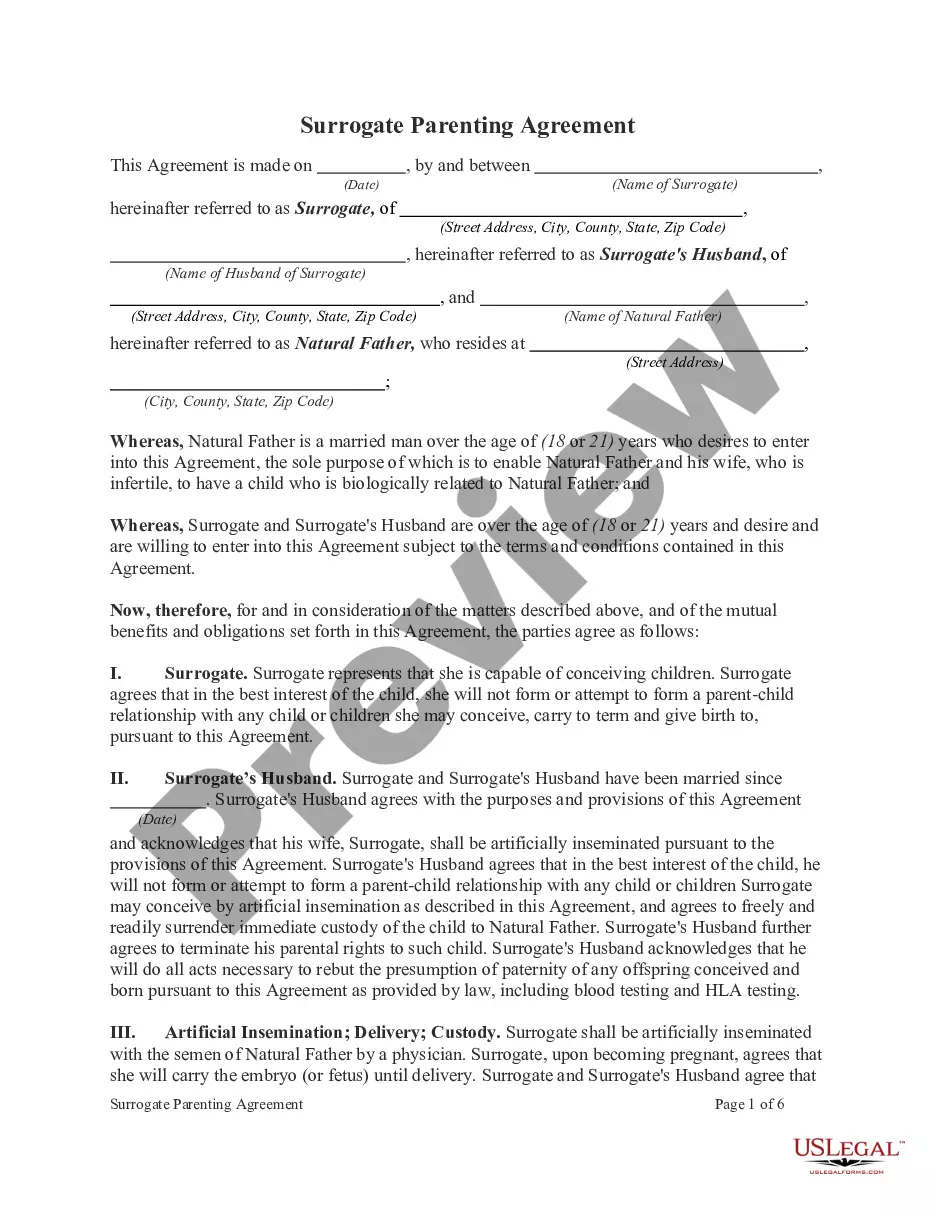


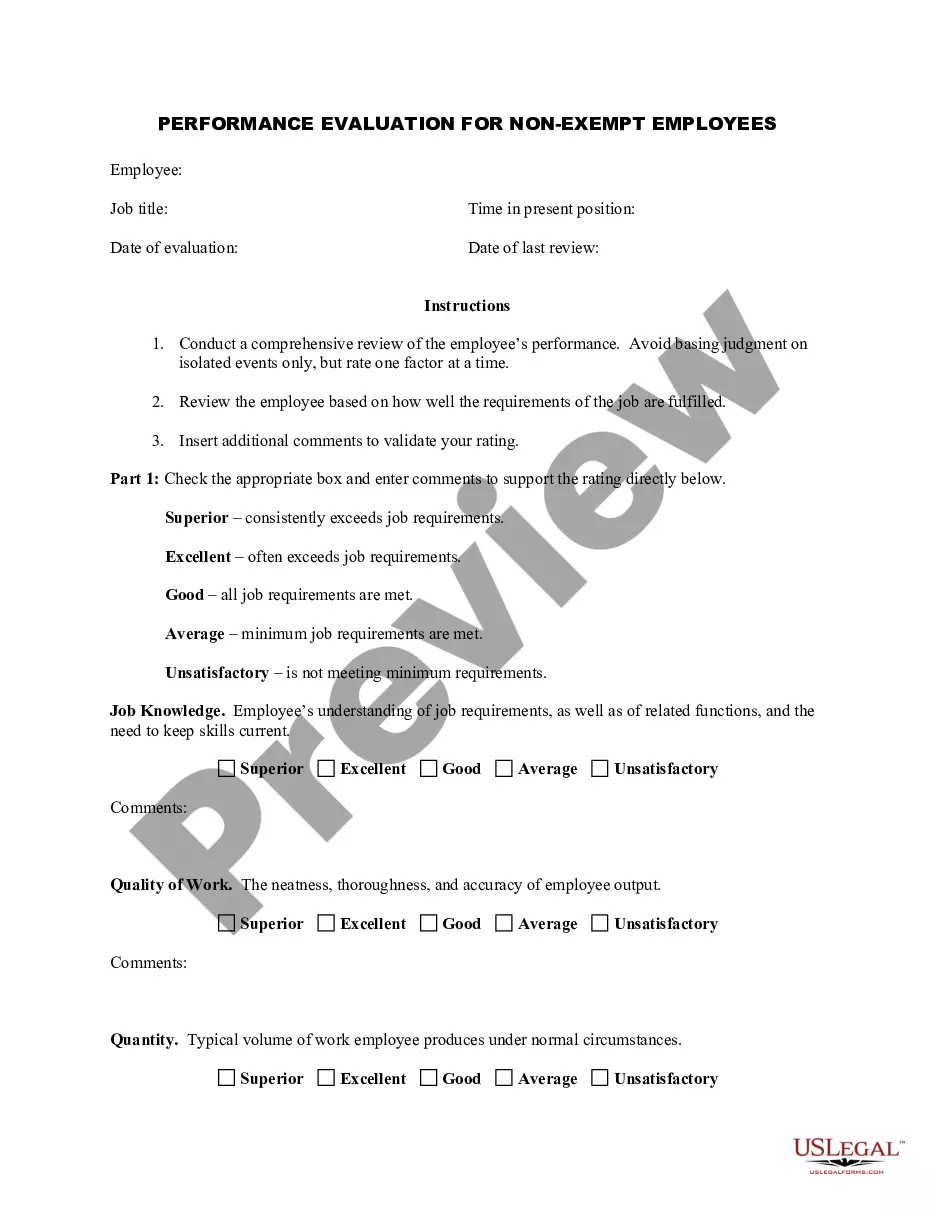
How to fill out Sample Letter For Tax Return For Supplement?
Choosing the right lawful record format might be a have difficulties. Needless to say, there are plenty of themes available online, but how can you get the lawful develop you will need? Take advantage of the US Legal Forms web site. The services offers a huge number of themes, like the Indiana Sample Letter for Tax Return for Supplement, which can be used for enterprise and private needs. Each of the varieties are examined by pros and fulfill federal and state requirements.
When you are currently authorized, log in to the account and then click the Acquire switch to have the Indiana Sample Letter for Tax Return for Supplement. Make use of account to appear throughout the lawful varieties you may have purchased formerly. Visit the My Forms tab of your respective account and acquire an additional backup of the record you will need.
When you are a fresh end user of US Legal Forms, listed below are basic directions that you should stick to:
- Very first, make certain you have chosen the proper develop to your city/region. It is possible to look through the form while using Preview switch and browse the form explanation to make sure it will be the best for you.
- When the develop is not going to fulfill your expectations, use the Seach discipline to discover the correct develop.
- Once you are sure that the form is suitable, go through the Purchase now switch to have the develop.
- Pick the costs program you desire and type in the required information and facts. Create your account and pay money for the order making use of your PayPal account or credit card.
- Pick the file format and obtain the lawful record format to the gadget.
- Full, change and produce and indicator the acquired Indiana Sample Letter for Tax Return for Supplement.
US Legal Forms will be the greatest local library of lawful varieties in which you will find a variety of record themes. Take advantage of the company to obtain expertly-created paperwork that stick to express requirements.
Form popularity
FAQ
Any individual filing an Indiana tax return may claim a $1,000 exemption for themselves. This exemption is available even if the individual can be claimed as a dependent on another taxpayer's return.
You have the following options to pay your tax: Send e-payment through state website. Mail payment to: Indiana Department of Revenue. P.O. Box 6117. Indianapolis, IN 46206-6117.
Full-Year Residents A general rule of thumb is to file Indiana state taxes if your income is $1,000 or more. When in doubt, it is best to file. To determine if you're required to file, first, figure your Indiana exemptions.
If you are requesting a refund: Do not enclose a copy of the federal tax return with the Indiana tax return.
Full-Year Residents If you were a full-year resident of Indiana and your gross income (the total of all your income before deductions) was greater than certain exemptions*, you must file an Indiana tax return. Full-year residents must file Form IT-40, Indiana Full-Year Resident Individual Income Tax.
NP-20A. To register for nonprofit status with the state of Indiana, submit a Nonprofit Application for Sales Tax Exemption (Form NP-20A) through DOR's e-services portal at INTIME.dor.in.gov. For more information, call 317-232-0129.
The standard homestead deduction is either 60% of your property's assessed value or a maximum of $45,000, whichever is less. The supplemental homestead deduction is based on the assessed value of your property and equals: 35% of the assessed value of a property that is less than $600,000.
Taxpayers are eligible for a $1,500 tax exemption per year for each dependent child. However, under HB 1001, enacted on , and effective retroactive to January 1, 2023, taxpayers who claim a dependent child for the first time may claim a higher one-time $3,000 exemption for the calendar year.