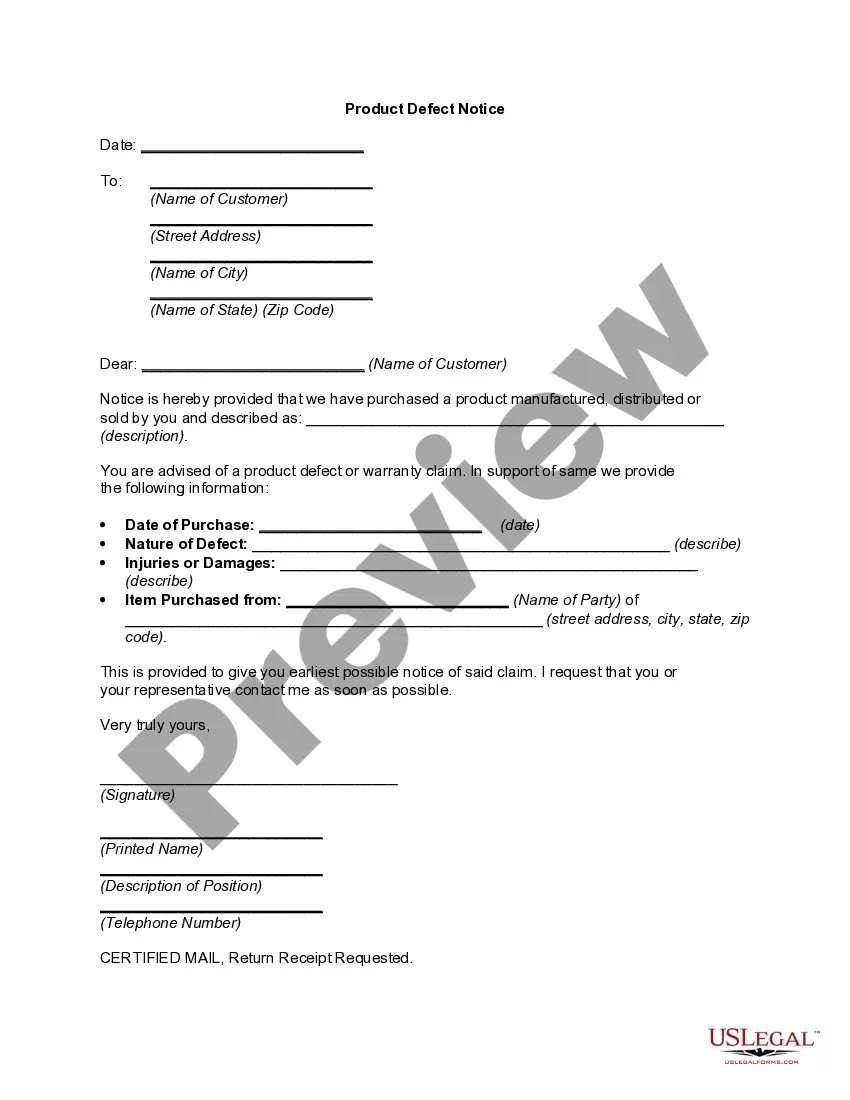
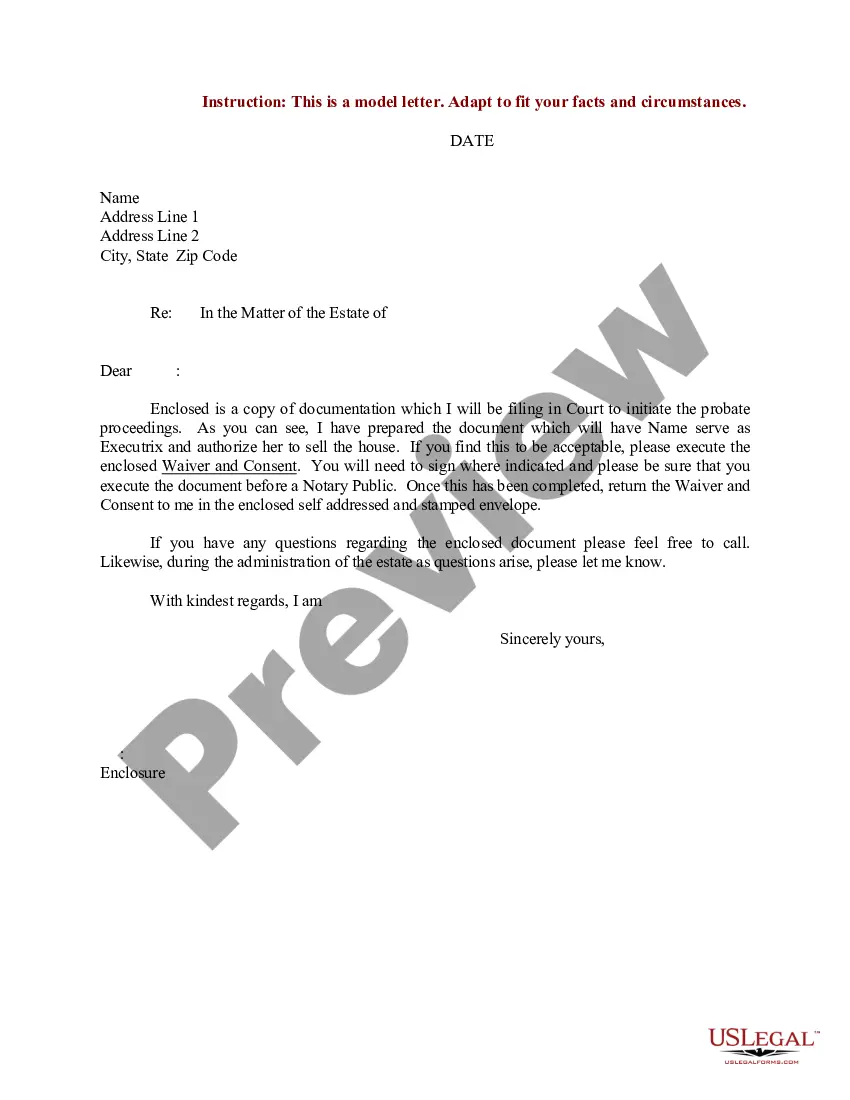
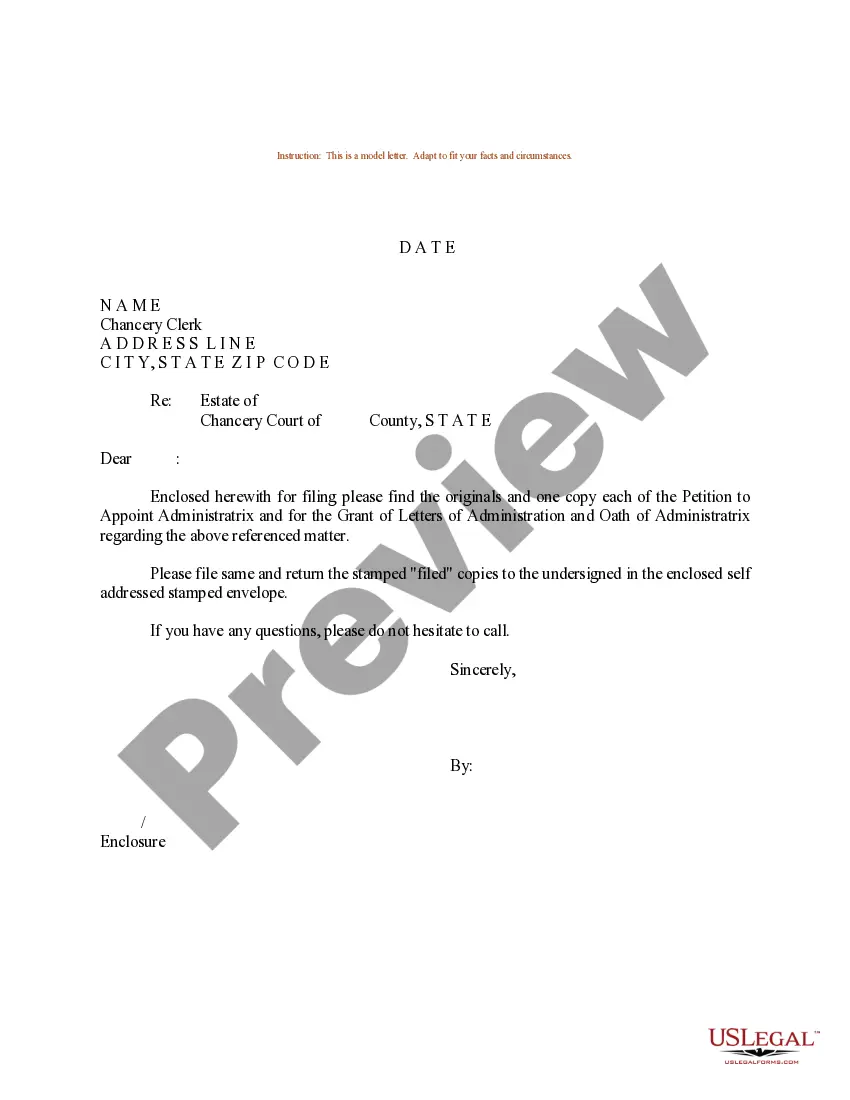
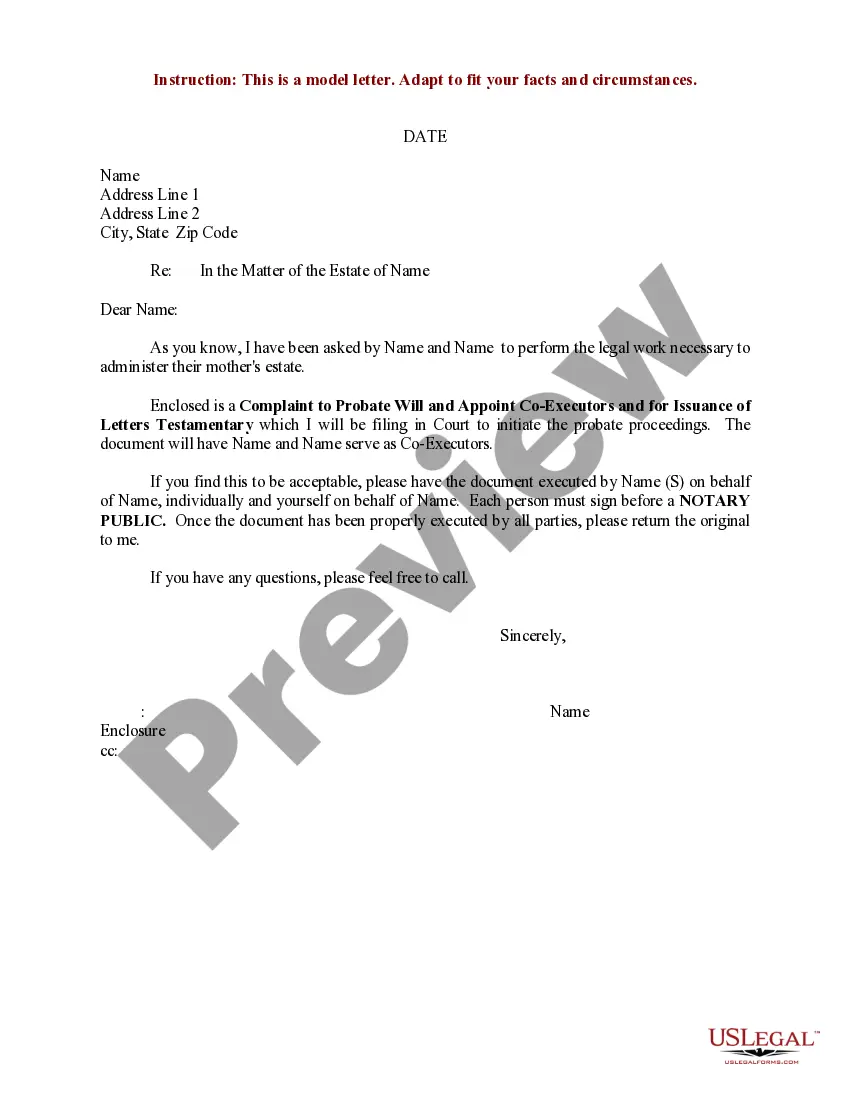
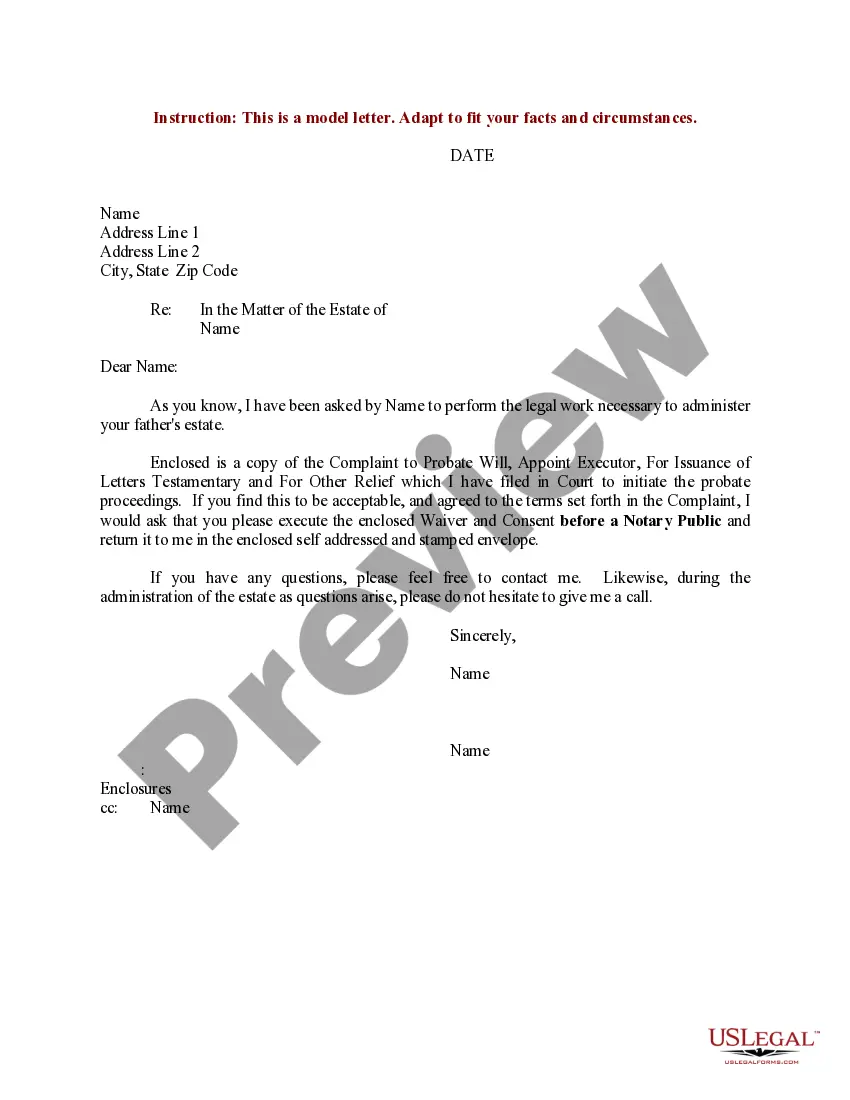
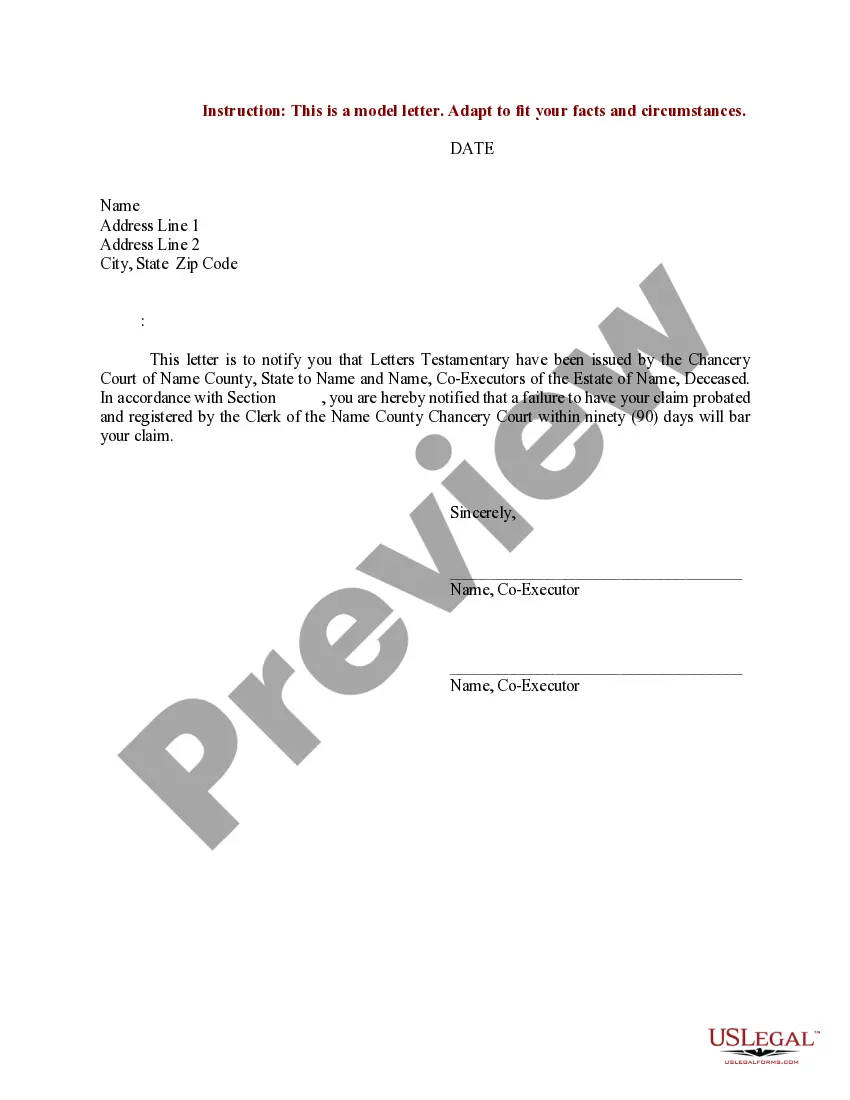
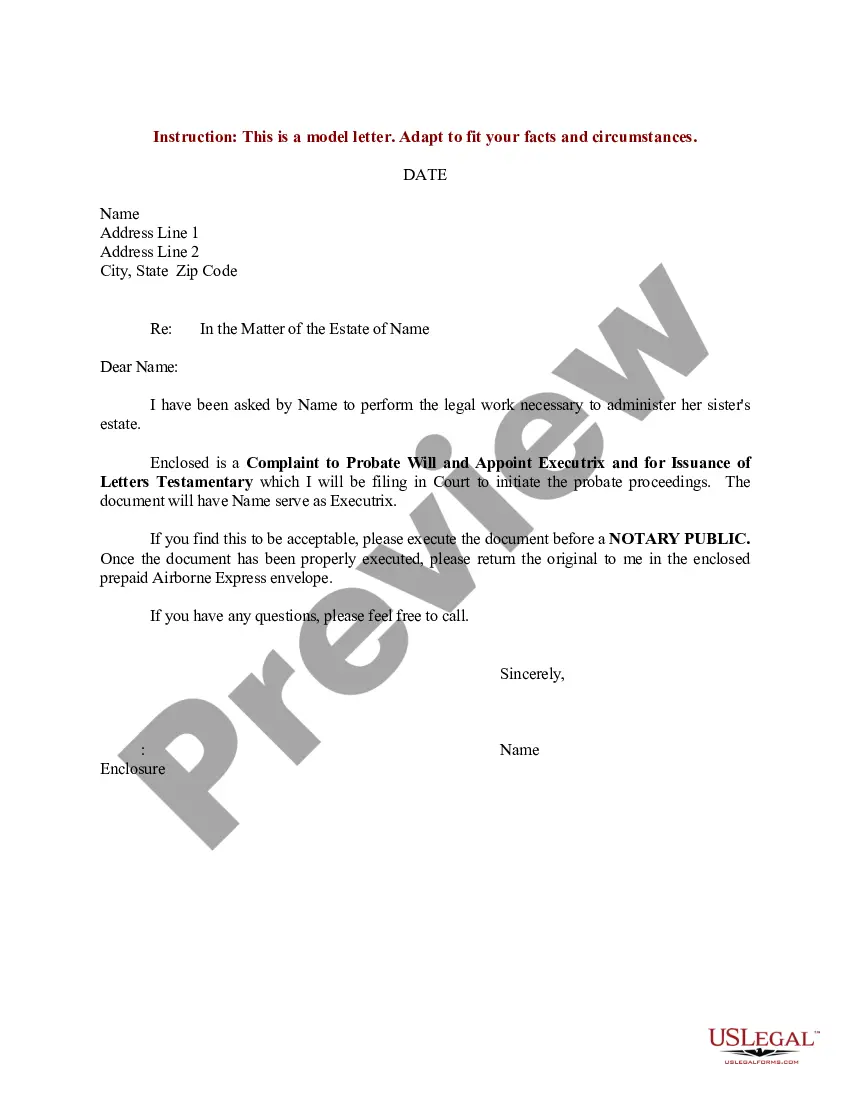
Indiana Sample Letter for Estate Probate Proceedings
Description
Get your form ready online
Our built-in tools help you complete, sign, share, and store your documents in one place.
Make edits, fill in missing information, and update formatting in US Legal Forms—just like you would in MS Word.
Download a copy, print it, send it by email, or mail it via USPS—whatever works best for your next step.
Sign and collect signatures with our SignNow integration. Send to multiple recipients, set reminders, and more. Go Premium to unlock E-Sign.
If this form requires notarization, complete it online through a secure video call—no need to meet a notary in person or wait for an appointment.
We protect your documents and personal data by following strict security and privacy standards.

Make edits, fill in missing information, and update formatting in US Legal Forms—just like you would in MS Word.

Download a copy, print it, send it by email, or mail it via USPS—whatever works best for your next step.

Sign and collect signatures with our SignNow integration. Send to multiple recipients, set reminders, and more. Go Premium to unlock E-Sign.

If this form requires notarization, complete it online through a secure video call—no need to meet a notary in person or wait for an appointment.

We protect your documents and personal data by following strict security and privacy standards.
Looking for another form?




How to fill out Sample Letter For Estate Probate Proceedings?
Finding the right legitimate document web template can be quite a struggle. Of course, there are plenty of templates available on the net, but how can you discover the legitimate form you require? Use the US Legal Forms web site. The assistance gives a large number of templates, like the Indiana Sample Letter for Estate Probate Proceedings, that can be used for company and private demands. Each of the forms are checked out by pros and fulfill federal and state requirements.
Should you be currently registered, log in for your profile and then click the Obtain switch to obtain the Indiana Sample Letter for Estate Probate Proceedings. Use your profile to search from the legitimate forms you might have ordered previously. Go to the My Forms tab of your own profile and get one more copy of your document you require.
Should you be a whole new customer of US Legal Forms, listed here are straightforward instructions for you to comply with:
- First, ensure you have selected the correct form for your personal town/region. You can examine the form utilizing the Review switch and read the form description to make certain it is the best for you.
- If the form does not fulfill your expectations, utilize the Seach field to obtain the proper form.
- When you are certain that the form is acceptable, select the Buy now switch to obtain the form.
- Opt for the pricing strategy you would like and type in the required details. Build your profile and purchase the transaction with your PayPal profile or bank card.
- Choose the document format and acquire the legitimate document web template for your product.
- Complete, edit and produce and indicator the acquired Indiana Sample Letter for Estate Probate Proceedings.
US Legal Forms may be the most significant local library of legitimate forms in which you can find a variety of document templates. Use the service to acquire appropriately-manufactured files that comply with condition requirements.
Form popularity
FAQ
Under Indiana Code, a court generally only has the power to admit a will to probate if the personal representative presents the will in the proper time frame. The general rule is that you have three years from an individual's death to file probate.
While the probate process isn't necessary for every estate in Indiana, a sizable portion of them will be forced to go before the court. However, there are certain assets of a decedent that will skip past this process, as they already have heirs or beneficiaries chosen. These include: Life insurance.
Probate can only be avoided by planning your estate so that most of your assets either: 1) have transferred to someone else prior to your death or 2) transfer to someone else automatically upon your death. A Will does NOT help to avoid probate. There are several ways to avoid probate.
Probate procedure Last Will and Testament (if it exists) Petition to Probate the estate with details of the date of death, personal representative information, heirs' addresses, assets and debts. Personal Representative's Oath of office affirming willingness to serve.
The Indiana probate process involves various steps, including: Filing the will with the applicable court. The court validates the will. The estate's responsibility is officially assigned to the executor or personal representative. The executor will identify the estate's creditors and beneficiaries.
In Indiana, the following assets are subject to probate: Solely-owned property: Any asset that was solely owned by the deceased person with no designated beneficiary is subject to probate. This could include bank accounts, cars, houses, personal belongings, and business interests.
As part of the probate process, letters testamentary are issued by your state's probate court. To obtain the document, you need a copy of the will and the death certificate, which are then filed with the probate court along with whatever letters testamentary forms the court requires as part of your application.
Is Probate Required in Indiana? Any estate worth more than $50,000 is subject to probate in Indiana. Estates worth less than $50,000 transfer ownership to heirs through the small estate administration with a written statement proving entitlement to the assets.