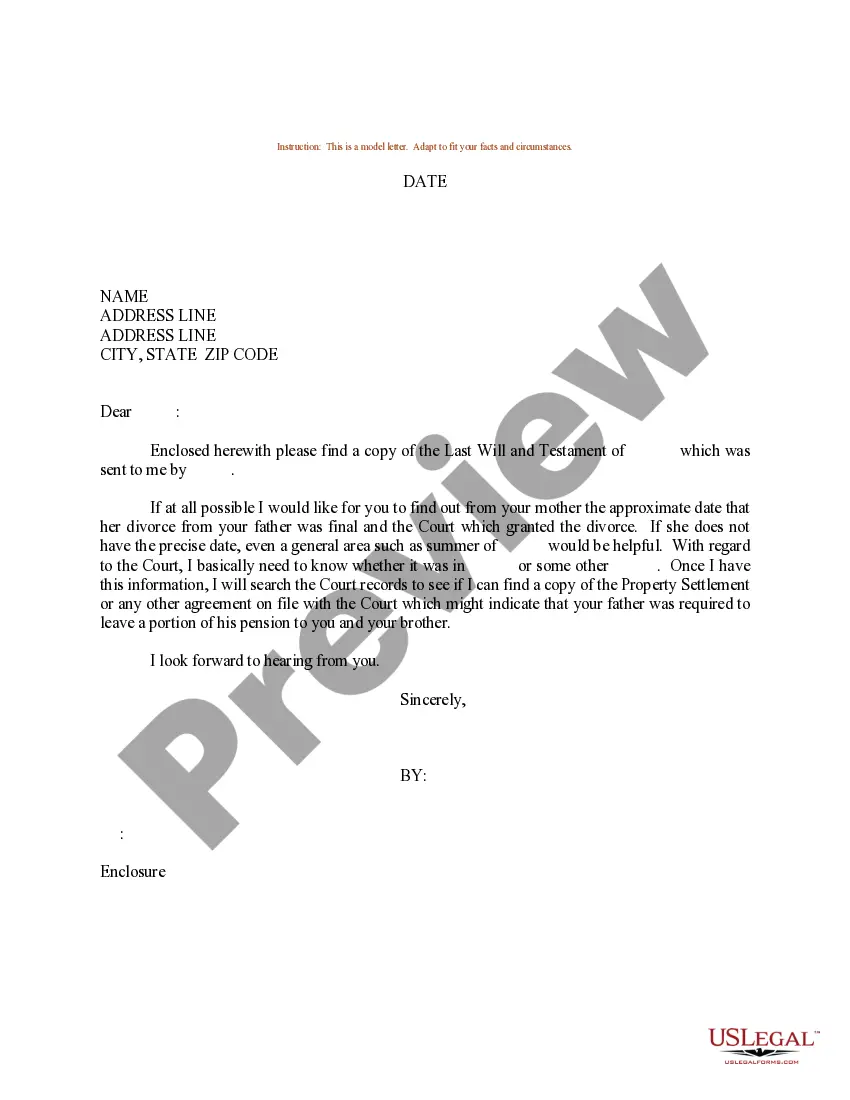
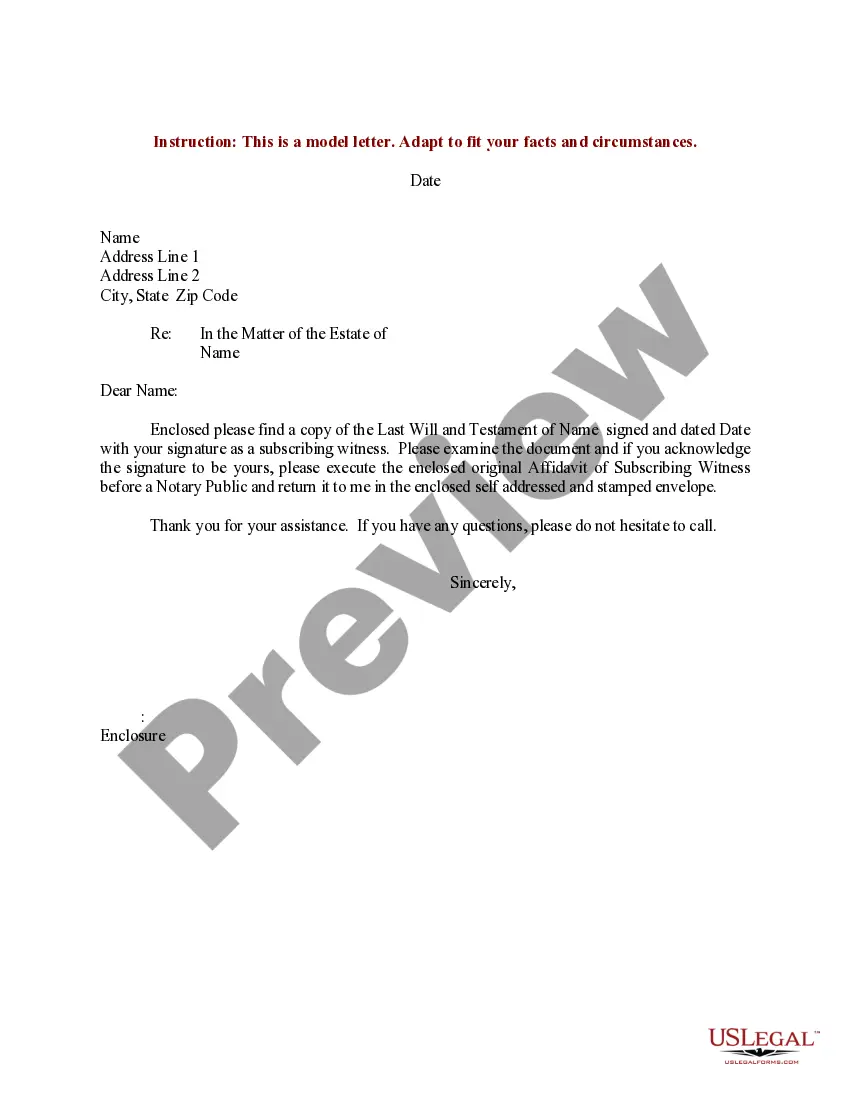
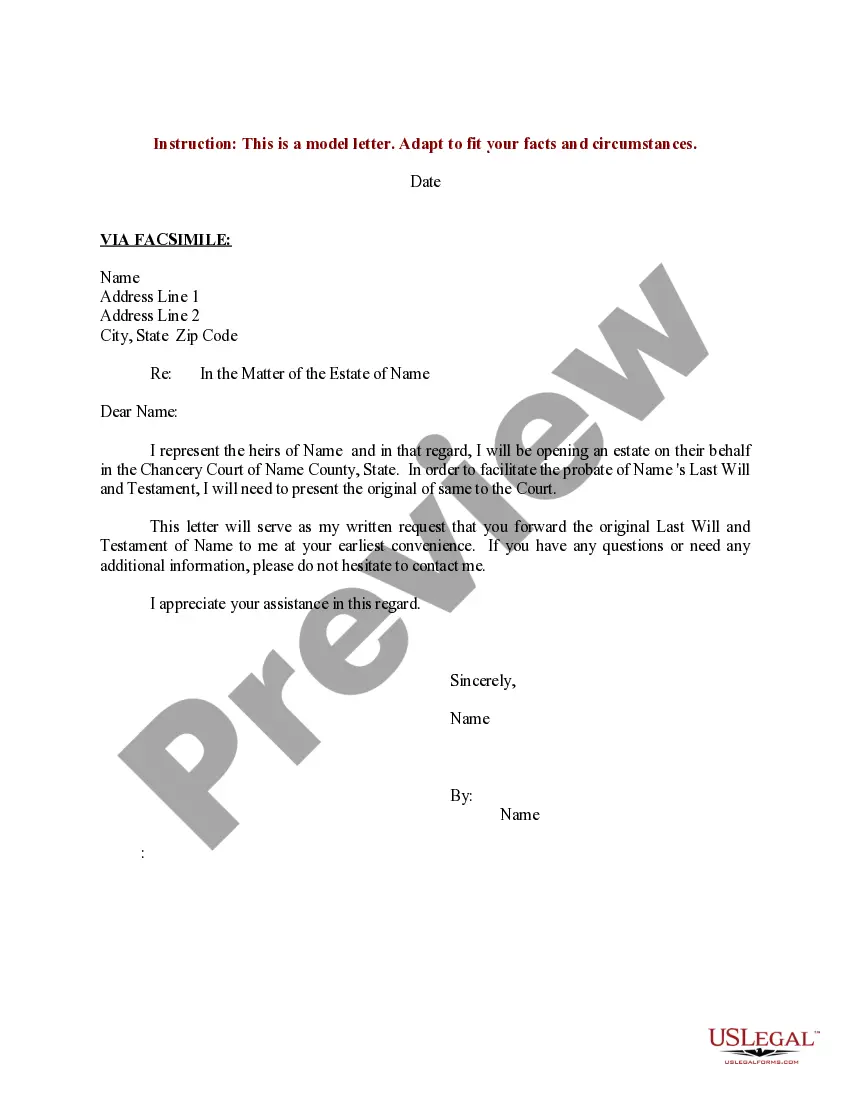
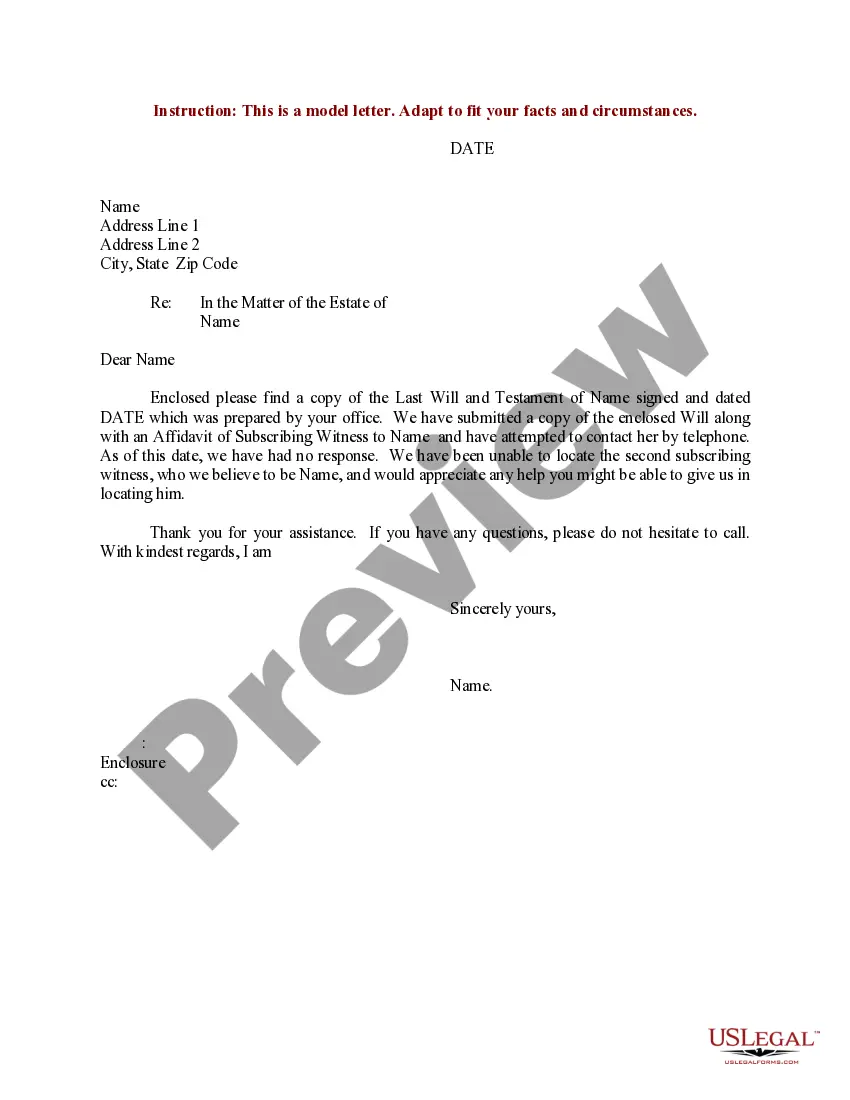
Indiana Sample Letter transmitting Last Will and Testament of Decedent
Description
Get your form ready online
Our built-in tools help you complete, sign, share, and store your documents in one place.
Make edits, fill in missing information, and update formatting in US Legal Forms—just like you would in MS Word.
Download a copy, print it, send it by email, or mail it via USPS—whatever works best for your next step.
Sign and collect signatures with our SignNow integration. Send to multiple recipients, set reminders, and more. Go Premium to unlock E-Sign.
If this form requires notarization, complete it online through a secure video call—no need to meet a notary in person or wait for an appointment.
We protect your documents and personal data by following strict security and privacy standards.

Make edits, fill in missing information, and update formatting in US Legal Forms—just like you would in MS Word.

Download a copy, print it, send it by email, or mail it via USPS—whatever works best for your next step.

Sign and collect signatures with our SignNow integration. Send to multiple recipients, set reminders, and more. Go Premium to unlock E-Sign.

If this form requires notarization, complete it online through a secure video call—no need to meet a notary in person or wait for an appointment.

We protect your documents and personal data by following strict security and privacy standards.
Looking for another form?



How to fill out Sample Letter Transmitting Last Will And Testament Of Decedent?
Are you currently in a position where you require documents for either business or personal purposes almost every day? There are numerous legal document templates available online, but finding reliable ones is not simple. US Legal Forms offers thousands of form templates, such as the Indiana Sample Letter transmitting Last Will and Testament of Decedent, which are crafted to comply with state and federal regulations.
If you are already acquainted with the US Legal Forms website and possess an account, simply Log In. After that, you can download the Indiana Sample Letter transmitting Last Will and Testament of Decedent template.
If you do not have an account and wish to start using US Legal Forms, follow these steps: Find the form you need and ensure it is for the correct city/state. Use the Preview option to review the document. Read the description to confirm that you have selected the appropriate form. If the form isn’t what you’re looking for, utilize the Search section to find the form that meets your needs and requirements. Once you obtain the correct form, click Get now. Choose the pricing plan you prefer, enter the necessary information to create your account, and pay for the transaction using your PayPal or credit card. Select a convenient file format and download your copy.
- Access all the document templates you have purchased in the My documents section. You can obtain an additional copy of the Indiana Sample Letter transmitting Last Will and Testament of Decedent at any time, if needed. Just select the necessary form to download or print the document template.
- Utilize US Legal Forms, one of the most extensive collections of legal forms, to save time and avoid errors. This service provides properly crafted legal document templates that you can use for various purposes. Create an account on US Legal Forms and start simplifying your life.
Form popularity
FAQ
Obtaining a letter of testamentary can be straightforward if you have the necessary documents and follow the correct procedures. While the process may seem daunting, especially if you are unfamiliar with legal requirements, many resources are available to assist you. Utilizing an Indiana Sample Letter transmitting Last Will and Testament of Decedent can simplify the documentation process. It is often beneficial to consult with a probate attorney for additional guidance.
A letter of testamentary is crucial for managing a deceased person's estate legally. It grants the executor the authority to settle debts, distribute assets, and perform other necessary tasks. Without this letter, financial institutions and other entities may not recognize your authority, complicating the estate settlement process. Using an Indiana Sample Letter transmitting Last Will and Testament of Decedent can help clarify the importance of this document.
In most cases, obtaining a letter of testamentary requires court involvement to ensure legal authority over the estate. However, if the decedent had a trust or if all heirs agree on the distribution of assets, you might avoid court altogether. It is essential to have the proper documentation, such as an Indiana Sample Letter transmitting Last Will and Testament of Decedent, to facilitate this process. Consulting with legal professionals can provide further clarity on your specific situation.
To obtain a letter of testamentary in Indiana, you must file a petition with the probate court in the county where the decedent lived. This petition typically includes a copy of the Last Will and Testament, along with other required documents. Once the court reviews your application, they may issue the letter, granting you the authority to manage the estate. An Indiana Sample Letter transmitting Last Will and Testament of Decedent can be a valuable resource during this process.
Testamentary documents include wills, trusts, and codicils, which outline how a person's assets should be distributed after their death. A Last Will and Testament is the most common testamentary document, specifying the distribution of property and appointing guardians for minor children. Additionally, an Indiana Sample Letter transmitting Last Will and Testament of Decedent can provide a clear template for creating your own documents. Understanding these examples helps ensure that your wishes are honored.
To file a transfer on death deed in Indiana, you must complete the appropriate form and ensure it includes the necessary information about the property and the beneficiaries. After filling out the deed, you need to sign it in the presence of a notary public. Finally, file the completed deed with the county recorder’s office where the property is located. For guidance, consider using an Indiana Sample Letter transmitting Last Will and Testament of Decedent as a reference.
A letter of testamentary in Indiana is a legal document issued by the probate court that grants the executor authority to manage and distribute the deceased's estate. This document is crucial for accessing bank accounts, selling property, and fulfilling other duties as outlined in the will. If you need guidance on how to inform beneficiaries about the will and the letter of testamentary, using an Indiana Sample Letter transmitting Last Will and Testament of Decedent can be very helpful.
Final distribution refers to the last step in the estate administration process where the executor transfers the remaining assets to the beneficiaries according to the will's instructions. This step concludes the executor's duties and formally ends the probate process. To communicate this effectively, consider using an Indiana Sample Letter transmitting Last Will and Testament of Decedent as a template to outline the final distribution details.
An example of a letter to a beneficiary of a will typically includes a greeting, a statement of gratitude, and information about the distribution of assets. It should clearly outline what the beneficiary will receive and any relevant timelines. You can find templates, such as the Indiana Sample Letter transmitting Last Will and Testament of Decedent, on platforms like USLegalForms to help you draft this important communication.
The final estate distribution letter is a document that the executor sends to beneficiaries, summarizing the distribution of assets and providing a final accounting of the estate. This letter formally closes the estate by detailing how assets have been divided and any remaining obligations. You may refer to an Indiana Sample Letter transmitting Last Will and Testament of Decedent for guidance on structuring this letter effectively.