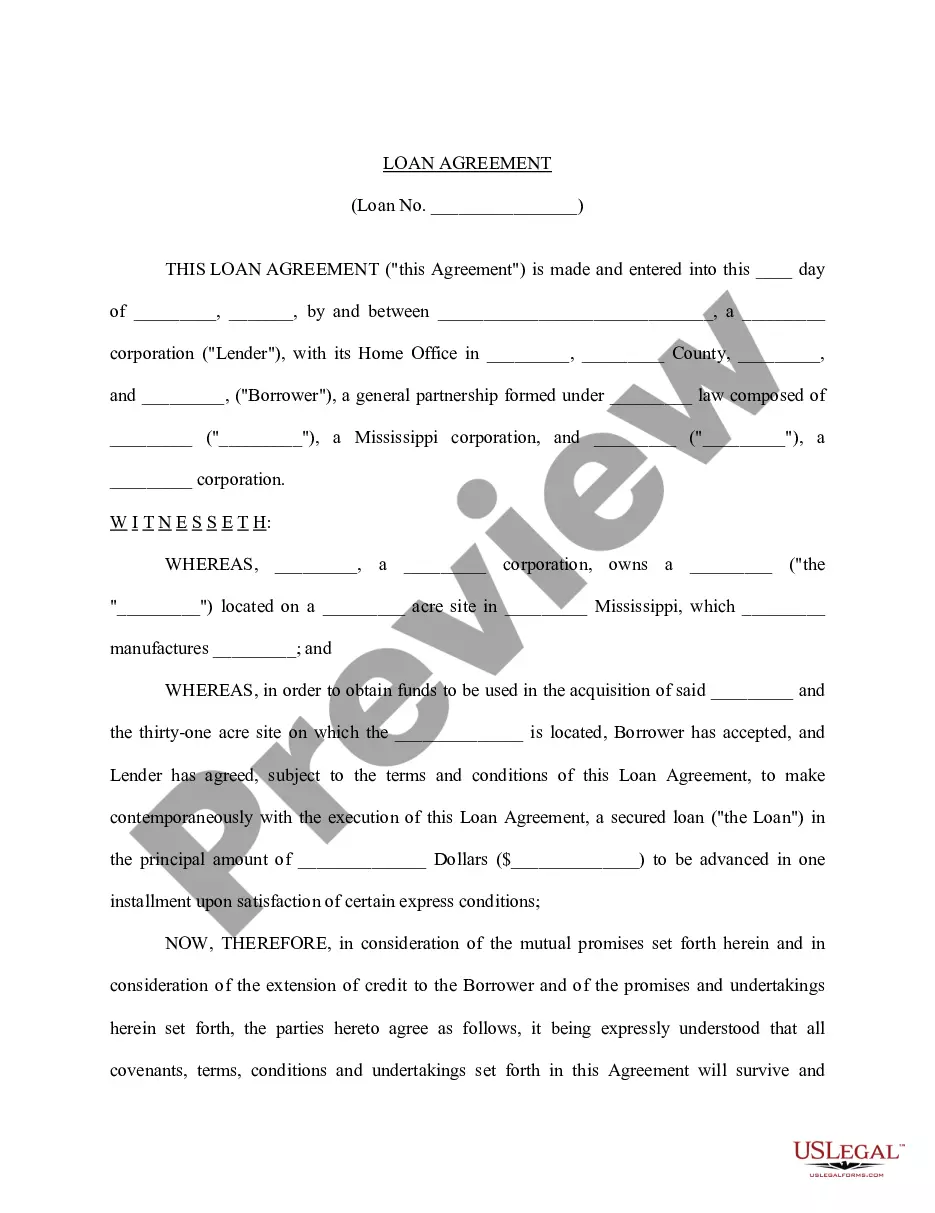
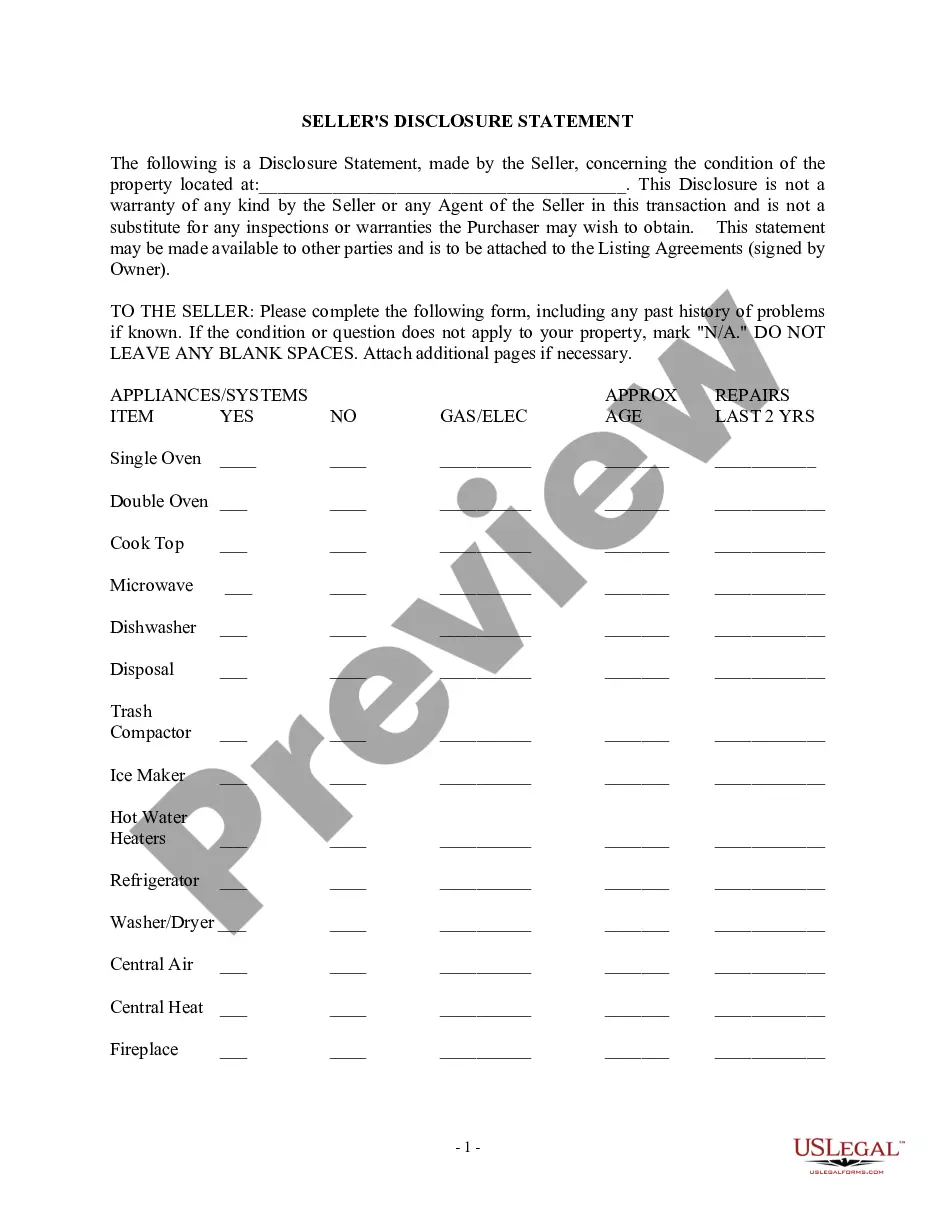
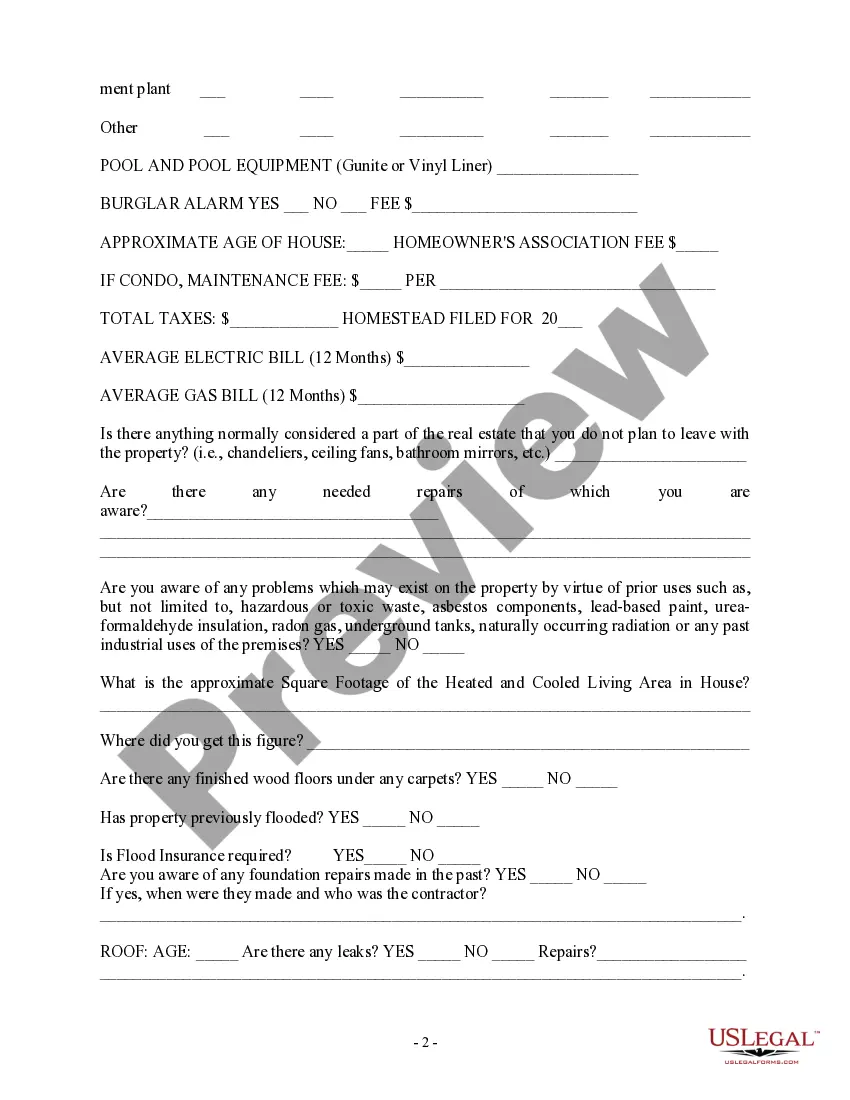
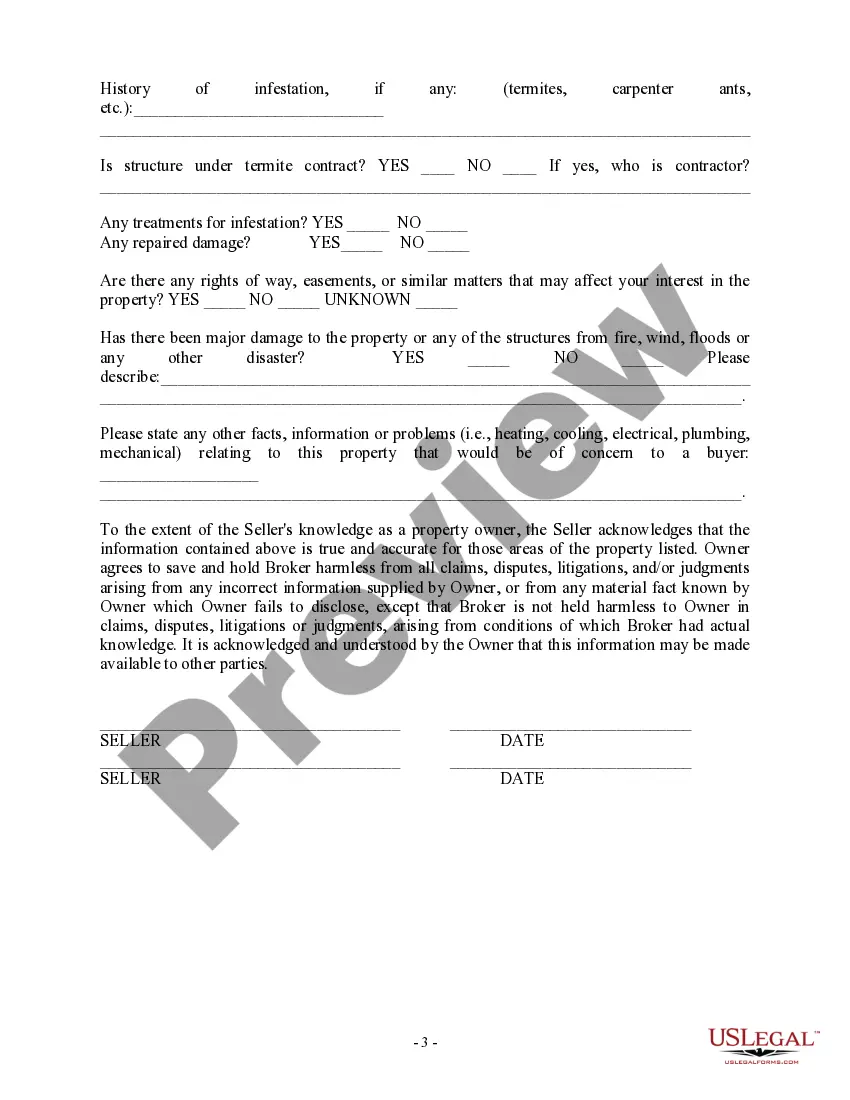
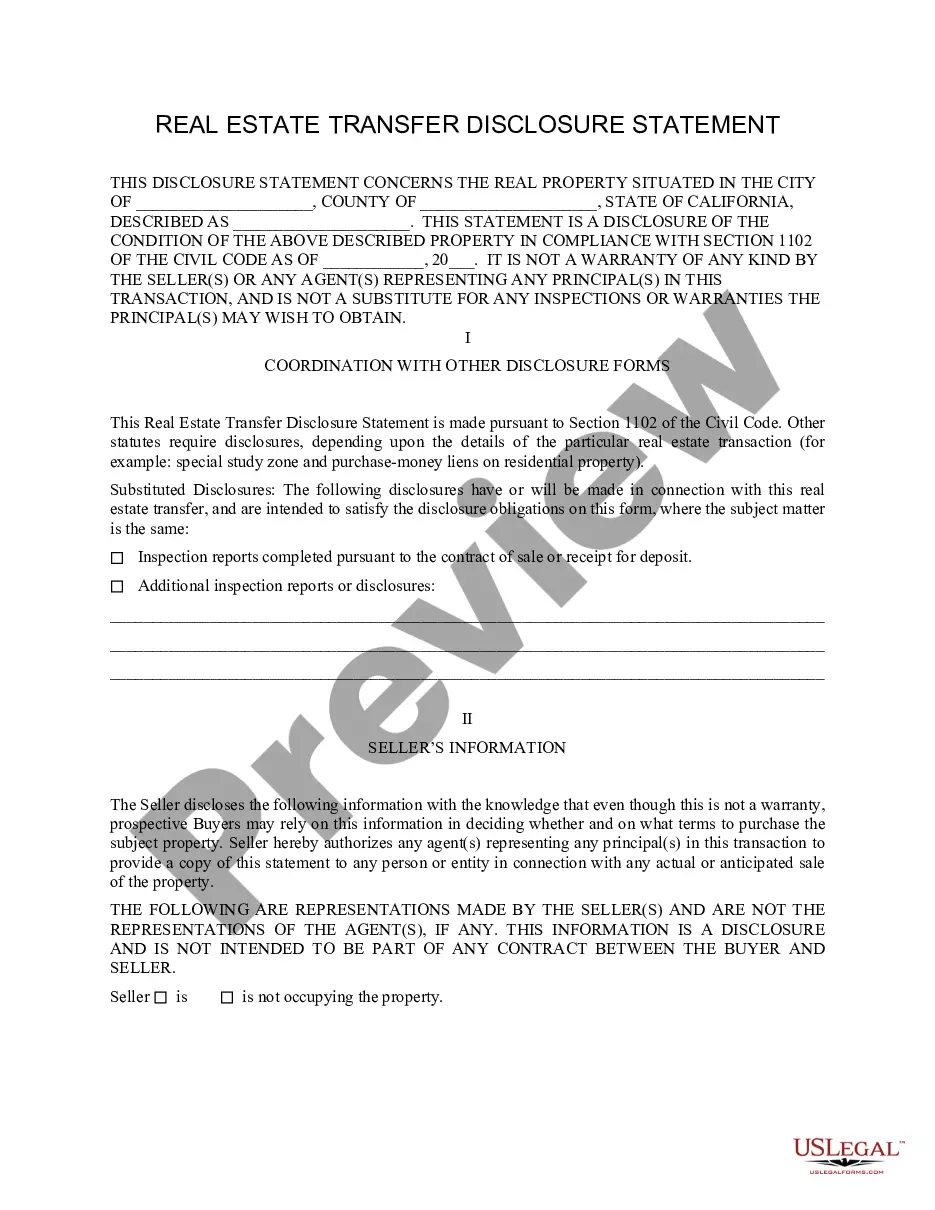
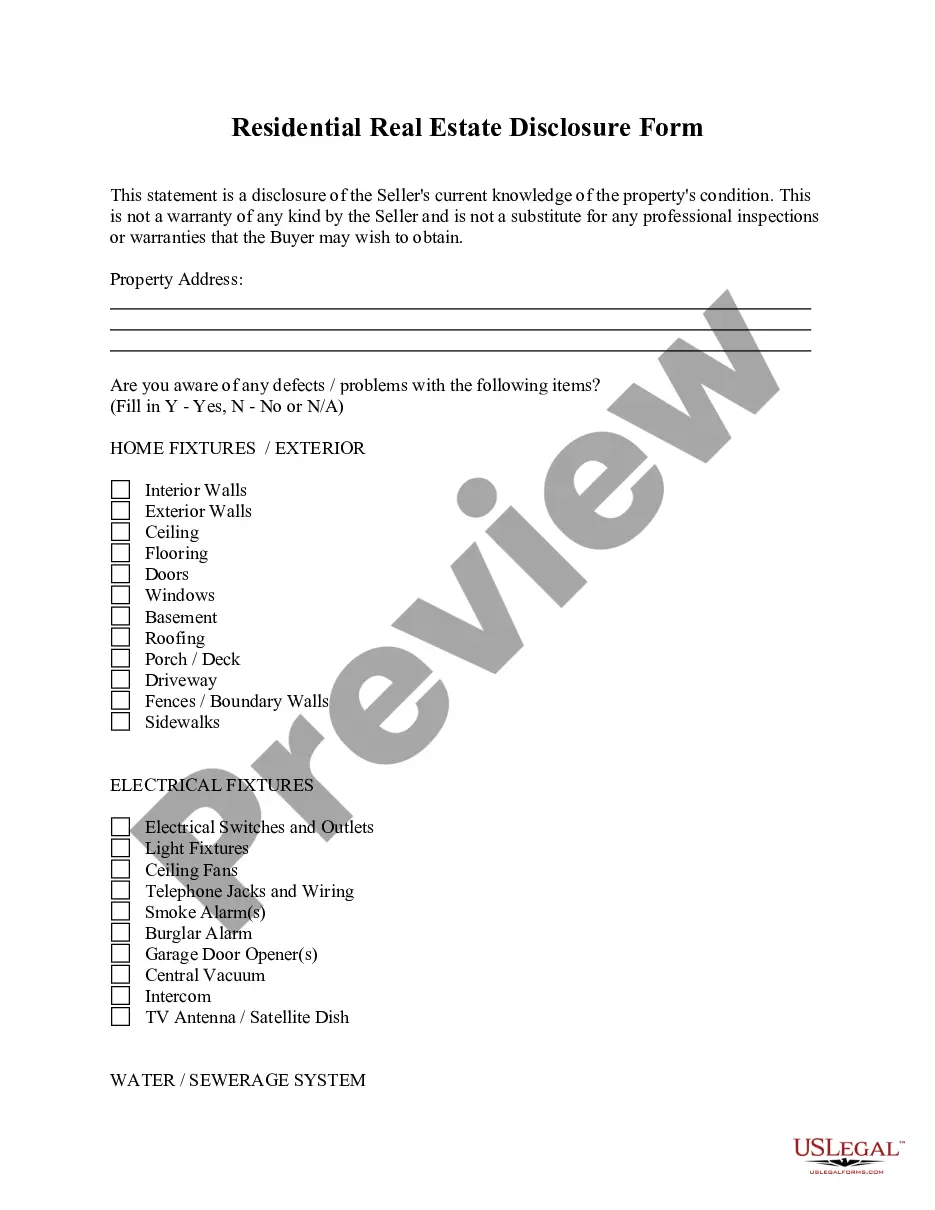
This form is a Seller's Disclosure Statement. This disclosure statement concerns the condition of property described in the document. The seller acknowledges that the information contained in the form is true and accurate.
Indiana Seller's Real Estate Disclosure Statement
487 downloads
Description
Free preview
Get your form ready online
Our built-in tools help you complete, sign, share, and store your documents in one place.
Built-in online Word editor
Make edits, fill in missing information, and update formatting in US Legal Forms—just like you would in MS Word.
Export easily
Download a copy, print it, send it by email, or mail it via USPS—whatever works best for your next step.
E-sign your document
Sign and collect signatures with our SignNow integration. Send to multiple recipients, set reminders, and more. Go Premium to unlock E-Sign.
Notarize online 24/7
If this form requires notarization, complete it online through a secure video call—no need to meet a notary in person or wait for an appointment.
Store your document securely
We protect your documents and personal data by following strict security and privacy standards.

Make edits, fill in missing information, and update formatting in US Legal Forms—just like you would in MS Word.

Download a copy, print it, send it by email, or mail it via USPS—whatever works best for your next step.

Sign and collect signatures with our SignNow integration. Send to multiple recipients, set reminders, and more. Go Premium to unlock E-Sign.

If this form requires notarization, complete it online through a secure video call—no need to meet a notary in person or wait for an appointment.

We protect your documents and personal data by following strict security and privacy standards.
Looking for another form?
How to fill out Seller's Real Estate Disclosure Statement?
US Legal Forms - one of the largest collections of legal documents in the United States - provides a broad selection of legal form templates that you can download or create.
By utilizing the site, you will find thousands of forms for business and personal purposes, categorized by type, state, or keywords. You can access the latest forms such as the Indiana Seller's Real Estate Disclosure Statement in moments.
If you currently have a subscription, Log In and retrieve the Indiana Seller's Real Estate Disclosure Statement from your US Legal Forms library. The Download button will be visible on every form you view. You have access to all previously downloaded forms from the My documents tab of your account.
Select the format and download the form to your device.
Make edits. Fill out, modify, and print and sign the downloaded Indiana Seller's Real Estate Disclosure Statement. Every template you add to your account has no expiration date and is yours forever. Thus, if you wish to download or print another copy, simply navigate to the My documents section and click on the form you need.
- If you want to use US Legal Forms for the first time, here are some simple steps to get started.
- Ensure that you have selected the appropriate form for your locality/region. Click the Preview button to review the content of the form.
- Read the form description to confirm that you have chosen the right form.
- If the form does not meet your needs, utilize the Search field at the top of the screen to find the one that does.
- If you are satisfied with the form, validate your selection by clicking the Buy Now button. Then, select the pricing plan you desire and provide your information to register for an account.
- Process the purchase. Use your credit card or PayPal account to complete the transaction.
Form popularity
FAQ
Some states have the caveat emptor rule, which means that the buyer is responsible for uncovering anything wrong with the property. Indiana is not a caveat emptor state. In fact, the form the seller is responsible for completing is rather lengthy and detailed.
Since the mid-1990's, the State of Indiana has required sellers of single-family residential real estate to complete and deliver to buyers a disclosure form entitled Seller's Residential Real Estate Sales Disclosure, pursuant to the requirements of Indiana Code § 32-21-5.
In general, a disclosure document is supposed to provide details about a property's condition that might negatively affect its value. Sellers who willfully conceal information can be sued and potentially convicted of a crime. Selling a property "As Is" will usually not exempt a seller from disclosures.
Indiana law (IC 32-21-5) generally requires sellers of 1-4 unit residential property to complete this form regarding the known physical condition of the property. An owner must complete and sign the disclosure form and submit the form to a prospective buyer before an offer is accepted for the sale of the real estate.
The State of Indiana requires the filing of a sales disclosure form (SDF) whenever real property is sold.
In the state of Indiana, you are not required to disclose if you think a house is haunted or if someone died in the home but you may not misrepresent or lie if a potential buyer asks. Indiana's Residential Real Estate Disclosure Law, Ind.
A real estate sales disclosure form is a checklist style document that Indiana law requires most sellers complete prior to closing on the property. This purpose of this document is to allow the seller an opportunity to disclose any known facts about the property and its condition.
The seller is required, to the best of his/her knowledge, to inform the buyer of any known material defects within the home and its major systems. For example, if the seller has knowledge of the property existing on a floodplain or the foundation is leaning should be disclosed.
A sales disclosure is a State Form (46021) that is completed for property transfers, both those that are transferred for valuable consideration and those that are the result of foreclosure, express threat of foreclosure, divorce, court orders, judgments, condemnation, or probate.