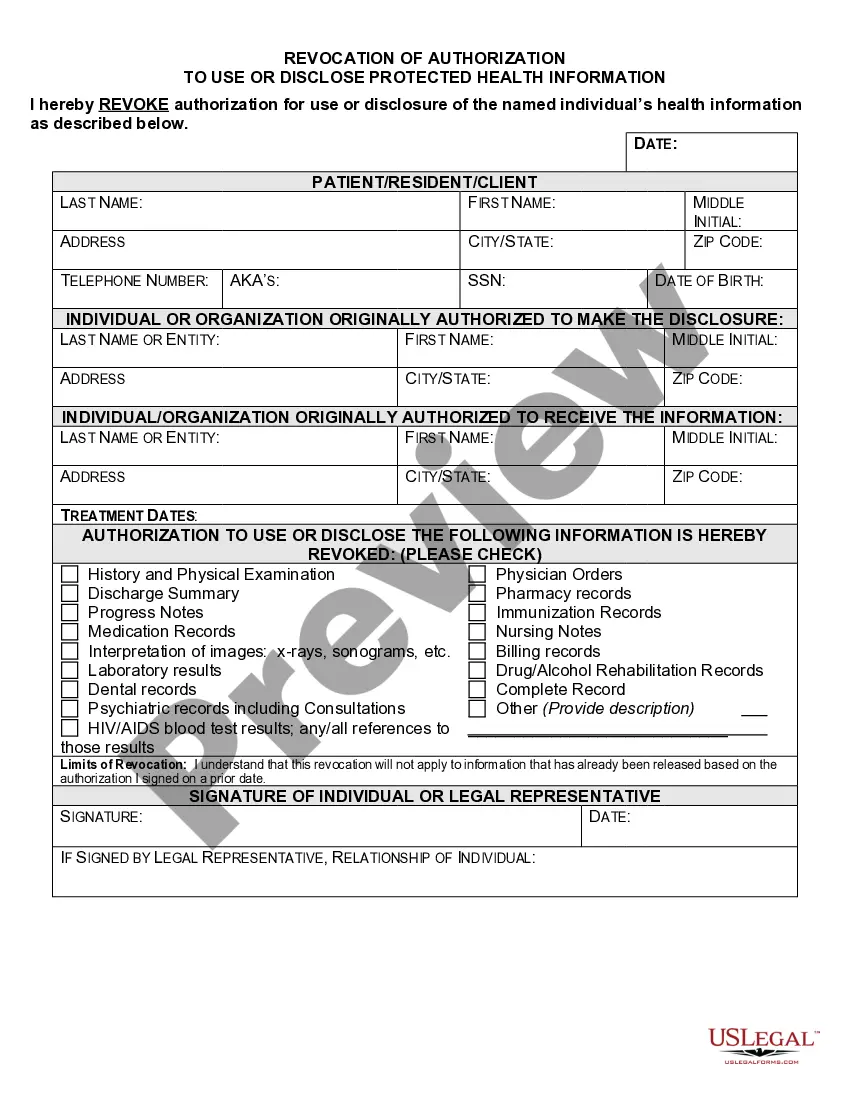
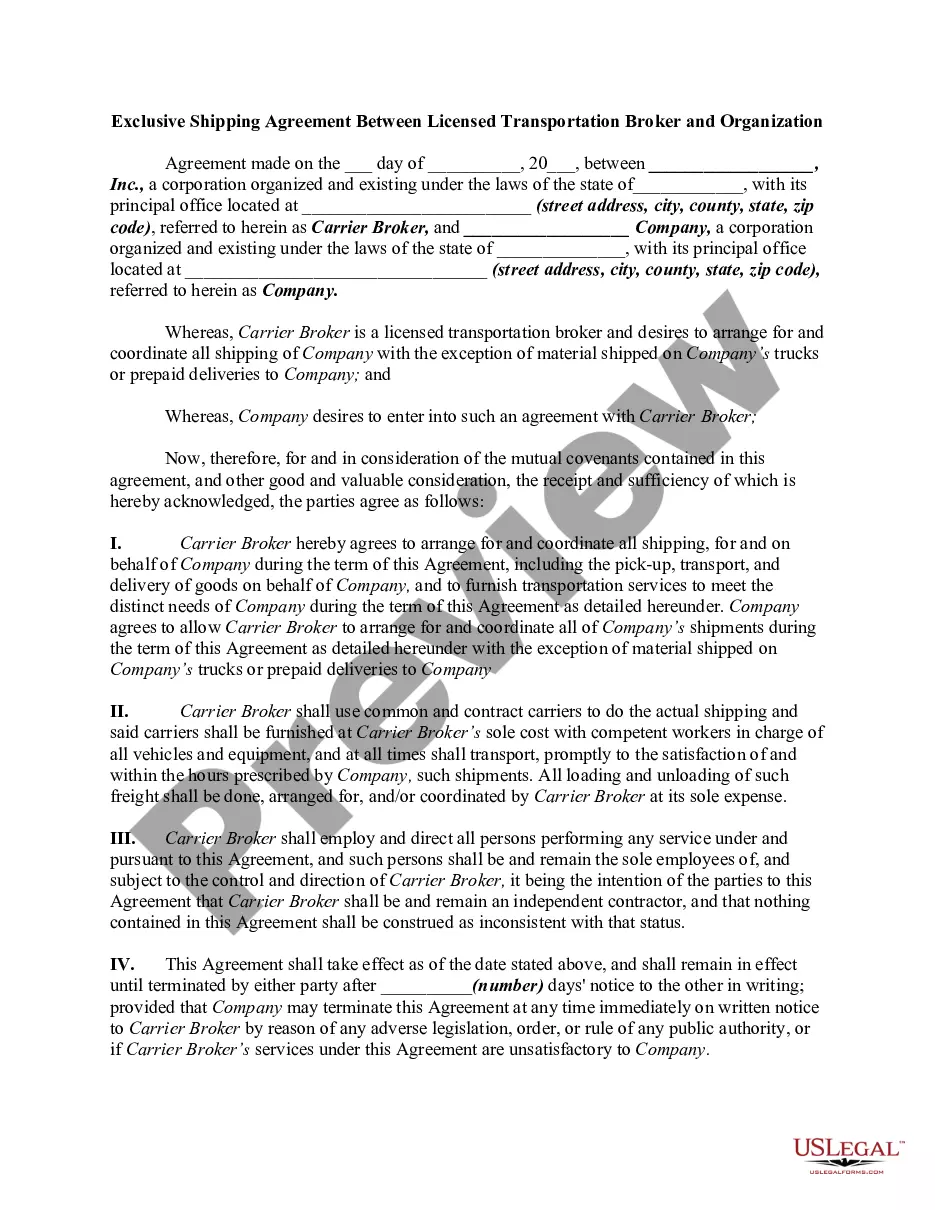
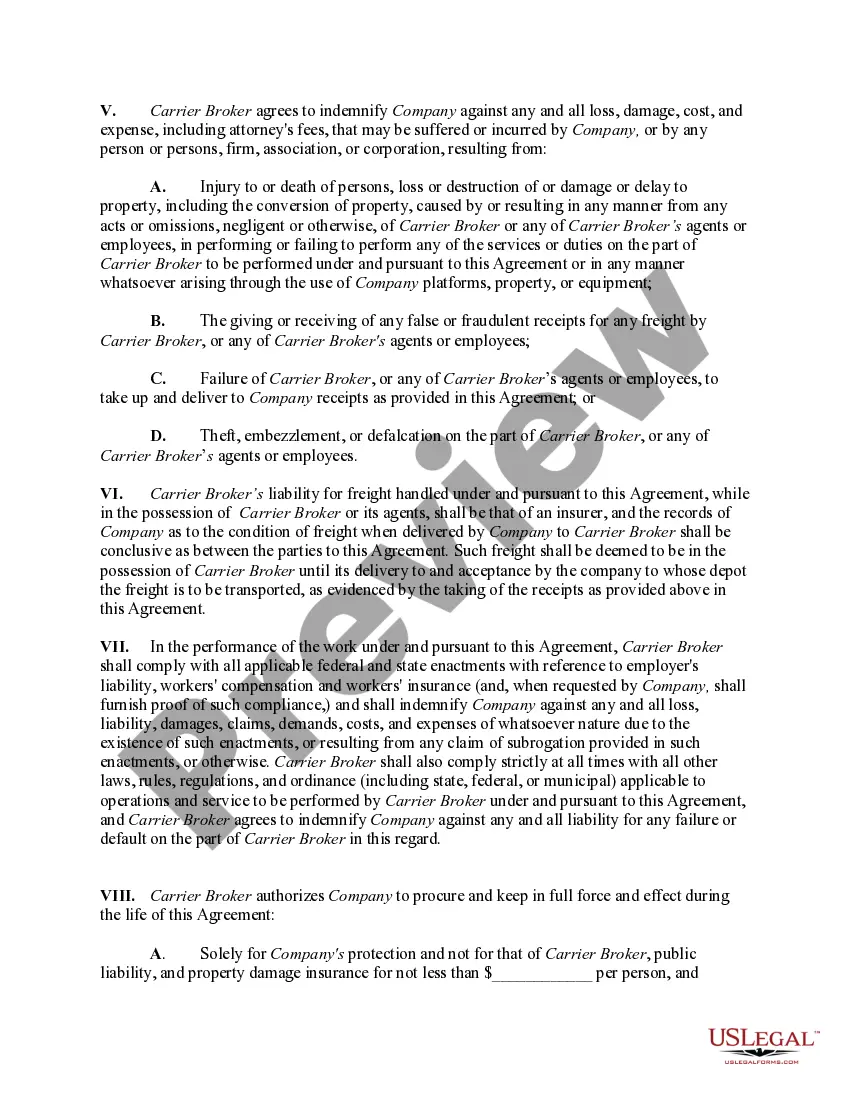
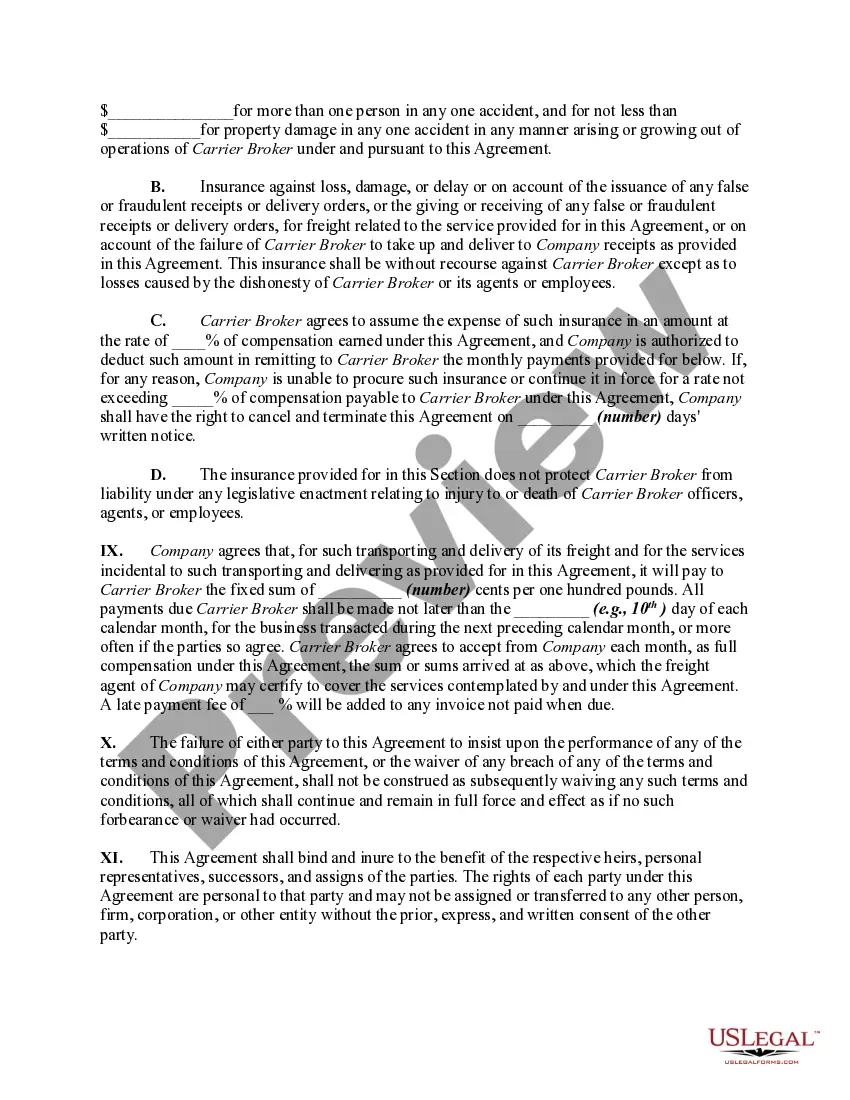
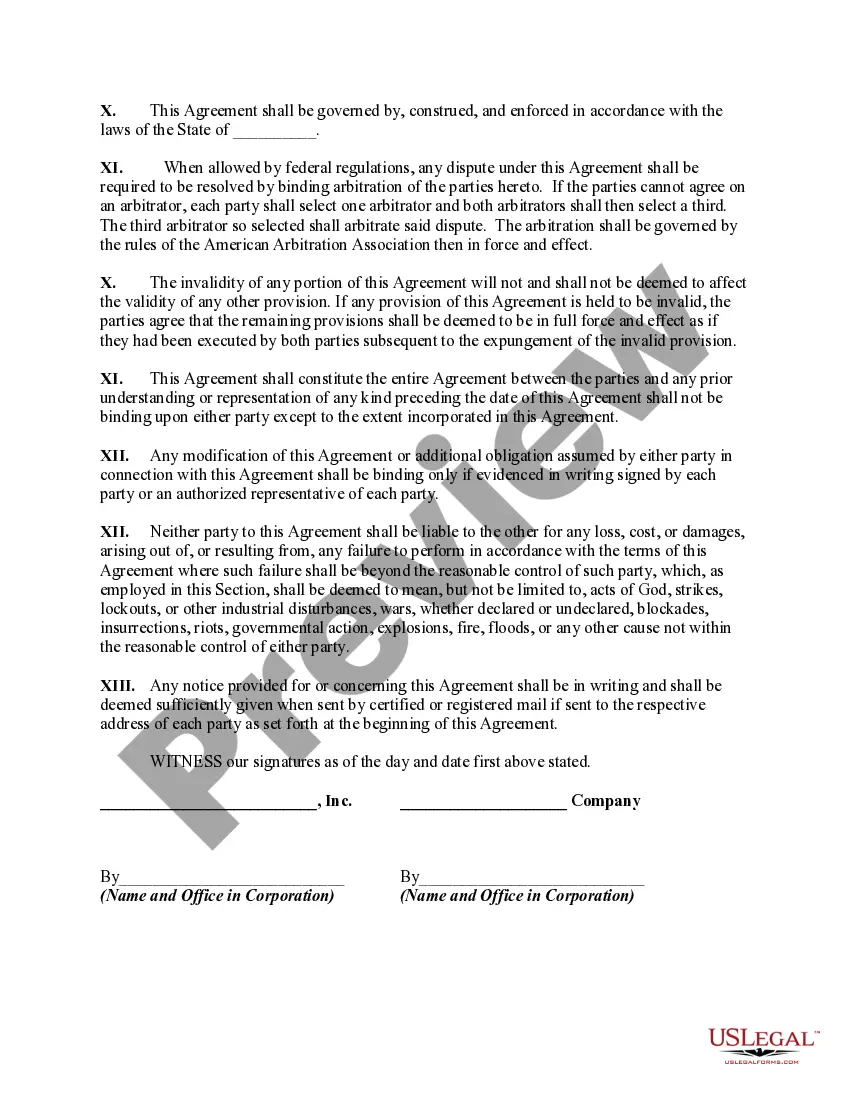
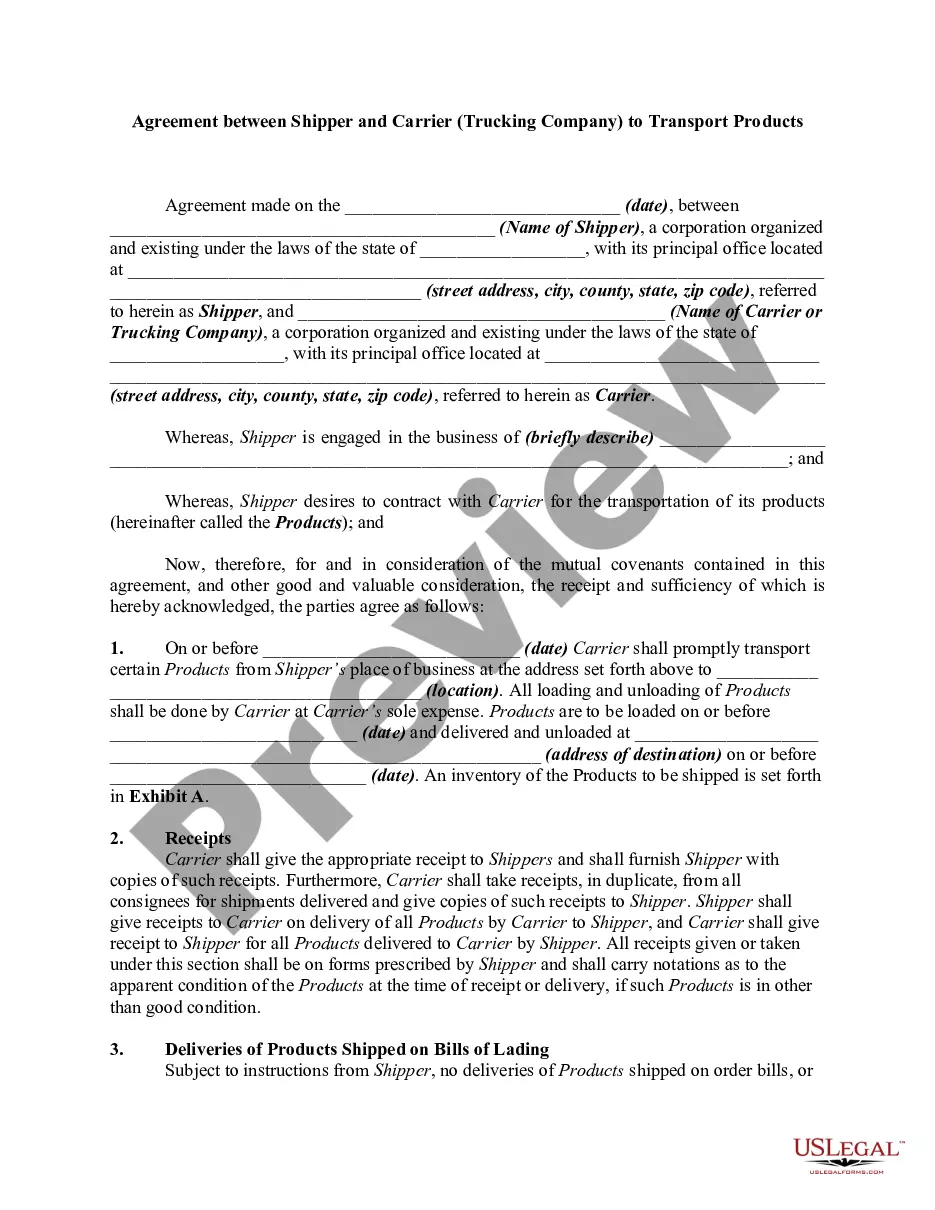
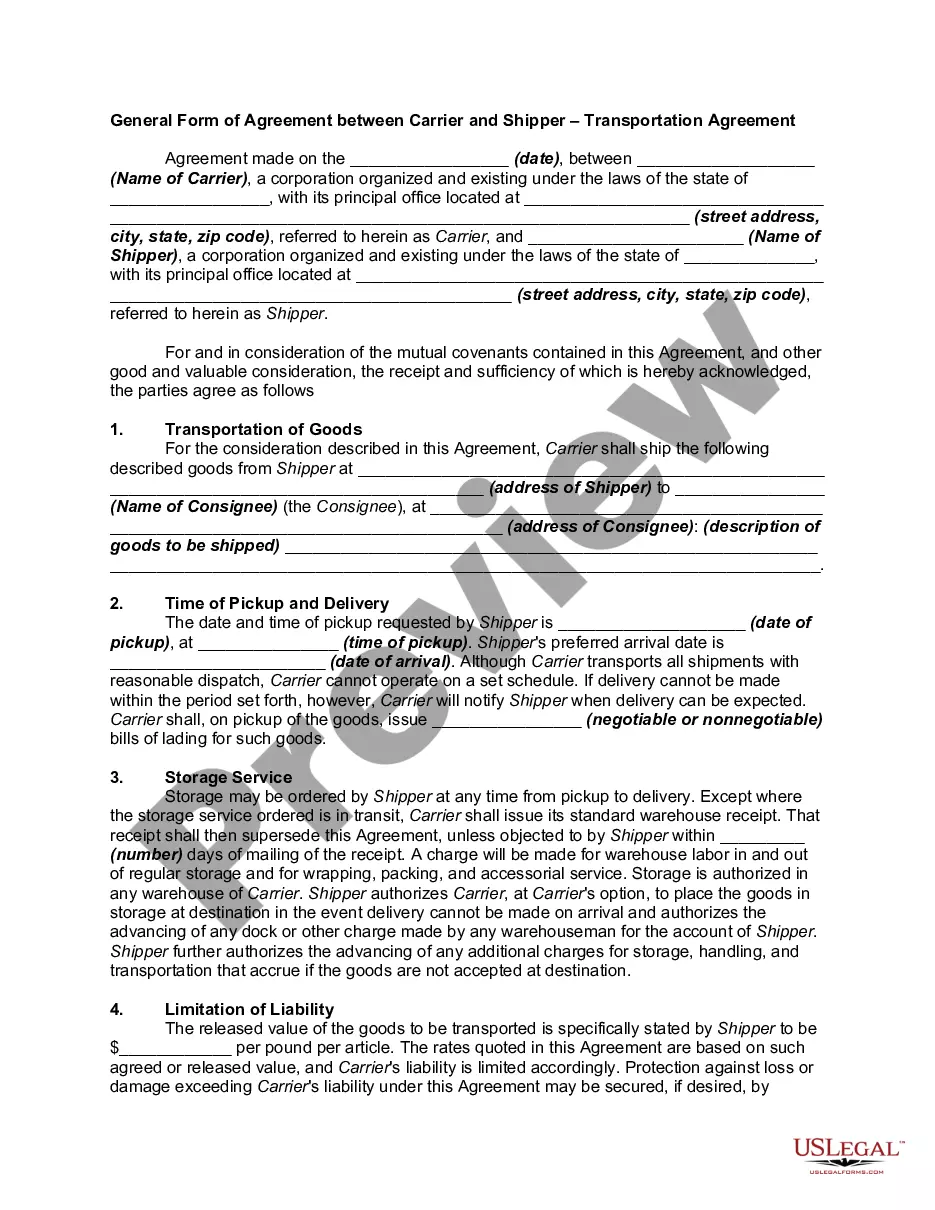
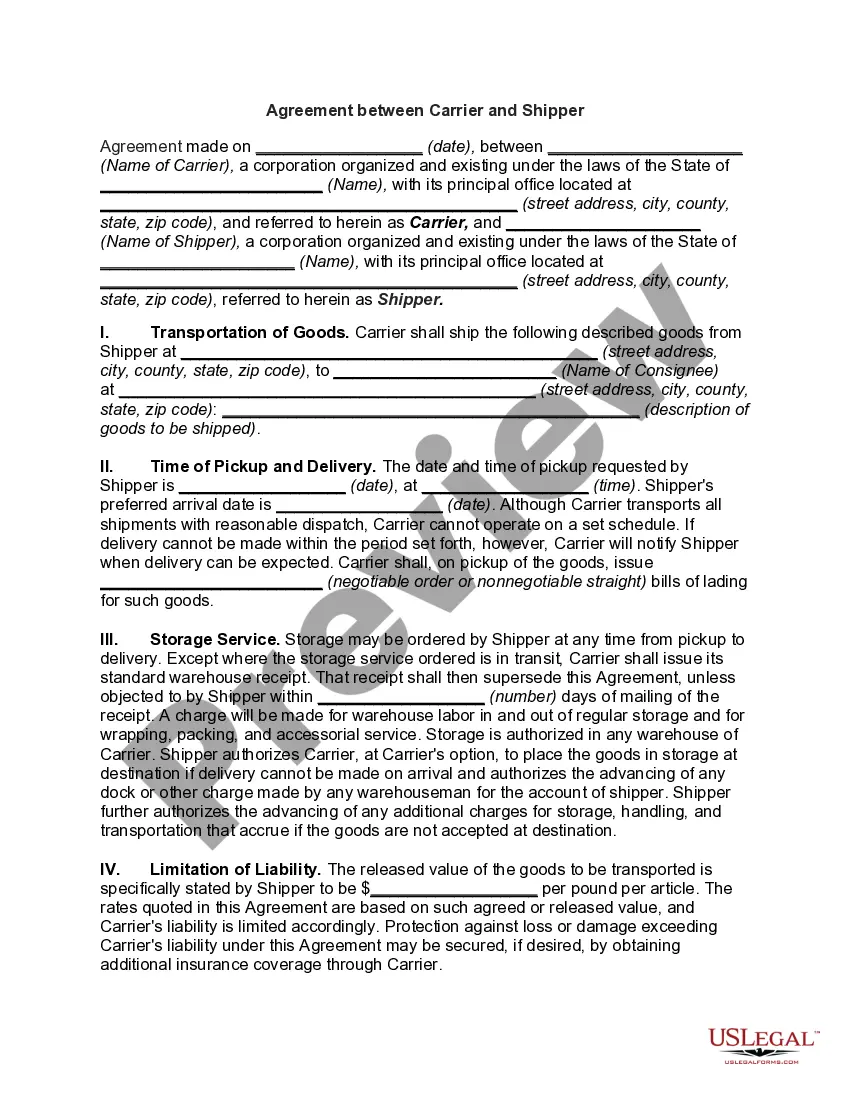
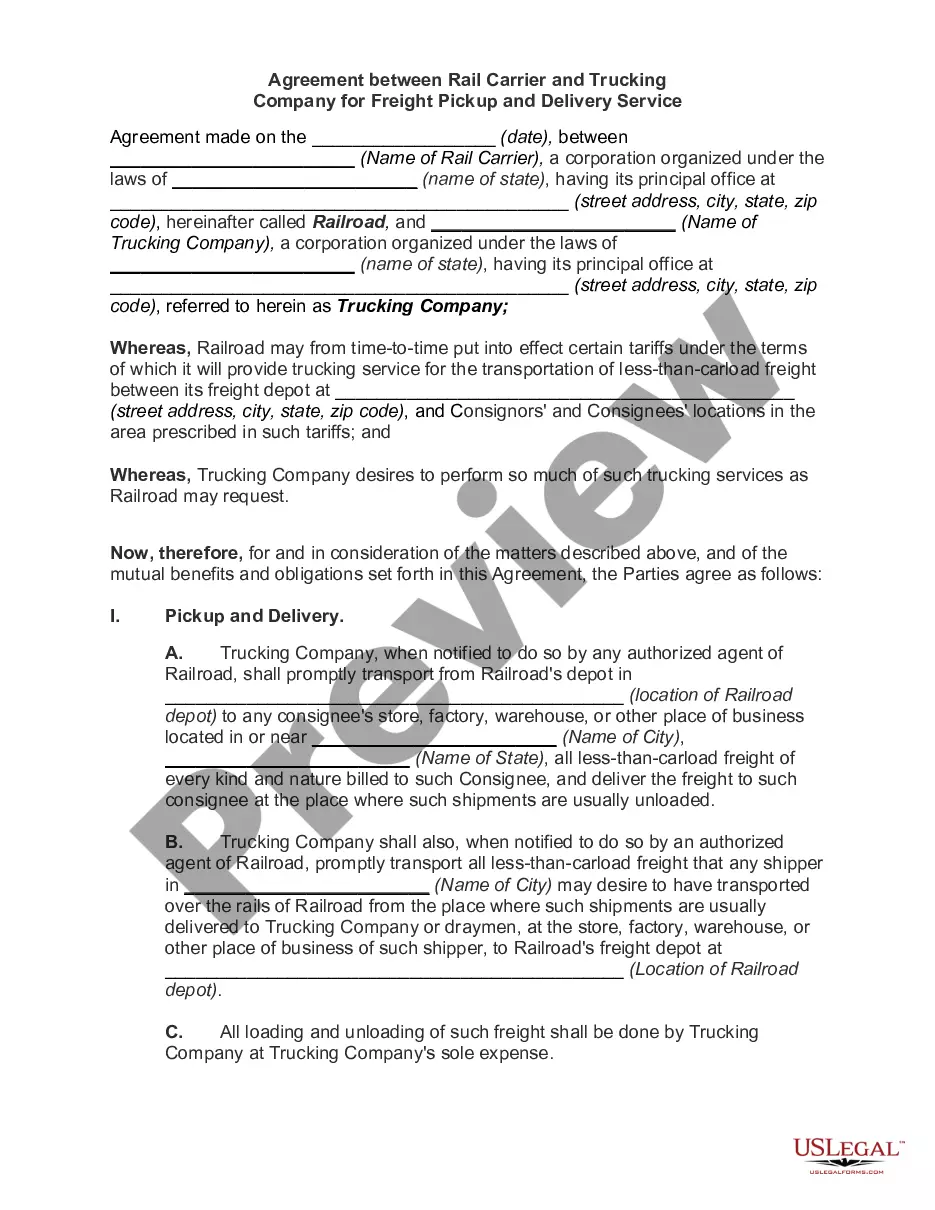
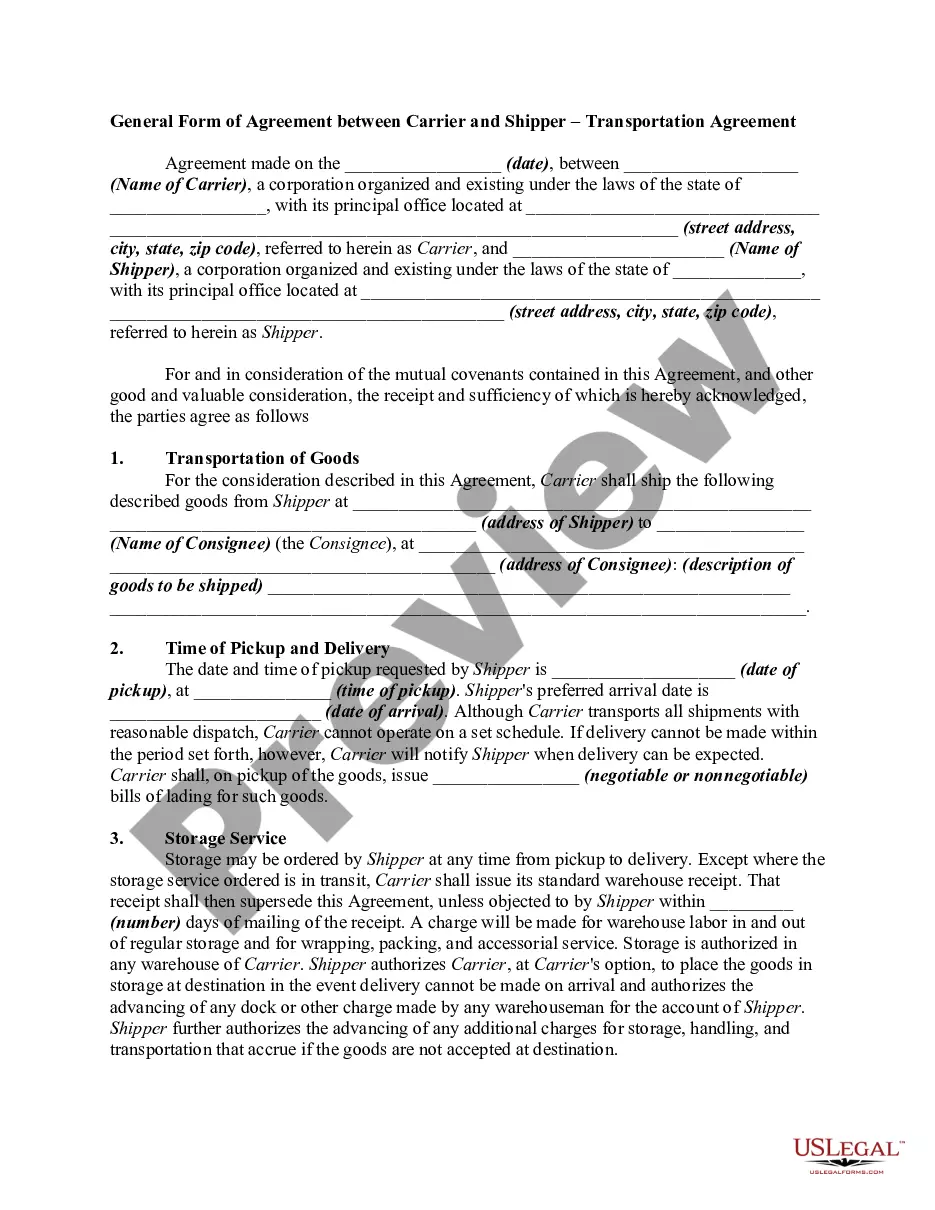
Indiana Exclusive Shipping Agreement Between Licensed Transportation Broker and Organization
Description
Get your form ready online
Our built-in tools help you complete, sign, share, and store your documents in one place.
Make edits, fill in missing information, and update formatting in US Legal Forms—just like you would in MS Word.
Download a copy, print it, send it by email, or mail it via USPS—whatever works best for your next step.
Sign and collect signatures with our SignNow integration. Send to multiple recipients, set reminders, and more. Go Premium to unlock E-Sign.
If this form requires notarization, complete it online through a secure video call—no need to meet a notary in person or wait for an appointment.
We protect your documents and personal data by following strict security and privacy standards.

Make edits, fill in missing information, and update formatting in US Legal Forms—just like you would in MS Word.

Download a copy, print it, send it by email, or mail it via USPS—whatever works best for your next step.

Sign and collect signatures with our SignNow integration. Send to multiple recipients, set reminders, and more. Go Premium to unlock E-Sign.

If this form requires notarization, complete it online through a secure video call—no need to meet a notary in person or wait for an appointment.

We protect your documents and personal data by following strict security and privacy standards.
Looking for another form?






How to fill out Exclusive Shipping Agreement Between Licensed Transportation Broker And Organization?
You might allocate time on the web looking for the valid document template that satisfies both state and federal requirements you will require.
US Legal Forms provides a vast selection of legal documents that can be assessed by experts.
You can either download or create the Indiana Exclusive Shipping Agreement Between Authorized Transport Broker and Company through the service.
If available, use the Preview option to browse the document template as well.
- If you possess a US Legal Forms account, you can sign in and select the Download option.
- After that, you can complete, modify, generate, or sign the Indiana Exclusive Shipping Agreement Between Authorized Transport Broker and Company.
- Every legal document template you purchase is yours indefinitely.
- To obtain another copy of the purchased form, go to the My documents section and select the corresponding option.
- If this is your first time using the US Legal Forms site, follow the simple guidelines outlined below.
- Firstly, ensure that you have selected the correct document template for your county/area of choice.
- Review the form description to confirm you have chosen the appropriate form.
Form popularity
FAQ
The main difference between a carrier broker and a shipper lies in their roles within the shipping process. A carrier broker facilitates the connection between a shipper and a transportation provider, essentially acting as an intermediary. On the other hand, a shipper is the entity that needs items transported, responsible for sending goods from one location to another. In the context of the Indiana Exclusive Shipping Agreement Between Licensed Transportation Broker and Organization, understanding these roles can help businesses streamline their shipping practices and ensure compliance with legal requirements.
The primary difference between a freight broker and a logistics broker lies in the scope of their services. A freight broker focuses mainly on arranging the transport of goods, while a logistics broker takes a holistic approach to supply chain management. This includes activities like warehousing, inventory control, and transportation management, often framed within agreements like the Indiana Exclusive Shipping Agreement Between Licensed Transportation Broker and Organization to ensure efficiency and compliance.
Freight and logistics are related but refer to different concepts. Freight pertains to the actual goods being transported, while logistics encompasses the planning, implementation, and management of those transport processes. Understanding this distinction is crucial for organizations looking to enter agreements, such as the Indiana Exclusive Shipping Agreement Between Licensed Transportation Broker and Organization, that optimize their shipping practices.
Freight brokers can be classified into several types, including traditional brokers, technology-based brokers, and niche brokers. Traditional brokers typically maintain personal relationships with clients to secure shipping needs. Technology-based brokers leverage software and platforms to enhance shipping efficiency, often establishing agreements like the Indiana Exclusive Shipping Agreement Between Licensed Transportation Broker and Organization to maintain service quality.
While a freight broker and a third-party logistics (3PL) provider share some similarities, they are not the same. A freight broker primarily facilitates the shipping process by connecting shippers with carriers, whereas a 3PL manages a broader range of logistics tasks. This includes warehousing, inventory management, and transportation planning, often working under an Indiana Exclusive Shipping Agreement Between Licensed Transportation Broker and Organization to streamline processes.
To obtain a freight broker license in Indiana, you must first apply to the Federal Motor Carrier Safety Administration (FMCSA). This process includes filling out the application, paying the necessary fees, and securing a surety bond. Completing these steps correctly allows you to engage in business under an Indiana Exclusive Shipping Agreement Between Licensed Transportation Broker and Organization, enhancing your credibility with shippers and carriers alike.
A freight broker acts as a middleman between shippers and carriers in the logistics industry. They connect businesses needing to transport goods with licensed transportation brokers who can fulfill those needs. Under an Indiana Exclusive Shipping Agreement Between Licensed Transportation Broker and Organization, brokers manage the negotiation of shipping rates, contract details, and delivery logistics to ensure a smooth process for all parties involved.
To obtain a freight broker license in Indiana, you must follow a process that involves registration with the FMCSA and securing a surety bond. Completing the necessary paperwork and adhering to the guidelines set forth by regulatory bodies is crucial. Additionally, familiarizing yourself with the Indiana Exclusive Shipping Agreement Between Licensed Transportation Broker and Organization can prepare you for managing your new responsibilities.
The relationship between a shipper and a broker is built on trust and clear communication. The broker acts as an intermediary, connecting shippers with carriers to facilitate transportation. It is essential to understand frameworks like the Indiana Exclusive Shipping Agreement Between Licensed Transportation Broker and Organization to maintain transparency and ensure smooth transactions.
A broker shipper agreement is a contract that establishes the roles of the broker and the shipper in the transportation process. This agreement clarifies responsibilities regarding freight management and payment terms. Understanding agreements like the Indiana Exclusive Shipping Agreement Between Licensed Transportation Broker and Organization can help you navigate your obligations effectively.