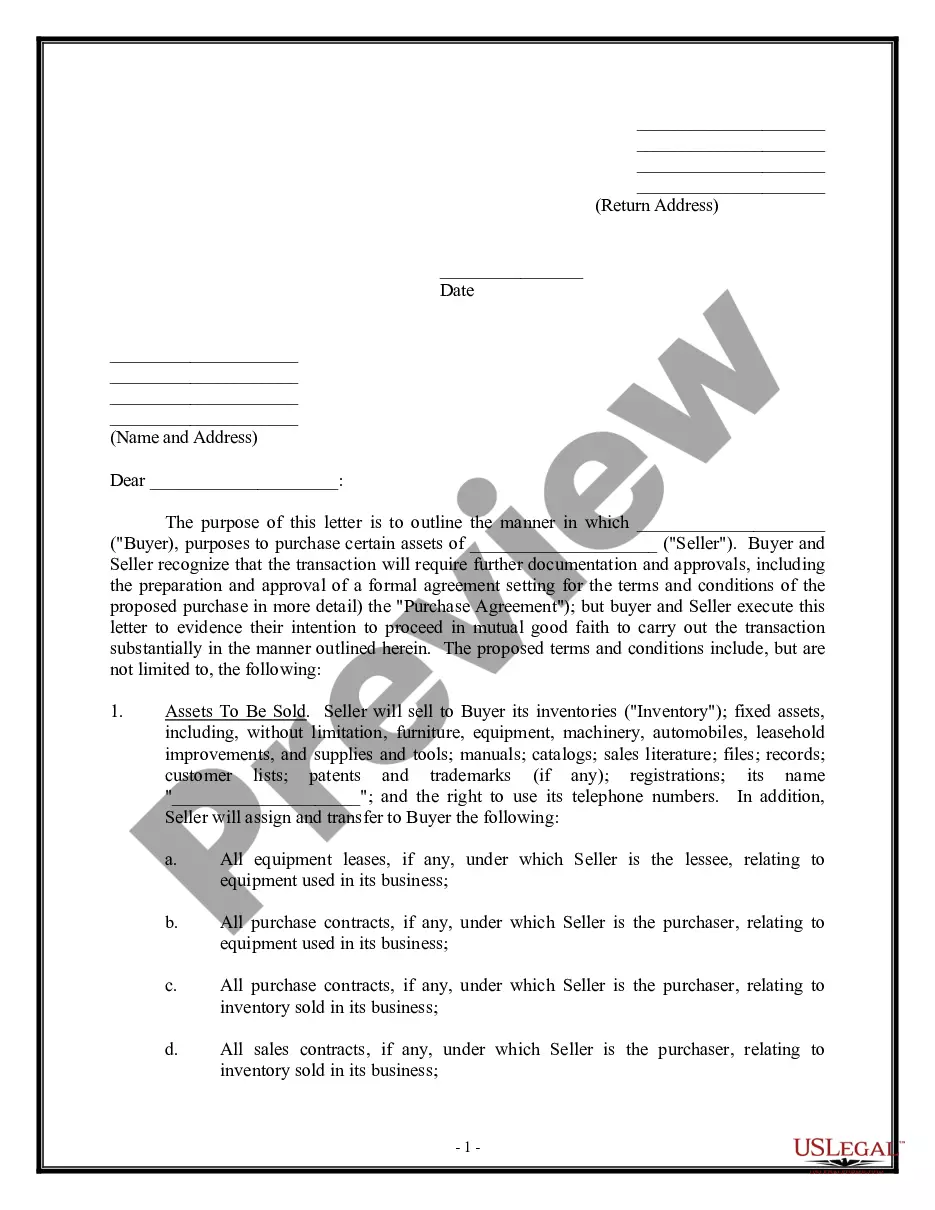
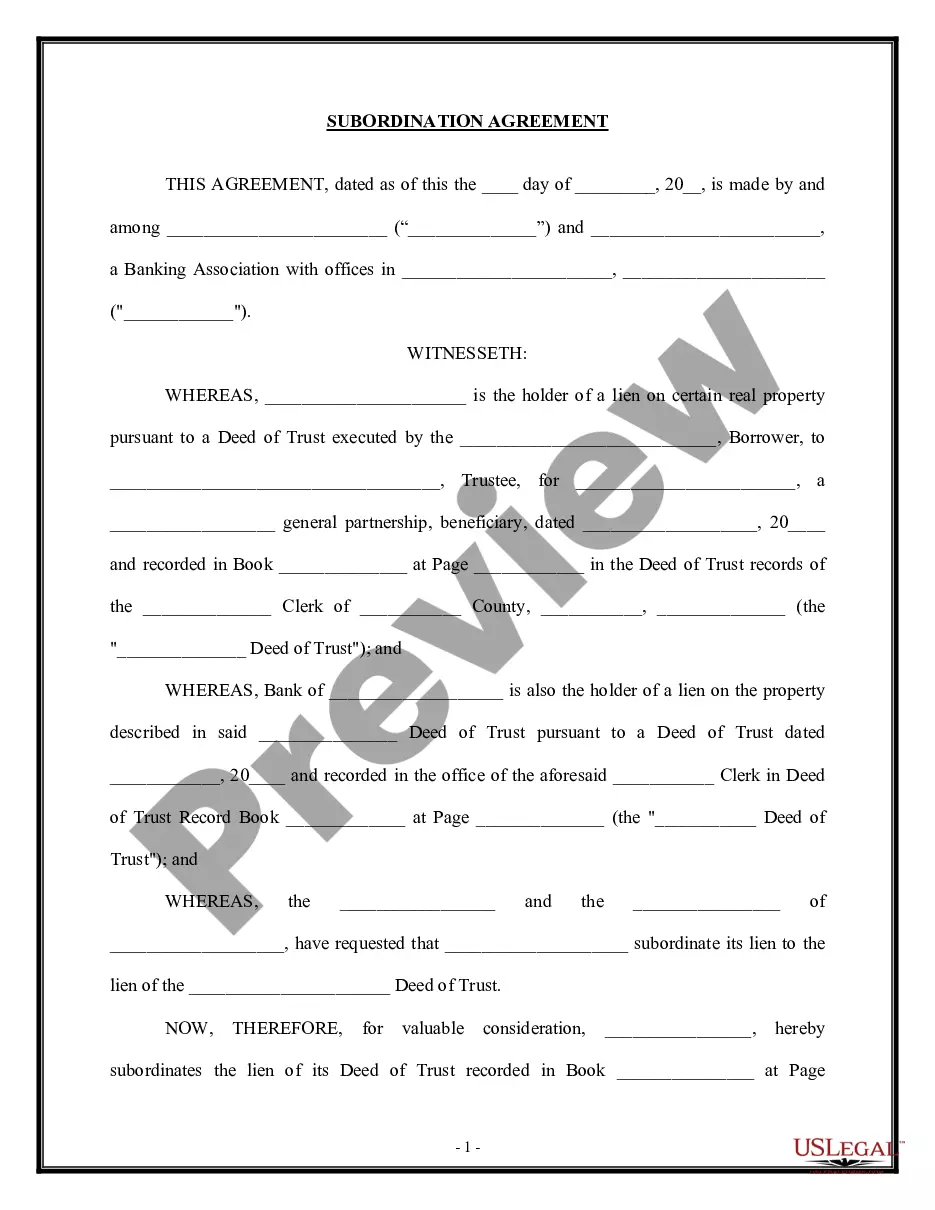
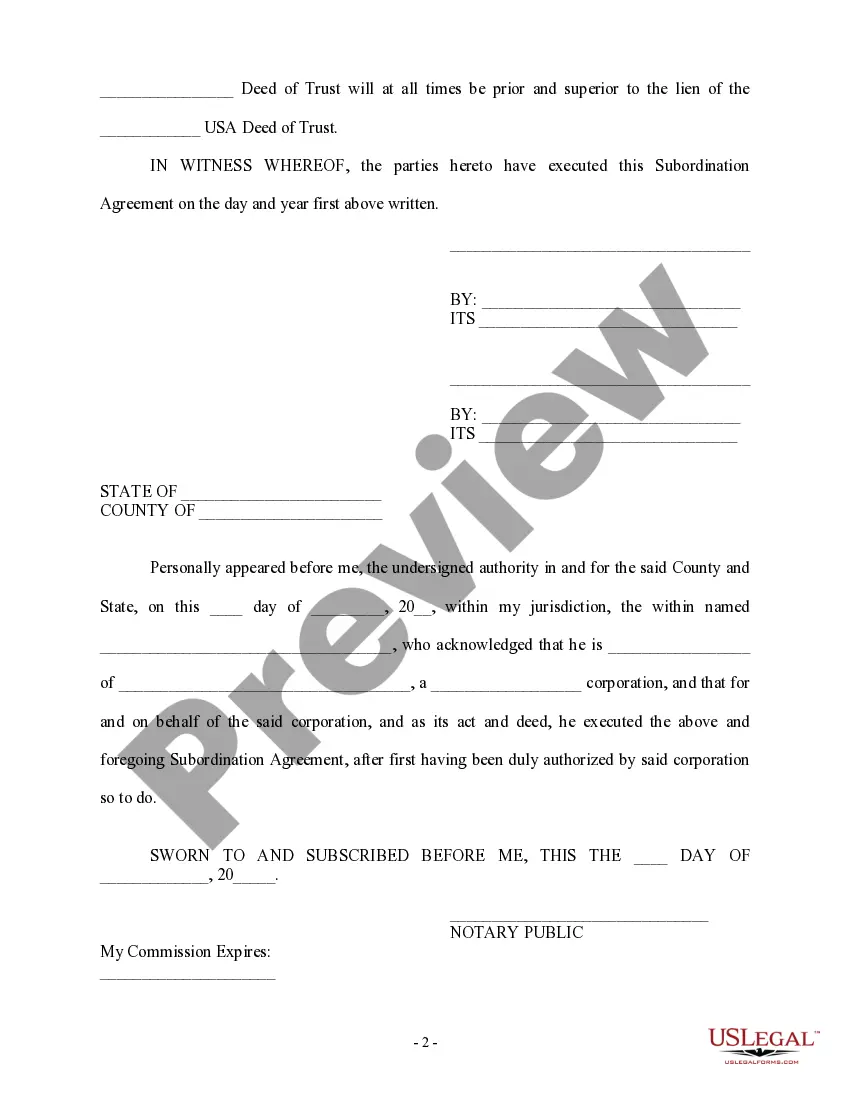
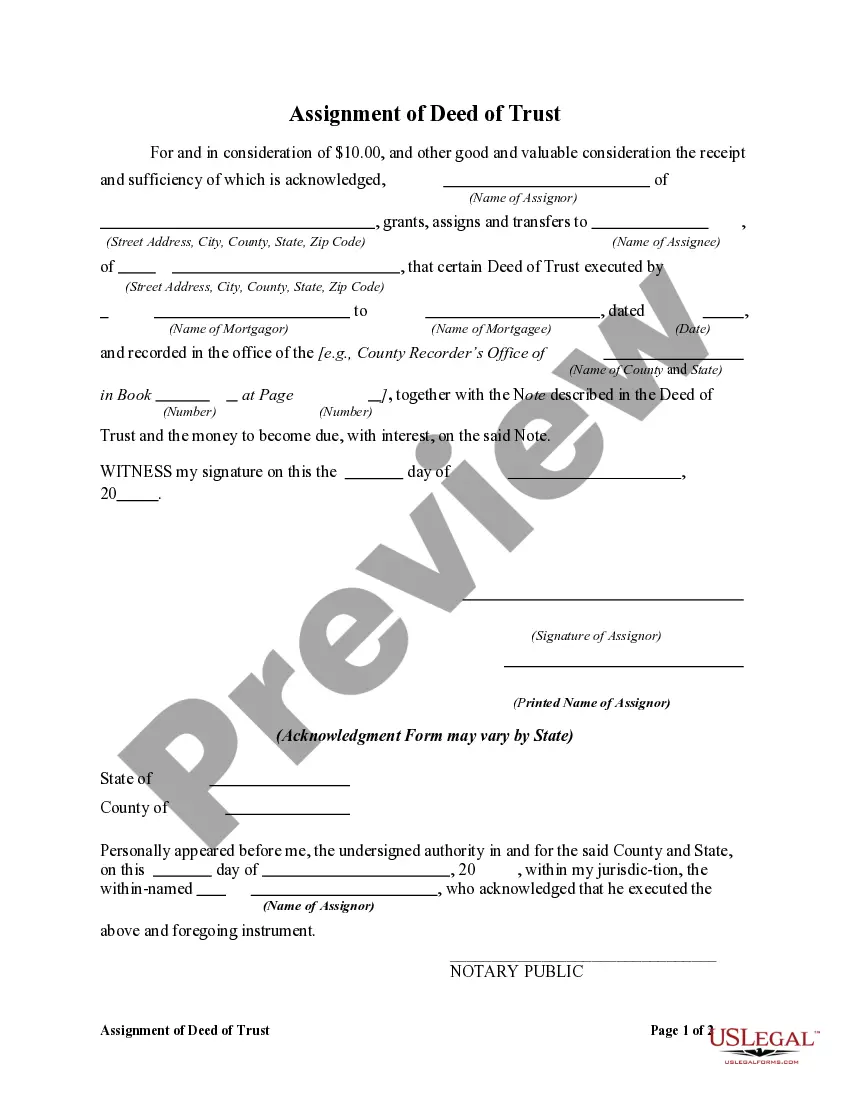
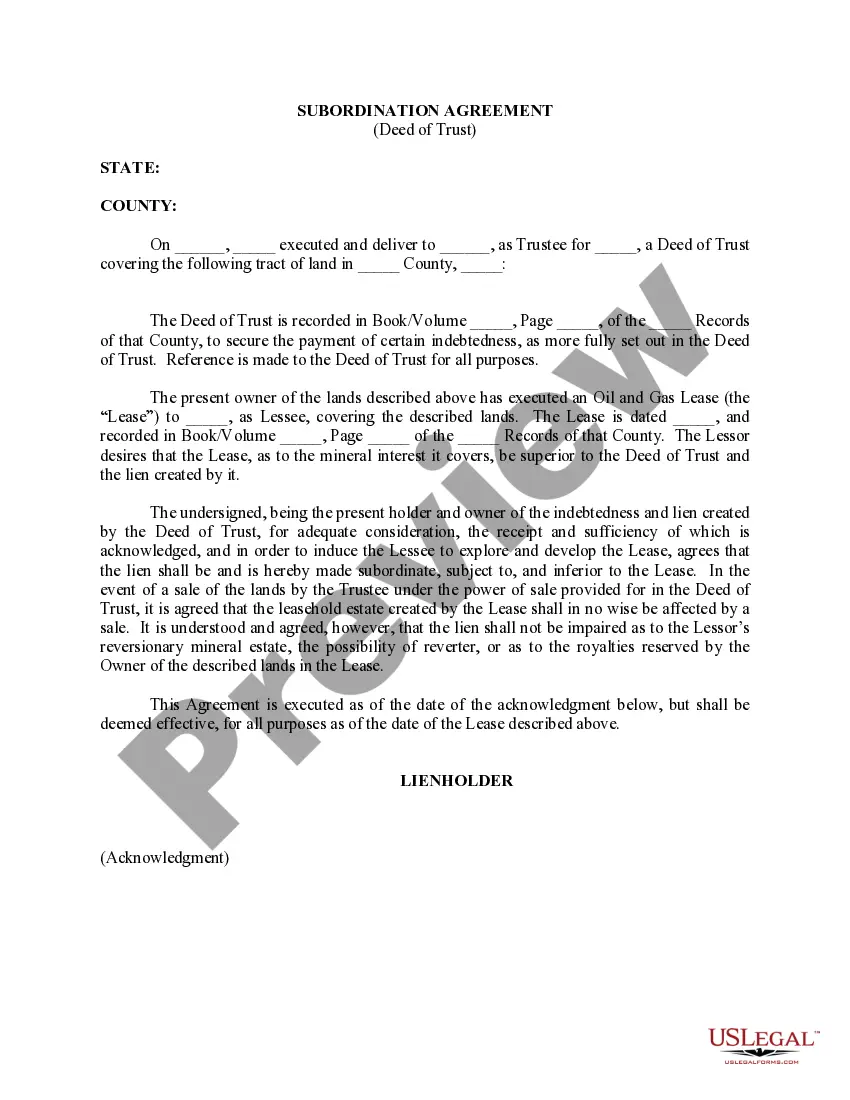
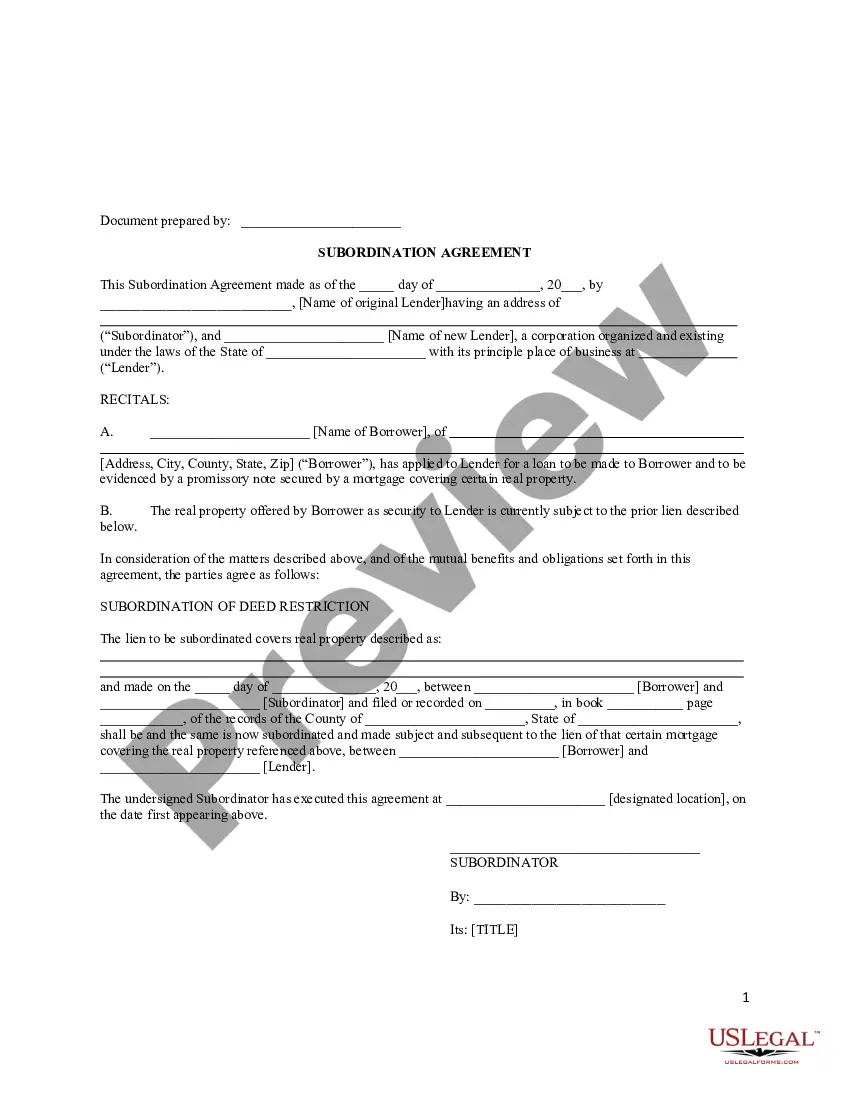
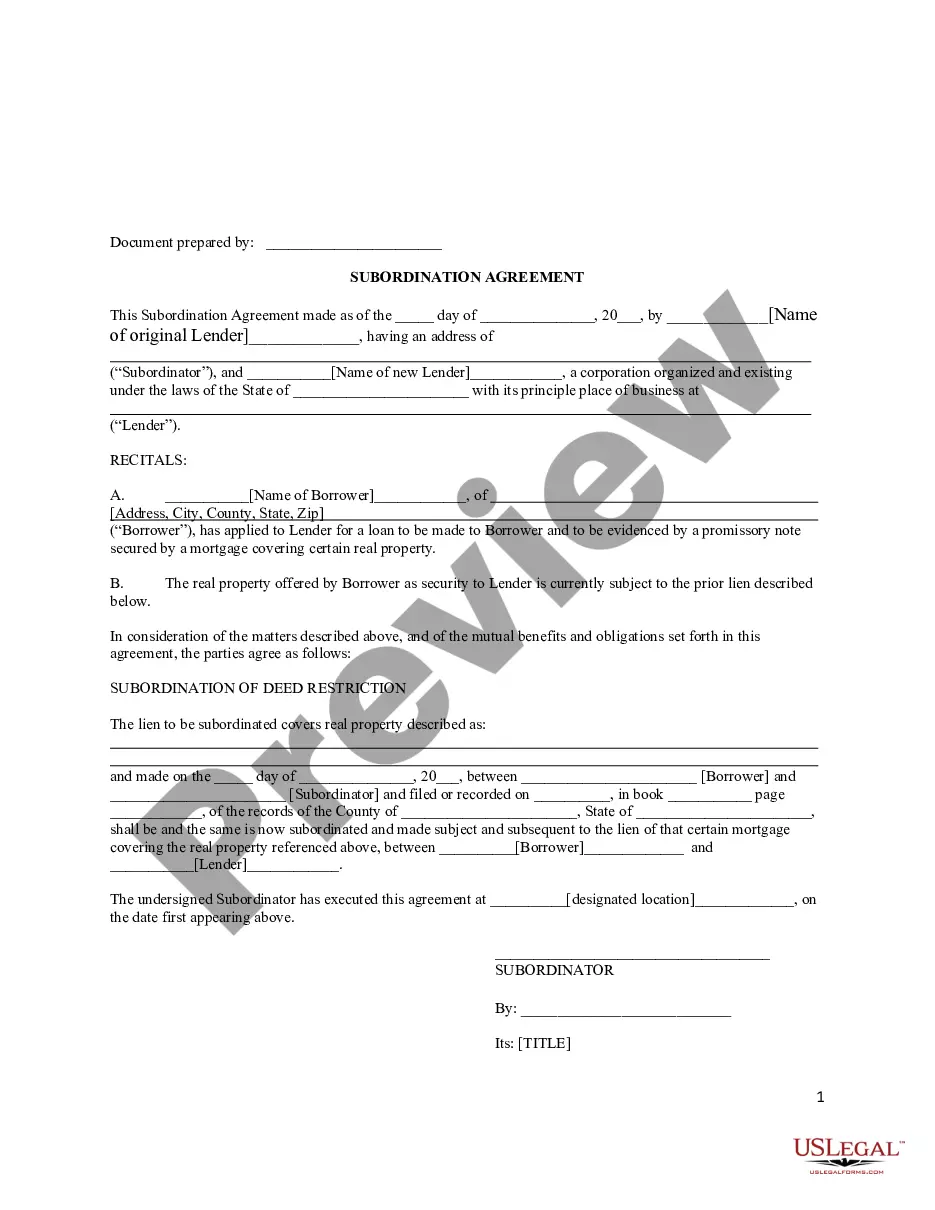
This agreement allows one lien holder to subordinate its deed of trust to the lien of another lien holder. For valuable consideration, a particular deed of trust will at all times be prior and superior to the subordinate lien.
Indiana Subordination Agreement of Deed of Trust
State:
Multi-State
Control #:
US-00185
Format:
Word;
Rich Text
Instant download
Description
Free preview


How to fill out Subordination Agreement Of Deed Of Trust?
If you want to be thorough, obtain, or print sanctioned document templates, utilize US Legal Forms, the largest compilation of legal forms available online. Employ the site's straightforward and convenient search feature to locate the documents you need. Various templates for business and personal purposes are categorized by groups and states, or keywords. Use US Legal Forms to quickly find the Indiana Subordination Agreement of Deed of Trust with just a few clicks.
If you are already a US Legal Forms user, sign in to your account and then click the Download button to retrieve the Indiana Subordination Agreement of Deed of Trust. You can also access forms you previously saved from the My documents section of your account.
If you are utilizing US Legal Forms for the first time, follow the instructions below: Step 1. Ensure you have selected the form for your correct region/country. Step 2. Use the Preview option to review the form’s content. Don’t forget to check the description. Step 3. If you are not satisfied with the form, utilize the Search field at the top of the screen to find other versions of the legal form template. Step 4. Once you have found the form you need, select the Get now button. Choose the pricing plan you prefer and enter your credentials to register for an account. Step 5. Complete the purchase. You can use your credit card or PayPal account to finalize the transaction. Step 6. Choose the format of your legal form and download it to your device. Step 7. Fill out, edit, and print or sign the Indiana Subordination Agreement of Deed of Trust.
- Every legal document template you obtain is yours for a long time.
- You have access to every form you saved in your account.
- Click the My documents section and select a form to print or download again.
- Be proactive and download, and print the Indiana Subordination Agreement of Deed of Trust with US Legal Forms.
- There are thousands of professional and state-specific forms available for your business or personal needs.
Form popularity
FAQ
Despite its technical-sounding name, the subordination agreement has one simple purpose. It assigns your new mortgage to first lien position, making it possible to refinance with a home equity loan or line of credit. Signing your agreement is a positive step forward in your refinancing journey.
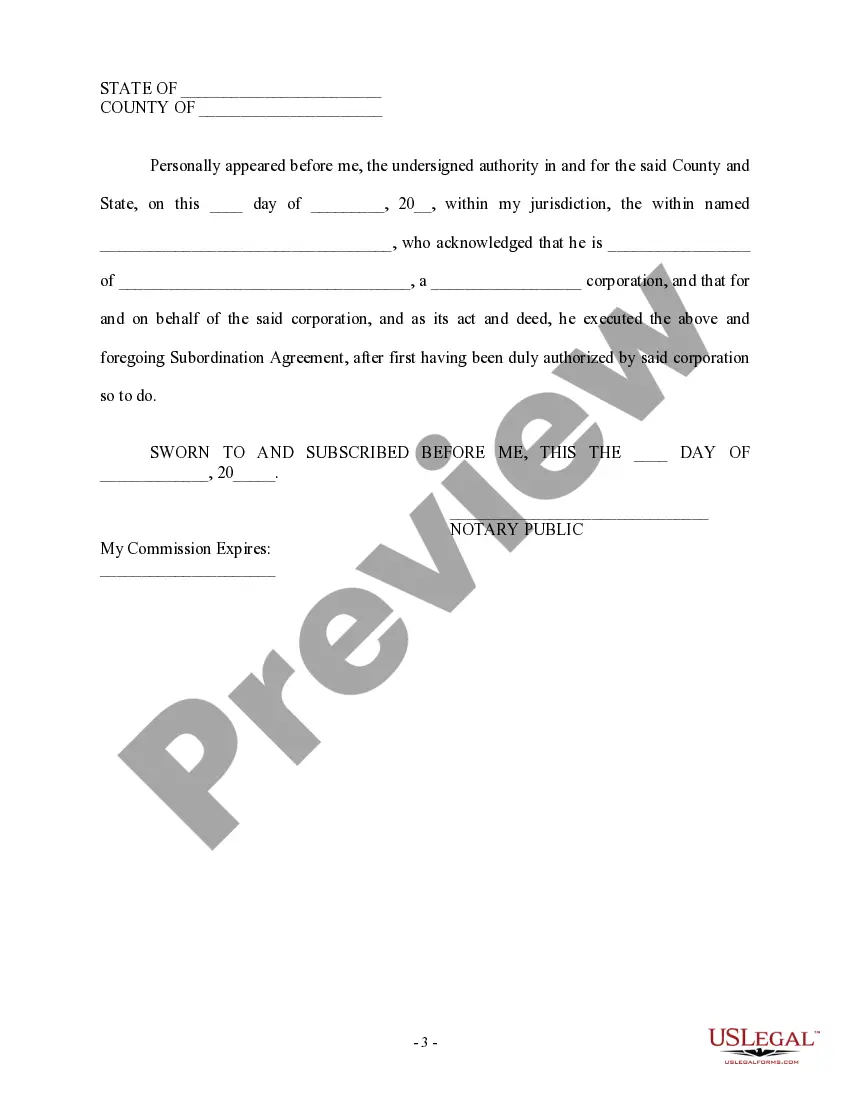
A subordination agreement must be signed and acknowledged by a notary and recorded in the official records of the county to be enforceable.
A contractual subordination occurs where, by agreement between a debtor and a creditor, debts owed to the creditor are to rank below other debts of the debtor.
The new lender prepares the subordination agreement in conjunction with the subordinating lienholder. Then the parties typically sign the agreement. But in some cases, just the subordinating lender will need to sign the paperwork.
A subordination clause is a clause in an agreement that states that the current claim on any debts will take priority over any other claims formed in other agreements made in the future.
An example is a trust document that includes a subordinate clause. This requires it to state that once the primary lien becomes active, a secondary lien becomes automatically subordinate. For instance, if a trust pays education funding as a first priority, the first lien is tuition.
A "subordination agreement" is a contract to prioritize one debt over another for repayment. The agreement establishes that one party's claim is superior to another party's interest. Subordination agreements happen all the time in mortgage refinancing transactions.
A subordination agreement must be signed and acknowledged by a notary and recorded in the official records of the county to be enforceable.