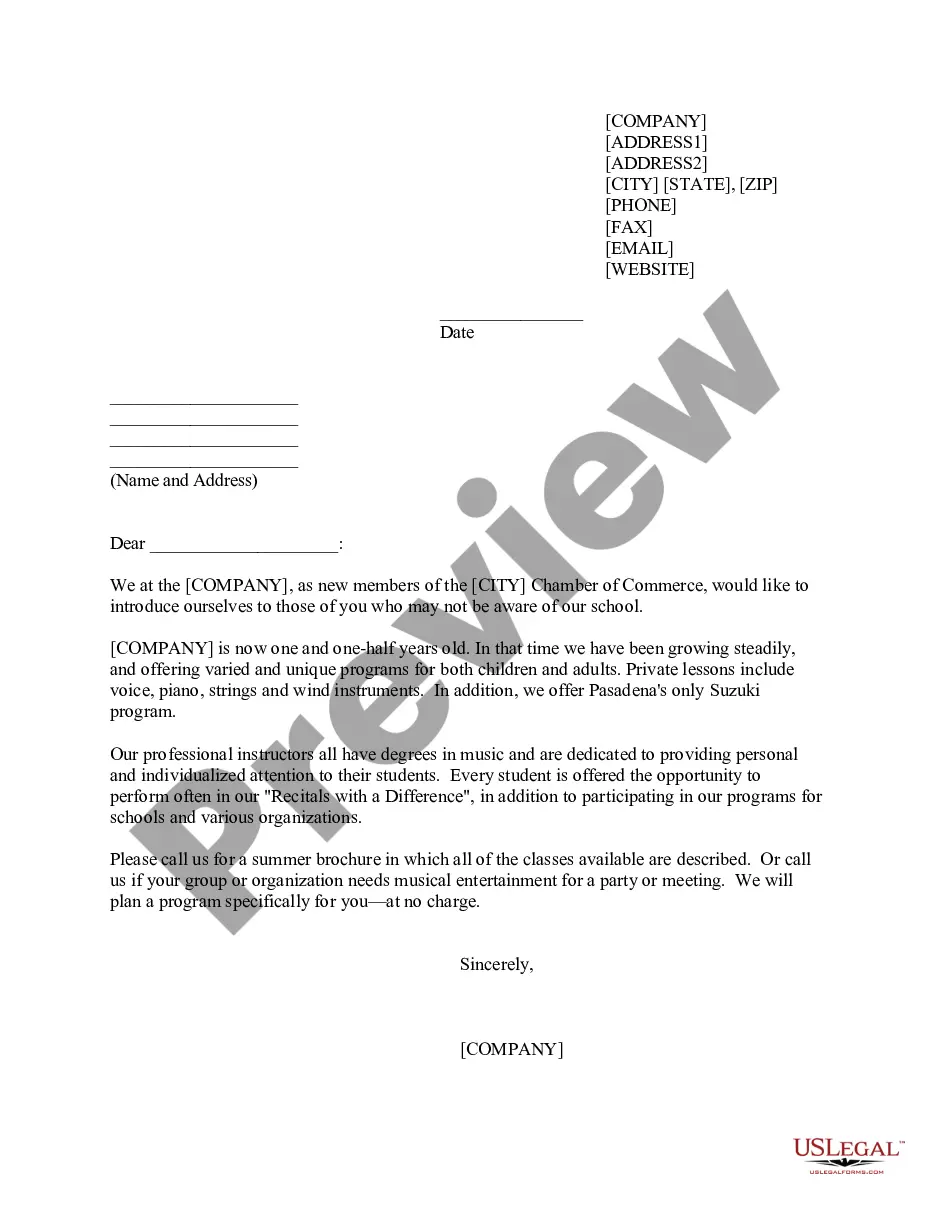
This form is a Complaint For Wrongful Termination of Insurance Under ERISA and For Bad Faith-Jury Trial Demand. Adapt to your specific circumstances. Don't reinvent the wheel, save time and money.
Indiana Complaint For Wrongful Termination of Insurance Under ERISA and For Bad Faith - Jury Trial Demand
Instant download
This website is not affiliated with any governmental entity
Public form
Description
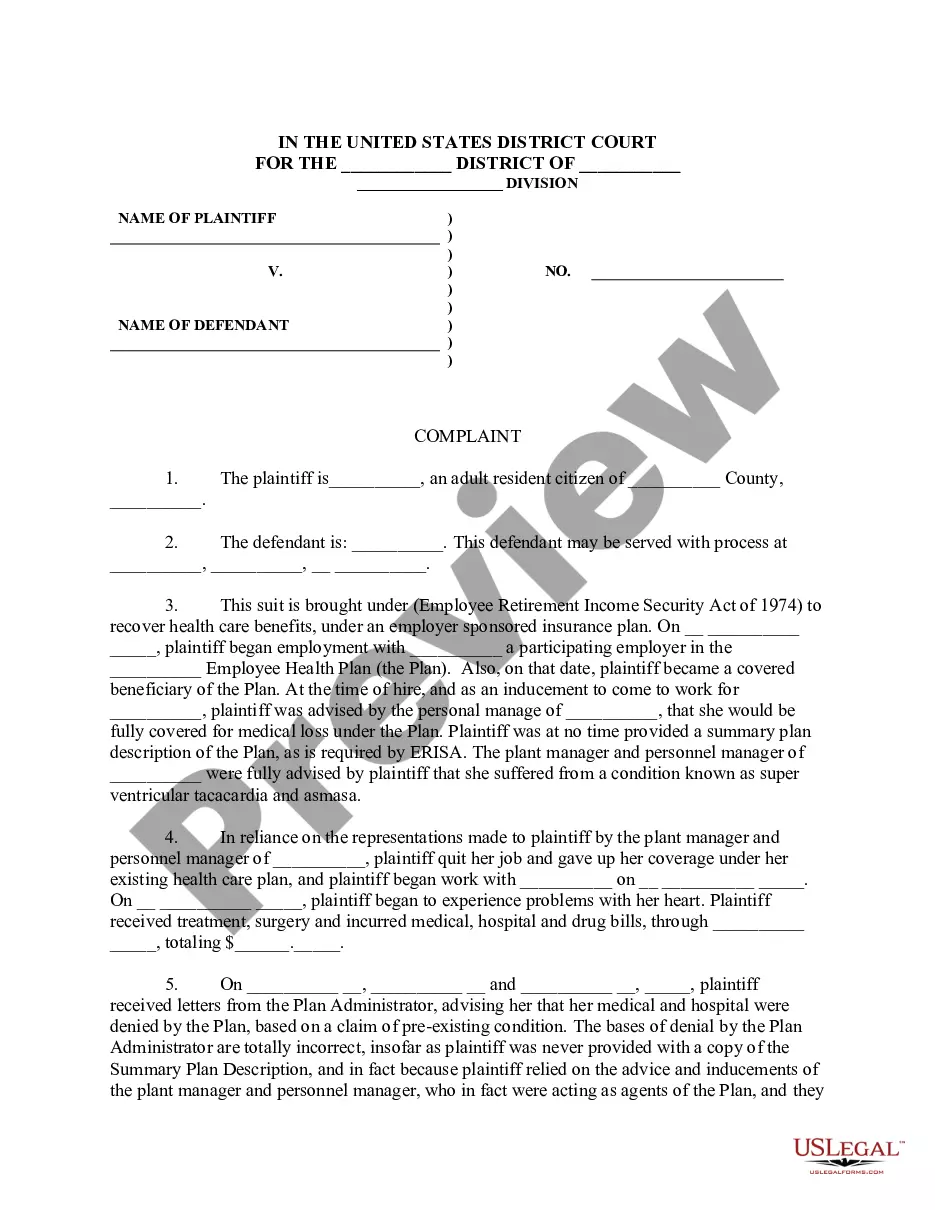



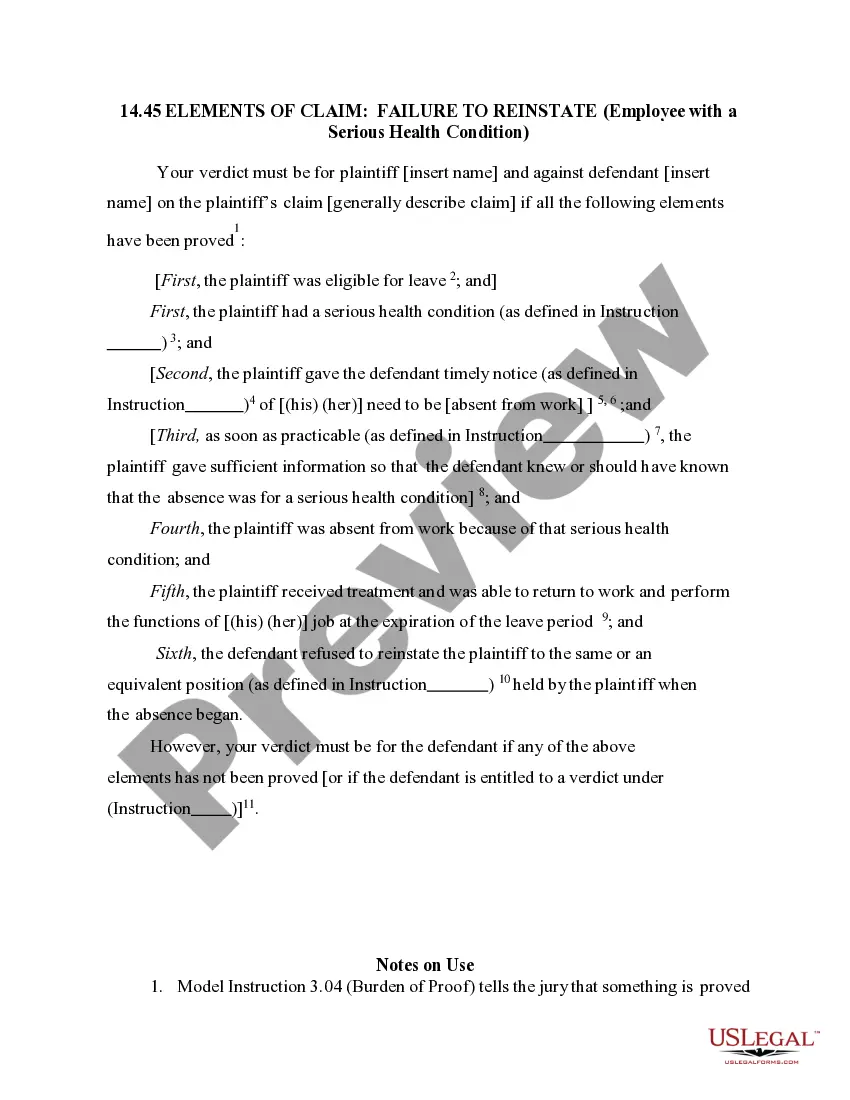

How to fill out Complaint For Wrongful Termination Of Insurance Under ERISA And For Bad Faith - Jury Trial Demand?
If you require thorough, obtain, or printing sanctioned document templates, utilize US Legal Forms, the largest assortment of legal forms available online. Employ the site's straightforward and user-friendly search to locate the documents you need. A range of templates for business and personal purposes are organized by categories and states or keywords.
Utilize US Legal Forms to acquire the Indiana Complaint For Wrongful Termination of Insurance Under ERISA and For Bad Faith - Jury Trial Demand with just a few clicks.
If you are already a US Legal Forms user, Log In to your account and click the Download option to locate the Indiana Complaint For Wrongful Termination of Insurance Under ERISA and For Bad Faith - Jury Trial Demand. You can also access forms you previously downloaded from the My documents tab in your account.
Every legal document template you purchase is your property forever. You have access to every form you downloaded in your account. Select the My documents section and choose a form to print or download again.
Obtain and download, and print the Indiana Complaint For Wrongful Termination of Insurance Under ERISA and For Bad Faith - Jury Trial Demand with US Legal Forms. There are numerous professional and state-specific forms you can use for your business or personal needs.
- Step 1. Make sure you have selected the form for the correct city/state.
- Step 2. Use the Review option to examine the form's content. Remember to read the summary.
- Step 3. If you are not satisfied with the form, use the Search area at the top of the screen to find other variations of the legal form template.
- Step 4. Once you have found the form you need, select the Buy now option. Choose the pricing plan you prefer and enter your information to register for an account.
- Step 5. Process the transaction. You can use your credit card or PayPal account to complete the transaction.
- Step 6. Choose the format of the legal form and download it to your device.
- Step 7. Complete, revise, and print or sign the Indiana Complaint For Wrongful Termination of Insurance Under ERISA and For Bad Faith - Jury Trial Demand.
Form popularity
FAQ
Winning a bad faith claim can be challenging, as you must prove that the insurance company acted unreasonably or with malice. The complexity of each case varies, depending on the evidence available and the specifics of the insurance policy. By utilizing the Indiana Complaint For Wrongful Termination of Insurance Under ERISA and For Bad Faith - Jury Trial Demand, you can enhance your chances of success and navigate the legal landscape with confidence.
To file a complaint against an insurance company in Indiana, start by documenting all relevant details, including your policy information and the nature of the complaint. Next, submit your complaint to the Indiana Department of Insurance, providing as much evidence as possible. For a more structured approach, consider using the Indiana Complaint For Wrongful Termination of Insurance Under ERISA and For Bad Faith - Jury Trial Demand to ensure your rights are protected during this process.
In Indiana, the bad faith law requires insurance companies to act in good faith and deal fairly with policyholders. If an insurer unjustly denies or delays a claim without reasonable justification, you may have grounds for a bad faith claim. Understanding these laws is crucial for anyone facing issues with their insurance provider, especially when pursuing an Indiana Complaint For Wrongful Termination of Insurance Under ERISA and For Bad Faith - Jury Trial Demand.
To prove that an insurance company acted in bad faith, you must demonstrate that the company failed to uphold its contractual obligations or neglected to properly investigate your claim. Gather evidence such as communication records, policy documents, and any relevant correspondence that highlights the insurer's unreasonable actions. If you feel overwhelmed, consider utilizing the Indiana Complaint For Wrongful Termination of Insurance Under ERISA and For Bad Faith - Jury Trial Demand to guide your case effectively.
The following are unfair claim settlement practices: (1) Misrepresenting pertinent facts or insurance policy provisions relating to coverages at issue. (2) Failing to acknowledge and act reasonably promptly upon communications with respect to claims arising under insurance policies.
Insurance bad faith statute of limitations You have 2 years to file an insurance bad faith claim in Indiana.
To establish bad faith in Indiana, you must prove conscious wrongdoing on the part of the insurance company by clear and convincing evidence. In other words, poor judgment and even negligence alone won't amount to bad faith.
In negotiations, a bad faith argument is made without genuine intention to come to an agreement but with an ulterior motive. Proof that a party was carrying on negotiations with an ulterior motive can help sustain a claim for bad faith.
There are two types of bad faith insurance claims: first-party and third-party. First-party insurance claims are those that policyholders bring against their insurance company for not covering their damages. In these cases, plaintiffs believe their insurance provider withholds payment on a claim they shouldn't.