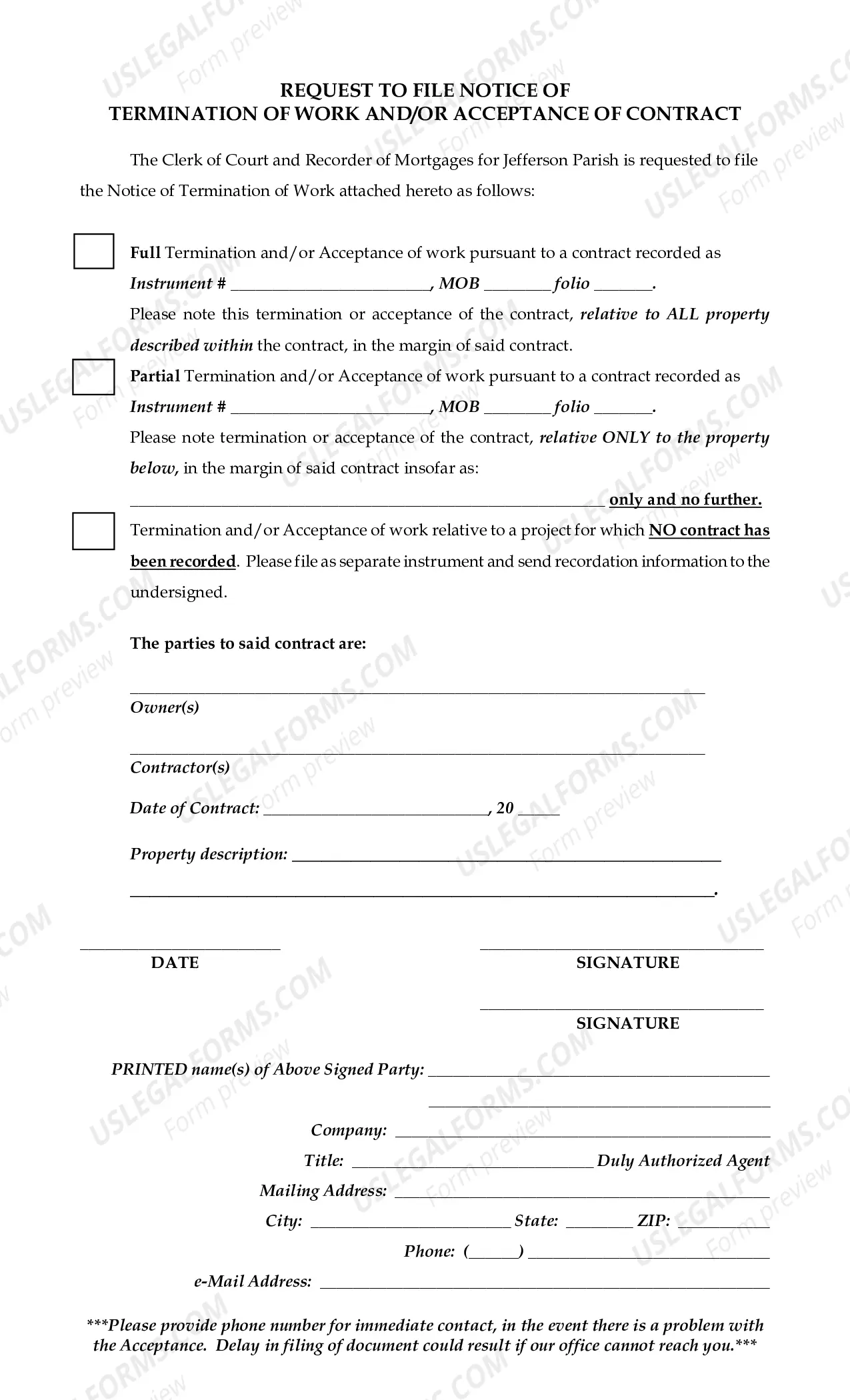
Indiana Notice of Option for Recording
About this form
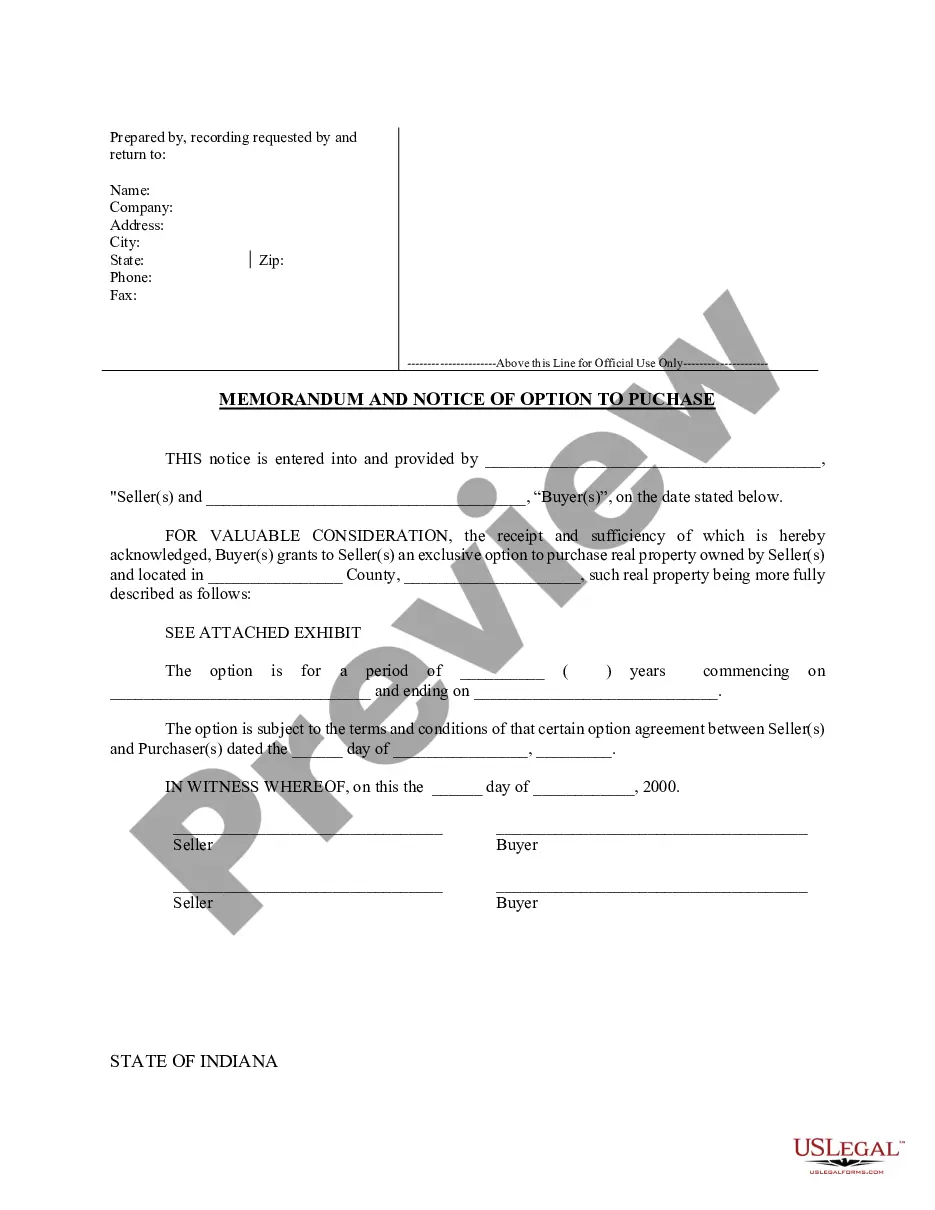
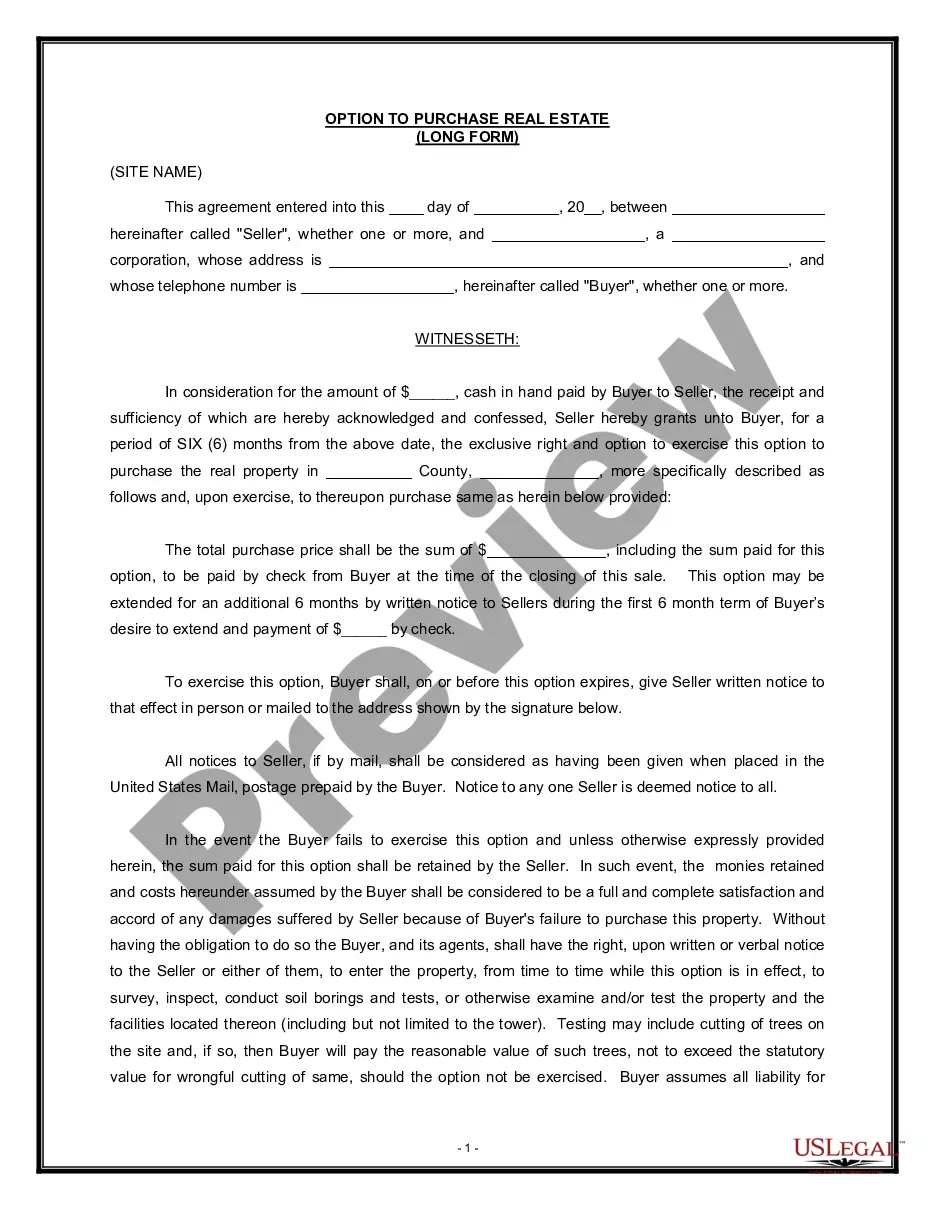
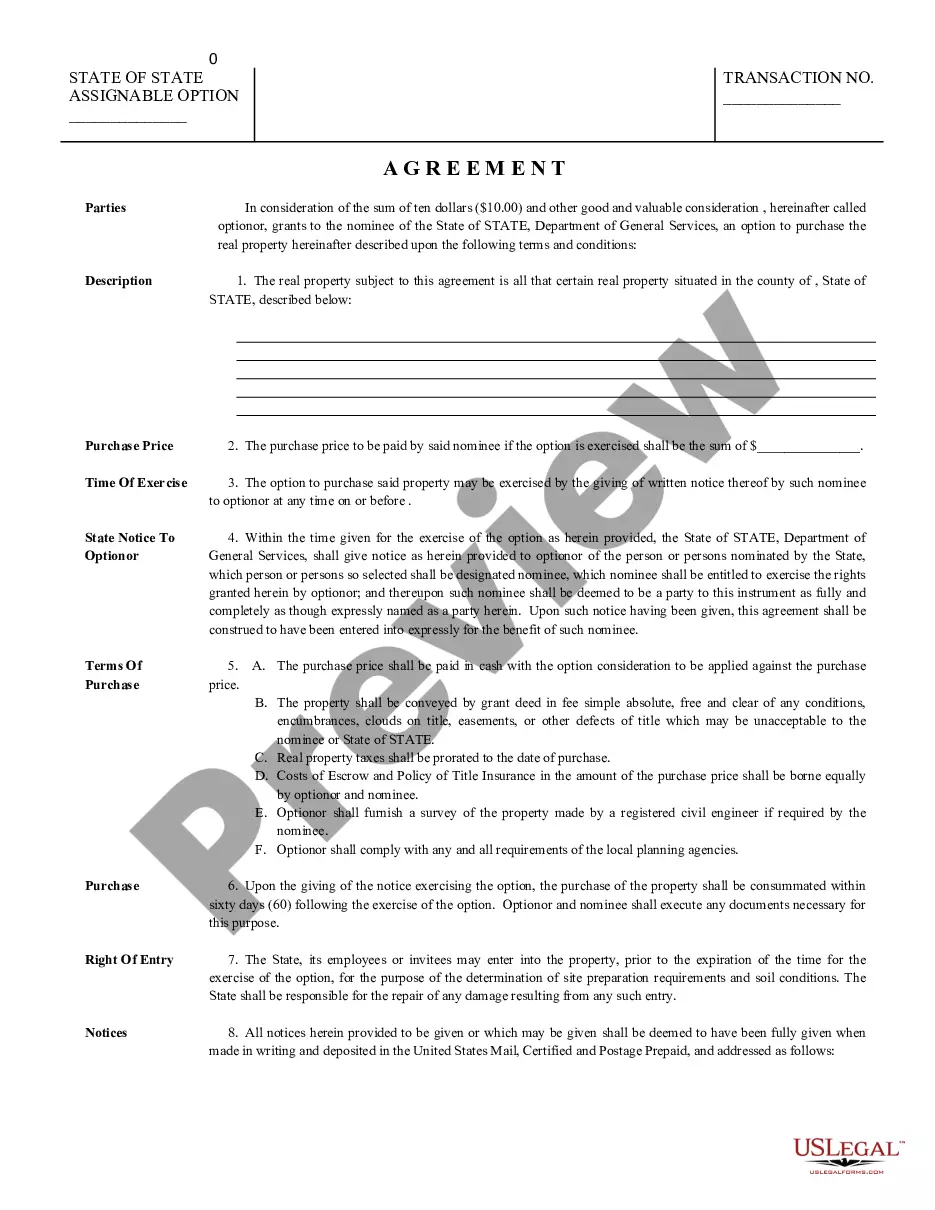
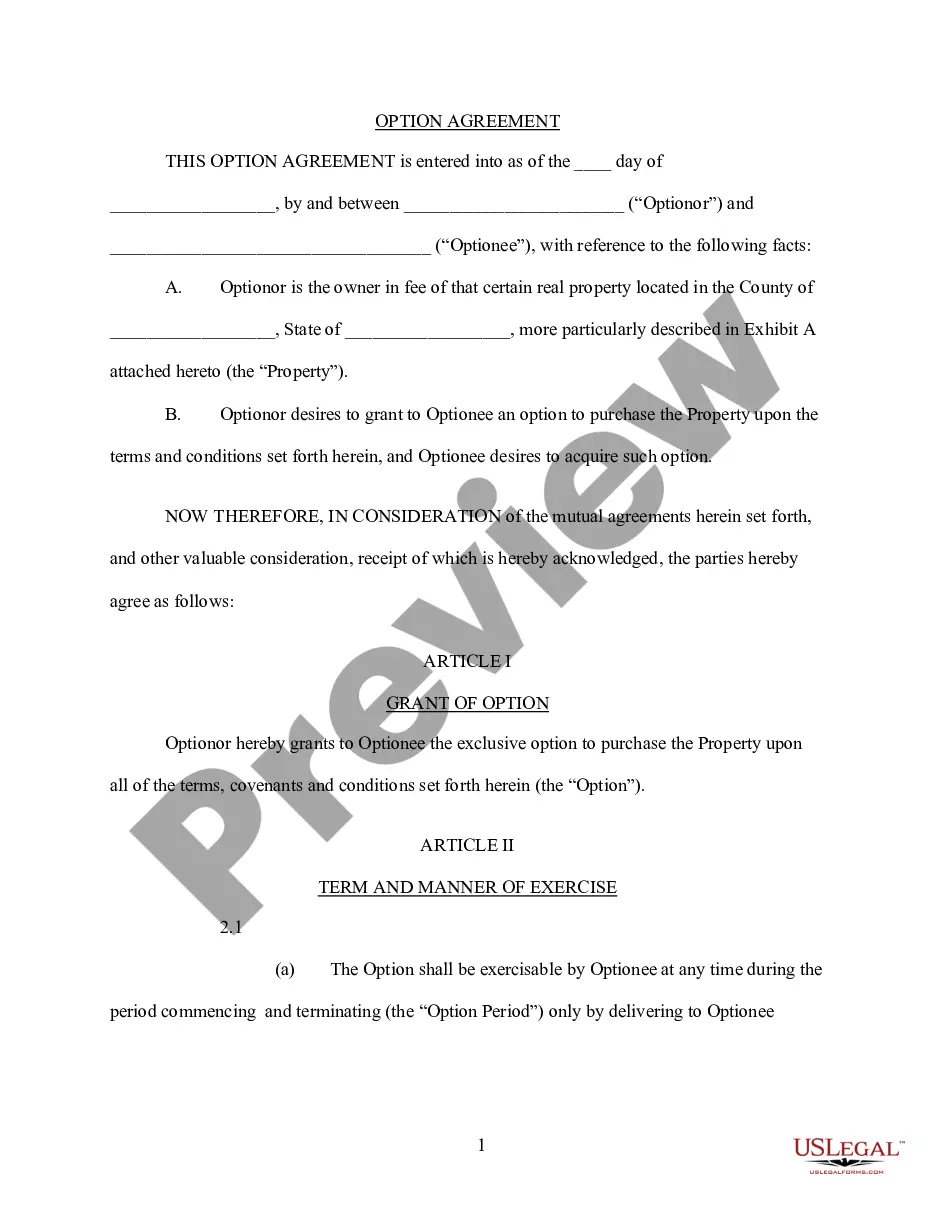
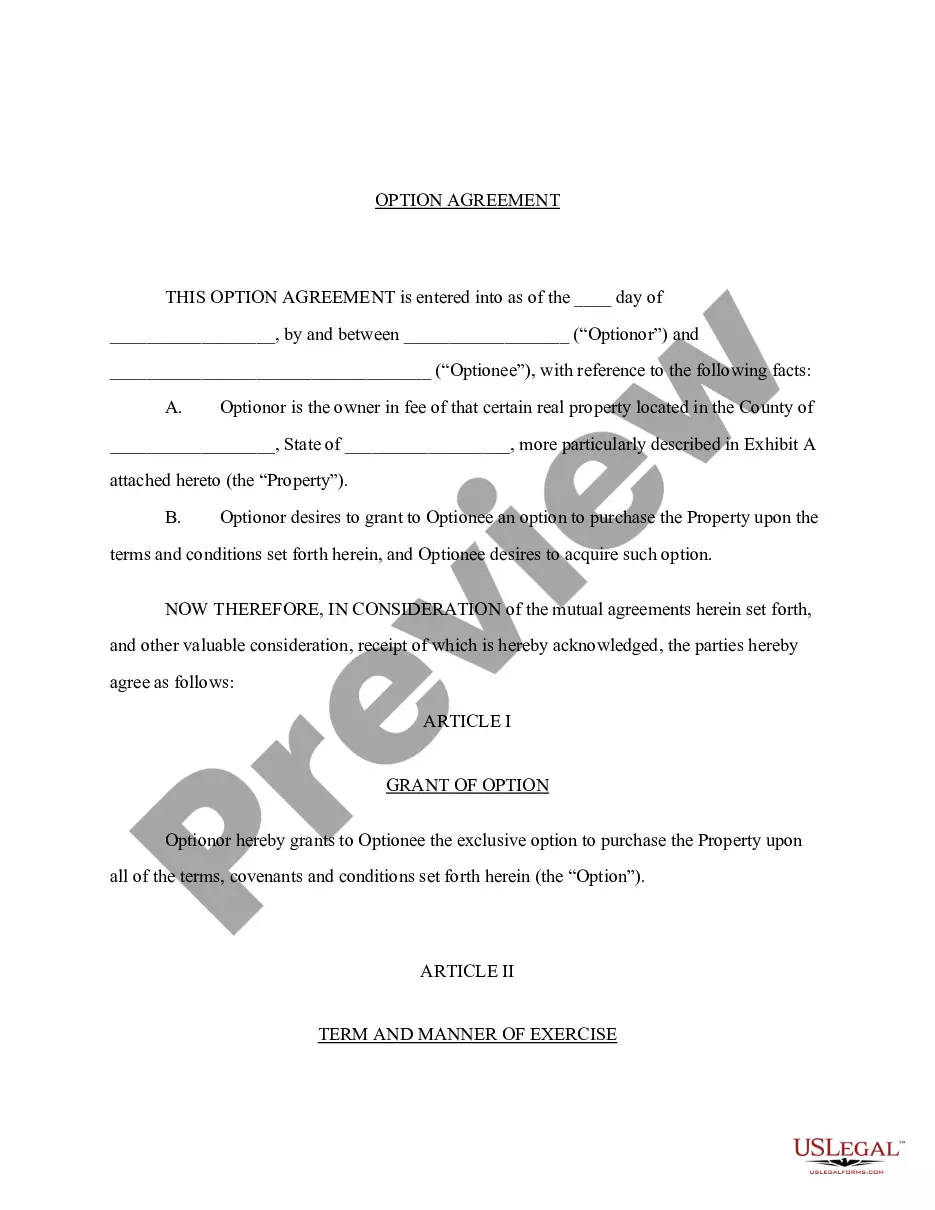
The Notice of Option for Recording is a legal document used to record an option to purchase real estate. This form serves as a formal notification in public records that an option exists on a specific property, allowing interested parties to be aware of the pending transaction. Unlike recording the entire Option Agreement, this notice provides a concise record while still indicating the seller's and buyer's intentions.
Key parts of this document
- Prepared by, recording requested by, and return to information
- Details of the seller(s) and buyer(s)
- Description of the real property, including location and county
- Time frame for the option's validity, including start and end dates
- Reference to an existing option agreement
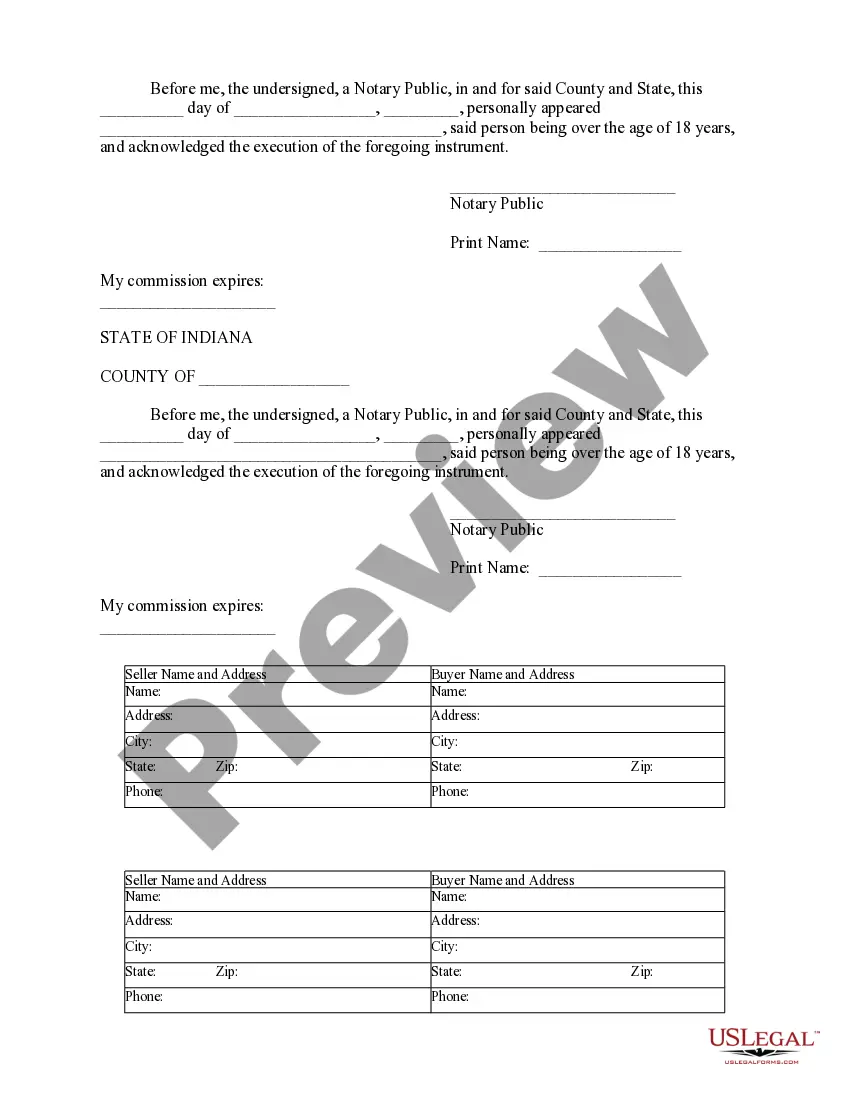
- Signatures of the seller(s) and buyer(s), along with notarization sections

When this form is needed
This form is typically used when a seller and buyer have agreed on an option to purchase property but want to ensure that third parties are aware of this arrangement. It is particularly useful in real estate transactions where the buyer needs time to secure financing or finalize due diligence before completing the sale. Recording this notice protects the buyerâs interest in the property against potential claims from others.
Intended users of this form
- Property sellers who wish to grant an option to purchase to a buyer
- Buyers seeking to formalize their interest in a property before the purchase
- Real estate agents and brokers involved in property transactions
- Attorneys managing real estate deals and ensuring proper documentation
Steps to complete this form
- Identify the parties: Enter the names of the seller(s) and buyer(s).
- Specify the property: Provide a detailed description of the real estate, including county and address.
- Enter the option period: Fill in the duration for which the option is valid.
- Reference the option agreement: Include the date of the related option agreement.
- Sign and date the notice: Ensure all parties sign the document and include the date of execution.
- Obtain notarization: Have the document notarized as required for legal validity.
Does this form need to be notarized?
Yes, this form must be notarized to be legally valid. The notarization process verifies the identities of the signers and confirms their understanding and willingness to enter into the agreement. US Legal Forms offers integrated online notarization, making it easy to complete this process through secure video calls, available 24/7.
Get your form ready online
Our built-in tools help you complete, sign, share, and store your documents in one place.
Make edits, fill in missing information, and update formatting in US Legal Forms—just like you would in MS Word.
Download a copy, print it, send it by email, or mail it via USPS—whatever works best for your next step.
Sign and collect signatures with our SignNow integration. Send to multiple recipients, set reminders, and more. Go Premium to unlock E-Sign.
If this form requires notarization, complete it online through a secure video call—no need to meet a notary in person or wait for an appointment.
We protect your documents and personal data by following strict security and privacy standards.

Make edits, fill in missing information, and update formatting in US Legal Forms—just like you would in MS Word.

Download a copy, print it, send it by email, or mail it via USPS—whatever works best for your next step.

Sign and collect signatures with our SignNow integration. Send to multiple recipients, set reminders, and more. Go Premium to unlock E-Sign.

If this form requires notarization, complete it online through a secure video call—no need to meet a notary in person or wait for an appointment.

We protect your documents and personal data by following strict security and privacy standards.
Common mistakes
- Failing to accurately describe the property, which can lead to disputes.
- Not entering the correct option period, causing confusion about the agreement.
- Omitting signatures, which invalidates the notice.
- Neglecting to notarize the document, if required, rendering it unenforceable.
Why use this form online
- Convenience of downloading and printing the form at your convenience.
- Editability to ensure all information is accurate before submission.
- Reliability as forms are drafted by licensed attorneys to ensure legal compliance.
Looking for another form?

Form popularity
FAQ
Most video recordings are legal with or without consent.Generally the majority of the laws dealing with video recording privacy issues tend to allow surreptitious recording and monitoring of video activity under most circumstances without notification of any of the parties involved.
Locate the prior deed to the property. Create the new deed. Sign the new deed. Record the original deed.
California is an all-party consent state.It is illegal to record a confidential conversation, including a private conversation or telephone call, without consent in California. A violation of this rule is the crime of eavesdropping, per Penal Code 632 PC.
This is because Indiana has a one-party consent law for recording conversations and allows video recordings in any public place.This means that a person can secretly record a conversation without the knowledge of the other party and it is completely legal.
Under Indiana's surveillance law, it is a misdemeanor for one to place a camera or other equipment that records images or data of any kind while unattended on the private property of another person without that person's consent.
Documents must be notarized. Documents executed or acknowledged in Indiana must include a statement that includes: The names of all those signing or serving as a witness on the document must be identical throughout the document and must be printed or typewritten under each signature.
Failure to record a deed effectively makes it impossible for the public to know about the transfer of a property. That means the legal owner of the property appears to be someone other than the buyer, a situation that can generate serious ramifications.
Retrieve your original deed. Get the appropriate deed form. Draft the deed. Sign the deed before a notary. Record the deed with the county recorder. Obtain the new original deed.
Signing (§ 32-21-2-3) All deed must be executed by one of the following: judge, clerk of a court of record, county auditor, county recorder, notary public, mayor of a city in Indiana or any other state, commissioner appointed in a state other than Indiana by the governor of Indiana, clerk of the city county council