Indiana Pretrial Settlement Agreement
About this form
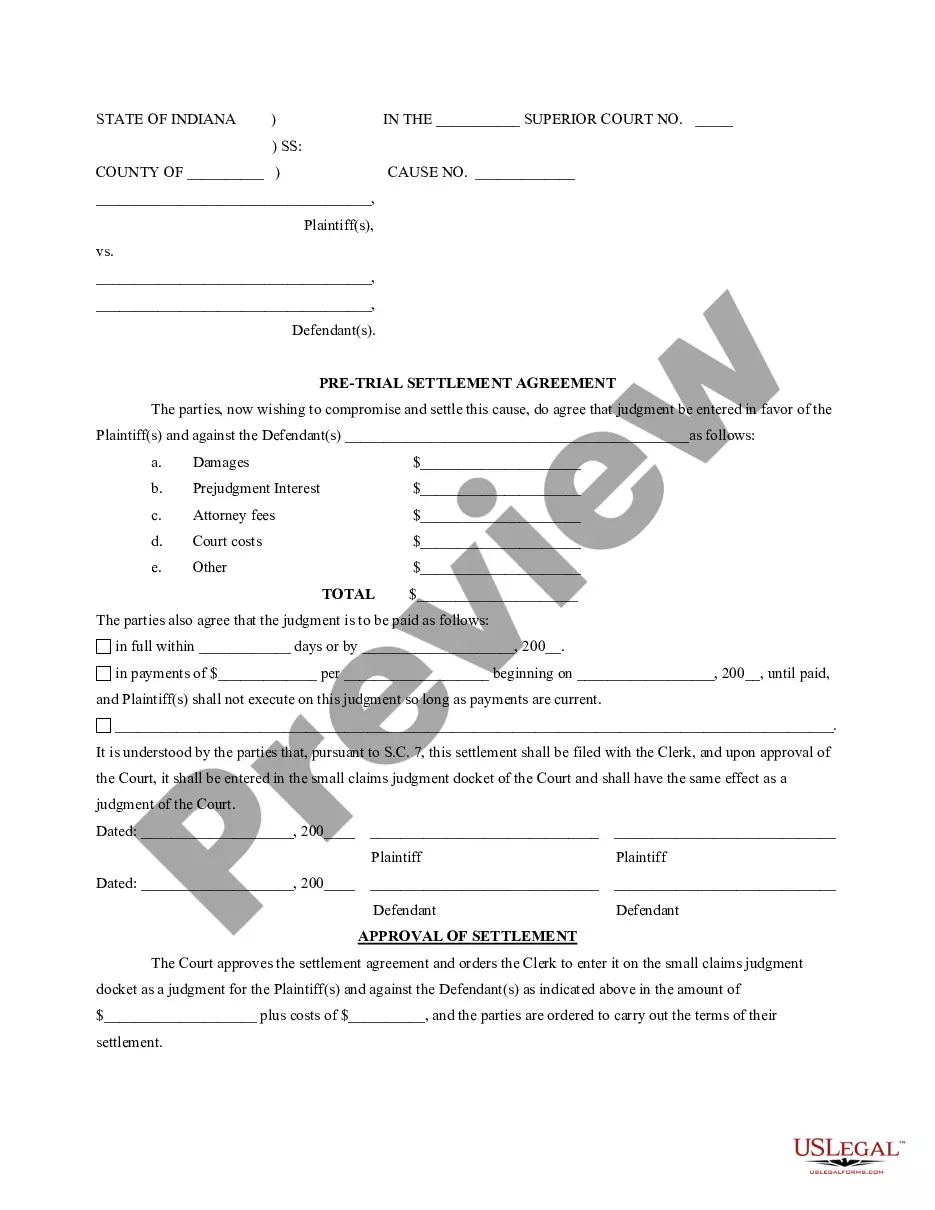
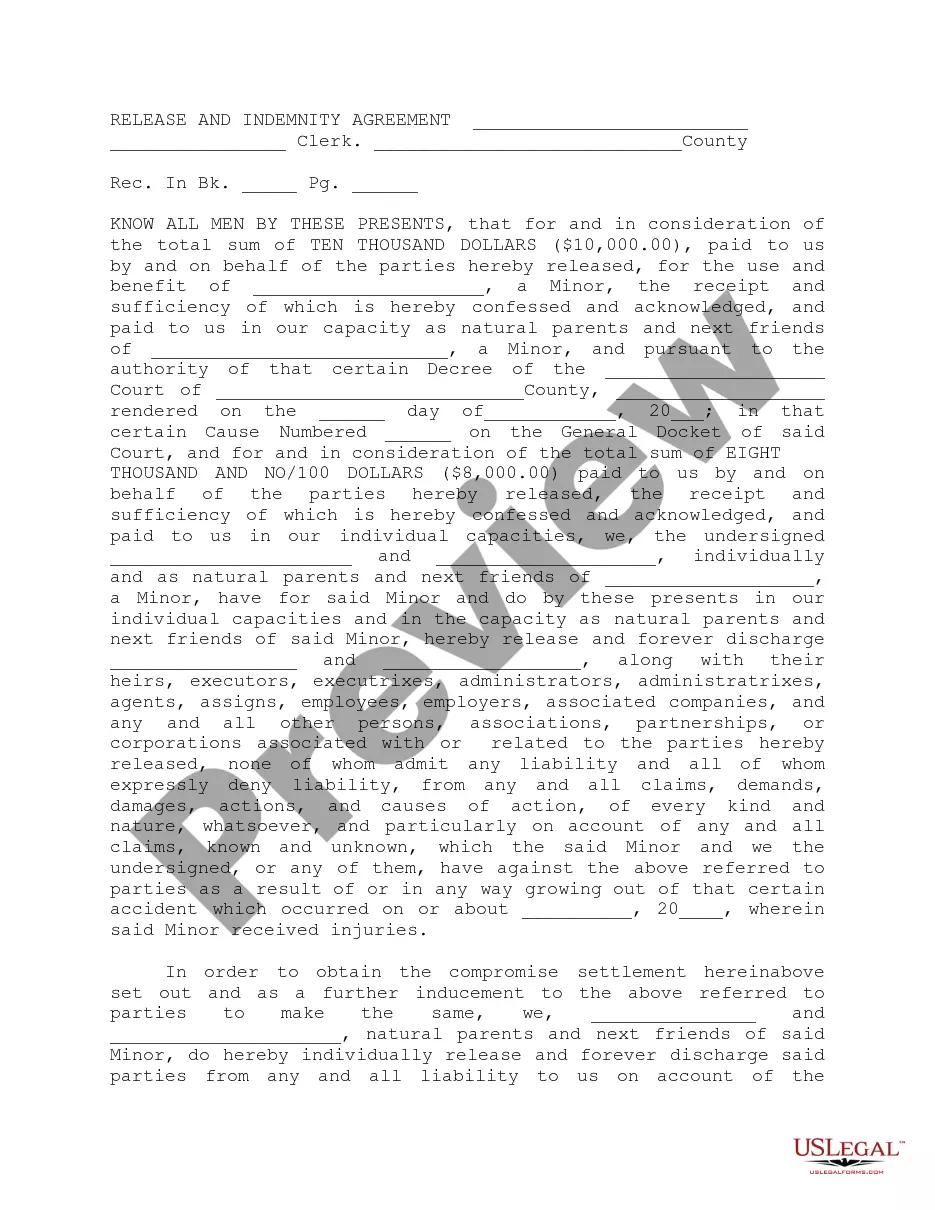
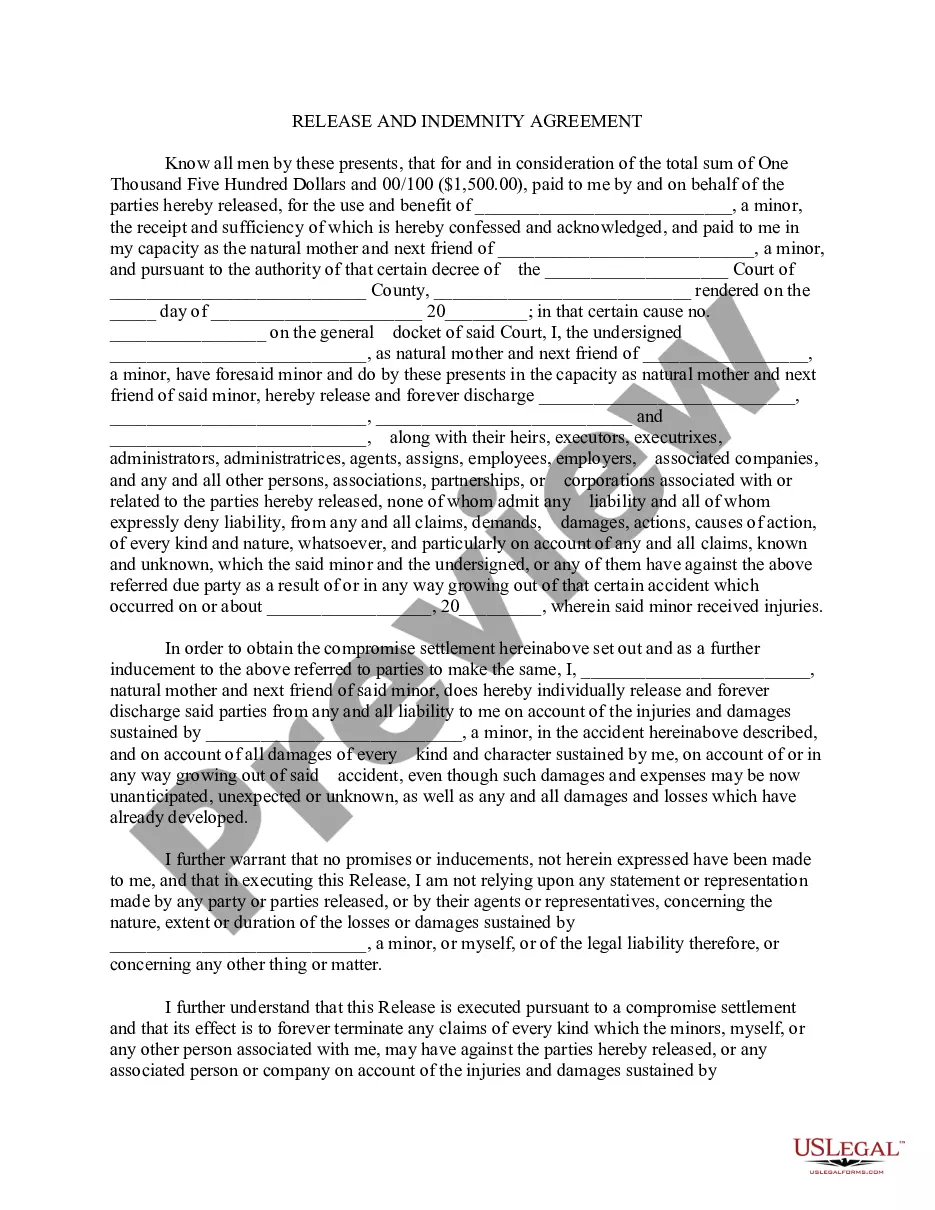
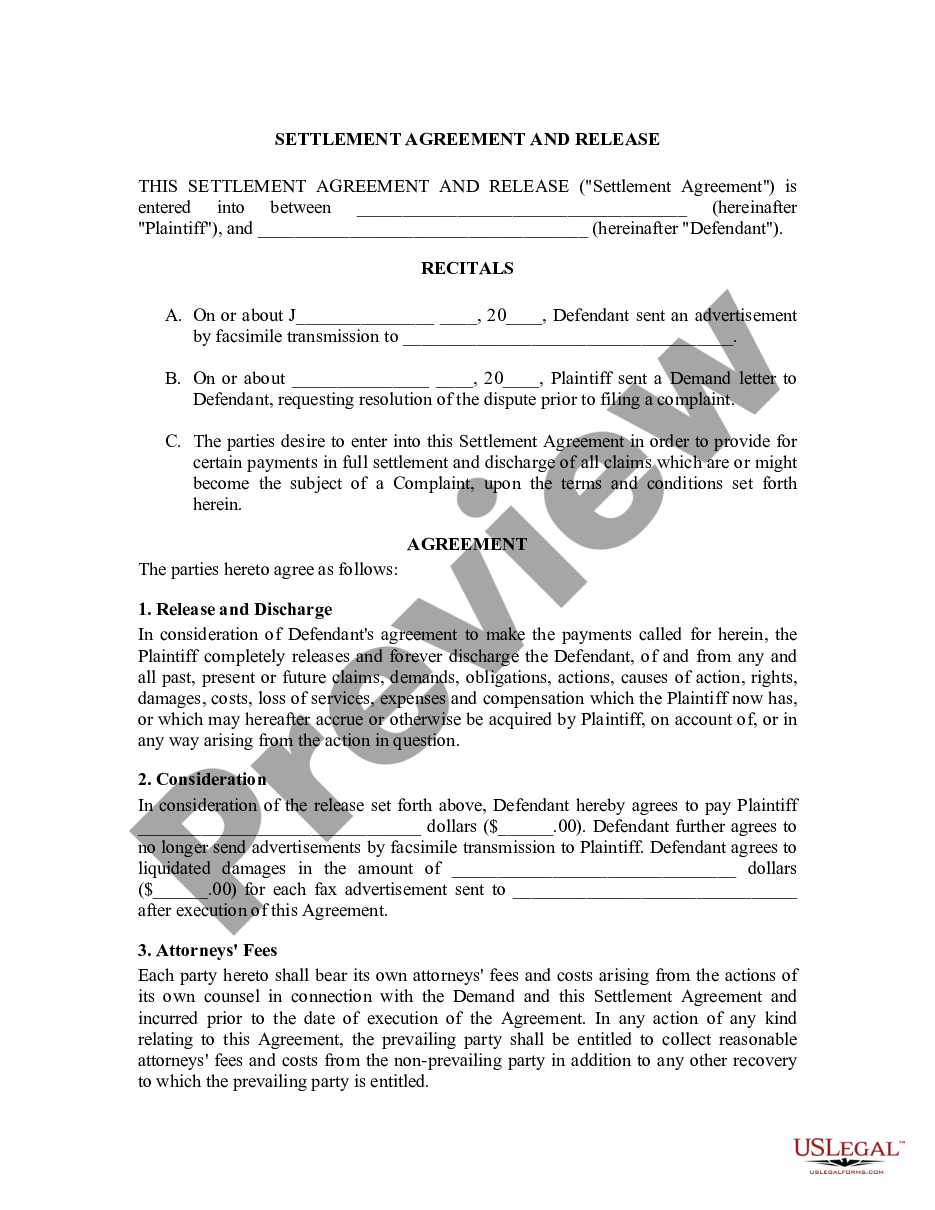
The Pretrial Settlement Agreement is a legal document used in Indiana's Small Claims Court. This agreement is essential for parties involved in a lawsuit who wish to settle their disputes before the trial begins. Unlike other forms of settlement documentation, this specific agreement is tailored to meet the requirements of small claims actions in Indiana, facilitating a resolution that is binding upon court approval.
What’s included in this form
- Identification of the plaintiff(s) and defendant(s).
- Details of damages and any associated costs, including prejudgment interest and attorney fees.
- The total amount of the settlement agreed upon by both parties.
- Payment terms, specifying how the judgment will be satisfied.
- Submission and court approval process for the settlement agreement.

When to use this document
This form is typically used when parties to a small claims lawsuit in Indiana have reached a mutual agreement to resolve their dispute without proceeding to trial. It is appropriate to use this agreement when both sides have discussed their claims and are ready to settle on specific terms regarding damages and payments.
Who this form is for
This form is intended for:
- Individuals or businesses involved in a small claims case in Indiana.
- Parties looking to avoid the time and expense of a trial.
- Those seeking a legally enforceable settlement agreement approved by the court.
How to prepare this document
- Identify and list the names of all parties involved, including plaintiffs and defendants.
- Detail the damages and any related costs, filling in amounts for damages, interest, attorney fees, and court costs.
- Specify the total amount settled upon by both parties.
- Outline the payment terms, including deadlines for full payment or installment arrangements.
- Ensure all parties sign and date the agreement in the designated areas.
Notarization guidance
This form does not typically require notarization to be legally valid. However, some jurisdictions or document types may still require it. US Legal Forms provides secure online notarization powered by Notarize, available 24/7 for added convenience.
Get your form ready online
Our built-in tools help you complete, sign, share, and store your documents in one place.
Make edits, fill in missing information, and update formatting in US Legal Forms—just like you would in MS Word.
Download a copy, print it, send it by email, or mail it via USPS—whatever works best for your next step.
Sign and collect signatures with our SignNow integration. Send to multiple recipients, set reminders, and more. Go Premium to unlock E-Sign.
If this form requires notarization, complete it online through a secure video call—no need to meet a notary in person or wait for an appointment.
We protect your documents and personal data by following strict security and privacy standards.

Make edits, fill in missing information, and update formatting in US Legal Forms—just like you would in MS Word.

Download a copy, print it, send it by email, or mail it via USPS—whatever works best for your next step.

Sign and collect signatures with our SignNow integration. Send to multiple recipients, set reminders, and more. Go Premium to unlock E-Sign.

If this form requires notarization, complete it online through a secure video call—no need to meet a notary in person or wait for an appointment.

We protect your documents and personal data by following strict security and privacy standards.
Common mistakes
- Failing to include all necessary parties in the agreement.
- Not specifying clear terms for payment schedules.
- Overlooking signatures, leading to an unenforceable agreement.
Why complete this form online
- Convenience of immediate access to the form from any location.
- Editability allows for accurate completion before submission.
- Reliability, with the form created by licensed attorneys ensuring legal validity.
Legal use & context
- This agreement is enforceable upon approval by the court, making it a legally binding document.
- The court approval ensures the settlement is recorded in the small claims judgment docket.
- It provides a clear outline of agreed-upon terms, reducing the likelihood of future disputes.
Looking for another form?
Form popularity
FAQ
There are other types of appearances that could be similar, such as for motions, but typically a pre-trial conference is something that happens about three to six weeks after the initial court appearance.
The purposes of the pretrial release decision include providing due process to those accused of crime, maintaining the integrity of the judicial process by securing defendants for trial, and protecting victims, witnesses and the community from threat, danger or interference.
Pretrial supervision is a level of supervision that a judge may make a person accused of a crime be subjected to as a condition to that person being allowed bond.You must continue to be supervised until the case is resolved or the judge releases you from supervision.
At the pretrial conference, a defendant is entitled to review a copy of the complaint , any written police reports or any other evidence that the State intends to use at the trial . Witnesses do not attend the pretrial disposition conference and no testimony is taken.
Pretrial Conference Most cases are settled before this stage; perhaps 85 percent of all civil cases end before trial, and more than 90 percent of criminal prosecutions end with a guilty plea.
Supervising defendants who are released from custody during the pretrial period by monitoring their compliance with release conditions and by helping to ensure they appear for scheduled court appearances and do not endanger community safety.
Continuances are automatic but limited to five days at the request of the accused and three days if the requested by the government. Good cause may require the court to extend the continuance.
Arrest. Booking. Bail. Arraignment. Plea Bargain. Preliminary Hearing. Do I Need A Lawyer?
Call Your Attorney. Write a Journal of Key Events About Your Case. Review the Police Report for Accuracy. Research How a Criminal Conviction Will Impact You or Your Career. Bring Your Calendar.