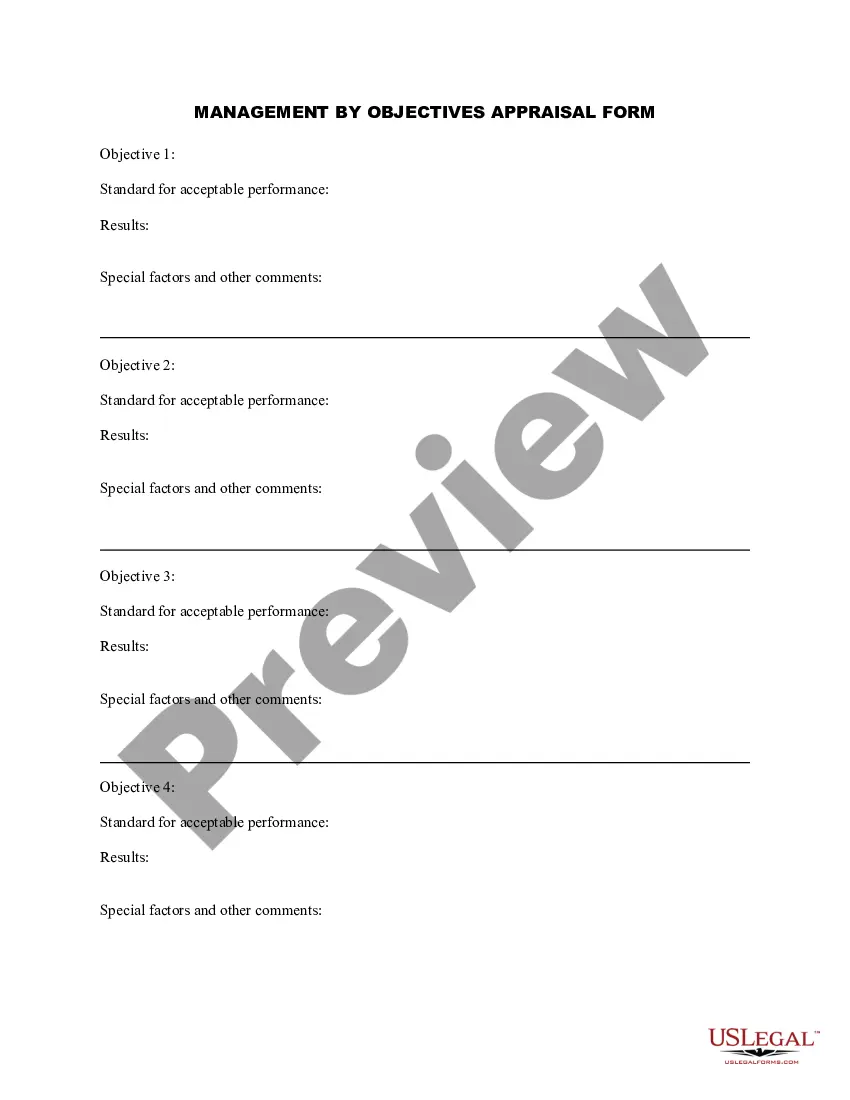
Illinois Management by Objectives Appraisal Form
Description
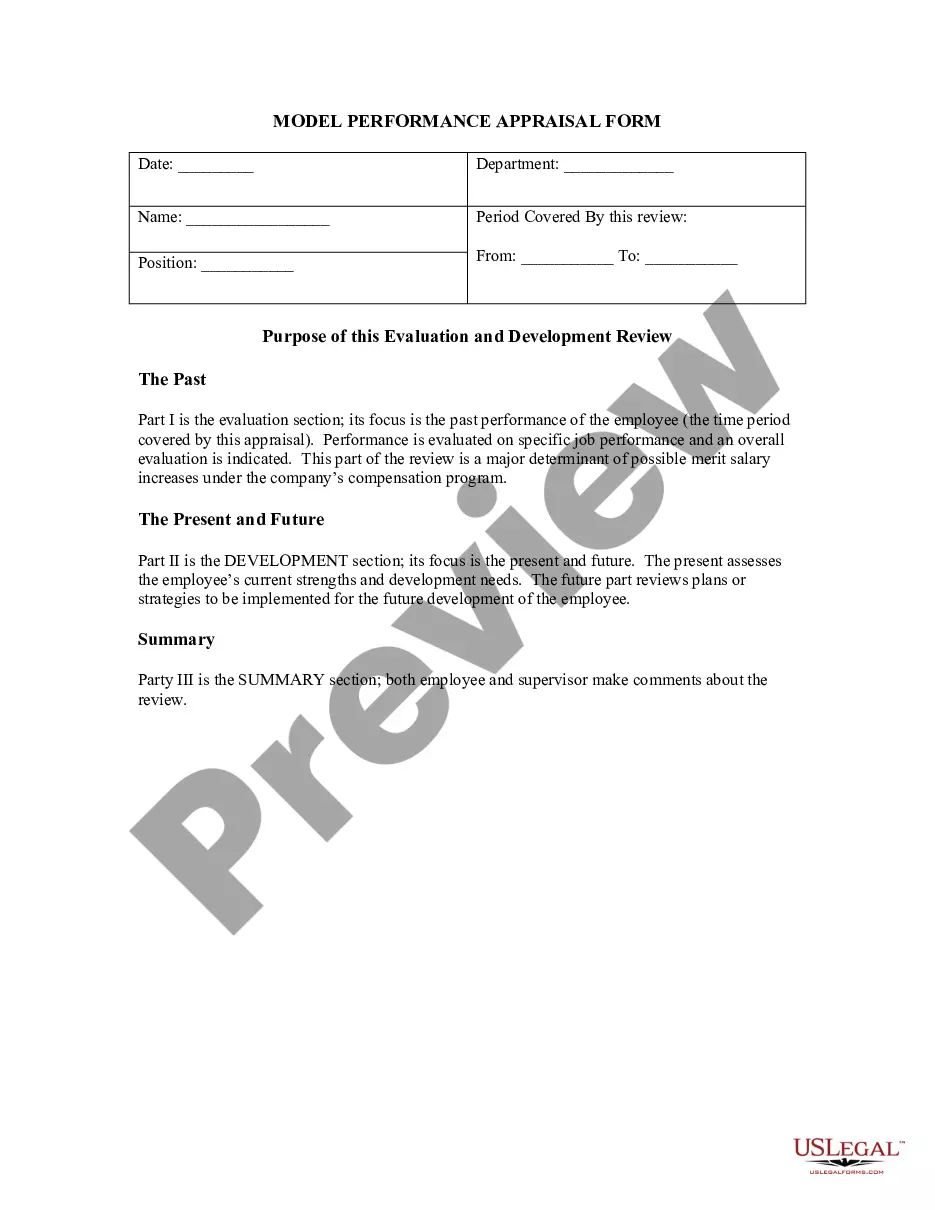
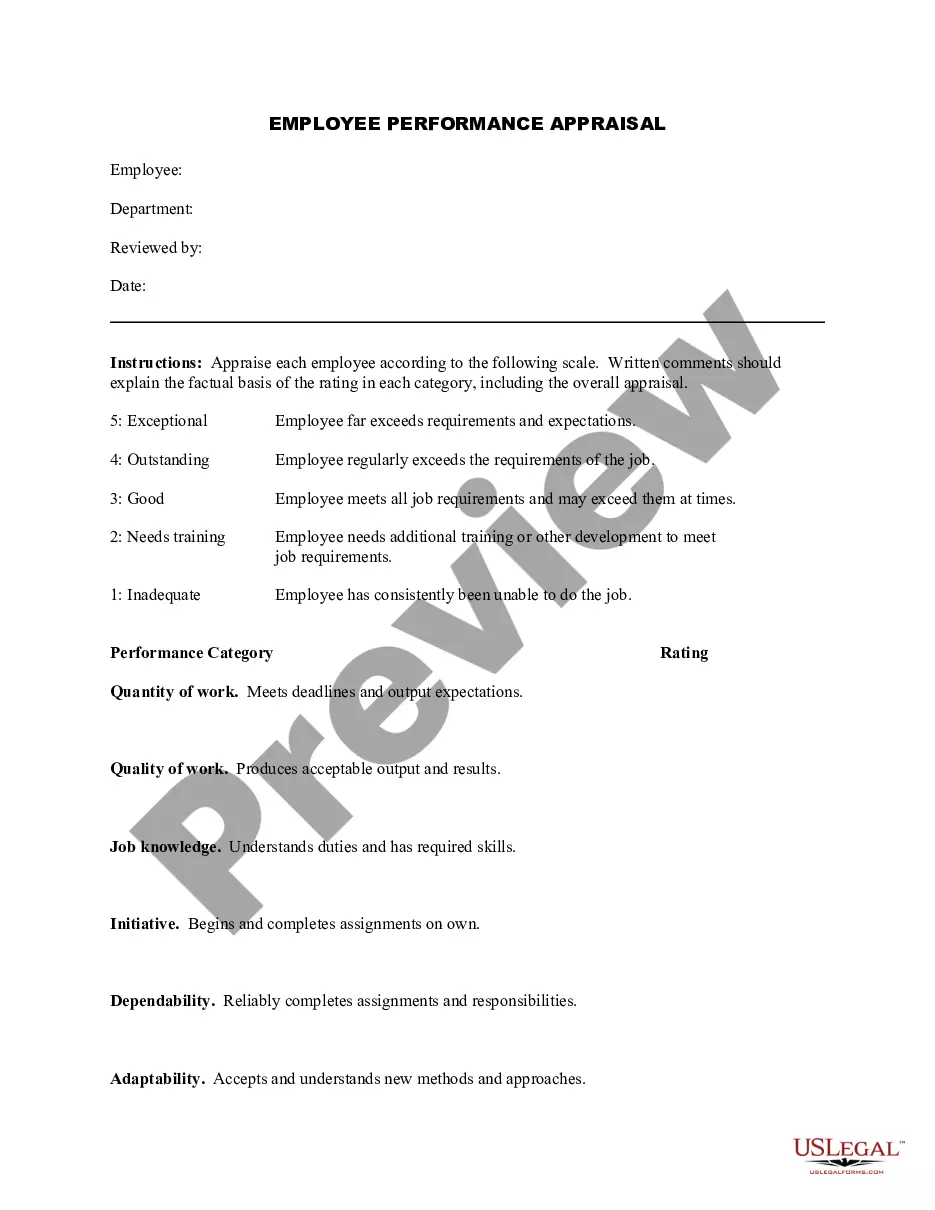
Get your form ready online
Our built-in tools help you complete, sign, share, and store your documents in one place.
Make edits, fill in missing information, and update formatting in US Legal Forms—just like you would in MS Word.
Download a copy, print it, send it by email, or mail it via USPS—whatever works best for your next step.
Sign and collect signatures with our SignNow integration. Send to multiple recipients, set reminders, and more. Go Premium to unlock E-Sign.
If this form requires notarization, complete it online through a secure video call—no need to meet a notary in person or wait for an appointment.
We protect your documents and personal data by following strict security and privacy standards.

Make edits, fill in missing information, and update formatting in US Legal Forms—just like you would in MS Word.

Download a copy, print it, send it by email, or mail it via USPS—whatever works best for your next step.

Sign and collect signatures with our SignNow integration. Send to multiple recipients, set reminders, and more. Go Premium to unlock E-Sign.

If this form requires notarization, complete it online through a secure video call—no need to meet a notary in person or wait for an appointment.

We protect your documents and personal data by following strict security and privacy standards.
Looking for another form?




How to fill out Management By Objectives Appraisal Form?
You may dedicate hours online searching for the legal document template that complies with the state and federal requirements you need.
US Legal Forms offers an extensive selection of legal forms that can be assessed by experts.
You can effortlessly download or print the Illinois Management by Objectives Appraisal Form from the platform.
You can obtain and print numerous document templates using the US Legal Forms website, which provides the largest assortment of legal forms. Utilize professional and state-specific templates to address your business or personal needs.
- If you already have a US Legal Forms account, you can Log In and click on the Acquire button.
- Subsequently, you can complete, alter, print, or sign the Illinois Management by Objectives Appraisal Form.
- Every legal document template you obtain is yours indefinitely.
- To retrieve an additional copy of a purchased form, go to the My documents tab and hit the relevant button.
- If you are using the US Legal Forms website for the first time, follow the simple instructions below.
- First, ensure you have selected the correct document template for the region/city of your choice.
- Review the form description to confirm that you have selected the right form.
Form popularity
FAQ
The term management by objectives (MBO) was first used by Peter F. Drucker in his 1954 book entitled The Practice of Management.
MBO uses a set of quantifiable or objective standards against which to measure the performance of a company and its employees. By comparing actual productivity to a given set of standards, managers can identify problem areas and improve efficiency.
These objectives are Survival, Profit and Growth of an organisation.
The Theory of MBO The following four major components of the MBO process are believed to contribute to its effectiveness: (1) setting specific goals; (2) setting realistic and acceptable goals; (3) joint participation in goal setting, planning, and controlling; and (4) feedback.
There are three basic types of objectives.Process objectives. These are the objectives that provide the groundwork or implementation necessary to achieve your other objectives.Behavioral objectives.Community-level outcome objectives.
Types of MBO Objectives:Strategic: These are the broad, general objectives determined by company management in step one.Tactical or Team: More specific objectives are set for teams or departments.Operational or Individual: Specific objectives belonging to an individual.
6 Stages of MBO (Management by Objectives) ProcessDefine organizational goals.Define employees objectives.Continuous monitoring performance and progress.Performance evaluation.Providing feedback.Performance appraisal.
Management by objectives (MBO) is the appraisal method where managers and employees together identify, plan, organize, and communicate objectives to focus on during a specific appraisal period.
What are the four elements of MBO? Goal specificity, participative decision making, and explicit time period, and performance feedback.