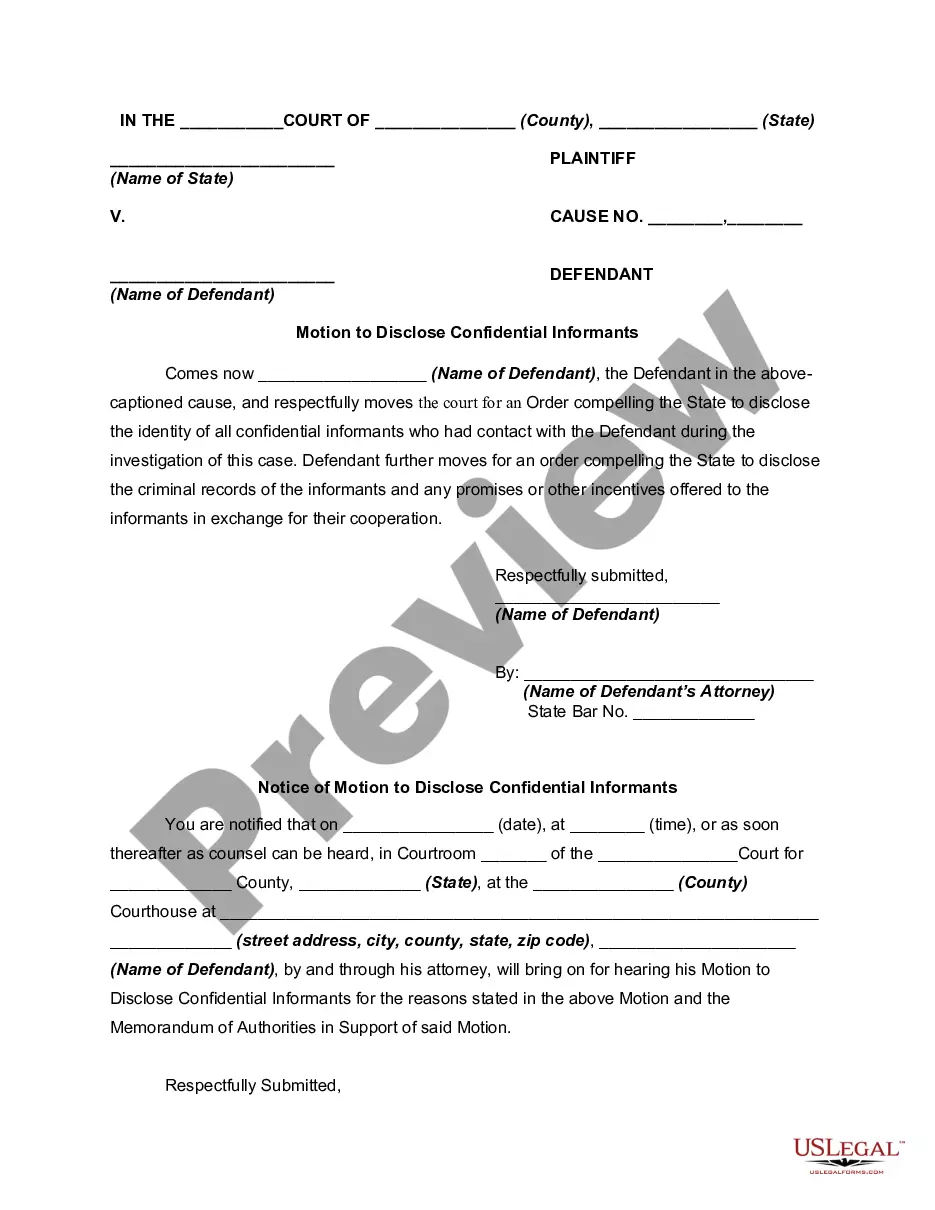
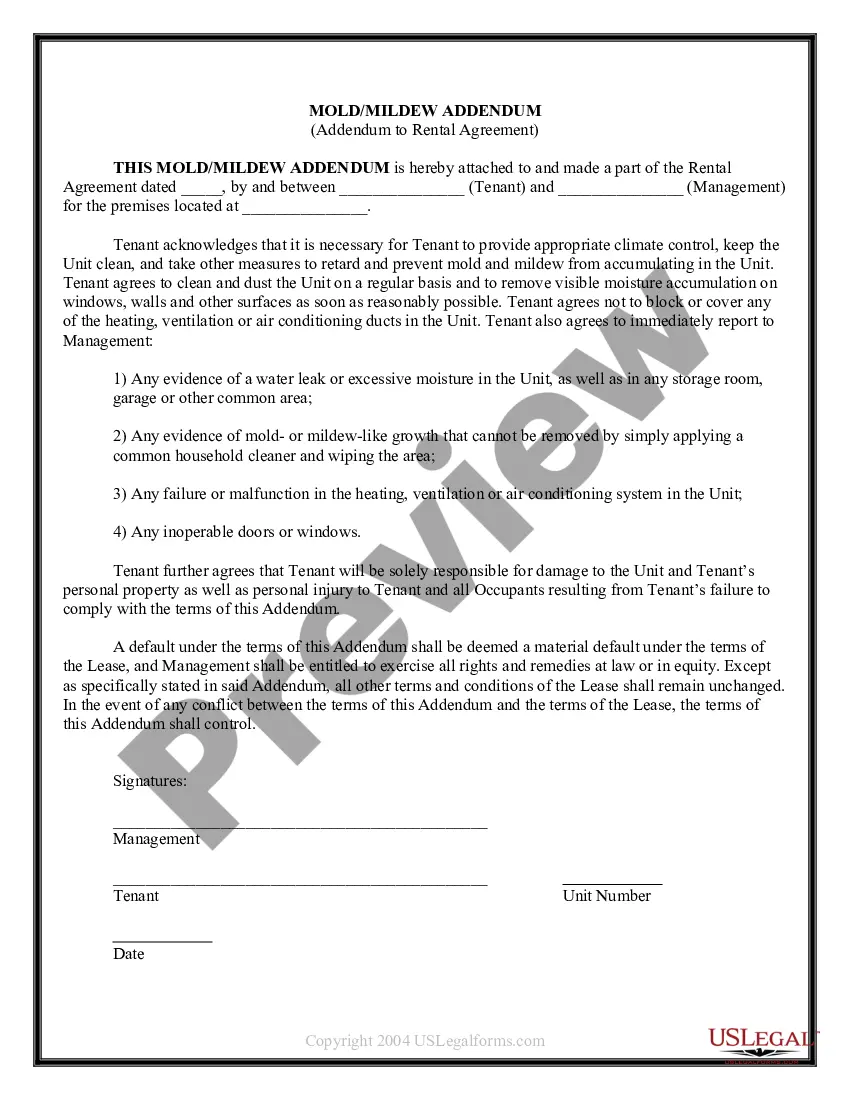
Addendum to rental agreement addressing mold/mildew issues.
Illinois Addendum To Apartment Lease regarding Mold
State:
Multi-State
Control #:
US-891LT
Format:
Word;
Rich Text
Instant download
Description
How to fill out Addendum To Apartment Lease Regarding Mold?
US Legal Forms - one of the largest collections of legal documents in the USA - offers a vast selection of legal paper templates you can obtain or print.
By using the website, you can access thousands of forms for business and personal use, organized by categories, states, or keywords.
You can find the latest forms, such as the Illinois Addendum To Apartment Lease concerning Mold, in just a few minutes.
Review the form description to make sure you have selected the right form. If the form does not meet your requirements, utilize the Search box at the top of the screen to find one that does.
If you are satisfied with the form, confirm your choice by clicking the Acquire now button. Then, choose the pricing plan you prefer and provide your details to register for an account.
- If you have a subscription, Log In and obtain the Illinois Addendum To Apartment Lease regarding Mold from the US Legal Forms library.
- The Download option will appear on each form you review.
- You can find all previously saved forms in the My documents section of your account.
- If you wish to use US Legal Forms for the first time, here are simple steps to help you get started.
- Ensure you have selected the correct form for your city/county.
- Click the Preview button to check the form’s content.
Form popularity
FAQ
Legally, you're not allowed to repair and deduct, withhold rent, or break your lease if you caused the mold problem. Make sure to promptly report spills and leaks to your landlord, and, if you do notice mold anywhere in your apartment, let your landlord know in writing before it becomes a more serious issue.
Illinois law allows landlords to do this, provided they give the tenant a written explanation of the mold damage costs (along with any other claimed damages) within 30 days of the tenant's lease termination.
Your lease must have been signed before you entered active duty and you must provide proof you will remain on active duty for at least 90 days. Your tenancy is legally terminated 30 days after the next date that rent is due once the notice is delivered or mailed, regardless of when your lease expires.
A tenant who needs repairs in their unit should first notify their landlord . The landlord then has a chance to make sure the repair is made. If the repair is required by law, or by the lease, the landlord has 14 days (or less, if it is an emergency) to repair.
Illinois landlord-tenant laws regarding mold are currently not present. There are no State or Federal laws or regulations requiring landlords to clean up the existence of mold in a rental property. Landlords do have the responsibility to keep a tenant's home safe and habitable.
In 2007, the Mold Remediation Registration Act was passed into law. This law requires that IDPH annually report to the General Assembly any federal research and regulations related to mold cleanup and standards for mold remediation training.
You can sue your landlord for mold in Illinois if you can prove that your landlord breached his or her duty to protect your health and safety and violated the rental agreement.