Illinois Technology Transfer Agreement
Description

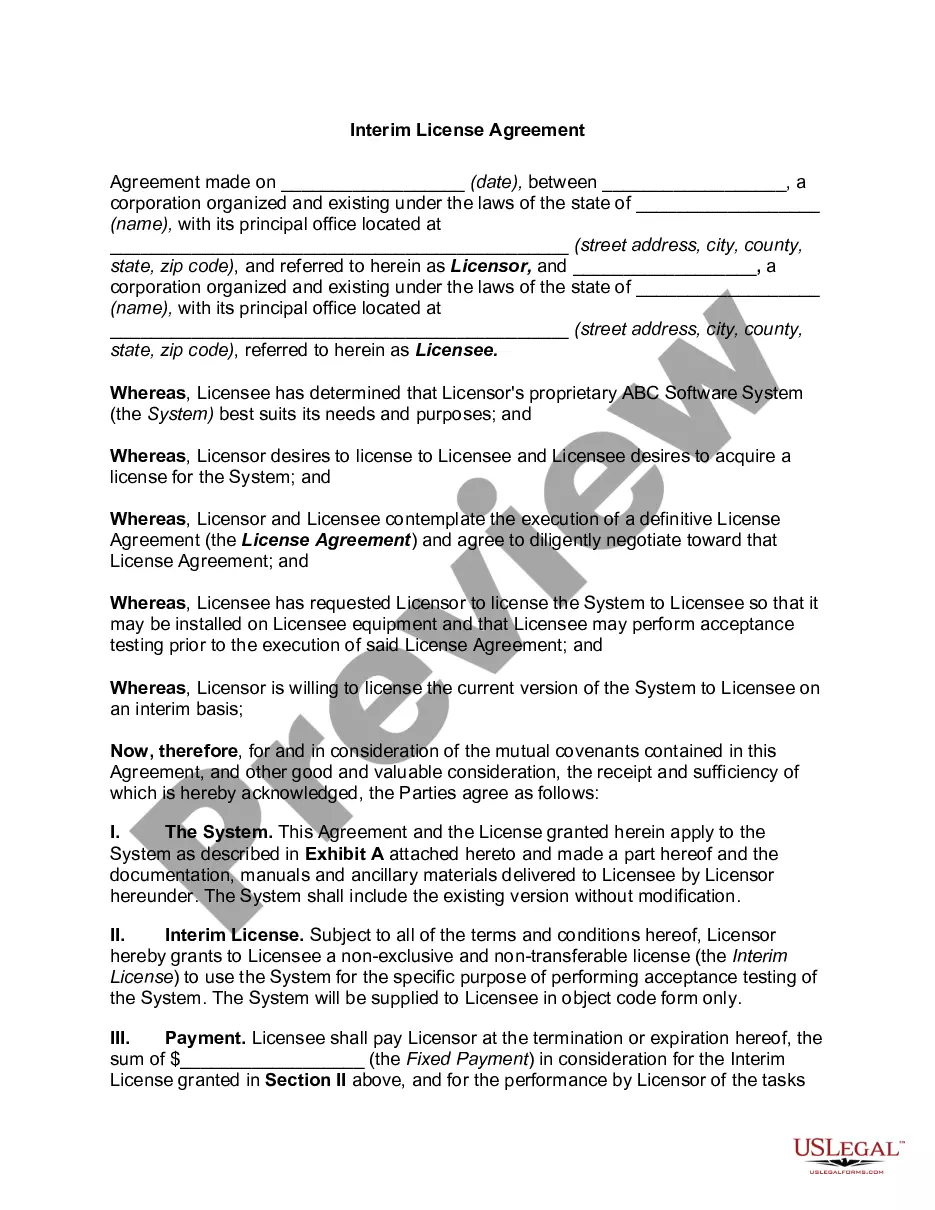
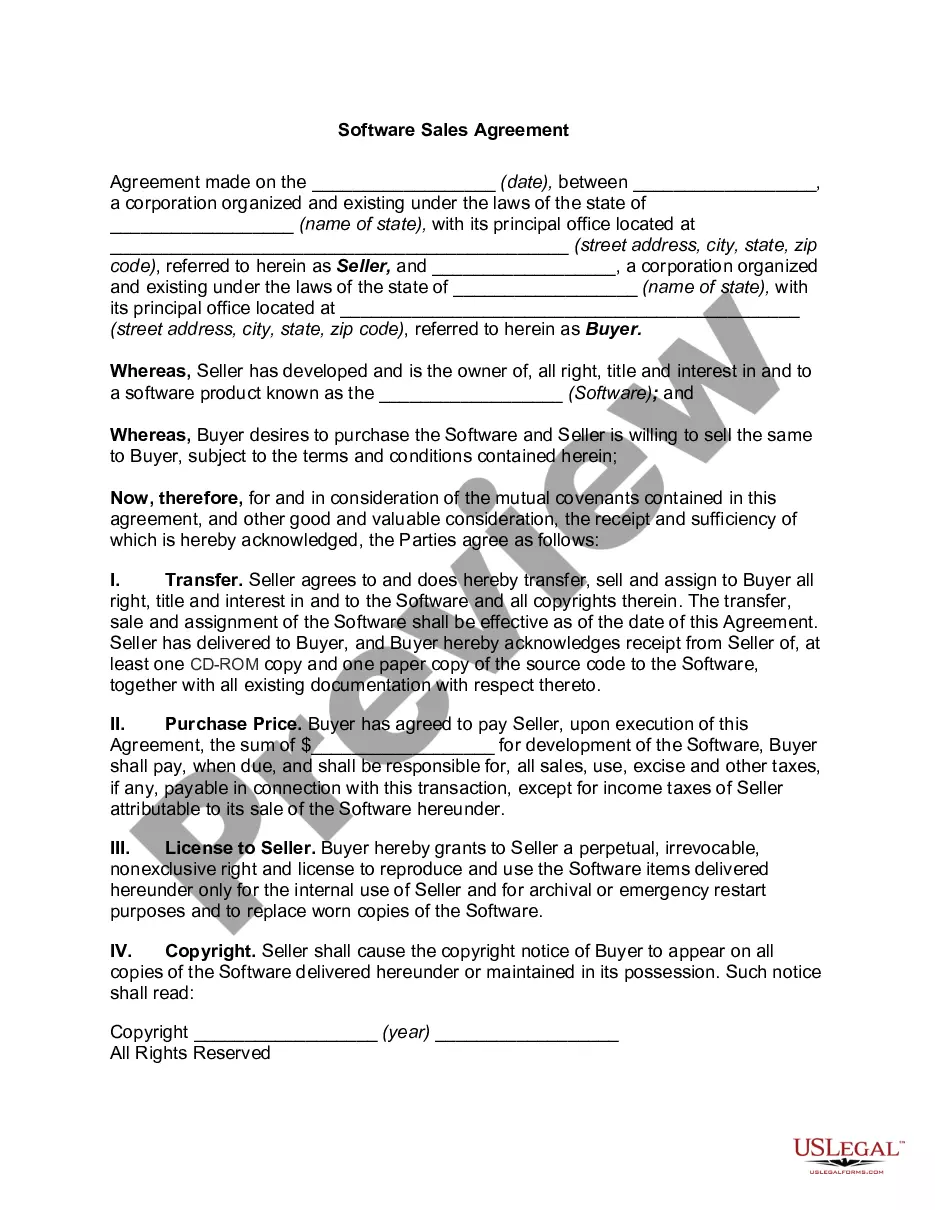
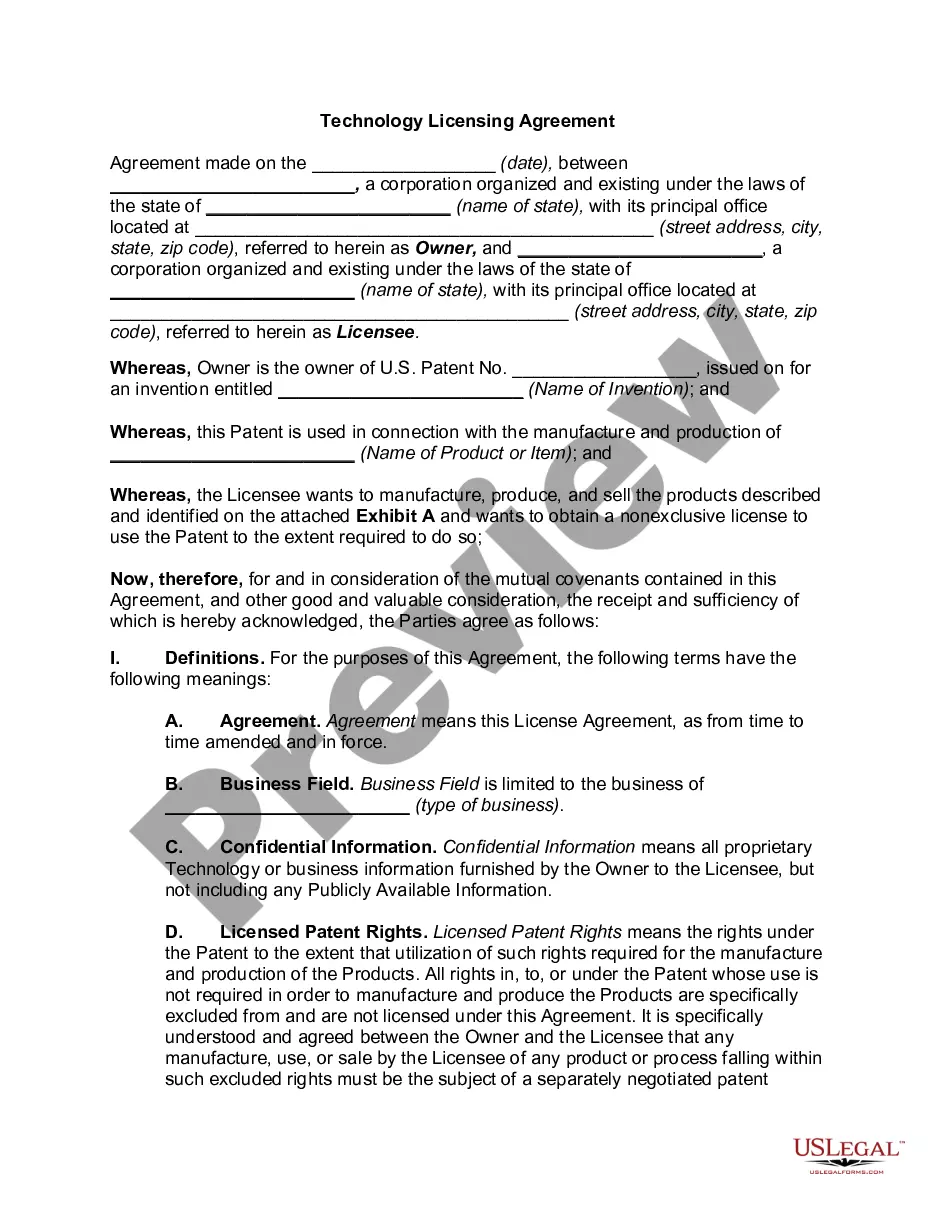
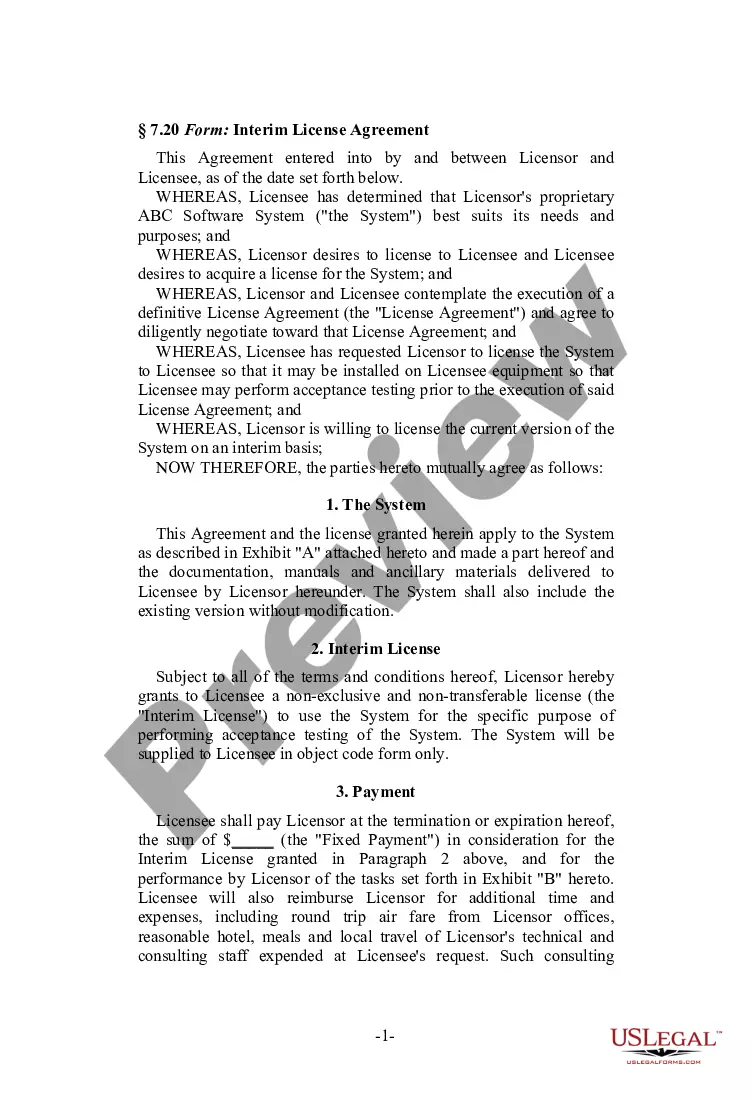
Get your form ready online
Our built-in tools help you complete, sign, share, and store your documents in one place.
Make edits, fill in missing information, and update formatting in US Legal Forms—just like you would in MS Word.
Download a copy, print it, send it by email, or mail it via USPS—whatever works best for your next step.
Sign and collect signatures with our SignNow integration. Send to multiple recipients, set reminders, and more. Go Premium to unlock E-Sign.
If this form requires notarization, complete it online through a secure video call—no need to meet a notary in person or wait for an appointment.
We protect your documents and personal data by following strict security and privacy standards.

Make edits, fill in missing information, and update formatting in US Legal Forms—just like you would in MS Word.

Download a copy, print it, send it by email, or mail it via USPS—whatever works best for your next step.

Sign and collect signatures with our SignNow integration. Send to multiple recipients, set reminders, and more. Go Premium to unlock E-Sign.

If this form requires notarization, complete it online through a secure video call—no need to meet a notary in person or wait for an appointment.

We protect your documents and personal data by following strict security and privacy standards.
Looking for another form?


How to fill out Technology Transfer Agreement?
It is feasible to spend hours online seeking the legal document format that meets the federal and state requirements you desire.
US Legal Forms offers thousands of legal templates that are evaluated by experts.
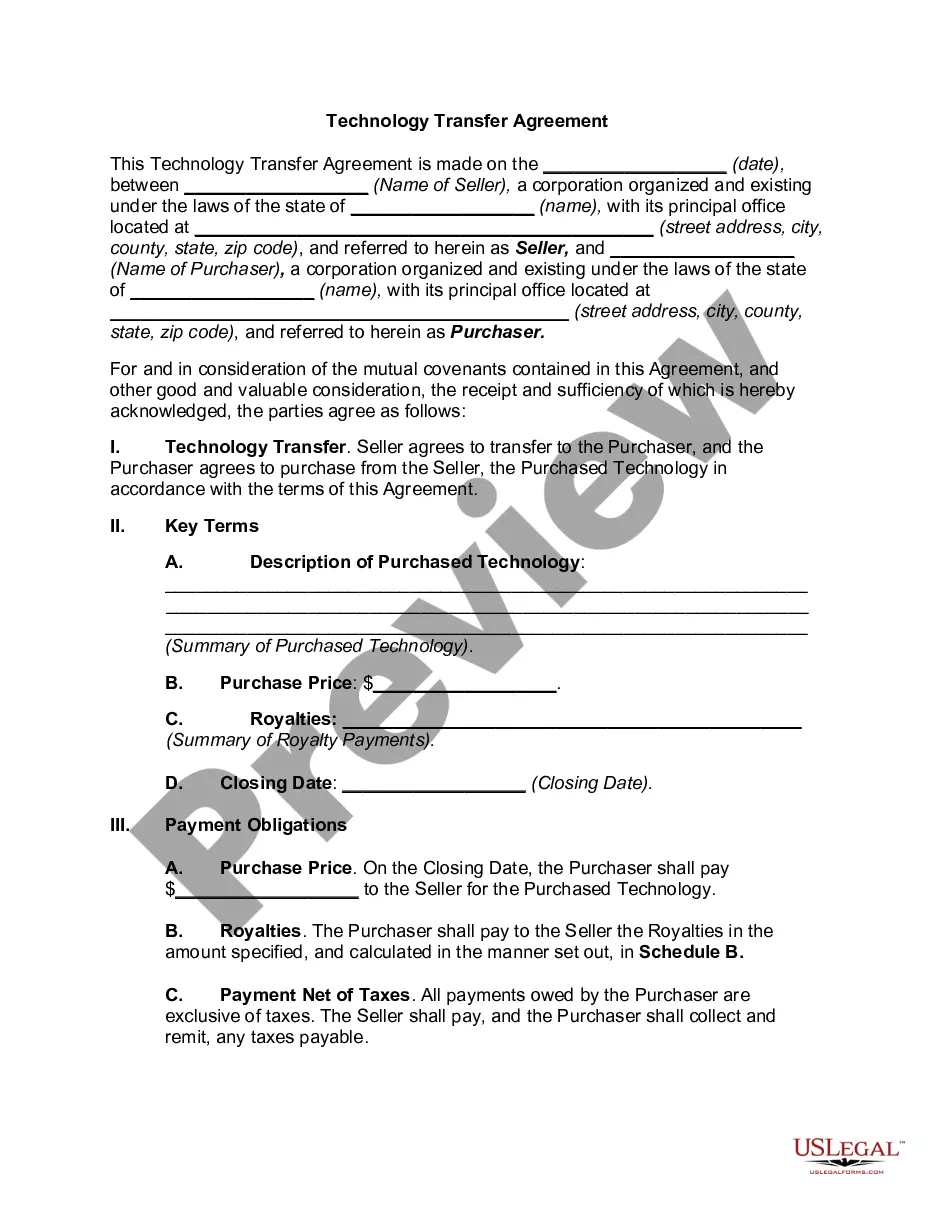
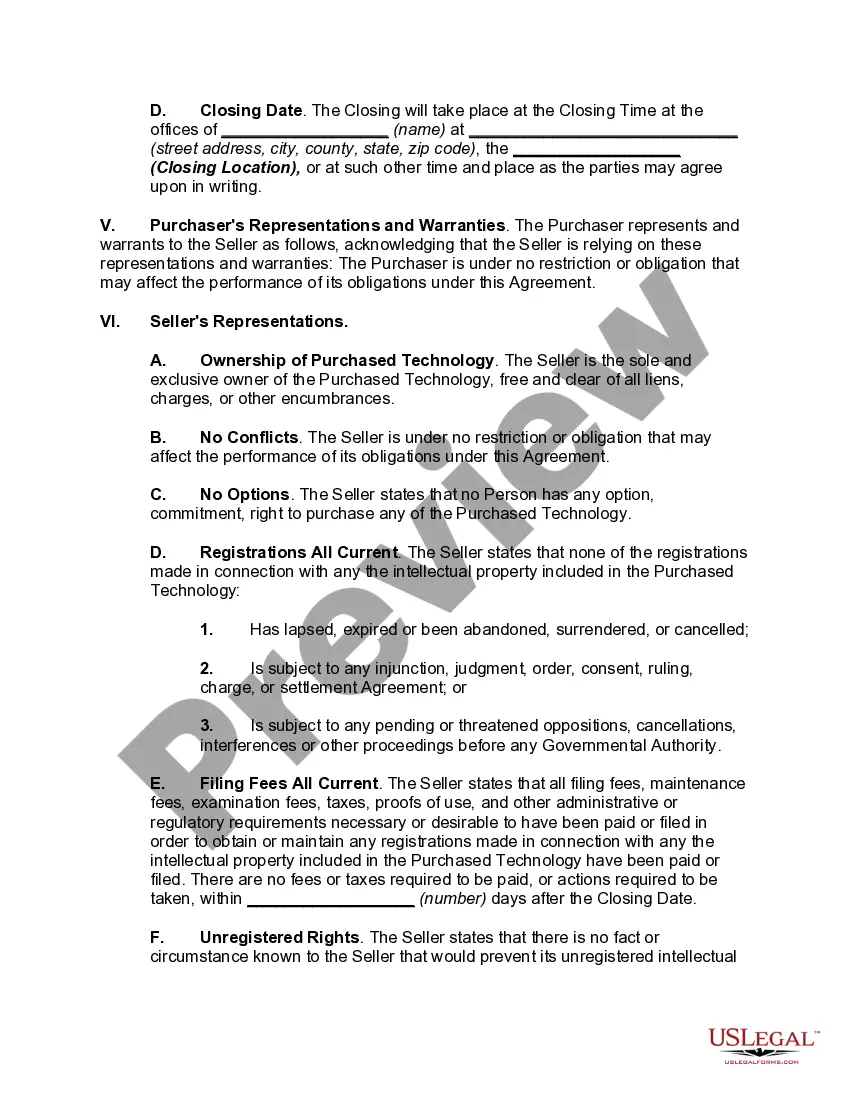
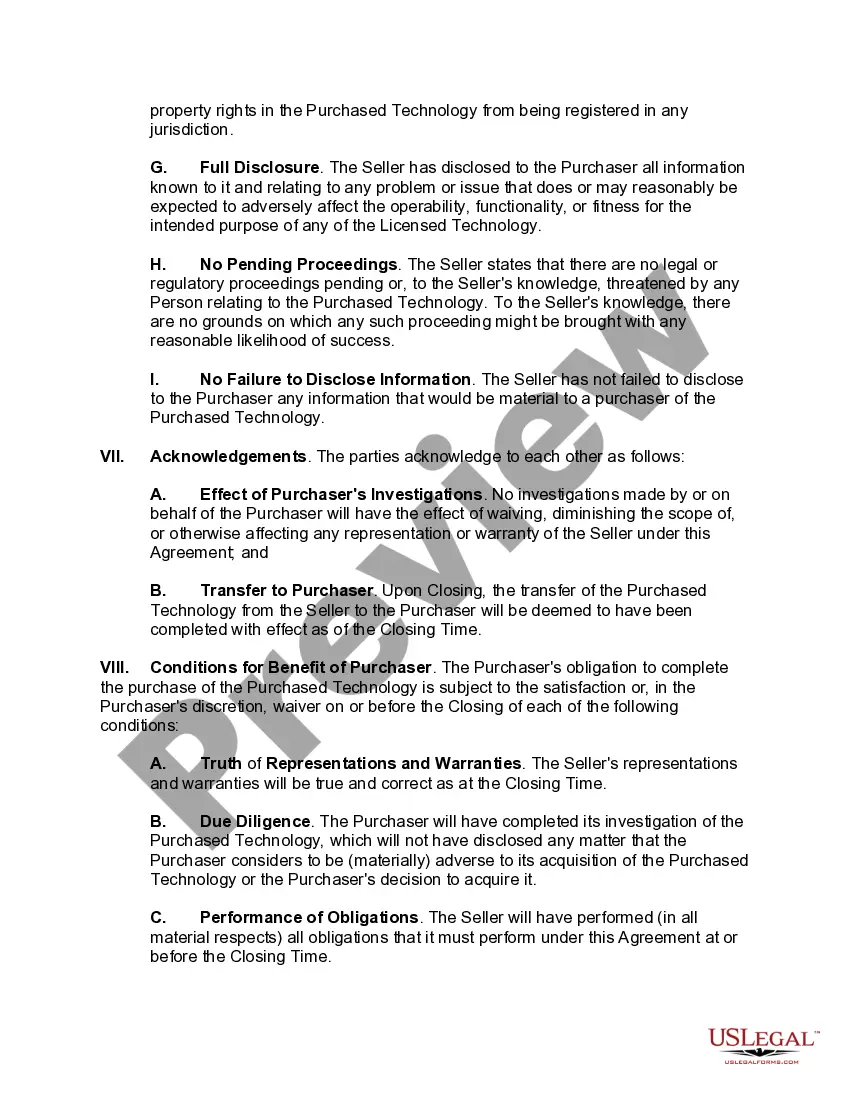
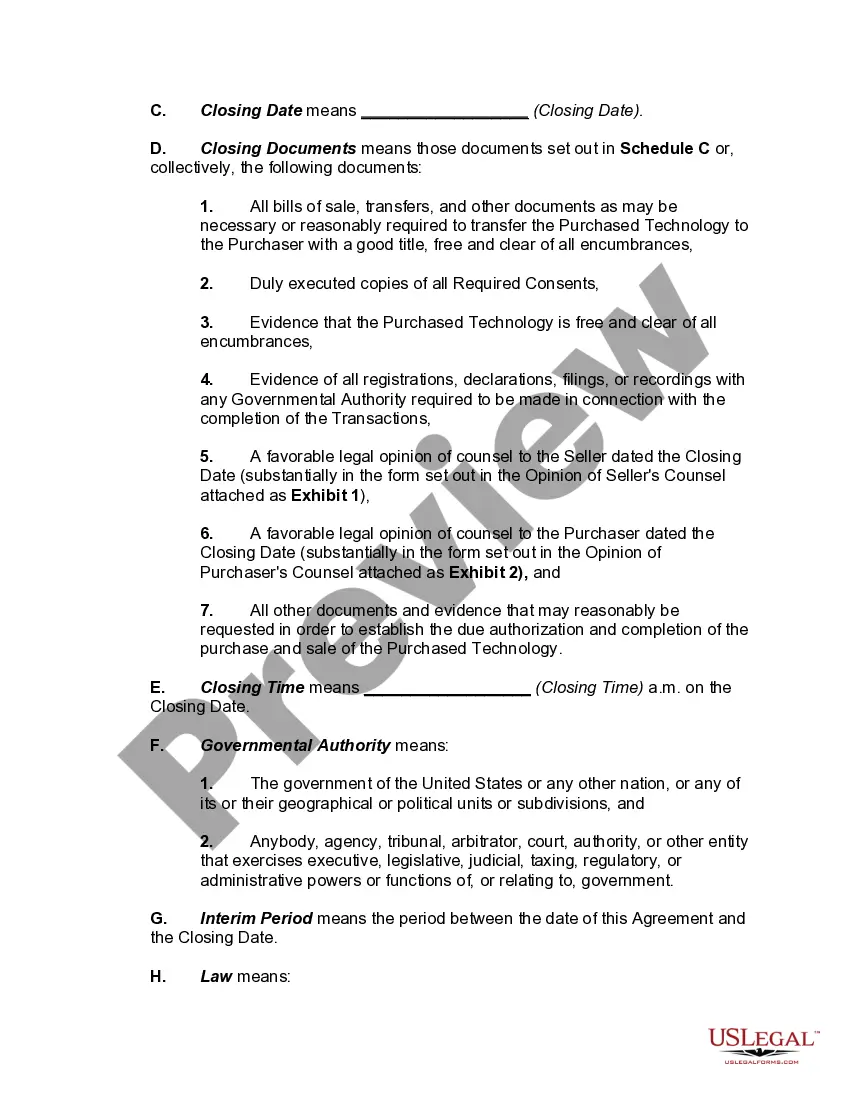
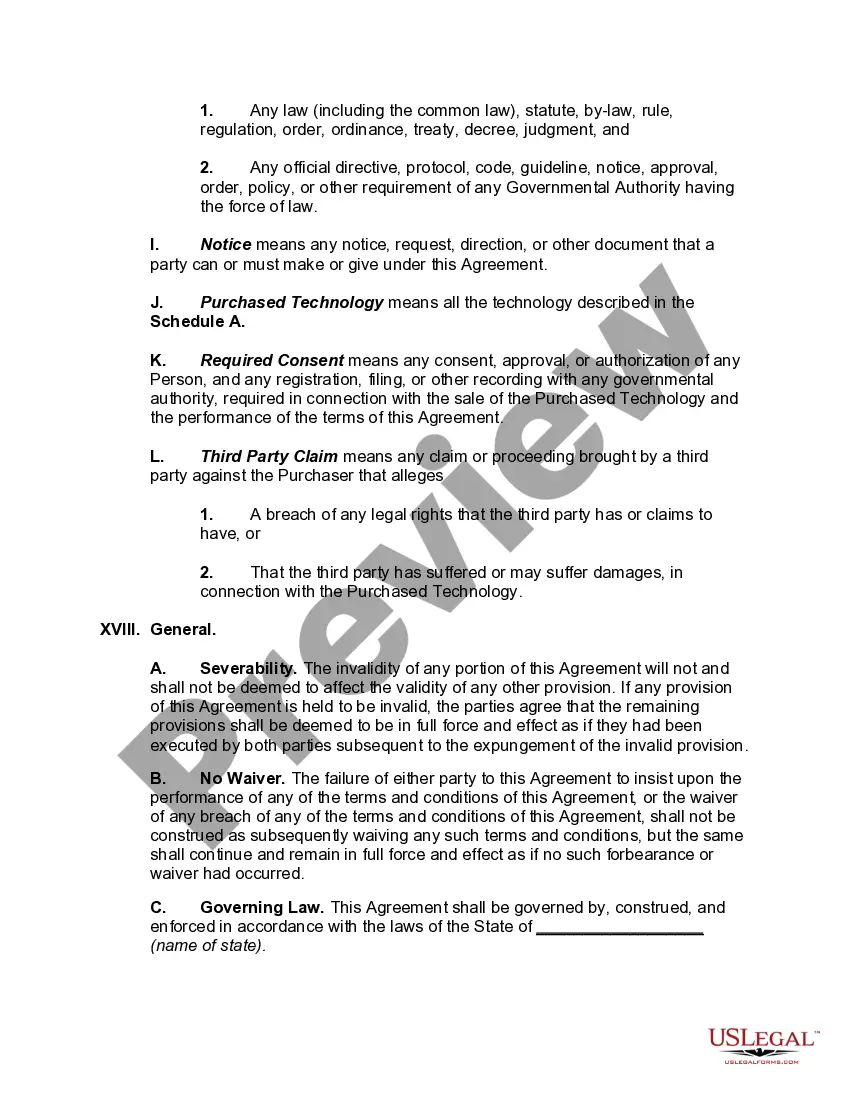
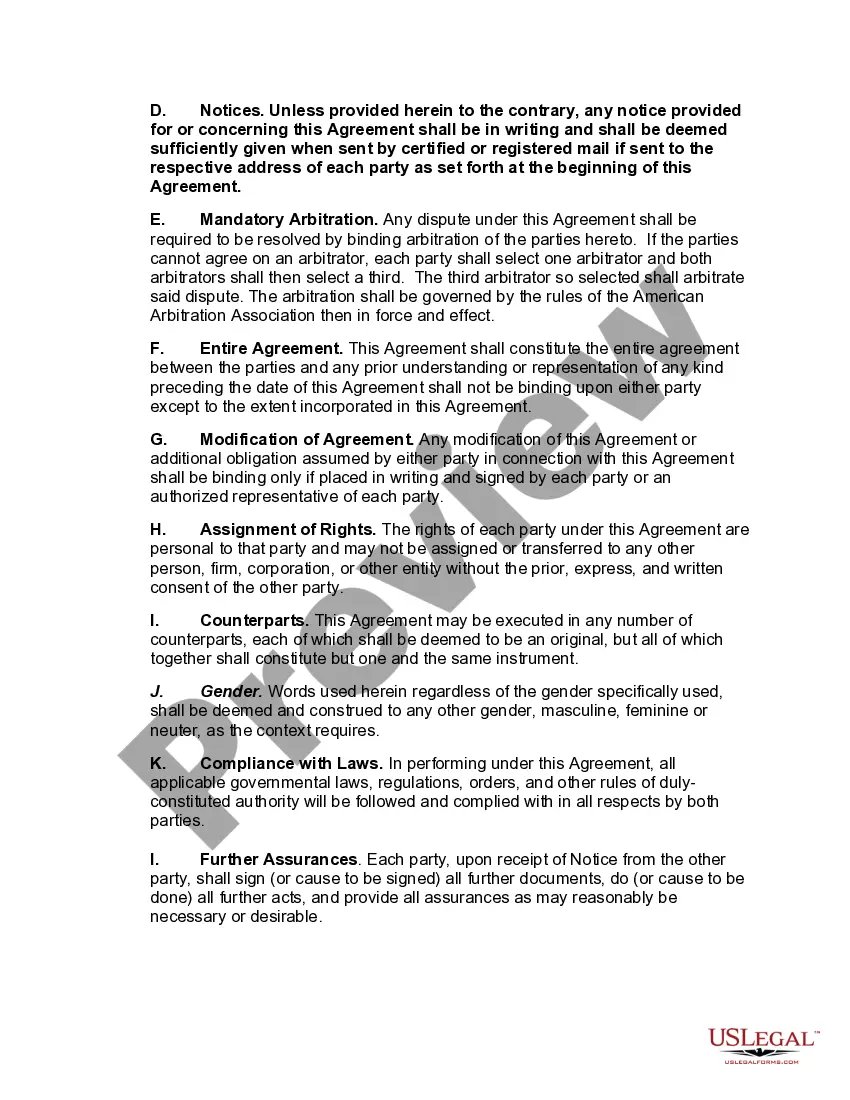
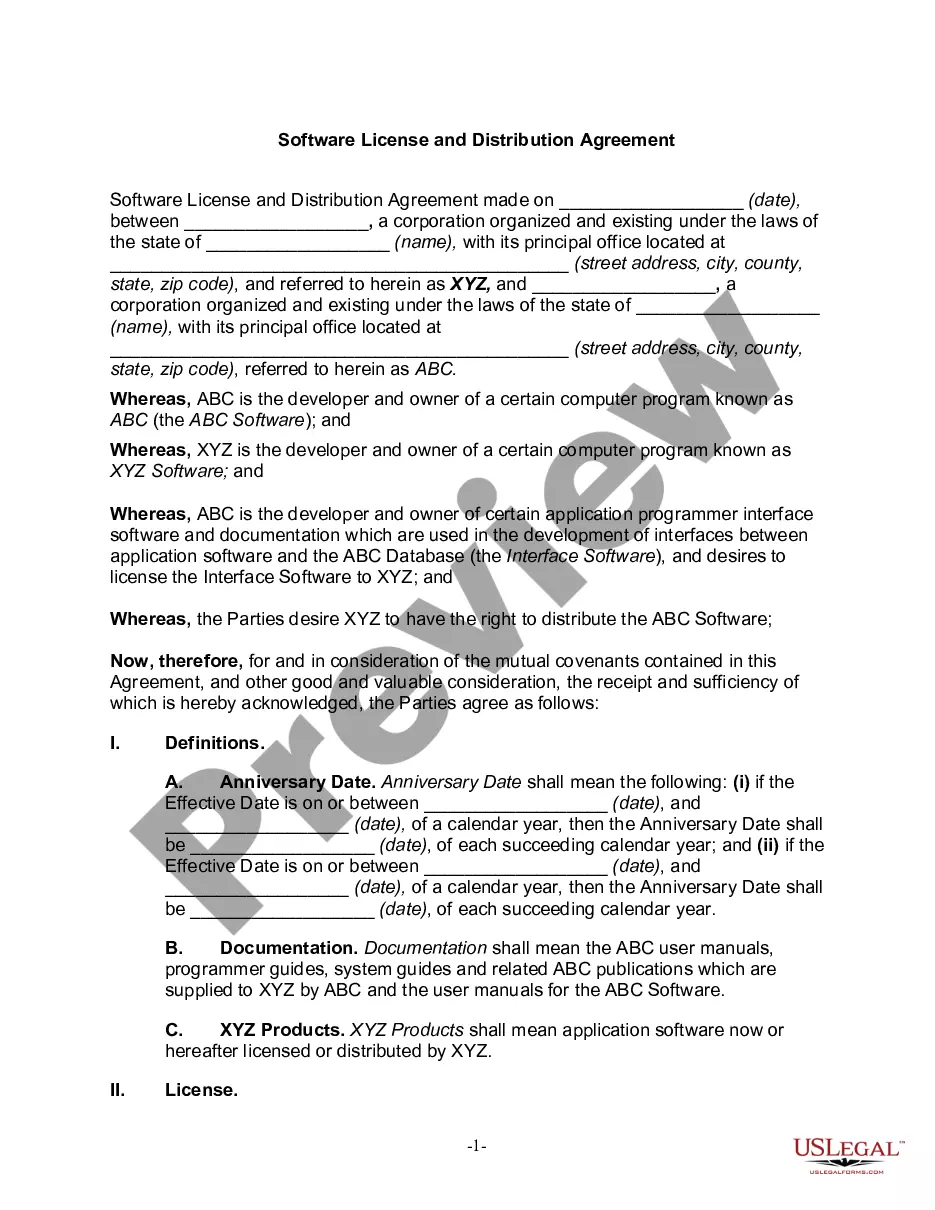
You can conveniently download or print the Illinois Technology Transfer Agreement from my service.
If available, use the Preview button to review the document format simultaneously.
- If you possess a US Legal Forms account, you can sign in and then click on the Download button.
- After that, you can complete, modify, print, or sign the Illinois Technology Transfer Agreement.
- Every legal document template you acquire is yours permanently.
- To obtain an additional copy of the purchased form, go to the My documents tab and click the corresponding button.
- If you are utilizing the US Legal Forms site for the first time, follow the simple instructions below.
- First, ensure that you have selected the correct document format for the region/area of your preference.
- Check the form description to confirm you have chosen the right format.
Form popularity
FAQ
Technology transfer is the process by which knowledge,, intellectual property and capabilities developed at its centres/units and elsewhere, utilising ISRO's resources are transferred to external entities including industries in the public and private sector, academia and State I Cehtral Government organisations.
TECH TRANSFER AGREEMENTSCooperative Research and Development Agreement (CRADA)Facility Use/Service Agreement (FUSA)License Agreement (LA)Material Transfer Agreement (MTA)Technical Assistance Agreement (TAA)
Technology transfer involves the implementation of scientific or technological information in a context different from that for which it was developed.
It allows U.S. universities, small businesses and non-profits to retain title to their inventions. The government retains a right to use the technology. Previously, the government owned the intellectual property rights to these inventions funded by the government.
Examples of technology transfer can be found across virtually every scientific and industrial area, from pharmaceuticals and medical devices to alternative energy solutions, computing, transport, artificial intelligence, robotics, agriculture, aerospace, environmental improvements and many more.
Based on this model the transfer scope consists of four types of technologies: General knowledge, Specific knowledge, Hardware, and Behaviors. This model categorizes the transfer methods in the TT process as 1) Impersonal communication, 2) Personal communication, 3) Group interaction, and 4) Physical relocation.
Technology transfer (TT) refers to the process of conveying results stemming from scientific and technological research to the market place and to wider society, along with associated skills and procedures, and is as such an intrinsic part of the technological innovation process.
A technology agreement, sometimes called a technology service agreement, is a legal document usually used between a company and a technology service provider to outline the rights and responsibilities of both parties as they enter into a business relationship.
A technology transfer agreement is a legal contract used when a company, referred to as the licensor, licenses industrial or intellectual property rights to a licensee. Intellectual property subject to a technology transfer agreement can include: Patents. Utility models. Trademarks.
Technology Transfer ProcessStep 1: Invention Disclosure.Step 2: Evaluation.Step 3: Patent Application.Step 4: Assessment and Marketing.Step 5: Licensing of Patents.Step 6: Commercialization.