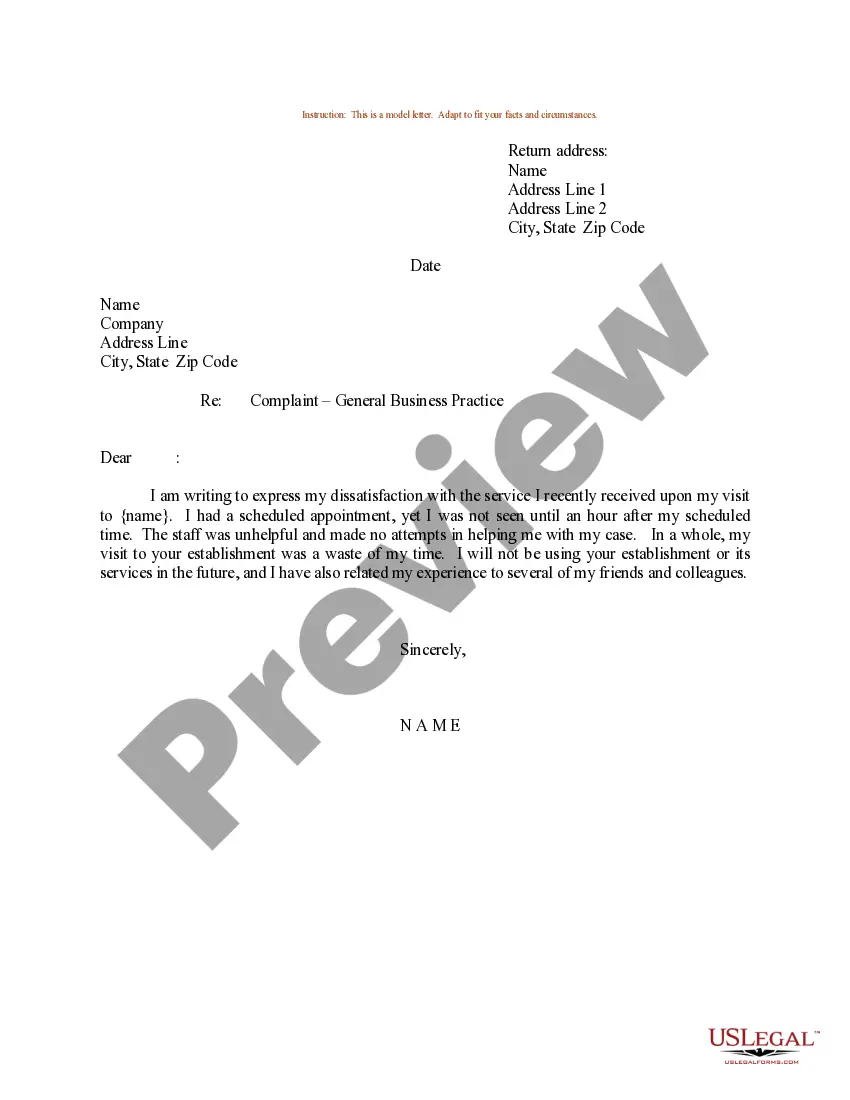
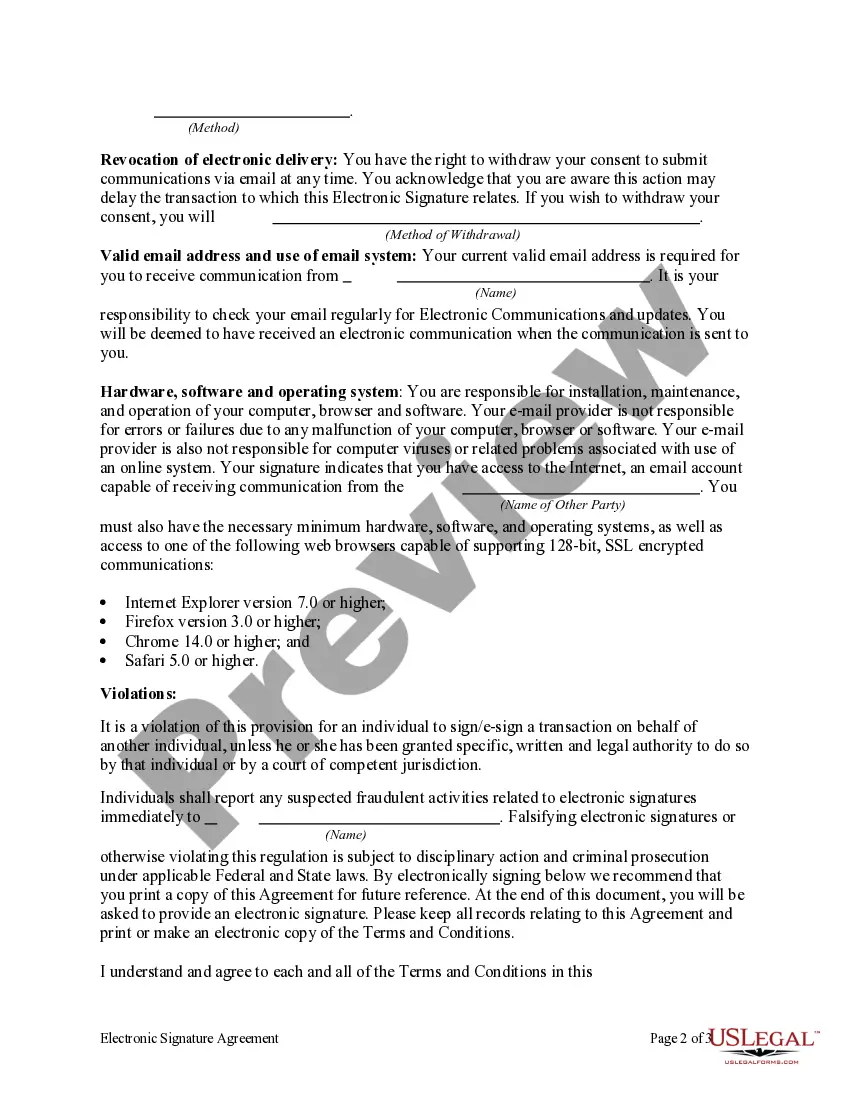
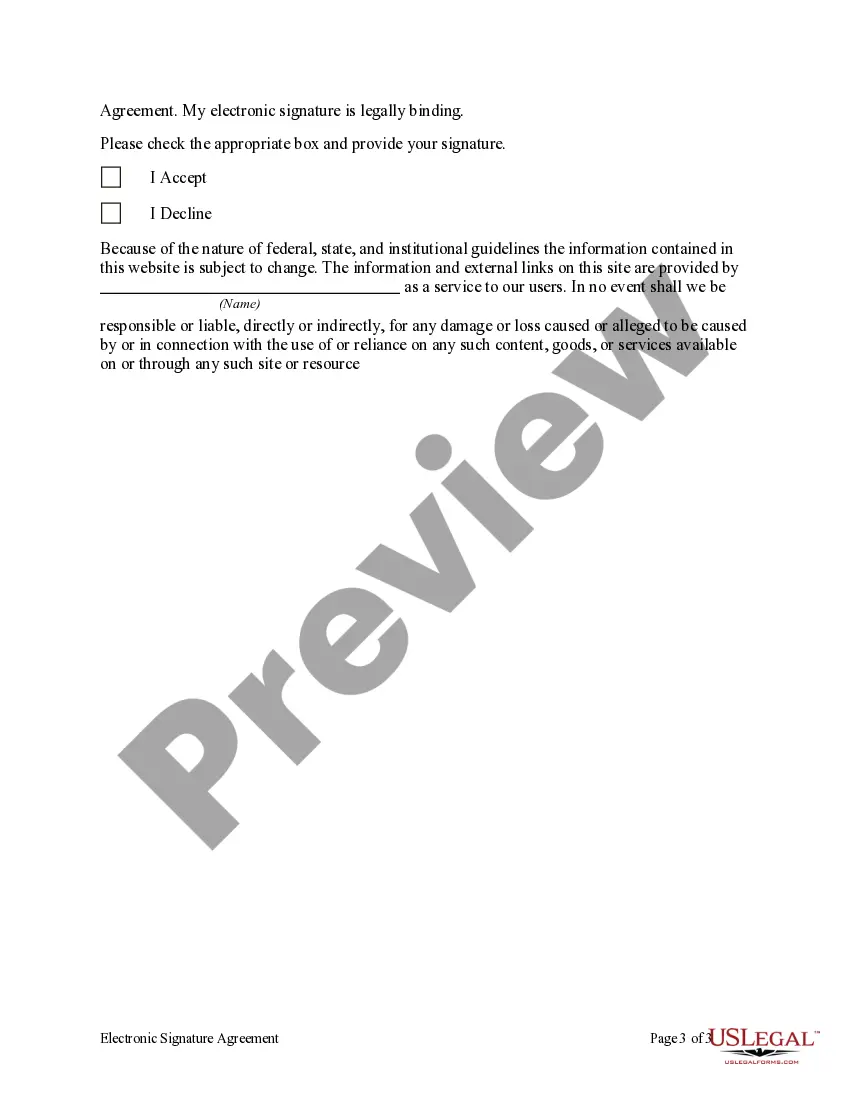
Illinois Electronic Signature Agreement
Description
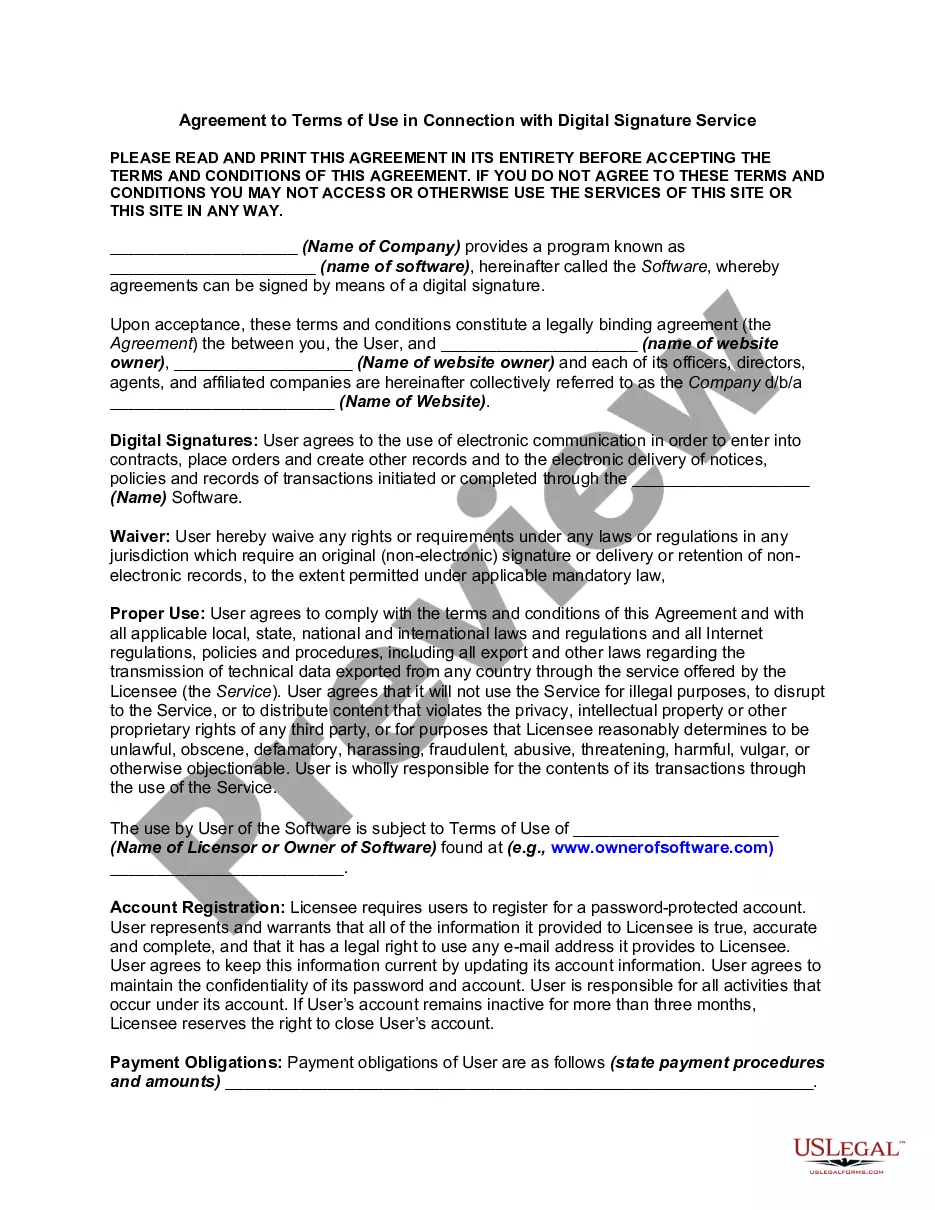
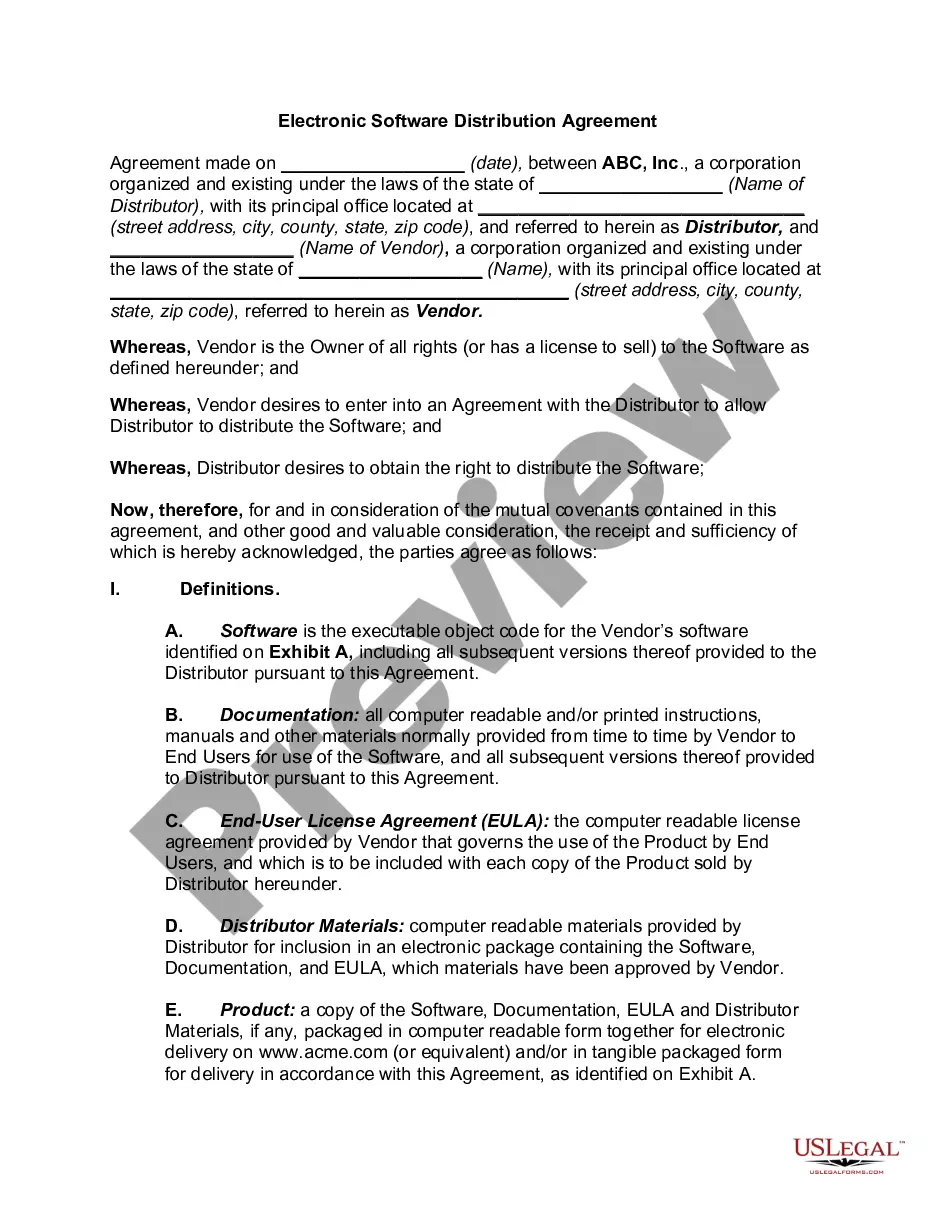
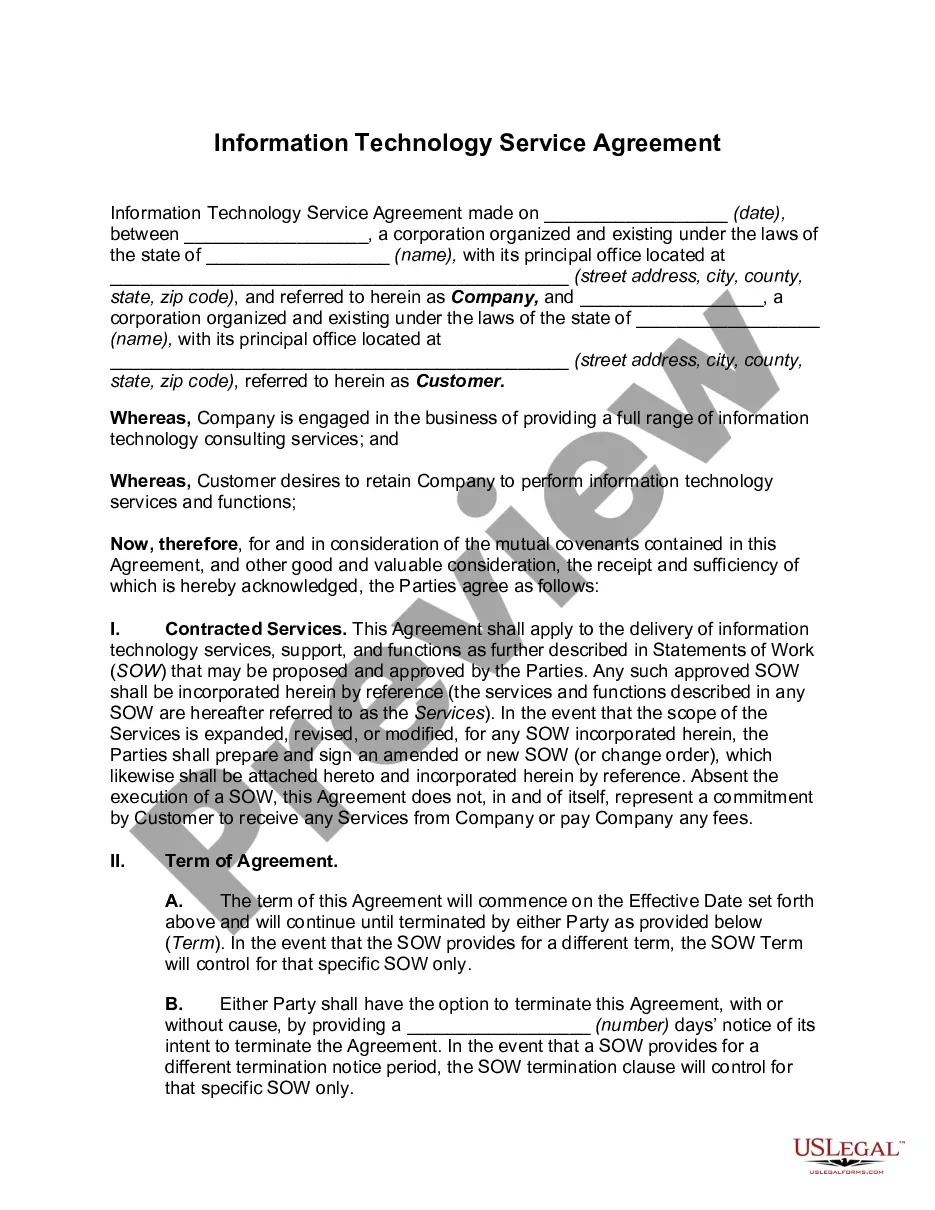
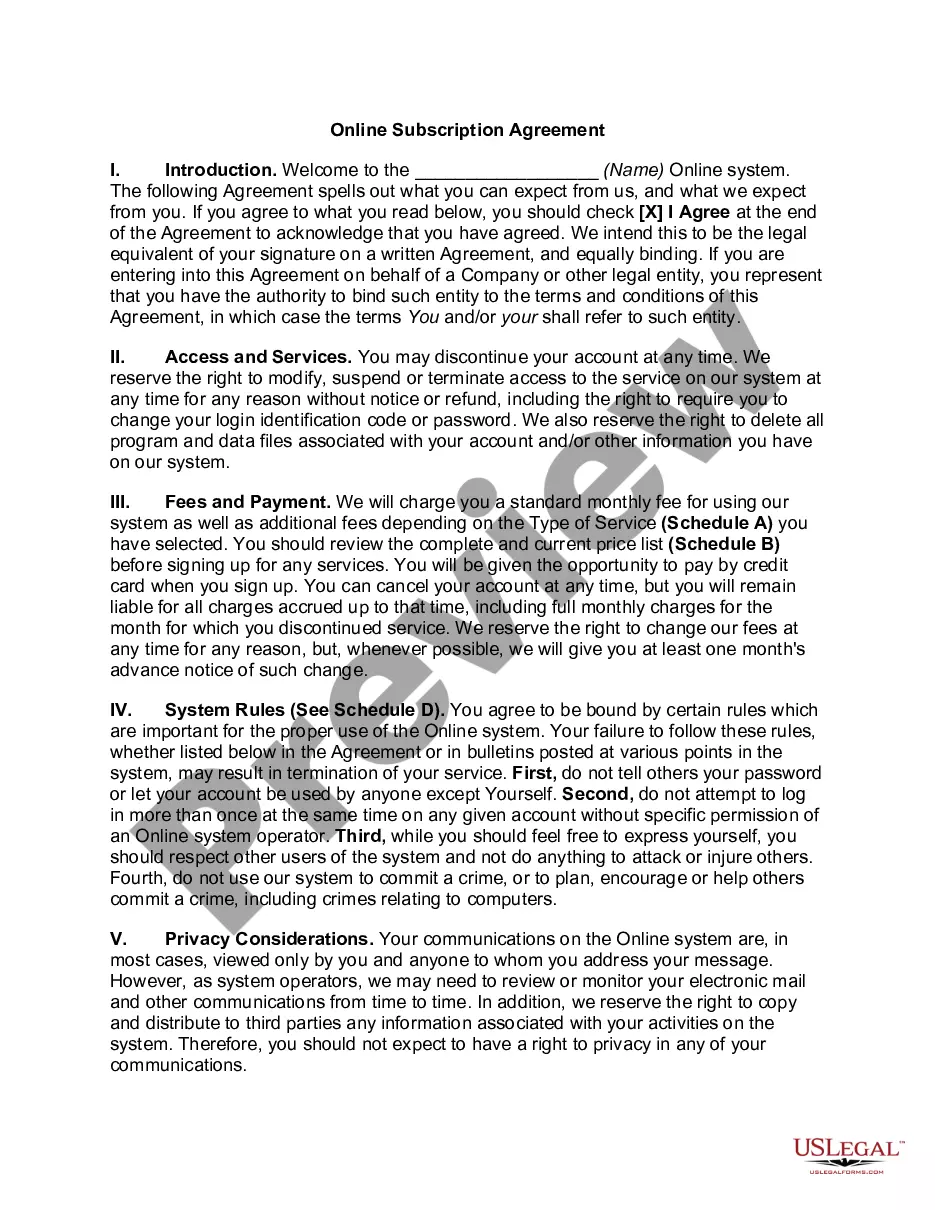
Get your form ready online
Our built-in tools help you complete, sign, share, and store your documents in one place.
Make edits, fill in missing information, and update formatting in US Legal Forms—just like you would in MS Word.
Download a copy, print it, send it by email, or mail it via USPS—whatever works best for your next step.
Sign and collect signatures with our SignNow integration. Send to multiple recipients, set reminders, and more. Go Premium to unlock E-Sign.
If this form requires notarization, complete it online through a secure video call—no need to meet a notary in person or wait for an appointment.
We protect your documents and personal data by following strict security and privacy standards.

Make edits, fill in missing information, and update formatting in US Legal Forms—just like you would in MS Word.

Download a copy, print it, send it by email, or mail it via USPS—whatever works best for your next step.

Sign and collect signatures with our SignNow integration. Send to multiple recipients, set reminders, and more. Go Premium to unlock E-Sign.

If this form requires notarization, complete it online through a secure video call—no need to meet a notary in person or wait for an appointment.

We protect your documents and personal data by following strict security and privacy standards.
Looking for another form?




How to fill out Electronic Signature Agreement?
Selecting the appropriate legal document template can be quite a challenge.
Naturally, there are many templates accessible online, but how can you obtain the legal form you require.
Utilize the US Legal Forms website.
First, make sure you have selected the correct form for your jurisdiction/area. You can view the form using the Preview button and read the form description to ensure this is indeed the right fit for you.
- This service offers thousands of templates, such as the Illinois Electronic Signature Agreement, which can be utilized for both business and personal purposes.
- All the forms are reviewed by experts and comply with state and federal regulations.
- If you are already registered, Log In to your account and click on the Download button to access the Illinois Electronic Signature Agreement.
- You can use your account to browse the legal forms you have previously obtained.
- Visit the My documents tab of your account to get an additional copy of the document you need.
- If you are a new user of US Legal Forms, here are basic instructions you should follow.
Form popularity
FAQ
For an electronic signature to be valid under the Illinois Electronic Signature Agreement, it must satisfy four key requirements: the signer must intend to sign, the signature must be associated with the record, the signer must have consented to electronic signatures, and the method used must be reliable. These criteria ensure authenticity and accountability in digital transactions. Understanding these requirements can enhance your confidence in using electronic signatures.
The electronic signature clause in a contract explicitly states that electronic signatures, like those in an Illinois Electronic Signature Agreement, are accepted and enforceable. This clause helps to clarify that all parties recognize and consent to using digital methods for signing. Incorporating this clause promotes clarity and reduces uncertainties regarding signature legitimacy.
The electronic signing provision allows parties to sign documents electronically rather than using physical signatures. This provision increases efficiency and convenience, especially in an Illinois Electronic Signature Agreement, where timely execution is often crucial. Implementing this provision can streamline business processes and foster a more agile environment.
The electronic signature clause delineates how parties may use electronic signatures within a contract. It typically states that any electronic signature on the Illinois Electronic Signature Agreement is as binding as a handwritten one. This clause affirms the intention to conduct business electronically and can provide a smooth process for all involved.
The main law governing electronic signatures in the United States is the Electronic Signatures in Global and National Commerce Act (ESIGN). This law, along with the Uniform Electronic Transactions Act (UETA) adopted by Illinois, ensures that electronic signatures are legally recognized. Thus, an Illinois Electronic Signature Agreement satisfies the legal requirements as long as both parties consent to use electronic methods.
An electronic signature disclaimer clarifies the intent of the parties using electronic signatures. For instance, it might state that electronic signatures on an Illinois Electronic Signature Agreement hold the same legal validity as traditional handwritten signatures. This helps to ensure that all parties understand their rights and obligations under the agreement.
The Illinois Secretary of State does accept electronic signatures for many transactions. This acceptance helps streamline processes, allowing businesses and individuals to operate more efficiently. By using platforms like US Legal Forms, you can ensure that your electronic signatures are properly crafted to meet the requirements set forth in the Illinois Electronic Signature Agreement.
Yes, electronic signatures are valid in Illinois when they comply with the Illinois Electronic Signature Agreement. This legislation grants electronic signatures the same legal standing as traditional handwriting. Consequently, you can confidently use electronic signatures for various documents, knowing they are recognized and enforceable.
Most states in the U.S. accept electronic signatures, but a few exceptions may exist for specific documents. It's essential to verify state-specific laws to ensure compliance. For example, some states may have restrictions on electronic signatures for wills and trusts, but the Illinois Electronic Signature Agreement establishes a reliable framework for valid electronic signatures in Illinois.
Yes, Illinois allows electronic notarization, providing a way to notarize documents digitally. This is designed to enhance convenience for users while ensuring legal compliance. By utilizing electronic notarization in conjunction with the Illinois Electronic Signature Agreement, individuals and businesses can expedite transactions with confidence.