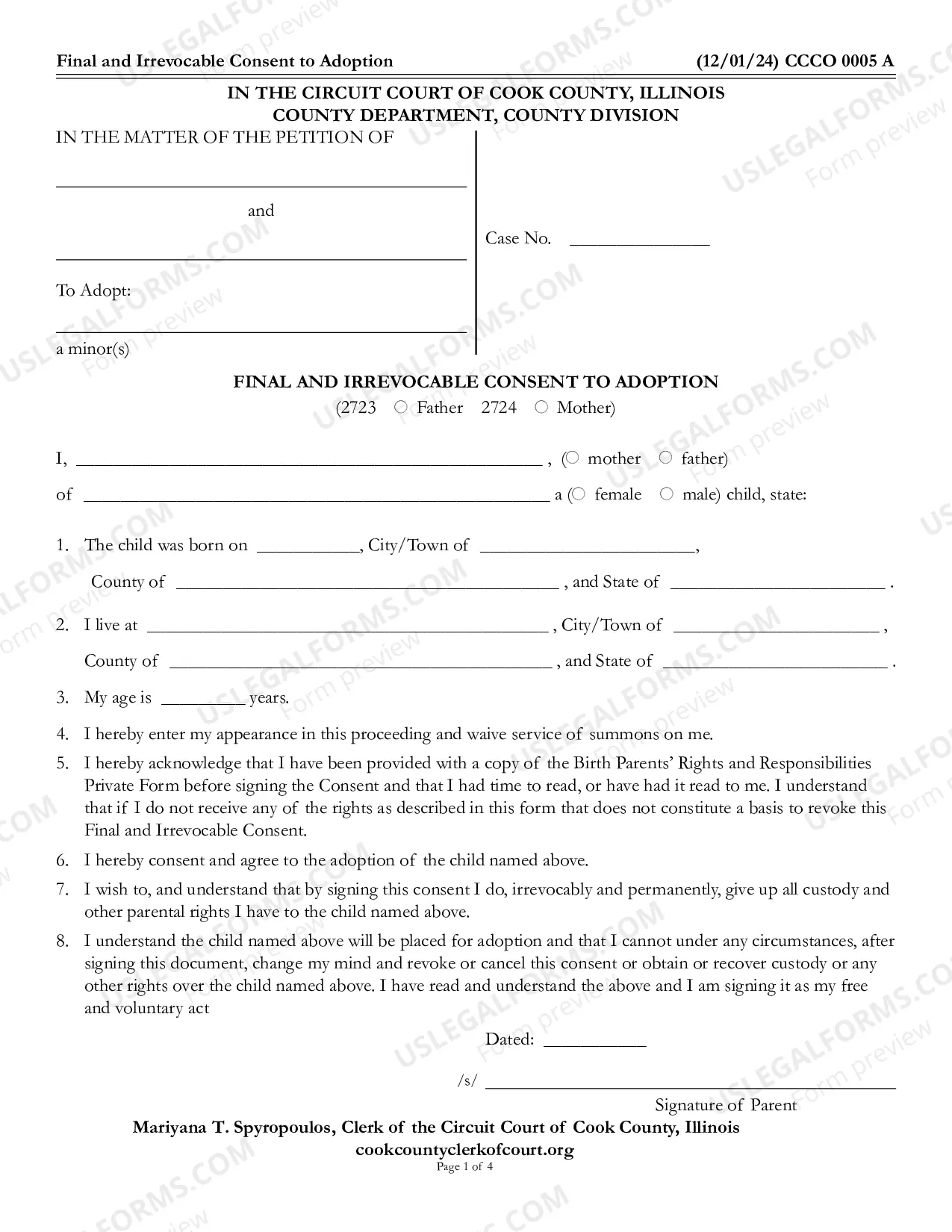
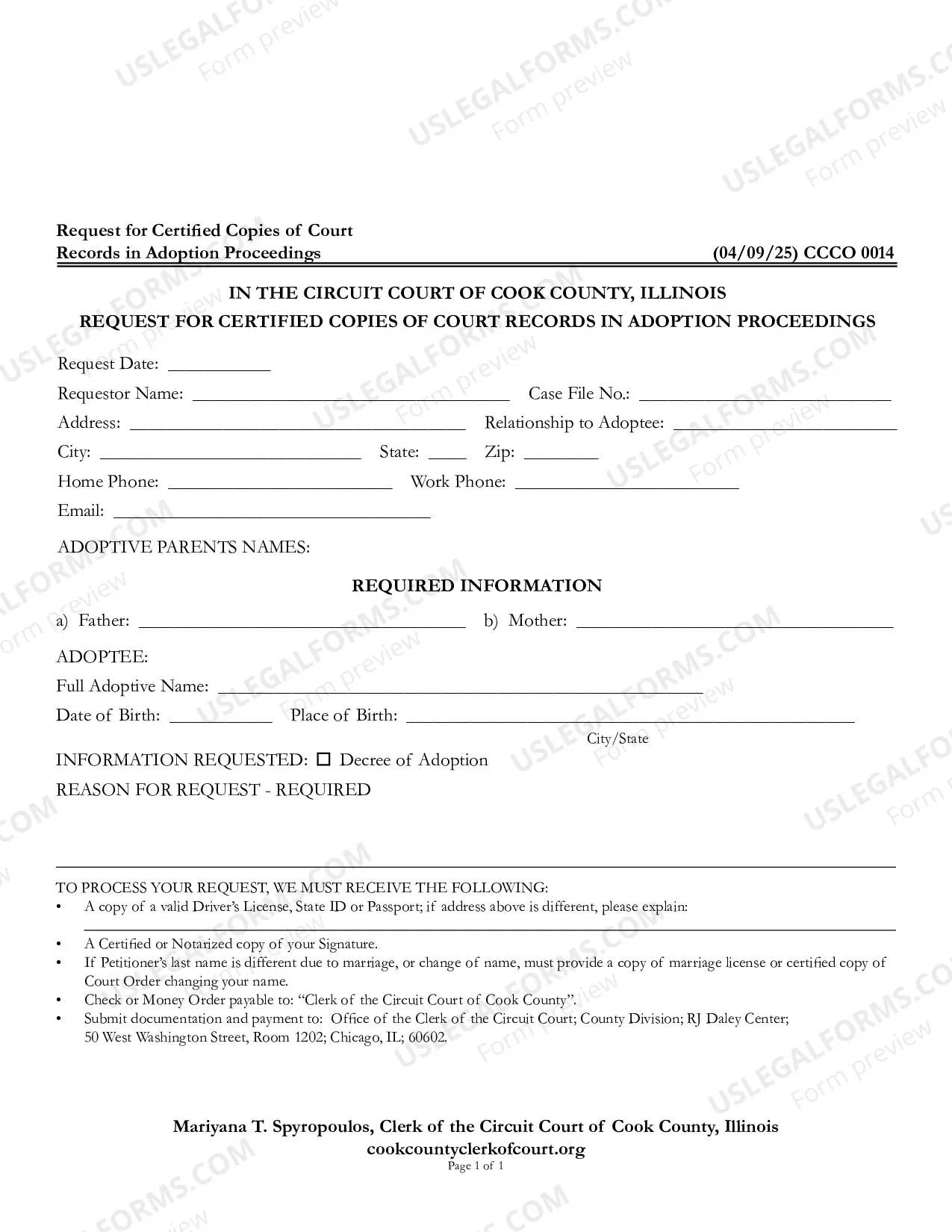
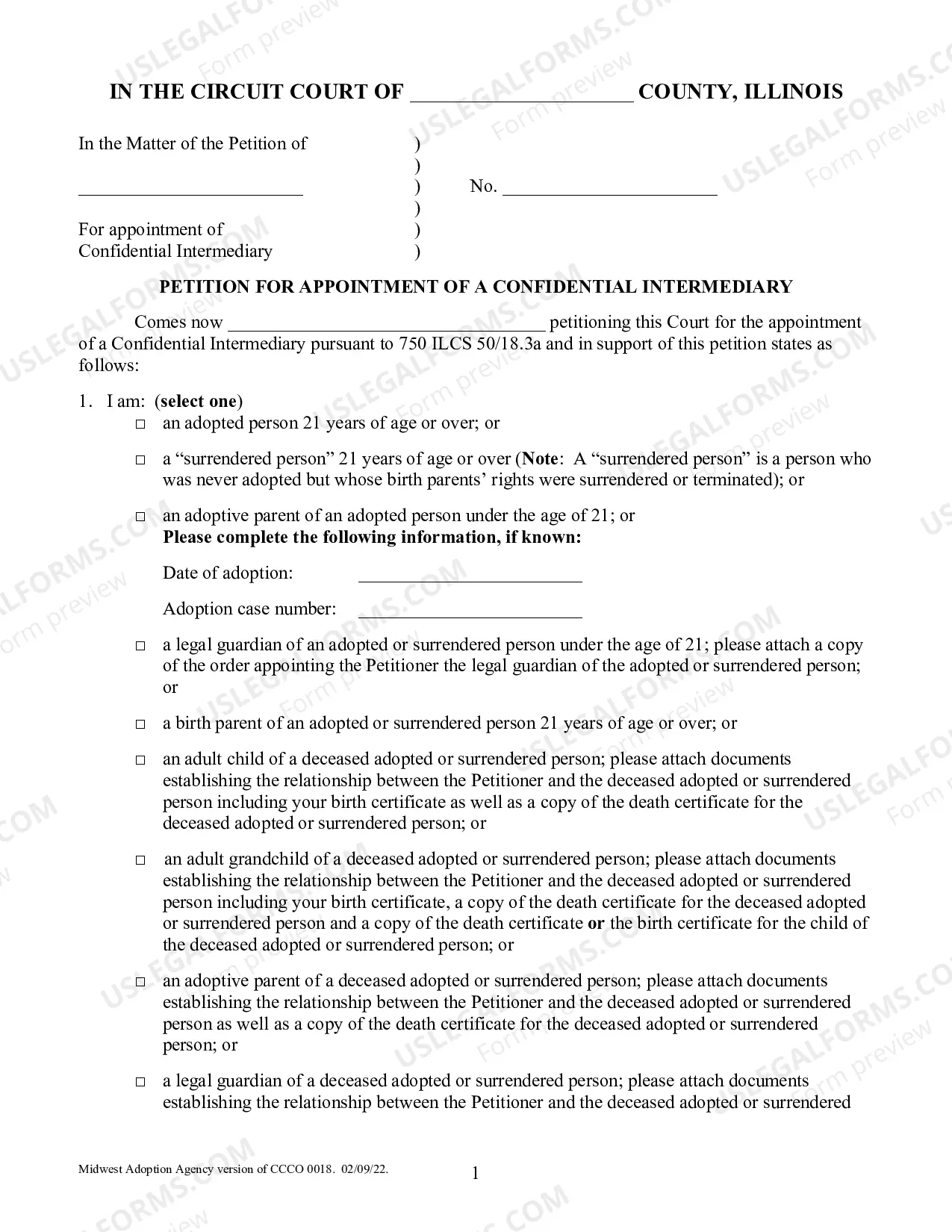
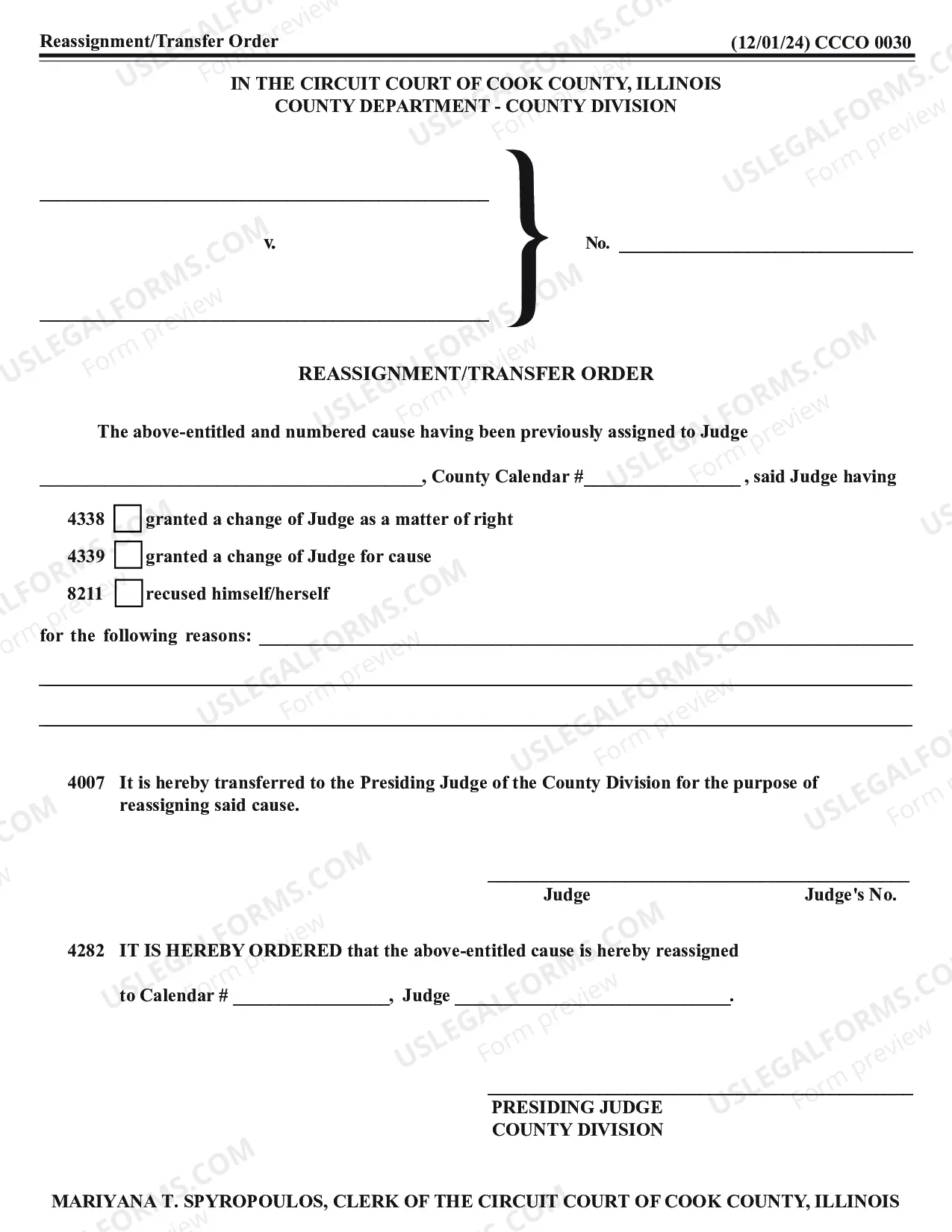
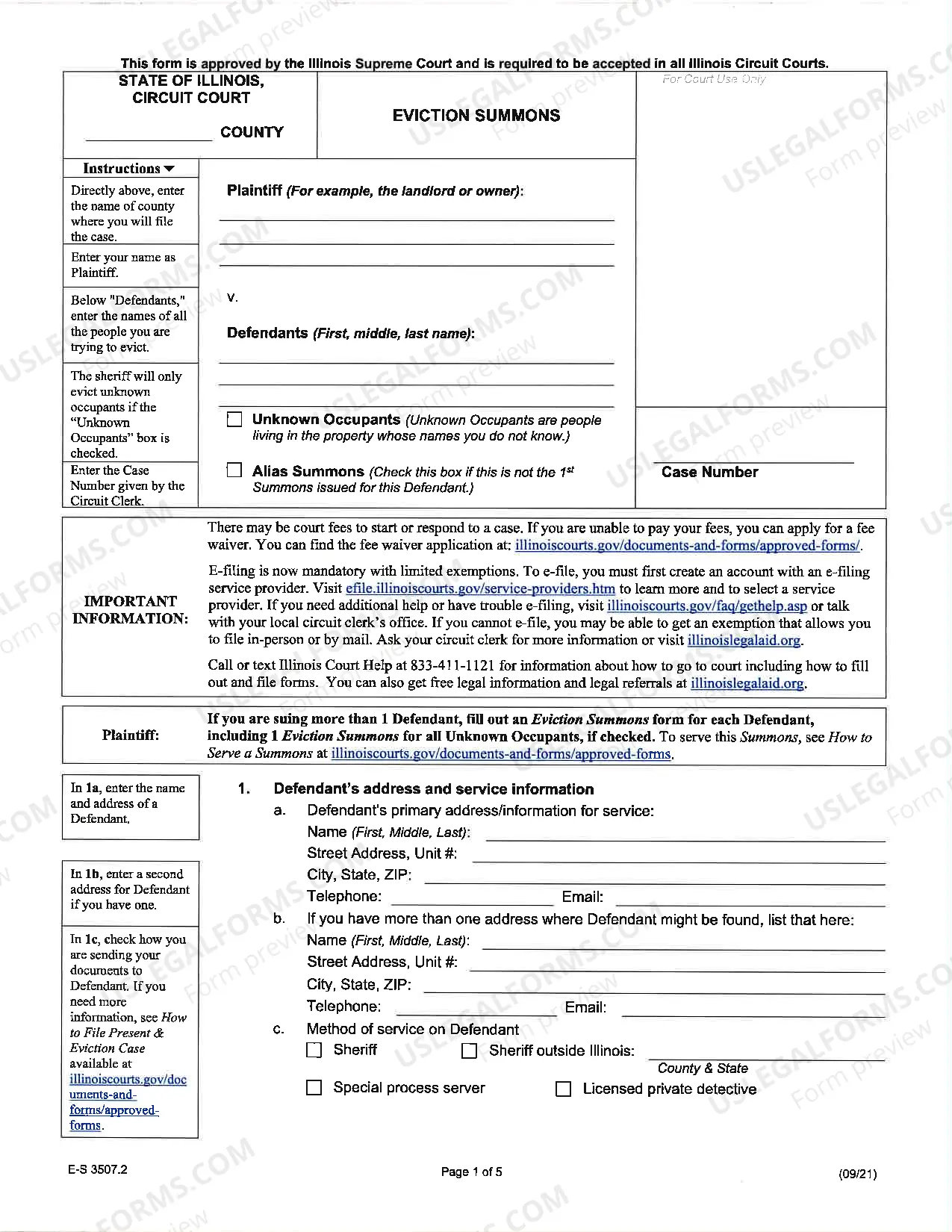
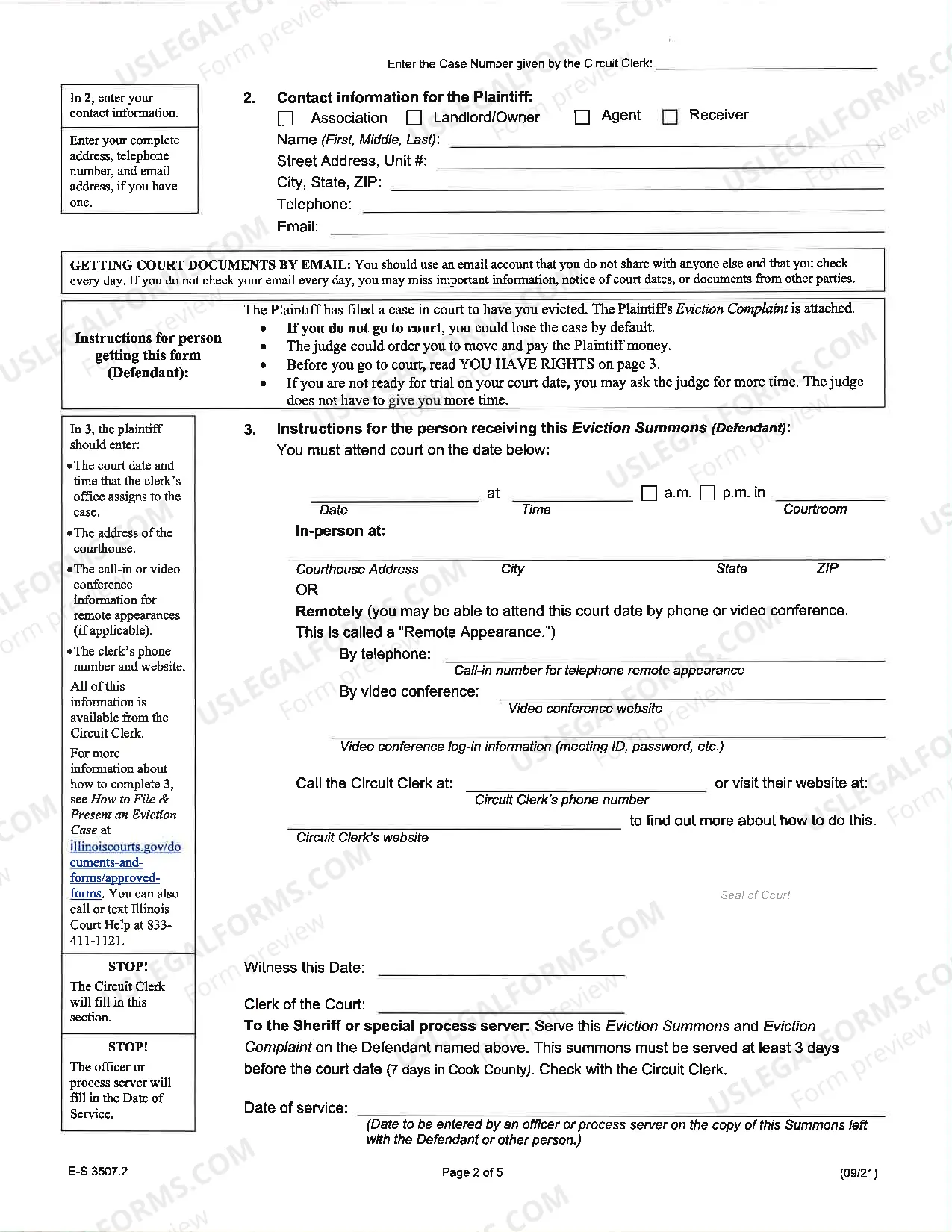
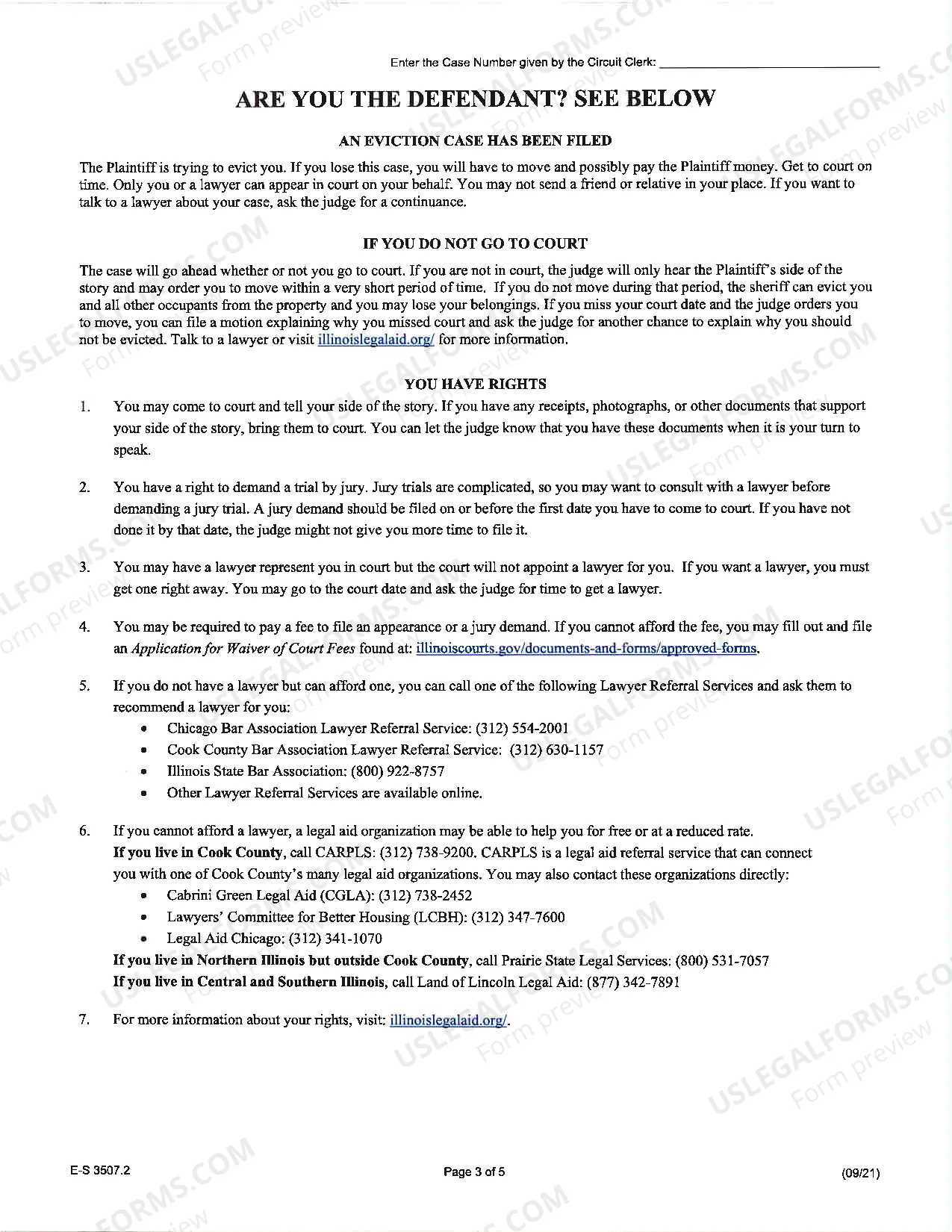
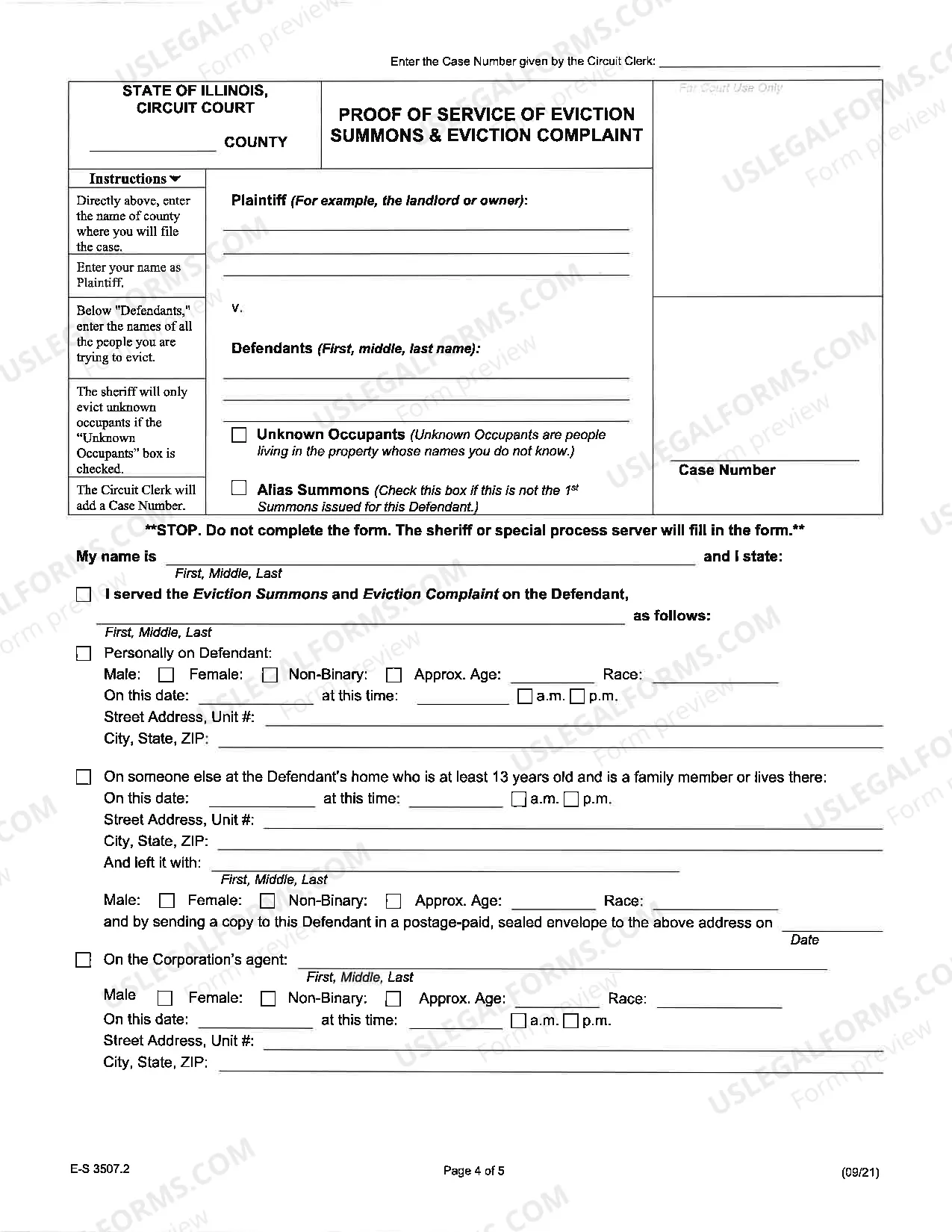
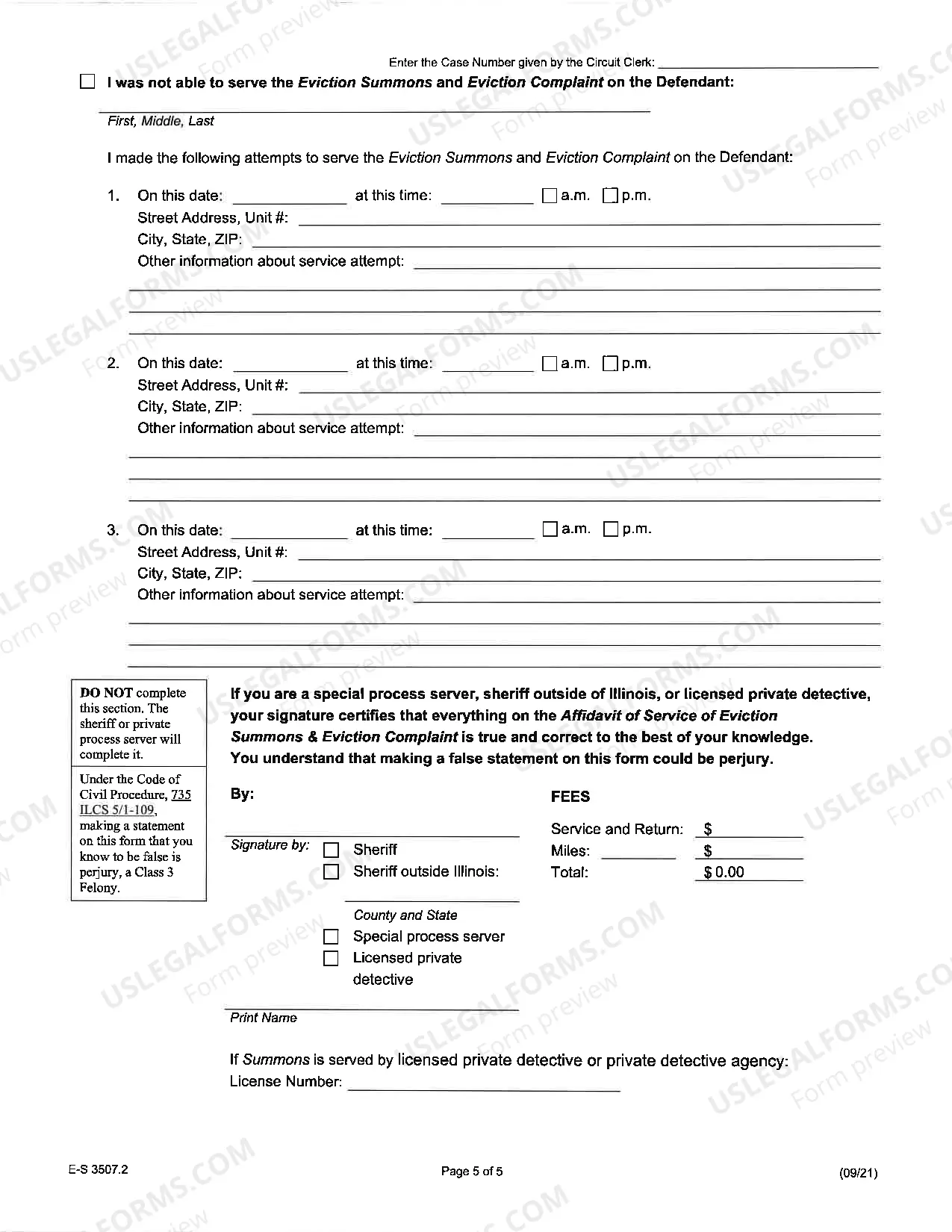
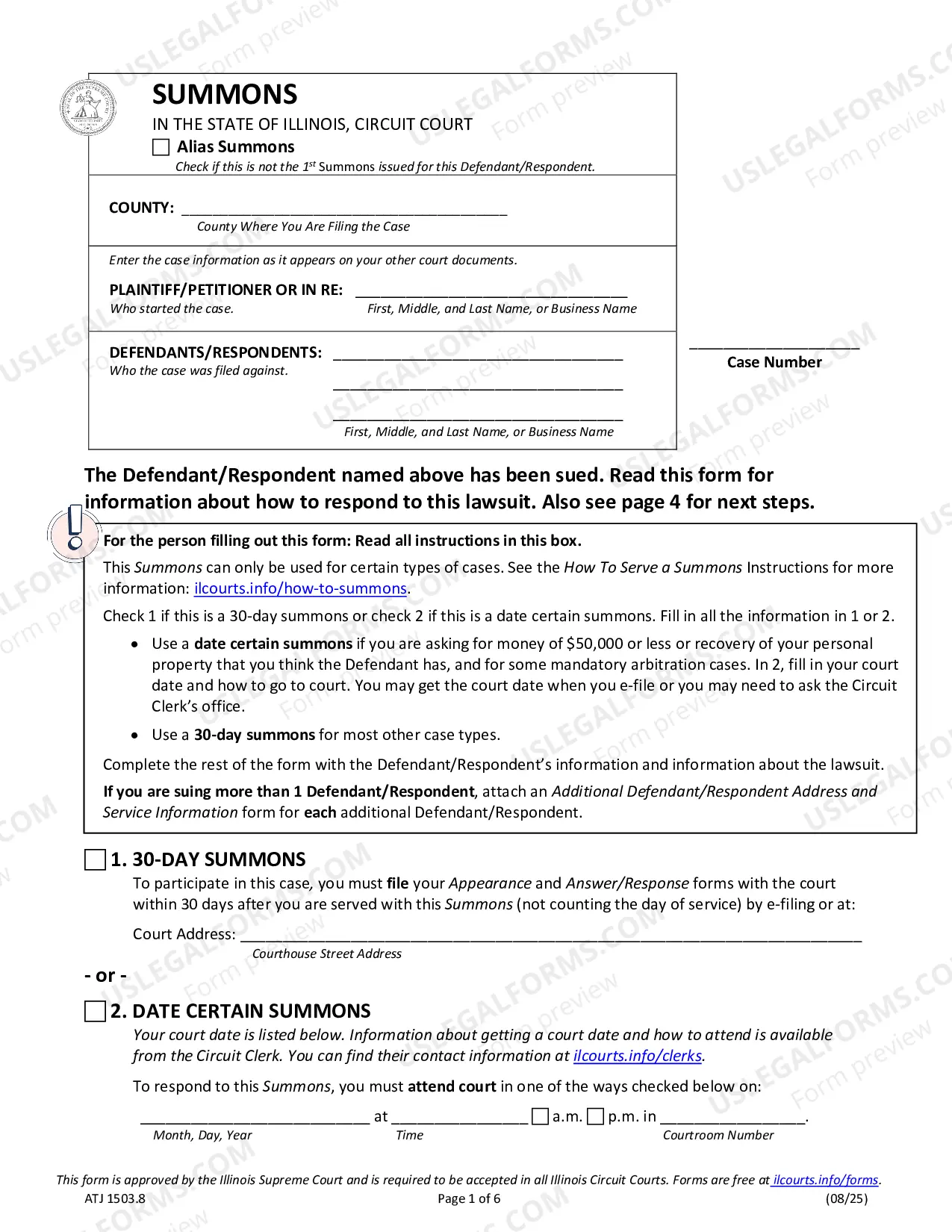
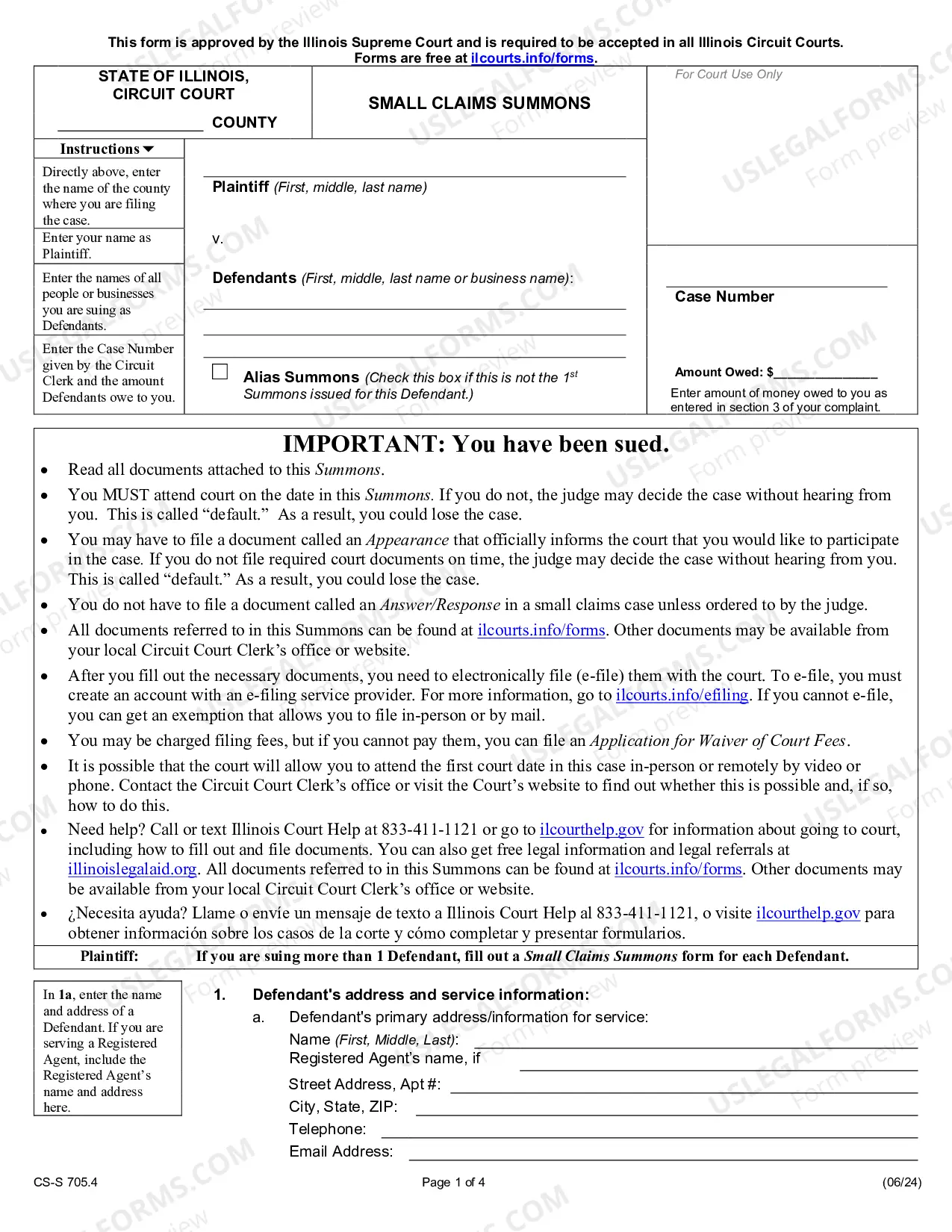
Illinois Summons In Forcible Entry and Detained (FED) is a legal document issued by a court to demand the removal of a tenant from a rented property. It is commonly used in cases where the tenant has failed to pay rent or has violated the terms of the lease agreement. The document serves as a notice to the tenant that their occupancy of the property is no longer allowed and if they fail to vacate, a forcible entry and detained action may be taken against them. There are several types of Feds in Illinois, including: 1. Summons in Forcible Entry and Detained: This summons is issued to the tenant when the landlord believes the tenant has unlawfully entered the premises without their permission. 2. Summons in Forcible Entry and Detained for Nonpayment of Rent: This summons is issued when the tenant has failed to pay rent and the landlord is seeking to evict them. 3. Summons in Forcible Entry and Detained for Violation of Lease: This summons is issued when the tenant has violated the terms of the lease agreement, such as by causing damage to the property or engaging in illegal activities. 4. Summons in Forcible Entry and Detained for Breach of Contract: This summons is issued when the tenant has failed to fulfill their contractual obligations as outlined in the lease agreement.
Illinois Summons In Forcible Entry and Detainer
Description
Get your form ready online
Our built-in tools help you complete, sign, share, and store your documents in one place.
Make edits, fill in missing information, and update formatting in US Legal Forms—just like you would in MS Word.
Download a copy, print it, send it by email, or mail it via USPS—whatever works best for your next step.
Sign and collect signatures with our SignNow integration. Send to multiple recipients, set reminders, and more. Go Premium to unlock E-Sign.
If this form requires notarization, complete it online through a secure video call—no need to meet a notary in person or wait for an appointment.
We protect your documents and personal data by following strict security and privacy standards.

Make edits, fill in missing information, and update formatting in US Legal Forms—just like you would in MS Word.

Download a copy, print it, send it by email, or mail it via USPS—whatever works best for your next step.

Sign and collect signatures with our SignNow integration. Send to multiple recipients, set reminders, and more. Go Premium to unlock E-Sign.

If this form requires notarization, complete it online through a secure video call—no need to meet a notary in person or wait for an appointment.

We protect your documents and personal data by following strict security and privacy standards.
Looking for another form?


How to fill out Illinois Summons In Forcible Entry And Detainer?
Completing official documents can be quite a hassle if you lack ready-to-use fillable templates. With the US Legal Forms online library of formal paperwork, you can trust the blanks you receive, as all of them comply with federal and state regulations and are reviewed by our specialists.
Acquiring your Illinois Summons In Forcible Entry and Detainer from our library is as straightforward as 1-2-3. Existing users with a valid subscription only need to Log In and click the Download button after locating the appropriate template. If needed, users can retrieve the same document from the My documents section of their account.
Haven’t you utilized US Legal Forms yet? Register for our service today to swiftly and effortlessly obtain any official document whenever you need to, and maintain your paperwork organized!
- Document compliance verification. You should carefully review the form's content that you wish to ensure it aligns with your requirements and adheres to your state law rules. Reviewing your document and examining its general overview will assist you in doing so.
- Alternative search (optional). If you encounter any discrepancies, explore the library using the Search tab above until you discover a fitting template, and click Buy Now when you identify the one you require.
- Account creation and form acquisition. Set up an account with US Legal Forms. After verifying your account, Log In and choose your preferred subscription option. Proceed with payment (both PayPal and credit card methods are available).
- Template download and additional usage. Choose the file format for your Illinois Summons In Forcible Entry and Detainer and click Download to store it on your device. Print it to finalize your documents manually, or utilize a comprehensive online editor to prepare an electronic version more swiftly and efficiently.
Form popularity
FAQ
In Illinois, the law which defines the process of eviction is known as the Forcible Entry and Detainer Act. The forcible court is known as a court of limited jurisdiction, which means that only claims for possession and monetary damages can be heard. The court will not allow unrelated defenses and counterclaims.
An eviction notice does not start a court case. If your landlord starts an eviction case against you, you will receive a Complaint and Summons. Your landlord must serve you with an eviction notice before filing the Complaint and Summons. First option: Resolve the issue without going to court.
On average, it would take anywhere between 3 weeks to 6 months for a complete eviction process. This does not include any appeals for reconsideration.
Naturally, landlords are hesitant to rent to someone with an eviction on their record. Evictions can stay on your credit report for up to seven years, creating a great deal of trouble for someone who cannot afford to buy a home but still needs to secure housing.