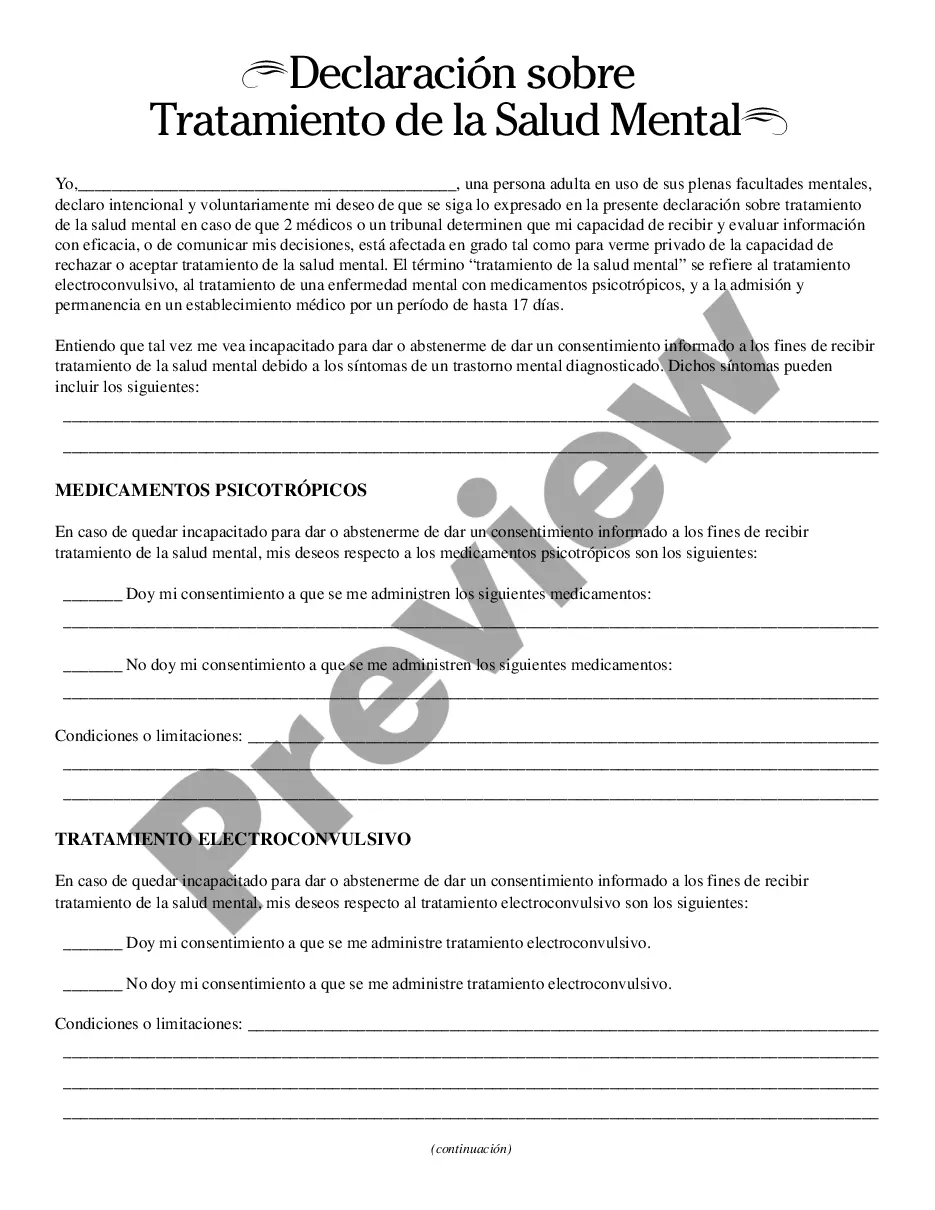
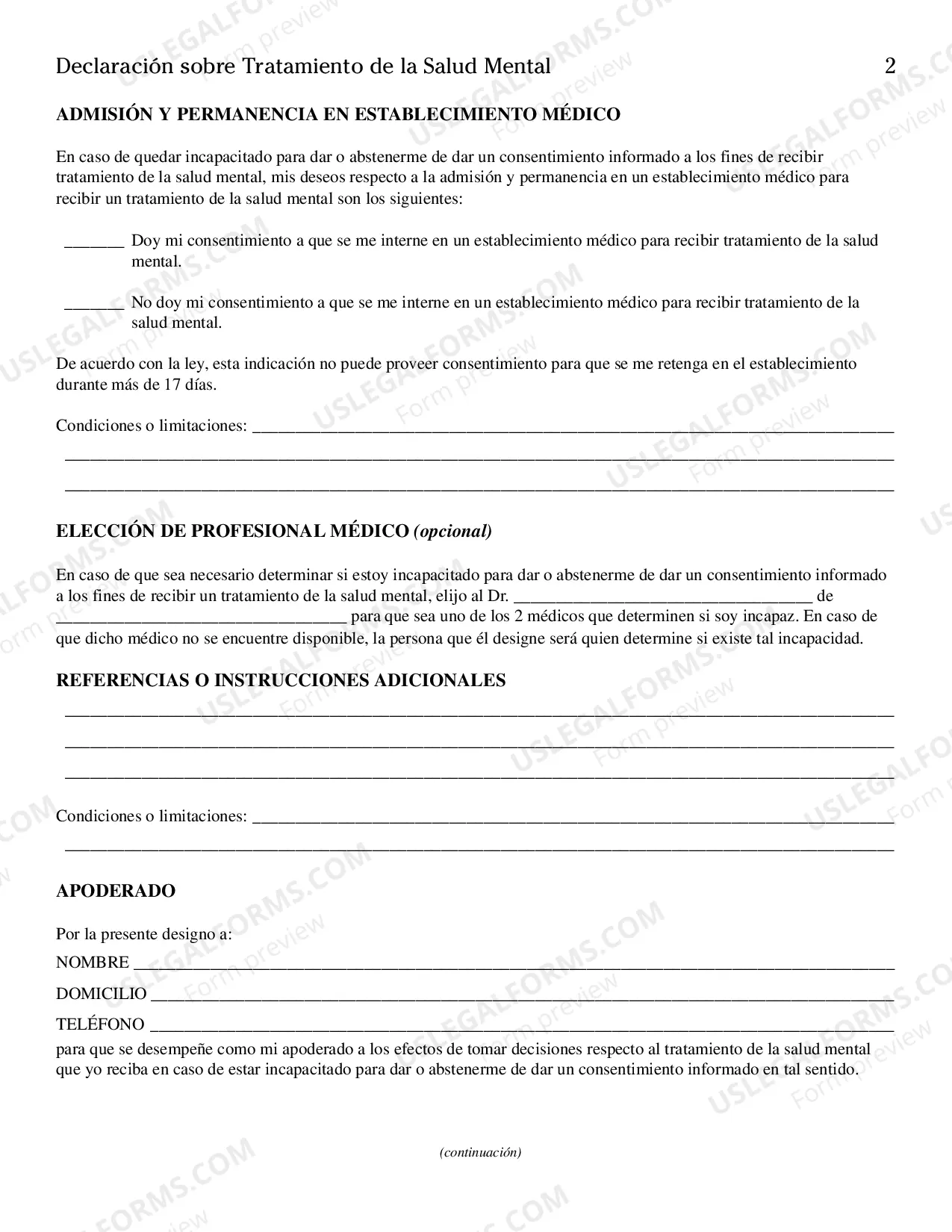
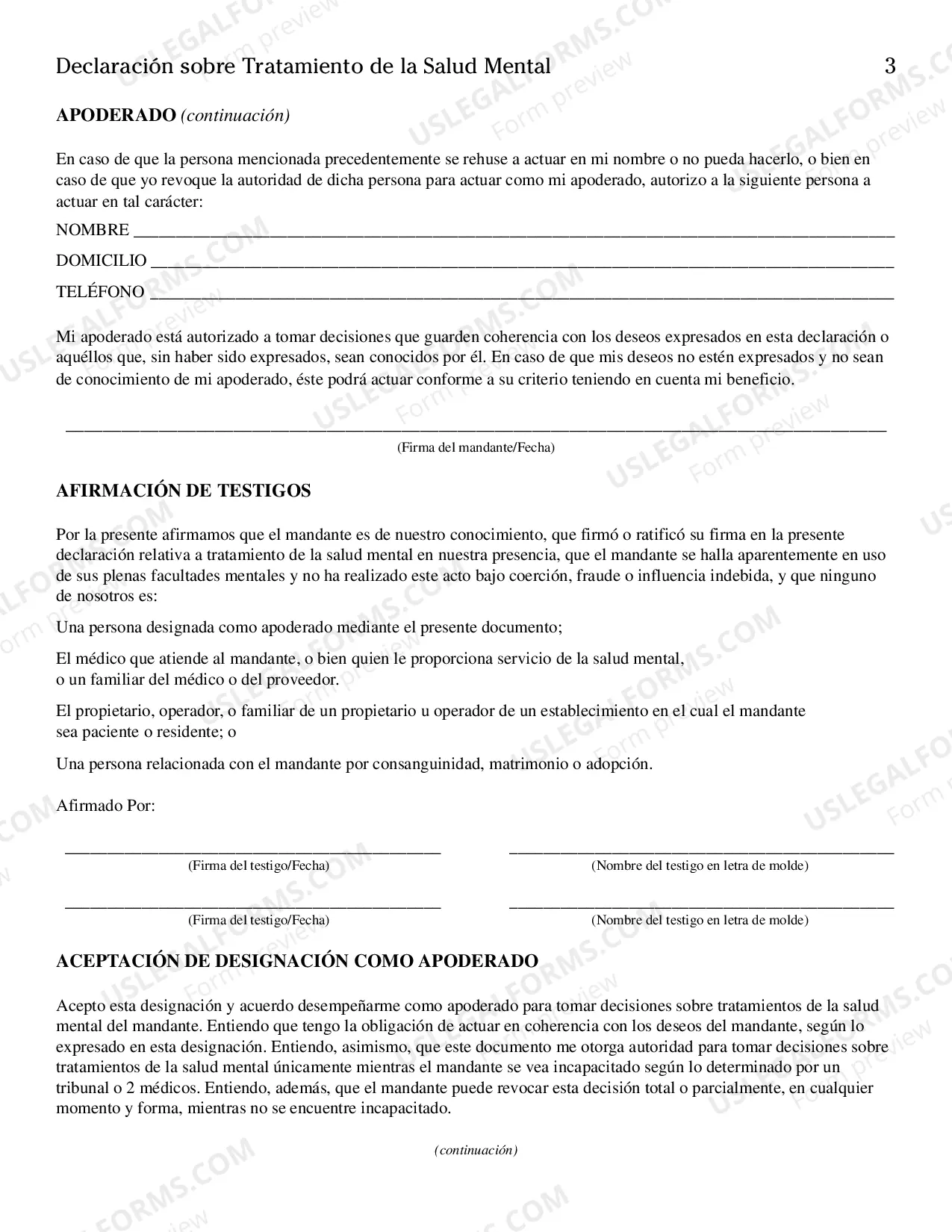
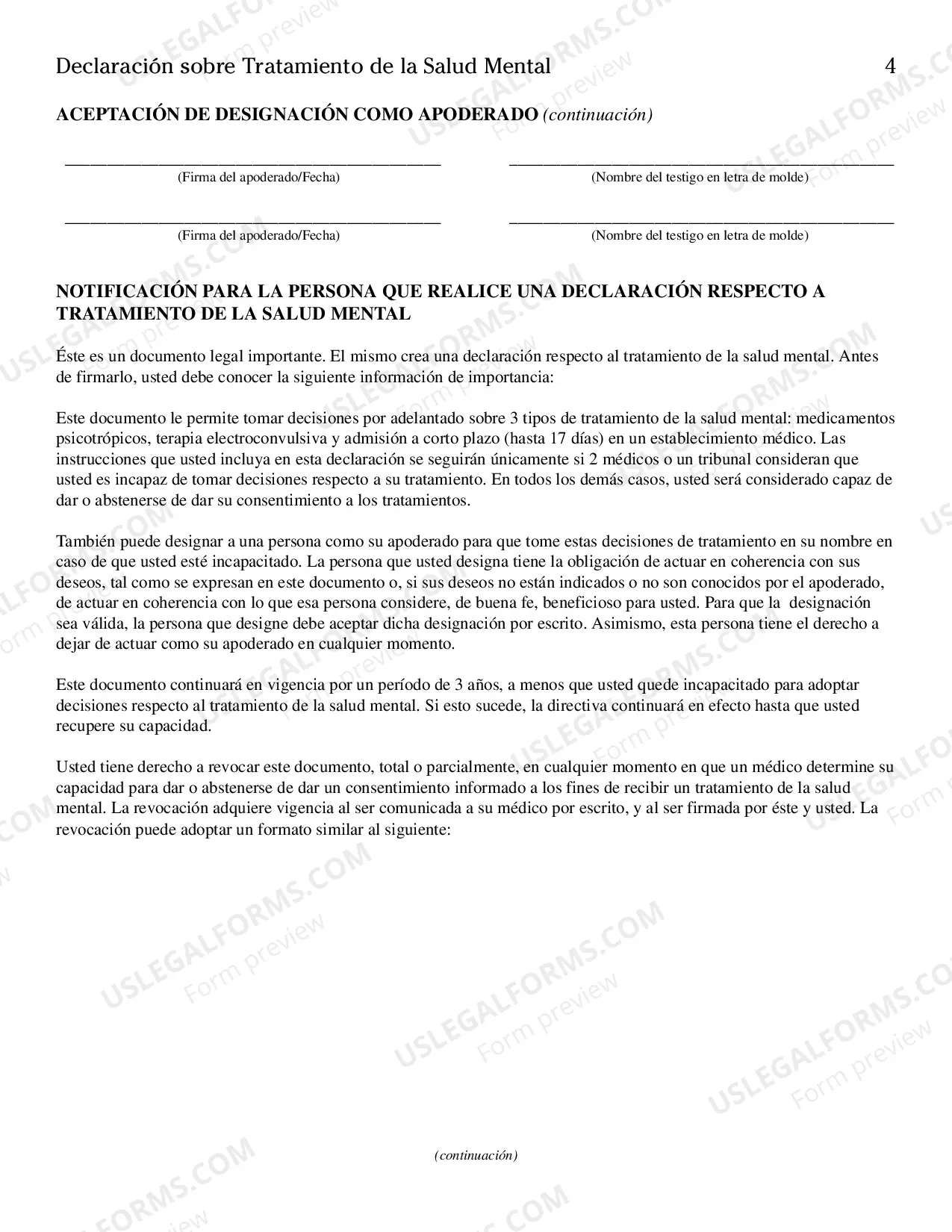
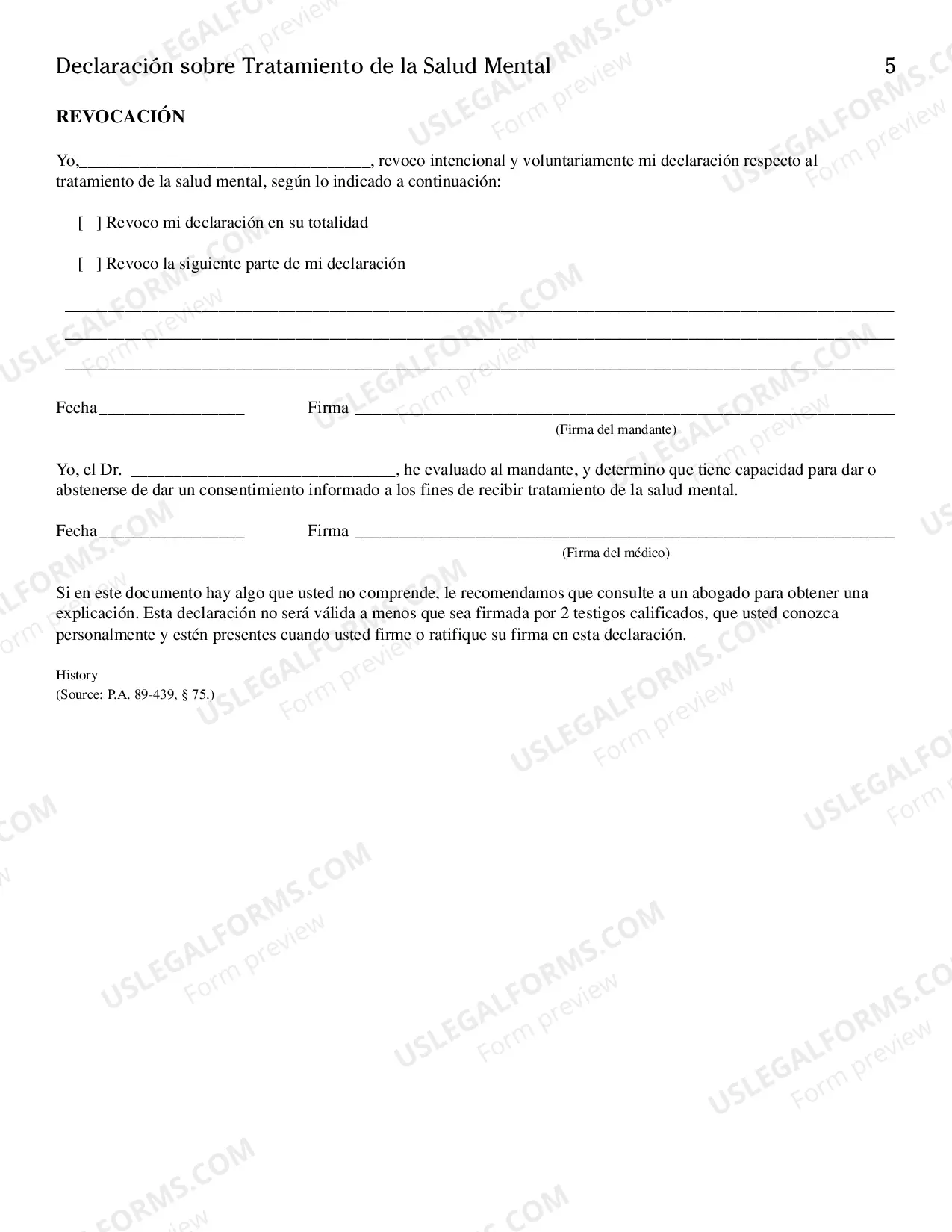
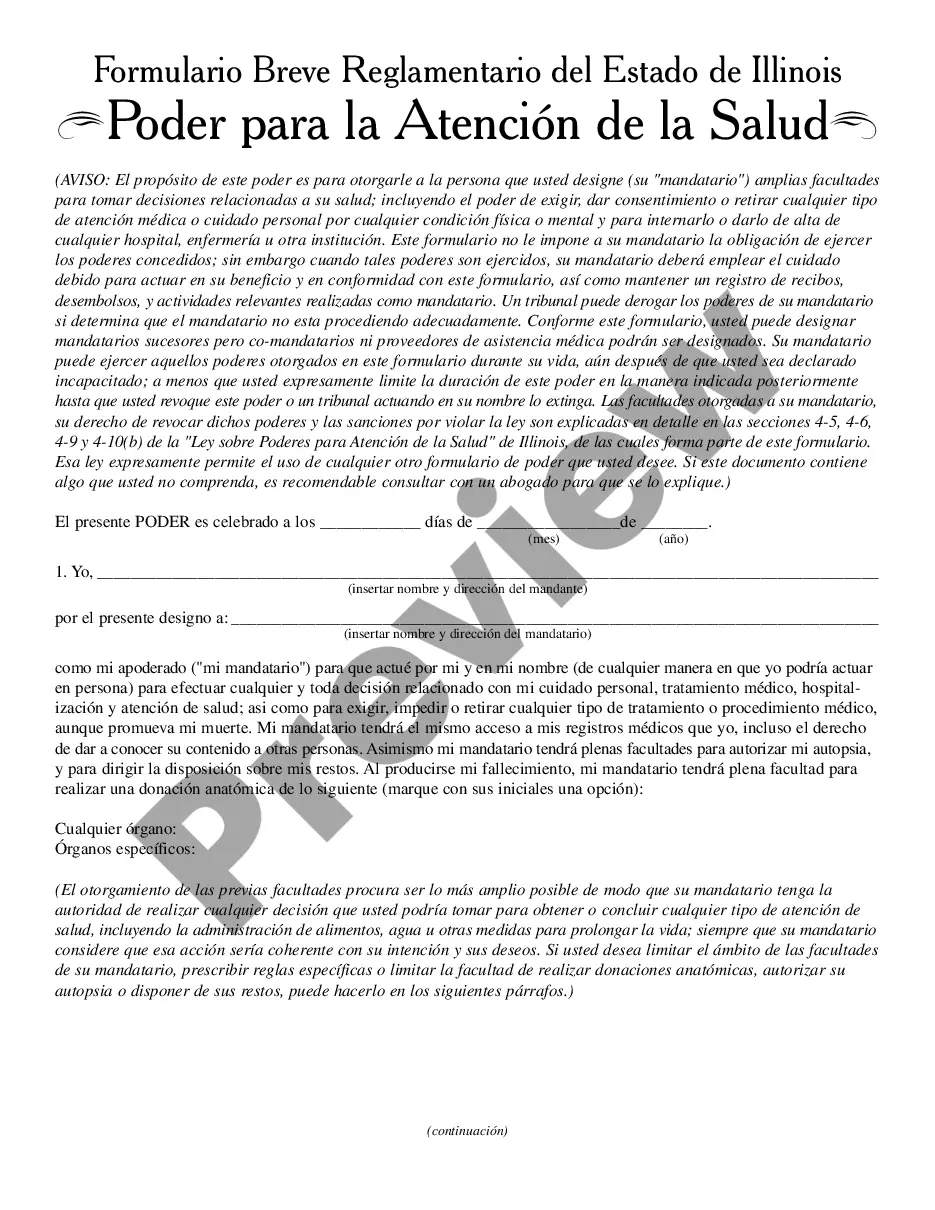
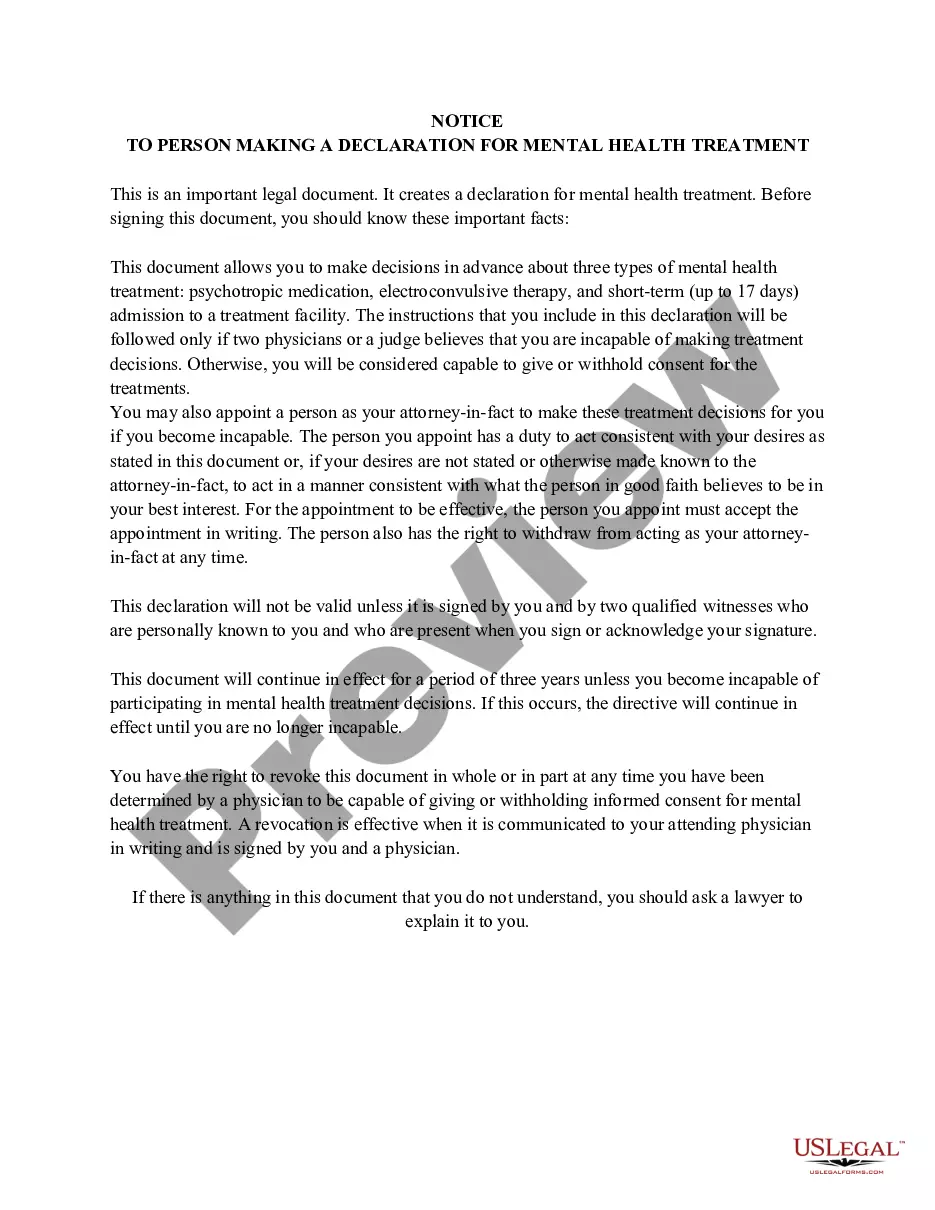
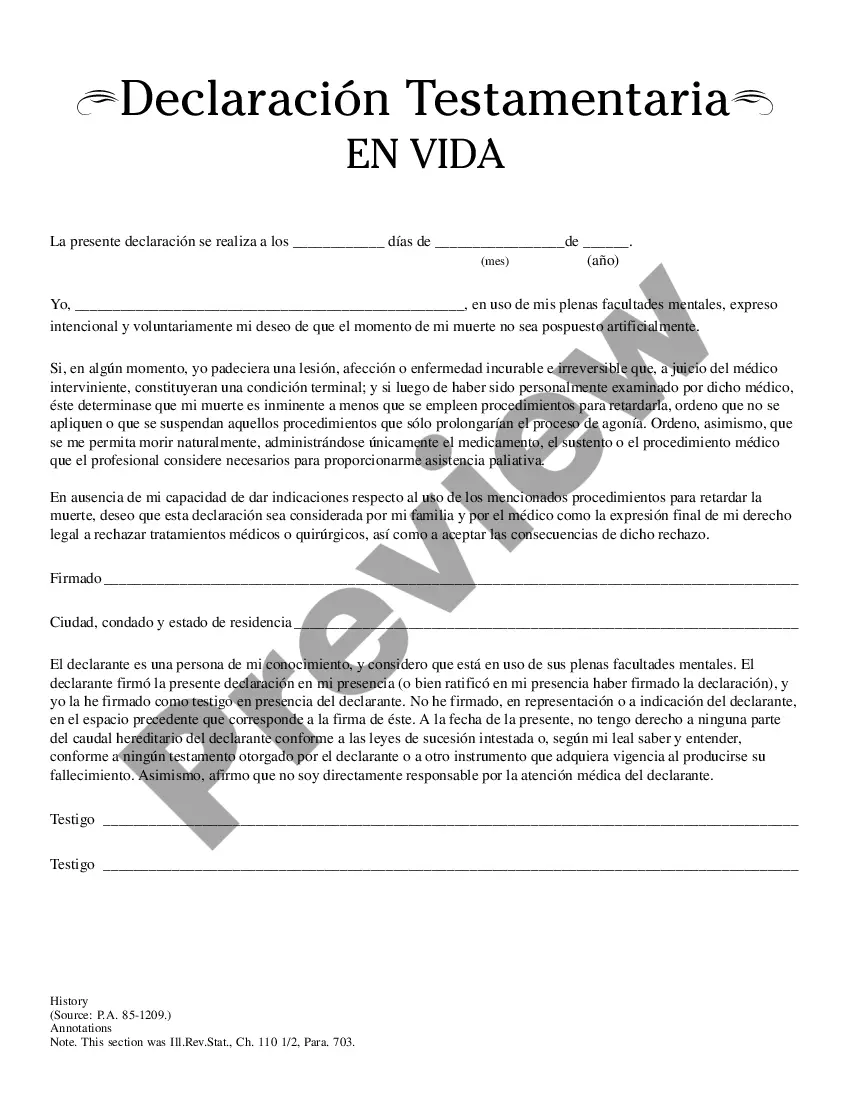
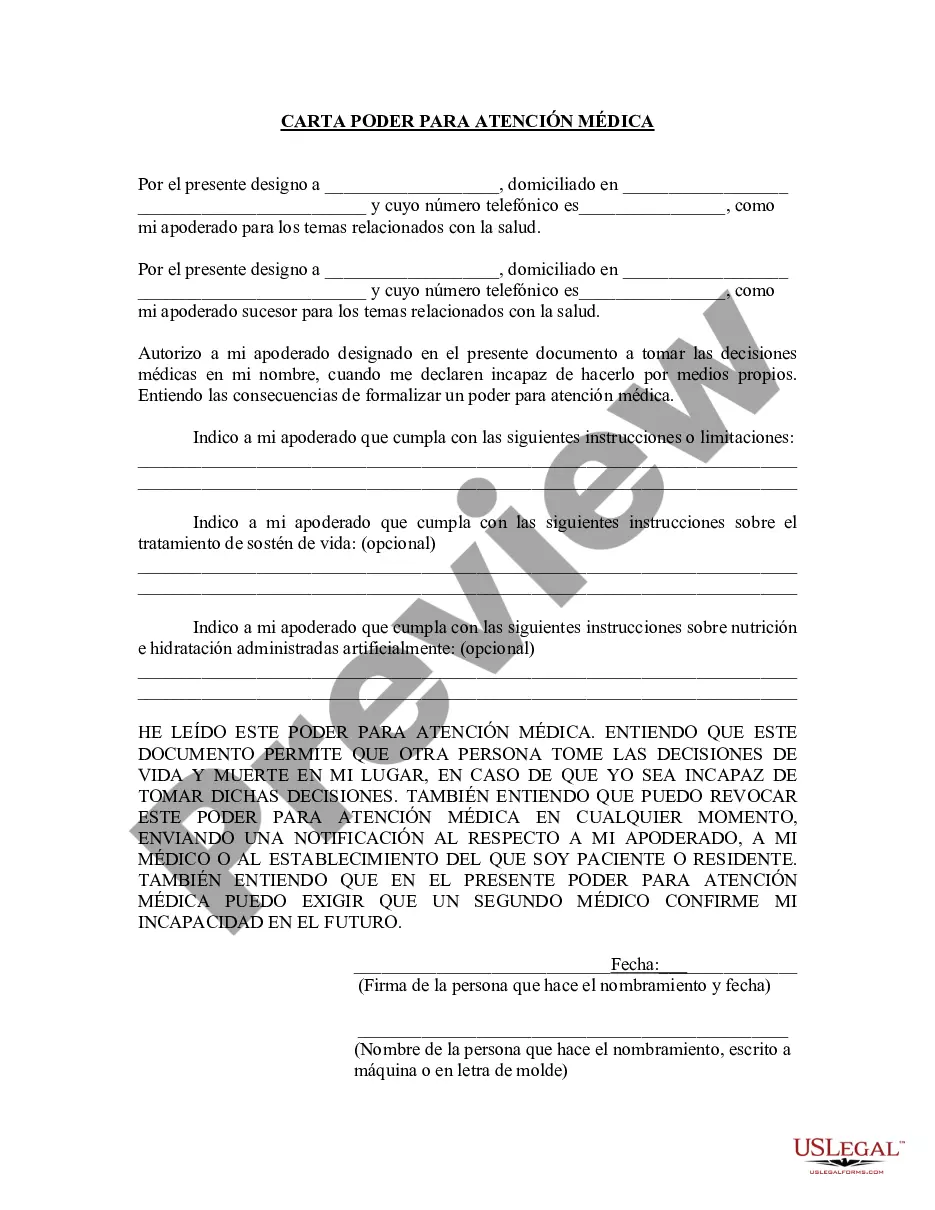
Illinois Declaracion sobre Tratamiento de la Salud Mental
Does this document require notarization?
In most cases, this form does not require notarization. However, some jurisdictions or signing circumstances might. US Legal Forms offers online notarization powered by Notarize, accessible 24/7 for a quick, remote process.
Get your form ready online
Our built-in tools help you complete, sign, share, and store your documents in one place.
Make edits, fill in missing information, and update formatting in US Legal Forms—just like you would in MS Word.
Download a copy, print it, send it by email, or mail it via USPS—whatever works best for your next step.
Sign and collect signatures with our SignNow integration. Send to multiple recipients, set reminders, and more. Go Premium to unlock E-Sign.
If this form requires notarization, complete it online through a secure video call—no need to meet a notary in person or wait for an appointment.
We protect your documents and personal data by following strict security and privacy standards.

Make edits, fill in missing information, and update formatting in US Legal Forms—just like you would in MS Word.

Download a copy, print it, send it by email, or mail it via USPS—whatever works best for your next step.

Sign and collect signatures with our SignNow integration. Send to multiple recipients, set reminders, and more. Go Premium to unlock E-Sign.

If this form requires notarization, complete it online through a secure video call—no need to meet a notary in person or wait for an appointment.

We protect your documents and personal data by following strict security and privacy standards.
Looking for another form?

Form popularity
FAQ
Major Depressive Episode: 7.8% (19.4 million people) Schizophrenia: <1% (estimated 1.5 million people) Bipolar Disorder: 2.8% (estimated 7 million people) Anxiety Disorders: 19.1% (estimated 48 million people)
Anxiety Disorders: Anxiety disorders are the most common mental health condition in the US and can include OCD, panic attacks and phobias. It is estimated that 40 million adults have an anxiety disorder.
Public mental health services in Illinois are administered and provided by the Illinois Department of Human ServicesDivision of Mental Health (DMH). Substance use and addiction treatment services are overseen by the Division of Alcoholism and Substance Abuse (DASA).
5150 is the number of the section of the Welfare and Institutions Code, which allows a person with a mental illness to be involuntarily detained for a 72-hour psychiatric hospitalization. A person on a 5150 can be held in the psychiatric hospital against their will for up to 72 hours.
Admission by court order: An Illinois judge can force an individual to be admitted to a mental health facility against his or her will. Any person over the age of 18 can file a petition for immediate hospitalization of a person with the mental illness.
Completed; Signed and dated; Made by a person 18 years of age or older; Given to the facility director of the mental health facility in the county where the respondent resides or is present;
Depending on whether the person seeks treatment for a mental condition he or she experiences, a therapist or a counselor can have a person committed against his or her will.The therapist will have the power to contact the appropriate authorities and have the person sent to a mental health clinic.
Simply put, it is not possible to hospitalize anyone, whether they are abusing drugs, extremely depressed or suffer from a psychotic illness. In addition, no one can be forced to take medications against their will.