Illinois Foreign Judgment Enrollment
About this form
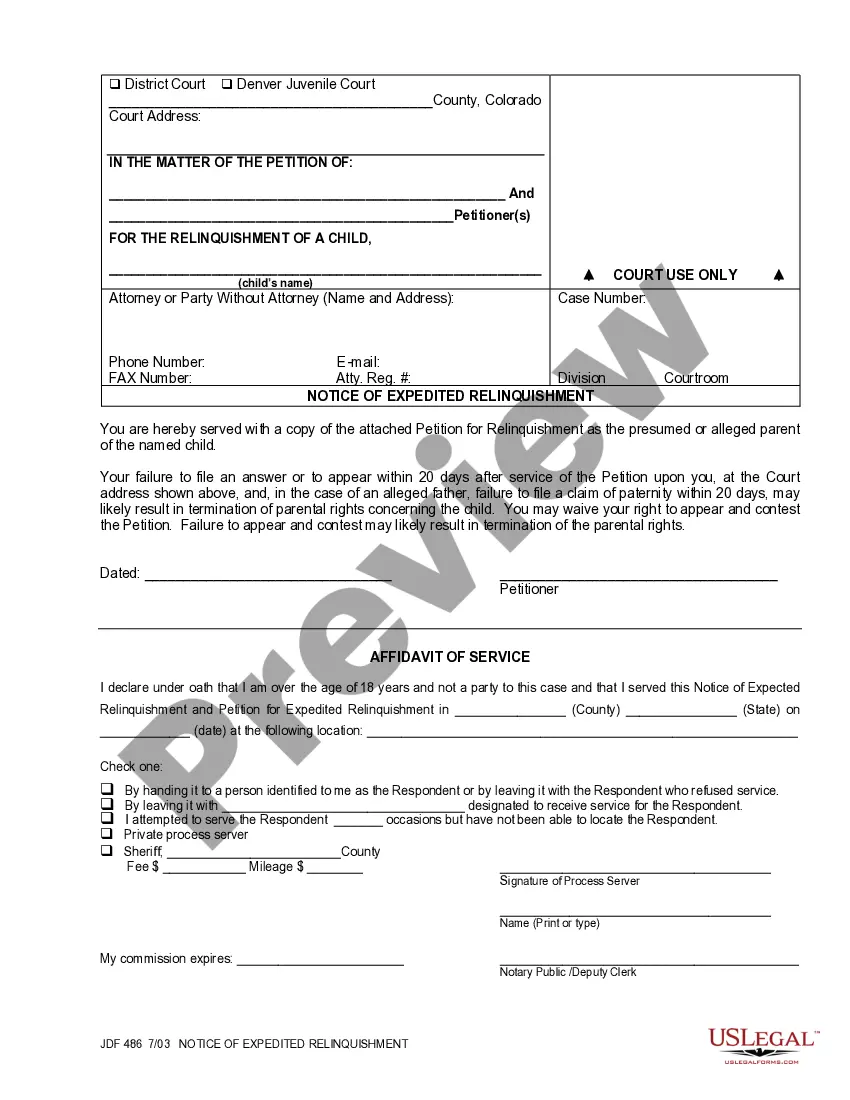
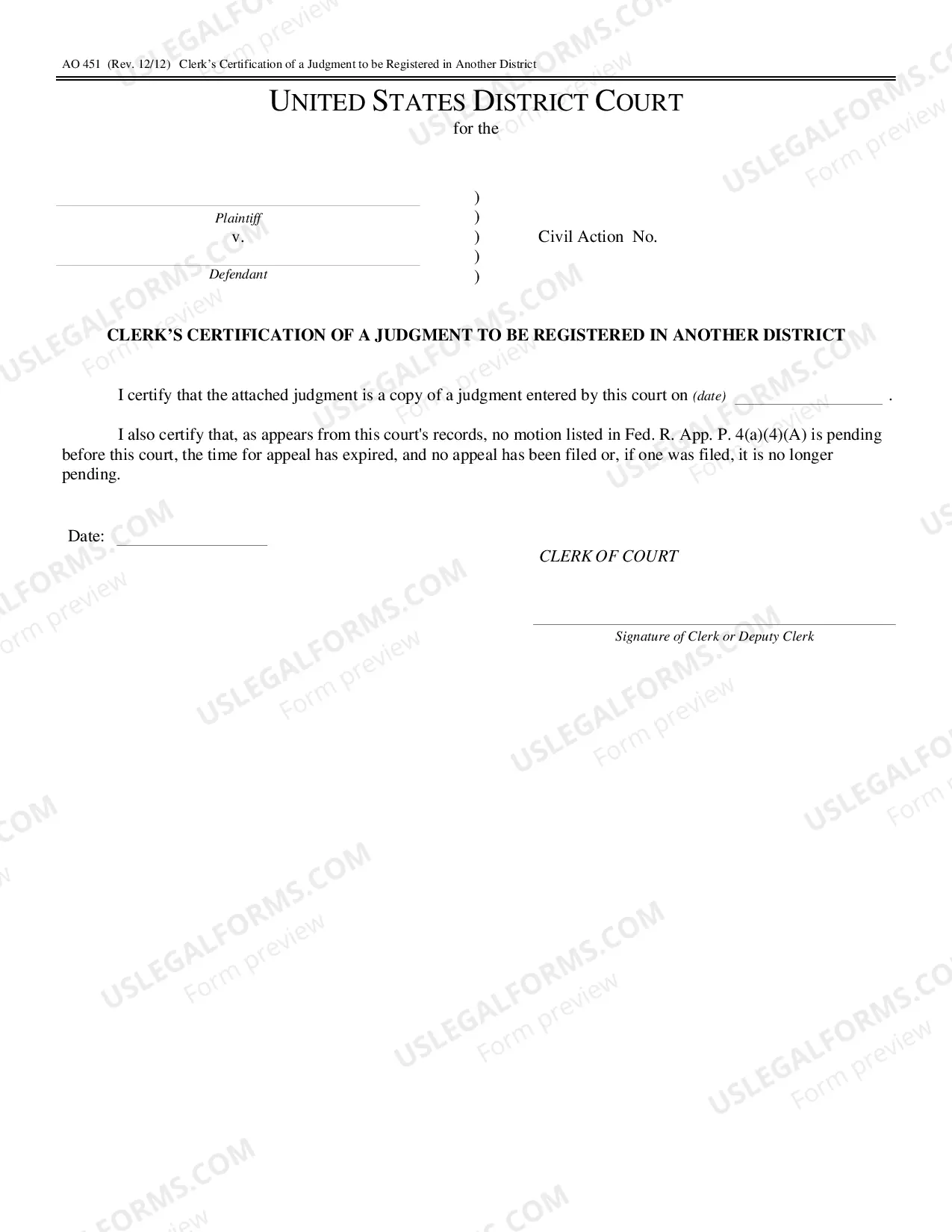
The Illinois Foreign Judgment Enrollment form is a legal document used to enroll a judgment from another state in Illinois. This form allows a judgment creditor to enforce a foreign judgment as if it were issued in Illinois, creating a judgment lien against the property of the judgment debtor. It is important as it facilitates the enforcement of judgments across state lines, which may differ from local enforcement processes.
What’s included in this form
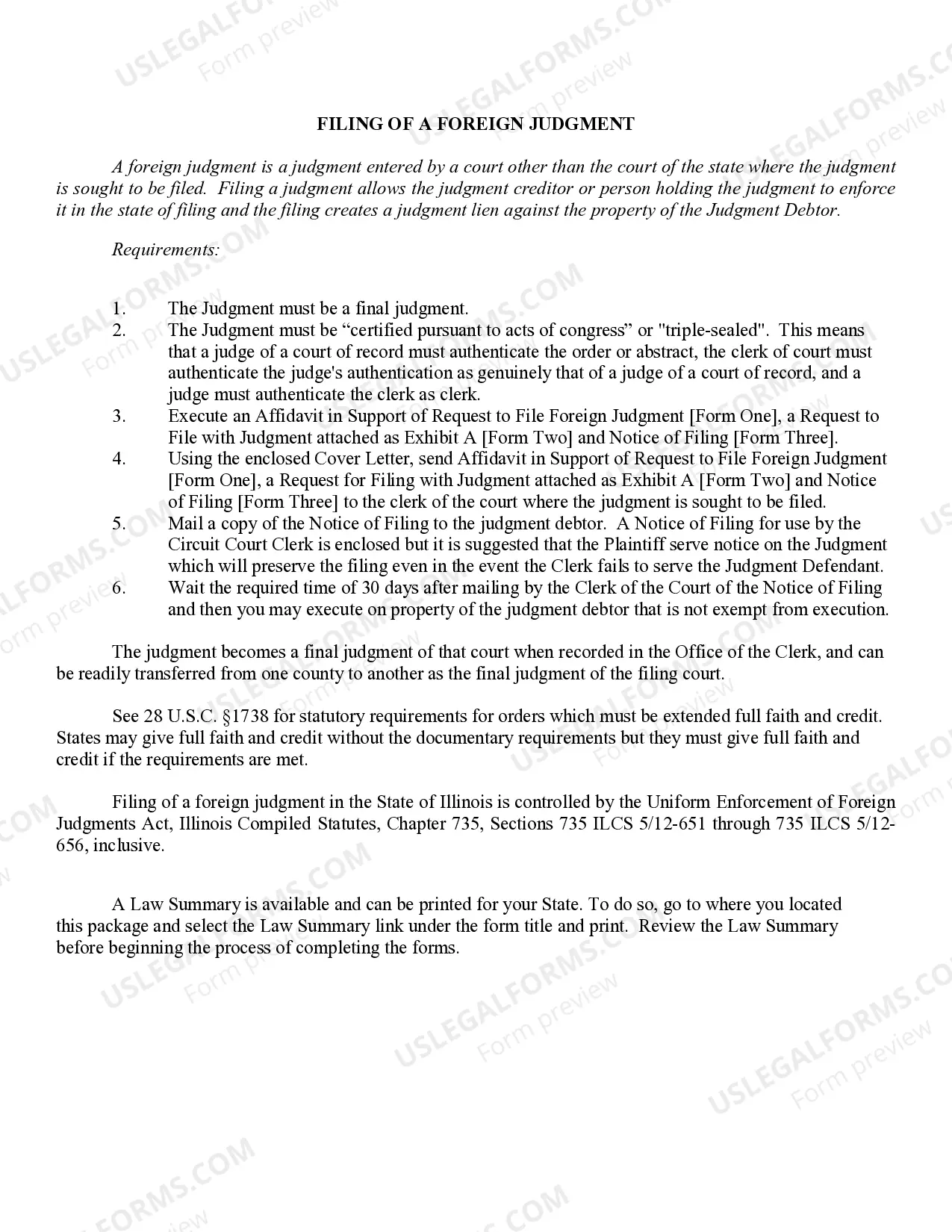
- Instructions for completing the enrollment process.
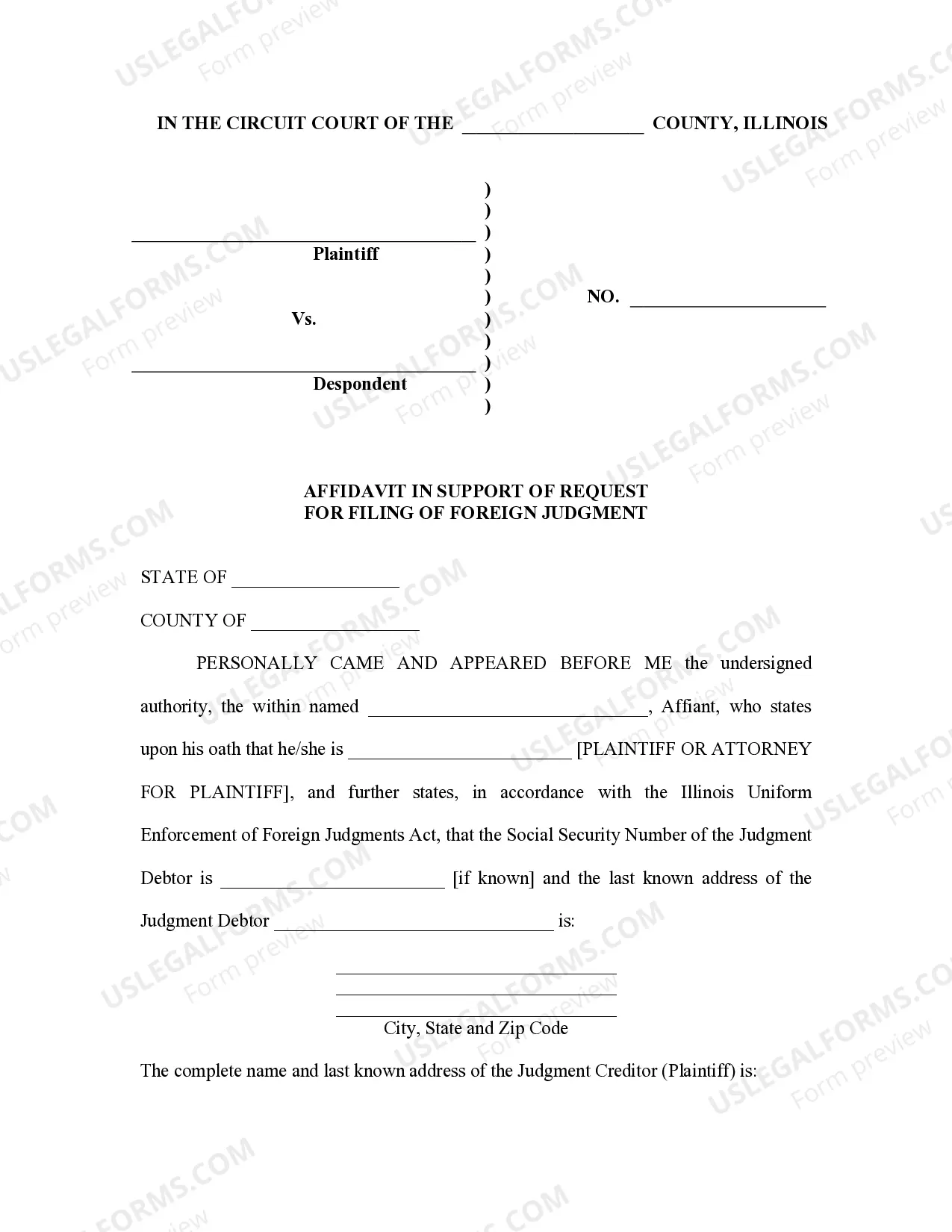
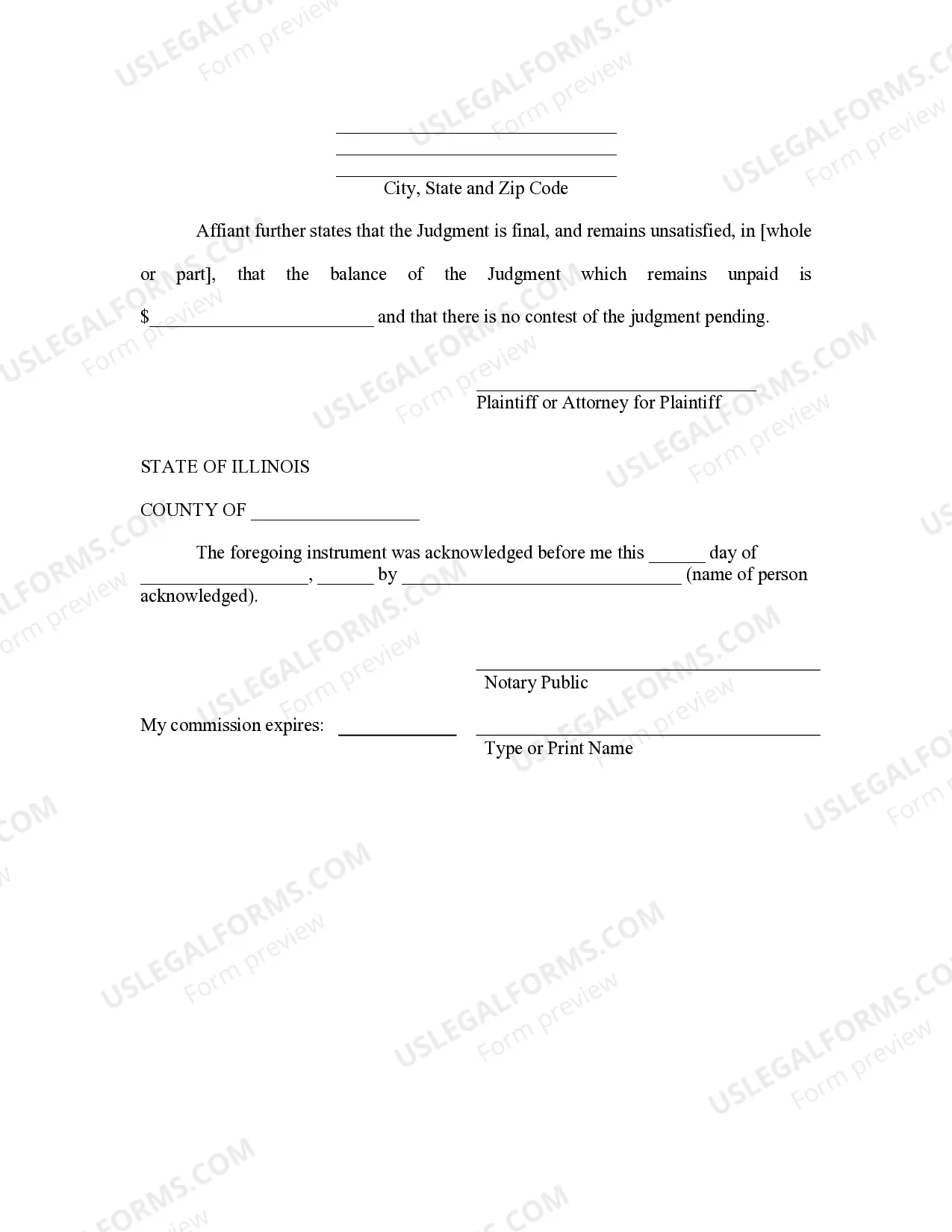
- Affidavit in Support of Request to File Foreign Judgment.
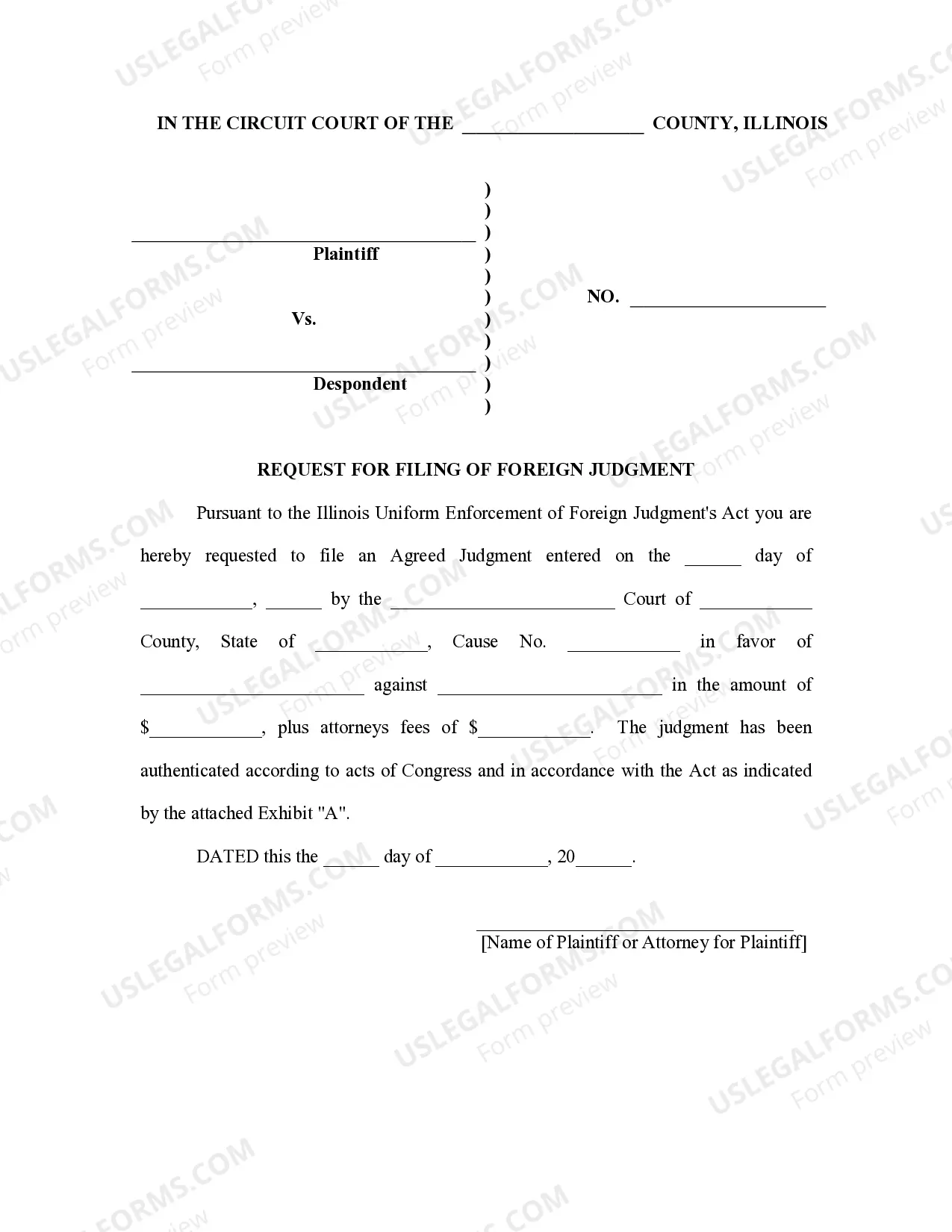
- Request to File with Judgment attached as an Exhibit.
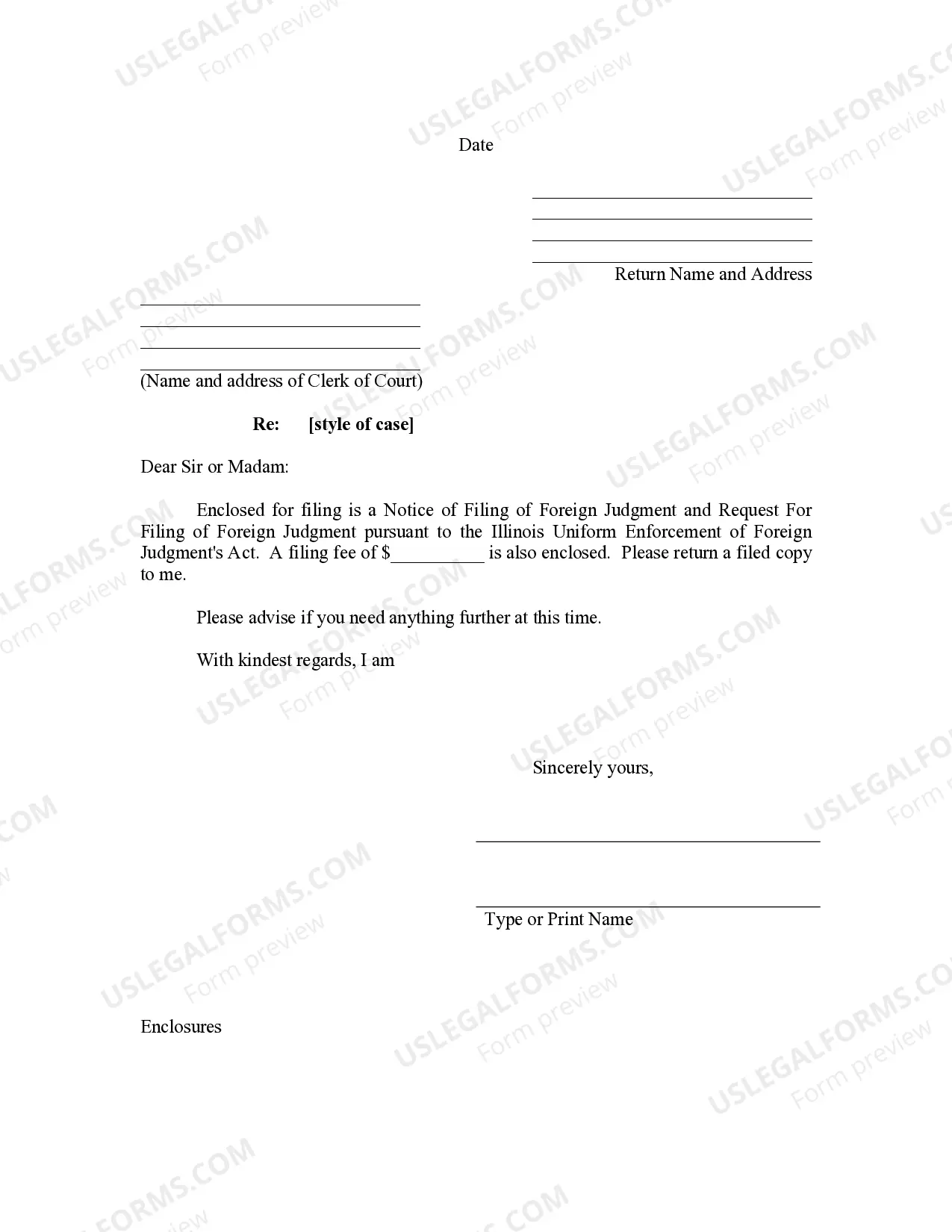
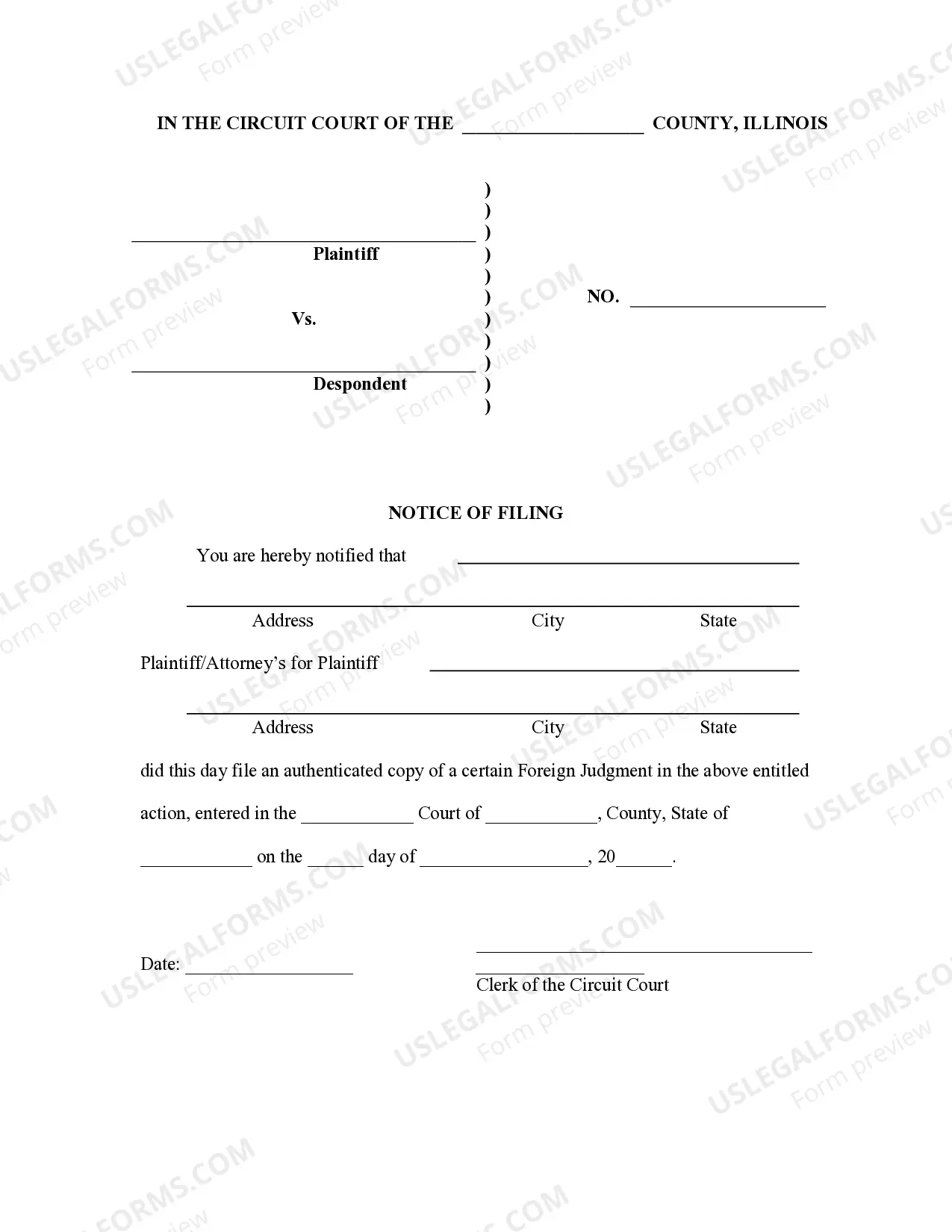
- Notice of Filing to be served to the judgment debtor.
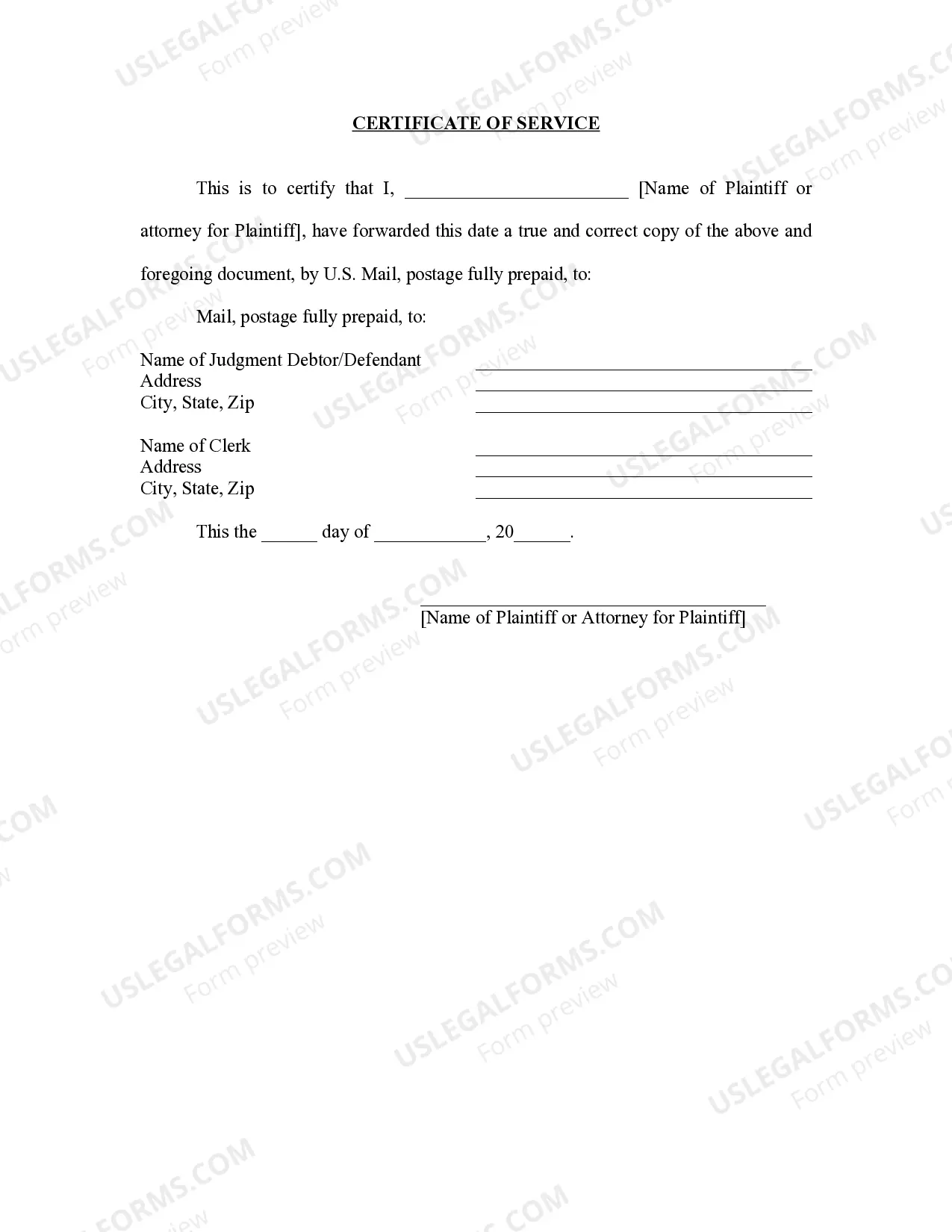
- Certificate of Service for confirming delivery of notices.

When to use this document
This form should be used when you have a final judgment from a court in another state and need to enforce it in Illinois. It is particularly relevant if you wish to attach a lien on property owned by the judgment debtor in Illinois, ensuring that you can collect the amount owed under the judgment.
Who can use this document
- Judgment creditors seeking to enforce a final judgment from another state.
- Attorneys representing clients with foreign judgments.
- Individuals who have a legal claim for amounts owed by a debtor across state lines.
Instructions for completing this form
- Gather all necessary information about the foreign judgment and the parties involved.
- Complete the Affidavit in Support of Request to File Foreign Judgment with accurate details including debtor information.
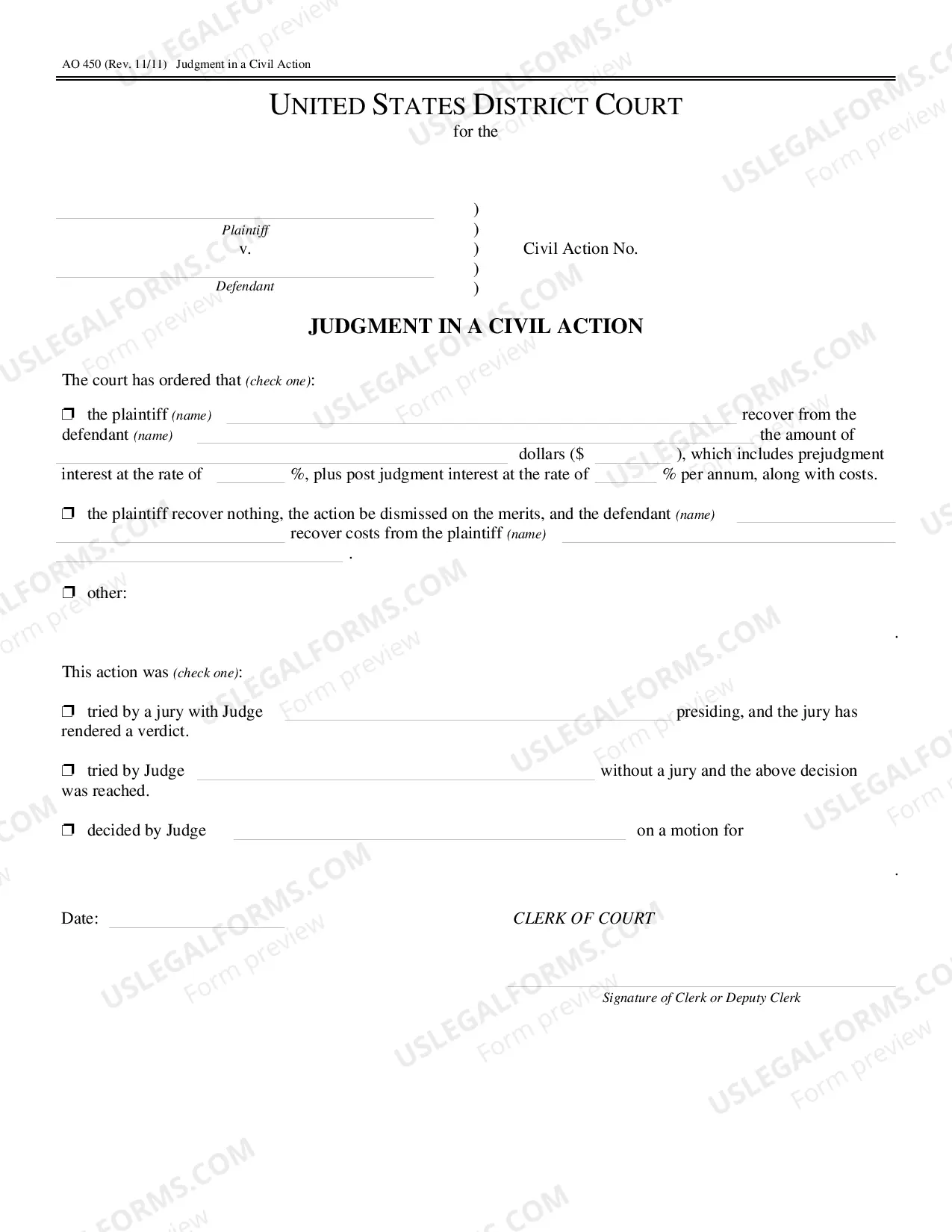
- Attach the foreign judgment as Exhibit A to the Request to File.
- Fill out the Notice of Filing to serve to the judgment debtor.
- Submit the completed forms to the appropriate clerk of the court in Illinois.
Is notarization required?
This form does not typically require notarization unless specified by local law. However, it is advisable to check any additional court requirements that may apply.
Get your form ready online
Our built-in tools help you complete, sign, share, and store your documents in one place.
Make edits, fill in missing information, and update formatting in US Legal Forms—just like you would in MS Word.
Download a copy, print it, send it by email, or mail it via USPS—whatever works best for your next step.
Sign and collect signatures with our SignNow integration. Send to multiple recipients, set reminders, and more. Go Premium to unlock E-Sign.
If this form requires notarization, complete it online through a secure video call—no need to meet a notary in person or wait for an appointment.
We protect your documents and personal data by following strict security and privacy standards.

Make edits, fill in missing information, and update formatting in US Legal Forms—just like you would in MS Word.

Download a copy, print it, send it by email, or mail it via USPS—whatever works best for your next step.

Sign and collect signatures with our SignNow integration. Send to multiple recipients, set reminders, and more. Go Premium to unlock E-Sign.

If this form requires notarization, complete it online through a secure video call—no need to meet a notary in person or wait for an appointment.

We protect your documents and personal data by following strict security and privacy standards.
Common mistakes
- Failing to ensure the foreign judgment is final and properly authenticated.
- Not serving a copy of the Notice of Filing to the judgment debtor.
- Omitting required signatures or information in the forms.
- Not waiting the required 30 days after the Notice of Filing before attempting to execute the judgment.
Why complete this form online
- Convenience of downloading and completing the form from home.
- Editability allows you to make necessary changes easily.
- Access to comprehensive instructions and legal summaries for clarity.
- Efficient approach to managing legal documentation without needing to visit a law office.
Legal use & context
- Enrolling a foreign judgment allows for enforcement in Illinois courts.
- Provides legal grounding for collecting debts across state lines.
- Establishes a judgment lien, which is crucial for asset collection.
- Complies with the Uniform Enforcement of Foreign Judgments Act, ensuring legitimacy and adherence to legal standards.
Summary of main points
- The Illinois Foreign Judgment Enrollment form is essential for enforcing judgments from other states.
- Proper completion and filing create a judgment lien against the debtor's property.
- Understanding state-specific requirements is critical for successful enrollment.
- Common mistakes can lead to delays or rejection of filings; careful attention is required.
Looking for another form?

Form popularity
FAQ
To enroll in a foreign judgment in Illinois, you must first file your 1401 petition with the appropriate court. You will need to provide necessary documentation, such as the original judgment and proof of service. Once filed, the court will review your case and, if approved, will issue an order confirming the enrollment, making it easier to enforce your rights.
To enforce a foreign judgment in the US, you first need to domesticate that judgment in the state where enforcement is sought. This involves filing the necessary paperwork and ensuring compliance with state laws. After the judgment is recognized, you can take action, such as garnishing wages or seizing property, to collect your debt. Utilizing platforms like USLegalForms can simplify this process, offering guidance for your Illinois foreign judgment enrollment.
To motion to set aside a judgment in Illinois, you must file a written motion with the court that issued the original judgment. In this motion, clearly outline the reasons for your request, such as a valid defense or improper service. It is important to provide evidence supporting your claim. For those dealing with Illinois Foreign Judgment Enrollment, our USLegalForms platform can guide you through the process, ensuring all necessary steps are correctly followed.
When a judgment is entered against you in Illinois, it becomes a public record that can affect your credit. This judgment may lead to wage garnishments or liens against your property. If you seek to enforce a judgment from another state, you will need to consider Illinois Foreign Judgment Enrollment to have the judgment recognized here. Understanding this process can help you address your legal obligations and protect your rights.
A foreign judgment cannot be enforced in the US before being recognised by a US court. The 1962 and 2005 Model Acts deal with the recognition of judgments.
Do not use illegal ways to collect your money. The debtor may be protected from abusive or unfair ways to collect the debt. Encourage the debtor to pay you voluntarily. Be organized. Ask a lawyer or collection agency for help. Make sure you renew your judgment. Ask the court for help.
To register a foreign judgment in Illinois, you should contact an attorney to prepare the registration cover sheet, attach the authenticated copy of the judgment from the sister state or foreign country, and attach an affidavit setting forth the name and last known post office address of the judgment debtor and the
Generally, a "foreign judgment" is one that is rendered in another state or country that is judicially distinct from the state where collection of the judgment is sought. Before a foreign judgment can be enforced, certain requirements must be met.
The term memorandum as used in this Section means a memorandum or copy of the judgment signed by a judge or a copy attested by the clerk of the court entering it and showing the court in which entered, date, amount, number of the case in which it was entered, name of the party in whose favor and name and last known
This involves obtaining a certified copy of the original judgment and filing it with the local court along with a number of other documents detailing the terms of the judgment and notifying the debtor of the domestication.