Illinois Architect - Mechanic's Lien - Notice and Claim - Individual
What is this form?
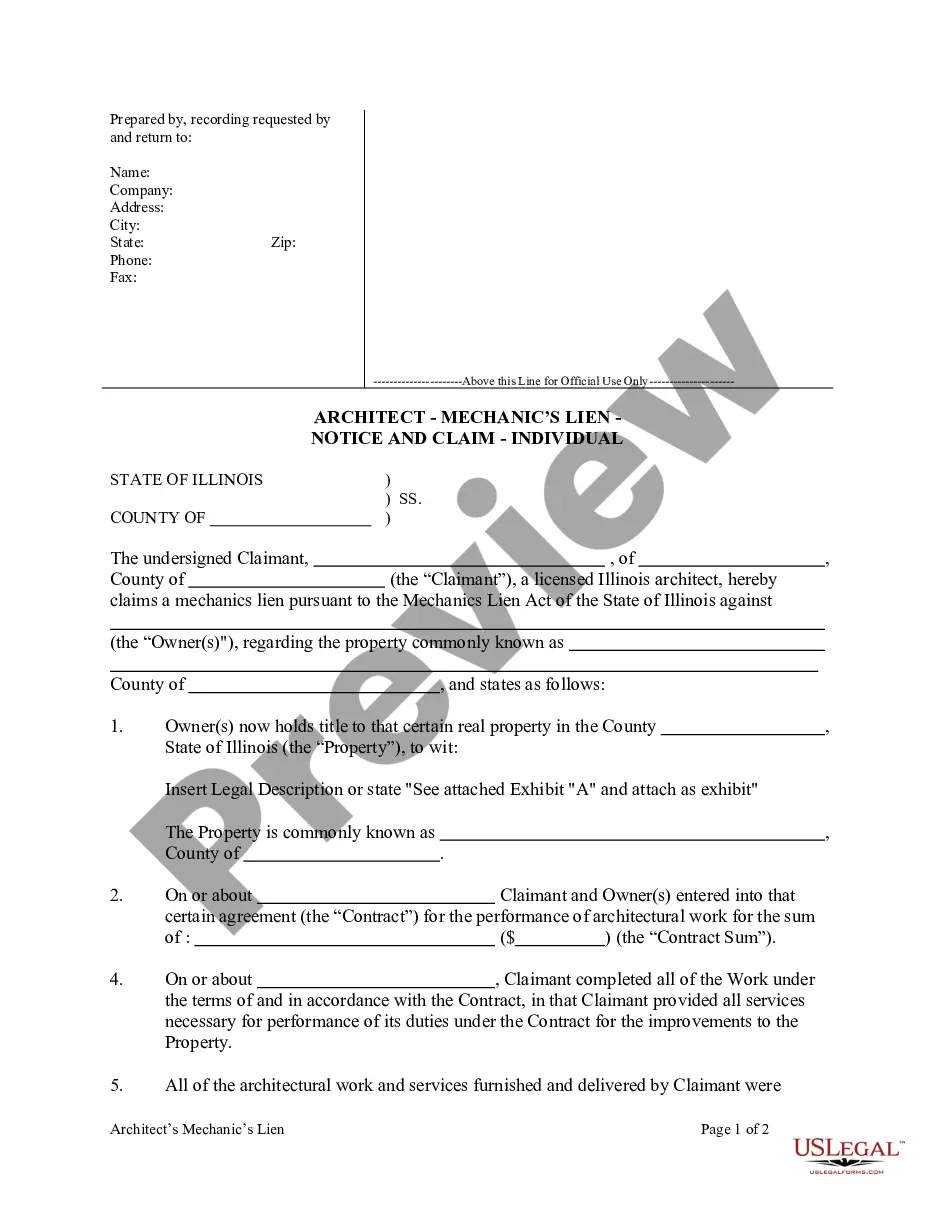
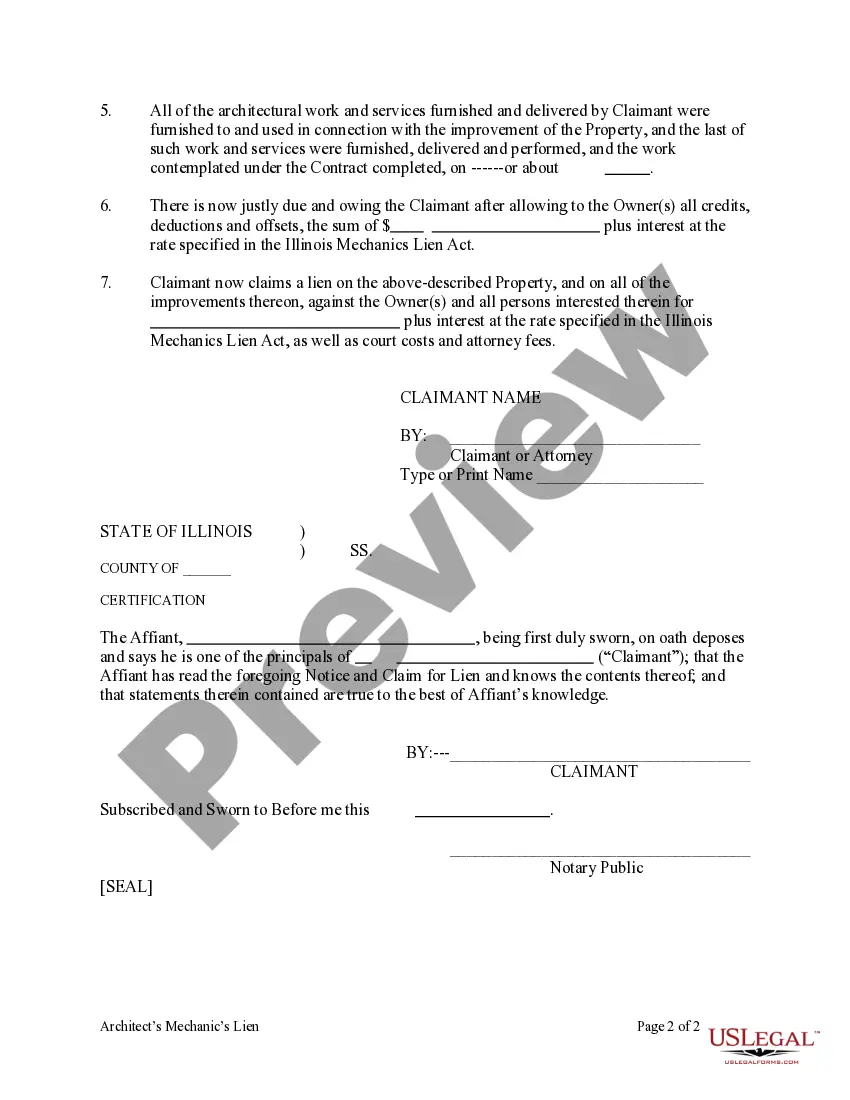
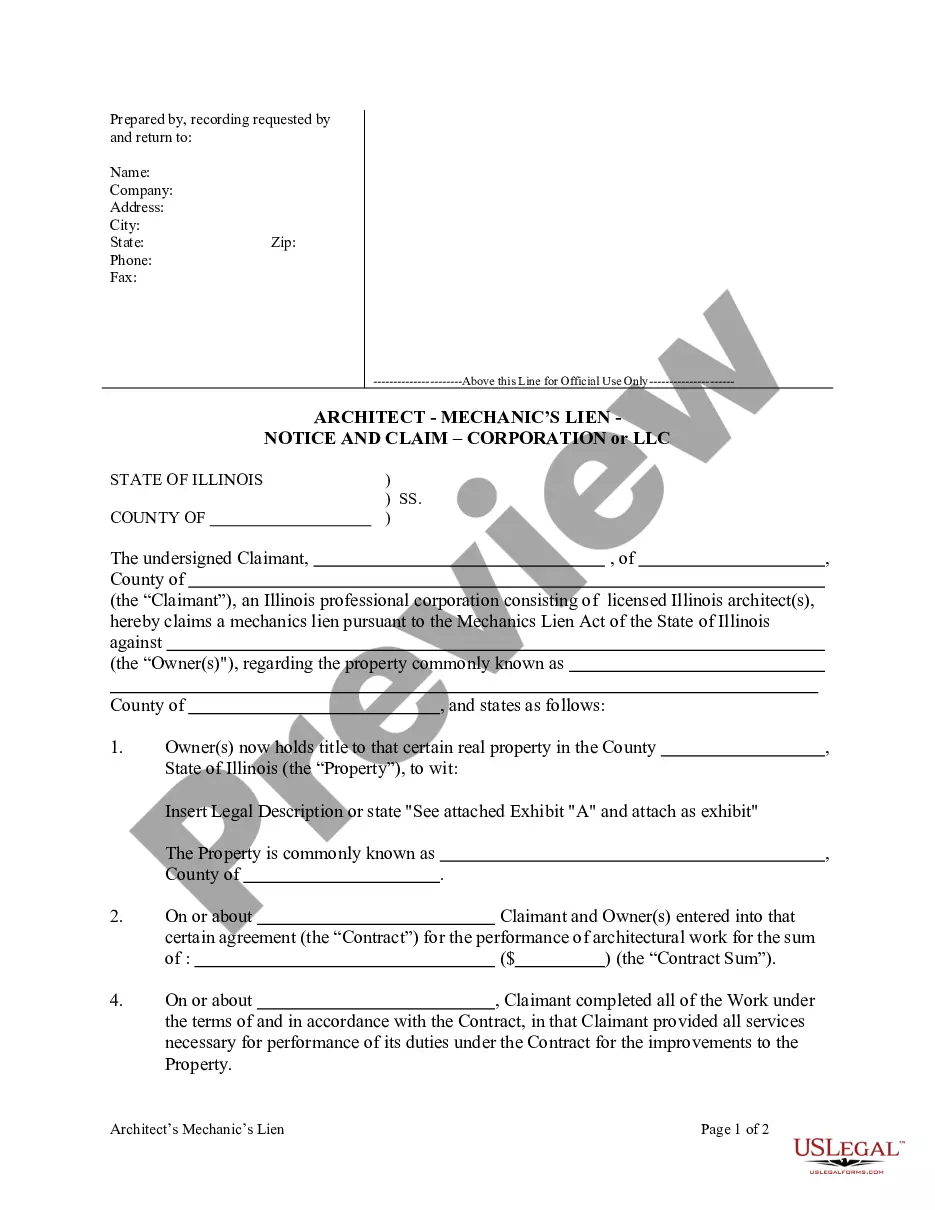
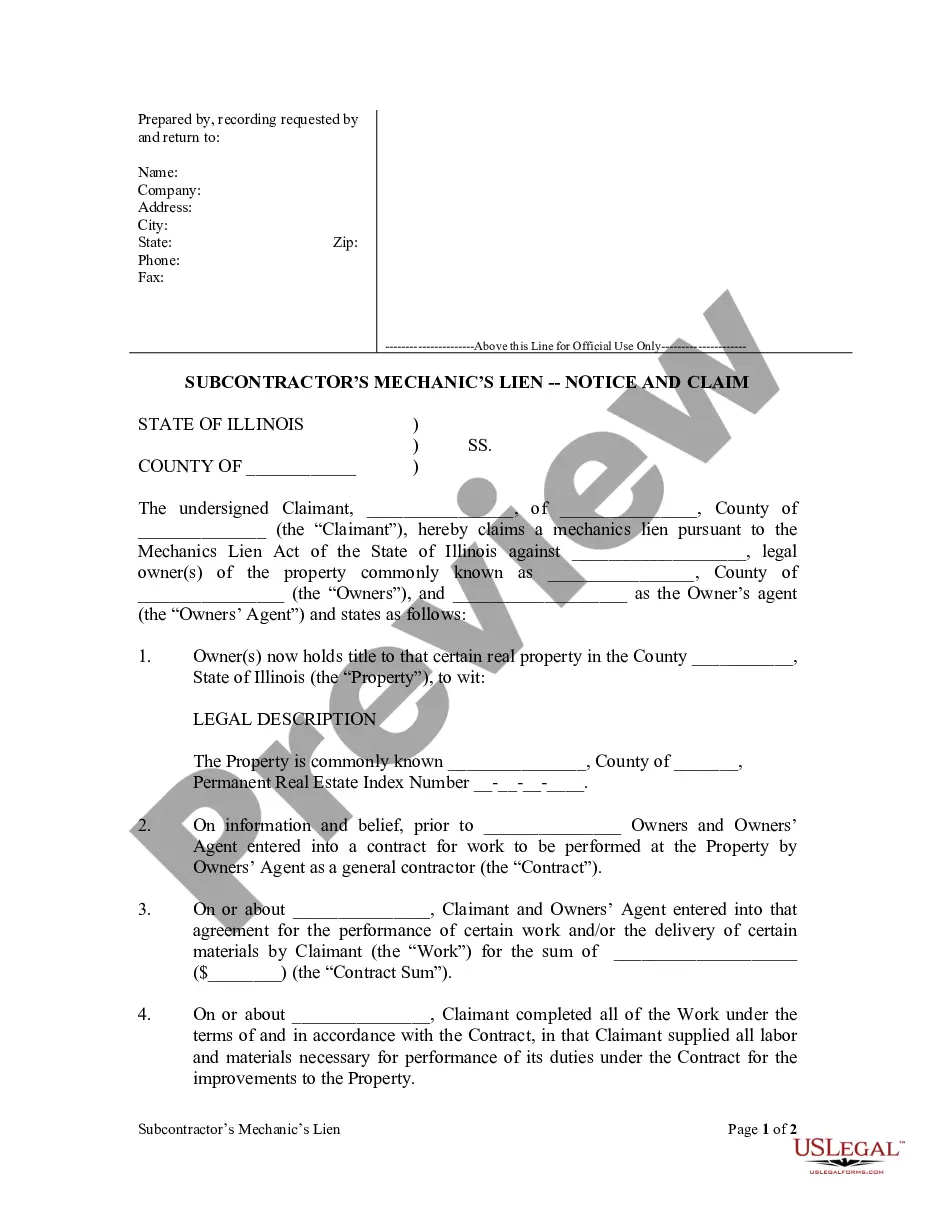
The Architect - Mechanic's Lien - Notice and Claim - Individual form is a legal document used by individual contractors to establish a claim of lien against a property. This form is essential for protecting contractors' rights to payment for services rendered or materials supplied while working on a property. It differs from other lien forms as it is specifically tailored for individual contractors, ensuring proper notice is given to property owners regarding the claimed lien.
Key parts of this document
- Claimant's information: Name and contact details of the contractor establishing the lien.
- Property owner's information: Name and address of the property owner who is being notified.
- Property description: A thorough description of the property involved in the lien claim.
- Description of work performed: A detailed account of the services or materials provided.
- Amount owed: The total amount of payment that is being claimed through the lien.
- Date of notice: The date the notice and claim is being sent to the property owner.
Situations where this form applies
This form is typically used when an individual contractor has not received payment for work completed on a property and needs to establish a legal claim to enforce payment rights. It is essential to provide proper notice to the property owner, ensuring they are aware of the contractor's claim against the property. This form may be used before filing a more formal lawsuit to recover owed funds.
Who should use this form
- Individual contractors seeking to secure payment for their work.
- Subcontractors or suppliers who have not been paid for materials or labor.
- Any party that has a legal interest in enforcing a lien against a property where work was performed.
Instructions for completing this form
- Identify the parties: Fill in the contractor's and property owner's names and addresses.
- Specify the property: Provide a detailed legal description of the property in question.
- Document the services: Clearly outline the work performed or materials supplied.
- Enter the amount owed: State the total amount the contractor is claiming.
- Date and sign: Include the date of the notice and ensure that the form is signed by the claimant.
Does this form need to be notarized?
This form usually doesn’t need to be notarized. However, local laws or specific transactions may require it. Our online notarization service, powered by Notarize, lets you complete it remotely through a secure video session, available 24/7.
Get your form ready online
Our built-in tools help you complete, sign, share, and store your documents in one place.
Make edits, fill in missing information, and update formatting in US Legal Forms—just like you would in MS Word.
Download a copy, print it, send it by email, or mail it via USPS—whatever works best for your next step.
Sign and collect signatures with our SignNow integration. Send to multiple recipients, set reminders, and more. Go Premium to unlock E-Sign.
If this form requires notarization, complete it online through a secure video call—no need to meet a notary in person or wait for an appointment.
We protect your documents and personal data by following strict security and privacy standards.

Make edits, fill in missing information, and update formatting in US Legal Forms—just like you would in MS Word.

Download a copy, print it, send it by email, or mail it via USPS—whatever works best for your next step.

Sign and collect signatures with our SignNow integration. Send to multiple recipients, set reminders, and more. Go Premium to unlock E-Sign.

If this form requires notarization, complete it online through a secure video call—no need to meet a notary in person or wait for an appointment.

We protect your documents and personal data by following strict security and privacy standards.
Common mistakes
- Failing to provide accurate property descriptions, which can lead to disputes or invalid claims.
- Omitting important details regarding the work performed or amount owed.
- Not sending the notice within the required time frame stipulated by state law.
Why use this form online
- Convenience: Easily download and complete the form from your computer or mobile device.
- Editability: Tailor the form to fit your specific situation without the need for physical copies.
- Reliability: Access to professionally drafted legal form templates ensures accuracy and compliance with legal requirements.
Looking for another form?
Form popularity
FAQ
California Mechanics' Lien law provides special protection to contractors, subcontractors, laborers and suppliers who furnish labor or materials to repair, remodel or build your home.The mechanics' lien is a right that California gives to workers and suppliers to record a lien to ensure payment.
The simplest way to prevent liens and ensure that subcontractors and suppliers are paid is to pay with joint checks. This is when both parties endorse the check. Compare the contractor's materials or labor bill to the schedule of payments in your contract and the Preliminary Notices.
Posting a Bond Asselta says to expect to pay 110 percent of the lien amount. Submit the bond to the court. The lien will then transfer to the bond and clear the property's title. Wait for the contractor claimant to foreclose on the lien in the allotted period to dispute the lien in court.
Under Illinois law, any mechanics lien should be filed in the County Recorder of Deeds where the property being liened is located. This is crucial as the lien must be filed not only in the correct county but the correct office as well. The fees and specific document formatting vary depending on your county.
A subcontractor or material supplier has 20 days after beginning work or delivering materials to serve you a Preliminary Notice. If the notice is late, the claimant loses lien rights for work done or materials delivered more than 20 days before the notice.
Under Illinois law, any mechanics lien should be filed in the County Recorder of Deeds where the property being liened is located. This is crucial as the lien must be filed not only in the correct county but the correct office as well. The fees and specific document formatting vary depending on your county.
To enforce the lien, the contractor must file a lawsuit within 90 days from the date of recording the lien. If this deadline is passed, the contractor may not be able to enforce the lien and may be required to remove the lien.
The process of bonding off a mechanics lien starts after a claimant has filed a mechanics lien. After the claim is made, a general contractor or a property owner can contact a surety bond company to purchase a surety bond that replaces the value of the lien that was filed against the property.