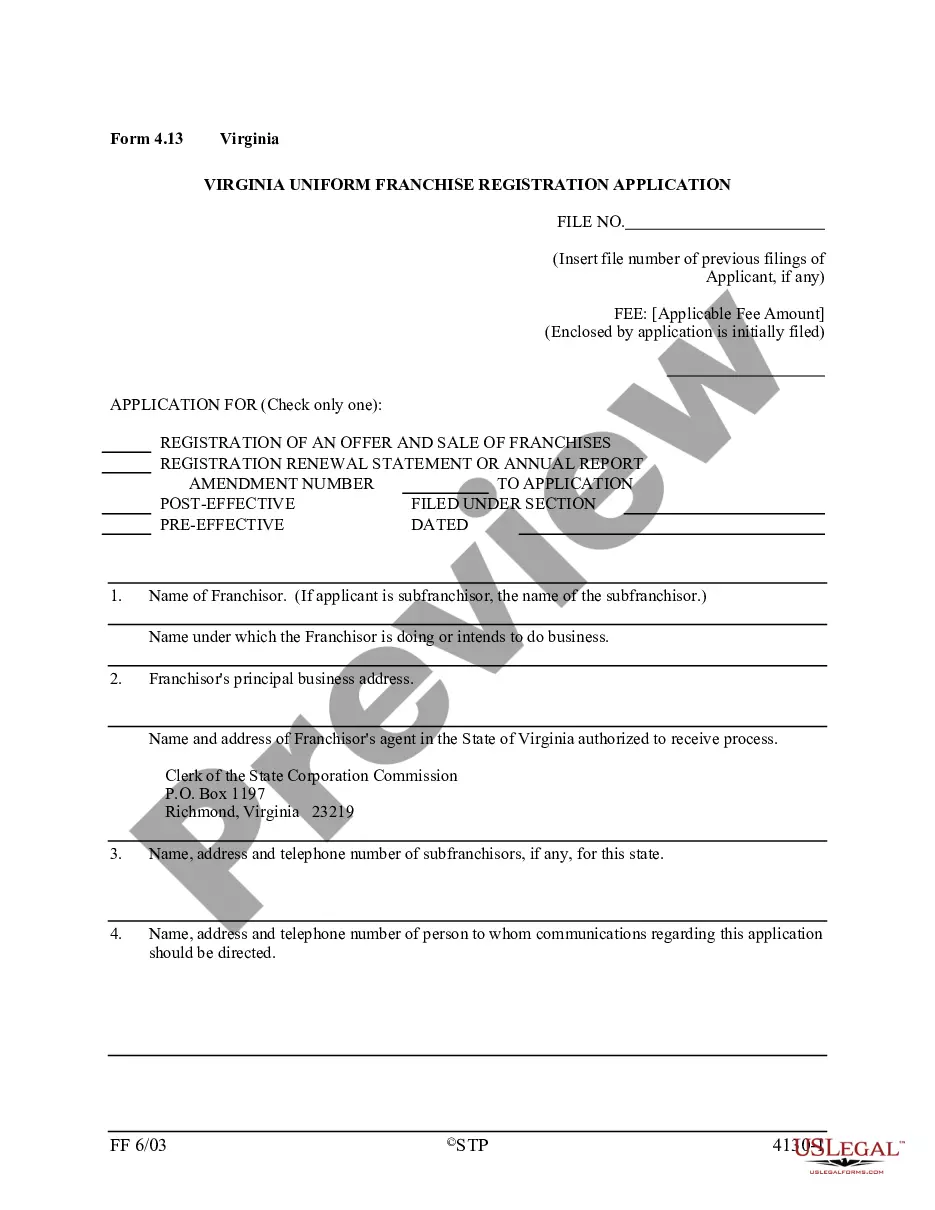
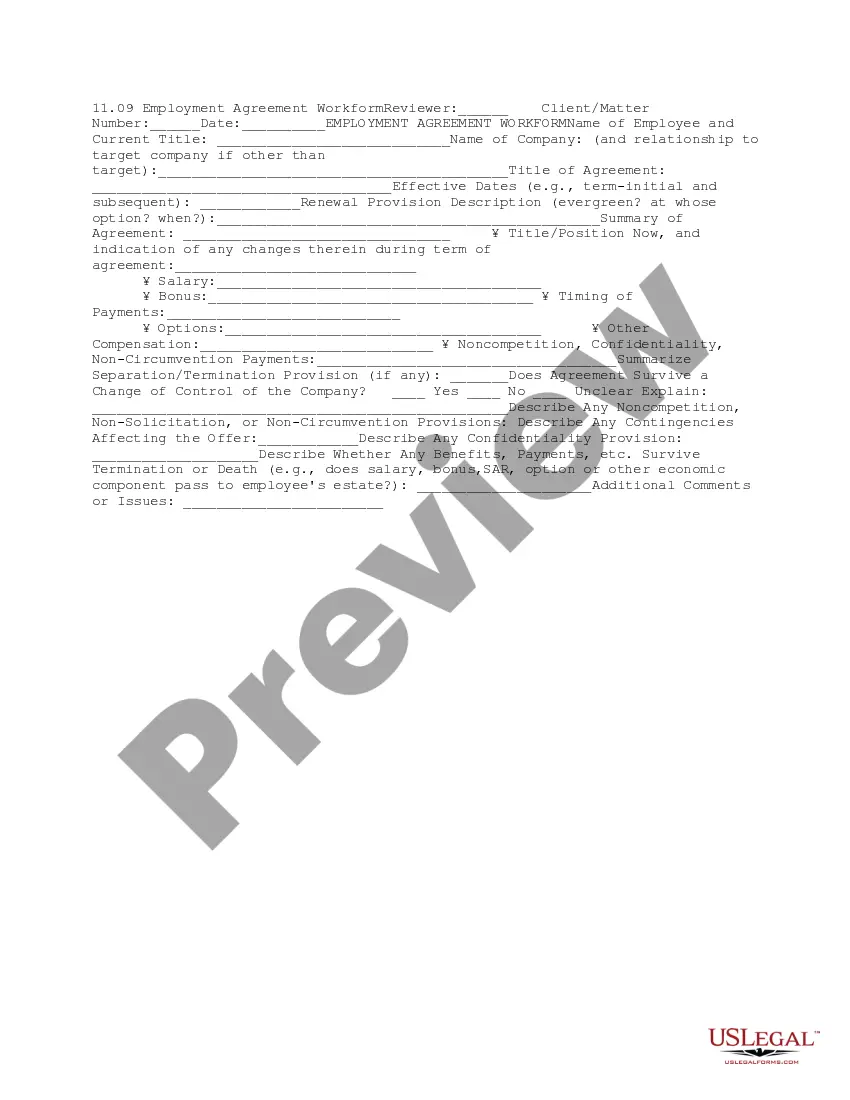
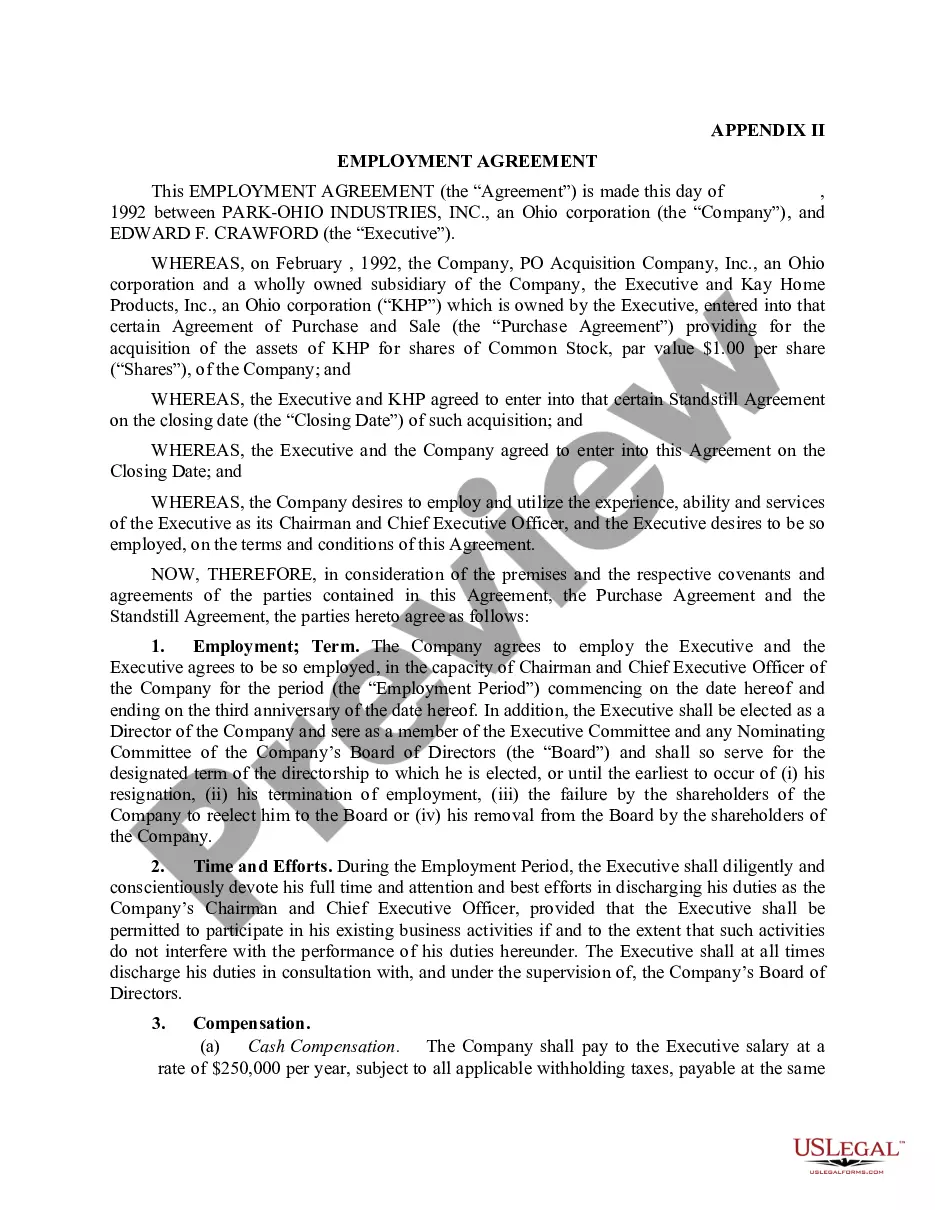
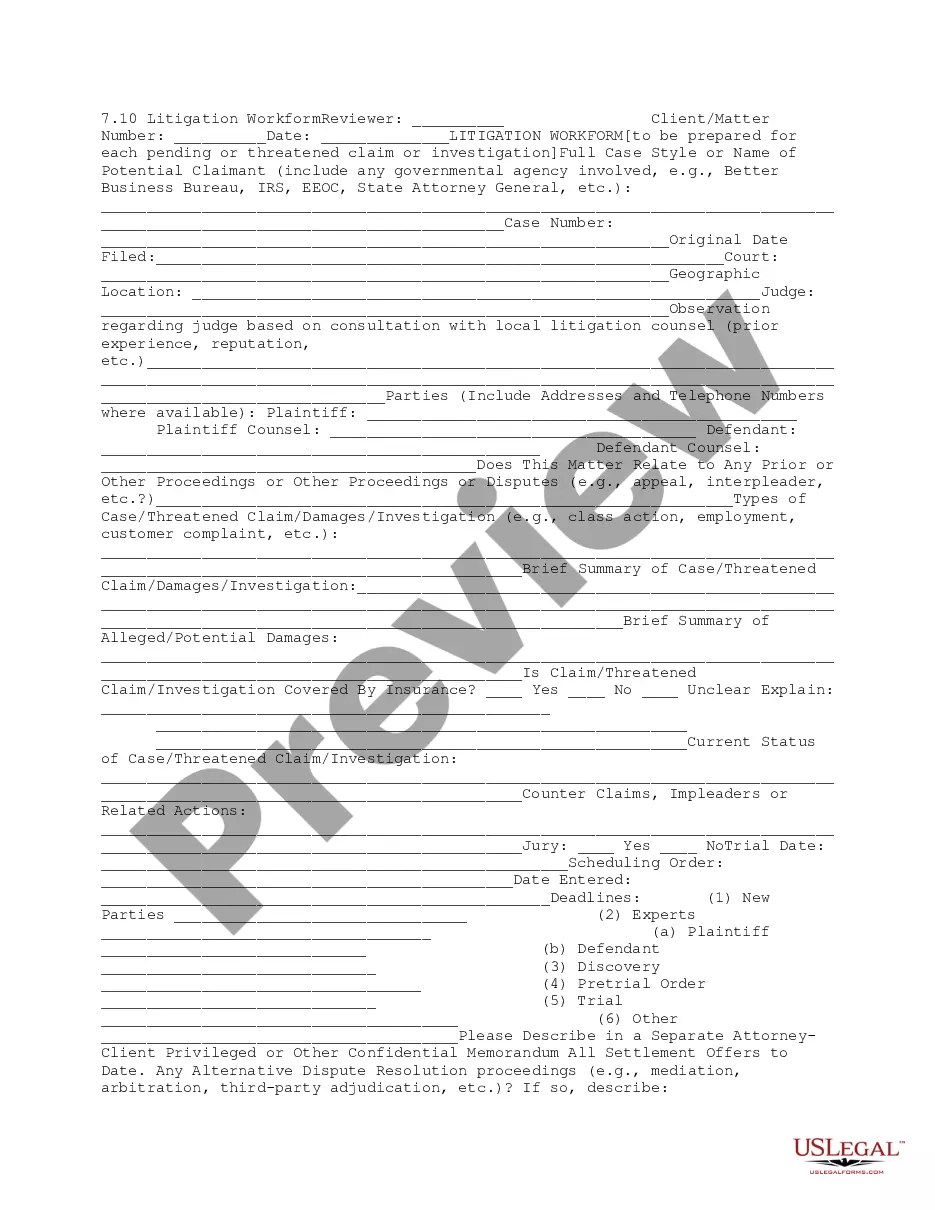
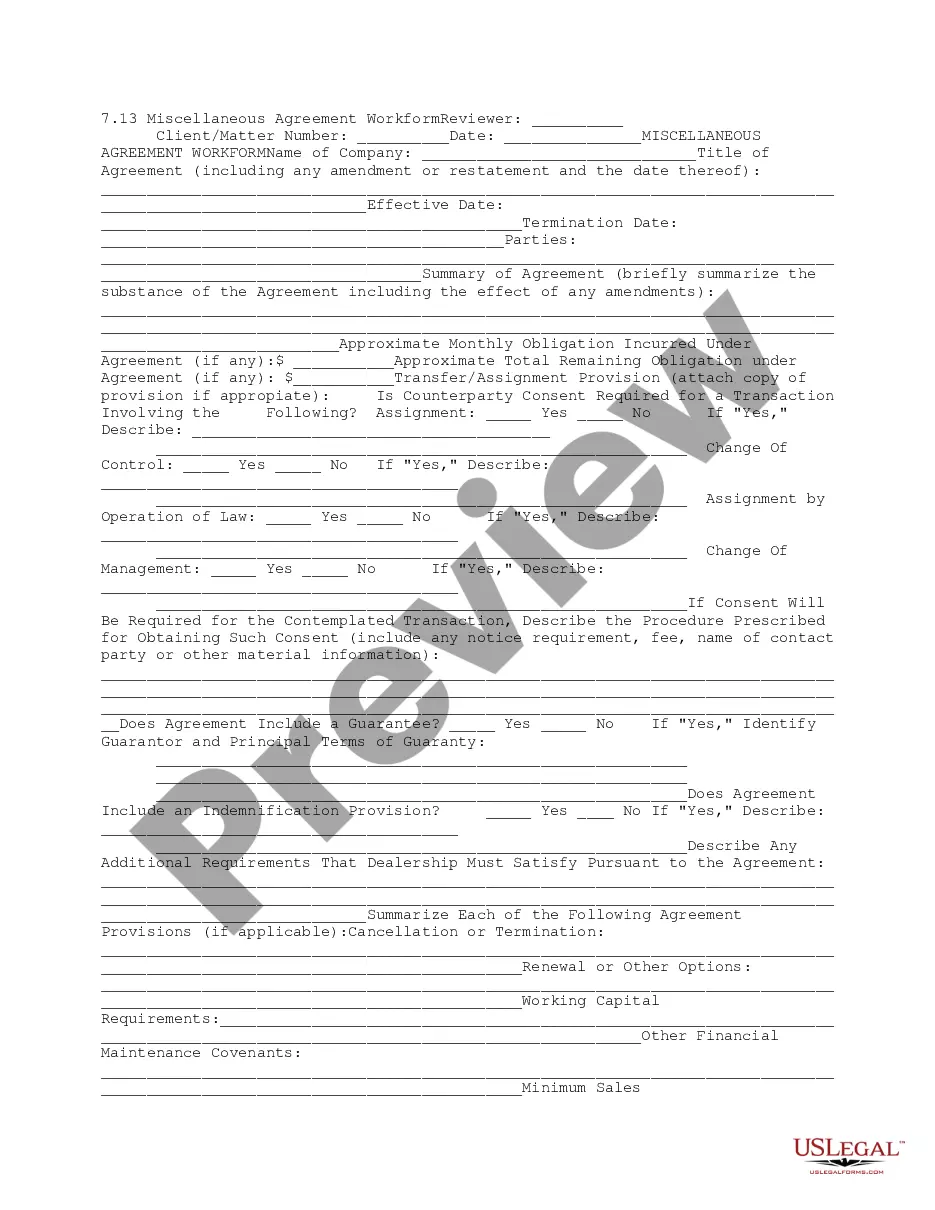
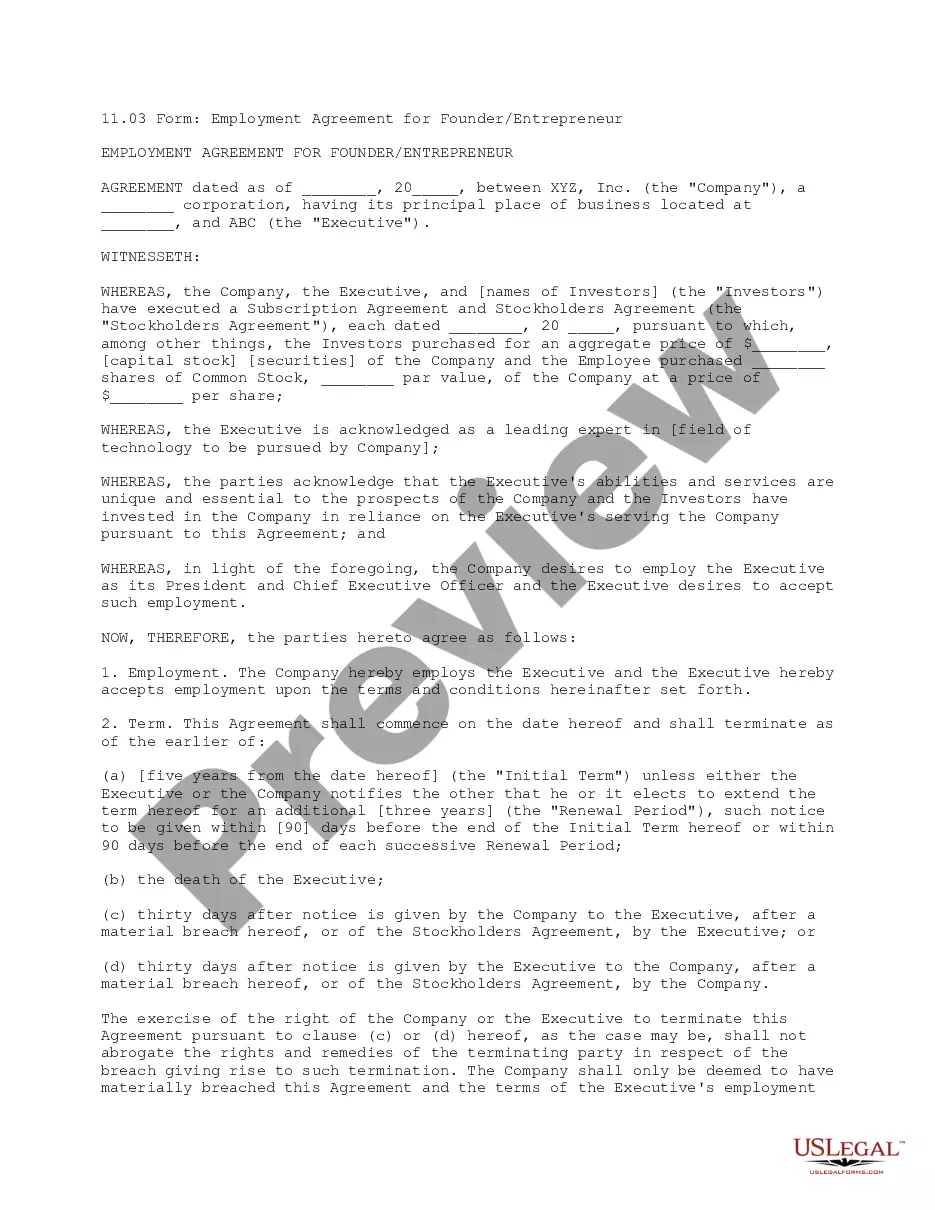
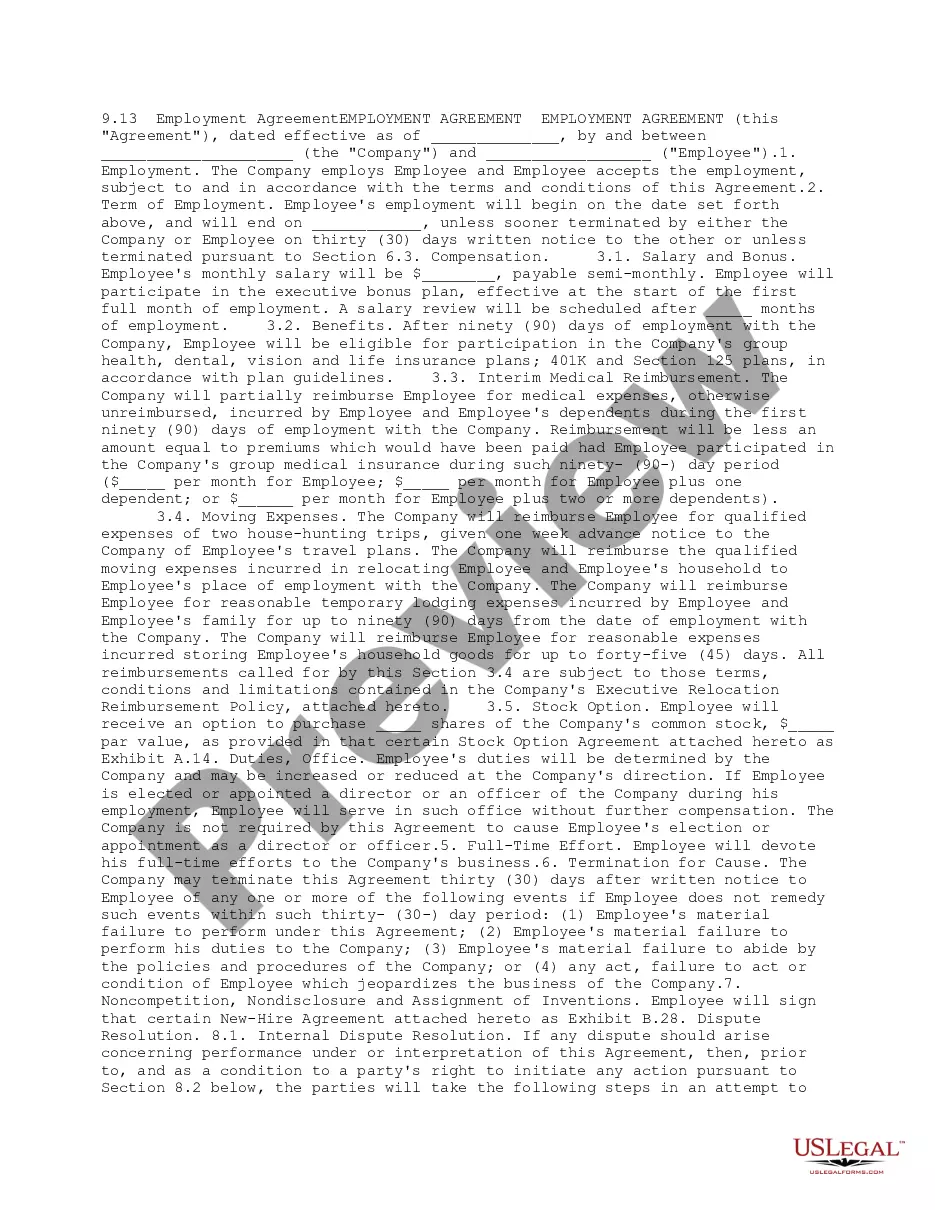
This due diligence workform is used to document new employee information, job title, and employment provisions in business transactions.
Idaho Employment Agreement Workform
Category:
State:
Multi-State
Control #:
US-DD01109
Format:
Word;
PDF;
Rich Text
Instant download
Description
Get your form ready online
Our built-in tools help you complete, sign, share, and store your documents in one place.
Built-in online Word editor
Make edits, fill in missing information, and update formatting in US Legal Forms—just like you would in MS Word.
Export easily
Download a copy, print it, send it by email, or mail it via USPS—whatever works best for your next step.
E-sign your document
Sign and collect signatures with our SignNow integration. Send to multiple recipients, set reminders, and more. Go Premium to unlock E-Sign.
Notarize online 24/7
If this form requires notarization, complete it online through a secure video call—no need to meet a notary in person or wait for an appointment.
Store your document securely
We protect your documents and personal data by following strict security and privacy standards.

Make edits, fill in missing information, and update formatting in US Legal Forms—just like you would in MS Word.

Download a copy, print it, send it by email, or mail it via USPS—whatever works best for your next step.

Sign and collect signatures with our SignNow integration. Send to multiple recipients, set reminders, and more. Go Premium to unlock E-Sign.

If this form requires notarization, complete it online through a secure video call—no need to meet a notary in person or wait for an appointment.

We protect your documents and personal data by following strict security and privacy standards.
Looking for another form?

How to fill out Employment Agreement Workform?
If you wish to thoroughly obtain, download, or print legal document templates, utilize US Legal Forms, the largest selection of legal forms available online.
Take advantage of the website's straightforward and user-friendly search to find the documents you require.
Various templates for business and personal reasons are organized by categories and states, or search terms.
Step 4. After you have found the form you need, click the Get now button. Choose the pricing plan you prefer and provide your details to register for an account.
Step 5. Complete the transaction. You can use your credit card or PayPal account to finalize the purchase. Step 6. Choose the format of your legal form and download it to your device. Step 7. Complete, edit, and print or sign the Idaho Employment Agreement Workform.
- Use US Legal Forms to obtain the Idaho Employment Agreement Workform in just a few clicks.
- If you are already a US Legal Forms user, Log Into your account and click the Acquire button to access the Idaho Employment Agreement Workform.
- You can also find forms you previously downloaded from the My documents section of your account.
- If you are using US Legal Forms for the first time, follow the instructions below.
- Step 1. Ensure you have selected the form for your accurate city/state.
- Step 2. Use the Review option to examine the form’s content. Don’t forget to read the summary.
- Step 3. If you are not satisfied with the form, use the Search field at the top of the screen to find different versions of the legal form template.
Form popularity
FAQ
Idaho law requires that if an employee quits, is terminated or is laid off, all wages then due must be paid the soonest of: the next regularly scheduled payday or within 10 days of the separation - weekends and holidays excluded.
Idaho recognizes non-compete agreements and has adopted is own statute governing non-compete agreements.
When is the last paycheck due after an employee separates? Idaho law requires that if an employee quits, is terminated or laid off, all wages then due must be paid the sooner of the next regularly scheduled payday or within 10 days of the separation (weekends and holidays excluded).
The Idaho non-compete statute remains in force unchanged today, although it was briefly amended in 2016 to add a paragraph establishing a rebuttable presumption of irreparable harm upon breach of a non-compete agreement.
Law Firm in Metro Manila, Philippines Corporate, Family, IP law, and Litigation Lawyers > Philippine Legal Advice > When do You Get your Final Pay When You Resign? You should get your final pay within thirty (30) days from the date of separation or termination of employment.
If your Idaho employer fires you for discriminatory reasons, in violation of an employment contract, or in retaliation for exercising your rights, for example, you may have a legal claim against your employer for wrongful termination.
Under the APLBI, Idaho employers may use non-compete agreements to protect their legitimate business interests by precluding key employees (or independent contractors) from engaging in employment that is in direct competition with the employer's business after termination of employment. The APLBI has provided
No federal or state law in Idaho requires employers to pay out an employee's accrued vacation, sick leave, or other paid time off (PTO) at the termination of employment.
Idaho is an employment-at-will state, which means that without a written employee contract, employees can be terminated for any reason at any time, provided that the reason is not discriminatory and that the employer is not retaliating against the employee for a rightful action.
Idaho law does not require employers to give breaks or meal periods. You would only be entitled to breaks if it is the employer's policy to provide them.