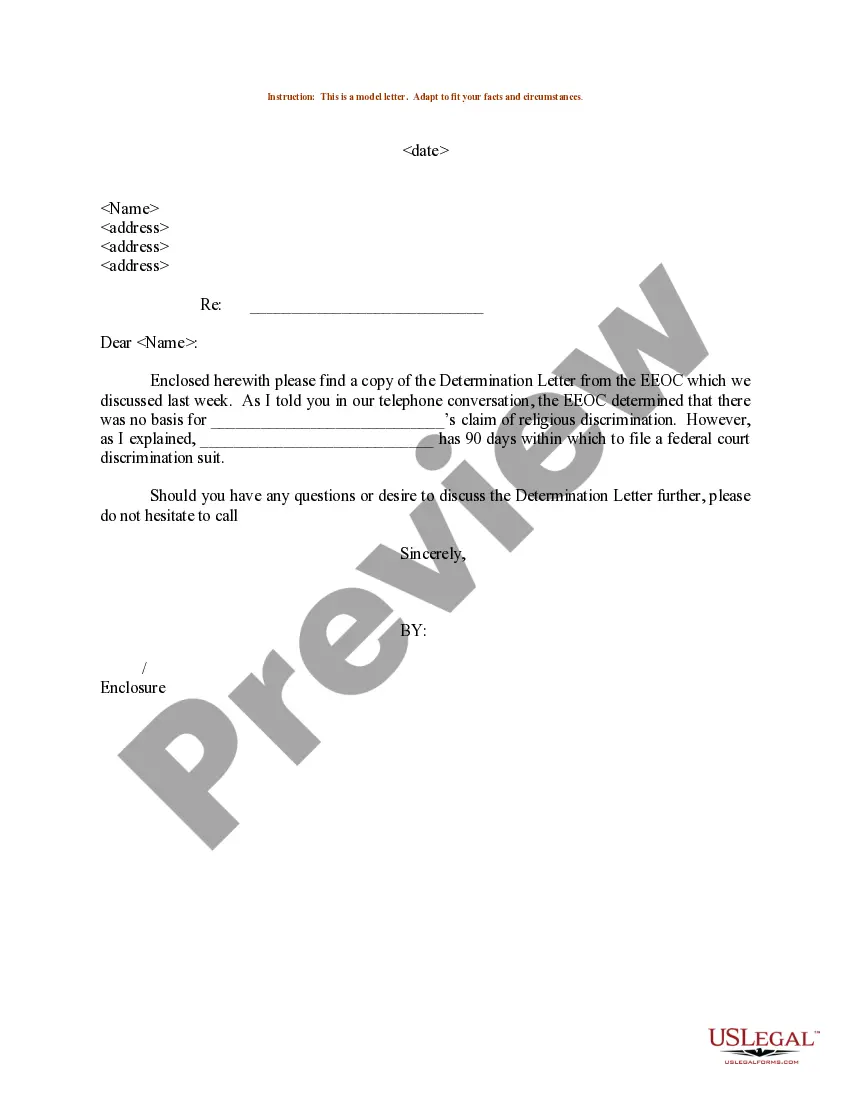
Idaho Sample Letter for Determination Sample Letter from the EEOC
Description
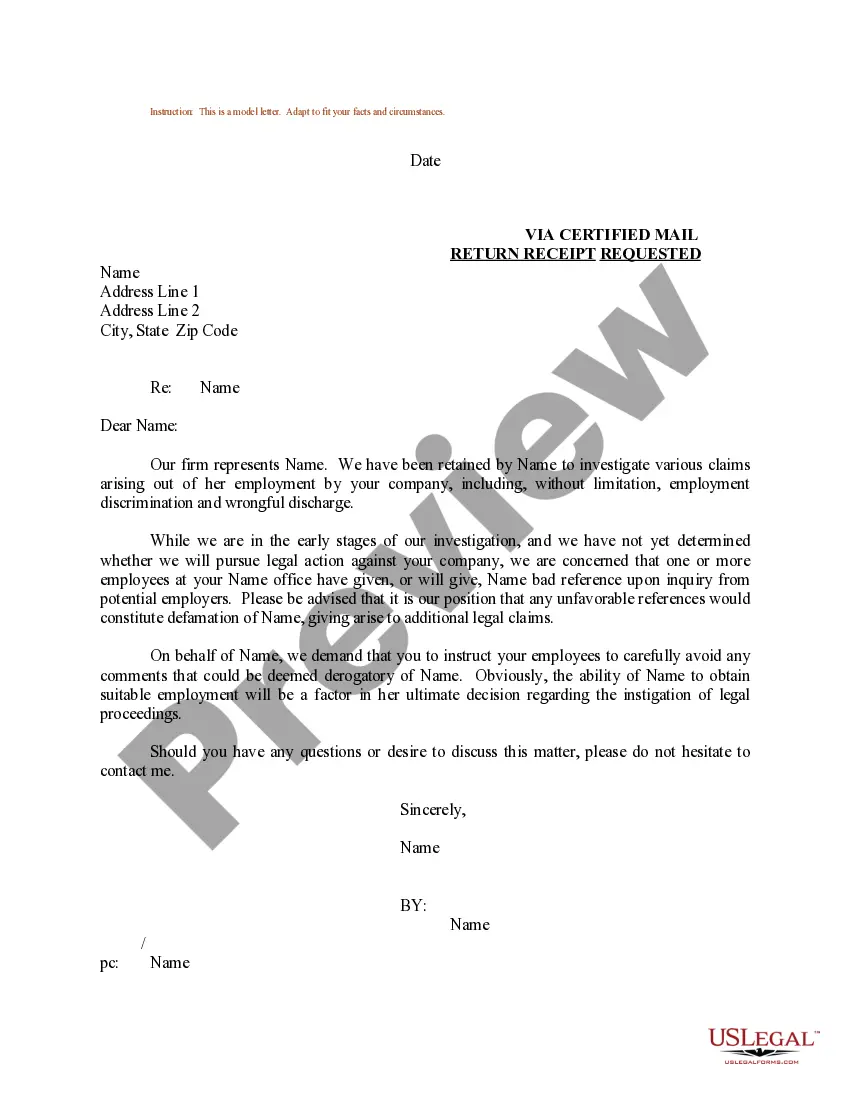
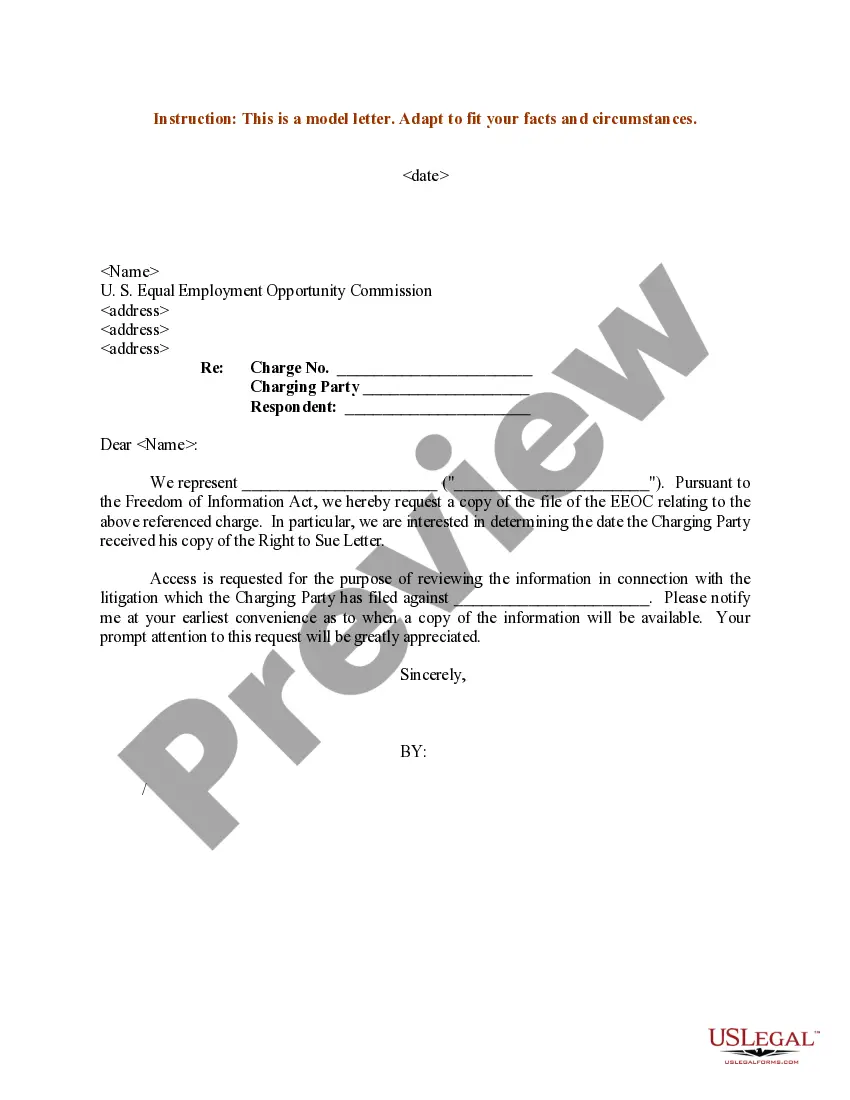
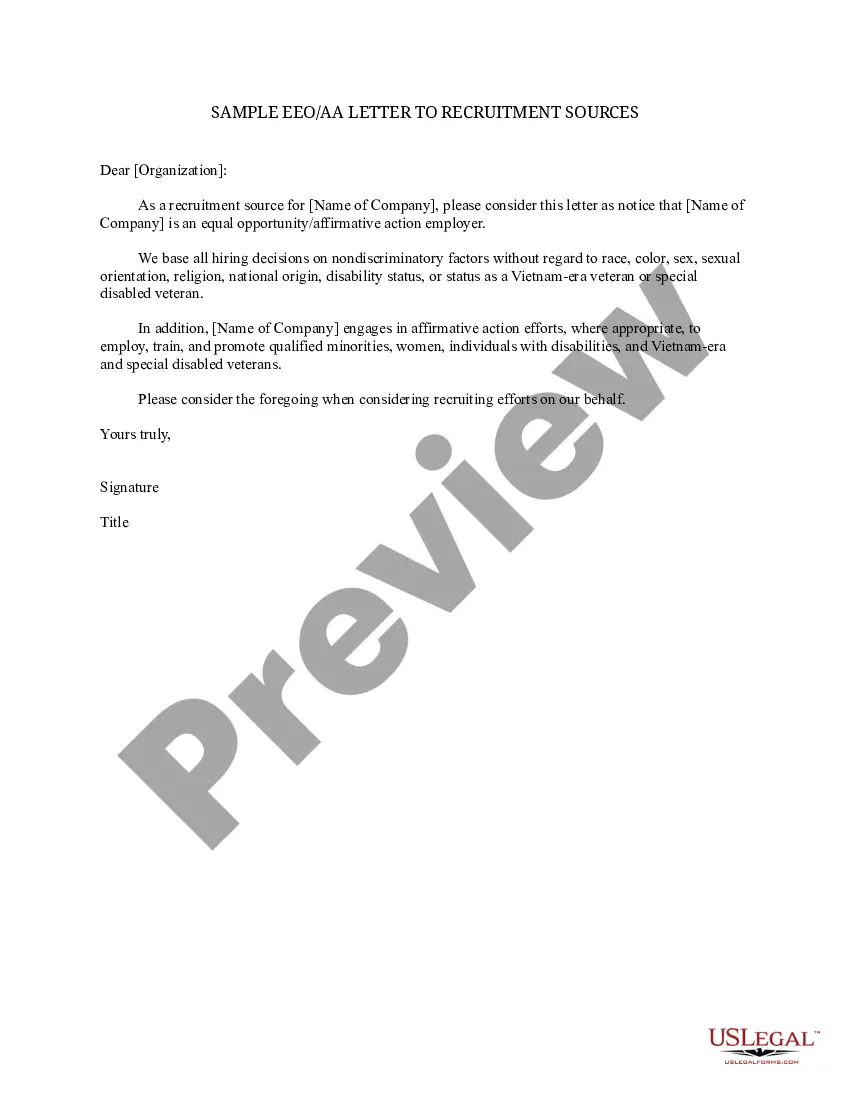
Get your form ready online
Our built-in tools help you complete, sign, share, and store your documents in one place.
Make edits, fill in missing information, and update formatting in US Legal Forms—just like you would in MS Word.
Download a copy, print it, send it by email, or mail it via USPS—whatever works best for your next step.
Sign and collect signatures with our SignNow integration. Send to multiple recipients, set reminders, and more. Go Premium to unlock E-Sign.
If this form requires notarization, complete it online through a secure video call—no need to meet a notary in person or wait for an appointment.
We protect your documents and personal data by following strict security and privacy standards.

Make edits, fill in missing information, and update formatting in US Legal Forms—just like you would in MS Word.

Download a copy, print it, send it by email, or mail it via USPS—whatever works best for your next step.

Sign and collect signatures with our SignNow integration. Send to multiple recipients, set reminders, and more. Go Premium to unlock E-Sign.

If this form requires notarization, complete it online through a secure video call—no need to meet a notary in person or wait for an appointment.

We protect your documents and personal data by following strict security and privacy standards.
Looking for another form?

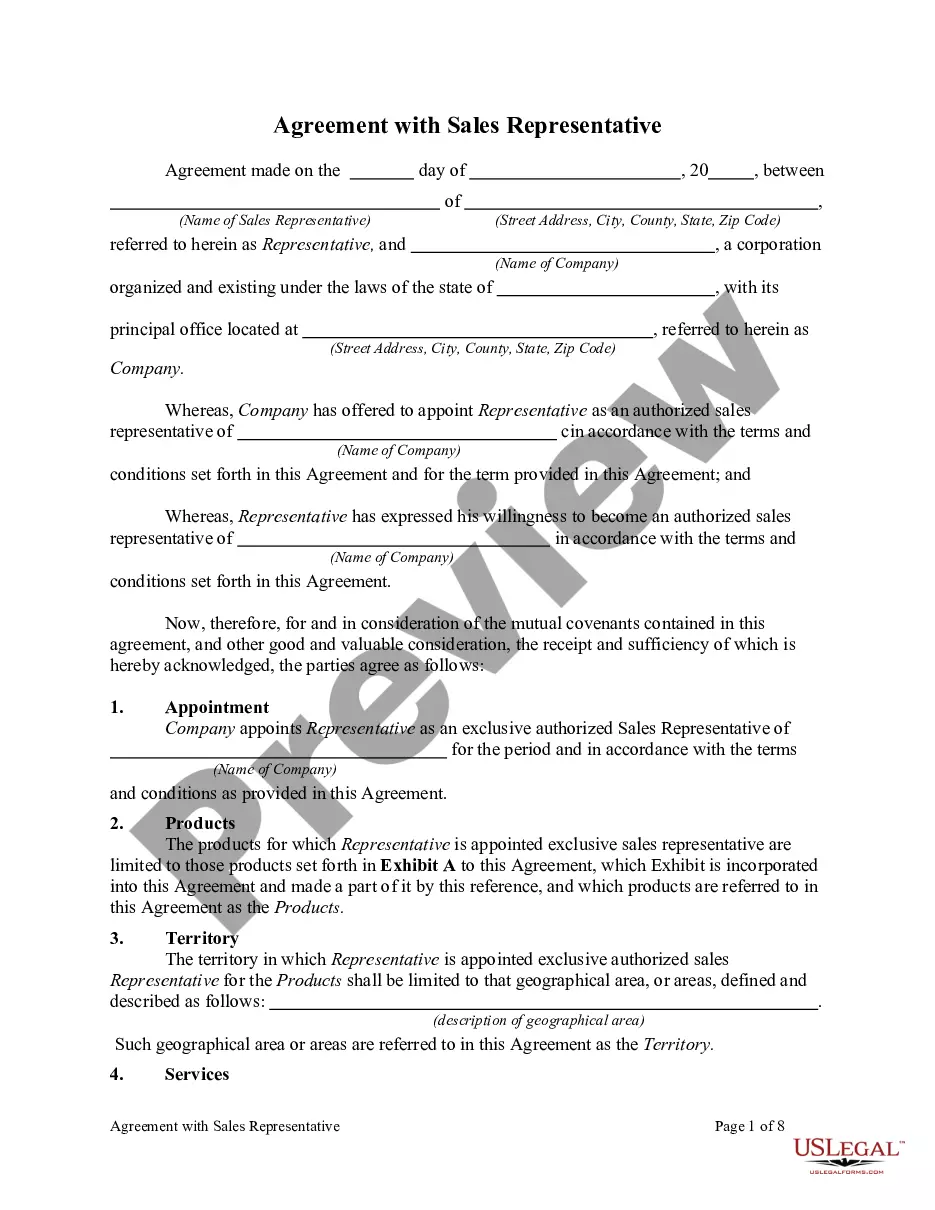

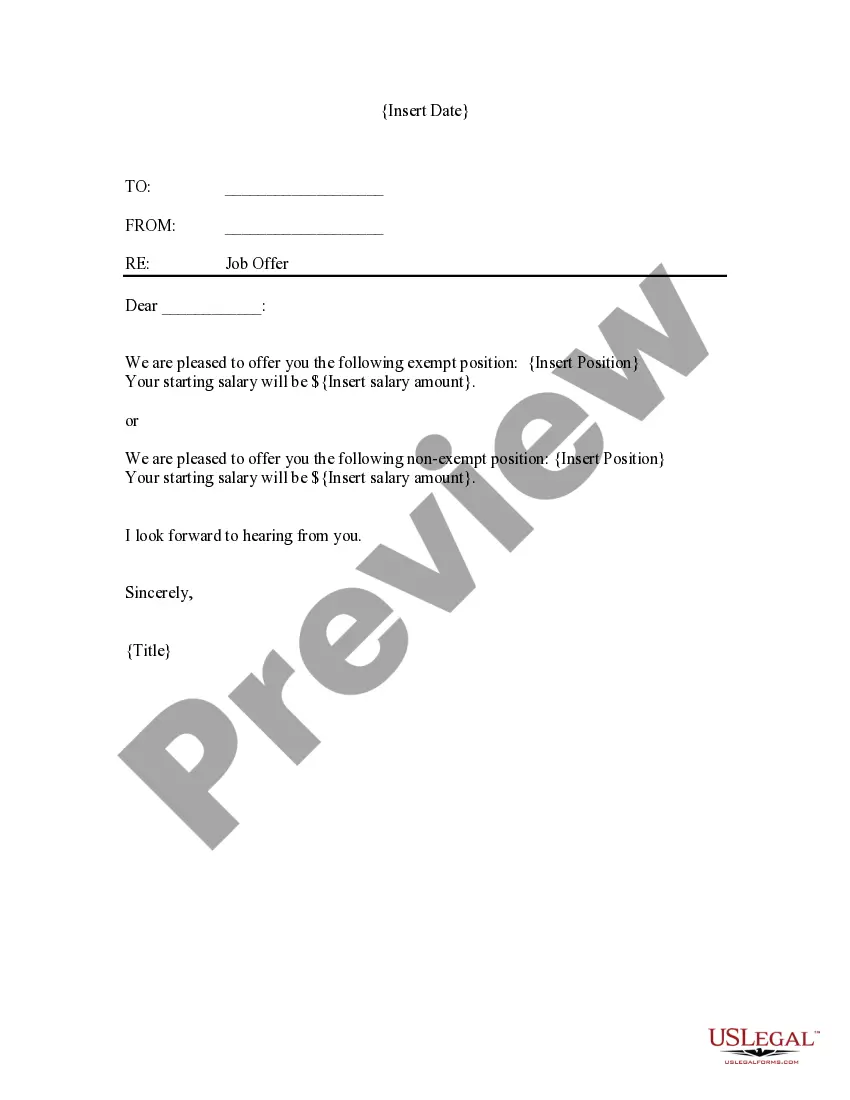

How to fill out Sample Letter For Determination Sample Letter From The EEOC?
US Legal Forms - one of many most significant libraries of legitimate varieties in the States - delivers a wide array of legitimate record themes it is possible to download or print out. Utilizing the web site, you can find a large number of varieties for company and personal reasons, sorted by groups, states, or keywords.You can find the most up-to-date versions of varieties such as the Idaho Sample Letter for Determination Sample Letter from the EEOC within minutes.
If you currently have a subscription, log in and download Idaho Sample Letter for Determination Sample Letter from the EEOC through the US Legal Forms collection. The Obtain key will appear on every single form you see. You have access to all earlier acquired varieties inside the My Forms tab of the account.
In order to use US Legal Forms the first time, here are simple instructions to help you get started off:
- Be sure you have picked the right form for the city/state. Click on the Review key to analyze the form`s articles. Look at the form outline to ensure that you have chosen the correct form.
- If the form doesn`t match your requirements, make use of the Search industry at the top of the monitor to find the the one that does.
- When you are content with the shape, confirm your decision by clicking the Buy now key. Then, opt for the prices program you prefer and provide your references to register for an account.
- Method the deal. Use your Visa or Mastercard or PayPal account to accomplish the deal.
- Find the formatting and download the shape on the product.
- Make changes. Fill up, edit and print out and indicator the acquired Idaho Sample Letter for Determination Sample Letter from the EEOC.
Every format you put into your money lacks an expiry particular date and is your own for a long time. So, if you want to download or print out another copy, just go to the My Forms area and click on about the form you will need.
Obtain access to the Idaho Sample Letter for Determination Sample Letter from the EEOC with US Legal Forms, by far the most considerable collection of legitimate record themes. Use a large number of professional and condition-certain themes that meet your business or personal requirements and requirements.
Form popularity
FAQ
If the EEOC finds ?probable cause? that a violation occurred, the EEOC will send a Letter of Determination to you and your employer. The EEOC will try to work with you and your employer to resolve the case. This process is called ?conciliation.?
You can also file a charge by sending us a letter that includes the following information: Your name, address, email, and telephone number. The name, address, email, and telephone number of the employer (or employment agency or union) you want to file your charge against. The number of employees employed there (if known)
If EEOC determines there is reasonable cause to believe discrimination has occurred, both parties will be issued a Letter of Determination stating that there is reason to believe that discrimination occurred and inviting the parties to join the agency in seeking to resolve the charge through an informal process known ...
A: Hiring a qualified and experienced employment law attorney is the best way to increase your chance of success with an EEOC complaint. Your attorney can help you gather the evidence you will need to substantiate your claim and can correspond with EEOC representatives on your behalf.
Chances of winning an EEOC case EEOC cases can be challenging, but you are best equipped to win with experienced legal representation. 95% of EEOC district court cases are successful. Although, as mentioned above, most cases are settled out of court.
If the EEOC determines that there is reasonable cause to believe that discrimination occurred, a written determination and invitation to enter into conciliation discussions are issued to the parties. If conciliation efforts are not successful, the EEOC and/or the charging party may bring suit.
It can be challenging to predict what your discrimination case may be worth. A majority of these cases get settled out of court, but some do go to trial. ing to the Equal Employment Opportunity Commission (EEOC), the average settlement for employment discrimination claims is about $40,000.
If no violation is found as a result of our investigation, the EEOC sends you and your employer a notice closing the case called a "Dismissal and Notice of Rights." You then have 90 days to file your own lawsuit, should you decide to do so.
How to File A Complaint The name, address, and telephone number of the person who is being treated unfairly; The name, address, and telephone number of the employer you are filing the complaint against; A brief description of the event or events that you believe are unfair or harassing; and.
Reasonable Cause EEOC's determination based upon the evidence obtained in the investigation that it believes discrimination did occur. Reasonable cause determinations are followed by efforts to conciliate the discriminatory issues which gave rise to the initial charge.