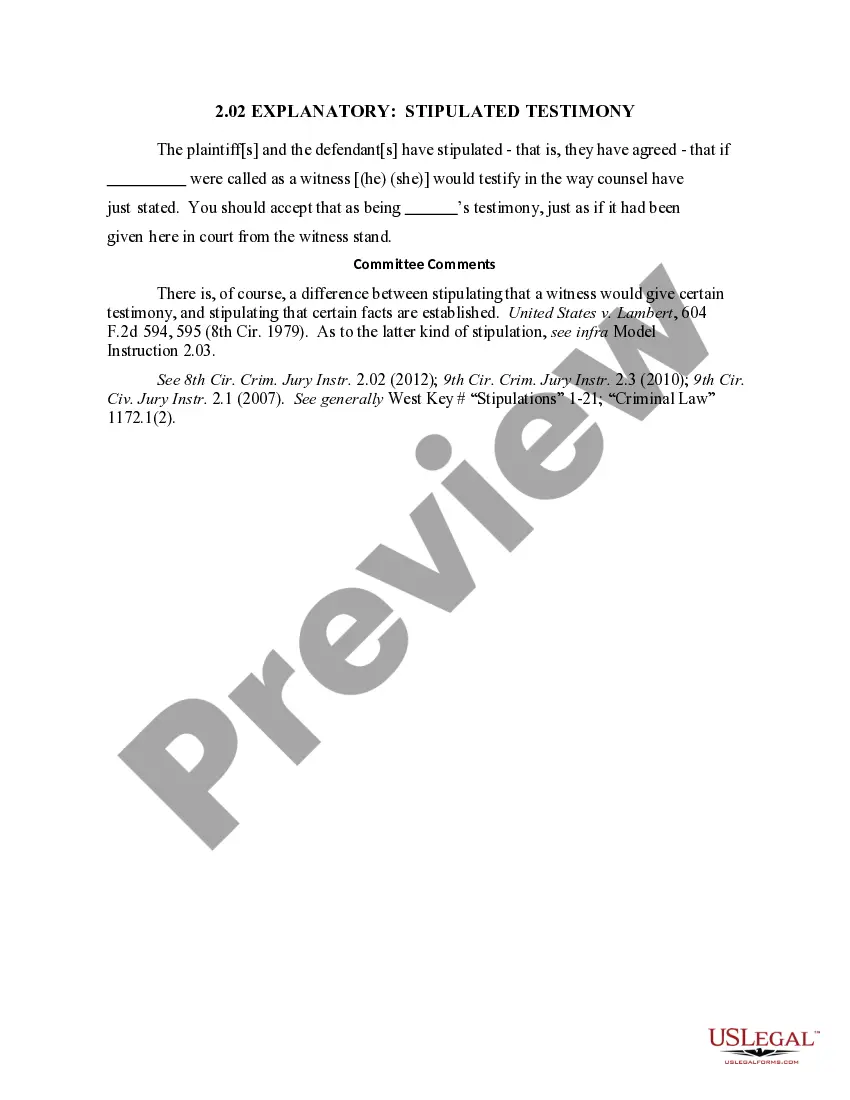
Idaho Work Made for Hire Agreement
Description
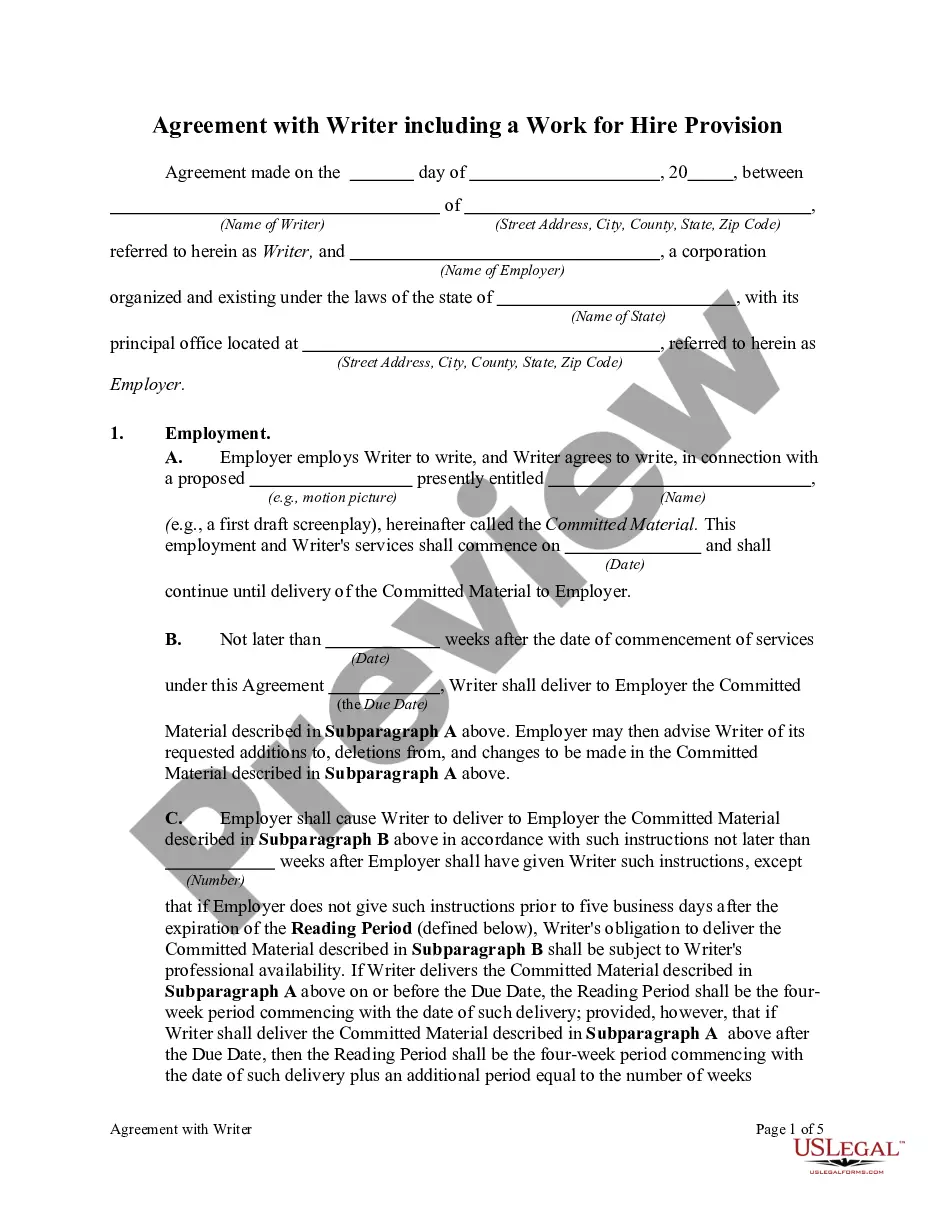
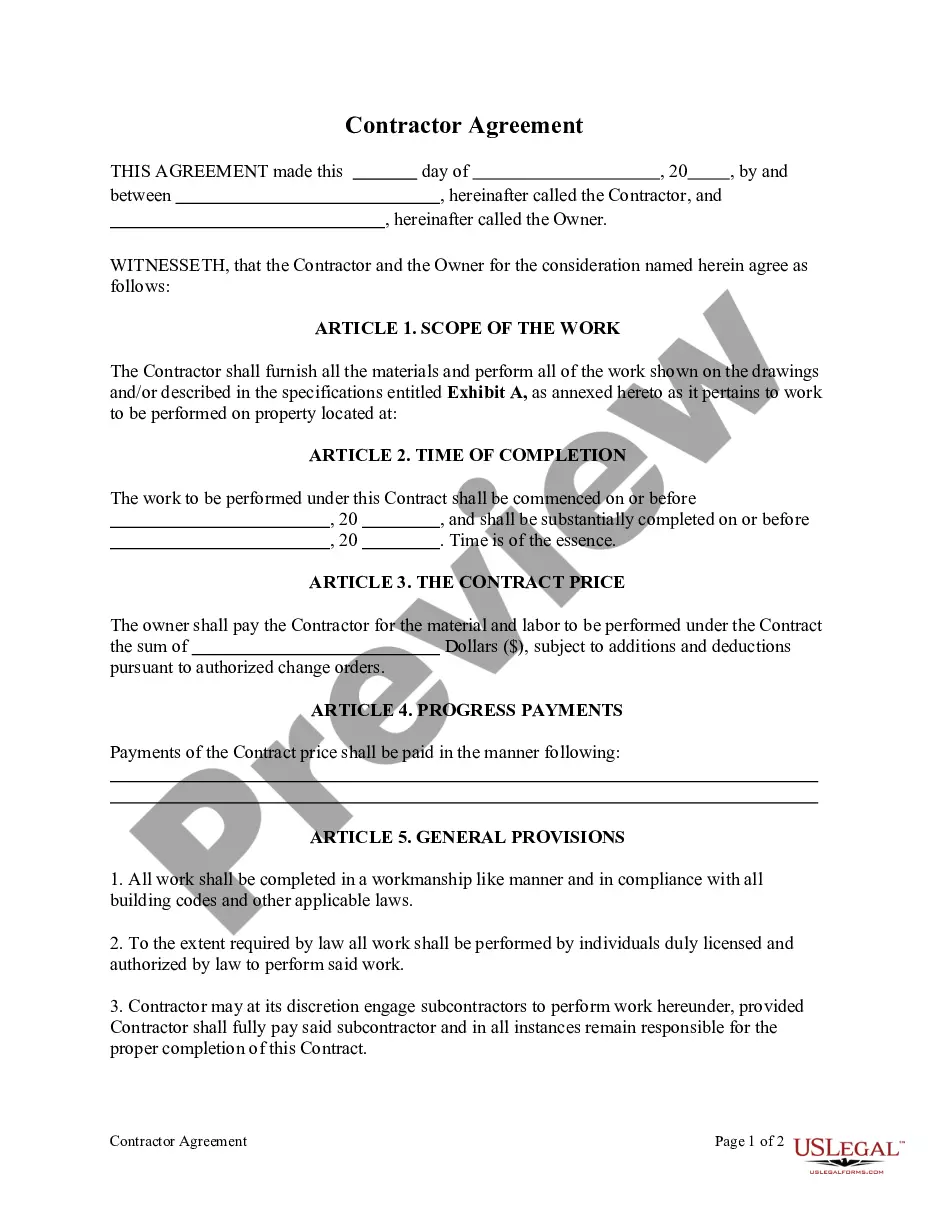
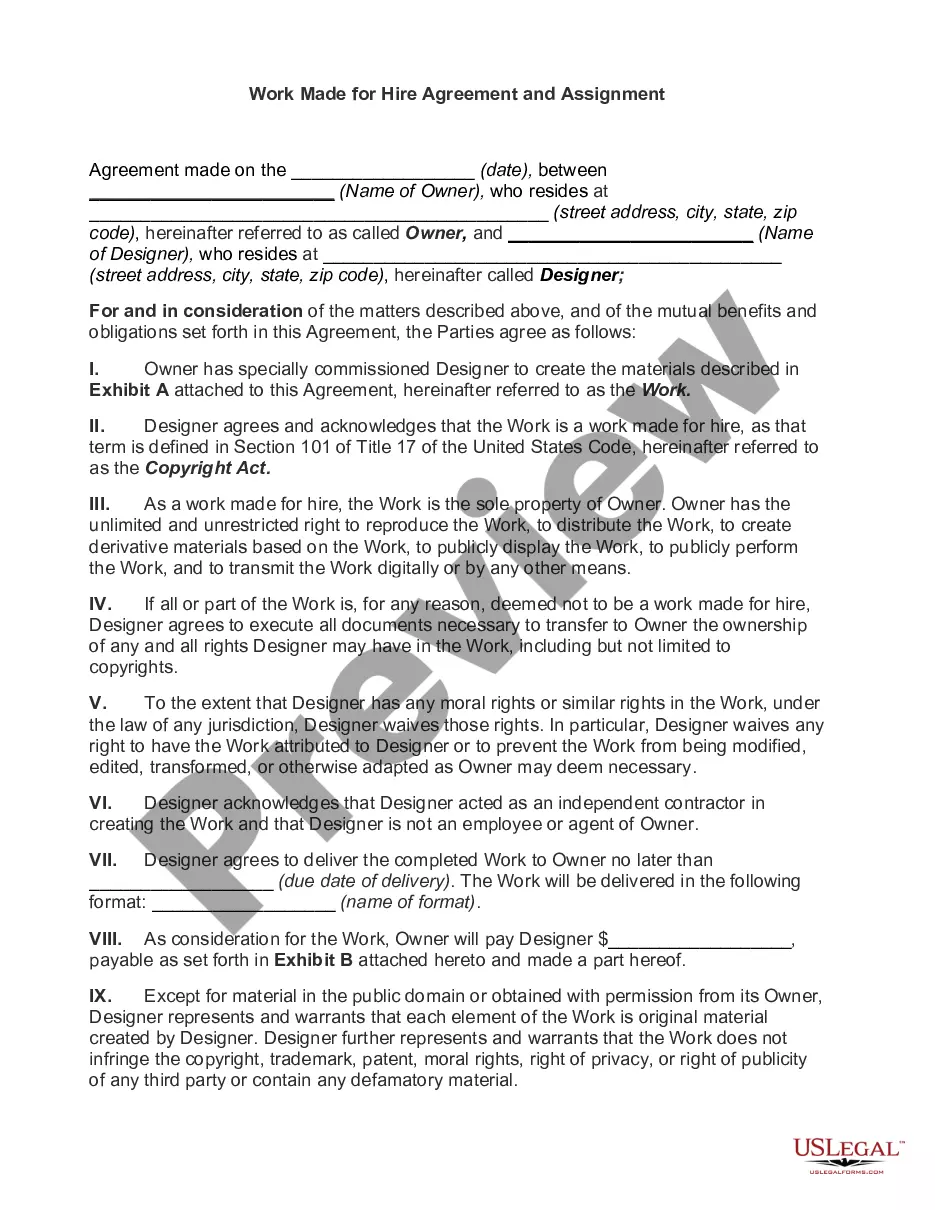
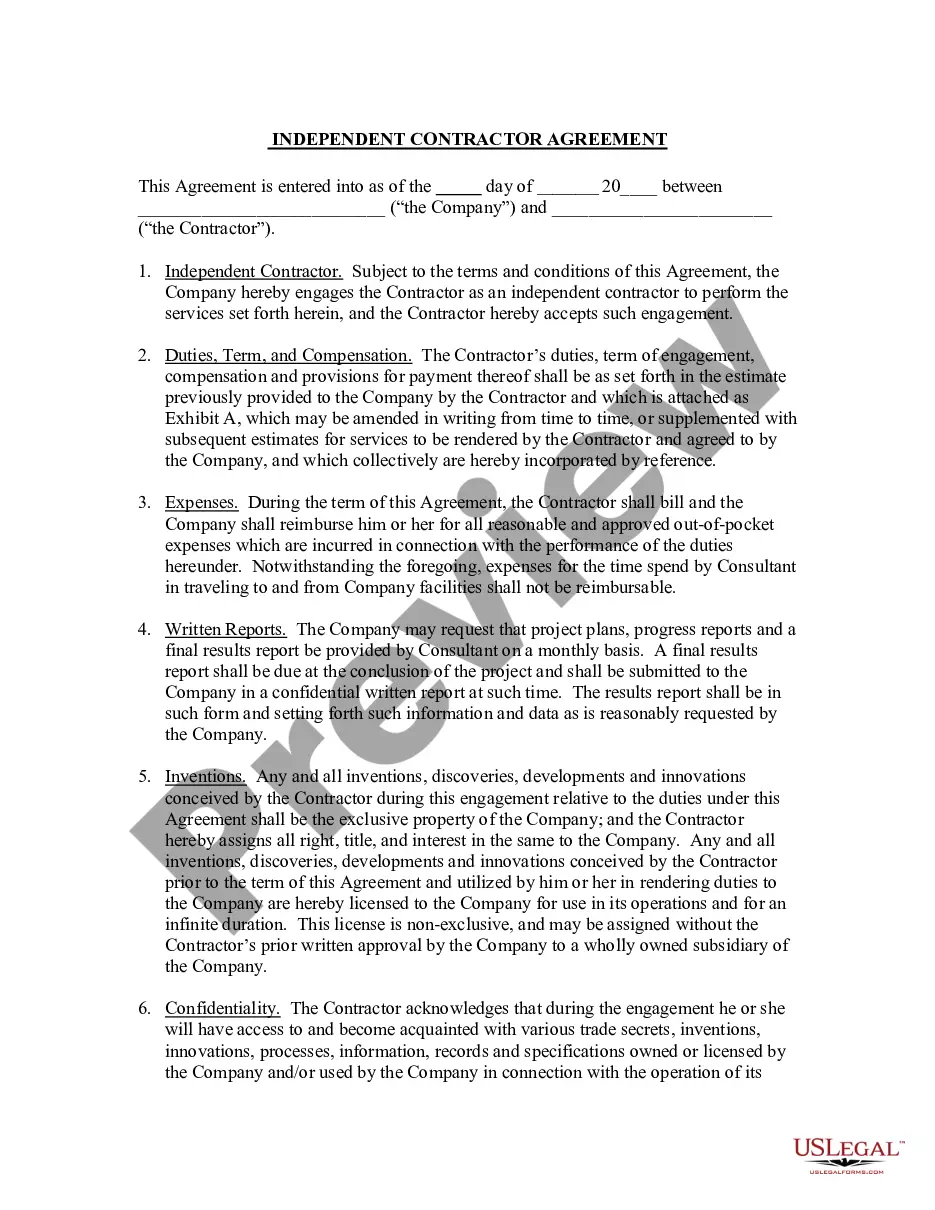
Get your form ready online
Our built-in tools help you complete, sign, share, and store your documents in one place.
Make edits, fill in missing information, and update formatting in US Legal Forms—just like you would in MS Word.
Download a copy, print it, send it by email, or mail it via USPS—whatever works best for your next step.
Sign and collect signatures with our SignNow integration. Send to multiple recipients, set reminders, and more. Go Premium to unlock E-Sign.
If this form requires notarization, complete it online through a secure video call—no need to meet a notary in person or wait for an appointment.
We protect your documents and personal data by following strict security and privacy standards.

Make edits, fill in missing information, and update formatting in US Legal Forms—just like you would in MS Word.

Download a copy, print it, send it by email, or mail it via USPS—whatever works best for your next step.

Sign and collect signatures with our SignNow integration. Send to multiple recipients, set reminders, and more. Go Premium to unlock E-Sign.

If this form requires notarization, complete it online through a secure video call—no need to meet a notary in person or wait for an appointment.

We protect your documents and personal data by following strict security and privacy standards.
Looking for another form?

How to fill out Work Made For Hire Agreement?
You might spend numerous hours online trying to locate the legal document template that meets the state and federal requirements you need.
US Legal Forms provides thousands of legal forms that are reviewed by professionals.
It is easy to download or print the Idaho Work Made for Hire Agreement from your service.
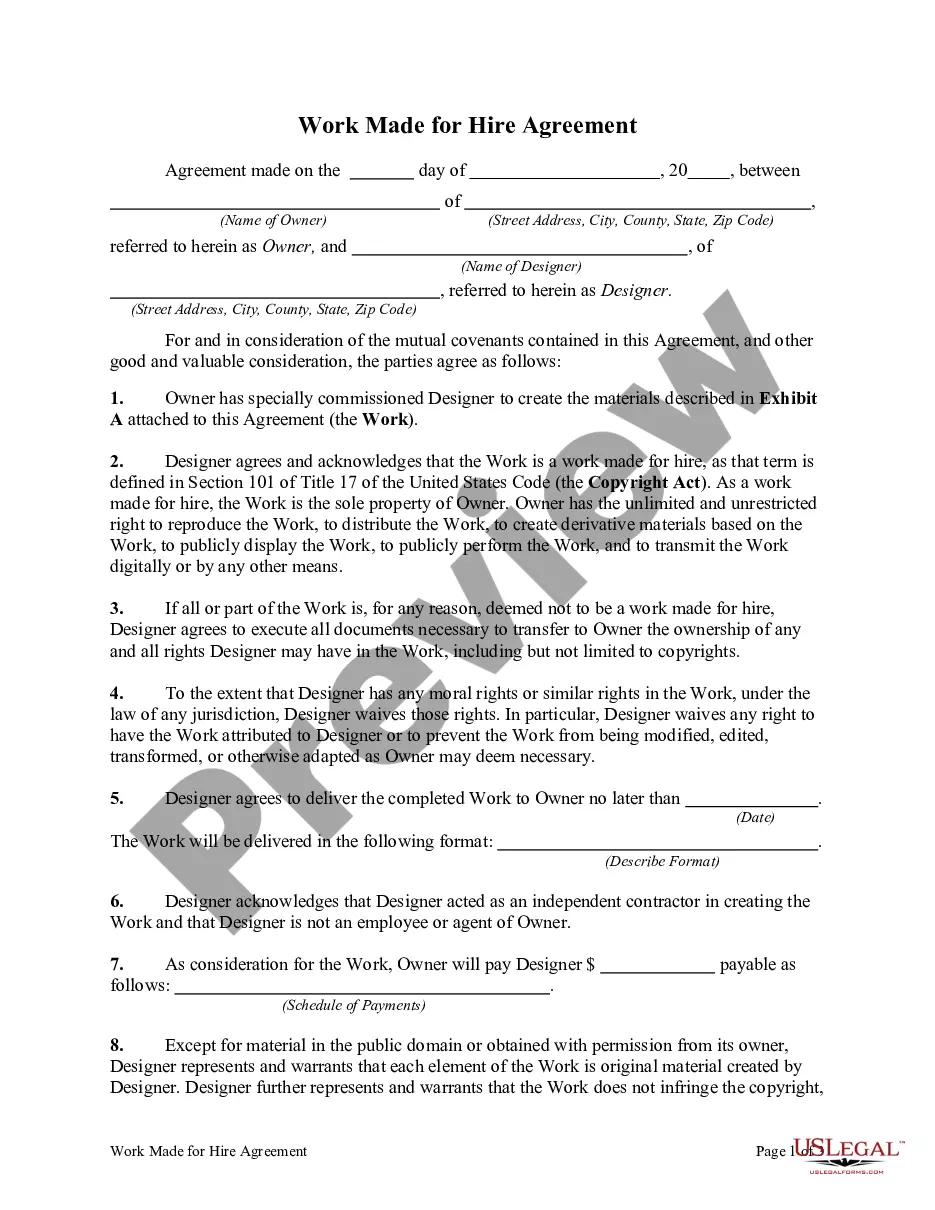
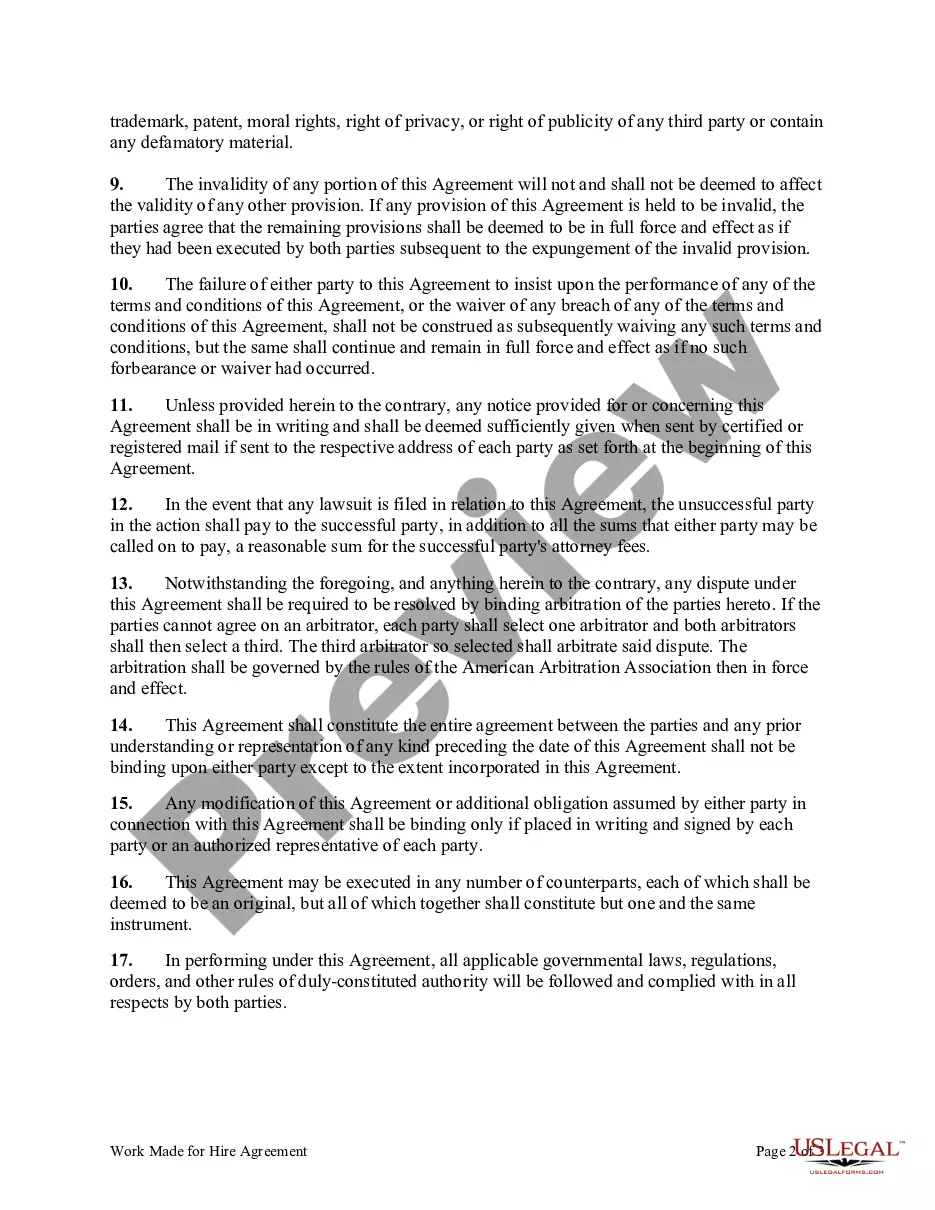
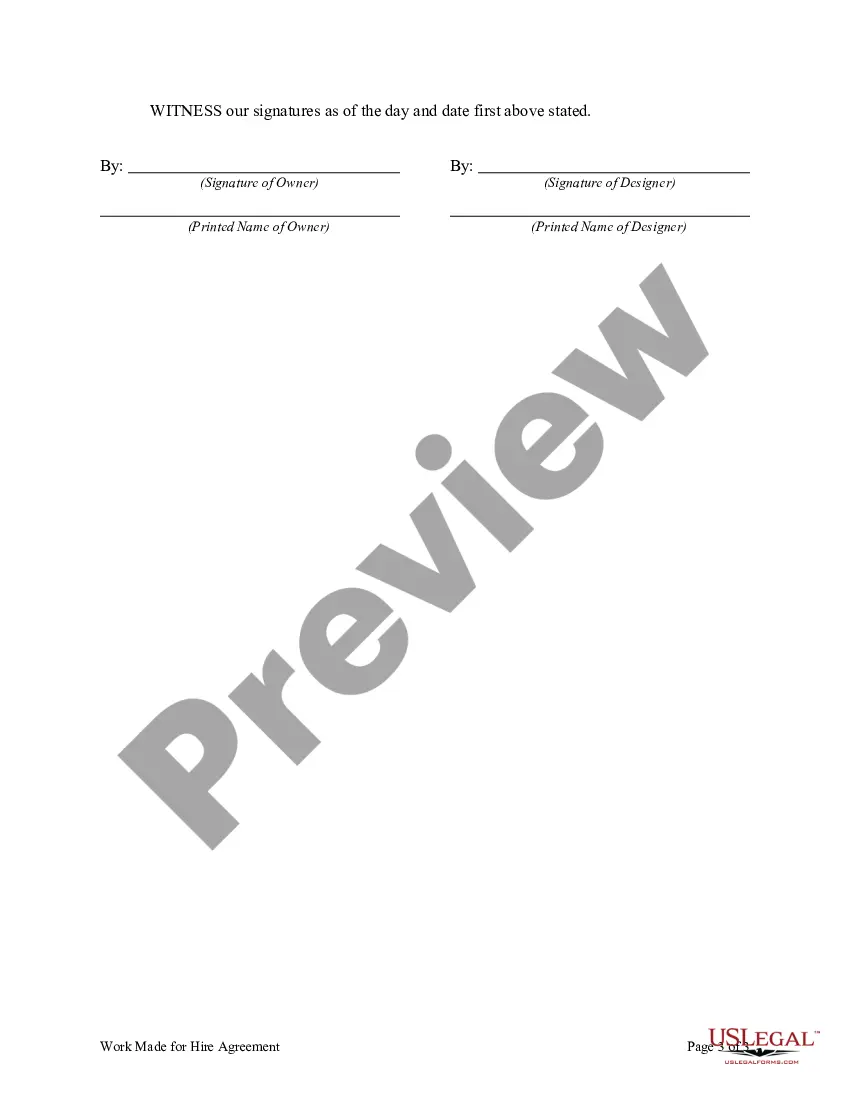
If available, use the Preview option to browse through the document template as well.
- If you possess a US Legal Forms account, you can sign in and click the Download button.
- After that, you can fill out, alter, print, or sign the Idaho Work Made for Hire Agreement.
- Every legal document template you acquire is yours to keep forever.
- To obtain another copy of the purchased form, visit the My documents section and click the relevant option.
- If you are using the US Legal Forms website for the first time, follow the simple instructions provided below.
- First, make sure that you have selected the correct document template for your county/city of choice.
- Review the form details to ensure you have chosen the correct form.
Form popularity
FAQ
When classifying a worker, consider their level of control over the work process, the permanency of their relationship with the employer, and whether the work performed is integral to the business. Each of these factors informs how the Idaho Work Made for Hire Agreement is applied. Accurately assessing these elements can help you avoid misclassification issues and ensure proper compliance.
For a work to achieve work made for hire status, it must either be created by an employee or commissioned under a defined agreement. Clarity about the nature of the work and its creation context is crucial. The Idaho Work Made for Hire Agreement provides a solid foundation to establish these conditions effectively and prevent potential conflicts.
The principle of work for hire centers around the notion that works created within the scope of employment or through specific contracts belong to the employer or commissioning party. This principle aims to clarify ownership issues and delineate responsibilities. By utilizing the Idaho Work Made for Hire Agreement, you ensure your rights and interests are safeguarded.
An important exception to the work made for hire doctrine occurs when the work is created by independent contractors. If a freelancer or contractor creates a piece without proper written agreements, they retain copyright ownership. Thus, to ensure your work remains under the Idaho Work Made for Hire Agreement, always formalize the relationship with clear documentation.
A basic work for hire agreement defines the relationship between the creator and the commissioning party. This document clearly states that the final work ownership belongs to the employer or the person who commissioned the work. Incorporating the Idaho Work Made for Hire Agreement into your projects can streamline ownership clarifications and help avoid disputes.
To qualify as a work made for hire under the Idaho Work Made for Hire Agreement, the work must be created by an employee during the scope of their employment or commissioned as part of a specific project. Additionally, there must be a clear written agreement stating the work's status as a work made for hire. It is essential to outline these conditions to protect your intellectual property rights effectively.
At the conclusion of a project, the work made for hire is owned by the employer or the party that commissioned the work. The creator typically does not retain any rights once the project is completed. Defining this in an Idaho Work Made for Hire Agreement is essential for establishing clear expectations and ownership.
When you create something for a company, the company usually owns that work, especially under a work made for hire agreement. This arrangement protects the company’s investment by ensuring they hold the necessary rights. To formalize this, an Idaho Work Made for Hire Agreement should be implemented, clarifying the ownership structure.
Generally, the output of a work project belongs to the party that commissioned the work, particularly in work made for hire arrangements. The creator relinquishes ownership at the time of creation. Therefore, when drafting an Idaho Work Made for Hire Agreement, ensure it specifies ownership rights to avoid future disputes.
In a work made for hire scenario, the employer or commissioning party typically owns the work immediately upon its creation. This means that the creator does not have ownership rights unless specified otherwise. It's vital to include these details in the Idaho Work Made for Hire Agreement to clearly define who retains rights.