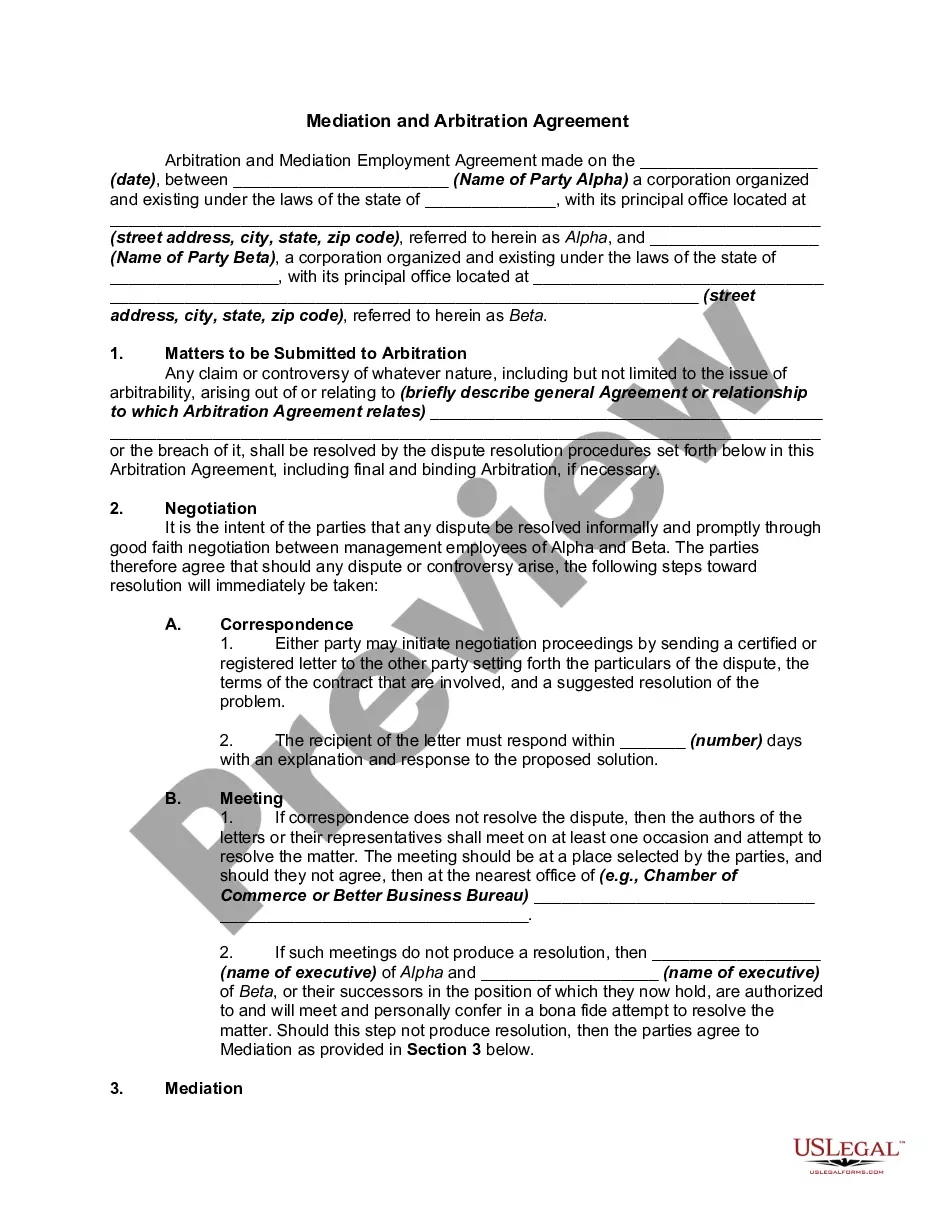
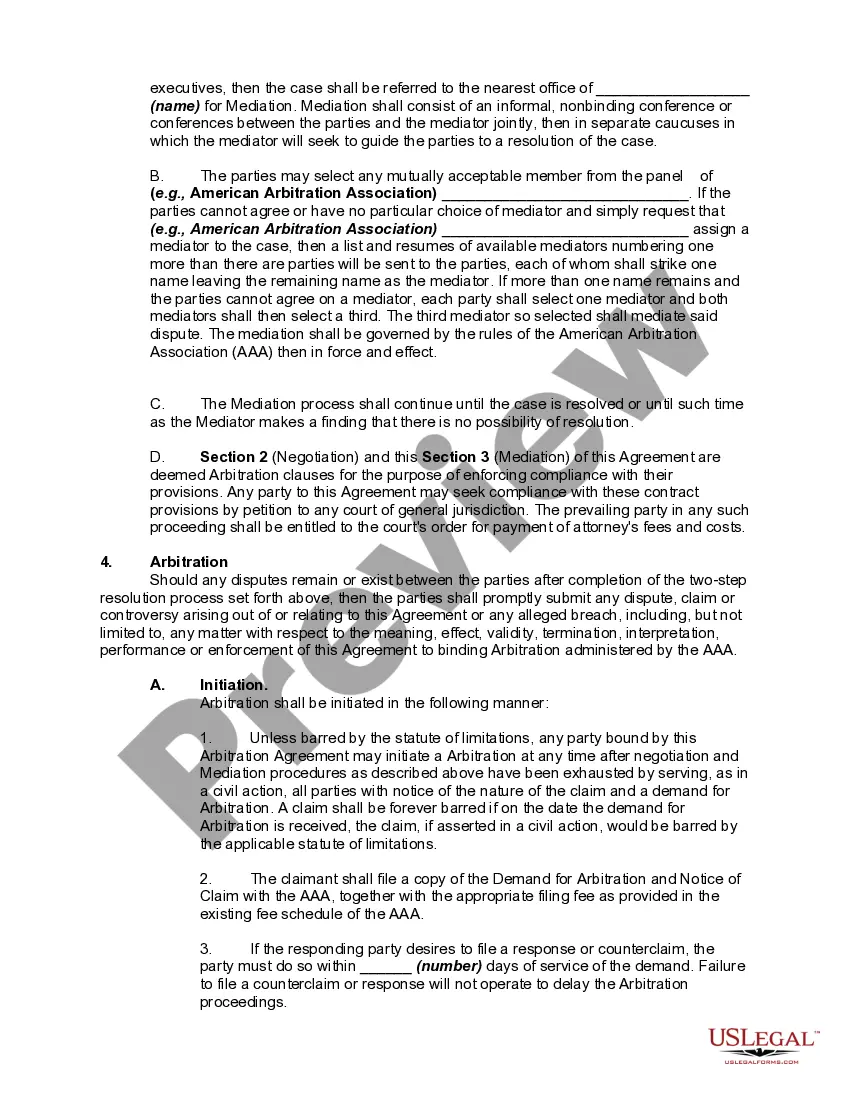
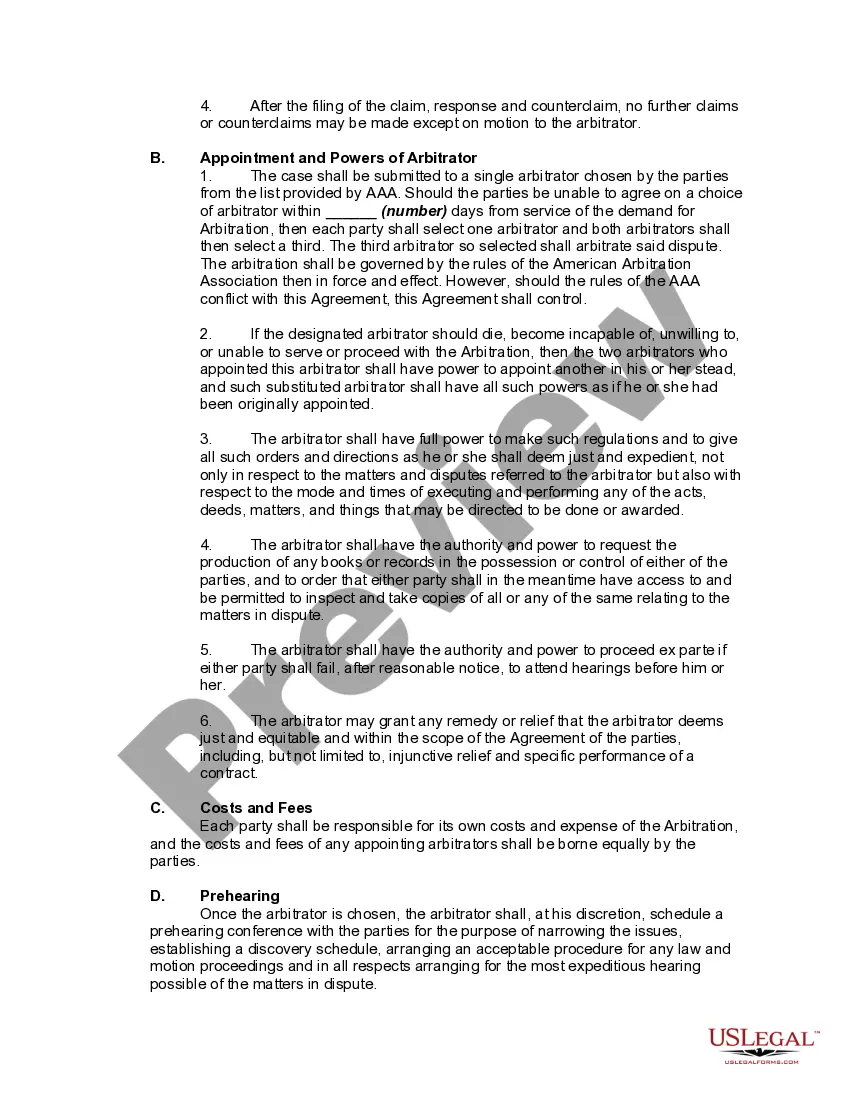
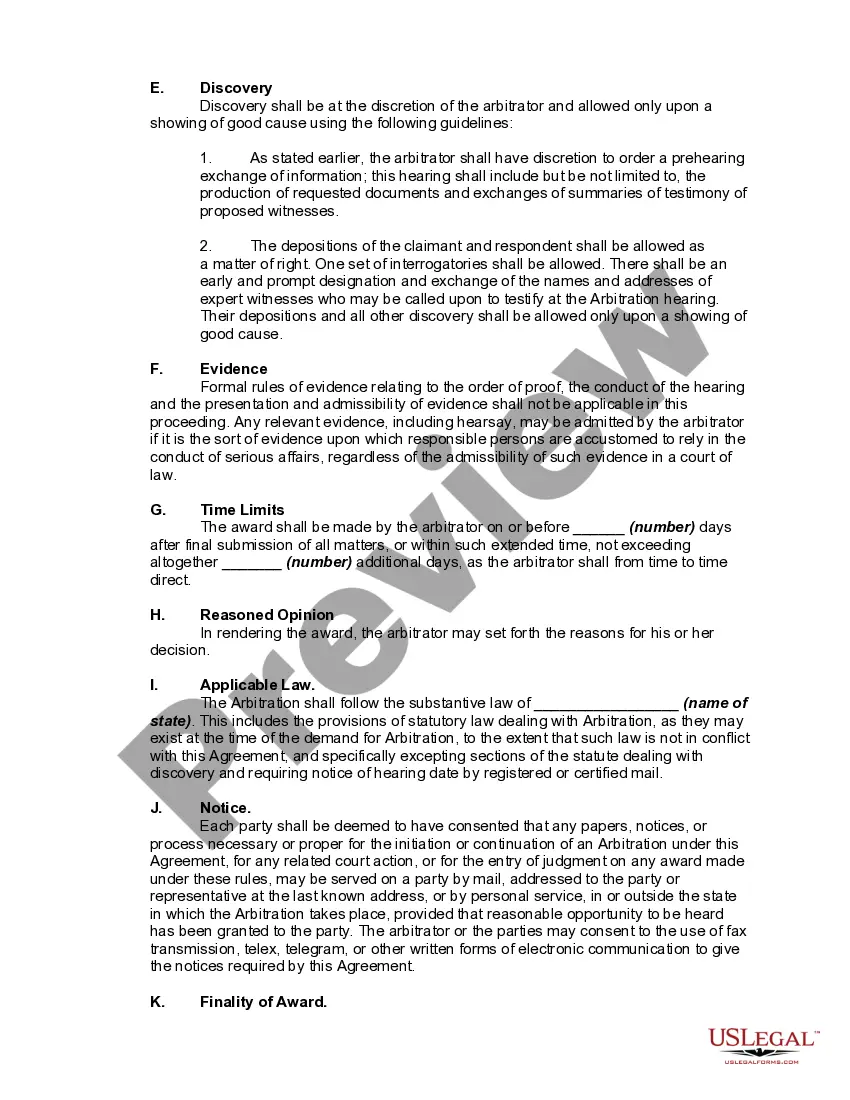
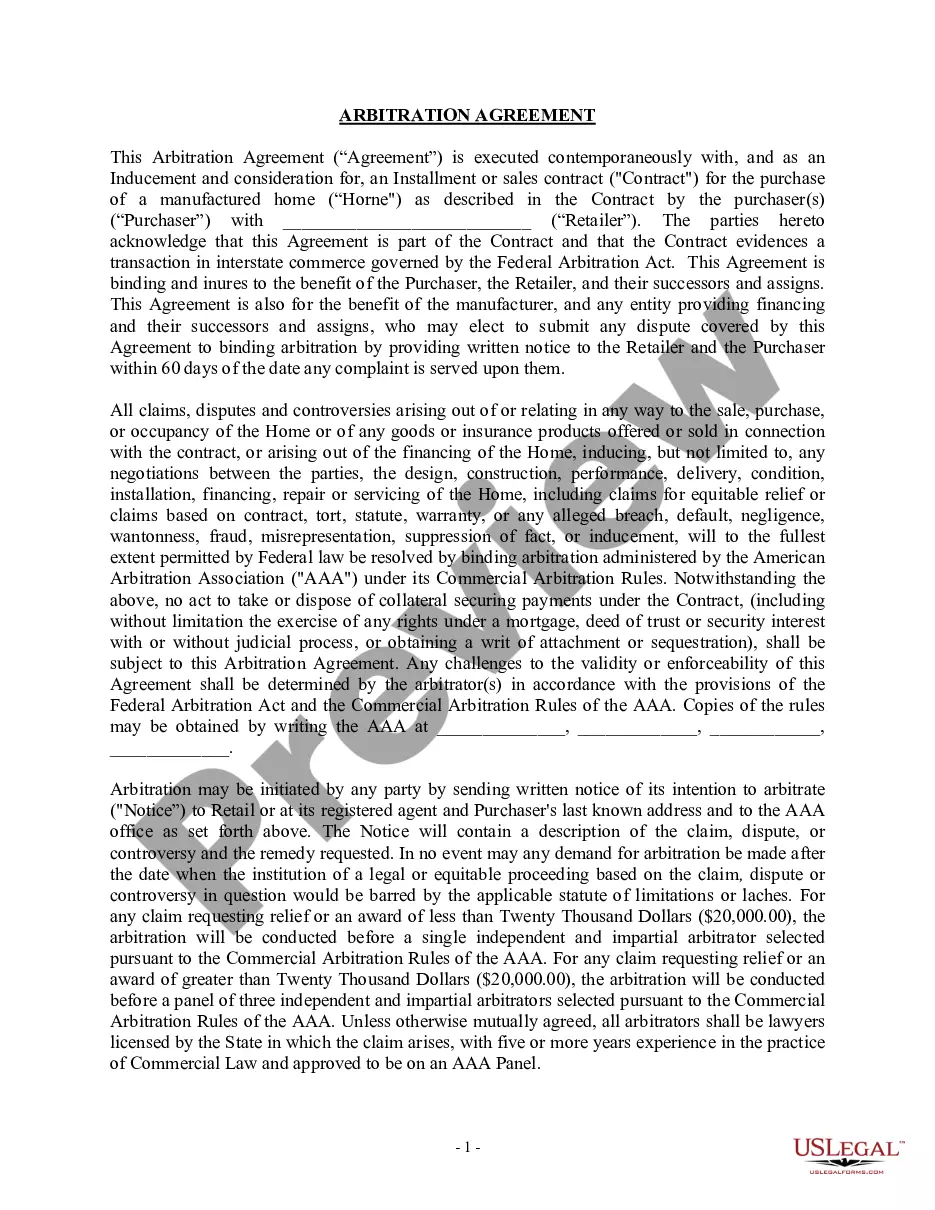
Arbitration is an alternative means of settling a dispute by impartial persons without proceeding to a court trial. It is sometimes preferred as a means of settling a matter in order to avoid the expense, delay, and acrimony of litigation. Discovery is with the discretion of the Arbitrator and there are simplified rules of evidence in arbitration.
Mediation is a non-adversarial method of alternative dispute resolution (ADR) in which a neutral third party helps resolve a dispute. The mediator does not have the power to render a decision on the matter or order an outcome. If a satisfactory resolution cannot be reached, the parties can pursue a lawsuit or arbitration.
This form provides for negotiation, then mediation if the negotiation fails to resolve the issues. If both negotiation and mediation fail to resolve the issues, the parties arbitrate the dispute.
Idaho Mediation and Arbitration Agreement
State:
Multi-State
Category:
Control #:
US-02980BG
Format:
Word;
Rich Text
125 downloads
Description
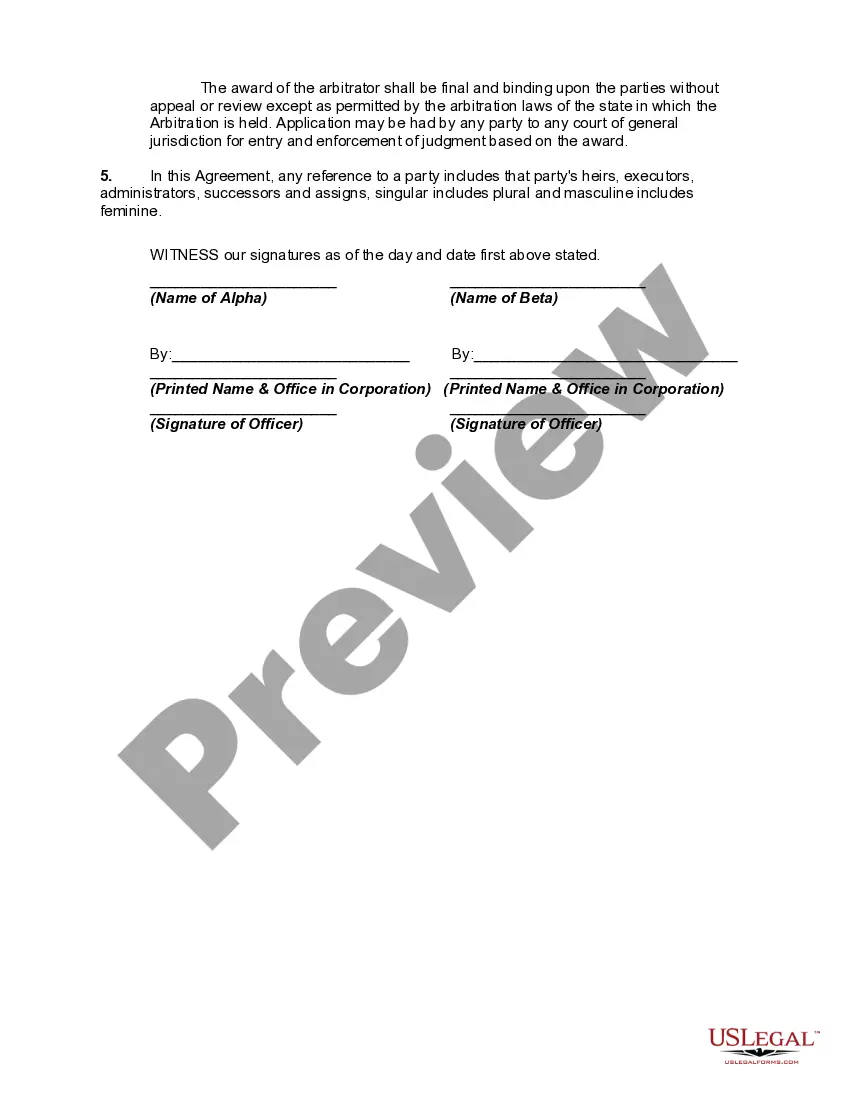
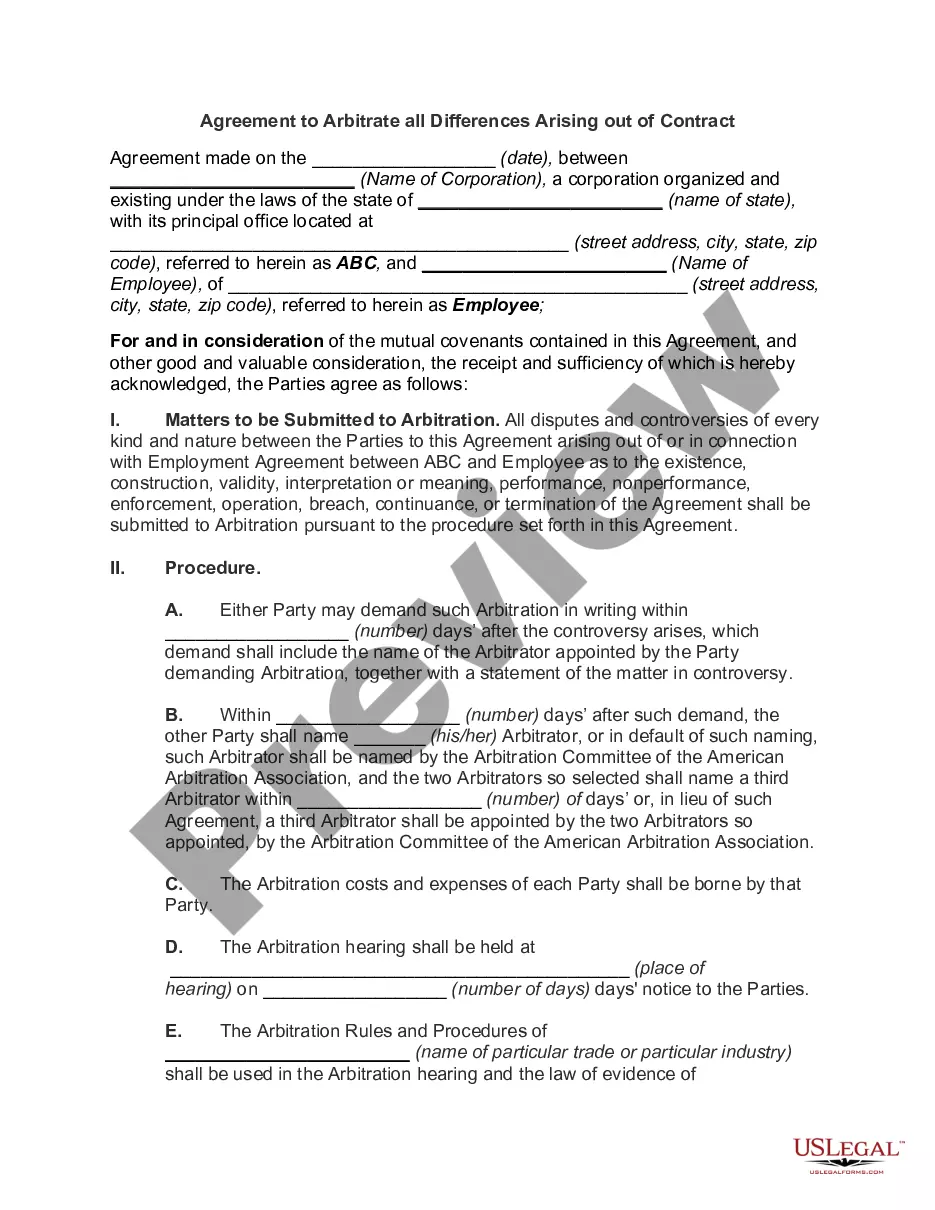
Free preview



Get your form ready online
Our built-in tools help you complete, sign, share, and store your documents in one place.
Built-in online Word editor
Make edits, fill in missing information, and update formatting in US Legal Forms—just like you would in MS Word.
Export easily
Download a copy, print it, send it by email, or mail it via USPS—whatever works best for your next step.
E-sign your document
Sign and collect signatures with our SignNow integration. Send to multiple recipients, set reminders, and more. Go Premium to unlock E-Sign.
Notarize online 24/7
If this form requires notarization, complete it online through a secure video call—no need to meet a notary in person or wait for an appointment.
Store your document securely
We protect your documents and personal data by following strict security and privacy standards.

Make edits, fill in missing information, and update formatting in US Legal Forms—just like you would in MS Word.

Download a copy, print it, send it by email, or mail it via USPS—whatever works best for your next step.

Sign and collect signatures with our SignNow integration. Send to multiple recipients, set reminders, and more. Go Premium to unlock E-Sign.

If this form requires notarization, complete it online through a secure video call—no need to meet a notary in person or wait for an appointment.

We protect your documents and personal data by following strict security and privacy standards.
Looking for another form?
How to fill out Mediation And Arbitration Agreement?
US Legal Forms - one of the largest collections of legal templates in the United States - offers a vast selection of legal document formats that you can download or print.
Using the website, you can find thousands of templates for business and personal purposes, organized by categories, states, or keywords.
You can locate the latest versions of documents such as the Idaho Mediation and Arbitration Agreement within minutes.
Verify your selection by clicking on the Get now button after satisfying with the form. Choose your desired pricing plan and provide your details to register for an account.
Process the transaction. Use your Visa or Mastercard or PayPal account to complete the payment. Choose the format and download the form to your device.
- If you have a subscription, Log In and download the Idaho Mediation and Arbitration Agreement from the US Legal Forms library.
- The Download option will appear on every form you view.
- You have access to all previously downloaded templates in the My documents section of your profile.
- To use US Legal Forms for the first time, here are simple guidelines to get started.
- Make sure you have selected the correct form for your city/state.
- Click the Preview button to review the content of the form.
Form popularity
FAQ
To write an arbitration agreement, begin by defining the parties involved and specifying the dispute subject matter. Include crucial details such as the arbitration process, rules that will govern the proceedings, and the determination of the arbitrator. Clear and concise language helps both parties understand their rights and responsibilities. The Idaho Mediation and Arbitration Agreement template on US Legal Forms streamlines this process, ensuring all necessary elements are included.
Yes, you can go to arbitration after mediation if the mediation does not lead to a resolution. This sequential approach allows parties to attempt negotiation first through the mediation process. If they fail to reach an agreement, the arbitration phase will initiate, providing an alternative avenue to resolve their dispute. Utilizing the Idaho Mediation and Arbitration Agreement can outline this process clearly, enhancing understanding and efficiency.
The combination of mediation and arbitration involves using both methods to resolve disputes effectively. Mediation starts the process by allowing parties to negotiate a settlement with the help of a neutral mediator. If mediation fails, arbitration takes over, where a neutral arbitrator makes a binding decision. This approach offers flexibility and can often save time and resources, making it a popular choice for the Idaho Mediation and Arbitration Agreement.
Drafting an arbitration agreement requires clarity and specific terms to ensure enforceability under the Idaho Mediation and Arbitration Agreement. It should outline the scope, rules, and procedures agreed upon by both parties. Consider consulting legal resources, such as US Legal Forms, which provide templates and guidance to help create a comprehensive arbitration agreement. A well-crafted agreement sets a clear path for resolving any potential disputes.
Mediation in Idaho involves a neutral mediator guiding the parties through discussions to find mutually agreeable solutions under the Idaho Mediation and Arbitration Agreement. The process is informal and confidential, promoting open communication. Each party has the opportunity to express their perspective while the mediator facilitates the dialogue. Successful mediation can lead to a settlement without the need for arbitration.
Yes, you can engage in both mediation and arbitration when dealing with disputes under the Idaho Mediation and Arbitration Agreement. This approach allows parties to first try mediation to reach a voluntary settlement. If mediation does not yield satisfactory results, arbitration provides a structured process for a final decision. Utilizing both methods can offer comprehensive resolution options.
In the context of the Idaho Mediation and Arbitration Agreement, mediation typically occurs before arbitration. Parties usually attempt mediation first to settle disputes amicably without the need for more formal procedures. If mediation fails to resolve the issue, then arbitration can be pursued as a binding solution. This sequence can save time and resources for all involved.
Mediation and arbitration agreements serve different functions in resolving disputes. Mediation involves a neutral third party who facilitates discussions and helps parties reach a voluntary agreement, while arbitration involves a neutral party making binding decisions after hearing both sides. Both methods aim to resolve conflicts outside of court, and utilizing an Idaho Mediation and Arbitration Agreement can significantly streamline this process, tailoring it to the preferences of the involved parties.
Code 7 903 refers specifically to Idaho's legal statutes regarding certain offenses, particularly concerning the treatment of child custody disputes. Understanding this code is crucial for anyone involved in legal negotiations. If you find yourself navigating these complex matters, utilizing an Idaho Mediation and Arbitration Agreement can be an effective way to resolve disputes efficiently and equitably.
Custodial interference in Idaho can result in significant legal penalties, including fines or incarceration, depending on the specifics of the case. This law serves to protect the rights of custodial parents while ensuring that children's best interests are prioritized. Engaging in mediation beforehand, such as through an Idaho Mediation and Arbitration Agreement, can often prevent these severe outcomes while promoting amicable solutions.