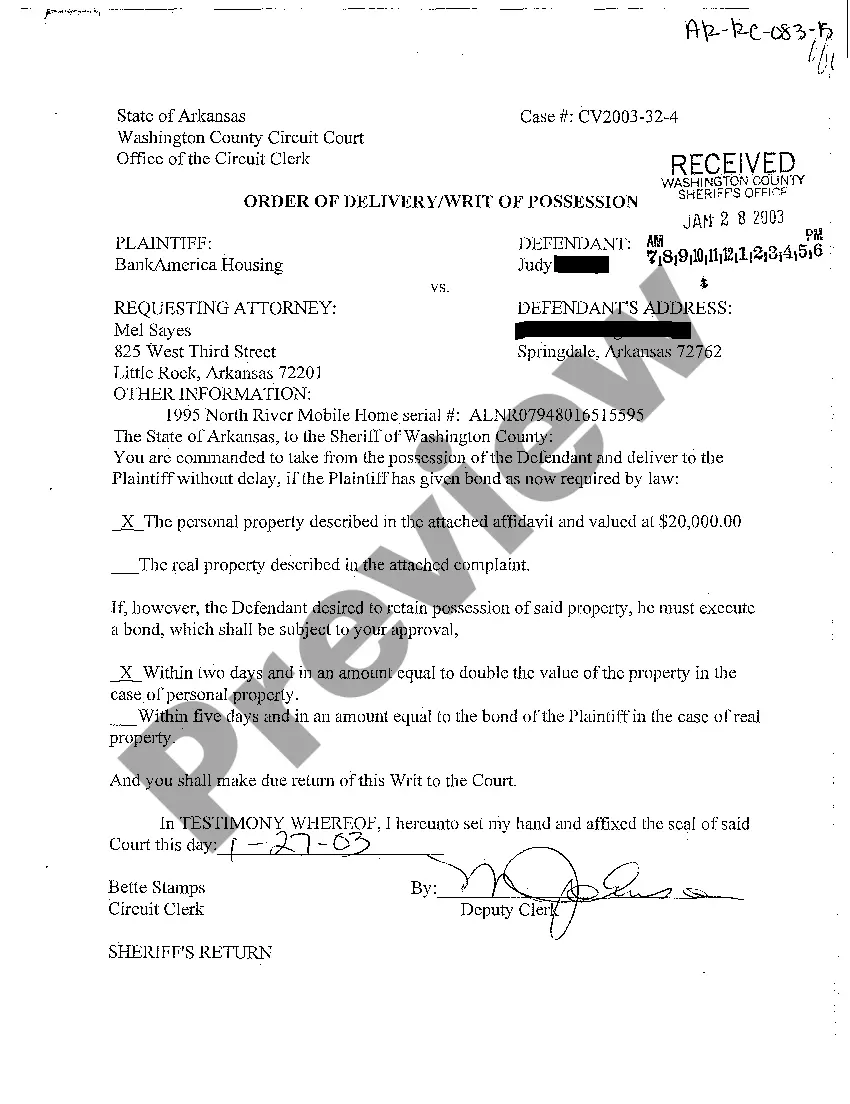
Idaho Declaration of Homestead
About this form
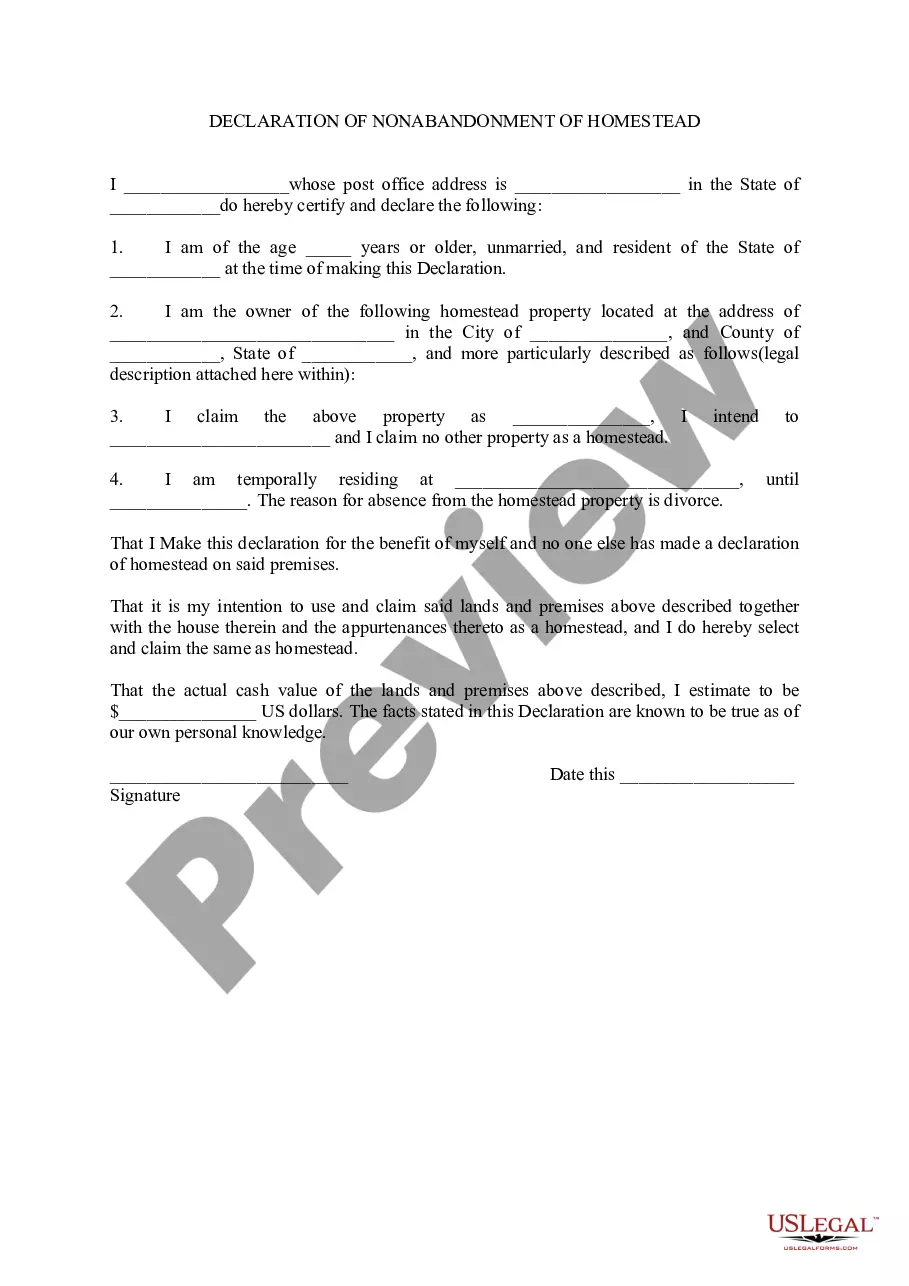
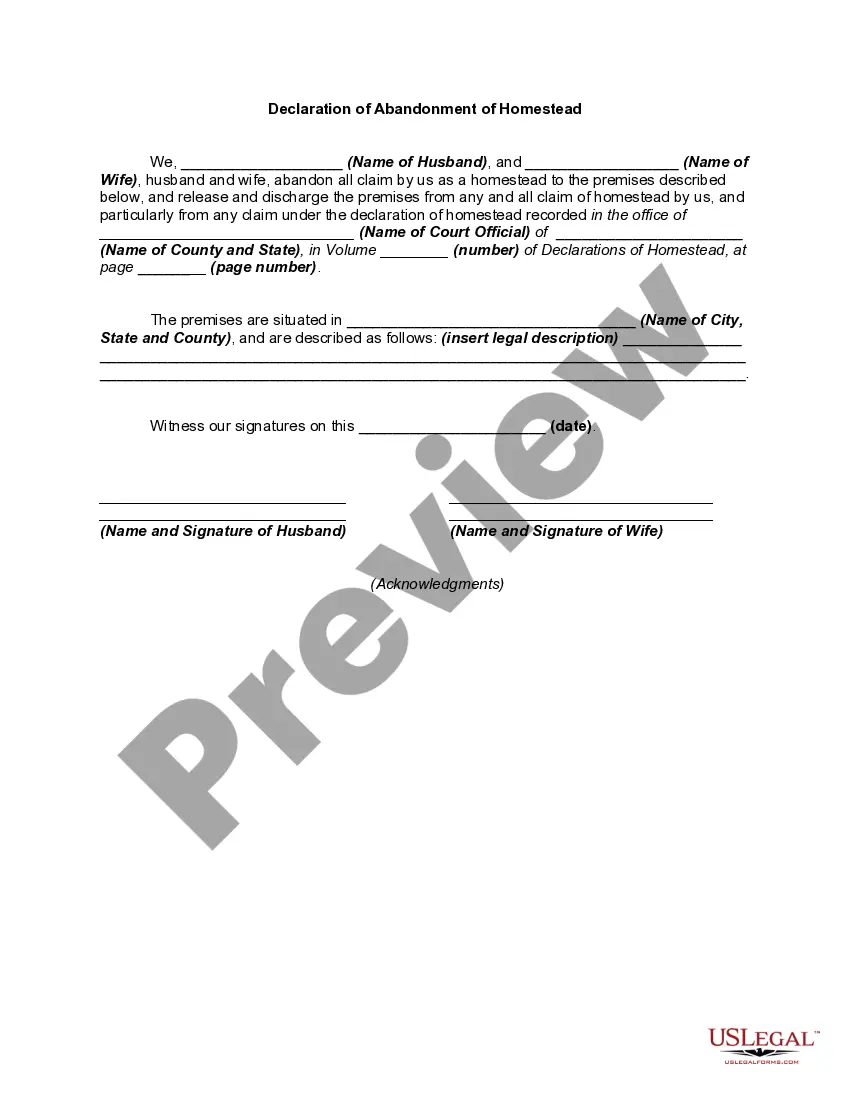
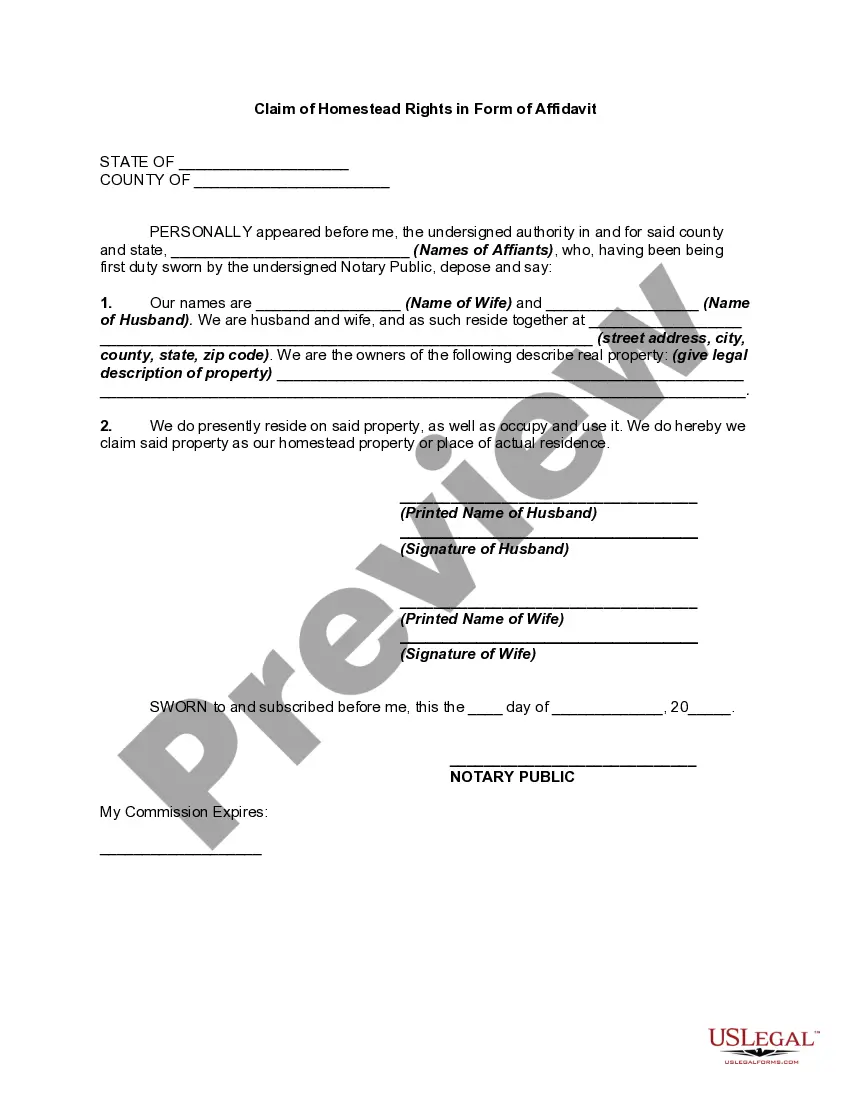
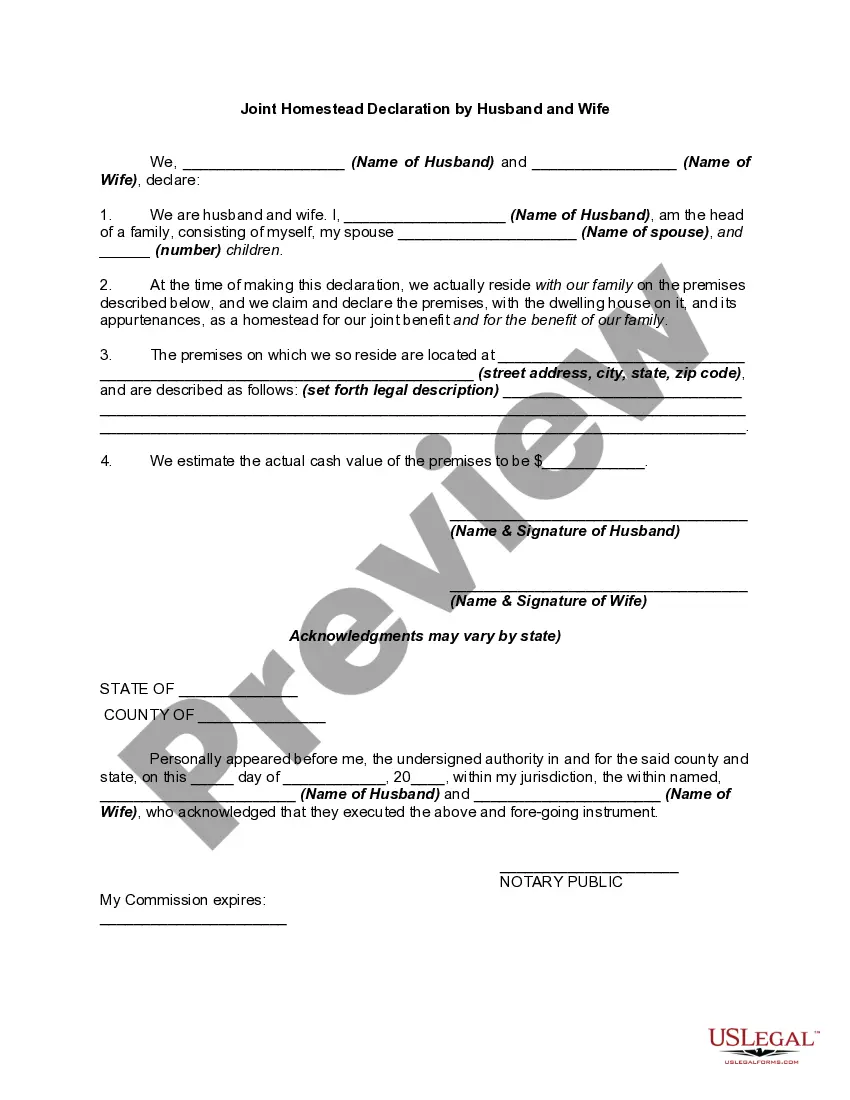
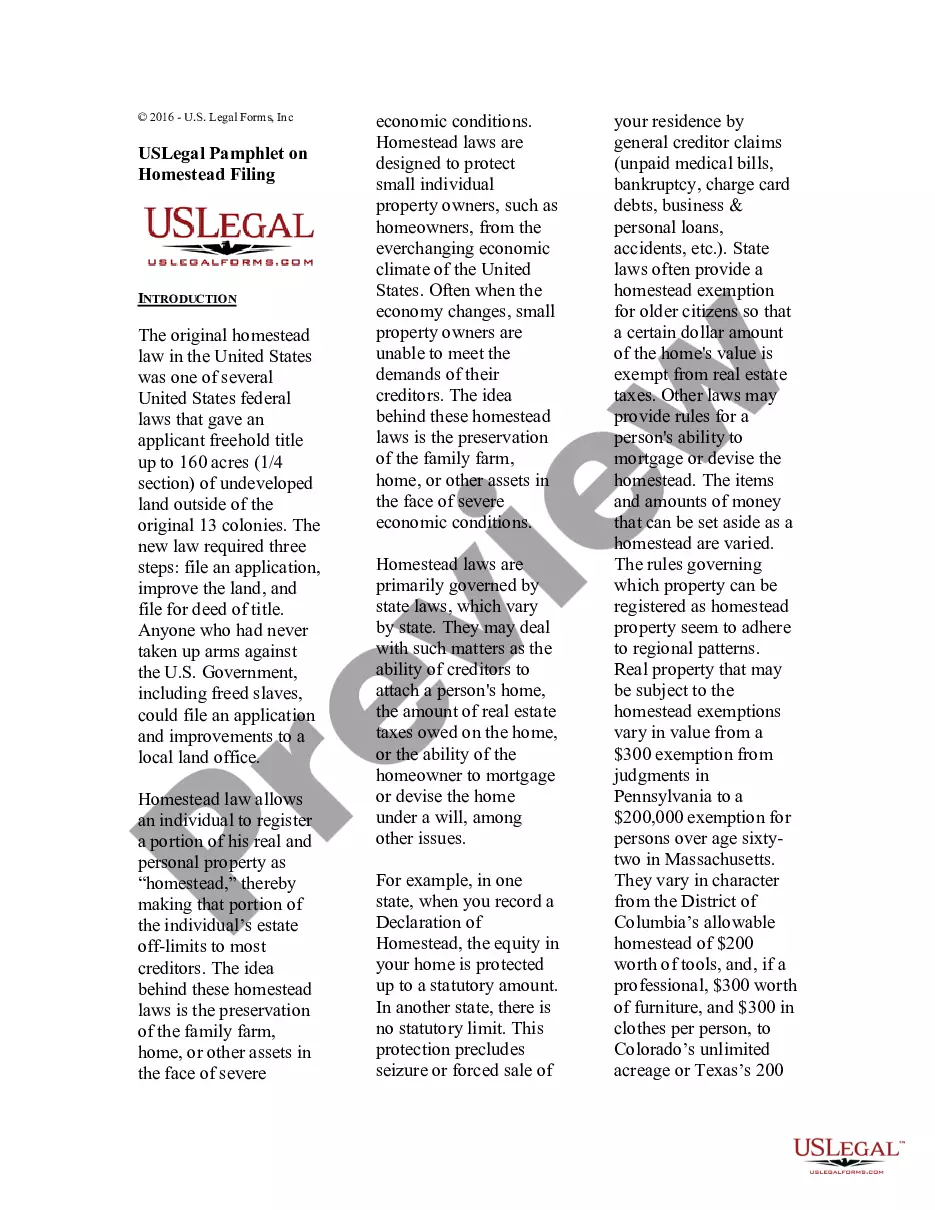
The Declaration of Homestead is a legal document that protects your home from unsecured creditors. By filing this declaration, you claim your primary residence as a homestead, safeguarding the equity in your property. This form differs from other real estate documents by specifically focusing on the protection of a homeowner's residence, ensuring that creditors cannot make claims against the equity or cash value in the home.
Main sections of this form
- Personal information: Name and address of the declarant.
- Property details: Description and location of the property being claimed as a homestead.
- Intent statement: Declaration of intention to use the property as a homestead.
- Valuation statement: Estimation of the propertyâs actual cash value.
- Notary acknowledgment: Certification of the declaration by a notary public.
When to use this document
This form is typically used by homeowners who wish to protect their equity in their primary residence from unsecured creditors. It is particularly useful if you anticipate financial difficulties or want to ensure your home is safeguarded against claims from unsecured debts, such as medical bills or credit card debt.
Who this form is for
This form is intended for:
- Homeowners looking to protect their primary residence.
- Individuals facing potential financial hardship.
- Those wanting to secure their home from unsecured creditors.
How to complete this form
- Identify the parties involved: Fill in your name and address accurately.
- Provide property details: Describe the property you wish to declare as a homestead.
- Make your intention clear: Indicate that this property will be claimed as your homestead.
- Estimate the property value: Enter the actual cash value of the property.
- Sign and date the form: Ensure you sign the declaration and include the date.
- Obtain notarization: Have the form notarized to validate the declaration.
Notarization requirements for this form
Yes, this form must be notarized to be legally valid. Notarization provides an official verification of your identity as the declarant. US Legal Forms offers integrated online notarization services, allowing you to complete the process securely via video call, ensuring you donât need to leave your home.
Get your form ready online
Our built-in tools help you complete, sign, share, and store your documents in one place.
Make edits, fill in missing information, and update formatting in US Legal Forms—just like you would in MS Word.
Download a copy, print it, send it by email, or mail it via USPS—whatever works best for your next step.
Sign and collect signatures with our SignNow integration. Send to multiple recipients, set reminders, and more. Go Premium to unlock E-Sign.
If this form requires notarization, complete it online through a secure video call—no need to meet a notary in person or wait for an appointment.
We protect your documents and personal data by following strict security and privacy standards.

Make edits, fill in missing information, and update formatting in US Legal Forms—just like you would in MS Word.

Download a copy, print it, send it by email, or mail it via USPS—whatever works best for your next step.

Sign and collect signatures with our SignNow integration. Send to multiple recipients, set reminders, and more. Go Premium to unlock E-Sign.

If this form requires notarization, complete it online through a secure video call—no need to meet a notary in person or wait for an appointment.

We protect your documents and personal data by following strict security and privacy standards.
Common mistakes
- Incorrectly estimating the cash value of the home.
- Failing to have the form notarized, which can invalidate the declaration.
- Not providing complete property details, such as accurate location and description.
Why complete this form online
- Convenience: Download and fill out the form at your own pace from anywhere.
- Editability: Make necessary changes easily before finalizing your declaration.
- Reliability: Forms are drafted by licensed attorneys, ensuring legal accuracy.
Main things to remember
- The Declaration of Homestead protects your home equity from unsecured creditors.
- It is essential to complete and file this form correctly to ensure protection.
- Notarization is required for the declaration to be valid.
Looking for another form?


Form popularity
FAQ
A Declaration of Homestead is a way to protect your home from unsecured creditors. The Declaration of Homestead protects the equity or cash value in your home. To find out the equity you have in your home, get the fair market value of your home.
Florida Homestead Tax Exemptions for each year must be filed by March 1 unless that day falls on a Sunday. For 2020, the exemption needs to be filed by March 2, 2020, since March 1, 2020 is a Sunday.
New homeowners must file a one-time application and have an Idaho-issued driver's license or identification card to establish the home as their primary residence and qualify for the property tax exemption. The Homeowner's Exemption Application is available from the assessor's office in each county.
Filing for the Homestead Exemption can be done online. Homeowners may claim up to a $50,000 exemption on their primary residence. The first $25,000 of this exemption applies to all taxing authorities.
A valid Florida driver's license. Either a valid voter's registration or a Declaration of Domicile, reflecting the homeowner's Florida address. At least one of your automobiles must be registered in Florida.
Homestead Exemption reduces the value used to calculate property taxes by 50 percent of the home, including up to one acre of land, up to a maximum dollar amount determined by the state Legislature. Homestead Exemption is available to all Idaho property owners on their primary residence.
Basically, a homestead exemption allows a homeowner to protect the value of her principal residence from creditors and property taxes. A homestead exemption also protects a surviving spouse when the other homeowner spouse dies.
Method #2: Take Advantage of All Applicable Tax Breaks Standard homestead exemption: The home of each Georgia resident that is owner-occupied as a primary residence may be granted a $2,000 exemption from most county and school taxes. The $2,000 is deducted from the 40% assessed value of the homestead.
Declaring a homestead on your owner occupied, primary residence in California will protect some of your equity, ownership amount, from creditors in or out of bankruptcy. California also offers an automatic homestead exemption, that does not require filing a declaration.