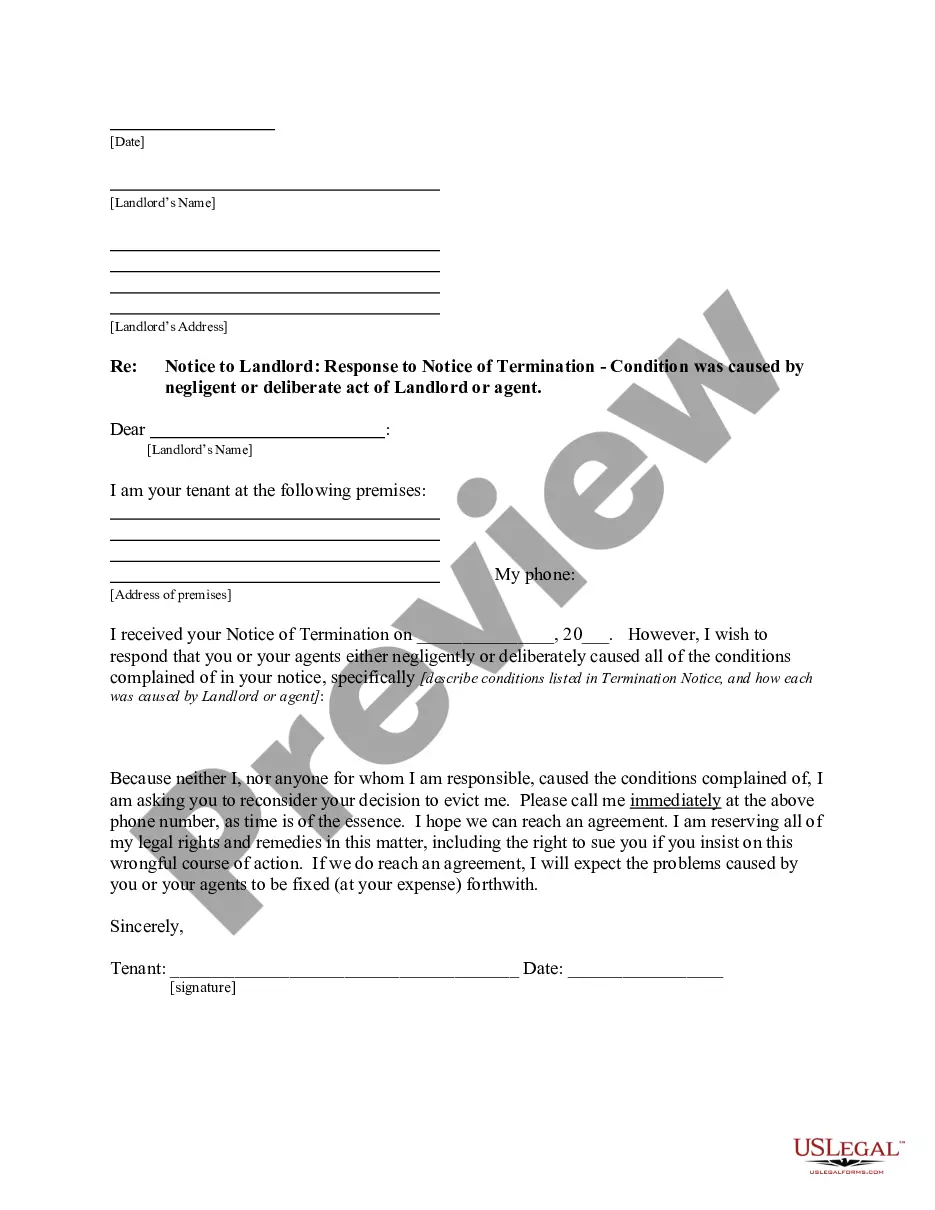
Idaho Letter from Tenant to Landlord responding to Notice to Terminate for Noncompliance - Noncompliant condition caused by Landlord's own deliberate or negligent act
What is this form?
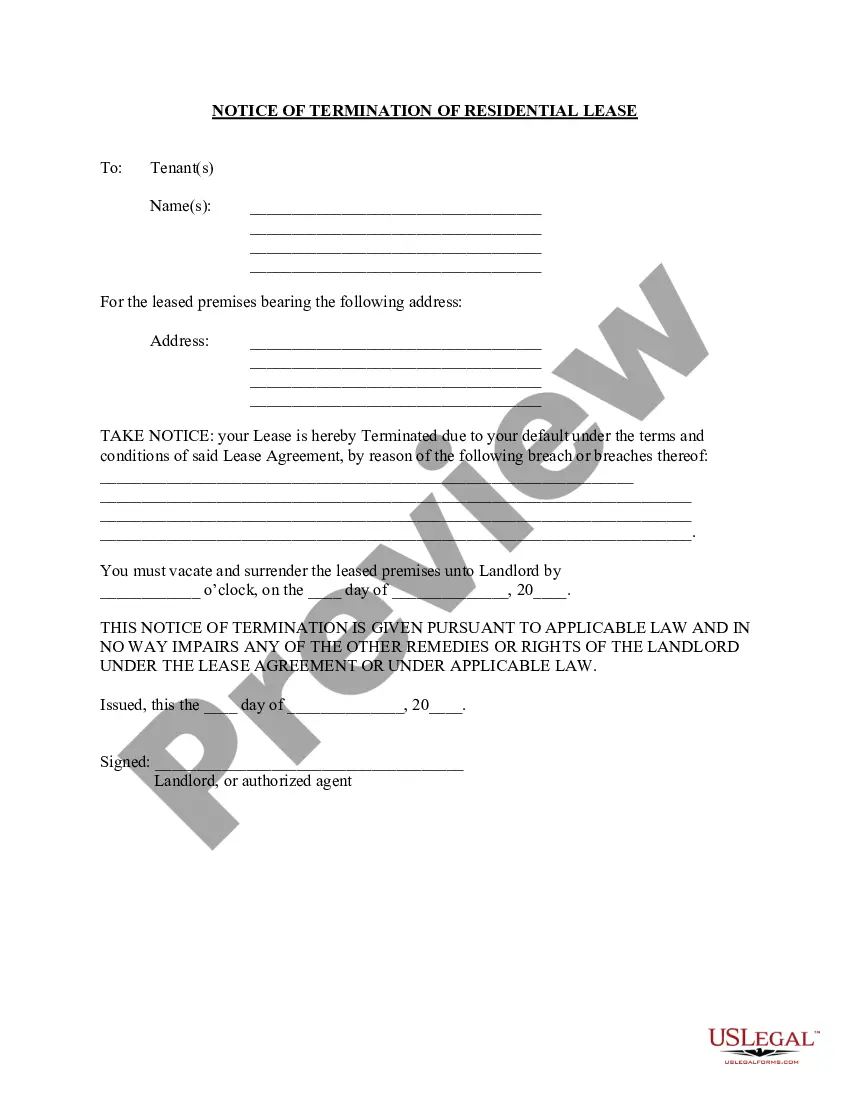
This form is a Letter from Tenant to Landlord responding to a Notice to Terminate for Noncompliance due to a noncompliant condition caused by the landlord's own deliberate or negligent act. It allows tenants to assert that the reasons for eviction stem from issues created by the landlord or their agents. This form requests immediate repairs and non-eviction while preserving the tenant's legal rights.
Key parts of this document
- Tenant's assertion regarding the landlord's actions leading to noncompliance.
- Request for immediate repairs to the property.
- Statement of intent to preserve legal rights.
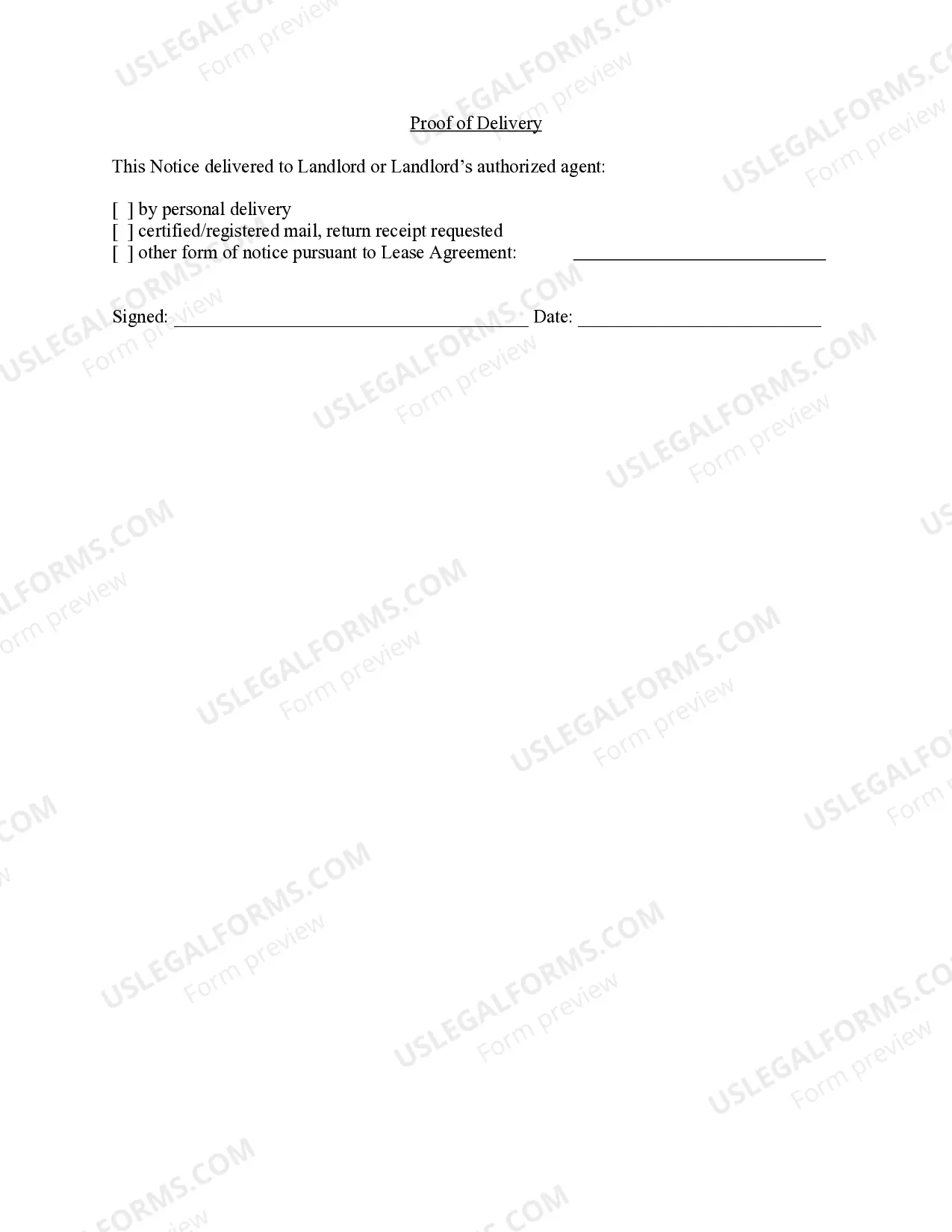
- Proof of delivery section to document how the notice is provided to the landlord.
- Signature block for the tenant and date of signing.


When to use this document
You should use this form when you receive a notice of eviction from your landlord, but you believe the reasons stated are due to factors that the landlord themselves are responsible for. This form allows you to formally respond to the notice, request necessary repairs, and potentially halt eviction proceedings.
Who should use this form
- Tenants facing eviction due to alleged noncompliance.
- Individuals who believe the eviction is based on issues caused by the landlord or their agents.
- Renters who wish to document their response and request repairs formally.
How to prepare this document
- Identify yourself as the tenant, including your name and contact information.
- Specify the address of the rental property in question.
- Clearly state the landlord's actions that you believe contributed to the noncompliance.
- Request specific repairs and the cessation of eviction proceedings.
- Provide your signature and the date to finalize the letter.
- Document the method of delivery to the landlord in the proof of delivery section.
Notarization guidance
This form does not typically require notarization unless specified by local law. Always check your state's requirements or consult a legal professional if you're uncertain.
Get your form ready online
Our built-in tools help you complete, sign, share, and store your documents in one place.
Make edits, fill in missing information, and update formatting in US Legal Forms—just like you would in MS Word.
Download a copy, print it, send it by email, or mail it via USPS—whatever works best for your next step.
Sign and collect signatures with our SignNow integration. Send to multiple recipients, set reminders, and more. Go Premium to unlock E-Sign.
If this form requires notarization, complete it online through a secure video call—no need to meet a notary in person or wait for an appointment.
We protect your documents and personal data by following strict security and privacy standards.

Make edits, fill in missing information, and update formatting in US Legal Forms—just like you would in MS Word.

Download a copy, print it, send it by email, or mail it via USPS—whatever works best for your next step.

Sign and collect signatures with our SignNow integration. Send to multiple recipients, set reminders, and more. Go Premium to unlock E-Sign.

If this form requires notarization, complete it online through a secure video call—no need to meet a notary in person or wait for an appointment.

We protect your documents and personal data by following strict security and privacy standards.
Mistakes to watch out for
- Failing to include specific details about the issues caused by the landlord.
- Missing the signature or date, which can invalidate the form.
- Not providing proof of delivery to the landlord.
- Using informal language instead of a professional tone in the letter.
Benefits of using this form online
- Convenience of accessing and downloading the form at any time.
- Editable templates allow you to customize the form to your specific situation.
- Forms drafted by licensed attorneys ensure legal accuracy and relevance.
- Immediate access to necessary legal documents without the need for an office visit.
Summary of main points
- This letter serves as a formal response to a landlord's eviction notice.
- It asserts that the landlord's own negligence or actions led to the notice.
- Tenants should use this form to protect their rights and request necessary repairs.
Looking for another form?
Form popularity
FAQ
A landlord cannot evict a tenant without an adequately obtained eviction notice and sufficient time. A landlord cannot retaliate against a tenant for a complaint. A landlord cannot forego completing necessary repairs or force a tenant to do their own repairs.A landlord cannot remove a tenant's personal belongings.
Renters can also break a lease without incurring penalties if they are beginning active military service. In order to break the lease without penalty, they need to prove they signed the lease before entering active duty and that they will remain on active duty for at least 90 days.
Although renters must abide by the Homeowners' Association rules, they still have rights under the law. The property owner must also follow their home state's Landlord-Tenant Laws that include the Fair Housing Act and Fair Credit Reporting Act.
If the resident does not follow the notice and pay rent or move out in the stipulated time (3 days), then you have the right order for their eviction. For a lease violation, Idaho landlord-resident laws require that you must give your resident a 3-Day Notice to Comply or Vacate to begin the eviction process.
The Idaho law enacted in 1977 clearly specifies the rights of landlords and tenants. Some of the tenant rights include: Right to remain on the property until they're properly evicted by a court order. Right to have repairs made within a reasonable amount of time after a request is made.
This notice will inform the tenant that the tenant has three days to either pay rent or move out of the rental unit. If the tenant does not comply with the notice within three days, then the landlord can go to court and file an eviction lawsuit (unlawful detainer suit) against the tenant.
Allow the landlord to enter the rental unit without providing proper notice as provided by law or the lease agreement; require the tenant's security deposit to cover damages not caused by the tenant or the tenant's guests;allow the landlord to seize a tenant's personal property if the tenant fails to pay rent.