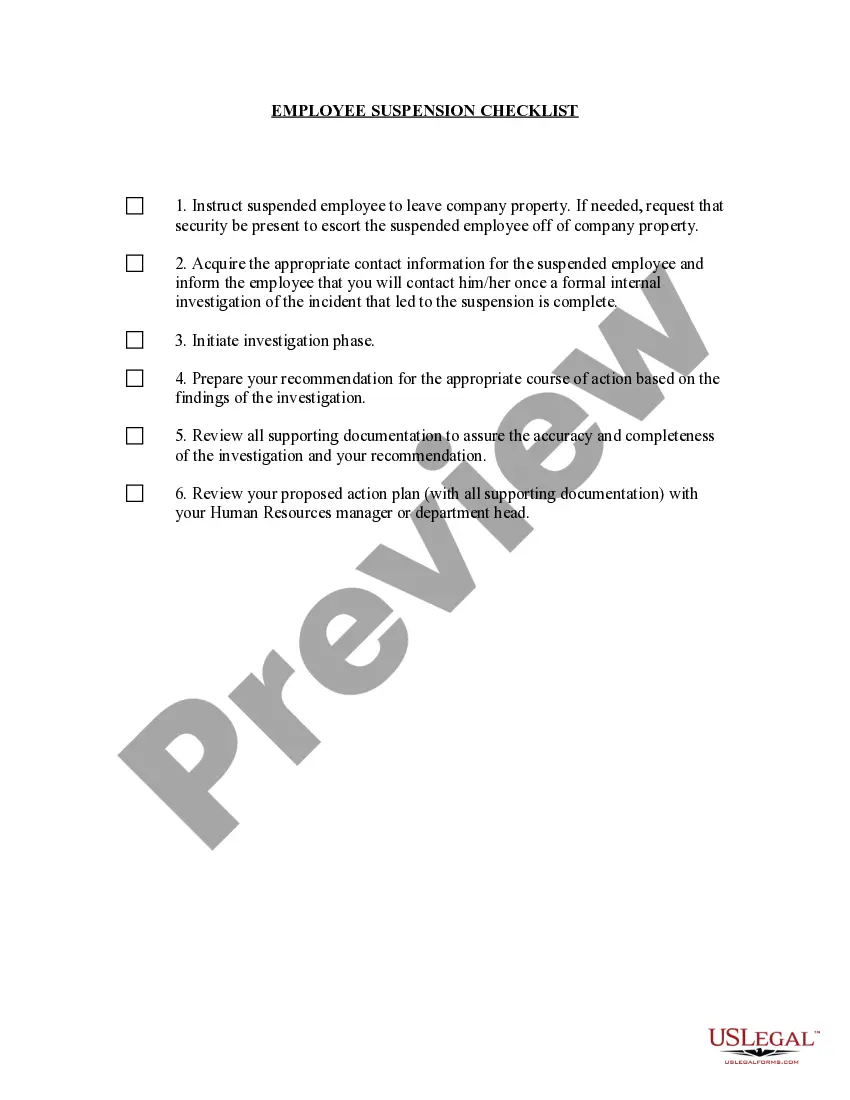
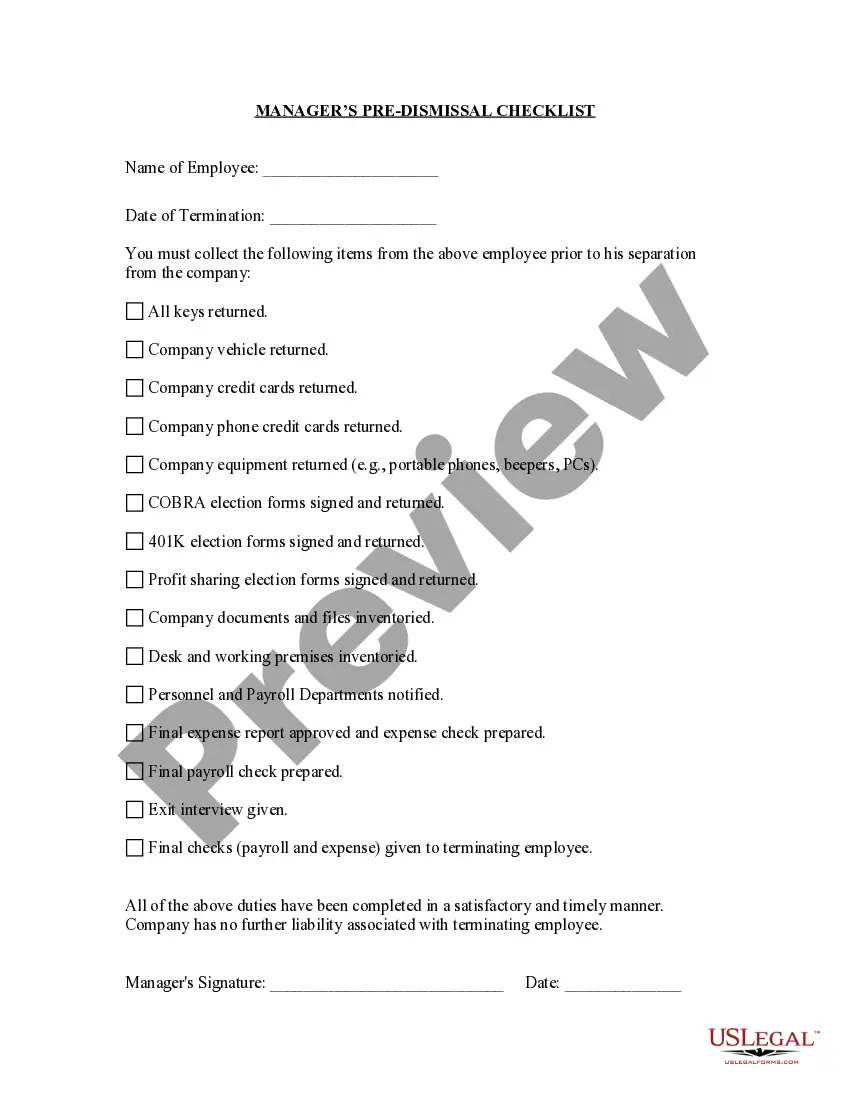
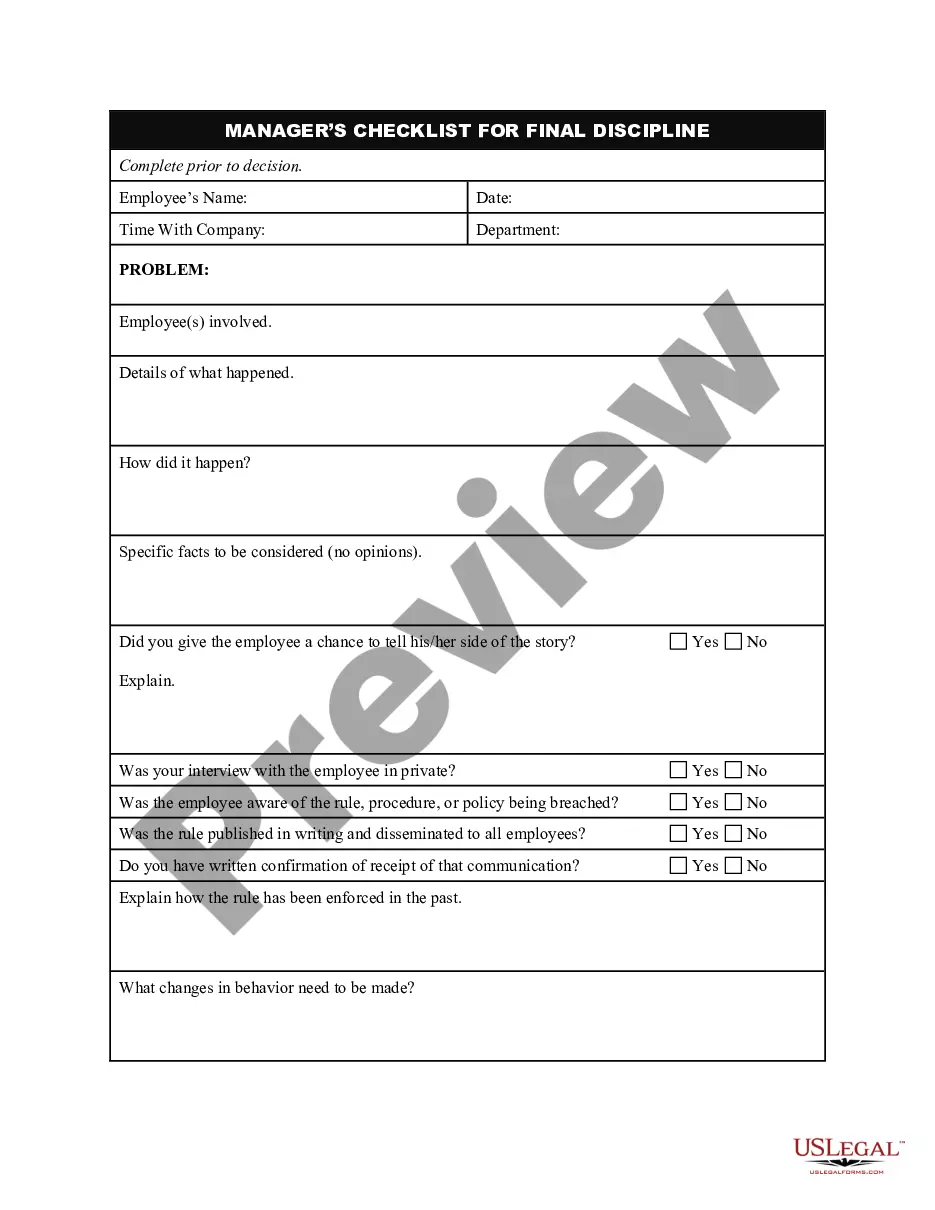
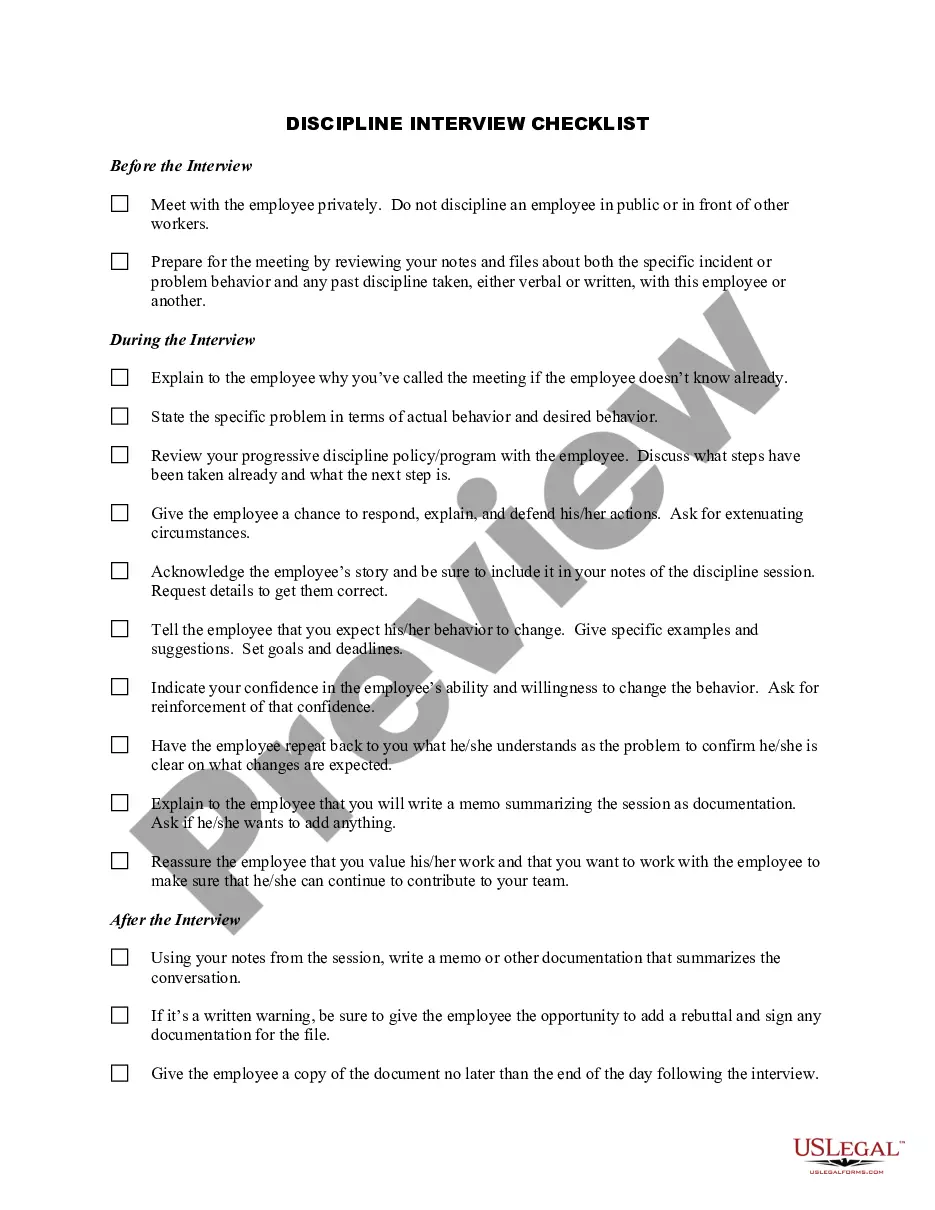
Iowa Employee Suspension Checklist
Description
Get your form ready online
Our built-in tools help you complete, sign, share, and store your documents in one place.
Make edits, fill in missing information, and update formatting in US Legal Forms—just like you would in MS Word.
Download a copy, print it, send it by email, or mail it via USPS—whatever works best for your next step.
Sign and collect signatures with our SignNow integration. Send to multiple recipients, set reminders, and more. Go Premium to unlock E-Sign.
If this form requires notarization, complete it online through a secure video call—no need to meet a notary in person or wait for an appointment.
We protect your documents and personal data by following strict security and privacy standards.

Make edits, fill in missing information, and update formatting in US Legal Forms—just like you would in MS Word.

Download a copy, print it, send it by email, or mail it via USPS—whatever works best for your next step.

Sign and collect signatures with our SignNow integration. Send to multiple recipients, set reminders, and more. Go Premium to unlock E-Sign.

If this form requires notarization, complete it online through a secure video call—no need to meet a notary in person or wait for an appointment.

We protect your documents and personal data by following strict security and privacy standards.
Looking for another form?






How to fill out Employee Suspension Checklist?
Are you presently in a situation where you need documents for either business or personal reasons almost daily.
There are numerous legal document templates available online, but finding ones you can trust is challenging.
US Legal Forms provides thousands of form templates, such as the Iowa Employee Suspension Checklist, designed to meet federal and state requirements.
Once you find the appropriate form, click Get now.
Choose the pricing plan you prefer, fill in the required information to create your account, and complete the payment with your PayPal or credit card.
- If you are already familiar with the US Legal Forms website and have an account, simply Log In.
- After that, you can download the Iowa Employee Suspension Checklist template.
- If you do not possess an account and wish to start using US Legal Forms, follow these steps.
- Obtain the form you need and ensure it is for the correct city/county.
- Use the Preview button to review the form.
- Check the description to confirm that you have selected the correct form.
- If the form isn’t what you’re looking for, use the Search field to find the document that meets your needs.
Form popularity
FAQ
6 Ways to Come Back from a Suspension Like a BossCommunicate professionally and responsibly with your employer throughout your suspension.Clearly define expectations with your employer before your return to work.Avoid even a suggestion of misconduct.Know your rights.Be apologetic where appropriate.More items...?
When an employee has been accused of gross misconduct or some other serious disciplinary matter, the employer will usually suspend the employee on full pay pending the outcome of the investigation or disciplinary process. The company's disciplinary policy will typically reserve the right to do this.
Suspension means the employee still has a job, and discharge or termination means she does not.
You can be suspended if you are being investigated for misconduct, for health or safety reasons, for example, because you are pregnant. Suspension is often part of an organisation's disciplinary procedure, to allow an investigation to take place. Employees can be suspended for medical or health and safety reasons.
Suspensions have a detrimental impact on the affected employee and may prejudice his or her reputation, advancement, job security and fulfilment. Suspensions must therefore be based on substantive reasons and fair procedures must be followed before employees are suspended.
Suspension means the employee still has a job, and discharge or termination means she does not.
Employee suspension is a step in the progressive discipline process that removes an employee from the workplace when performance issues, misconduct, or serious incidents necessitate a review and decision about retaining the employee.
A suspended employee remains in your employment but does not attend your place of work or engage in any work from home. In most circumstances, the employee should be paid in full and receive the same benefits during a period of suspension.
This would enable the employee to bring a claim in the employment tribunal. An employer has to have reasonable and proper cause to suspend you. It may be acting unreasonably (and in breach of contract) where the disciplinary allegation against you isn't credible.
Suspension is considered as an administrative penalty when an employee commits several infractions of the company policies or code of conduct such as repeated absences, repeated tardiness or other similar acts. It may also be resorted to when an employee committed gross or habitual negligence of his/her work.