Iowa Checklist for Remedying Identity Theft of Deceased Persons
Description
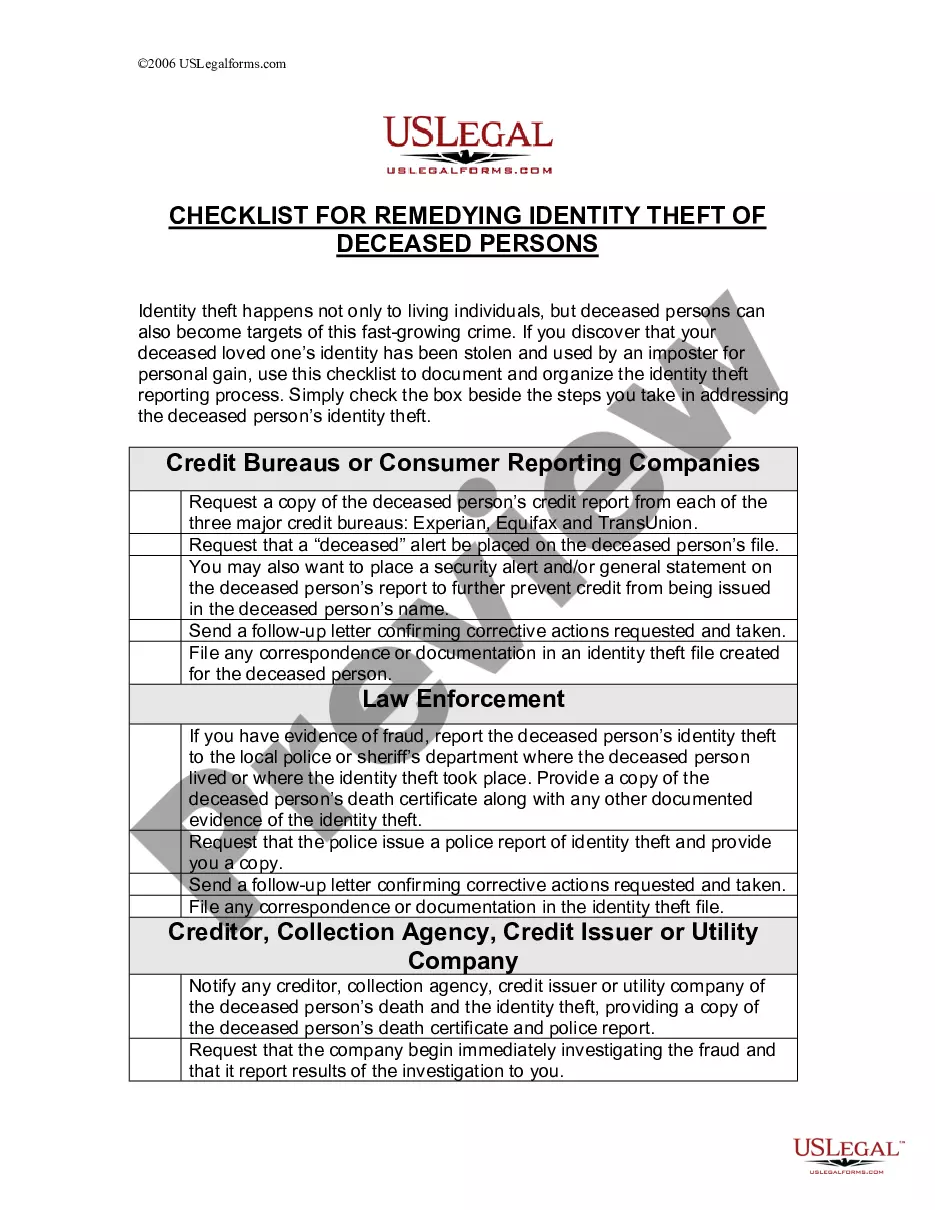
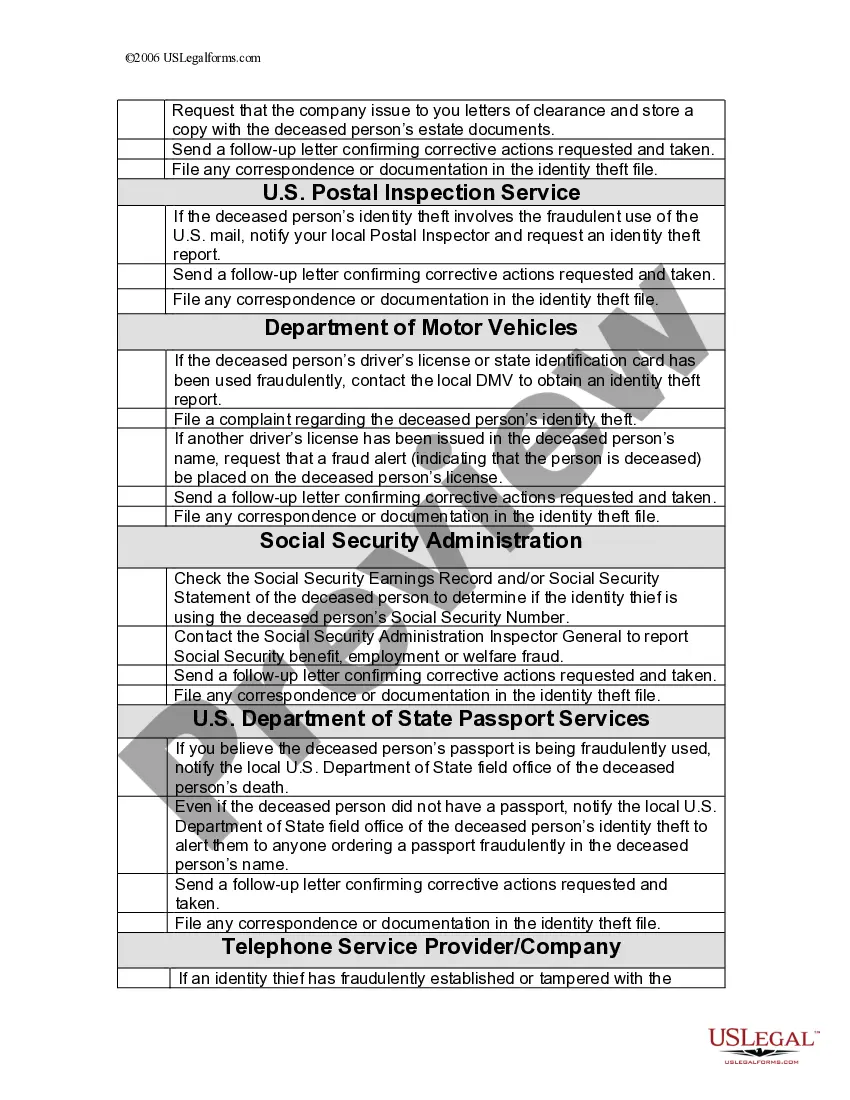
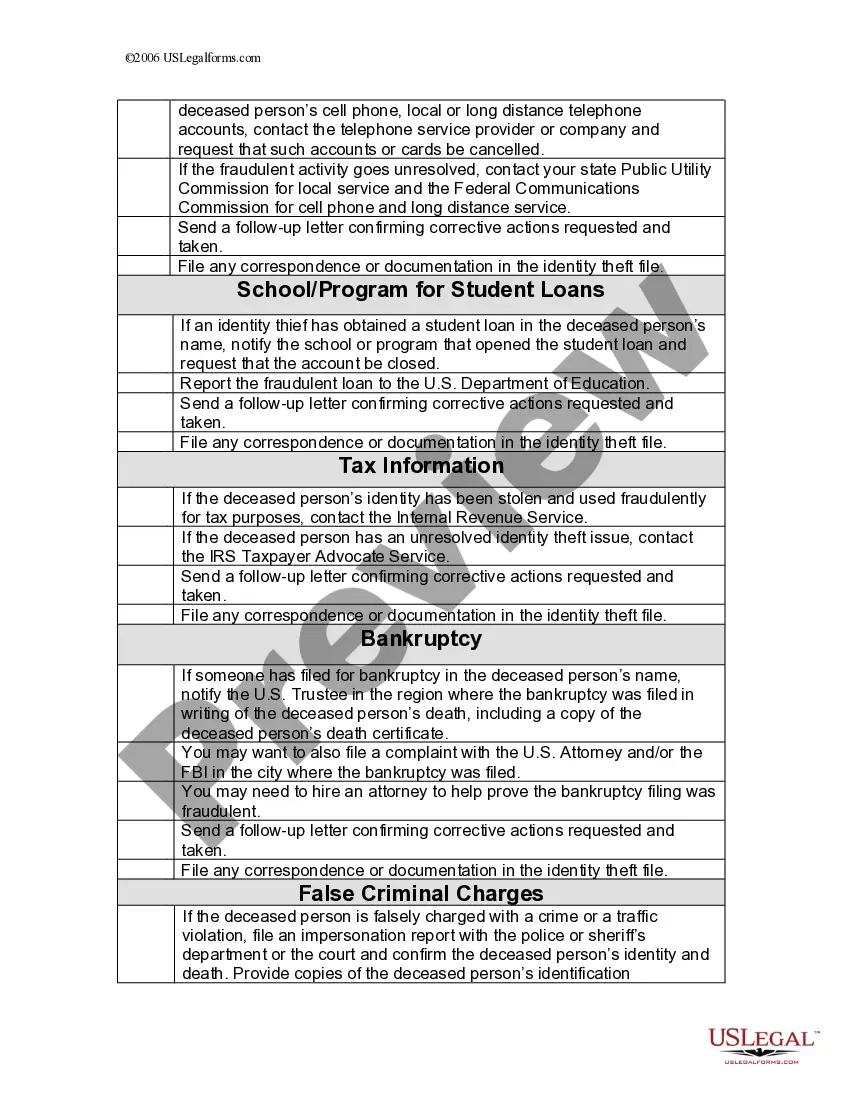
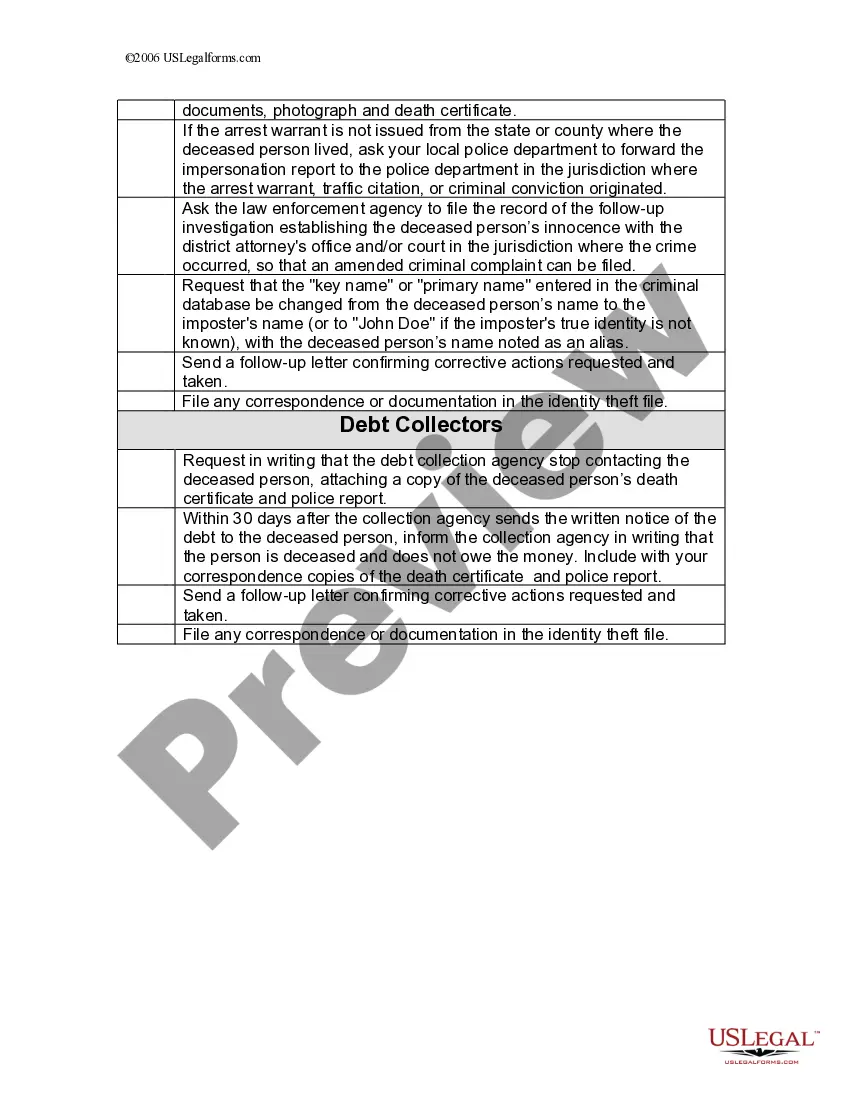
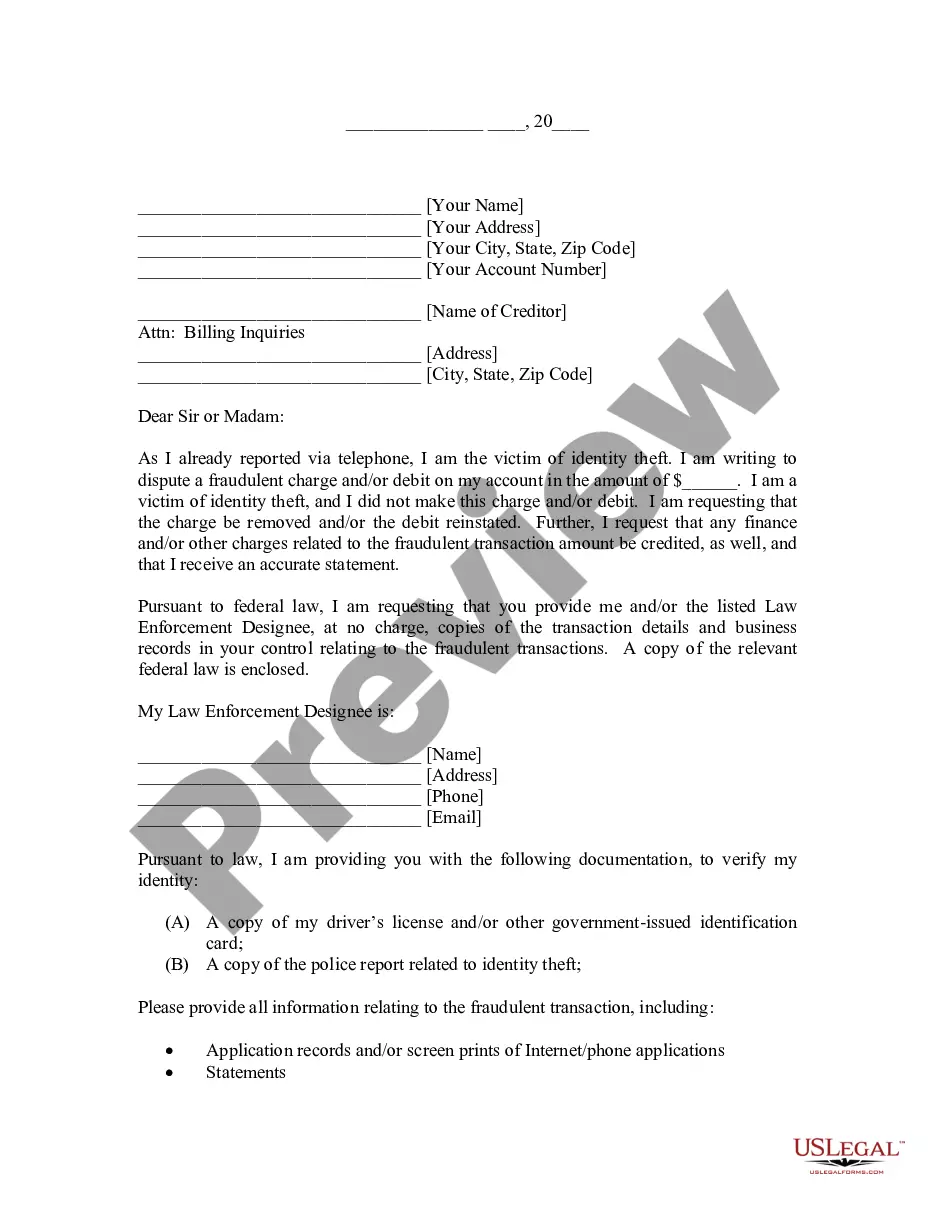
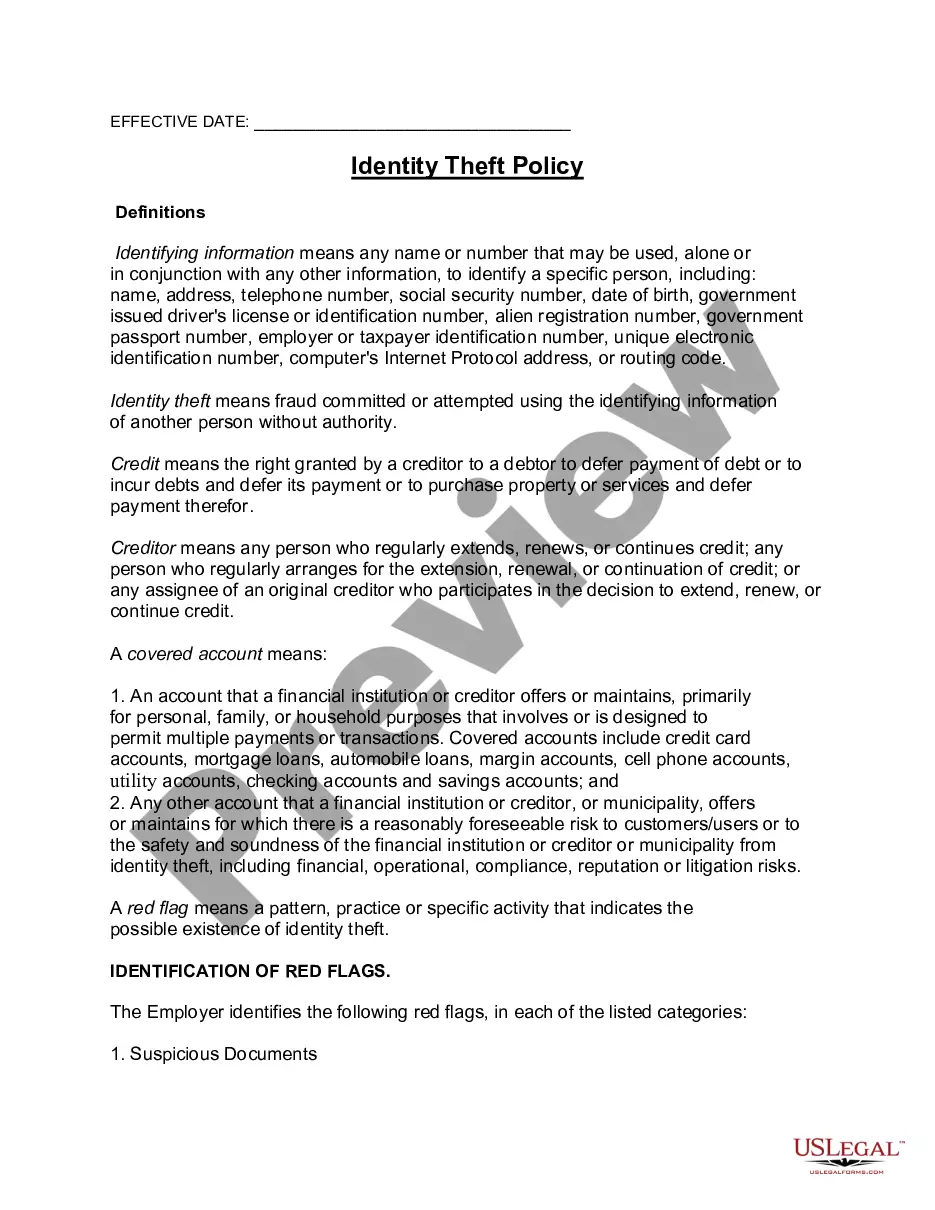
How to fill out Checklist For Remedying Identity Theft Of Deceased Persons?
US Legal Forms - one of the largest collections of legal templates in the United States - offers a broad selection of legal document formats that you can obtain or print. By utilizing the site, you can discover countless templates for business and personal purposes, organized by categories, states, or keywords. You can locate the most recent versions of templates like the Iowa Checklist for Addressing Identity Theft of Deceased Individuals within moments.
If you possess a subscription, Log In and obtain the Iowa Checklist for Addressing Identity Theft of Deceased Individuals from the US Legal Forms library. The Download button will appear on each document you view. You can access all previously acquired templates in the My documents section of your account.
If you are looking to use US Legal Forms for the first time, here are straightforward tips to help you get started: Make sure you have selected the correct document for your city/region. Click the Preview button to review the document's content. Check the document summary to ensure you have chosen the right form. If the document doesn’t meet your requirements, use the Search box at the top of the screen to find one that does.
Access the Iowa Checklist for Addressing Identity Theft of Deceased Individuals with US Legal Forms, the most extensive collection of legal document templates. Utilize a wide array of professional and state-specific templates that meet your business or personal requirements.
- If you are satisfied with the form, confirm your choice by clicking the Purchase now button.
- Then, select the pricing plan you prefer and provide your information to register for an account.
- Process the transaction. Use your Visa or Mastercard or PayPal account to complete the transaction.
- Choose the format and download the document to your device.
- Make edits. Fill out, modify, and print and sign the downloaded Iowa Checklist for Addressing Identity Theft of Deceased Individuals.
- Every format you added to your account has no expiration date and is yours forever. Therefore, if you want to download or print another copy, simply visit the My documents section and click on the document you need.
Form popularity
FAQ
File a police report Family identity theft is not okay; it's still a crime. If you're a victim, and there is substantial damage, going to the police might be the only way to get reimbursement. You can also help ensure this doesn't happen to someone else. Visit a local law enforcement office to file a police report.
File a report with your local police department. Place a fraud alert on your credit report. ... Consumer Reporting Agencies (CRA's) Close the accounts that you know or believe have been tampered with or opened fraudulently. ... Report the theft to the Federal Trade Commission. ... File a police report.
Identity theft can victimize the dead. An identity thief's use of a deceased person's Social Security number may create problems for family members. This type of identity theft also victimizes merchants, banks, and other businesses that provide goods and services to the thief.
Follow these tips to reduce the risk of a deceased person from having their identity stolen: Send copies of the death certificate to each credit reporting bureau, asking them to put a ?deceased alert? on the credit reports. Review the deceased taxpayer's credit report for questionable credit card activity.
? Iowa law defines Identity theft as follows: A person commits the crime of Identity Theft if the person fraudulently uses or attempts to fraudulently use identification information of another person, with the intent to obtain credit, property, services, or other benefit. Iowa Code Section 715A. 8.
Deceased family member identity theft, also known as ghosting, occurs when someone uses the personal information of a deceased person to commit fraud. This can include opening new credit accounts, applying for loans or making other financial transactions in the deceased person's name.
Identity Theft of a Deceased Person Identity thieves can get personal information about deceased individuals by reading obituaries, stealing death certificates, or searching genealogy websites that sometimes provide death records from the Social Security Death Index.
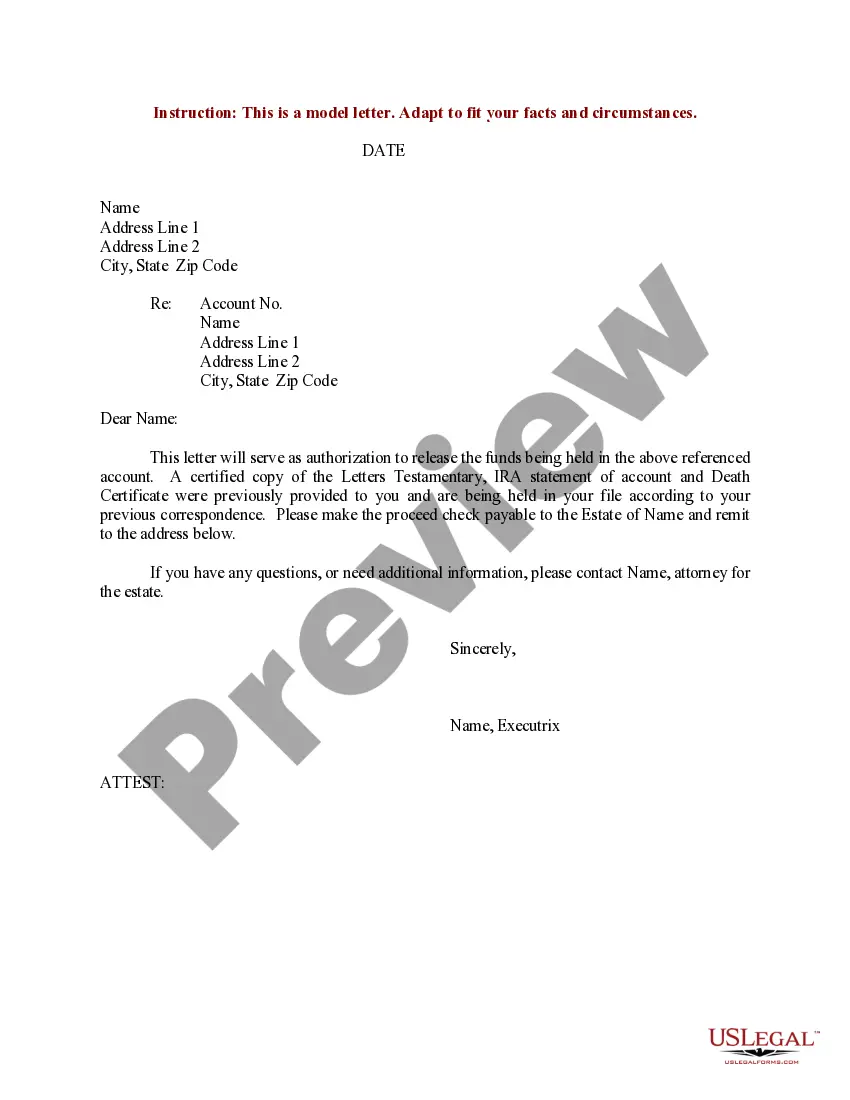
Send a written notice to all financial institutions where the deceased had an account instructing them to close all individual accounts and remove the deceased's name from joint accounts: As soon as you receive the certified copies of the death certificate, send a letter and a certified copy to each of the financial ...