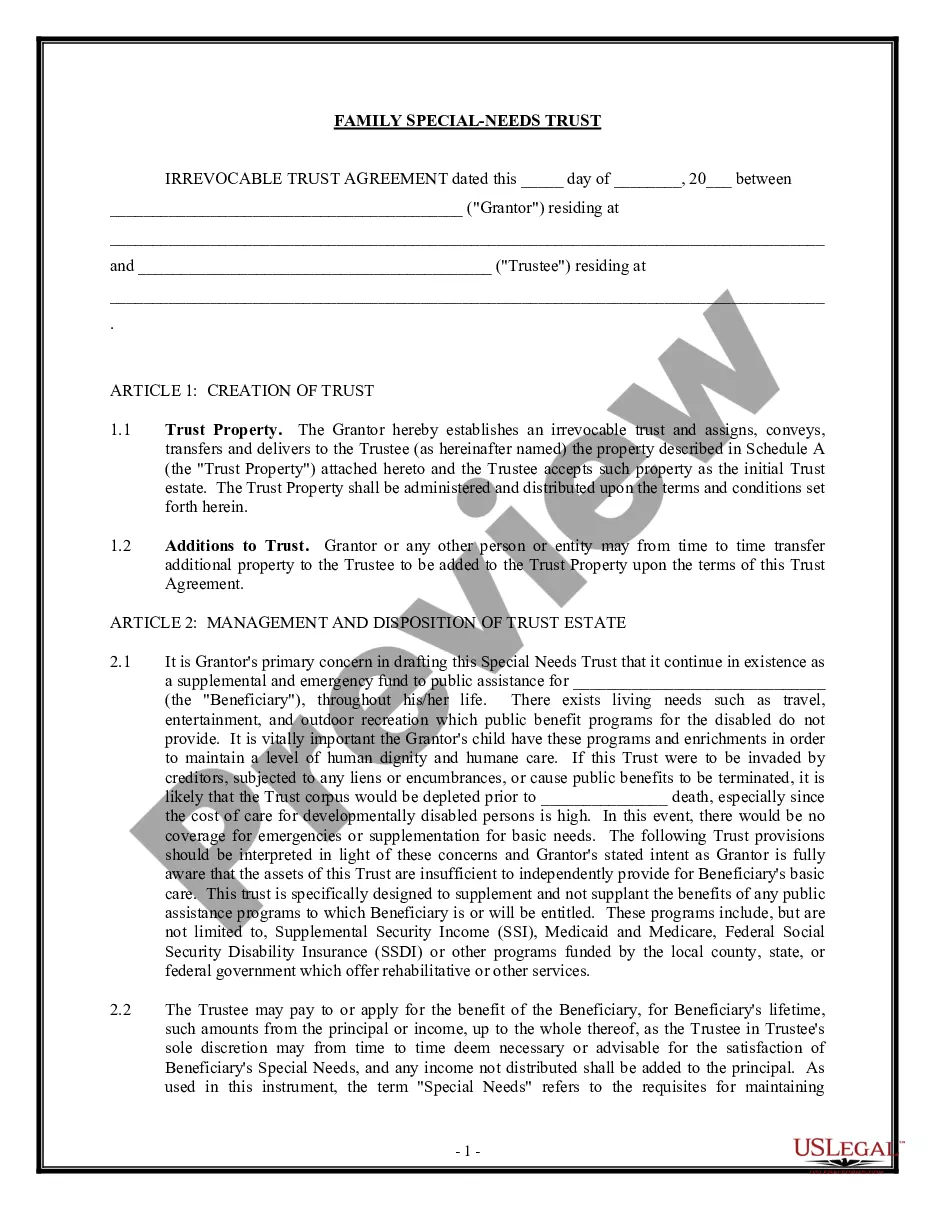
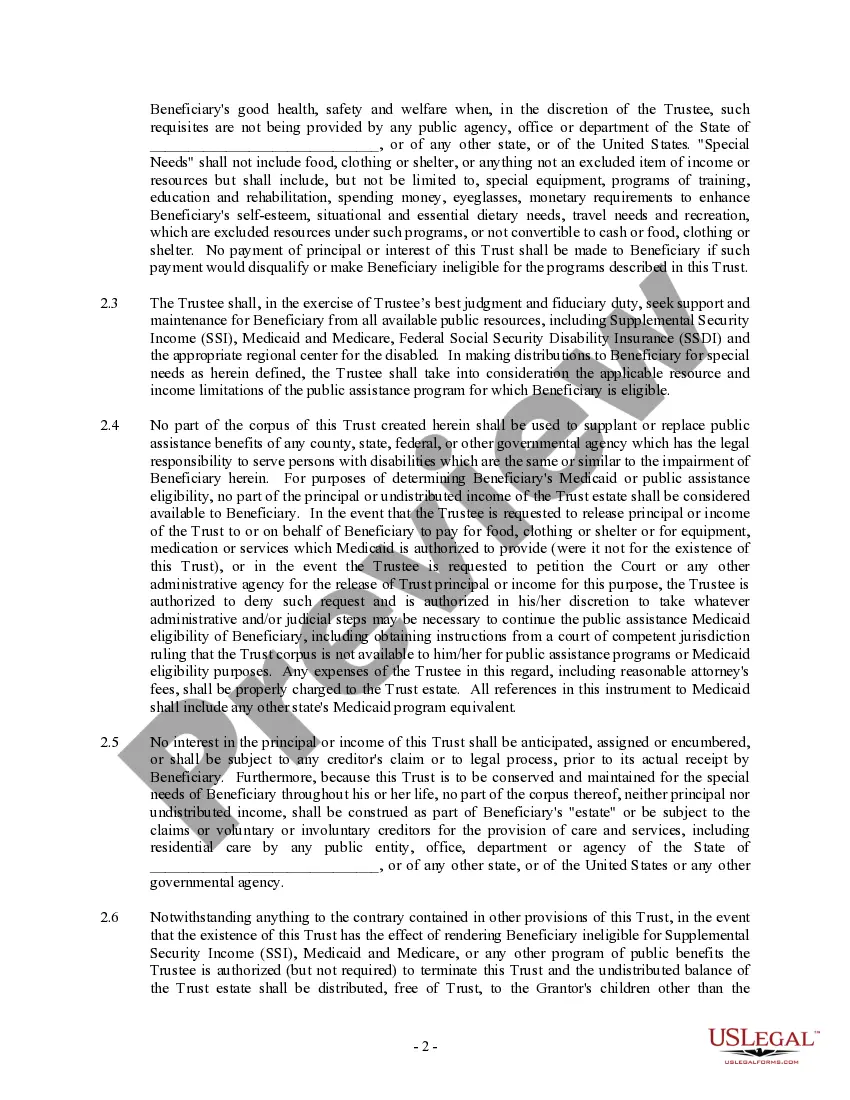
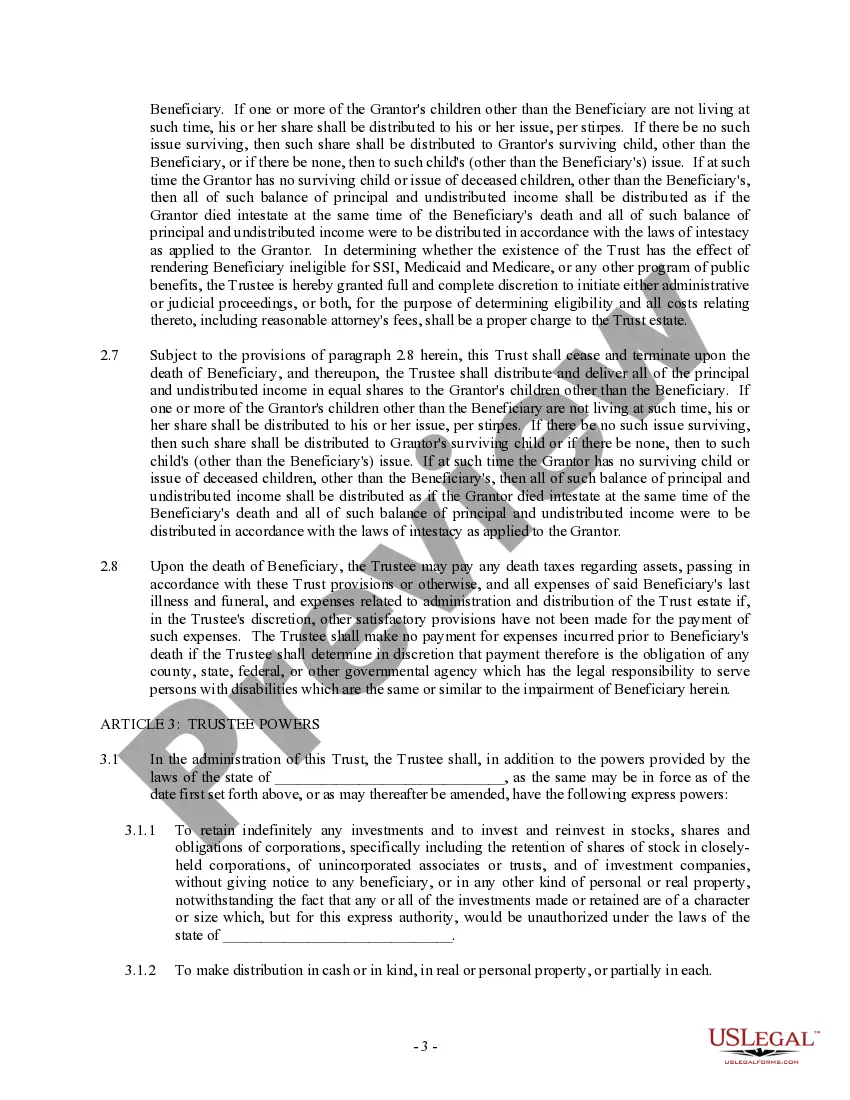
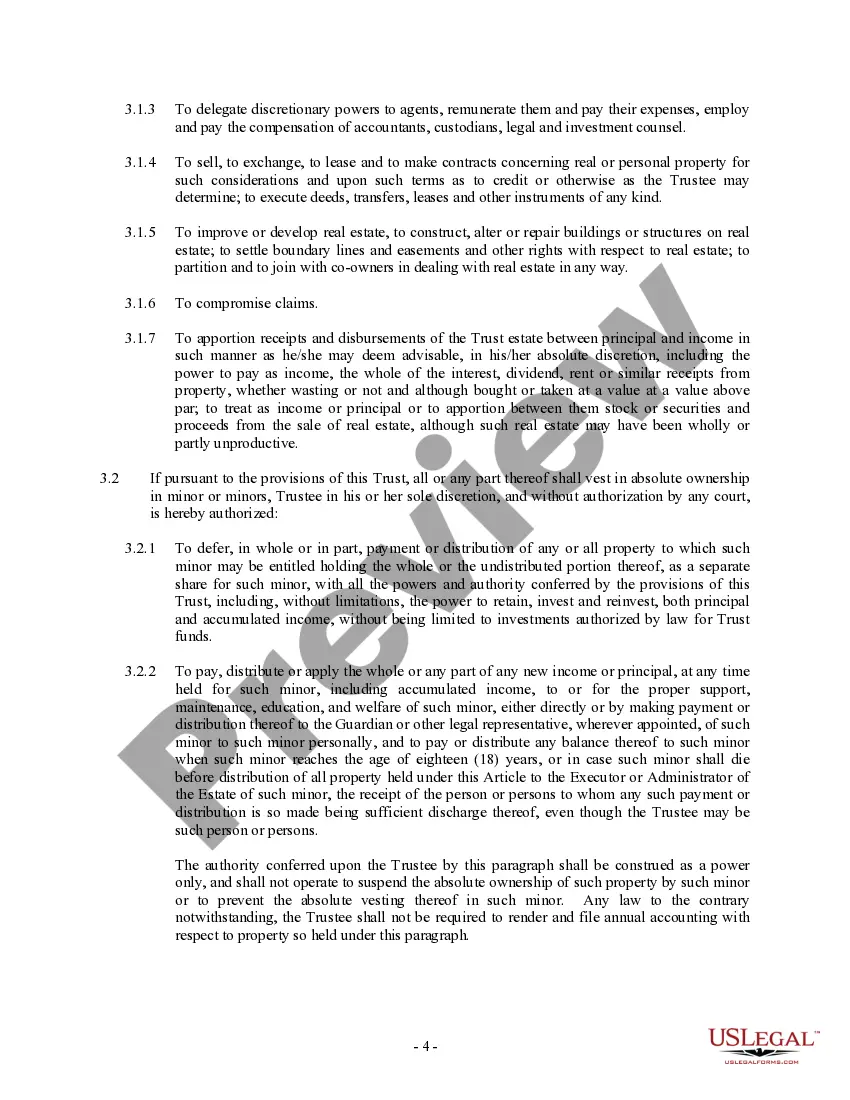
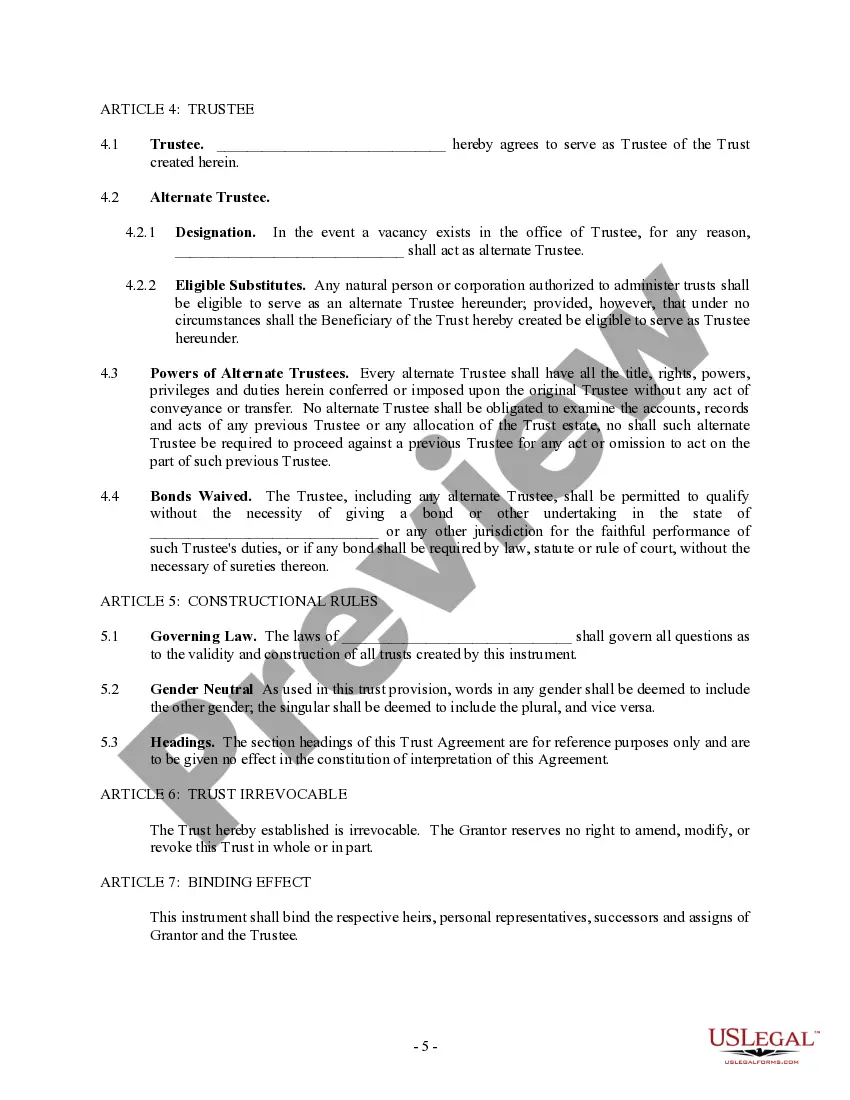
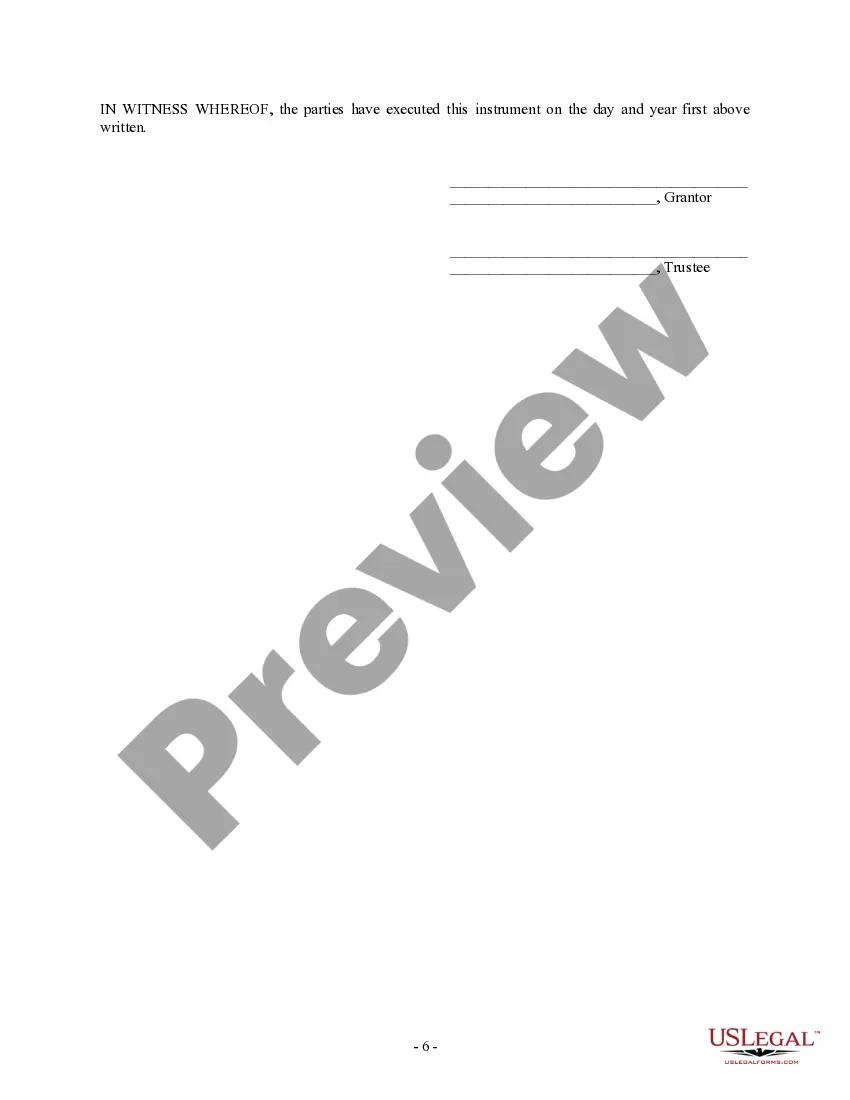
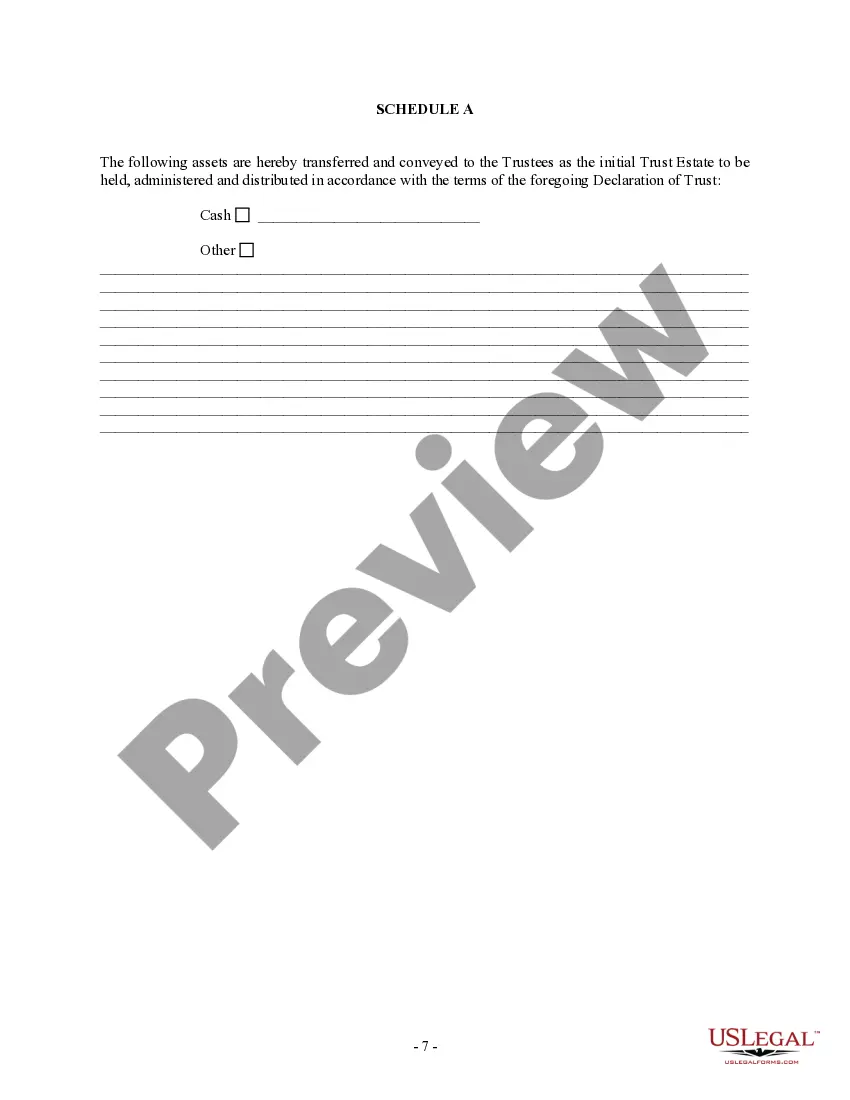
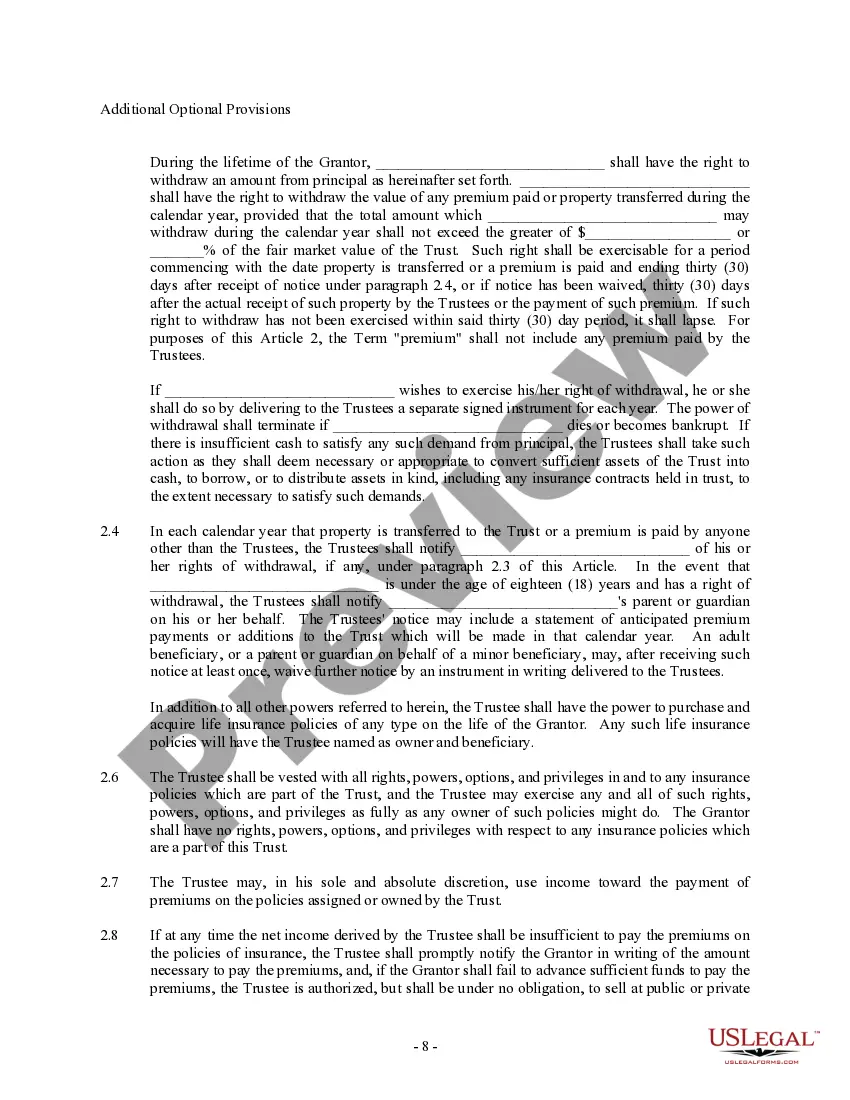
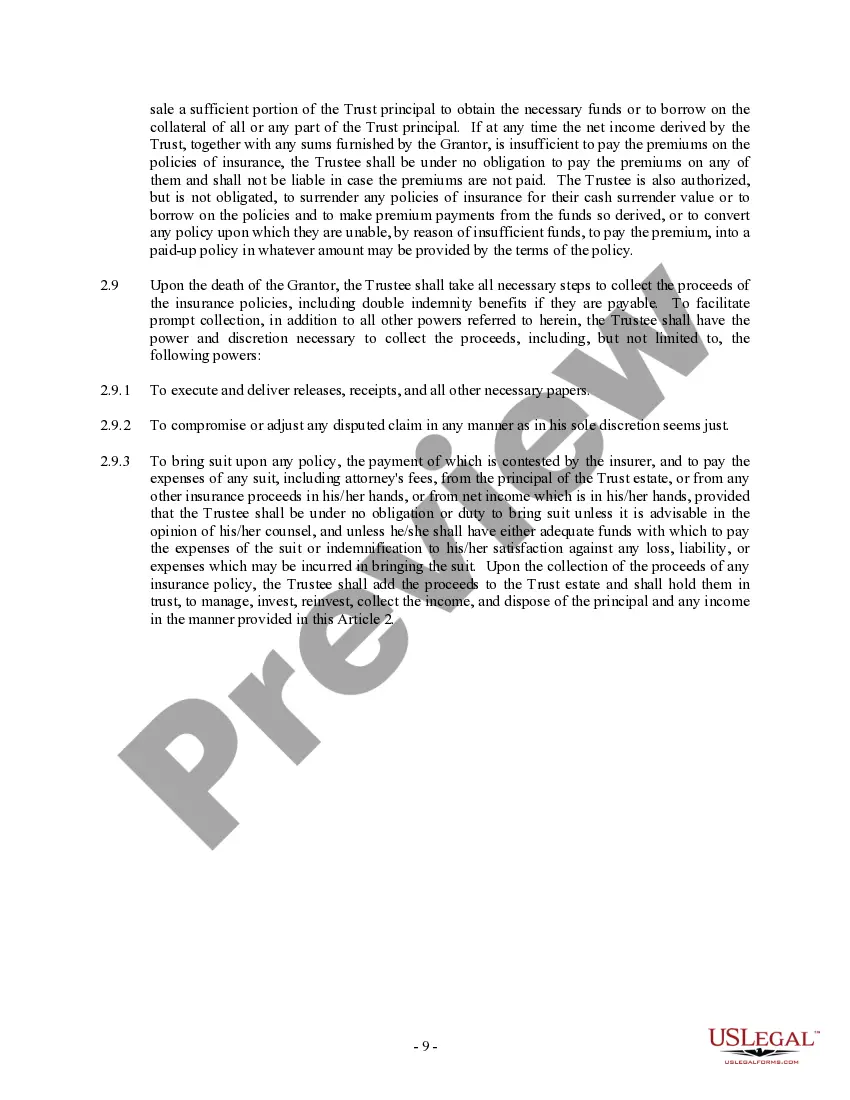
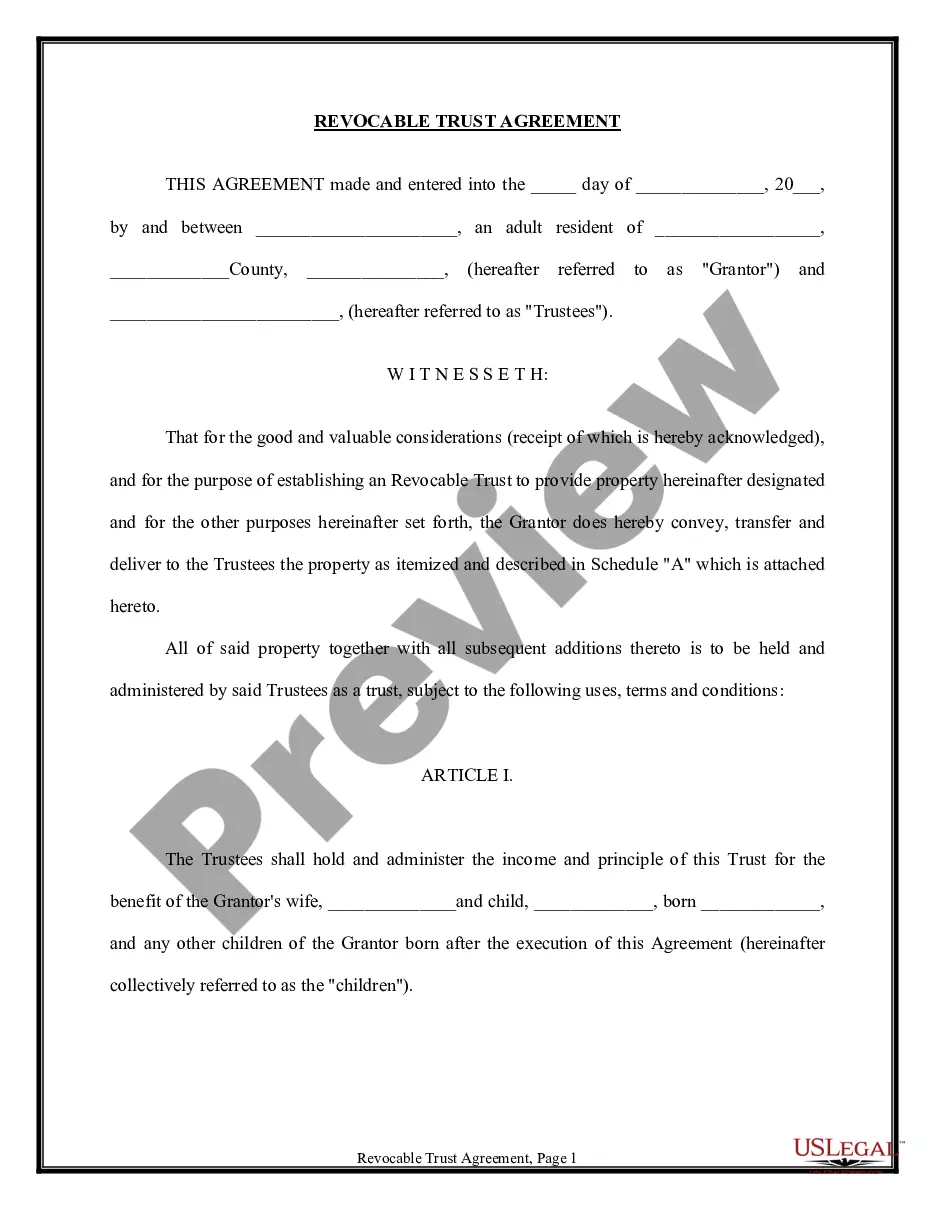
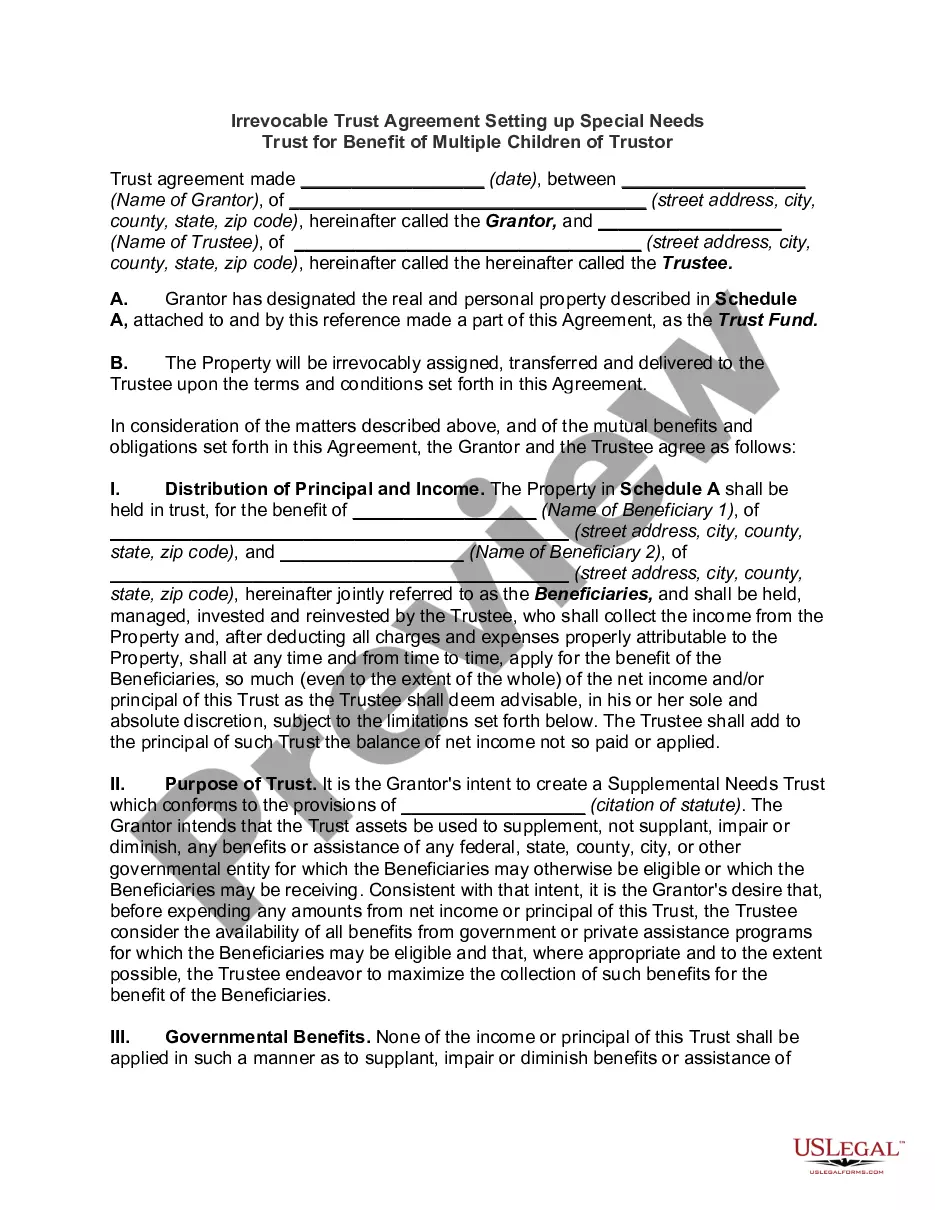
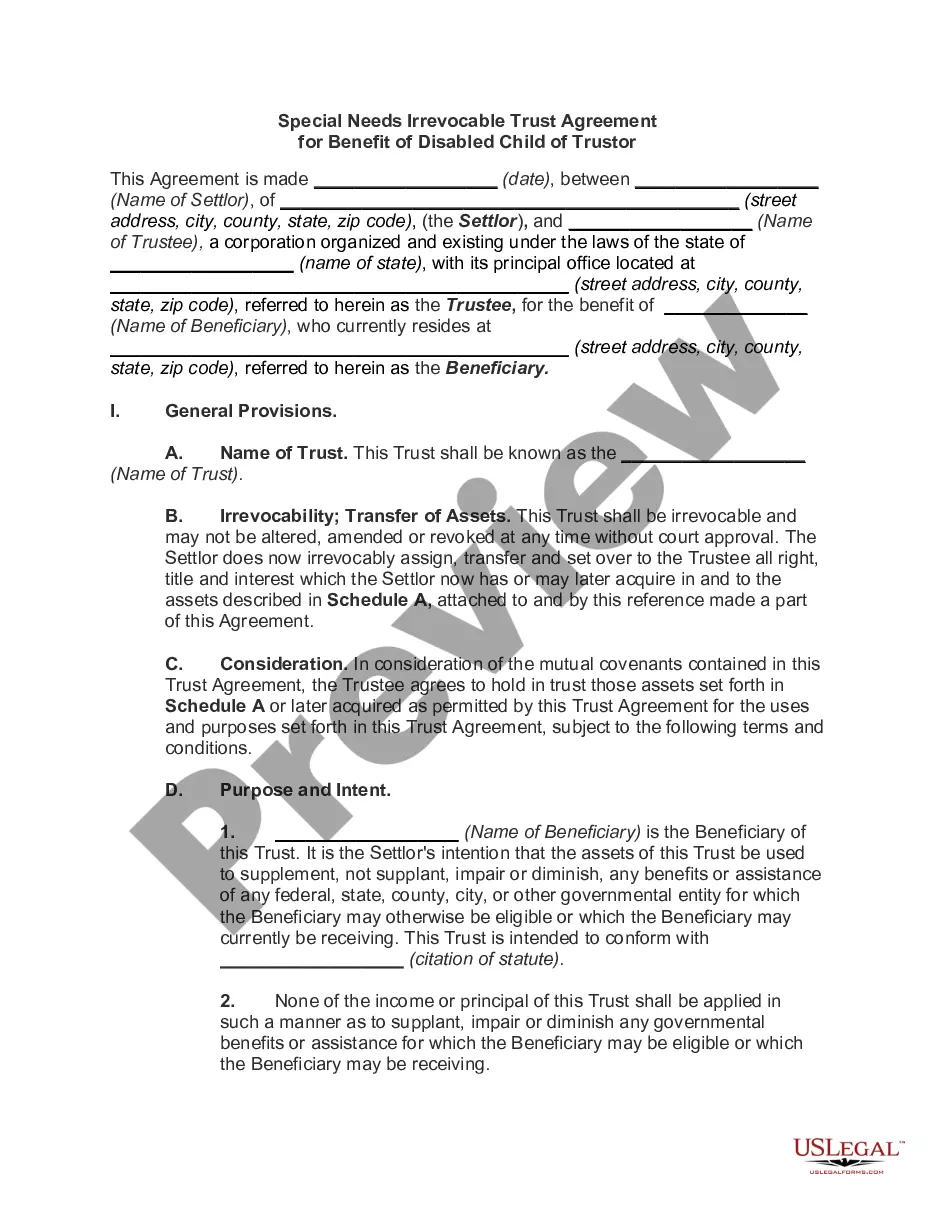
The grantor establishes an irrevocable trust and assigns, conveys, transfers and delivers to the trustee certain property and the trustee accepts such property as the initial trust estate. It is the grantor's primary concern that the trust continue in existence as a supplemental and emergency fund to public assistance for the sake of the beneficiary throughout his/her life. Other provisions of the trust agreement include: the management and disposition of the trust estate, trustee powers, and additional optional clauses.
Iowa Trust Agreement - Family Special Needs
935 downloads

Reviewed by
Description
Free preview
Get your form ready online
Our built-in tools help you complete, sign, share, and store your documents in one place.
Built-in online Word editor
Make edits, fill in missing information, and update formatting in US Legal Forms—just like you would in MS Word.
Export easily
Download a copy, print it, send it by email, or mail it via USPS—whatever works best for your next step.
E-sign your document
Sign and collect signatures with our SignNow integration. Send to multiple recipients, set reminders, and more. Go Premium to unlock E-Sign.
Notarize online 24/7
If this form requires notarization, complete it online through a secure video call—no need to meet a notary in person or wait for an appointment.
Store your document securely
We protect your documents and personal data by following strict security and privacy standards.

Make edits, fill in missing information, and update formatting in US Legal Forms—just like you would in MS Word.

Download a copy, print it, send it by email, or mail it via USPS—whatever works best for your next step.

Sign and collect signatures with our SignNow integration. Send to multiple recipients, set reminders, and more. Go Premium to unlock E-Sign.

If this form requires notarization, complete it online through a secure video call—no need to meet a notary in person or wait for an appointment.

We protect your documents and personal data by following strict security and privacy standards.
Looking for another form?
How to fill out Trust Agreement - Family Special Needs?
US Legal Forms - one of the largest collections of legal documents in the United States - offers a range of legal form templates that you can download or print.
By utilizing the website, you can access thousands of forms for business and personal needs, organized by type, state, or keywords. You can find the most recent versions of forms like the Iowa Trust Agreement - Family Special Needs within minutes.
If you currently hold a subscription, Log In and obtain the Iowa Trust Agreement - Family Special Needs from your US Legal Forms library. The Download option will appear on every form you view. You have access to all previously downloaded forms within the My documents section of your account.
Complete the transaction. Use your credit card or PayPal account to finalize the transaction.
Select the format and download the form onto your device. Make edits. Complete, modify, and print and sign the downloaded Iowa Trust Agreement - Family Special Needs. Each template you save to your account does not expire and is yours indefinitely. Therefore, if you wish to download or print another copy, simply navigate to the My documents section and click on the form you need. Access the Iowa Trust Agreement - Family Special Needs with US Legal Forms, one of the most extensive collections of legal document templates. Utilize thousands of professional and state-specific templates that meet your business or personal needs and requirements.
- Ensure you have selected the correct form for your city/county.
- Click the Preview option to check the form's details.
- Review the form description to ensure you have chosen the correct one.
- If the form does not meet your requirements, use the Search box at the top of the screen to find one that does.
- Once you are satisfied with the form, confirm your choice by clicking the Buy now button.
- Then, choose the payment plan you prefer and provide your details to register for an account.
Form popularity
FAQ
The primary difference between a standard trust and a special needs trust lies in their purpose and regulations. A standard trust manages and distributes assets according to the grantor's wishesnversely, a special needs trust is specifically designed to benefit individuals with disabilities while preserving their eligibility for government assistance. When creating an Iowa Trust Agreement - Family Special Needs, understanding these distinctions is essential for effective planning.
A special needs trust offers many advantages, but it also has some downsides. For example, maintaining the trust can involve administrative costs, which may consume resources over time. Furthermore, improper management or failure to comply with regulations can endanger the beneficiary's government benefits, making it vital to adhere to best practices when forming an Iowa Trust Agreement - Family Special Needs.
The compensation for a trustee of a special needs trust can vary widely, typically ranging from 1% to 5% of the trust assets annually. This rate often depends on the complexity of the trust and the level of involvement required. When establishing your Iowa Trust Agreement - Family Special Needs, it’s crucial to consider reasonable trustee fees to ensure the trust remains financially viable while serving its intended purpose.
One significant mistake parents make is failing to clearly outline the terms and intentions behind the trust. Inadequate communication can lead to misunderstandings and disputes among family members. To avoid this pitfall in an Iowa Trust Agreement - Family Special Needs, parents should work closely with legal professionals to draft precise guidelines that cater to their child's unique needs.
The maximum amount that can be placed in a special needs trust varies by state and the specific needs of the beneficiary. In many cases, it's essential to structure the trust to not exceed certain limits that could jeopardize government benefits. When creating an Iowa Trust Agreement - Family Special Needs, consulting with a legal expert can ensure the trust remains compliant while providing sufficient funds.
While discretionary trusts offer flexibility in managing distributions, they also come with potential downsides. One major concern is the lack of certainty for beneficiaries regarding their benefits. Additionally, if the trustee is not diligent, the beneficiaries may not receive adequate support, which can be challenging, especially when navigating the complexities of an Iowa Trust Agreement - Family Special Needs.
In Iowa, a will does not have to be notarized to be valid; however, notarization can help confirm the authenticity of the document. While a notarized will may streamline the probate process, it is not a strict requirement. It's vital to create a comprehensive estate plan that may include an Iowa Trust Agreement - Family Special Needs to provide the best support for your family.
Iowa trust laws govern how trusts are created, managed, and dissolved. They establish the rights and responsibilities of trustees and beneficiaries. Familiarity with these laws is essential when drafting an Iowa Trust Agreement - Family Special Needs, as compliance ensures that the trust serves its intended purpose effectively and legally.
A will distributes your assets after death, whereas a trust can begin managing those assets during your lifetime. Trusts generally avoid probate, providing quicker access to funds and privacy for your beneficiaries. Understanding these differences is crucial when creating an Iowa Trust Agreement - Family Special Needs, as it offers various benefits that a traditional will may not.
Setting up a special needs trust in Iowa involves creating a document that specifies how funds will support the beneficiary without compromising their eligibility for government benefits. You should detail the purpose of the trust and include provisions for managing the assets. Engaging with a professional experienced in Iowa Trust Agreements - Family Special Needs can help tailor the trust to your loved one’s specific needs and circumstances.