Iowa Living Trust Property Record
What this document covers
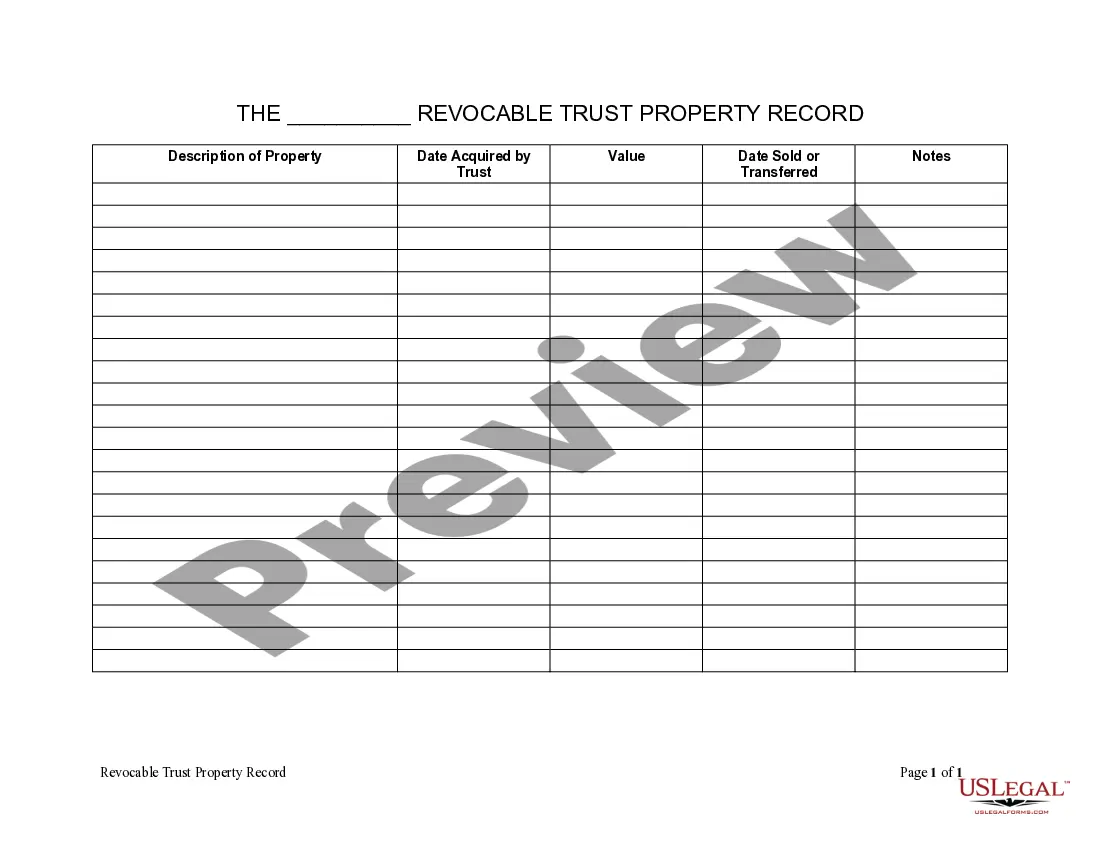
The Living Trust Property Record is a valuable legal document designed to help document and inventory the assets placed within a living trust. This form is crucial for ensuring proper estate planning and management, allowing the trustee to maintain accurate records of all property, including real estate, personal belongings, and intellectual property. Compared to other estate planning documents, this specific form focuses on asset management and tracking during the lifetime of the trust creator, enabling clear oversight and organization of trust assets.
What’s included in this form
- Description of Property: A section to detail each asset held in the trust.
- Date Acquired by Trust: The date when each property was transferred into the trust.
- Value: An estimation or appraised value of each asset at the time it enters the trust.
- Date Sold or Transferred: Information regarding any changes to the ownership status of assets.

Common use cases
The Living Trust Property Record should be used when setting up a living trust or when adding new assets to an existing trust. It is essential for documenting all items placed within the trust to ensure proper management and distribution of assets according to the trust creator's wishes. This form is particularly helpful during estate planning to keep a detailed inventory of all assets, making it easier for beneficiaries and the trustee to handle estate matters effectively.
Who this form is for
- Individuals creating a living trust for their assets and property.
- Trustees responsible for managing the assets within a living trust.
- Beneficiaries seeking transparency regarding the trust assets.
- Families involved in estate planning processes to ensure proper management of their inheritances.
Steps to complete this form
- Identify each asset: List every property you wish to include in the trust.
- Describe the property: Provide a clear description for each item listed.
- Enter acquisition dates: Specify the dates when each asset was transferred to the trust.
- Assign values: Record the current estimated value for each asset.
- Document sales or transfers: Note any dates when assets were sold or transferred elsewhere.
Does this form need to be notarized?
Notarization is generally not required for this form. However, certain states or situations might demand it. You can complete notarization online through US Legal Forms, powered by Notarize, using a verified video call available anytime.
Get your form ready online
Our built-in tools help you complete, sign, share, and store your documents in one place.
Make edits, fill in missing information, and update formatting in US Legal Forms—just like you would in MS Word.
Download a copy, print it, send it by email, or mail it via USPS—whatever works best for your next step.
Sign and collect signatures with our SignNow integration. Send to multiple recipients, set reminders, and more. Go Premium to unlock E-Sign.
If this form requires notarization, complete it online through a secure video call—no need to meet a notary in person or wait for an appointment.
We protect your documents and personal data by following strict security and privacy standards.

Make edits, fill in missing information, and update formatting in US Legal Forms—just like you would in MS Word.

Download a copy, print it, send it by email, or mail it via USPS—whatever works best for your next step.

Sign and collect signatures with our SignNow integration. Send to multiple recipients, set reminders, and more. Go Premium to unlock E-Sign.

If this form requires notarization, complete it online through a secure video call—no need to meet a notary in person or wait for an appointment.

We protect your documents and personal data by following strict security and privacy standards.
Common mistakes to avoid
- Failing to update the record when new assets are added or existing ones are sold.
- Not including necessary details for each asset, such as a complete description.
- Omitting dates of acquisition or sales, leading to confusion over trust assets status.
Benefits of completing this form online
- Easy editing: Modify your form quickly as needed without starting over.
- Accessible: Download and complete the form at your convenience.
- Compliance: Ensure your form meets basic legal requirements for living trusts.
Looking for another form?


Form popularity
FAQ
The owner of a trust is typically the person who created it, known as the grantor or settlor. They have the authority to determine how the assets in the Iowa Living Trust Property Record should be managed and distributed. Once the grantor passes away, the assets transfer to the beneficiaries as specified in the trust. To gain clarity on ownership aspects, using resources from uslegalforms can be beneficial.
Identifying the owner of a trust can be complex, as trusts are designed to protect privacy. In many cases, you will find the trustee's name rather than the grantor listed on public records available in the Iowa Living Trust Property Record. To uncover this information, you may consult legal platforms like uslegalforms, which can provide guidance on navigating trust ownership inquiries.
Yes, beneficiaries have the right to request a copy of the trust. This transparency is crucial for beneficiaries to understand their rights regarding the assets outlined in the Iowa Living Trust Property Record. The trustee typically provides access to the trust document following the grantor’s death. Engaging with uslegalforms can help you comprehend the legal obligations trustees have towards beneficiaries.
You cannot directly look up someone's trust online due to privacy laws. However, you can access certain public records that may offer insight into the Iowa Living Trust Property Record. Often, estate planning documents become part of public records when a trust is funded or property is transferred. You might want to consider using platforms like uslegalforms to help guide you through the process of obtaining necessary documents.
In Iowa, living trusts are generally not recorded like wills. Instead, they are private documents, and the details typically remain confidential unless a specific action triggers public disclosure. However, it is important to maintain an accurate and updated Iowa Living Trust Property Record, especially when managing assets or dealing with beneficiaries. This documentation helps clarify the status and ownership of various properties held in trust.
The best way to put your house in trust involves several key steps. First, create a detailed living trust document that specifies how you want your property managed. Next, prepare a new deed transferring ownership of the house to the trust and record it with the appropriate county. Finally, regularly review your Iowa Living Trust Property Record to ensure all aspects remain aligned with your wishes.
If you don’t file taxes on your trust when required, you may face penalties and interest charges from the IRS. Failure to file can also lead to legal complications, as it signals a lack of compliance with tax regulations. To protect your Iowa Living Trust Property Record and ensure smooth asset management, it is crucial to stay informed about your tax responsibilities. Consulting with a tax advisor can help you avoid these pitfalls.
Depending on the type of trust you have, it may need to file a tax return. A revocable living trust, for example, does not require a separate tax return as its income is reported on your individual tax return. If your Iowa Living Trust Property Record generates income, it is essential to understand your tax obligations clearly. Consulting with a tax professional can provide clarity on your specific situation.
In Iowa, you typically do not need to record a certificate of trust. However, many institutions may require a certificate of trust to verify the authority of the trustee before allowing transactions. A well-structured Iowa Living Trust Property Record can make these transactions smoother, ensuring that property transfers or asset management occur without unnecessary delays.
Generally, you do not need to file your living trust with the court in Iowa. Living trusts are private documents, and there is no requirement to register them unless you are dealing with property that needs to be transferred to a trust. However, it's essential to keep your Iowa Living Trust Property Record updated and organized to reflect any changes or additions to your assets.