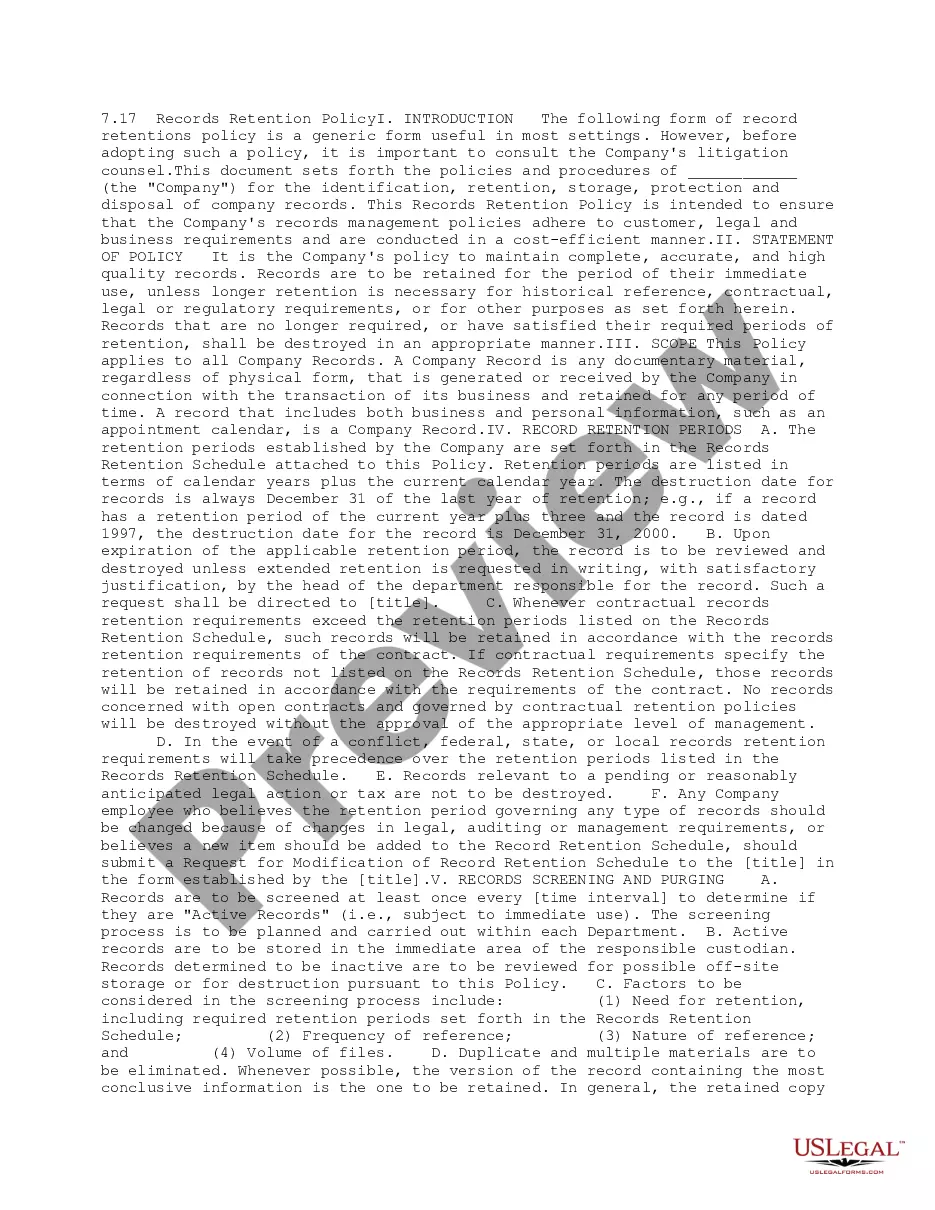
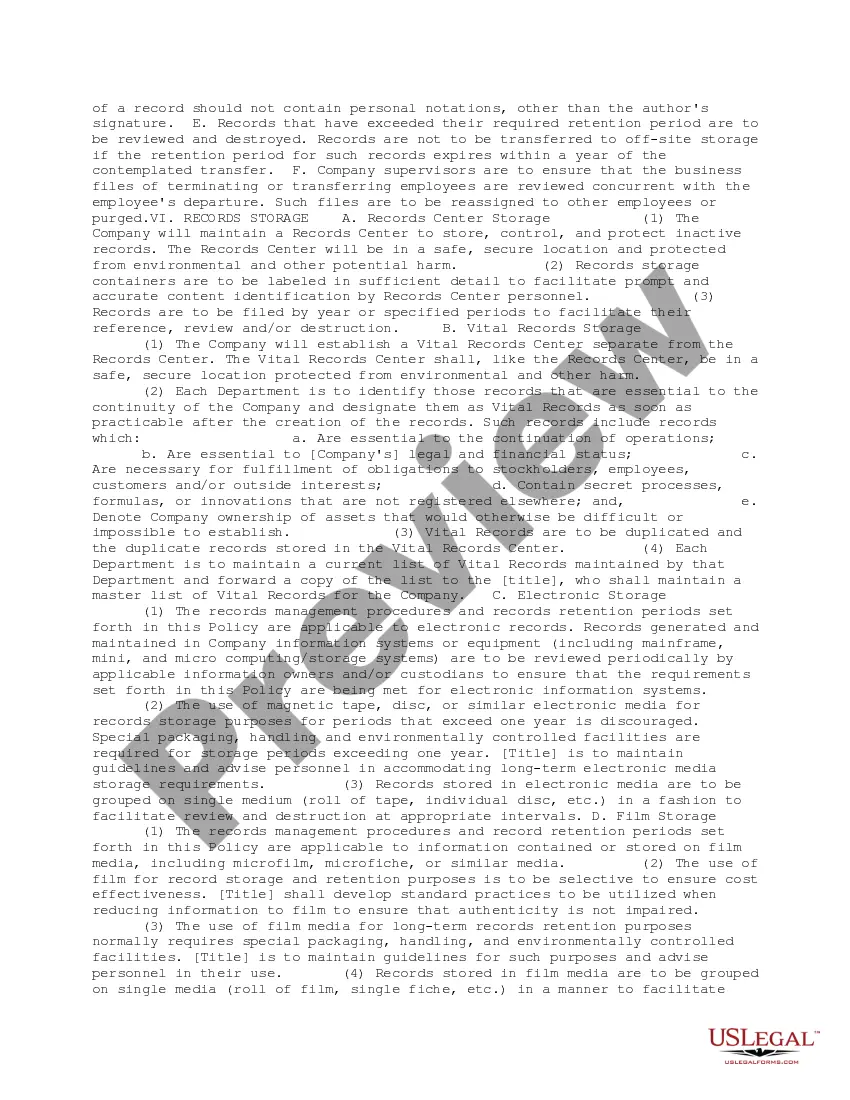
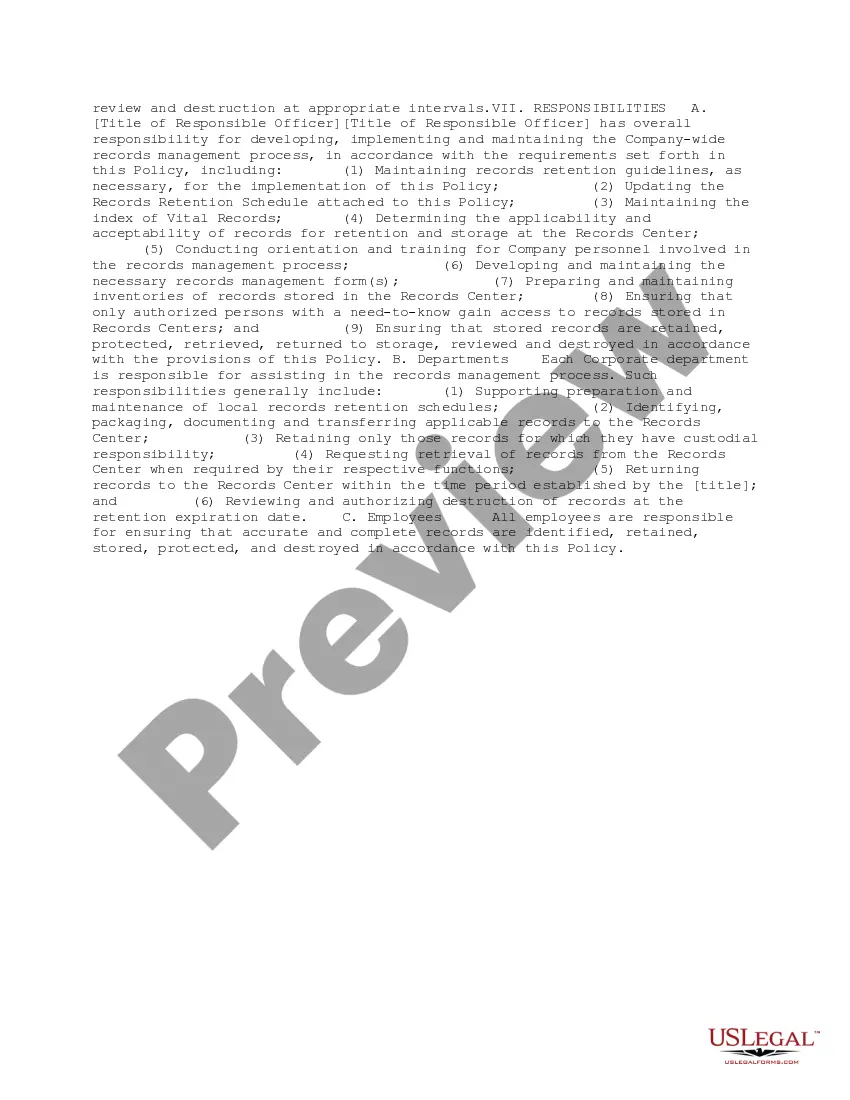
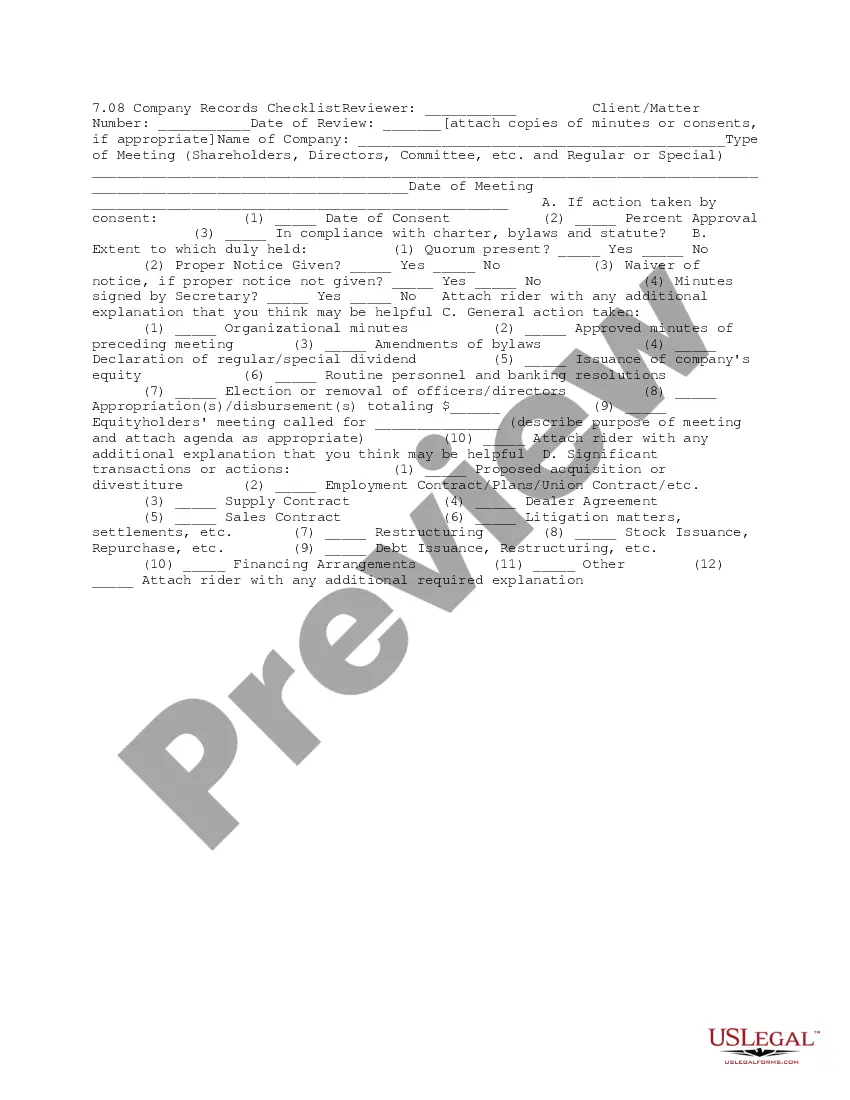
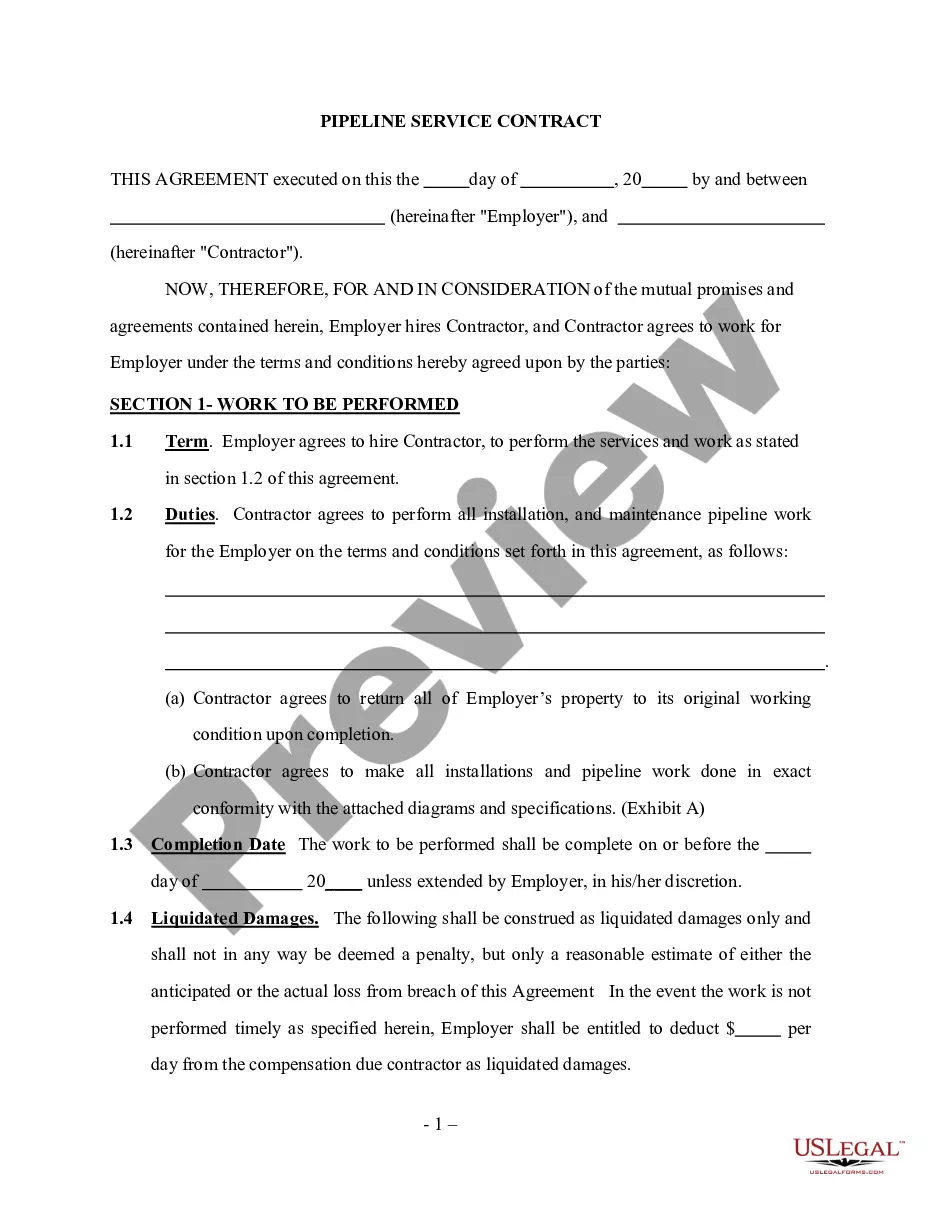
This due diligence form entails policies and procedures for the identification, retention, storage, protection and disposal of company records. This Records Retention Policy is intended to ensure that the company's records management policies adhere to customer, legal and business requirements and are conducted in a cost-efficient manner.
Hawaii Records Retention Policy
Category:
State:
Multi-State
Control #:
US-DD0717
Format:
Word;
PDF;
Rich Text
Instant download
Description
Free preview
How to fill out Records Retention Policy?
US Legal Forms - one of the largest collections of legal documents in the United States - offers a variety of legal form templates that you can download or print.
By using the website, you can access thousands of forms for business and personal purposes, organized by categories, states, or keywords. You can find the latest versions of forms like the Hawaii Records Retention Policy in just minutes.
If you already have a subscription, Log In and obtain the Hawaii Records Retention Policy from the US Legal Forms library. The Acquire button will appear on every form you view. You can access all previously downloaded forms in the My documents section of your account.
Complete the purchase. Use your credit card or PayPal account to finalize the transaction.
Retrieve the format and download the form onto your device. Make modifications. Fill out, edit, print, and sign the downloaded Hawaii Records Retention Policy. Every template you add to your account has no expiration date and is yours forever. Therefore, if you wish to download or print another copy, simply go to the My documents section and click on the form you desire. Access the Hawaii Records Retention Policy with US Legal Forms, one of the most extensive collections of legal document templates. Utilize a wealth of professional and state-specific templates that meet your business or personal requirements.
- If this is your first time using US Legal Forms, here are simple instructions to help you get started.
- Ensure you have selected the correct form for your city/region.
- Click the Review button to view the form’s details.
- Check the form information to confirm that you have selected the right document.
- If the form does not meet your needs, use the Search bar at the top of the screen to find one that does.
- If you are satisfied with the form, confirm your choice by clicking the Buy now button.
- Next, choose the pricing plan you prefer and provide your credentials to create an account.
Form popularity
FAQ
To create a retention policy, begin by listing the different types of records your organization collects and needs to manage. Assess the applicable regulations, including the Hawaii Records Retention Policy, to determine appropriate retention times. Establish procedures for record storage, access, and eventual destruction. Engaging tools from USLegalForms can simplify this process and ensure compliance with local laws.
Writing a data retention policy involves clearly defining what types of records your organization holds and for how long. Start by reviewing the Hawaii Records Retention Policy for guidelines relevant to your state and industry. Identify necessary records, outline retention timelines, and establish secure disposal methods. Utilizing a platform like USLegalForms can guide you through creating a comprehensive policy tailored to your needs.
Certain records, such as tax filings, employee payroll documents, and business contracts, should be kept for at least 10 years. The Hawaii Records Retention Policy emphasizes the importance of retaining these records in case of audits or legal inquiries. Keeping them for this duration ensures compliance and protects your organization from potential risks. Make sure to evaluate the specific requirements that apply to your industry.
A record retention policy outlines how long an organization should keep various types of records. It typically includes guidelines on the types of records to retain, their storage methods, and procedures for secure disposal. Understanding the Hawaii Records Retention Policy helps businesses comply with regulations and protect vital information. This policy serves as a roadmap for managing records effectively.
You should keep various financial records for seven years, including tax returns, bank statements, and receipts related to expenses or income. This practice is a key component of the Hawaii Records Retention Policy, ensuring that you stay prepared for audits or disputes. For optimal organization, consider using tools like USLegalForms, which can help you keep your financial records sorted and compliant.
In Hawaii, medical records must typically be retained for six years from the date of the last service, or longer if required by specific state laws or regulations. This aligns closely with the principles outlined in the Hawaii Records Retention Policy, providing clear guidelines for healthcare providers. If you need assistance managing medical records in compliance with Hawaii law, consider utilizing platforms like USLegalForms that offer resources and templates.
The IRS does not automatically destroy tax records after seven years. However, this period is often considered a safe window for retaining tax documents before you may choose to dispose of them. Knowing the Hawaii Records Retention Policy can help you determine the appropriate time to keep your tax records, ensuring that you have relevant information available if the IRS requests it later on.
The 7 year retention policy refers to the guideline suggesting that certain records, especially financial documents, should be kept for seven years. This period allows businesses and individuals sufficient time to address any IRS inquiries or audits. Understanding the Hawaii Records Retention Policy is crucial for compliance and maintaining organized financial practices. It helps ensure that you are prepared for any legal or financial challenges that may arise.
To create an effective retention policy, begin by understanding the specific legal and regulatory requirements that apply to your organization, particularly the Hawaii Records Retention Policy. Map out the different categories of records you manage, and define clear retention periods for each category based on operational needs. Ensure that the policy includes guidelines on how to store, manage, and securely dispose of records when the retention period ends. Effective communication and training are vital to ensure compliance within your organization.
The 7-year retention rule generally refers to the guideline that allows businesses to retain financial records, such as tax returns and associated documents, for a minimum of seven years under the Hawaii Records Retention Policy. This period is important for legal compliance and audit preparedness, ensuring that records are available if needed for review. However, be aware that certain records may have different retention requirements, so it’s essential to consult relevant laws and regulations. Following this rule can safeguard your organization from potential legal issues.