Hawaii Comprehensive Equipment Lease with Provision Regarding Investment Tax
Description
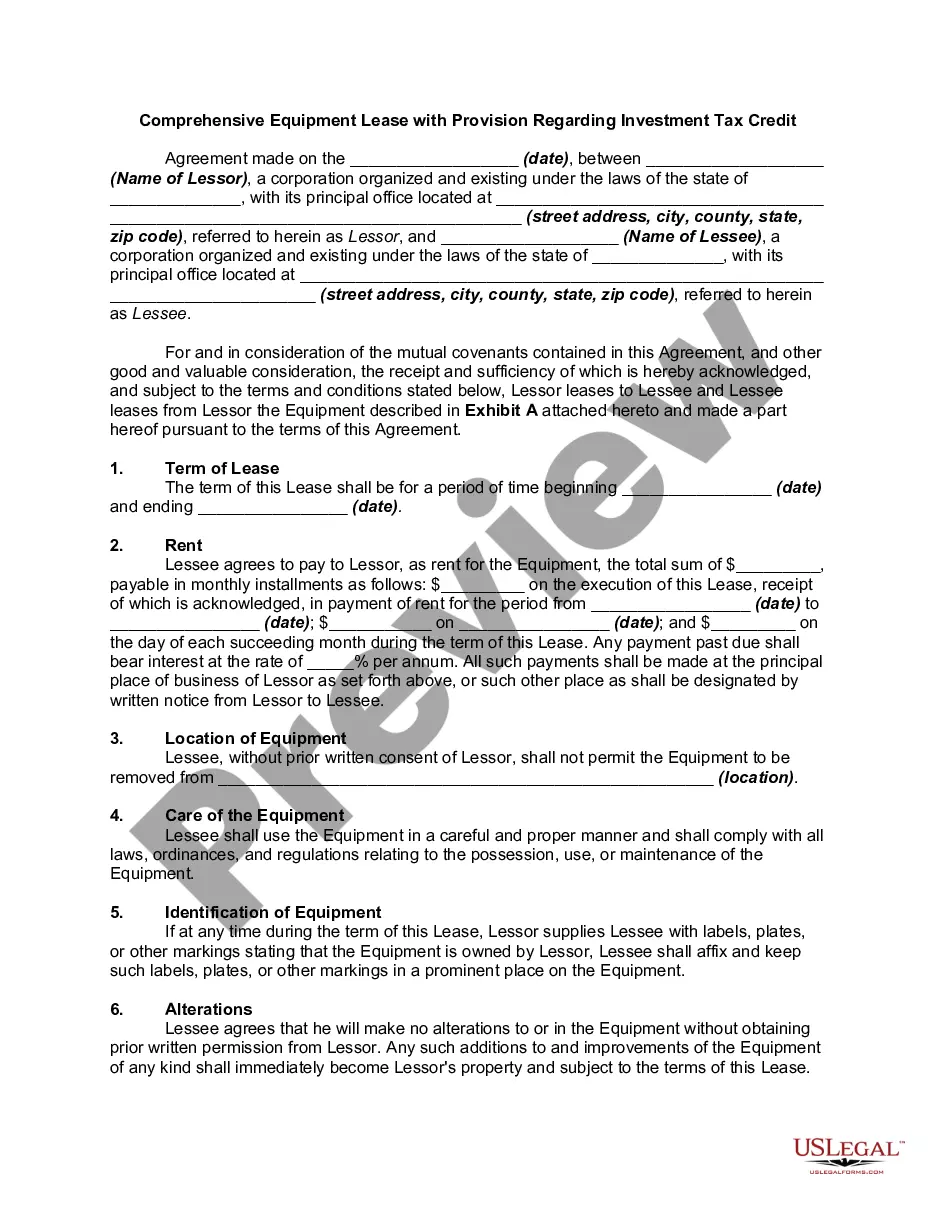
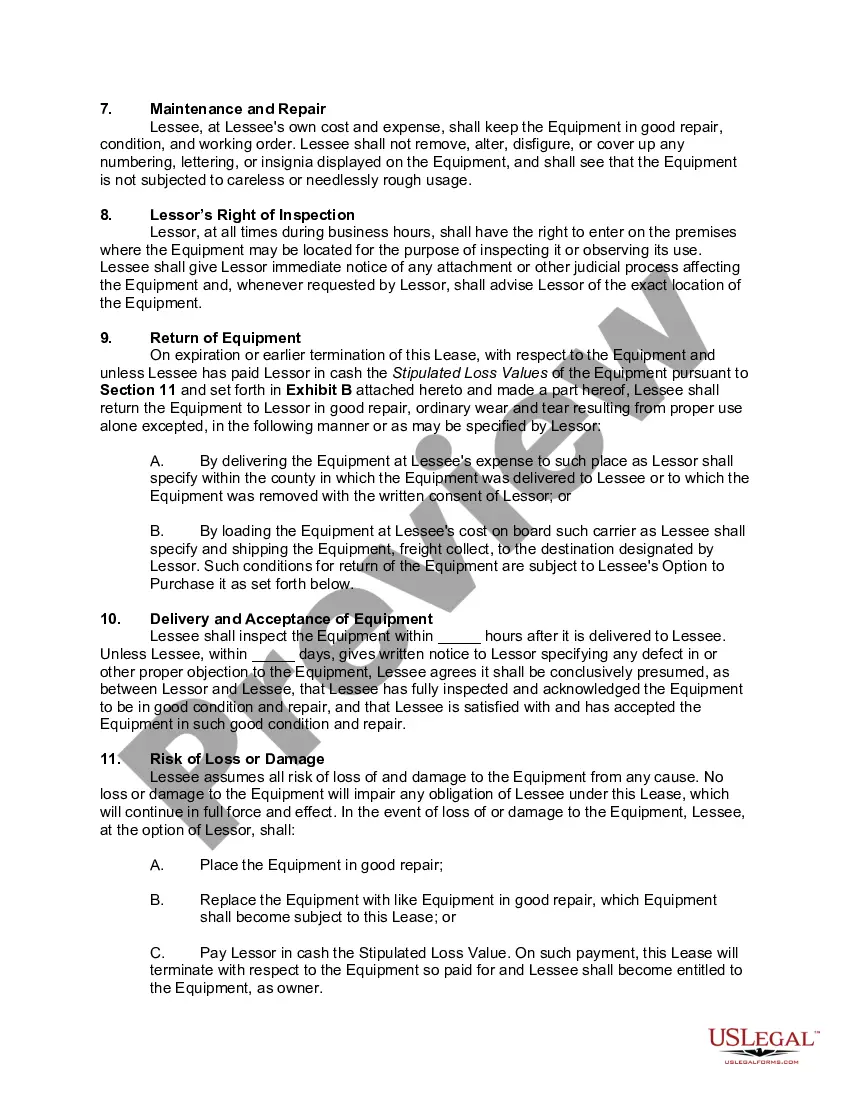
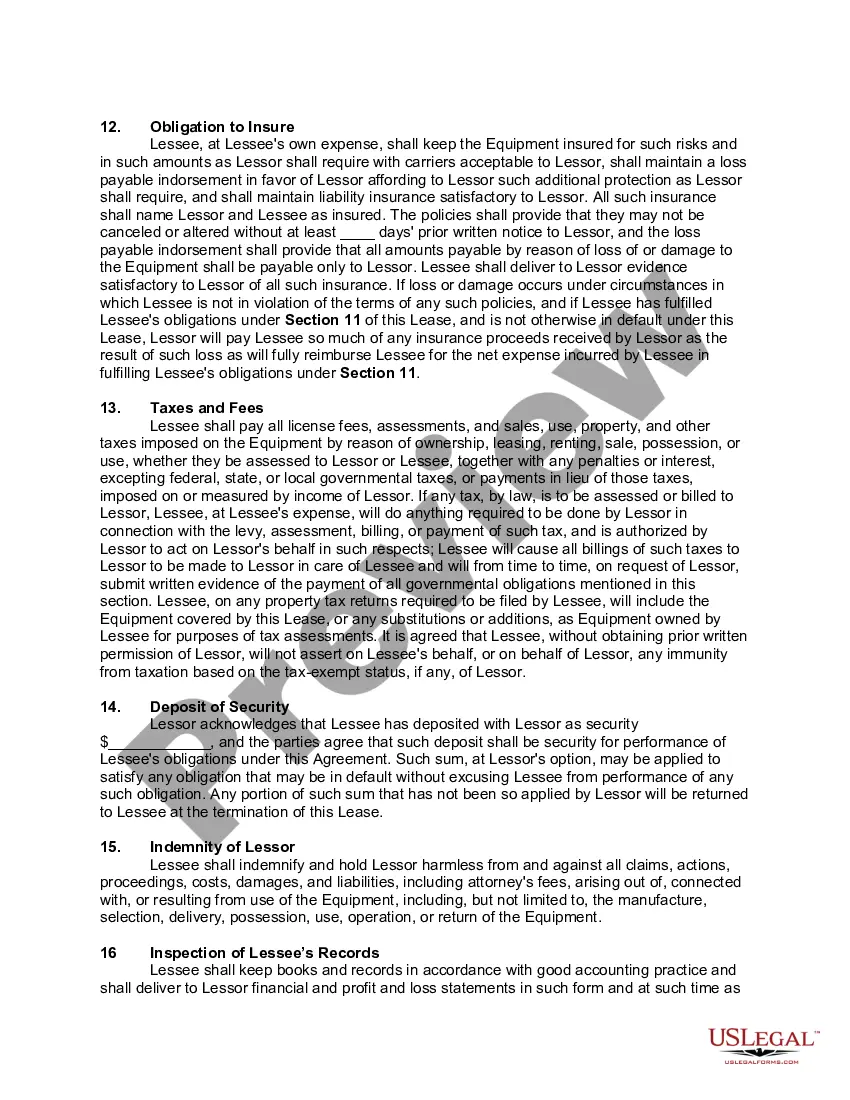
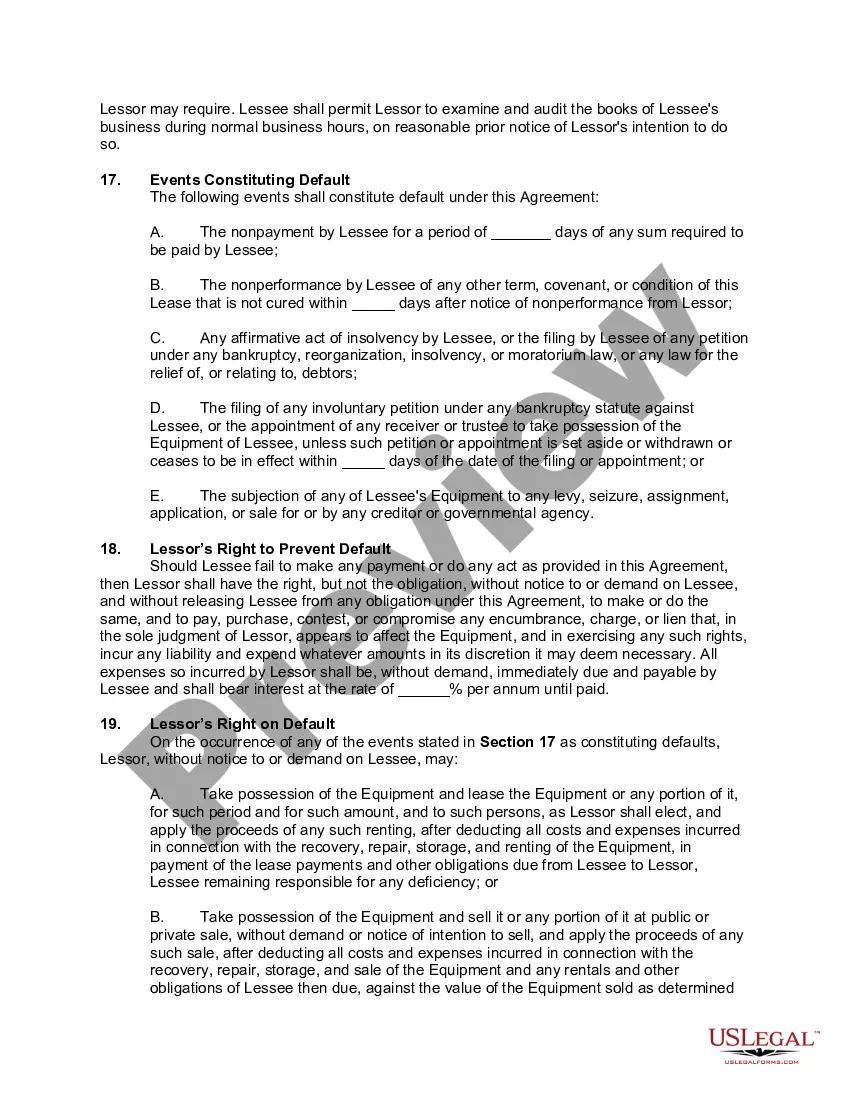
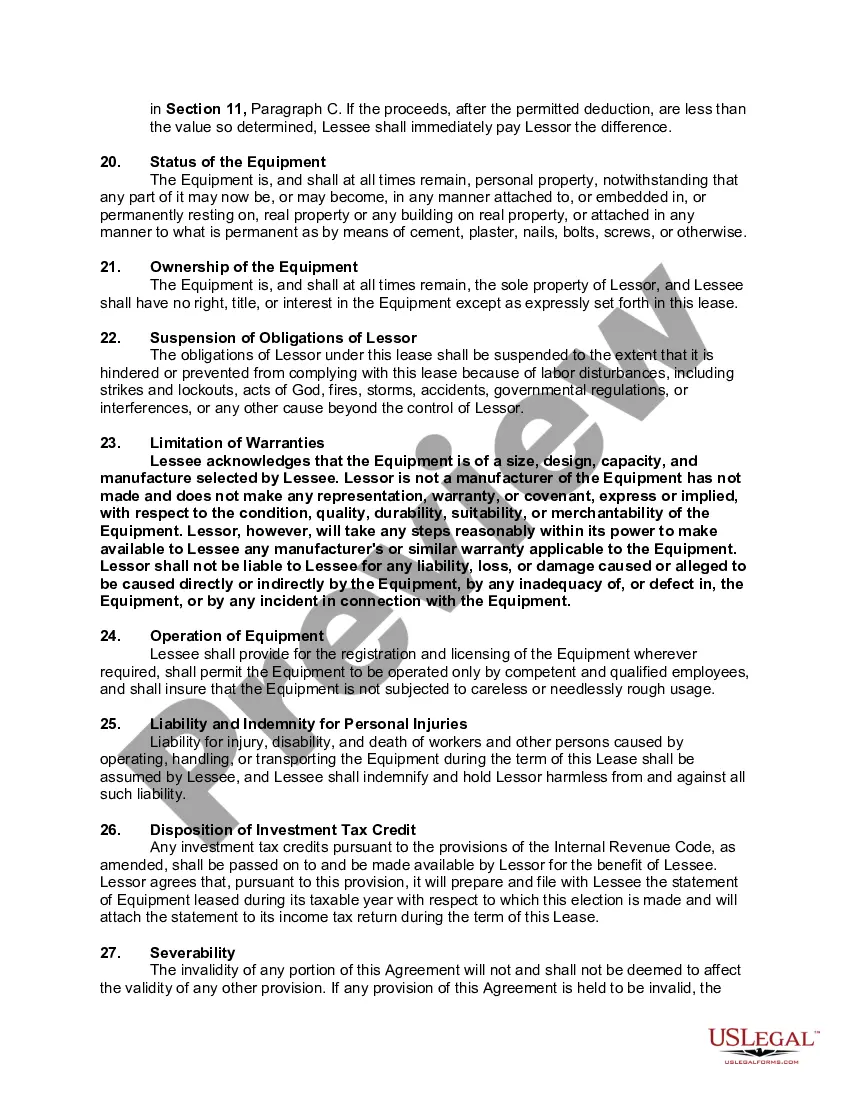
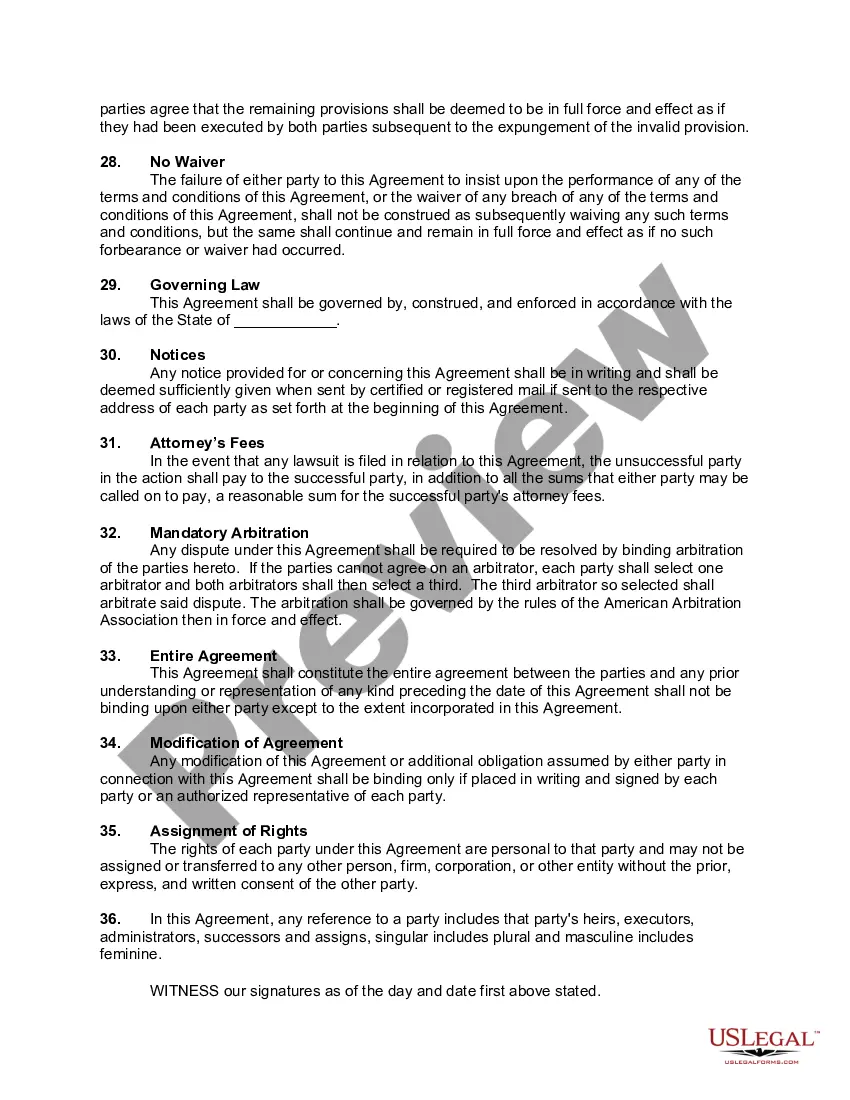
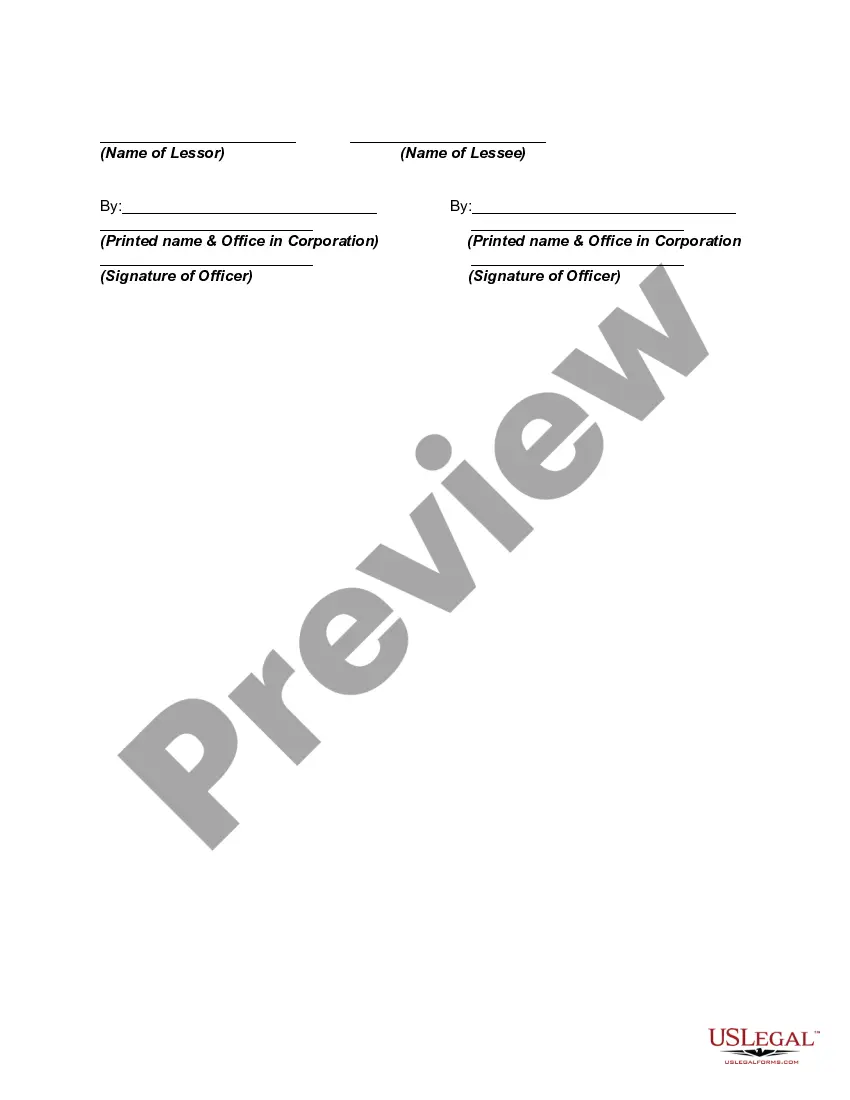
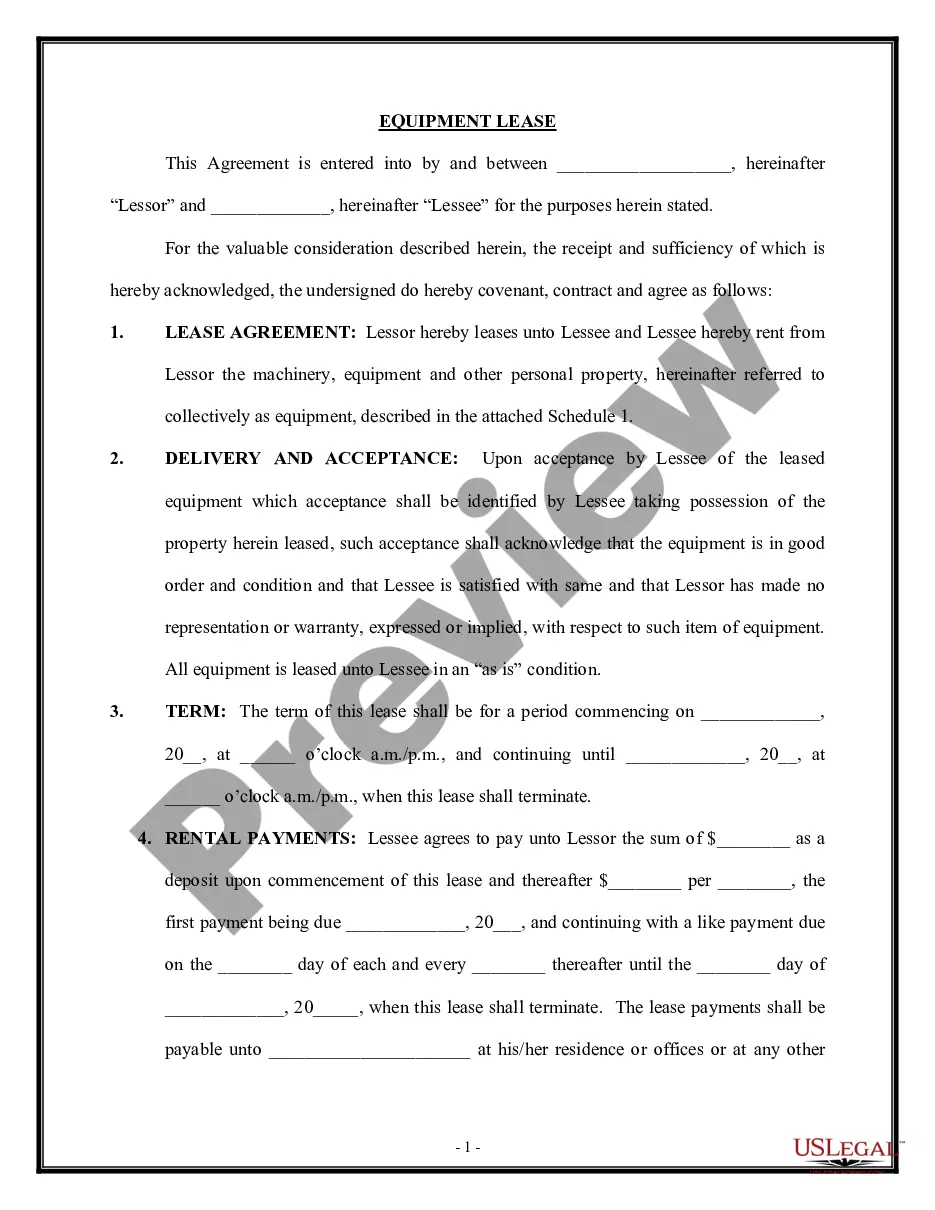
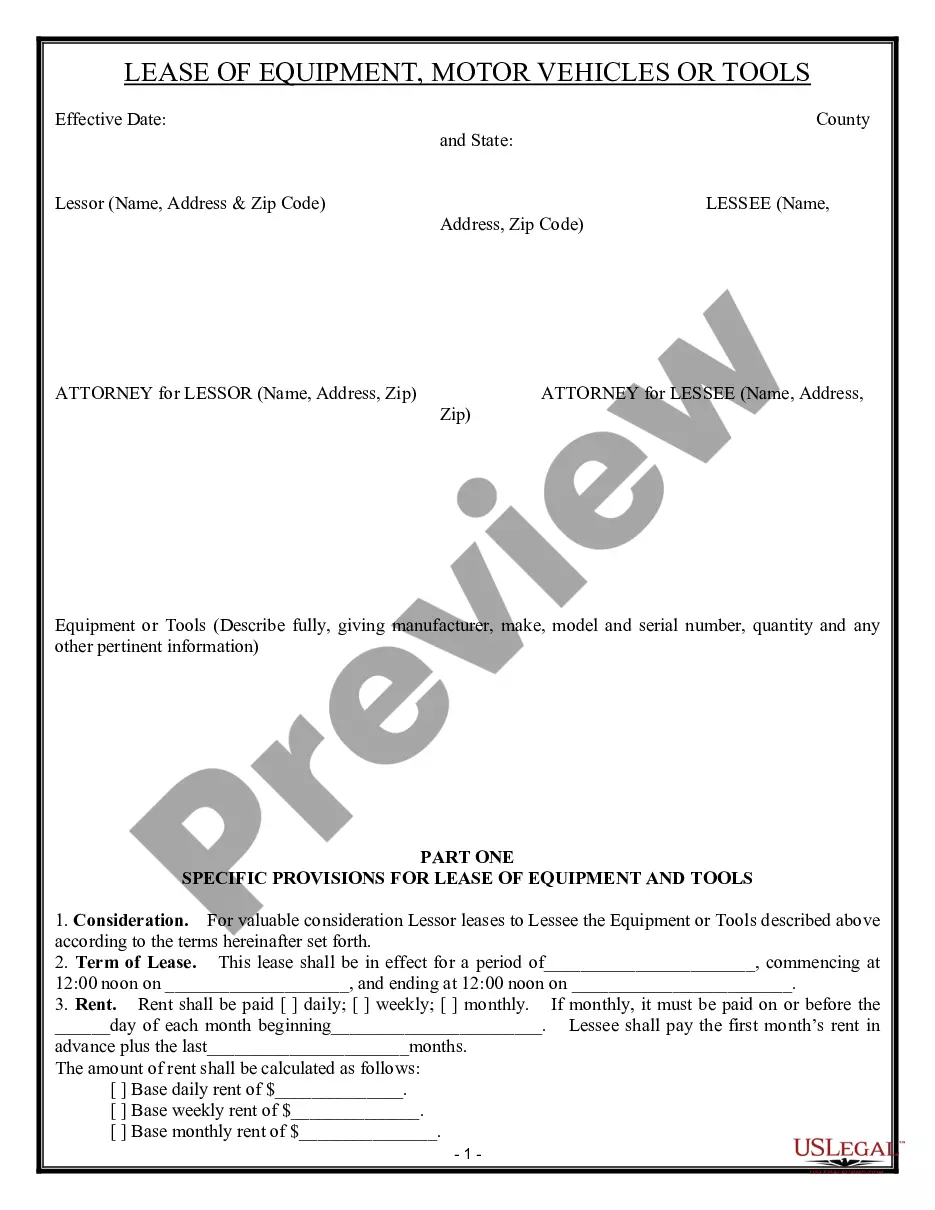
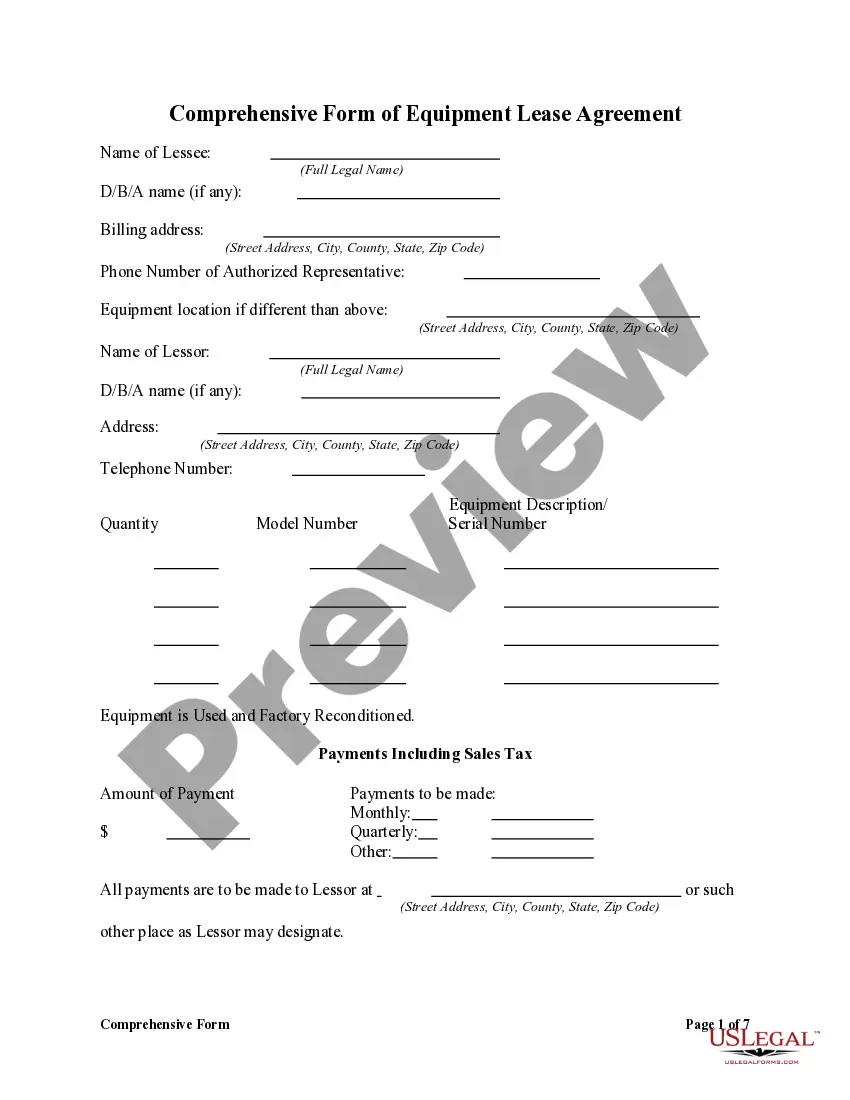
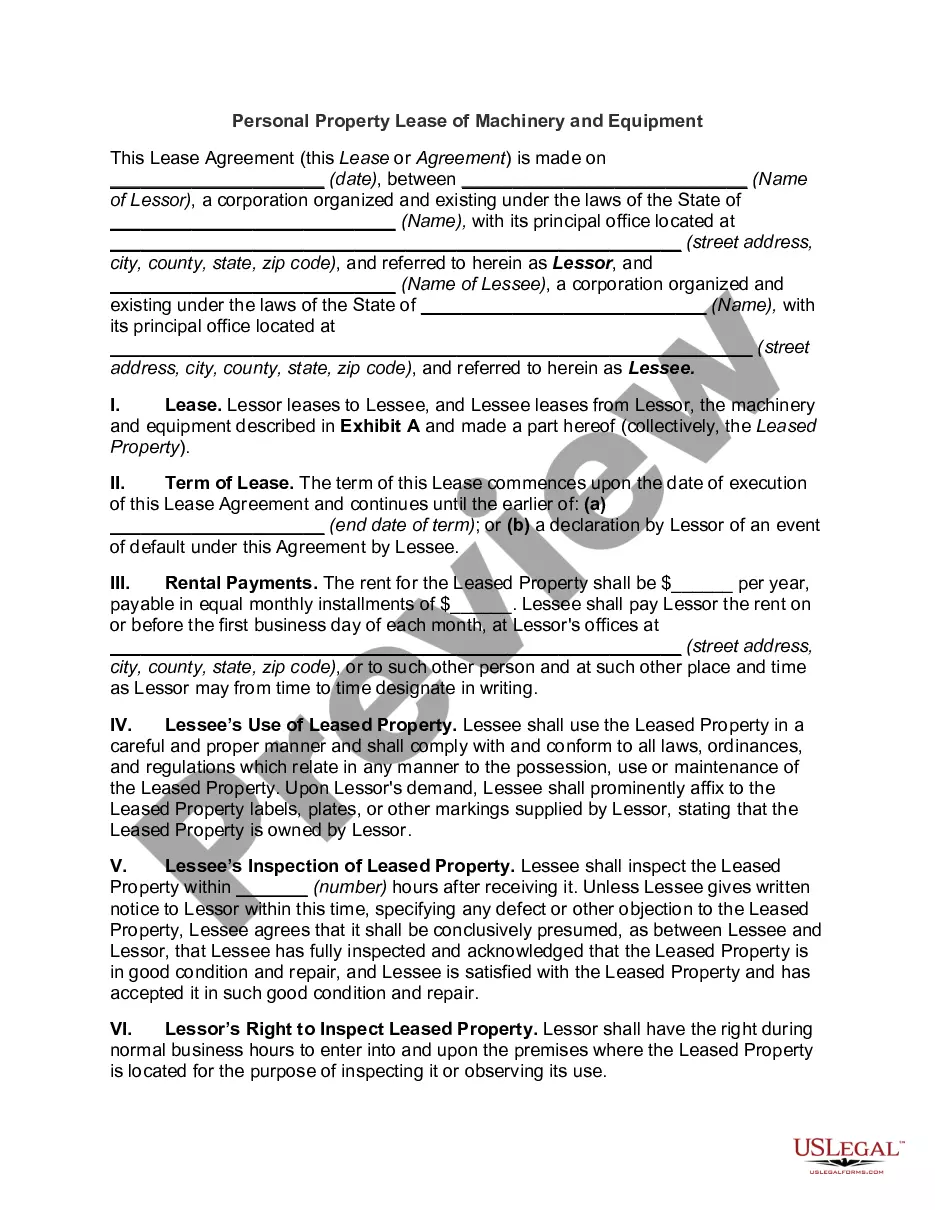
How to fill out Comprehensive Equipment Lease With Provision Regarding Investment Tax?
Selecting the appropriate legal document template may present some challenges. Naturally, there exists an assortment of templates accessible on the internet, but how can you find the legal form you require.
Utilize the US Legal Forms website. This service offers a vast collection of templates, including the Hawaii Comprehensive Equipment Lease with Provision Regarding Investment Tax, suitable for both business and personal purposes. All forms are reviewed by experts and comply with federal and state regulations.
If you are already registered, Log In to your account and click on the Obtain button to get the Hawaii Comprehensive Equipment Lease with Provision Regarding Investment Tax. Use your account to access the legal forms you may have purchased earlier. Go to the My documents section of your account and download another copy of the document you require.
Complete, modify, print, and sign the obtained Hawaii Comprehensive Equipment Lease with Provision Regarding Investment Tax. US Legal Forms is the largest collection of legal documents where you can find a variety of document templates. Utilize the service to acquire properly crafted paperwork that adhere to state requirements.
- If you are a new user of US Legal Forms, here are some simple steps to follow.
- First, ensure you have selected the correct form for your city/state. You can browse the document using the Review option and check the document details to confirm it is suitable for you.
- If the form does not suit your needs, utilize the Search area to find the appropriate form.
- Once you are confident the form is adequate, click on the Purchase now option to obtain the form.
- Choose the pricing plan you want and input the necessary information. Create your account and finalize the purchase using your PayPal account or credit card.
- Select the file format and download the legal document template to your device.
Form popularity
FAQ
In Hawaii, the conveyance tax on a commercial lease can vary based on the terms of the lease and the value of the transaction. Typically, the tax amount is calculated and may involve considerations of lease duration and rental rates. A Hawaii Comprehensive Equipment Lease with Provision Regarding Investment Tax could be structured in ways that optimize your financial exposure to this tax. To navigate these complexities effectively, you might find the tools and templates available on US Legal Forms to be quite helpful.
When dealing with a Hawaii Comprehensive Equipment Lease with Provision Regarding Investment Tax, you should be aware that leased equipment typically qualifies as a depreciable asset. This means that the leasing party can often claim tax deductions for depreciation, which can significantly reduce taxable income. Additionally, under certain circumstances, lessees may also be eligible for investment tax credits, further maximizing tax benefits associated with the lease. For precise guidance, consulting a tax advisor or using resources from US Legal Forms could be highly beneficial.
Nexus requirements in Hawaii generally refer to the connection your business has with the state for tax purposes. If you engage in business activities, such as leasing equipment under a Hawaii Comprehensive Equipment Lease with Provision Regarding Investment Tax, you may establish a tax presence. Businesses with physical presence, employees, or significant transactions in Hawaii must comply with local tax laws. Understanding these requirements is vital to maintaining compliance and optimizing your tax strategy.
G 45 is used for the collection of General Excise Tax on a monthly or quarterly basis, while G 49 is the annual filing that summarizes these transactions. This distinction is important for tracking your tax responsibilities accurately. When you're involved in a Hawaii Comprehensive Equipment Lease with Provision Regarding Investment Tax, proper management of both forms can ensure you maintain compliance.
Sales tax is levied directly on purchases made by consumers, whereas excise tax applies to specific goods, such as gasoline and tobacco. In Hawaii, the General Excise Tax acts like both. When considering a Hawaii Comprehensive Equipment Lease with Provision Regarding Investment Tax, it's vital to understand how these taxes can affect your lease agreements and financial plans.
The G45 form is used for periodic General Excise Tax filings, while the G49 form is an annual summary of these taxes. Essentially, G45 reports the tax collected over a specific period, and G49 reconciles those amounts over the year. Understanding these forms is essential for businesses with a Hawaii Comprehensive Equipment Lease with Provision Regarding Investment Tax to ensure compliance.
The Hawaii tax G-49 form is used for businesses to report their General Excise and Use Tax returns. This form provides detailed information regarding gross income and tax due. If you're entering into a Hawaii Comprehensive Equipment Lease with Provision Regarding Investment Tax, familiarizing yourself with the G-49 form can help you manage your tax responsibilities more effectively.
Hawaii taxes investment income similarly to ordinary income, meaning it is subject to the state's progressive income tax rates. Both short-term and long-term capital gains are included in taxable income. Therefore, being mindful of tax implications is crucial when managing assets, especially in light of a Hawaii Comprehensive Equipment Lease with Provision Regarding Investment Tax.
The take-home amount from a $100,000 salary in Hawaii depends on various factors, including filing status and available deductions. Typically, you can expect to retain approximately 70-75% after state and federal tax obligations. This information becomes important when planning for payments related to a Hawaii Comprehensive Equipment Lease with Provision Regarding Investment Tax.
Hawaii does not have a general capital gains tax exemption; however, certain types of property can qualify for favorable treatments. For example, profits from the sale of a primary residence may be eligible for exclusion under federal guidelines. It is essential for investors to factor in these details when considering a Hawaii Comprehensive Equipment Lease with Provision Regarding Investment Tax.