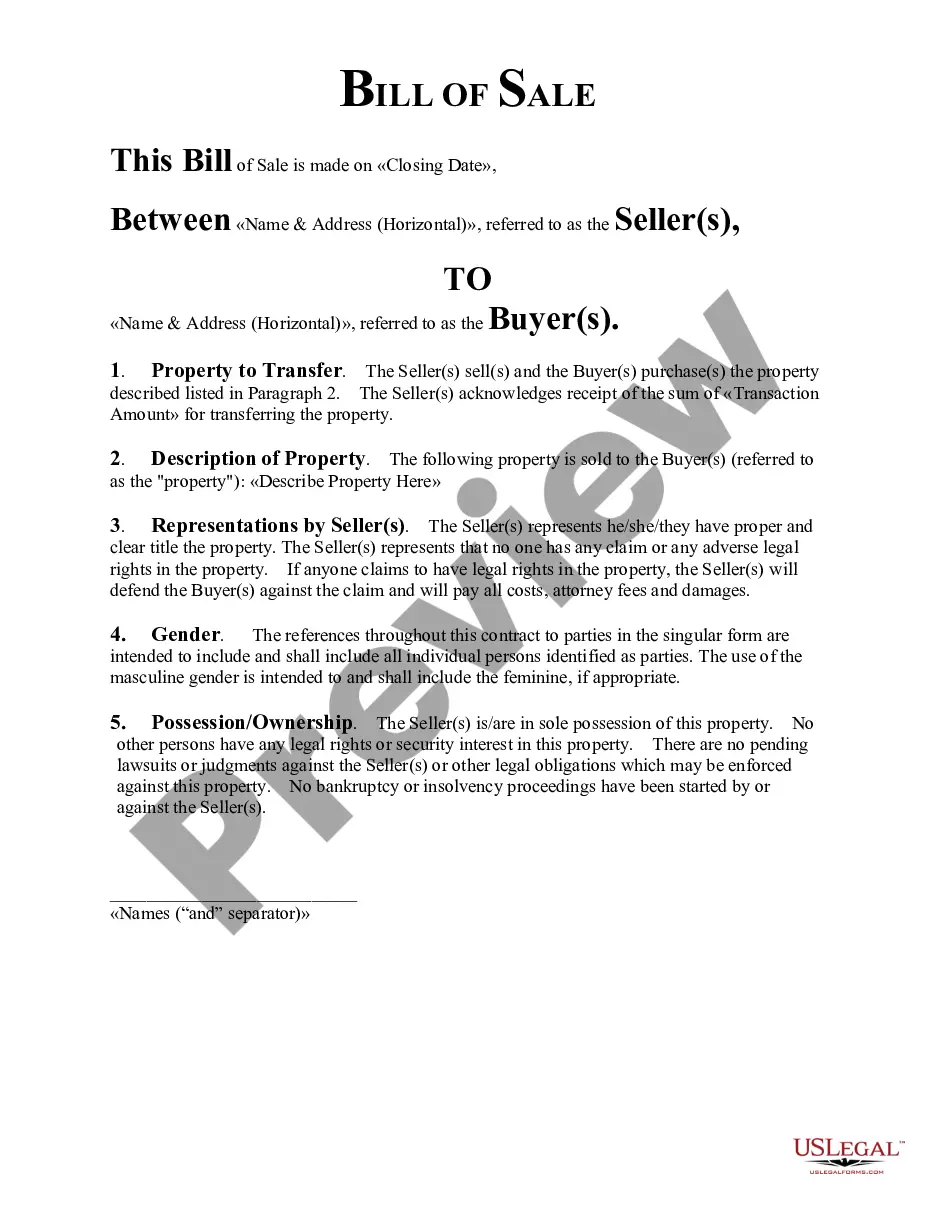
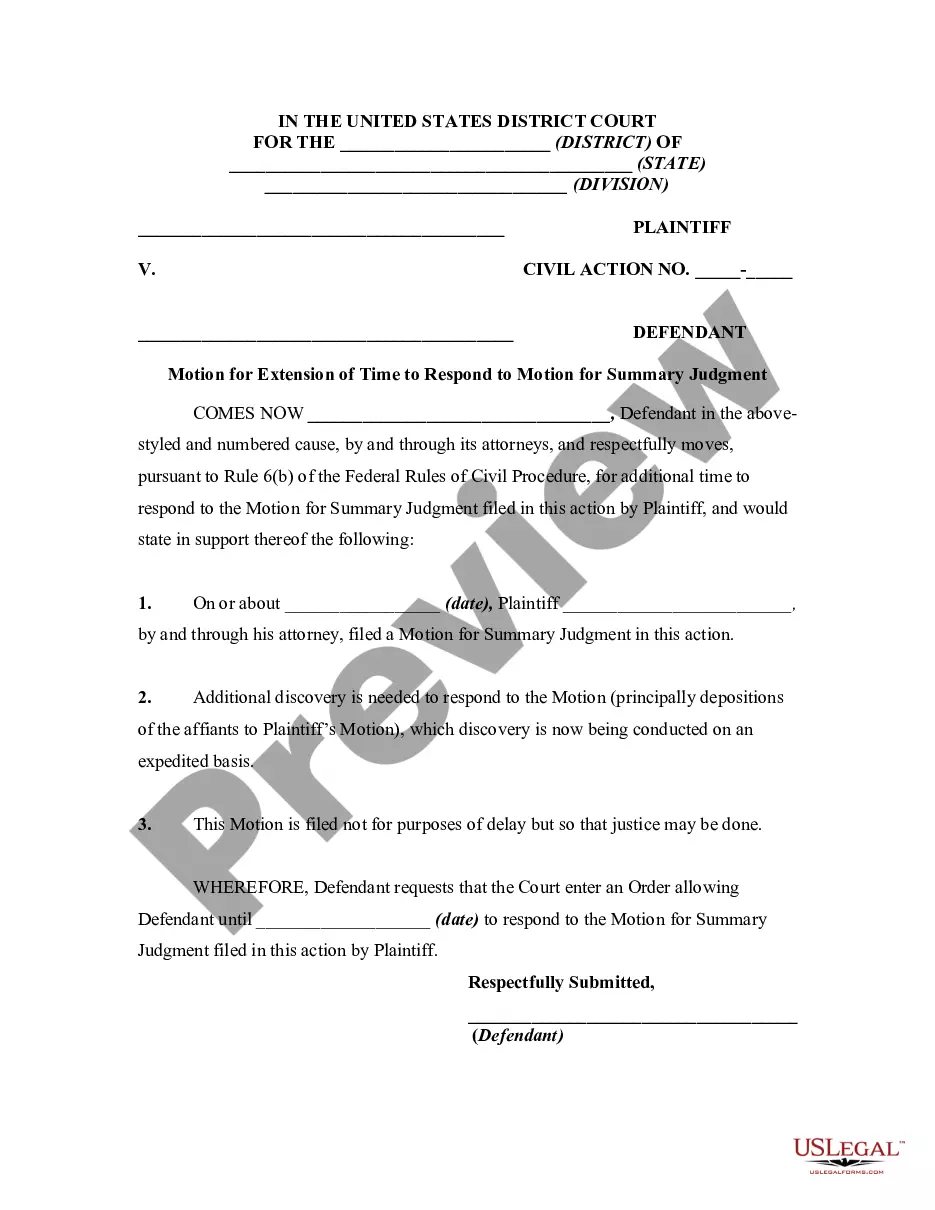
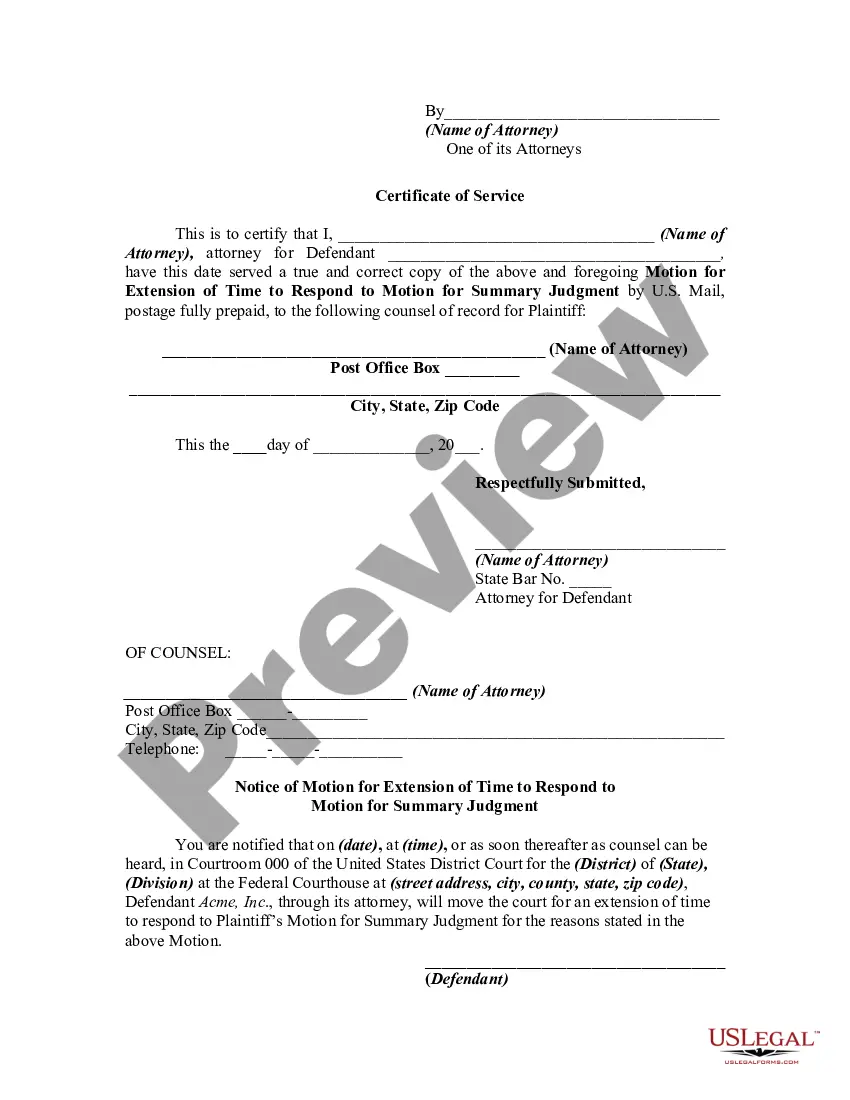
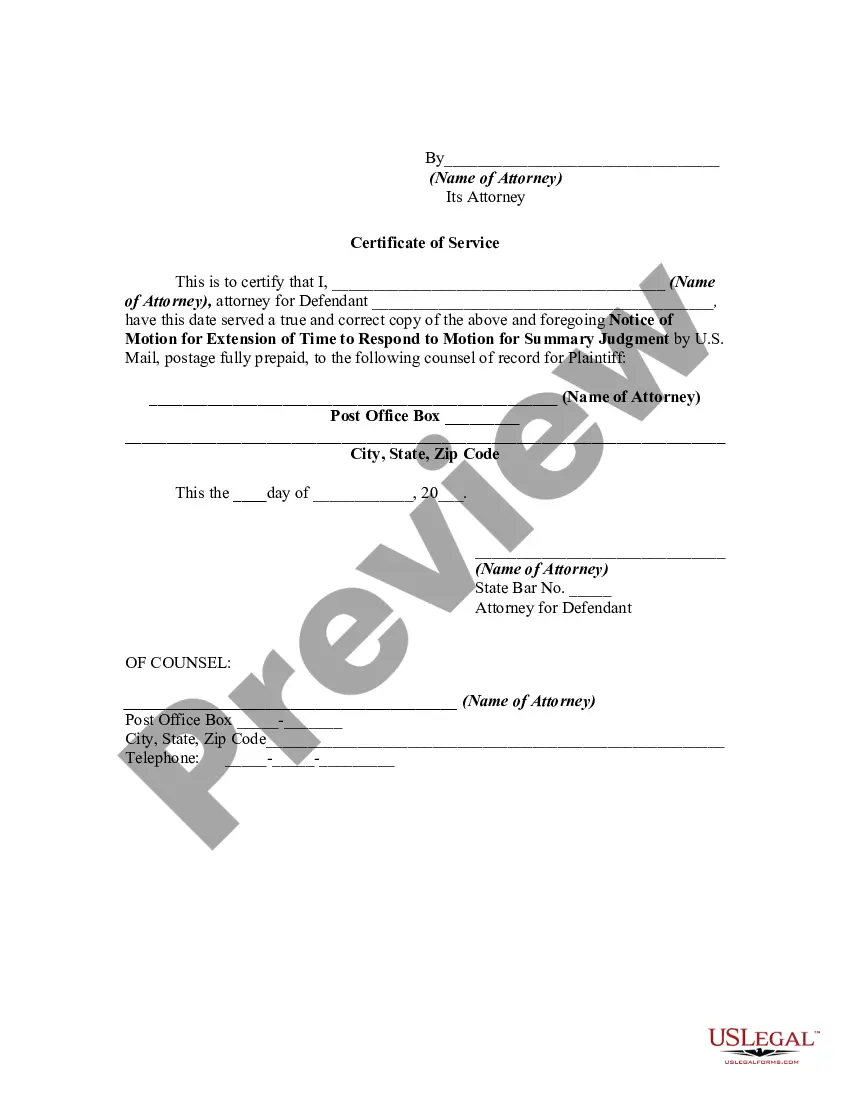
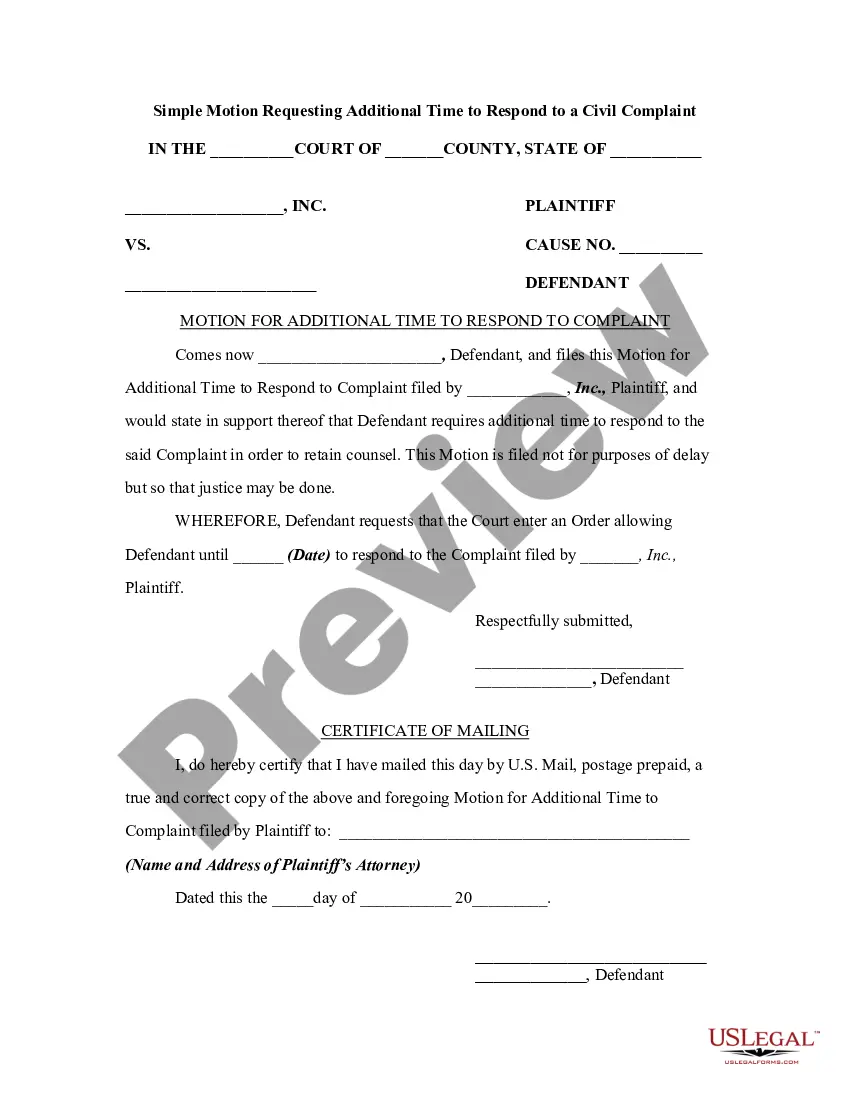
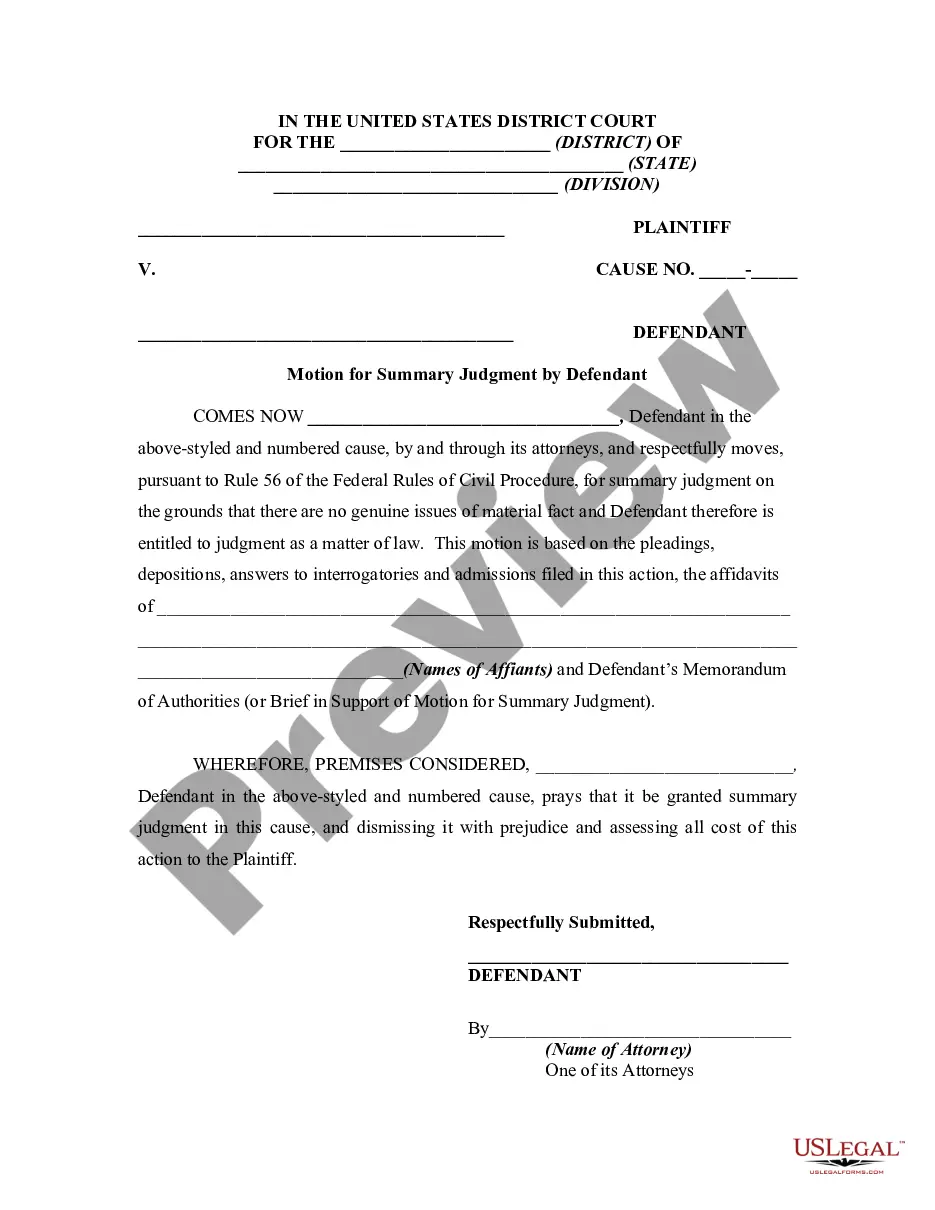
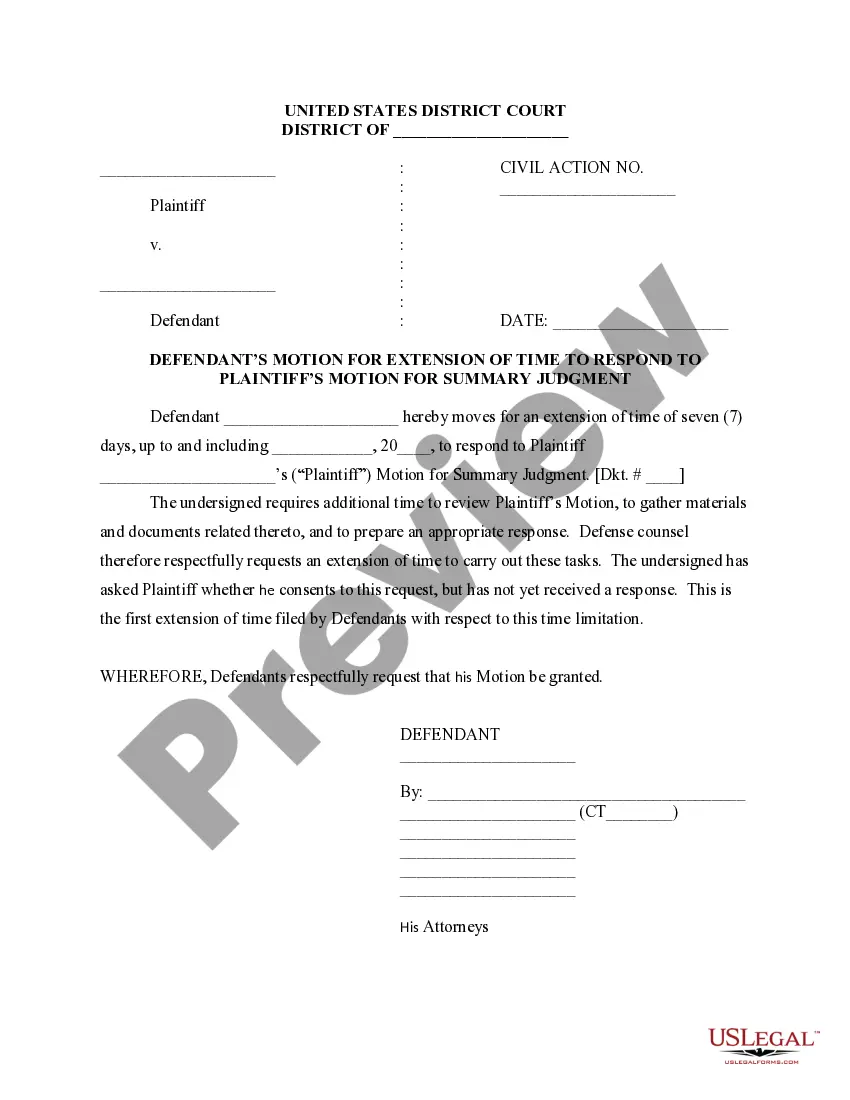
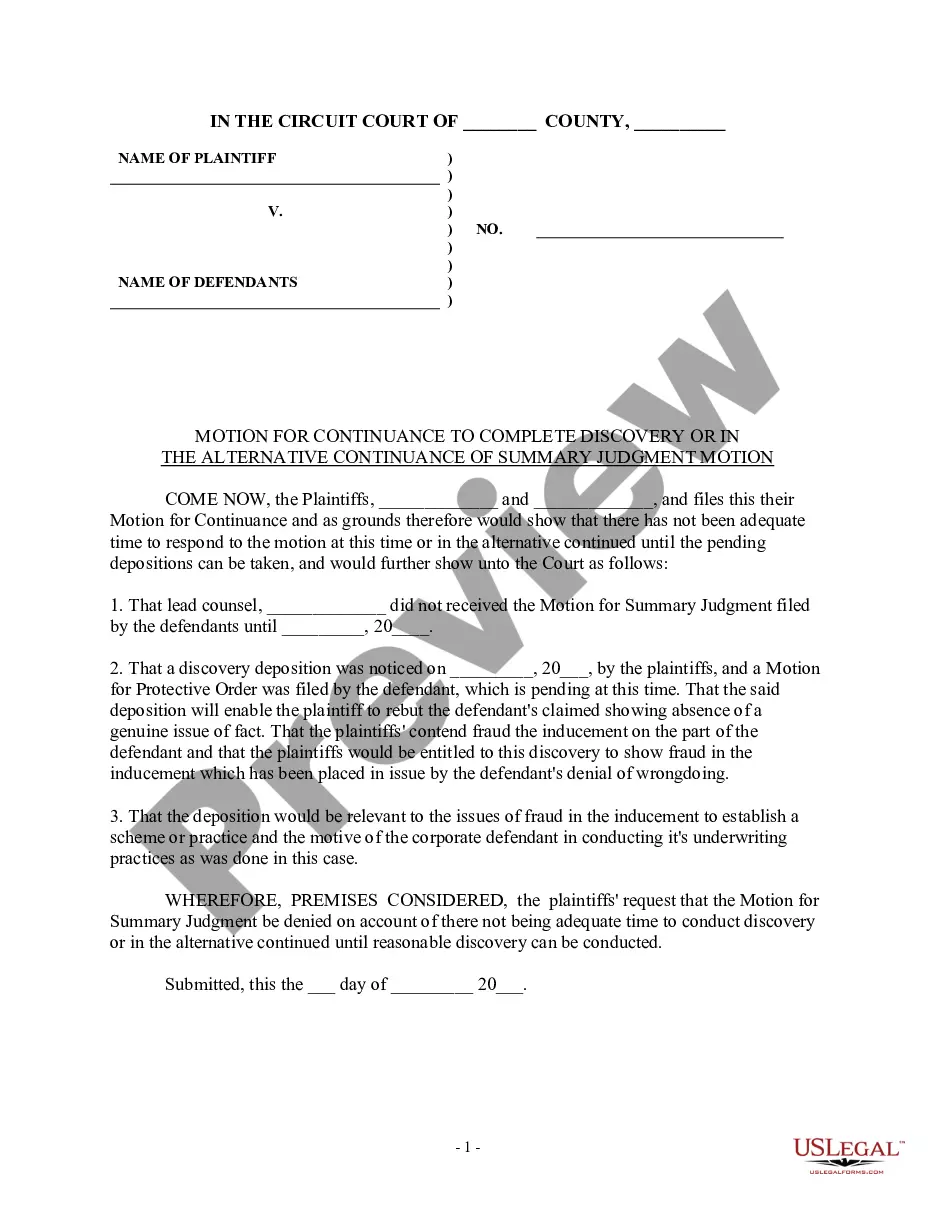
This form is a generic motion requesting additional time to respond to a motion for summary judgment.
Hawaii Motion Requesting Additional Time to Respond to Motion for Summary Judgment with Notice of Motion
Category:
State:
Multi-State
Control #:
US-00919BG
Format:
Word;
Rich Text
Instant download
Description
Free preview

Get your form ready online
Our built-in tools help you complete, sign, share, and store your documents in one place.
Built-in online Word editor
Make edits, fill in missing information, and update formatting in US Legal Forms—just like you would in MS Word.
Export easily
Download a copy, print it, send it by email, or mail it via USPS—whatever works best for your next step.
E-sign your document
Sign and collect signatures with our SignNow integration. Send to multiple recipients, set reminders, and more. Go Premium to unlock E-Sign.
Notarize online 24/7
If this form requires notarization, complete it online through a secure video call—no need to meet a notary in person or wait for an appointment.
Store your document securely
We protect your documents and personal data by following strict security and privacy standards.

Make edits, fill in missing information, and update formatting in US Legal Forms—just like you would in MS Word.

Download a copy, print it, send it by email, or mail it via USPS—whatever works best for your next step.

Sign and collect signatures with our SignNow integration. Send to multiple recipients, set reminders, and more. Go Premium to unlock E-Sign.

If this form requires notarization, complete it online through a secure video call—no need to meet a notary in person or wait for an appointment.

We protect your documents and personal data by following strict security and privacy standards.
Looking for another form?

How to fill out Motion Requesting Additional Time To Respond To Motion For Summary Judgment With Notice Of Motion?
Finding the appropriate legitimate document format can be challenging. Clearly, there are numerous templates available online, but how do you locate the correct form you need? Use the US Legal Forms website. The service provides thousands of templates, such as the Hawaii Motion Requesting Additional Time to Respond to Motion for Summary Judgment with Notice of Motion, suitable for both business and personal needs. All forms are reviewed by professionals and meet federal and state requirements.
If you are already registered, Log In to your account and click on the Download button to obtain the Hawaii Motion Requesting Additional Time to Respond to Motion for Summary Judgment with Notice of Motion. Use your account to browse through the legal forms you have previously ordered. Go to the My documents section of your account and retrieve another copy of the document you need.
If you are a new user of US Legal Forms, here are simple instructions for you to follow: First, ensure you have selected the correct form for your city/state. You can view the form using the Preview button and check the form summary to confirm that it is indeed the right one for you. If the form does not meet your needs, use the Search field to find the suitable form. Once you are confident that the form is appropriate, click the Purchase now button to acquire the form. Choose the pricing plan you prefer and enter the required information. Create your account and place an order using your PayPal account or credit card. Select the file format and download the legal document template to your device. Complete, edit, print, and sign the obtained Hawaii Motion Requesting Additional Time to Respond to Motion for Summary Judgment with Notice of Motion.
Make sure to follow all guidelines and instructions provided to ensure you successfully obtain the required legal documents.
- US Legal Forms is the largest collection of legal documents where you can find various document templates.
- Utilize the service to download professionally crafted papers that comply with state requirements.
- Navigate through thousands of forms designed for personal and business use.
- Access forms that have been vetted by experts to ensure legal compliance.
- Experience a user-friendly interface to simplify your document search.
- Enjoy a secure transaction process with multiple payment options.
Form popularity
FAQ
HFCR rule 68 authorizes the family court to award attorney's fees and costs in certain types of cases to a party that extends a settlement offer if the offer is not accepted and the final judgment in its entirety is patently not more favorable to the offeree than the settlement offer.
Unless the court otherwise directs and subject to the provisions of Rule 54 of these rules and Rule 23 of the Rules of the Circuit Courts, the prevailing party shall prepare and submit a proposed judgment.
Rule 16.1 - Expedited or Non-Expedited Track Assignment Based on Case Characteristics; Discovery Limitations; Trial Setting (a)Assignment of case to expedited track.
As the name suggests, a Rule 68 Offer of Judgment is, in fact, an offer permitting a plaintiff to accept and enter a judgment against a defendant on specified terms, subject to the court's approval of the settlement via Rule 68.
On motion and upon such terms as are just, the court may relieve a party or a party's legal representative from a final judgment, order, or proceeding for the following reasons: (1) mistake, inadvertence, surprise, or excusable neglect; (2) newly discovered evidence which by due diligence could not have been discovered ...
(4) A reply to the opposition shall be served and filed by the moving party not less than five days preceding the noticed or continued date of hearing, unless the court for good cause orders otherwise. (5) Evidentiary objections not made at the hearing shall be deemed waived.
A party may obtain discovery of the existence and contents of any insurance agreement under which any person carrying on an insurance business may be liable to satisfy part or all of a judgment which may be entered in the action or to indemnify or reimburse for payments made to satisfy the judgment.
(A) Parties may obtain discovery regarding any matter, not privileged, which is relevant to the subject matter involved in the pending action, whether it relates to the claim or defense of the party seeking discovery or to the claim or defense of any other party, including the existence, description, nature, custody, ...