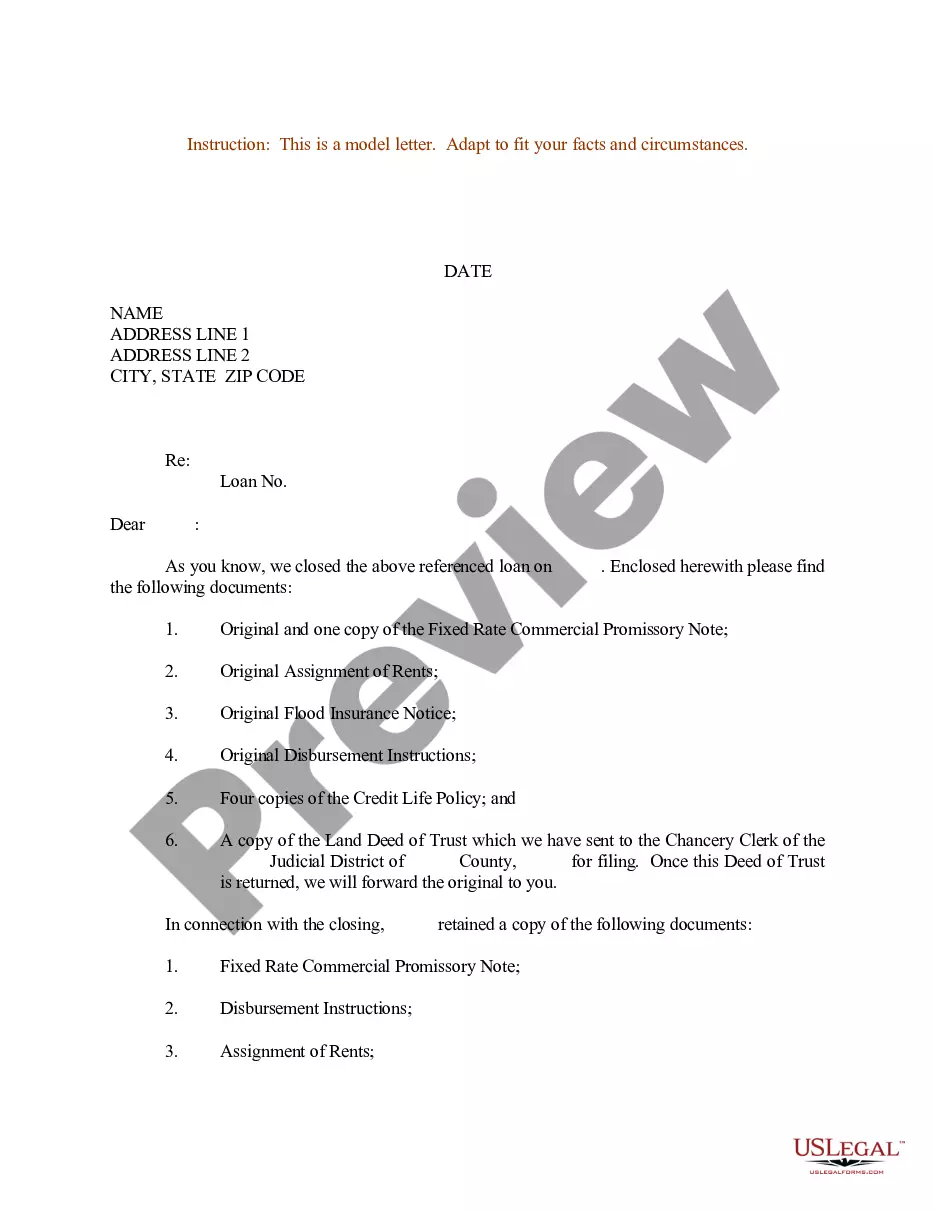
In a deed, a grantee may agree to do something or refrain from doing certain acts. This agreement will become a binding contract between the grantor and the grantee. An example would be an agreement to maintain fences on the property or that the property will only be used for residential purposes. This kind of covenant is binding, not only between the grantor and the grantee, but also runs with the land. This means that anyone acquiring the land from the grantee is also bound by the covenant of the grantee. A covenant that provides that the grantee will refrain from certain conduct is called a restrictive or protective covenant. For example, there may be a covenant that no mobile home shall be placed on the property.
A restrictive or protective covenant may limit the kind of structure that can be placed on the property and may also restrict the use that can be made of the land. For example, when a tract of land is developed for individual lots and homes to be built, it is common to use the same restrictive covenants in all of the deeds in order to cause uniform restrictions and patterns on the property. For example, the developer may provide that no home may be built under a certain number of square feet. Any person acquiring a lot within the tract will be bound by the restrictions if they are placed in the deed or a prior recorded deed. Also, these restrictive covenants may be placed in a document at the outset of the development entitled "Restrictive Covenants," and list all the restrictive covenants that will apply to the tracts of land being developed. Any subsequent deed can then refer back to the book and page number where these restrictive covenants are recorded. Any person owning one of the lots in the tract may bring suit against another lot owner to enforce the restrictive covenants. However, restrictive covenants may be abandoned or not enforceable by estoppel if the restrictive covenants are violated openly for a sufficient period of time in order for a Court to declare that the restriction has been abandoned.
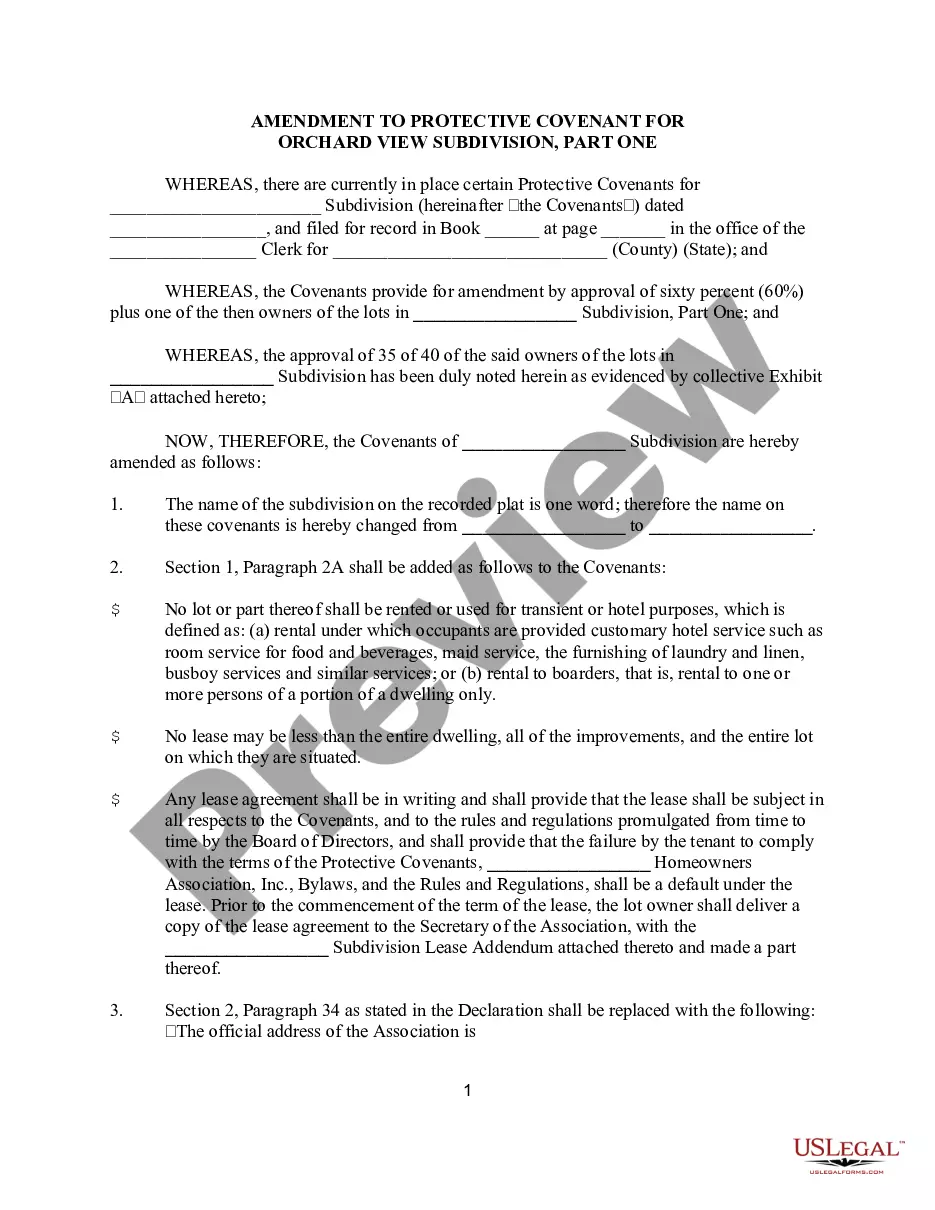
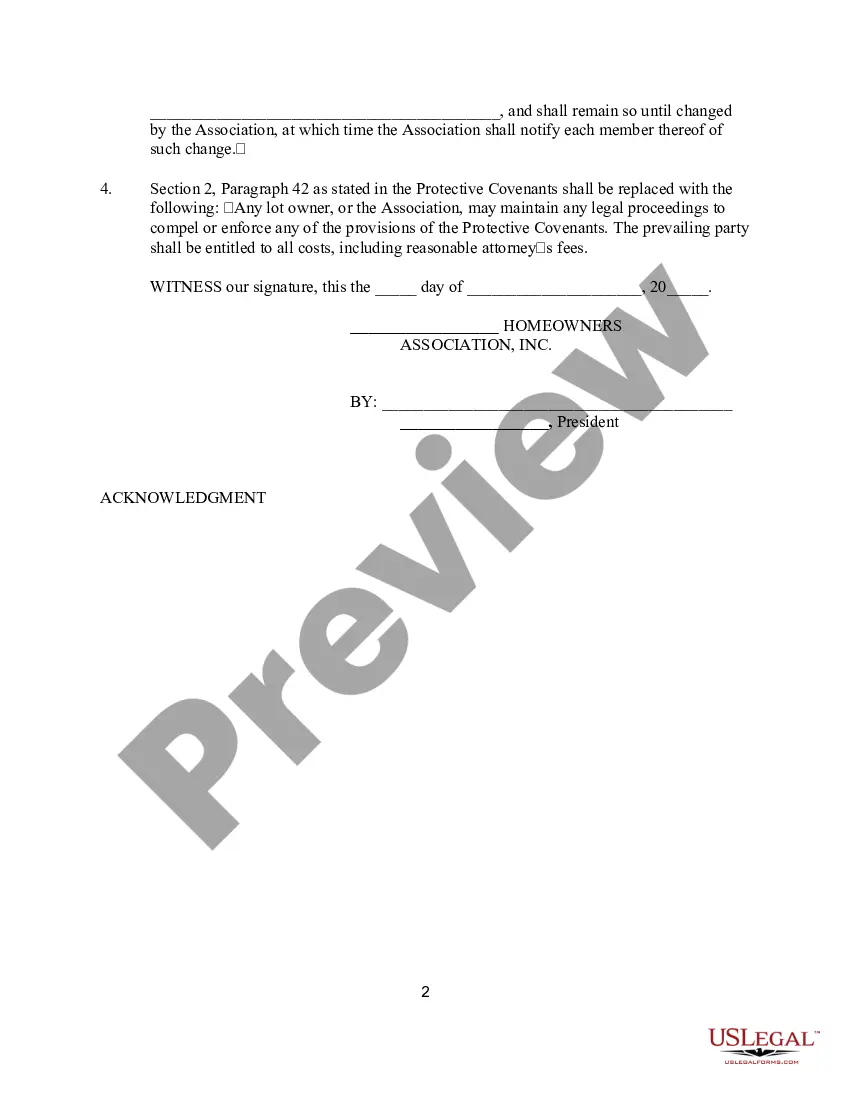
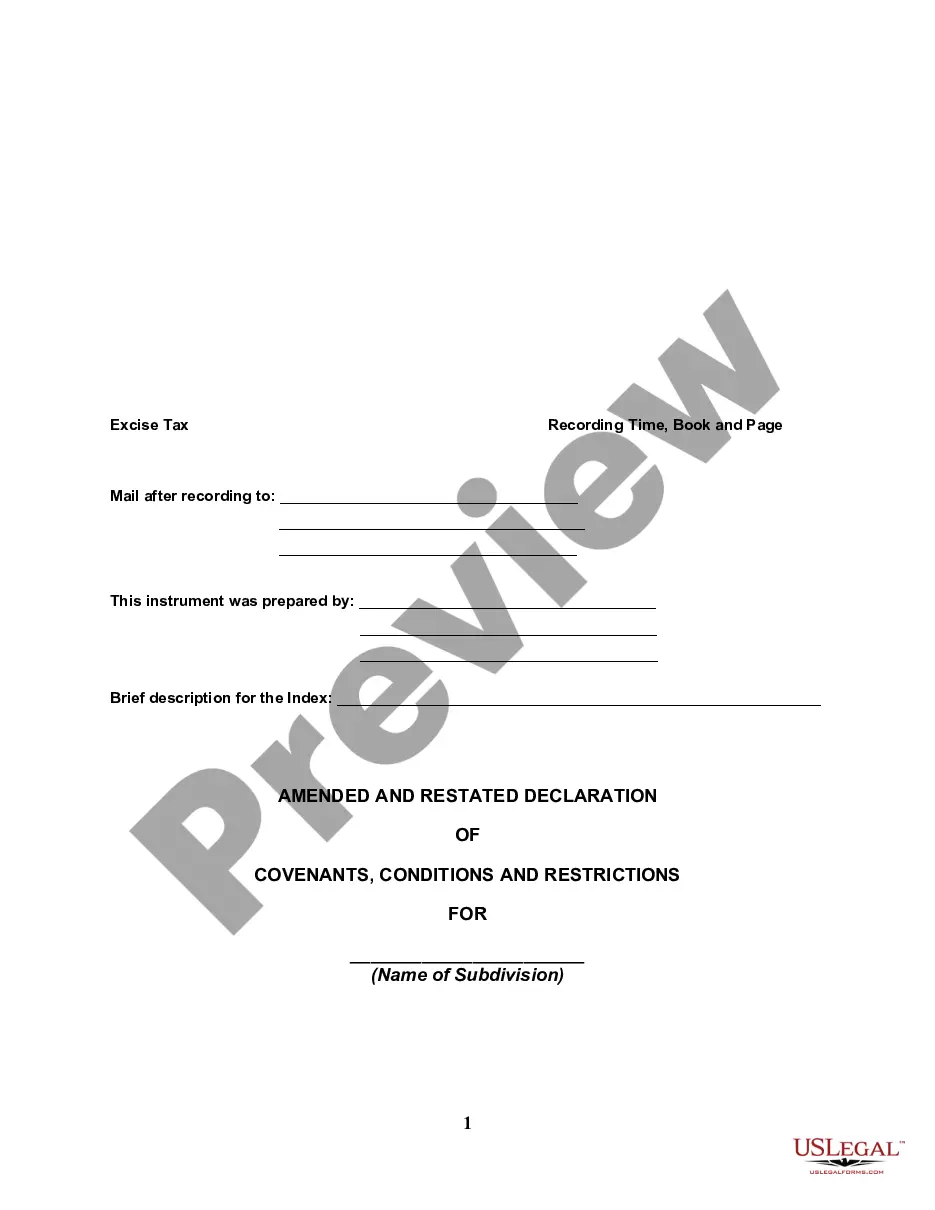
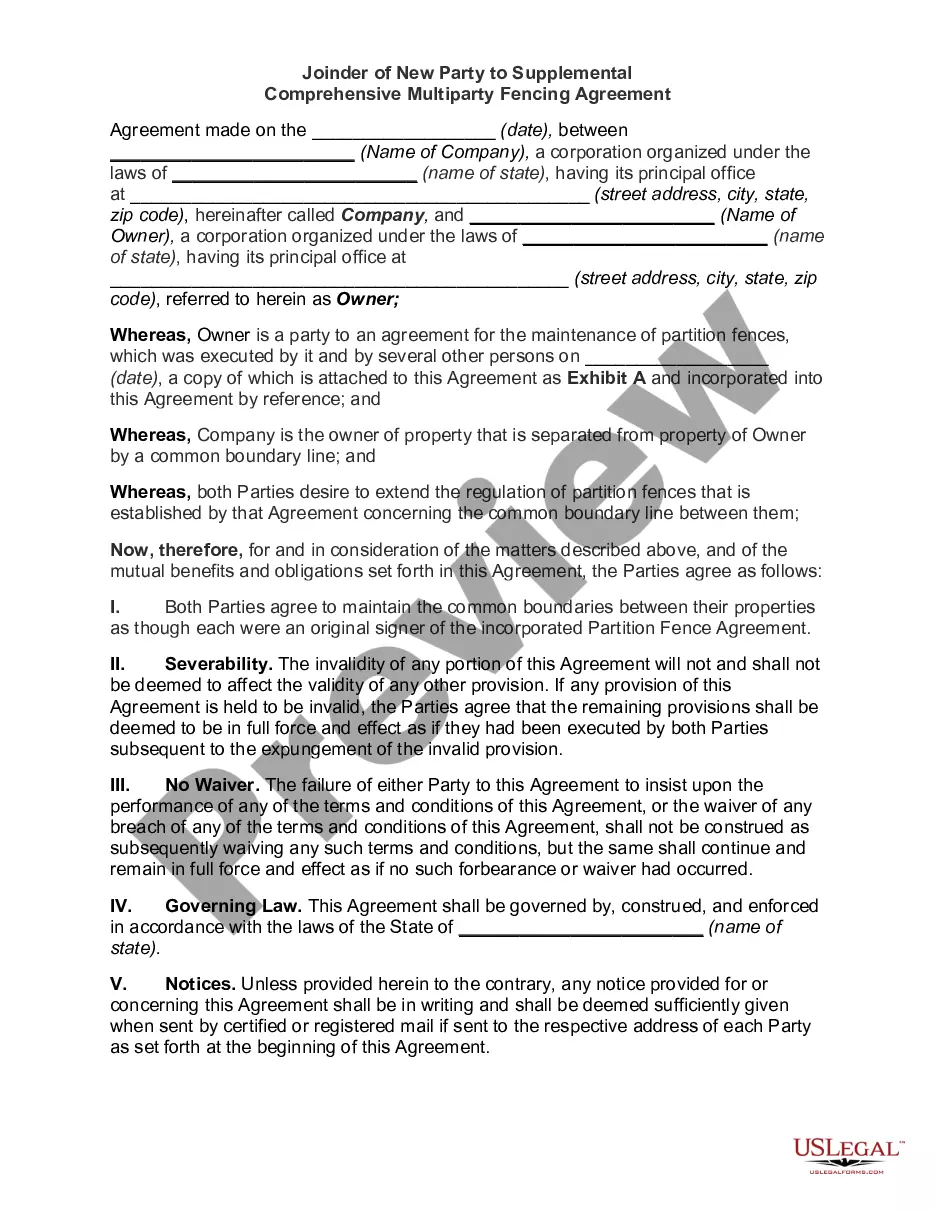
The following form shows one way in which Restrictive or Protective Covenants may be amended.
Hawaii Amendment to Protective Covenant
Instant download
Description
Free preview
Get your form ready online
Our built-in tools help you complete, sign, share, and store your documents in one place.
Built-in online Word editor
Make edits, fill in missing information, and update formatting in US Legal Forms—just like you would in MS Word.
Export easily
Download a copy, print it, send it by email, or mail it via USPS—whatever works best for your next step.
E-sign your document
Sign and collect signatures with our SignNow integration. Send to multiple recipients, set reminders, and more. Go Premium to unlock E-Sign.
Notarize online 24/7
If this form requires notarization, complete it online through a secure video call—no need to meet a notary in person or wait for an appointment.
Store your document securely
We protect your documents and personal data by following strict security and privacy standards.

Make edits, fill in missing information, and update formatting in US Legal Forms—just like you would in MS Word.

Download a copy, print it, send it by email, or mail it via USPS—whatever works best for your next step.

Sign and collect signatures with our SignNow integration. Send to multiple recipients, set reminders, and more. Go Premium to unlock E-Sign.

If this form requires notarization, complete it online through a secure video call—no need to meet a notary in person or wait for an appointment.

We protect your documents and personal data by following strict security and privacy standards.
Looking for another form?


How to fill out Amendment To Protective Covenant?
It is feasible to spend hours online trying to find the authentic document template that fulfills the federal and state requirements you need.
US Legal Forms offers thousands of authentic forms that are verified by professionals.
You can easily obtain or create the Hawaii Amendment to Protective Covenant from this service.
If available, use the Review option to look at the document template as well.
- If you already possess a US Legal Forms account, you can Log In and select the Obtain option.
- Next, you can fill out, modify, create, or sign the Hawaii Amendment to Protective Covenant.
- Each authentic document template you acquire belongs to you indefinitely.
- To acquire another version of any purchased form, go to the My documents tab and click on the corresponding option.
- If this is your first time using the US Legal Forms website, follow the straightforward instructions below.
- First, ensure you have selected the correct document template for the state/city of your choice.
- Review the form description to ensure you have chosen the right form.
Form popularity
FAQ
Breaching a restrictive covenant leaves you open to potential legal action from the other party, if they wish to enforce the covenant. If you are taken to court and the other party is successful, you might have to undo any work carried out and may face a fine or have to pay damages, as well as legal fees.
A person who is affected by a restrictive covenant has two options to protect themselves against any action for breaching it: Obtaining insurance cover, known as 'indemnity insurance', in respect of any attempt to enforce the covenant. Seeking a declaration from the Lands Tribunal that the covenant is invalid.
An application can be made to the Lands Tribunal to have a covenant removed or varied. The Lands Tribunal will consider any changes to the property or neighbourhood since the covenant was put in place, whether the covenant is unreasonably preventing developments that would be beneficial.
5 (the Act) expressly states that a restrictive covenant that is registered without a defined expiration date expires 40 years after the date of registration.
Can I get a restrictive covenant removed? If there is a covenant on your property which is obsolete, you can make an application to the Upper Tribunal (Lands Chamber) (which use to be known as the Lands Tribunal) asking for the covenant to be discharged or modified.
As restrictive covenants don't 'expire', if they are breached the person with the benefit of the covenant can enforce them against you.
They are permanent and unchangeable. If a subdivision is in a zoned area, any restrictive covenants take priority over zoning ordinances to the extent that the covenants are more restrictive than the zoning requirements.
If all parties with the benefit of the restrictive covenant can be identified and found, and they agree to release the restrictive covenant, a deed of release can be negotiated and entered into. The deed will operate to release the land from the burden of the covenant and enable you to develop the land freely.
It is important to remember though, that if a breach of a restrictive covenant has existed for 20 years or more, without any complaint by the person with the benefit of the restrictive covenant, they will no longer be able to enforce against the breach.
A restrictive covenant is a promise included in a contract or agreement that somehow restricts one of the parties from doing something. In business, restrictive covenants often apply to employee contracts. They can help protect business operations after an employee leaves the company.