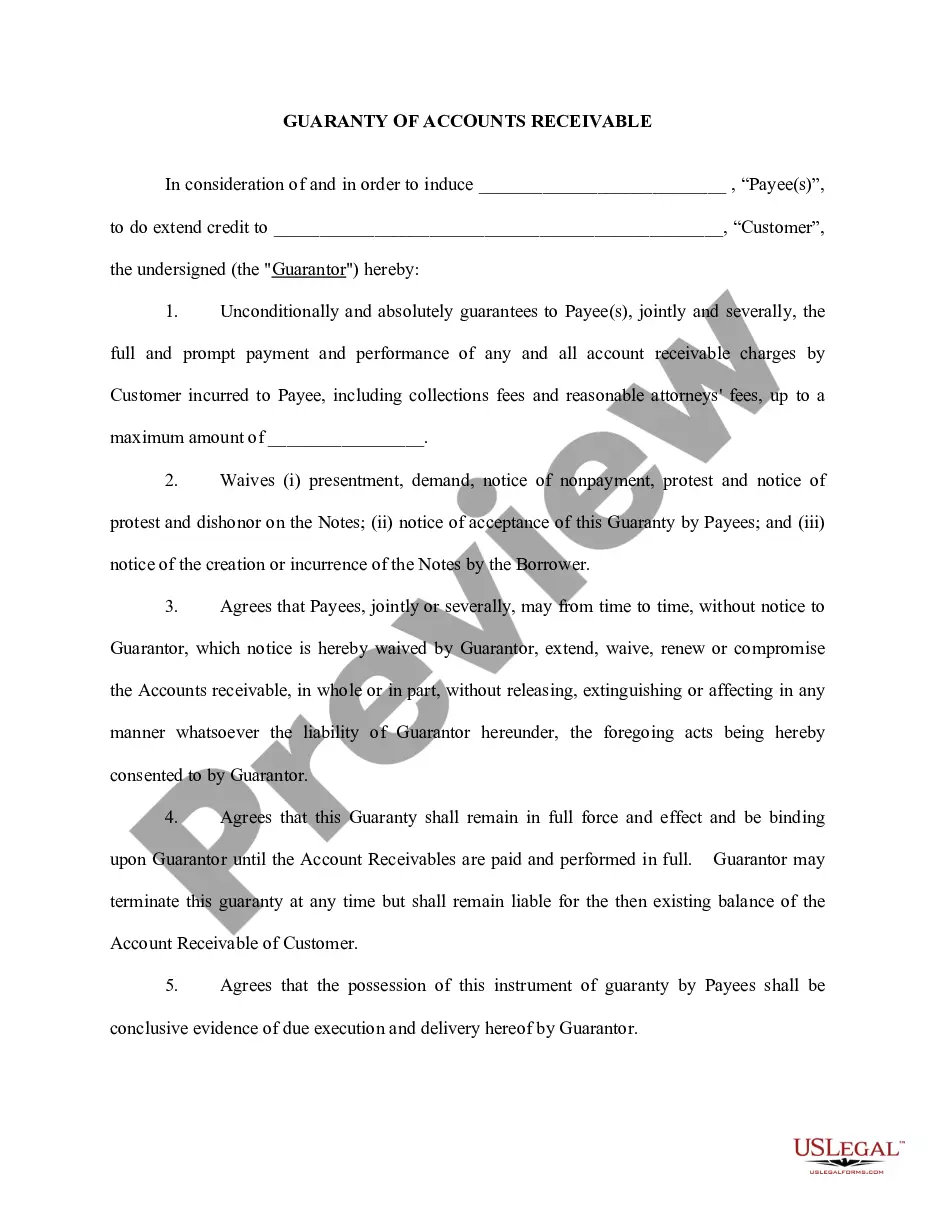
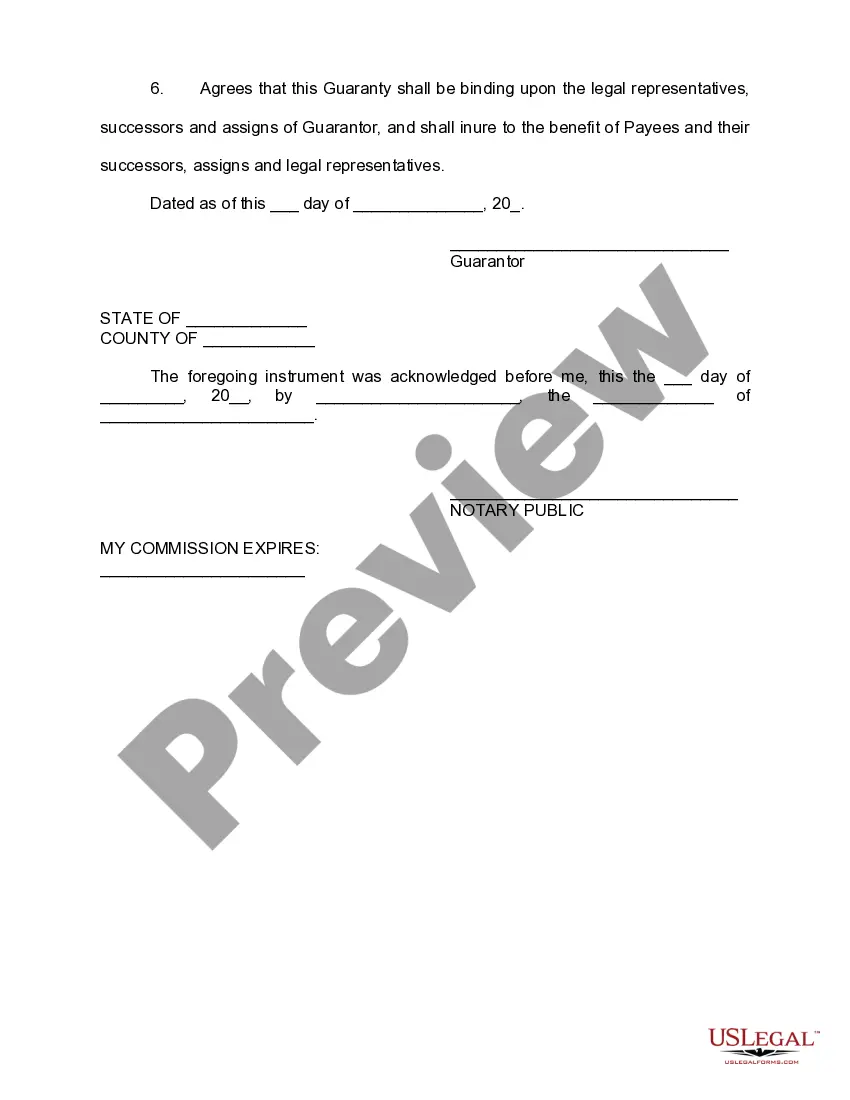
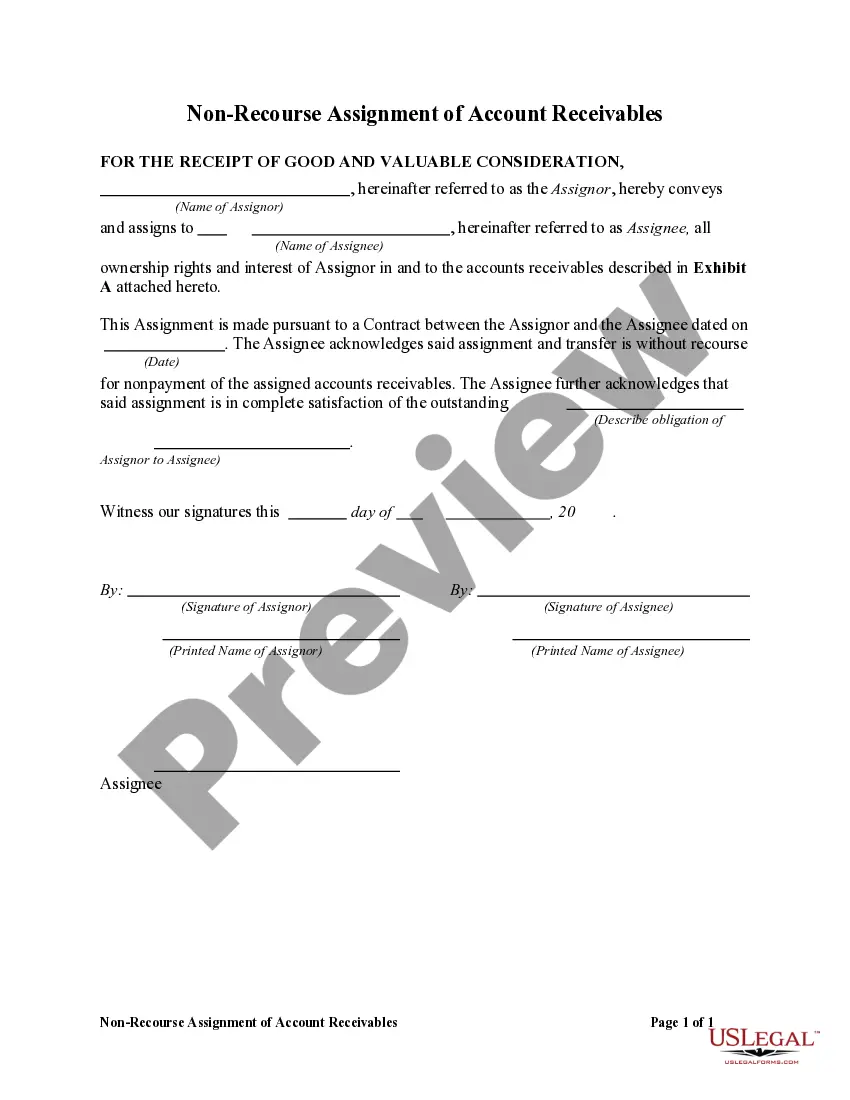
This form states that the guarantor unconditionally and absolutely guarantees to payee(s), jointly and severally, the full and prompt payment and performance of any and all account receivable charges by the customer incurred to the payee, including collections fees and reasonable attorneys' fees, up to a certain maximum amount.
Hawaii Accounts Receivable - Guaranty
Category:
State:
Multi-State
Control #:
US-00401
Format:
Word;
Rich Text
Instant download
Description
Free preview


Get your form ready online
Our built-in tools help you complete, sign, share, and store your documents in one place.
Built-in online Word editor
Make edits, fill in missing information, and update formatting in US Legal Forms—just like you would in MS Word.
Export easily
Download a copy, print it, send it by email, or mail it via USPS—whatever works best for your next step.
E-sign your document
Sign and collect signatures with our SignNow integration. Send to multiple recipients, set reminders, and more. Go Premium to unlock E-Sign.
Notarize online 24/7
If this form requires notarization, complete it online through a secure video call—no need to meet a notary in person or wait for an appointment.
Store your document securely
We protect your documents and personal data by following strict security and privacy standards.

Make edits, fill in missing information, and update formatting in US Legal Forms—just like you would in MS Word.

Download a copy, print it, send it by email, or mail it via USPS—whatever works best for your next step.

Sign and collect signatures with our SignNow integration. Send to multiple recipients, set reminders, and more. Go Premium to unlock E-Sign.

If this form requires notarization, complete it online through a secure video call—no need to meet a notary in person or wait for an appointment.

We protect your documents and personal data by following strict security and privacy standards.
Looking for another form?





How to fill out Accounts Receivable - Guaranty?
Finding the correct legal document format can be a challenge. Of course, there are numerous templates available online, but how do you locate the legal form you require? Utilize the US Legal Forms website. The service provides a multitude of templates, such as the Hawaii Accounts Receivable - Guaranty, which can be utilized for business and personal needs. All of the forms are verified by experts and comply with federal and state regulations.
If you are already registered, Log In to your account and click the Download button to obtain the Hawaii Accounts Receivable - Guaranty. Use your account to browse through the legal forms you have previously purchased. Visit the My documents tab in your account to get another copy of the document you require.
If you are a new user of US Legal Forms, here are simple steps for you to follow: First, ensure you have selected the appropriate form for your city/county. You can view the form using the Preview button and review the form details to confirm it is the correct one for you. If the form does not meet your requirements, use the Search field to find the correct form. Once you are certain that the form is suitable, click on the Get now button to obtain the form. Choose the pricing plan you wish and enter the necessary details. Create your account and complete the transaction using your PayPal account or credit card.
- Select the file format and download the legal document format to your device.
- Fill out, modify, and print and sign the obtained Hawaii Accounts Receivable - Guaranty.
- US Legal Forms is the largest collection of legal forms where you can find various document templates.
- Take advantage of the service to obtain professionally crafted documents that adhere to state regulations.
Form popularity
FAQ
The 7 7 7 rule for collections suggests that you should contact your debtors seven days after a payment is missed, then again after another seven days, and finally follow up seven days later. This strategy helps maintain communication and encourages timely payments. By implementing this rule, you can enhance your Hawaii Accounts Receivable - Guaranty processes and improve your collection success rate.
In Hawaii, a debt generally becomes uncollectible after six years. This period starts from the date of the last payment or the last acknowledgment of the debt. It is crucial to track your accounts receivable to ensure timely action. Utilizing Hawaii Accounts Receivable - Guaranty can help you manage your debts effectively before they reach this uncollectible stage.
Accounts receivable controls are internal control policies and procedures implemented by a company to ensure the accuracy, validity, and timely collection of outstanding amounts owed by customers.
Below, we break down the process into 8 comprehensive steps, providing you with a roadmap for effective AR process management. Step 1: Customer Order Placement. ... Step 2: Credit Approval. ... Step 3: Invoice Dispatch. ... Step 4: Collections Management. ... Step 5A: Writing Off Uncollectible Debts. ... Step 5B: Payment Processing.
The AR cycle entails tracking and collecting payments owed in a timely manner. It involves many steps, from submitting medical bills, following up on unpaid claims, and patient billing to payment posting and collections management.
Percentage-of-receivables method The percentage-of-receivables method estimates uncollectible accounts by determining the desired size of the Allowance for Uncollectible Accounts. Rankin would multiply the ending balance in Accounts Receivable by a rate (or rates) based on its uncollectible accounts experience.
Accounts receivable collections is the process a business undergoes to ensure that customers follow through on payments for services or products provided. Collections can take on many different approaches depending on the business, the customer, and the accounts receivable.
4 steps to prepare accounts receivable aging report Review open invoices. ... Categorize customers ing to the aging schedule. ... Create a list of customers with outstanding invoices. ... List customers ing to the number of days outstanding.
Account receivable is the amount the company owes from the customer for selling its goods or services. The journal entry to record such credit sales of goods and services is passed by debiting the accounts receivable account with the corresponding credit to the Sales account.
What is the accounts receivable process? The accounts receivable process delivers cash into the business. This is done via the invoicing and the collection process to bring payments in from goods or services sold.