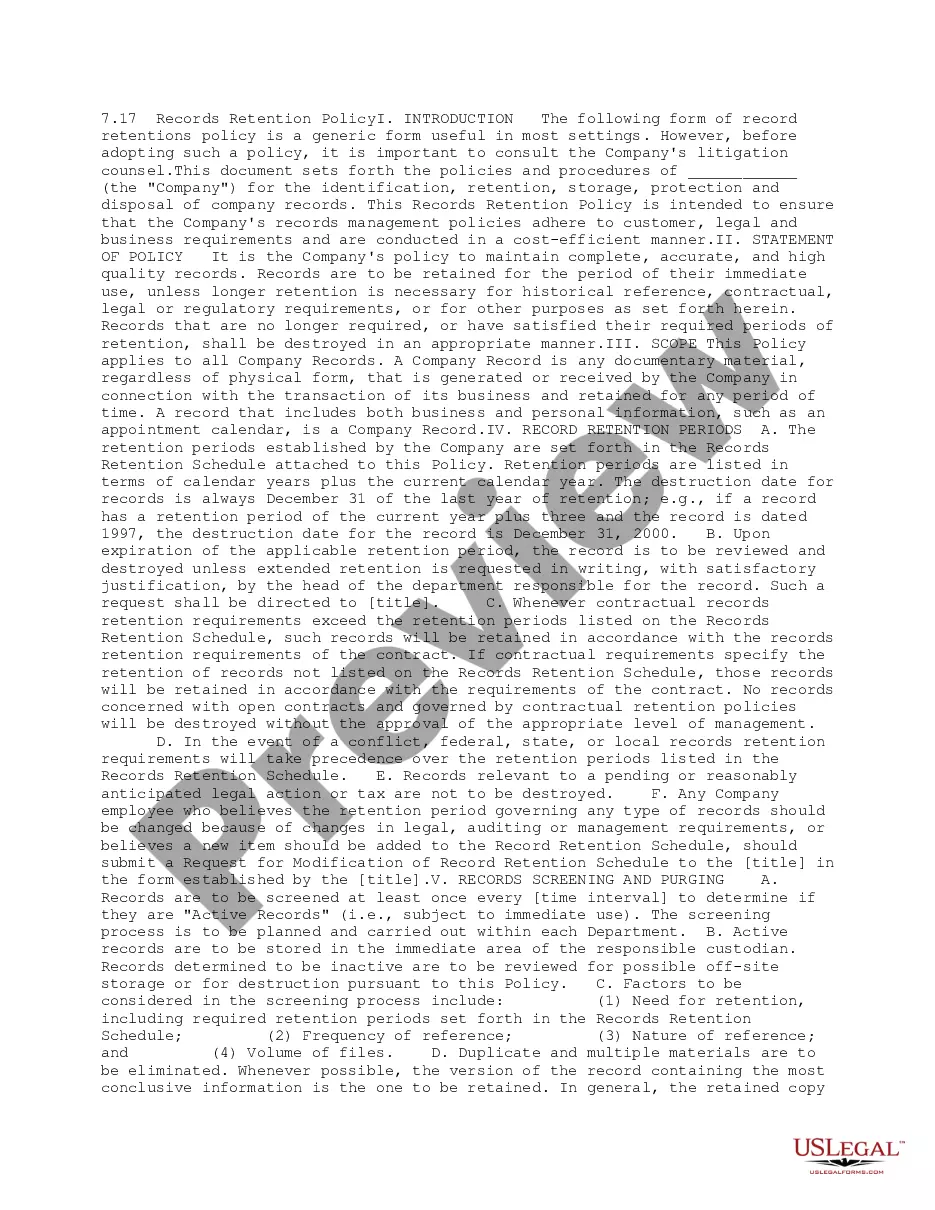
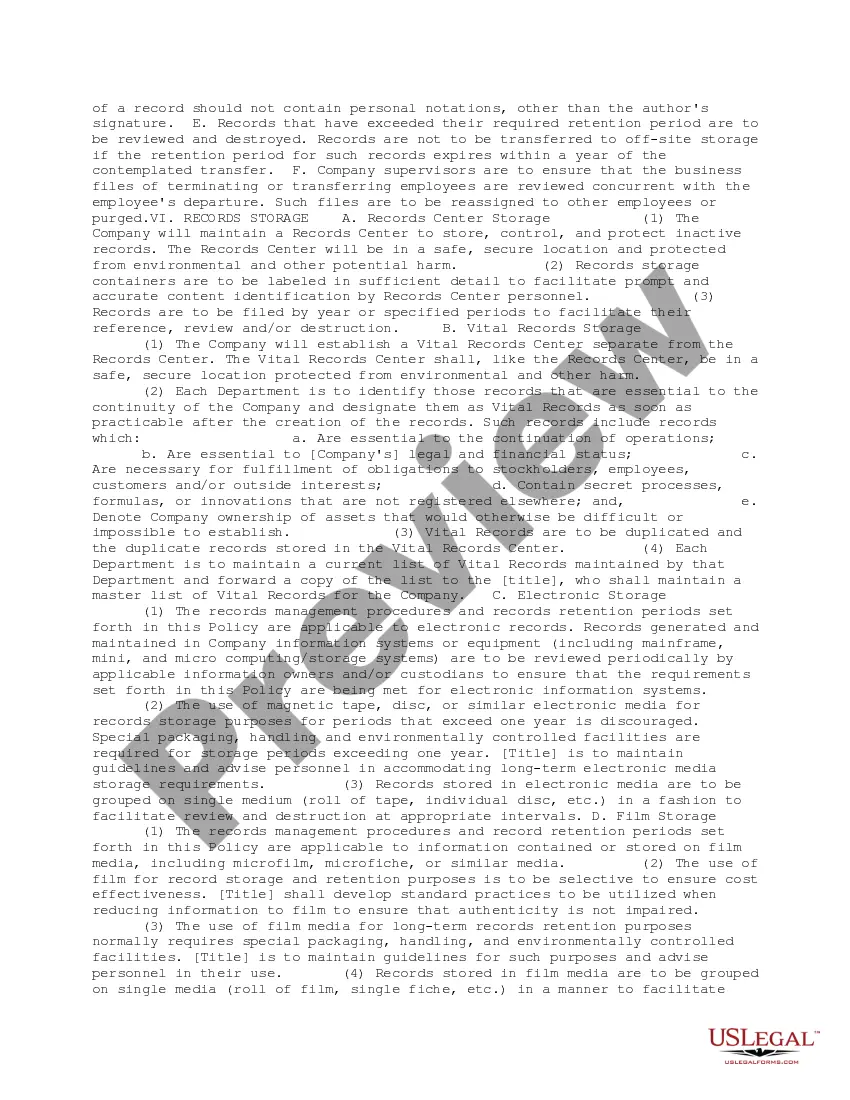
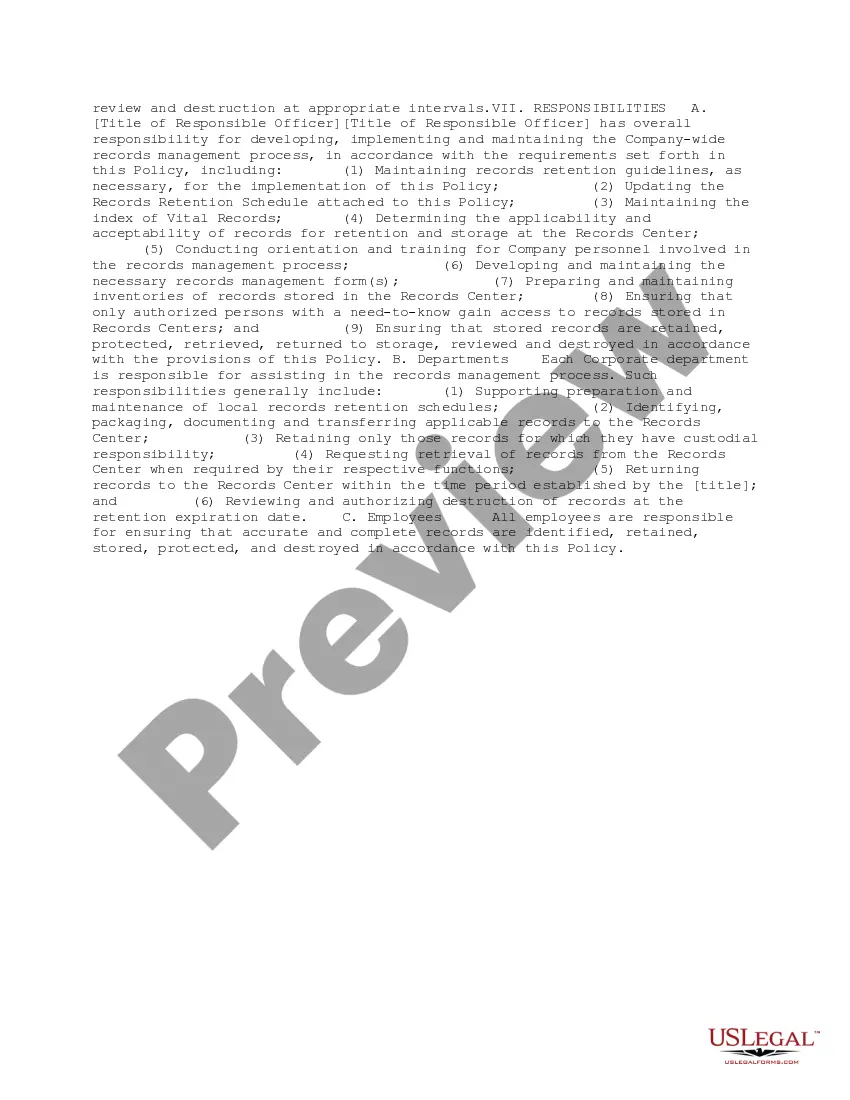
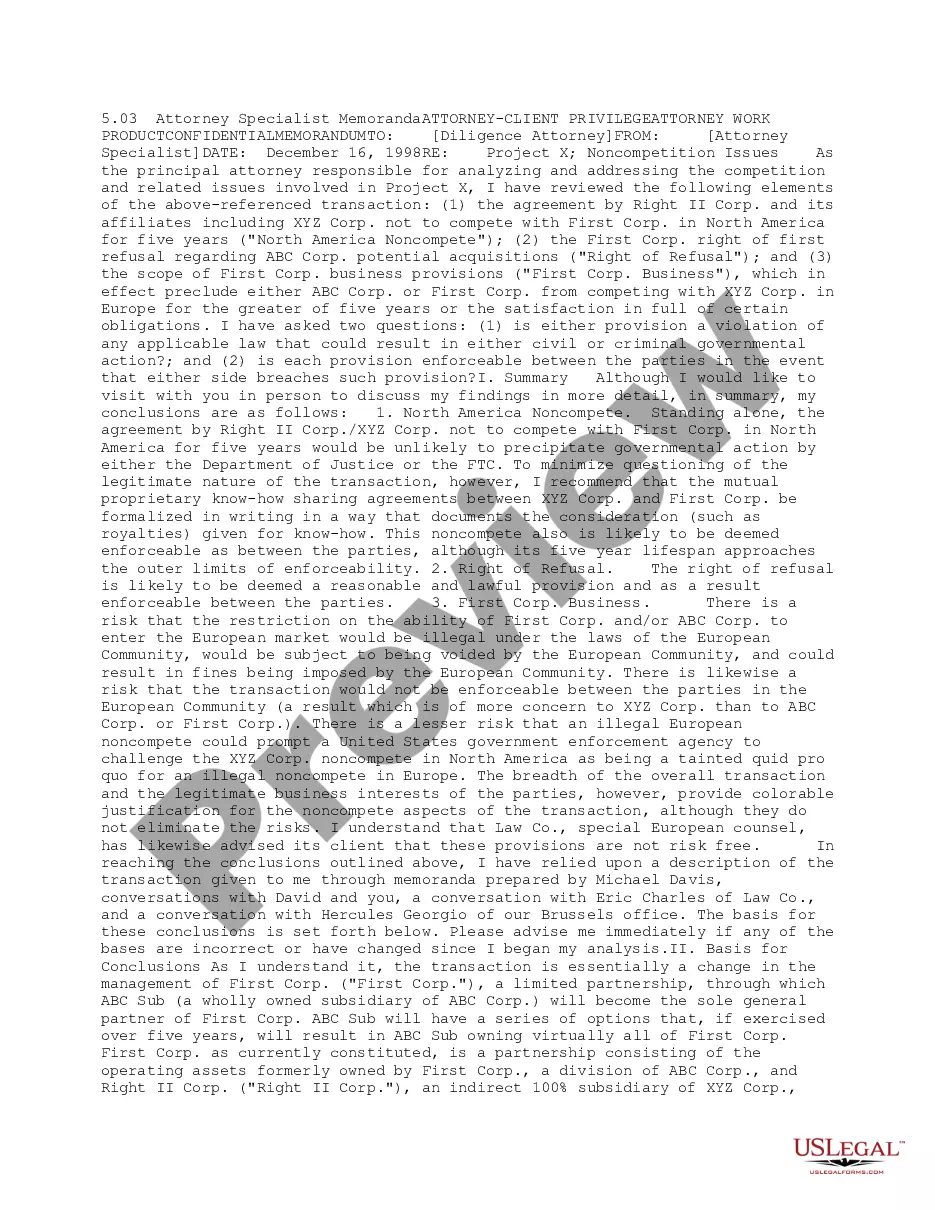
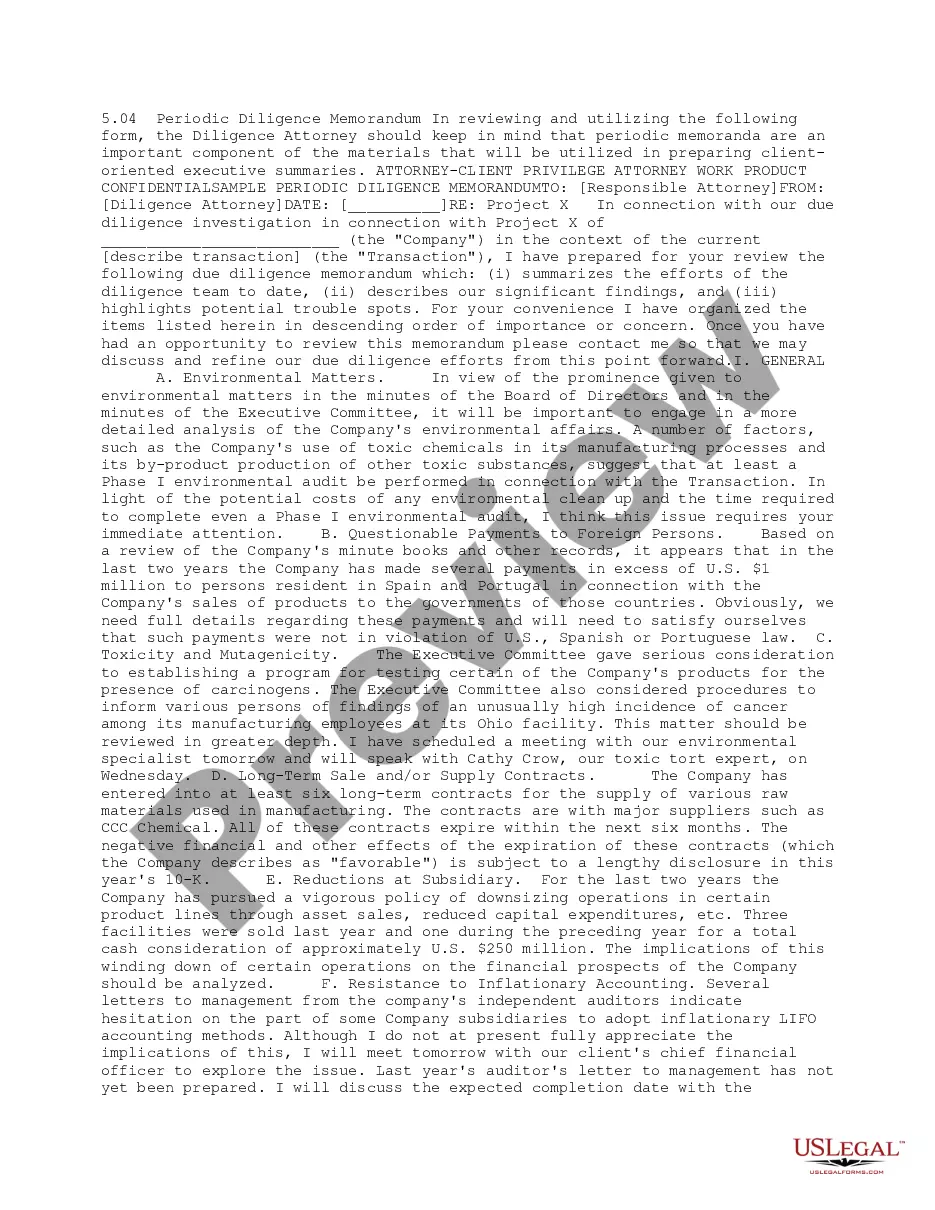
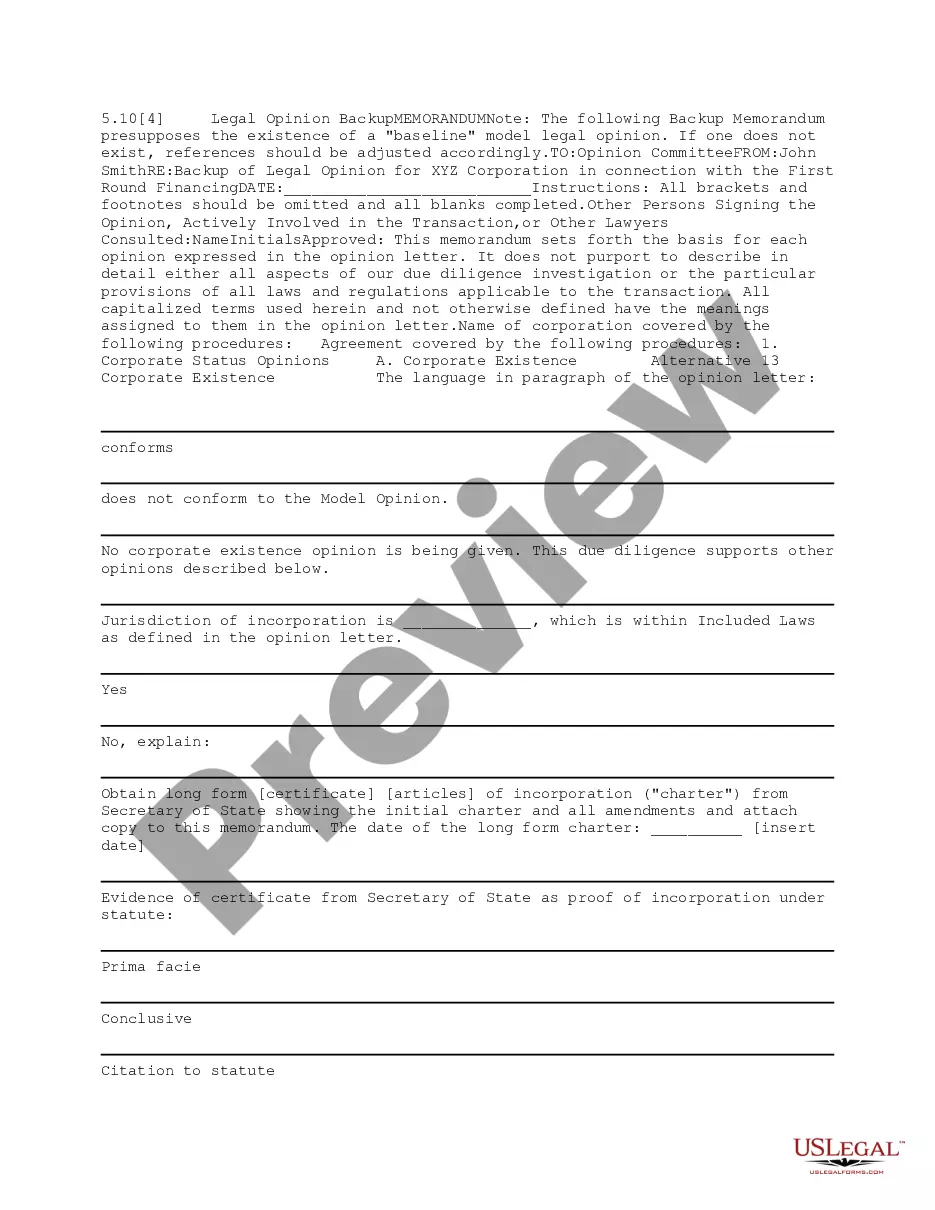
This due diligence form entails policies and procedures for the identification, retention, storage, protection and disposal of company records. This Records Retention Policy is intended to ensure that the company's records management policies adhere to customer, legal and business requirements and are conducted in a cost-efficient manner.
Guam Records Retention Policy
State:
Multi-State
Category:
Control #:
US-DD0717
Format:
Word;
PDF;
Rich Text
56 downloads
Description
Free preview
Get your form ready online
Our built-in tools help you complete, sign, share, and store your documents in one place.
Built-in online Word editor
Make edits, fill in missing information, and update formatting in US Legal Forms—just like you would in MS Word.
Export easily
Download a copy, print it, send it by email, or mail it via USPS—whatever works best for your next step.
E-sign your document
Sign and collect signatures with our SignNow integration. Send to multiple recipients, set reminders, and more. Go Premium to unlock E-Sign.
Notarize online 24/7
If this form requires notarization, complete it online through a secure video call—no need to meet a notary in person or wait for an appointment.
Store your document securely
We protect your documents and personal data by following strict security and privacy standards.

Make edits, fill in missing information, and update formatting in US Legal Forms—just like you would in MS Word.

Download a copy, print it, send it by email, or mail it via USPS—whatever works best for your next step.

Sign and collect signatures with our SignNow integration. Send to multiple recipients, set reminders, and more. Go Premium to unlock E-Sign.

If this form requires notarization, complete it online through a secure video call—no need to meet a notary in person or wait for an appointment.

We protect your documents and personal data by following strict security and privacy standards.
Looking for another form?
How to fill out Records Retention Policy?
US Legal Forms - one of the biggest collections of legal documents in the USA - provides a range of legal form templates you can download or print.
By utilizing the website, you will access a plethora of forms for business and personal purposes, organized by categories, states, or keywords.
You can find the latest versions of forms like the Guam Records Retention Policy in just minutes.
Refer to the form description to confirm that you have selected the correct document.
If the form does not meet your requirements, use the Search field at the top of the screen to find one that does.
- If you already have a monthly subscription, Log In and download the Guam Records Retention Policy from your US Legal Forms library.
- The Download button will appear on each form you view.
- You have access to all previously acquired forms in the My documents tab of your profile.
- If you are using US Legal Forms for the first time, here are simple steps to get started.
- Ensure you have selected the correct form for your city/state.
- Click the Preview button to review the content of the form.
Form popularity
FAQ
To create a retention policy, start by gathering key stakeholders to discuss the types of documents and data your organization handles. Research the Guam Records Retention Policy to understand legal retention requirements. Finally, document your findings in a clear policy that establishes guidelines for document retention, storage, and disposal.
Creating a record retention policy involves identifying all document types and determining the legal retention requirements for each. Reference the Guam Records Retention Policy for guidance on standard retention times. Engaging your team in the process can lead to a more comprehensive policy that meets both regulatory and operational needs.
A standard file retention policy outlines the duration for which various types of records are kept. Generally, this aligns with regulations like the Guam Records Retention Policy, which sets specific timeframes for different records. It's essential to regularly review and update your retention policy to stay compliant with any changes in legislation and organizational requirements.
An example of a data retention policy might specify retaining financial records for seven years, while employee records may be kept for ten years after termination. This aligns with guidelines in the Guam Records Retention Policy, which provides a framework for different types of records. Your policy should be clear, concise, and tailored to your organization's specific needs.
To develop a data retention policy, begin by evaluating the types of data your organization collects and stores. You should reference the Guam Records Retention Policy to define retention periods for compliance. Moreover, consider how data is used within your organization to ensure that retention times meet both legal requirements and operational needs.
The Records Management Act Guam establishes a framework for managing public records in Guam. It outlines the responsibilities of government agencies in the retention, preservation, and disposal of records. Understanding this act is crucial, as it guides compliance with the Guam Records Retention Policy and ensures transparency and accountability in public administration.
Creating a document retention policy starts with identifying the types of documents you handle and understanding the legal requirements for maintaining them. You should assess how long each document type needs to be kept based on regulations like the Guam Records Retention Policy. Additionally, involve key stakeholders to ensure the policy aligns with organizational needs and compliance standards.
A comprehensive Guam Records Retention Policy should include the retention schedule, which outlines how long to keep various records, ensuring compliance and reducing legal risks. Next, a clear definition of record types is essential, as it helps all employees understand what documents are covered under the policy. Lastly, the process for record disposal should be established to ensure that outdated records are safely and securely discarded, protecting sensitive information while maintaining compliance.
Guam follows a combination of local and federal laws, including its own statutes and various federal regulations. The Guam Records Retention Policy reflects these laws, establishing how long organizations must retain records. By adhering to this policy, businesses and individuals can ensure compliance with applicable legal standards in Guam. Utilizing services like USLegalForms can help streamline your understanding of these laws.
The Federal Records Management Act governs how federal agencies manage their records, including their creation, maintenance, and disposal. This act aims to ensure that government records are preserved for their legal, historical, and informational value. Understanding this act can complement your knowledge of the Guam Records Retention Policy, ensuring that you meet both federal and local standards. For more detailed guidance, check out resources on platforms like USLegalForms.