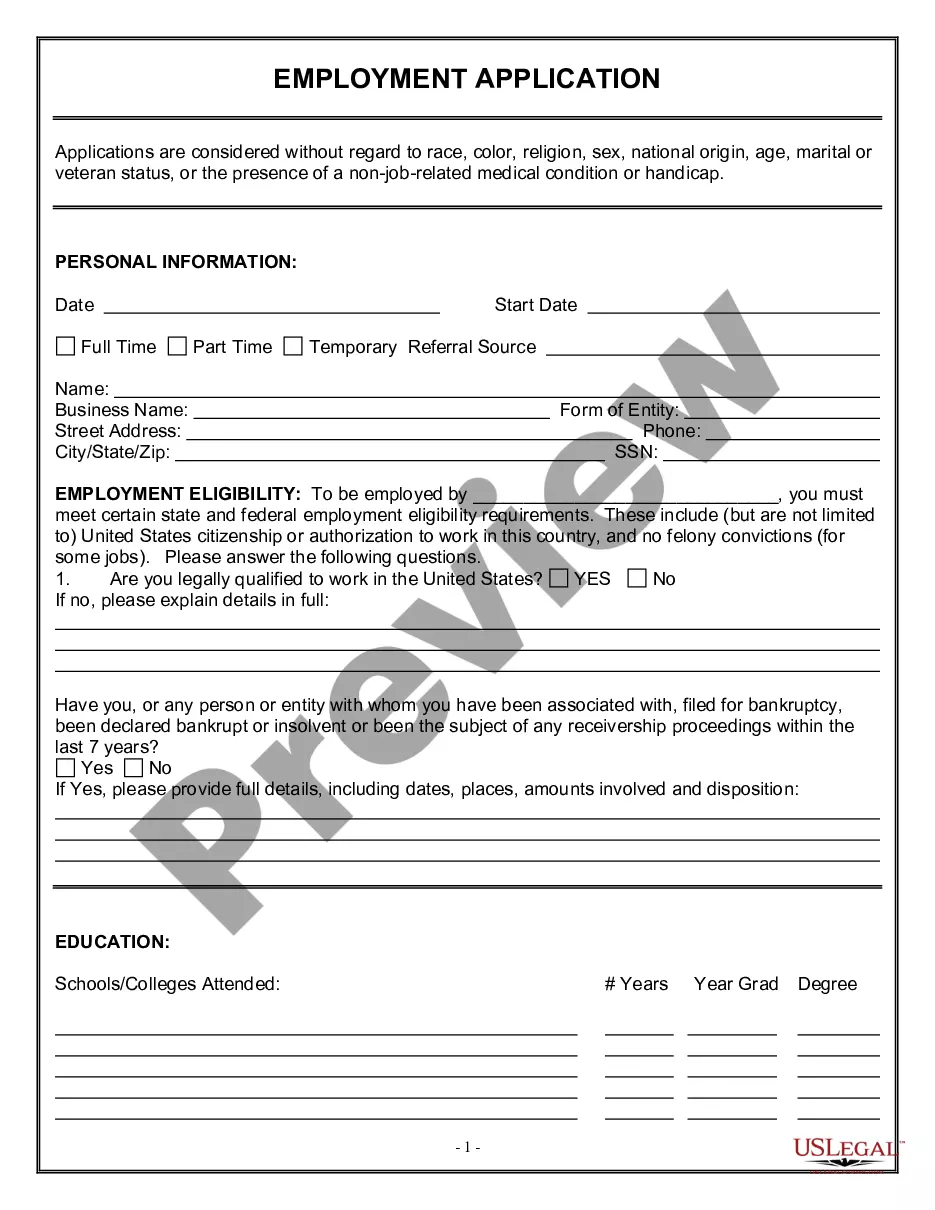
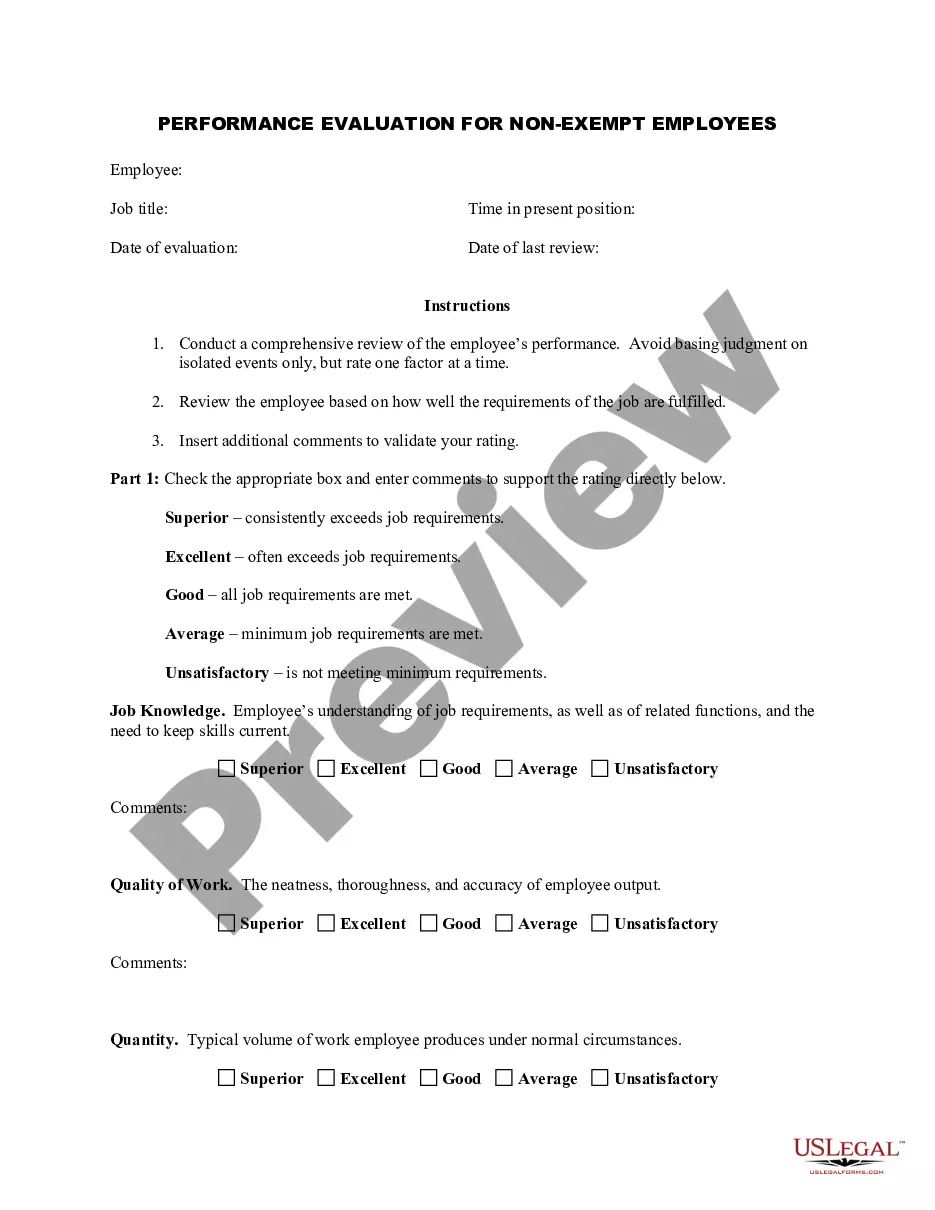
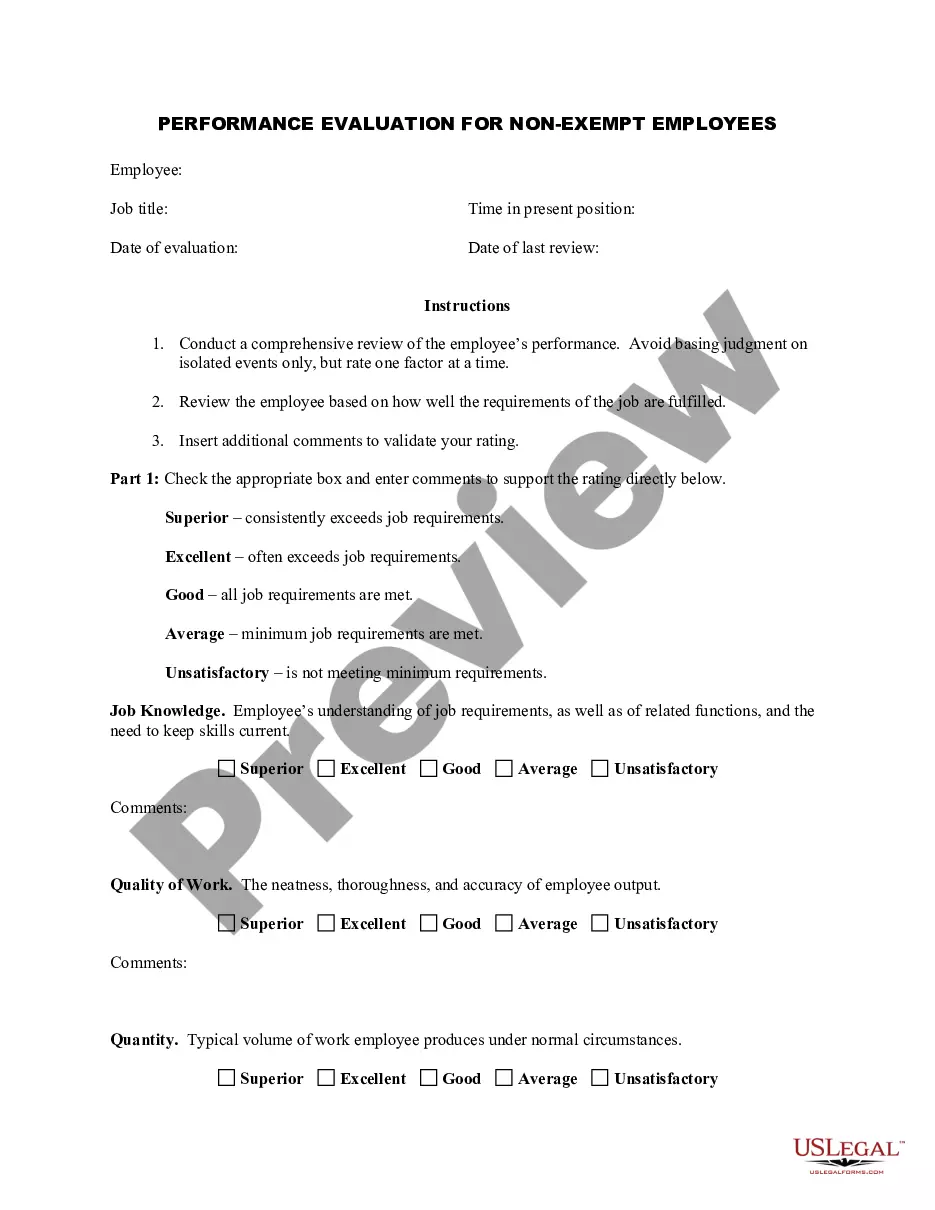
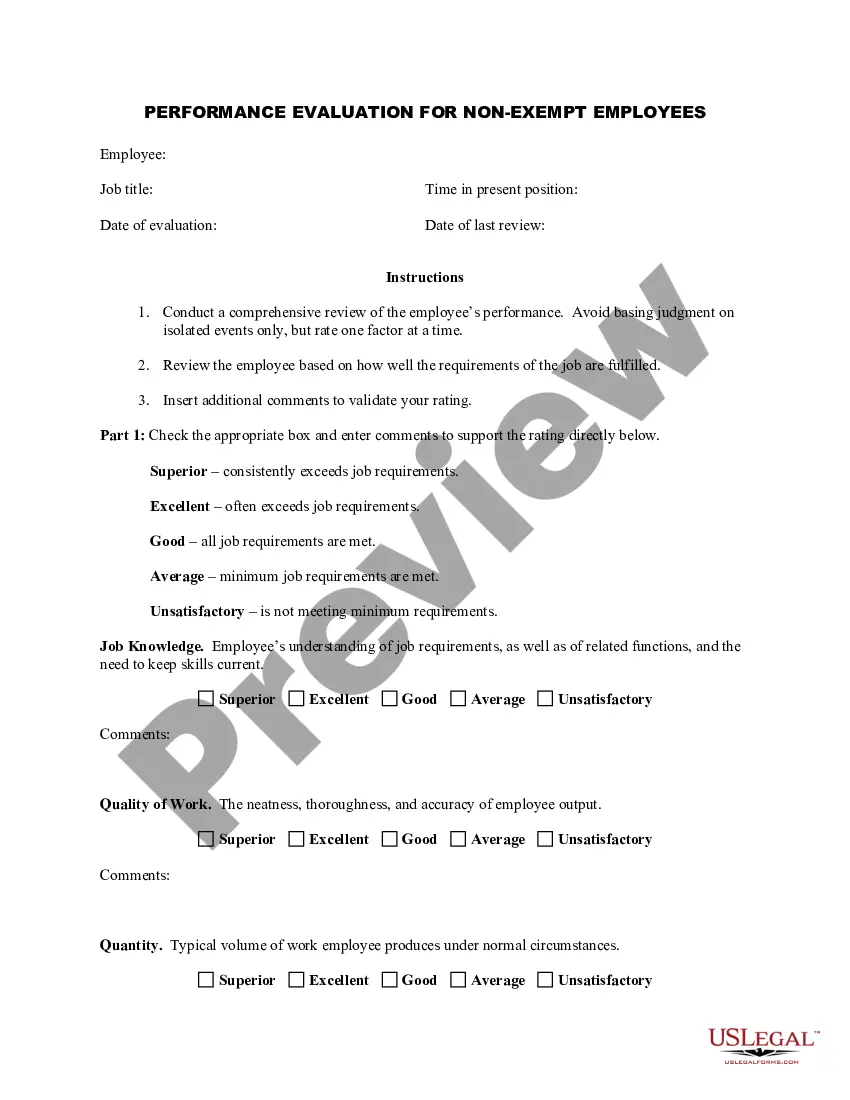
Guam Employee Evaluation Form for Veterinarian
Description
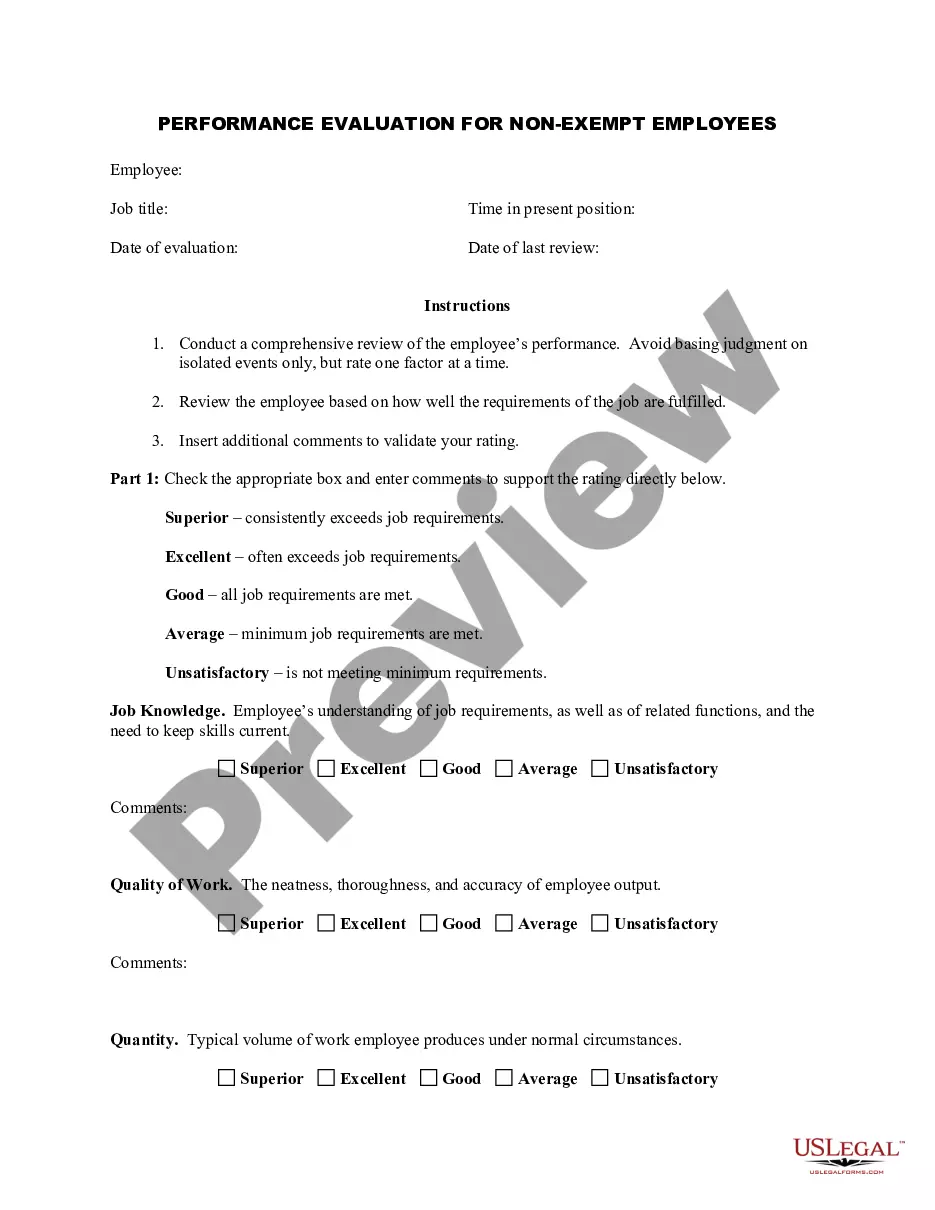
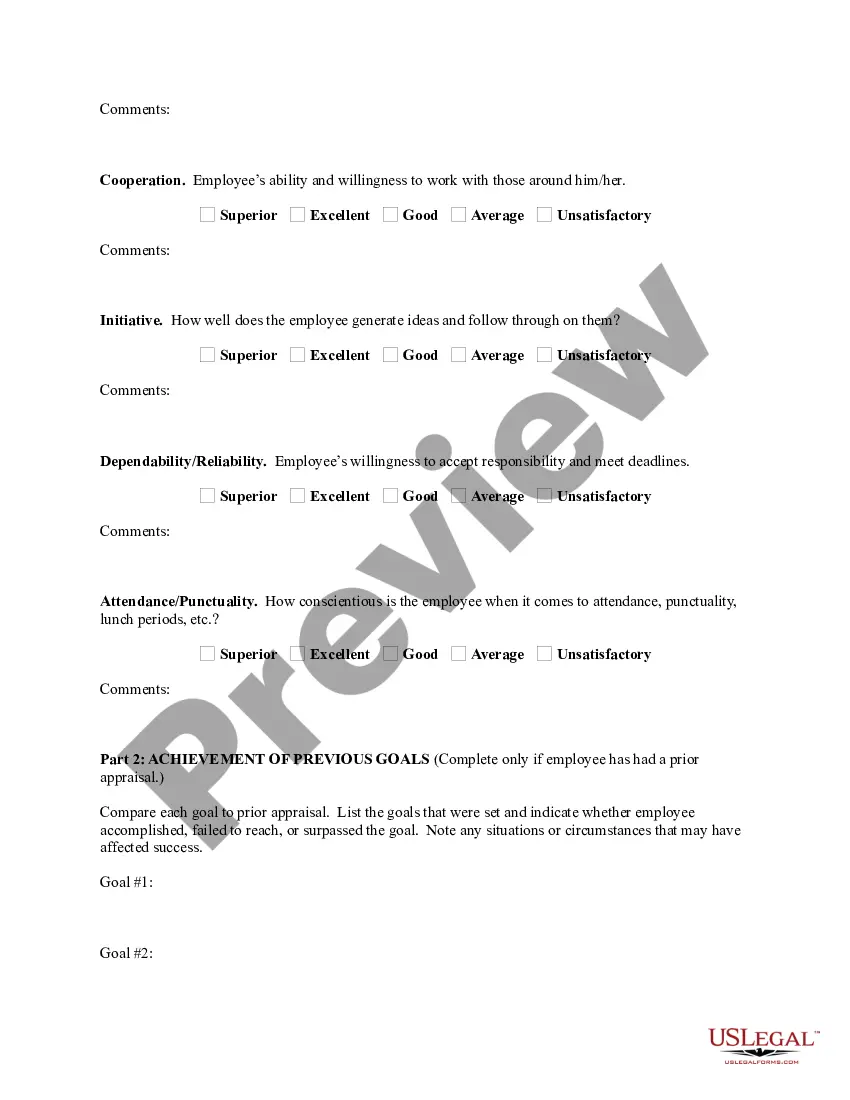
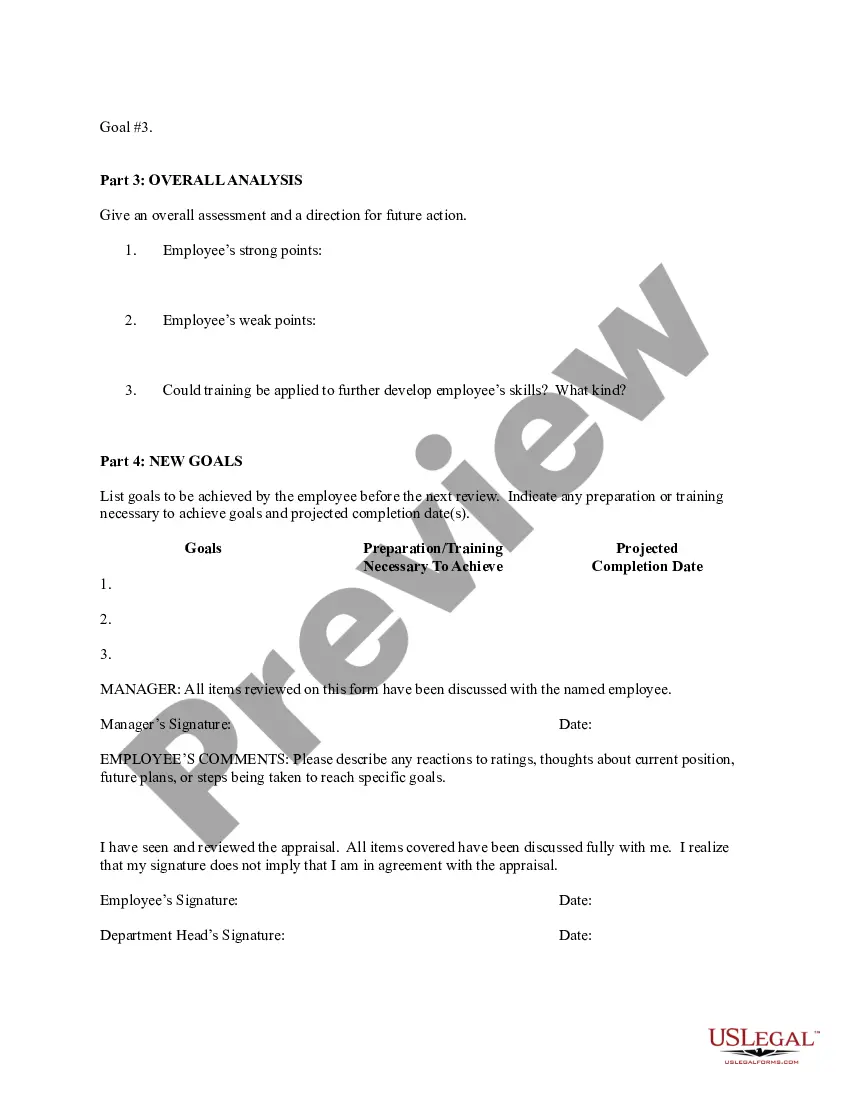




How to fill out Employee Evaluation Form For Veterinarian?
You are capable of dedicating multiple hours online seeking the legal document template that meets the state and federal standards you require.
US Legal Forms offers an extensive collection of legal forms that are reviewed by experts.
It is easy to download or print the Guam Employee Evaluation Form for Veterinarian from their service.
If available, utilize the Review option to look over the document template as well.
- If you possess a US Legal Forms account, you can Log In and select the Download option.
- Subsequently, you can fill out, modify, print, or sign the Guam Employee Evaluation Form for Veterinarian.
- Every legal document template you obtain is yours indefinitely.
- To retrieve an additional copy of any purchased form, navigate to the My documents tab and click on the respective option.
- If you are visiting the US Legal Forms website for the first time, follow the simple instructions below.
- First, ensure that you have chosen the correct document template for your area/city of preference.
- Refer to the form details to confirm you have selected the appropriate form.
Form popularity
FAQ
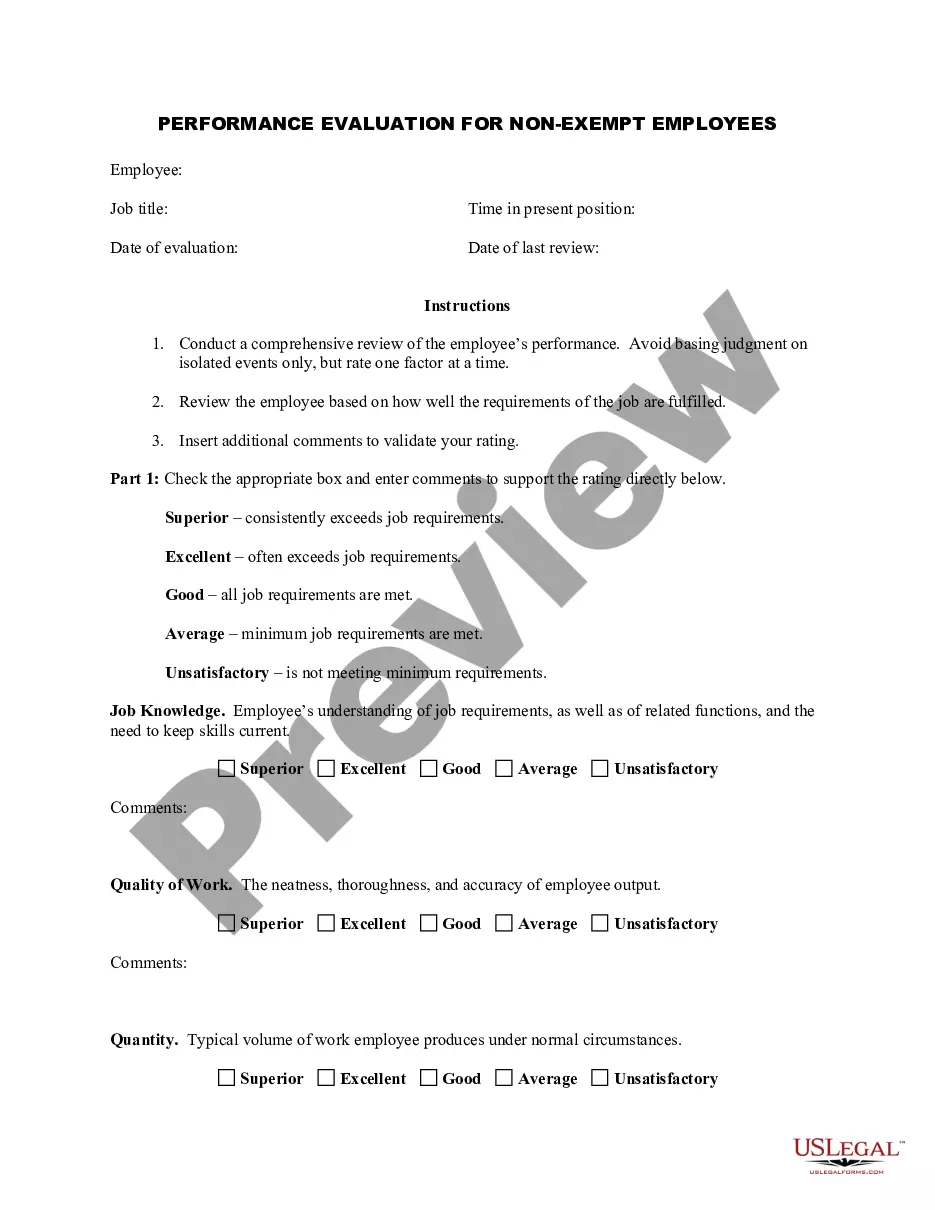
Filling out an employee self-evaluation form involves reflecting on your job performance and achievements. Start by reviewing your goals and objectives, then assess your strengths and areas for improvement. Using the Guam Employee Evaluation Form for Veterinarian can streamline this process, ensuring you cover all necessary aspects effectively.
A routine checkup can cost between $50 to $250, and most general veterinary care costs less than $500. Some unexpected health problems can cost many thousands of dollars to treat depending on the condition. Ongoing costs like those associated with cancer treatments can cost even more.
Another good way of evaluating your vet is to see if they've had any legal or non-legal complaints filed against them....Ask people in your community.Find out what they think of the doctor personally.Find out how the vet treats their pet.Third party references are good, too.
Anecdotally, practice value has been expected to be between 2/3rd's of gross revenue and 100% of 1 year's gross revenue. Often, practice owners will blindly offer that their practice is worth anywhere between 2/3rd's and 1 year's gross revenue.
A great vet takes a detailed history and conducts a thorough nose-to-tail exam. Every vet I interviewed for this article agreed that to do the physical exam justice, a vet must allow at least 30 minutes for the initial well care appointment or sick visit. Less than that and your pet's getting seriously shortchanged.
5 Key Personality Traits of a Successful VeterinarianCompassion.Dexterity.Skilled Communicator.Problem Solver.Decision Maker.
First Visit ProtocolThe dog or cat will be weighed.Heart and lungs listened to.Rectal temperature taken.Ears, eyes, nose, feet, and genitalia examined.Skin, coat, teeth and mouth examined.Abdomen and lymph nodes palpated.Feces examined (bring a sample) for worms (most pups have roundworms)More items...?
Most veterinarians work full time, often working more than 40 hours per week. Some work nights or weekends, and they may have to respond to emergencies outside of scheduled work hours.
Target earnings before interest, tax, depreciation and amortization (EBITDA) is typically 14% to 17%, but the average is 11% to 12% for small-animal practices. Farquer and McCormick consider a practice of any type to be financially healthy if it is 14% to 18% EBITDA.
Small animal hospitals typically generate a profit of 10% to 15%, while specialty and emergency practices often earn 15% to 25%. The higher the profit, the more valuable the practice will be at selling time. Does that mean your practice profit needs to be in the 10% to 25% range and that you are a failure if it is not?