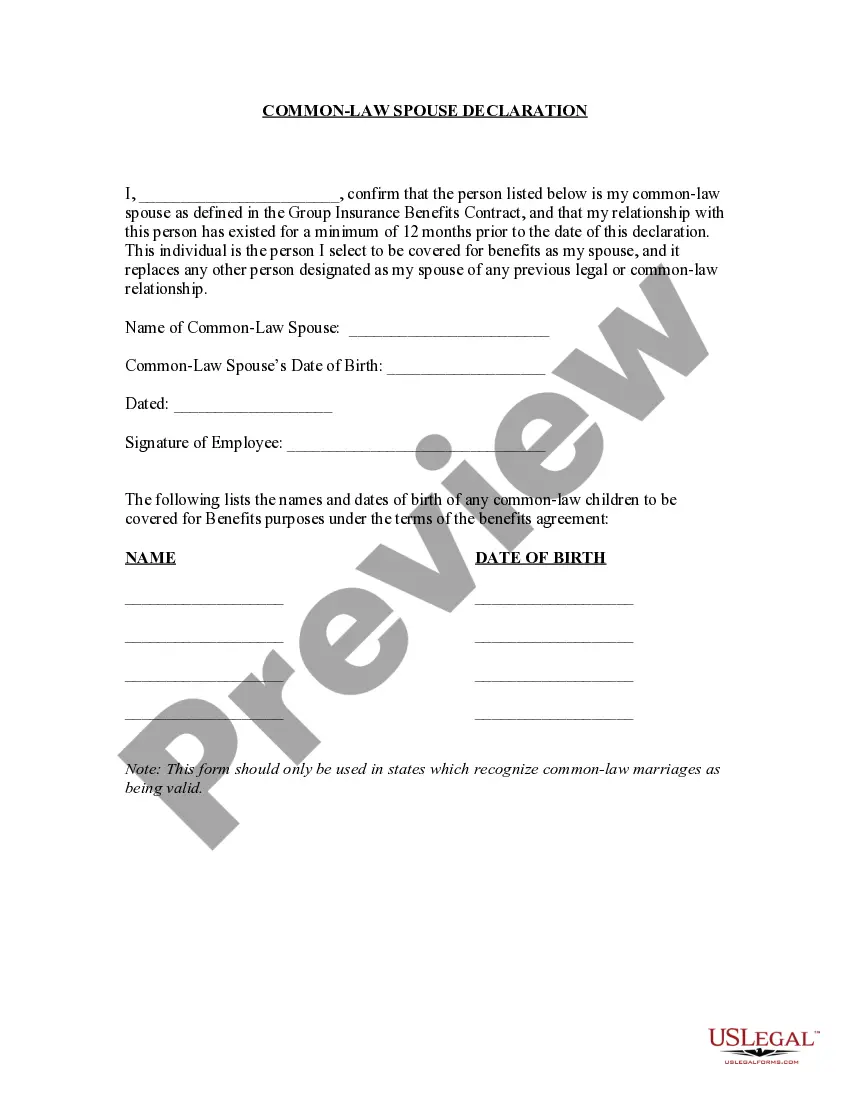
Guam Common Law Spouse or Marriage Declaration or Affidavit
Description
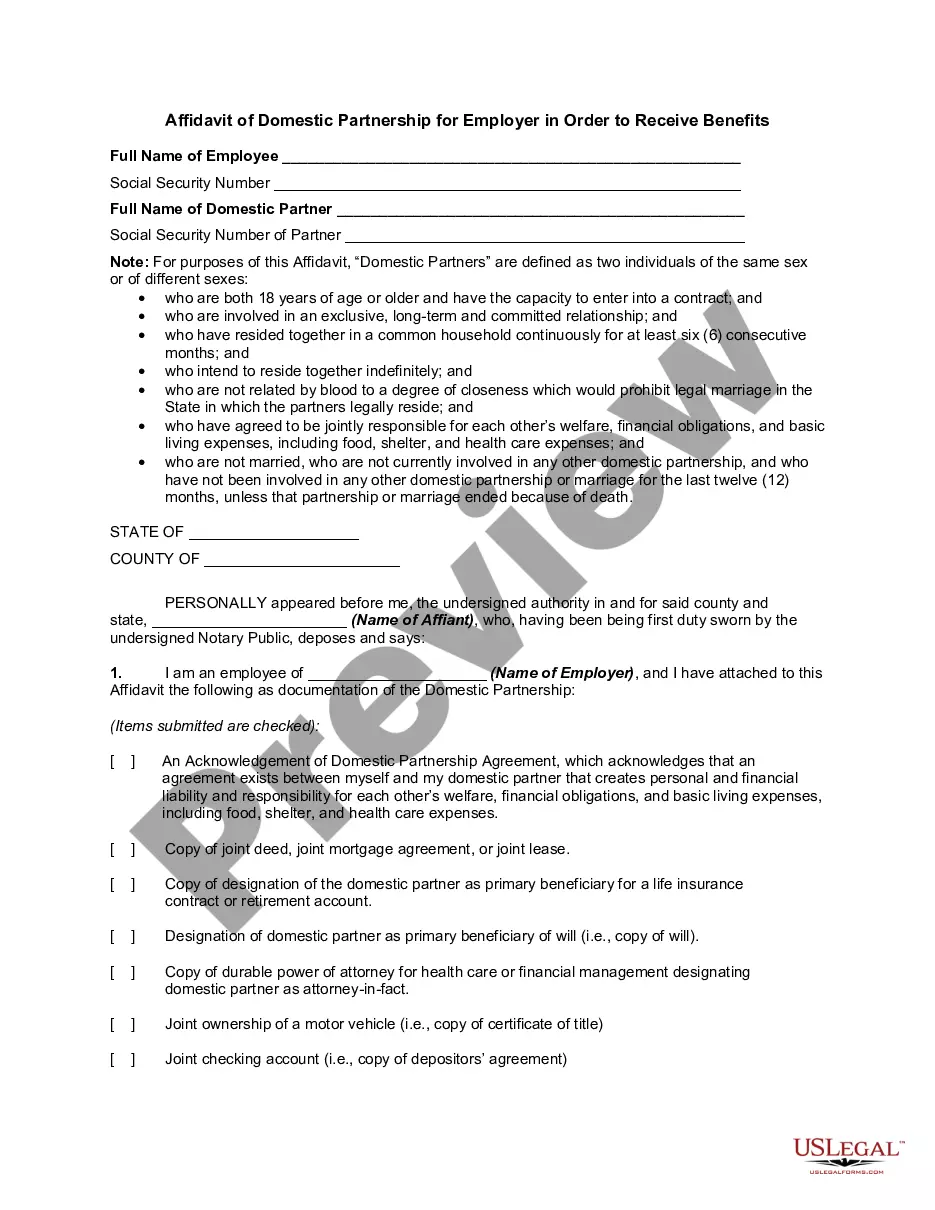
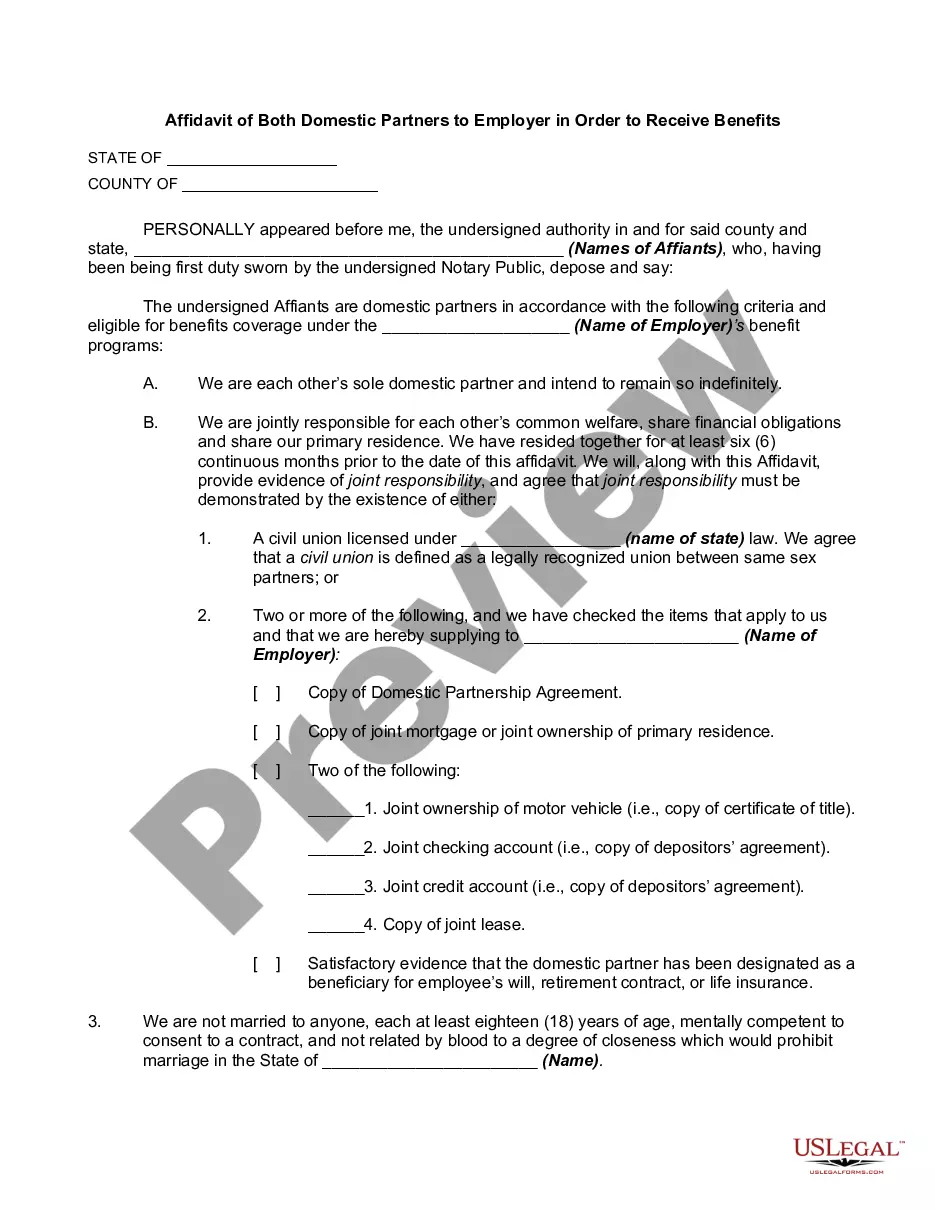
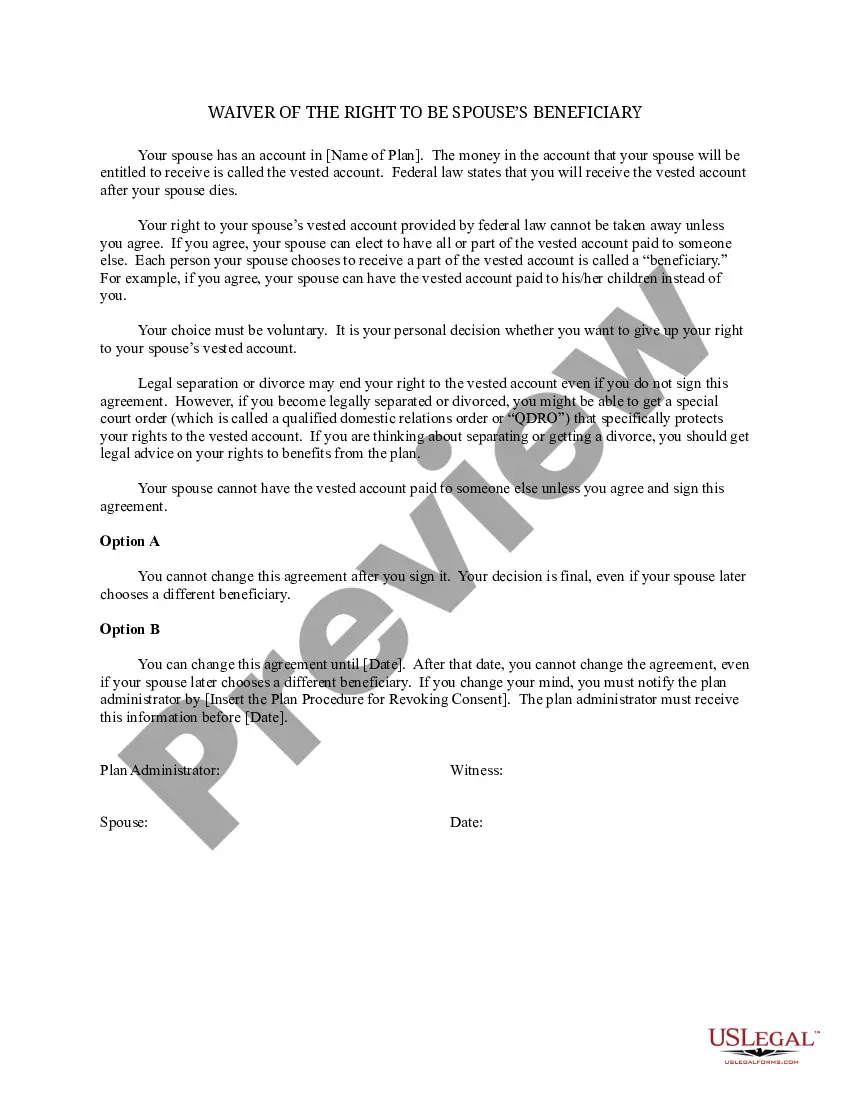
Get your form ready online
Our built-in tools help you complete, sign, share, and store your documents in one place.
Make edits, fill in missing information, and update formatting in US Legal Forms—just like you would in MS Word.
Download a copy, print it, send it by email, or mail it via USPS—whatever works best for your next step.
Sign and collect signatures with our SignNow integration. Send to multiple recipients, set reminders, and more. Go Premium to unlock E-Sign.
If this form requires notarization, complete it online through a secure video call—no need to meet a notary in person or wait for an appointment.
We protect your documents and personal data by following strict security and privacy standards.

Make edits, fill in missing information, and update formatting in US Legal Forms—just like you would in MS Word.

Download a copy, print it, send it by email, or mail it via USPS—whatever works best for your next step.

Sign and collect signatures with our SignNow integration. Send to multiple recipients, set reminders, and more. Go Premium to unlock E-Sign.

If this form requires notarization, complete it online through a secure video call—no need to meet a notary in person or wait for an appointment.

We protect your documents and personal data by following strict security and privacy standards.
Looking for another form?

How to fill out Common Law Spouse Or Marriage Declaration Or Affidavit?
You can spend time online trying to locate the legal document template that satisfies the federal and state requirements you need.
US Legal Forms offers thousands of legal documents that have been reviewed by experts.
You can download or print the Guam Common Law Spouse or Marriage Declaration or Affidavit from this service.
If available, use the Review button to view the document template as well.
- If you already possess a US Legal Forms account, you may Log In and click on the Download button.
- Subsequently, you can complete, modify, print, or sign the Guam Common Law Spouse or Marriage Declaration or Affidavit.
- Every legal document template you purchase belongs to you forever.
- To obtain another copy of the purchased form, navigate to the My documents tab and click the appropriate button.
- If you are using the US Legal Forms website for the first time, follow the simple instructions below.
- First, ensure that you have selected the right document template for the state/city of your choice.
- Check the form outline to confirm you have picked the correct form.
Form popularity
FAQ
Here are the places that recognize common-law marriage: Colorado, Iowa, Kansas, Montana, New Hampshire (for inheritance purposes only), Oklahoma, Rhode Island, South Carolina, Texas, Utah and the District of Columbia.
In addition to regular marriage, Australia, Brazil, and 11 US states recognize common law (or de facto) marriage, which allows one or both cohabiting partners to claim, under certain conditions, that an informal union is a marriage.
A common law marriage is a legally recognized marriage between two people who have not purchased a marriage license or had their marriage solemnized by a ceremony. Not all states have statutes addressing common law marriage. In some states case law and public policy determine validity.
As of 2018, eight states acknowledge common law marriages through final legislation. Those states are: Colorado, District of Columbia, Iowa, Kansas, Montana, New Hampshire, Texas, and Utah. The requirements to establish a common law marriage vary by state.
This section indicates that if a State were to find a common-law relationship between a man and woman and were to recognize such relationship as a valid marriage, the Federal Government would accept this in determining that they were man and wife.
Georgia Not recognized as lawful if common law marriage is entered into (in GA or any other state) after 1/1/97. Guam Not Recognized if entered into after 1948. Hawaii Not Recognized. Requires a license before marriage.
This section indicates that if a State were to find a common-law relationship between a man and woman and were to recognize such relationship as a valid marriage, the Federal Government would accept this in determining that they were man and wife.
Where is common-law marriage allowed? Here are the places that recognize common-law marriage: Colorado, Iowa, Kansas, Montana, New Hampshire (for inheritance purposes only), Oklahoma, Rhode Island, South Carolina, Texas, Utah and the District of Columbia.
What constitutes common law? A common law relationship is simply the act of living together in a marriage-like relationship without actually being legally married. It does not require any kind of legal process to create a common law union.
Marriage is a legal union between two individuals while a common-law marriage involves two people who live together and present themselves as a couple without getting married. Fewer than a dozen states and the District of Columbia recognize common-law marriages.