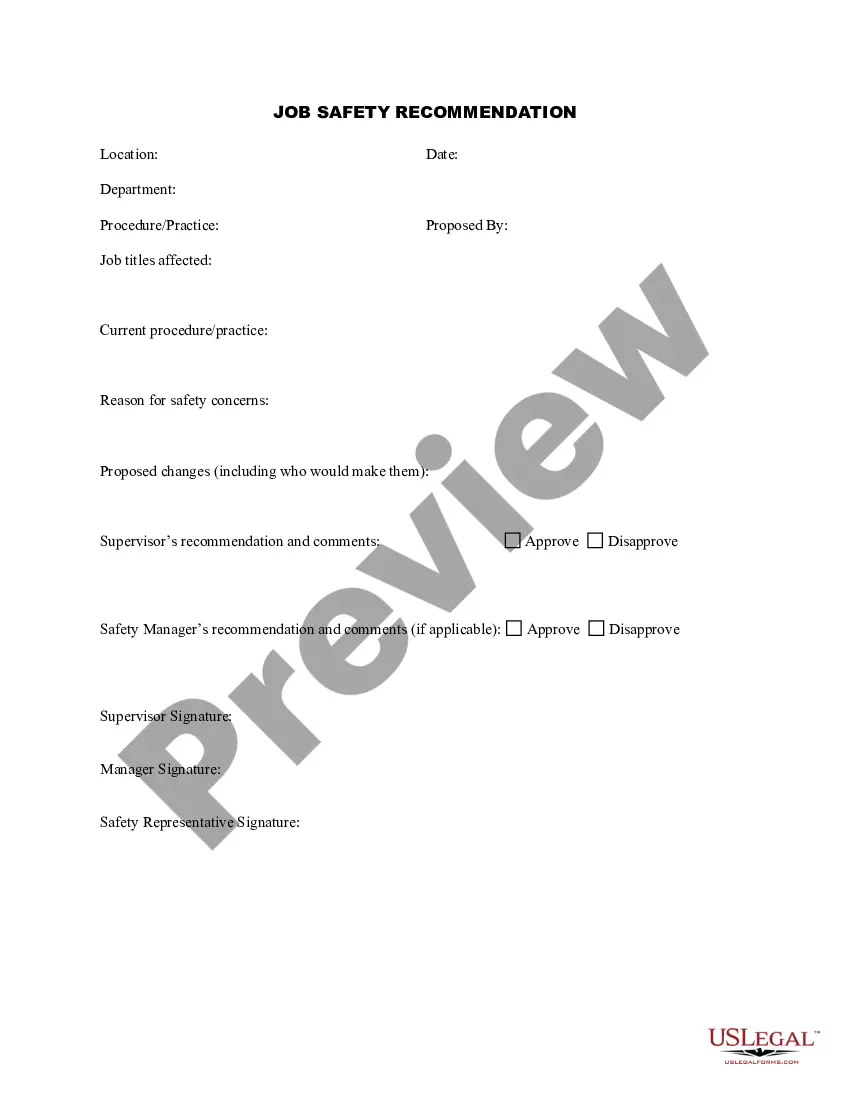
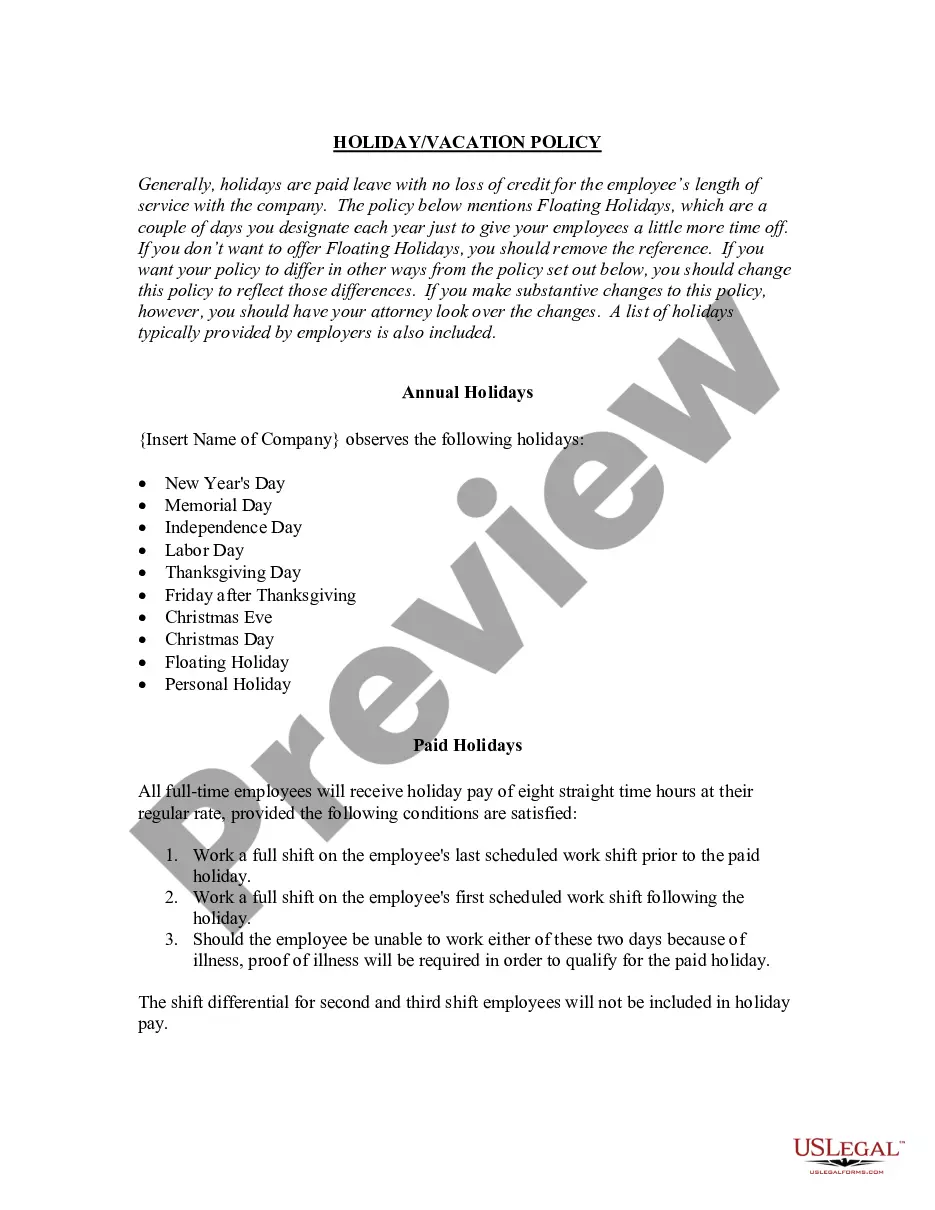
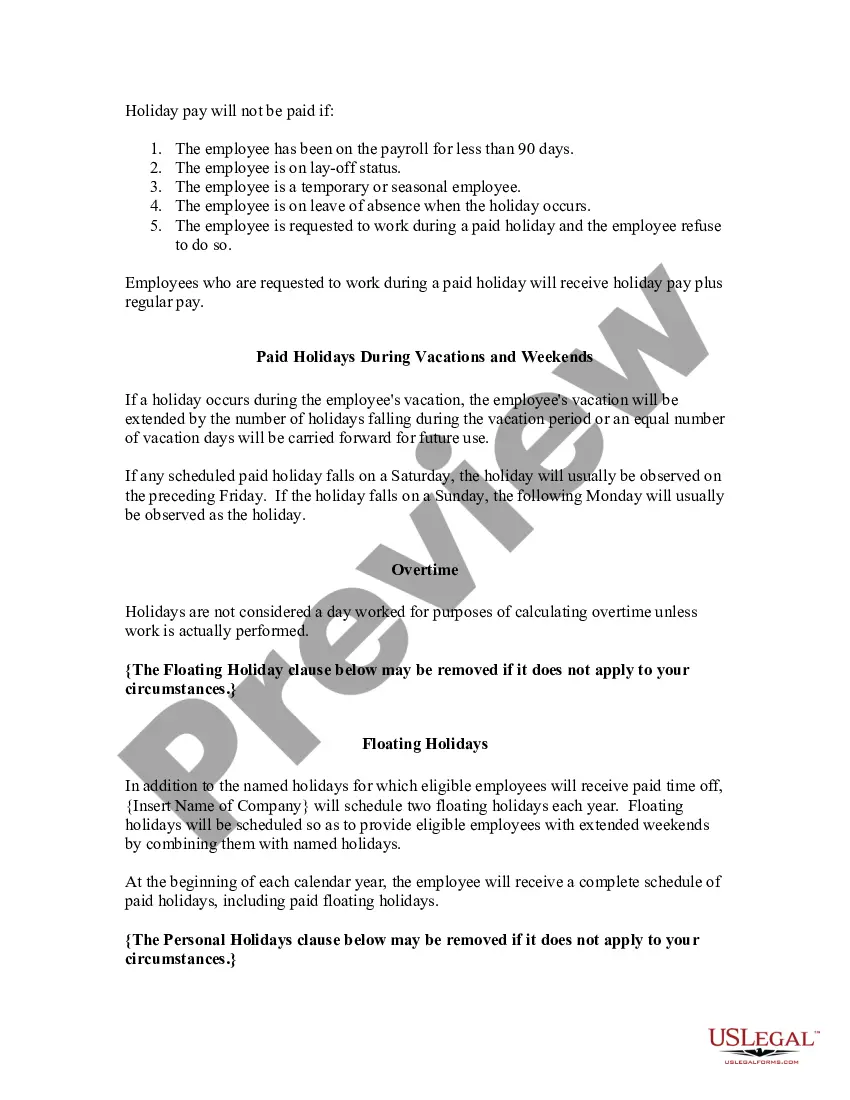
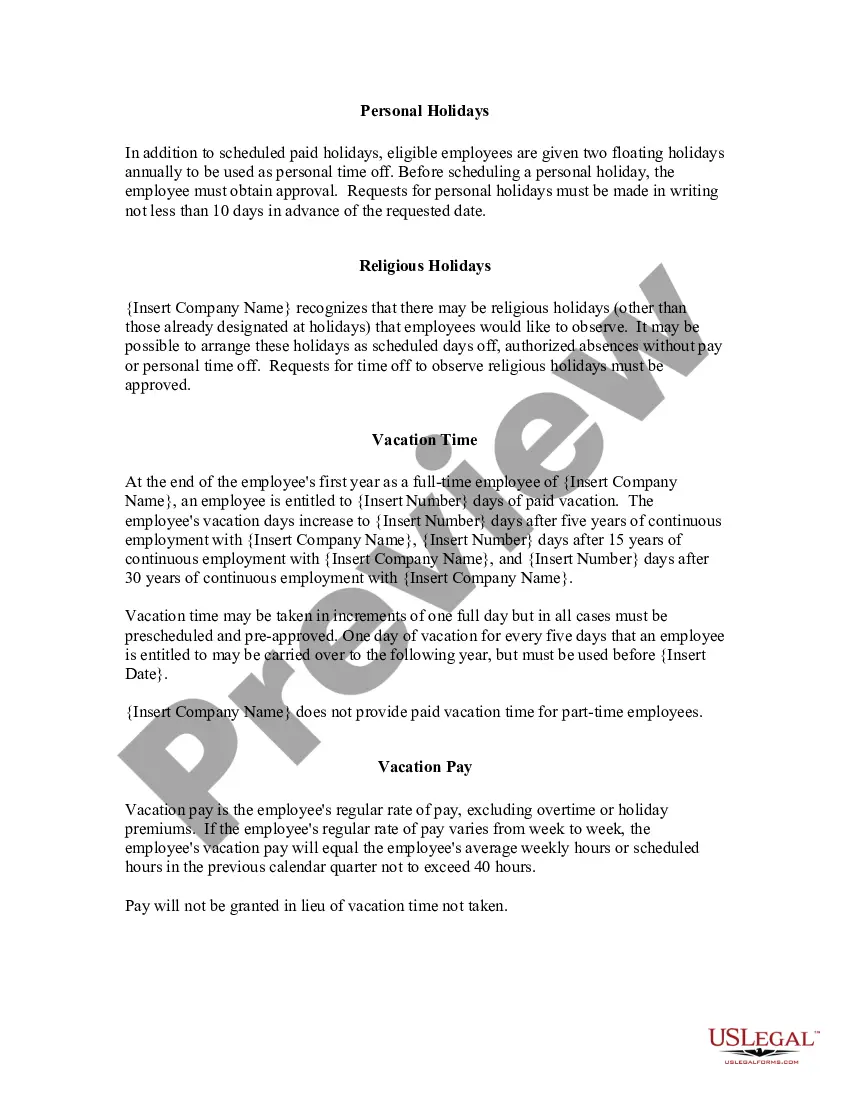
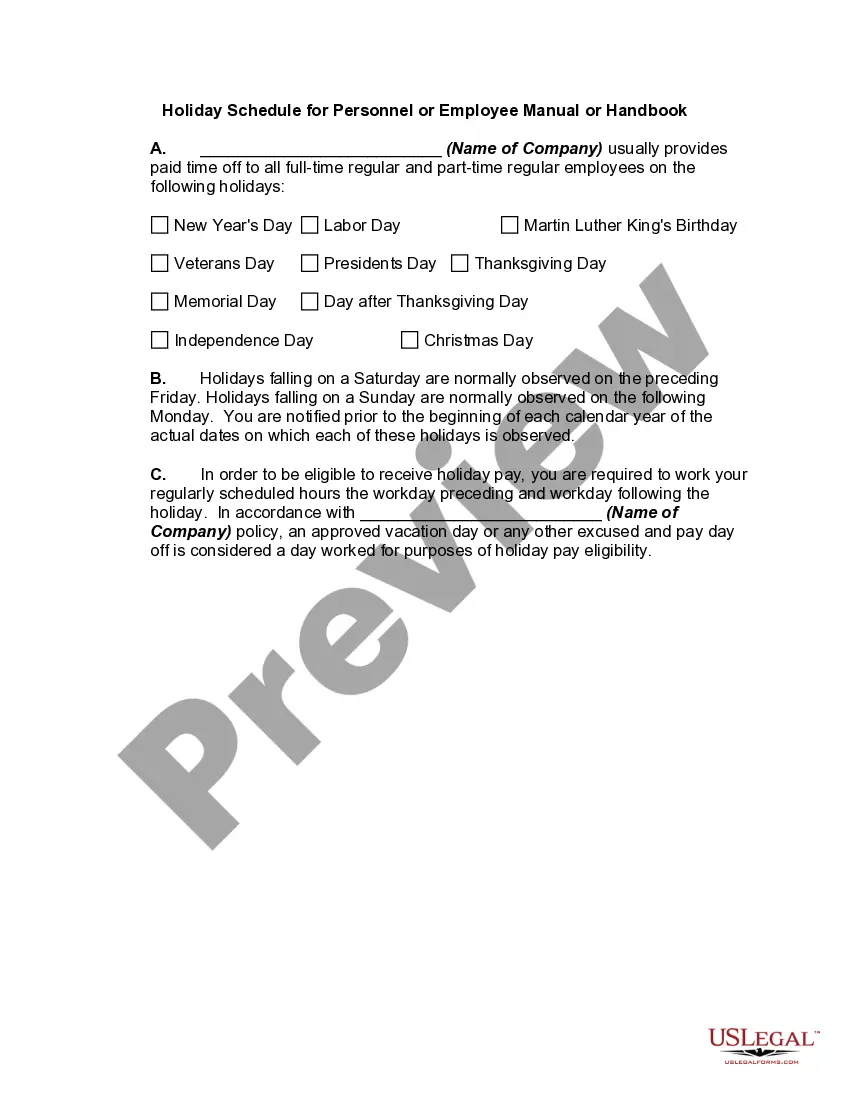
Guam Holiday Vacation Policy
Description
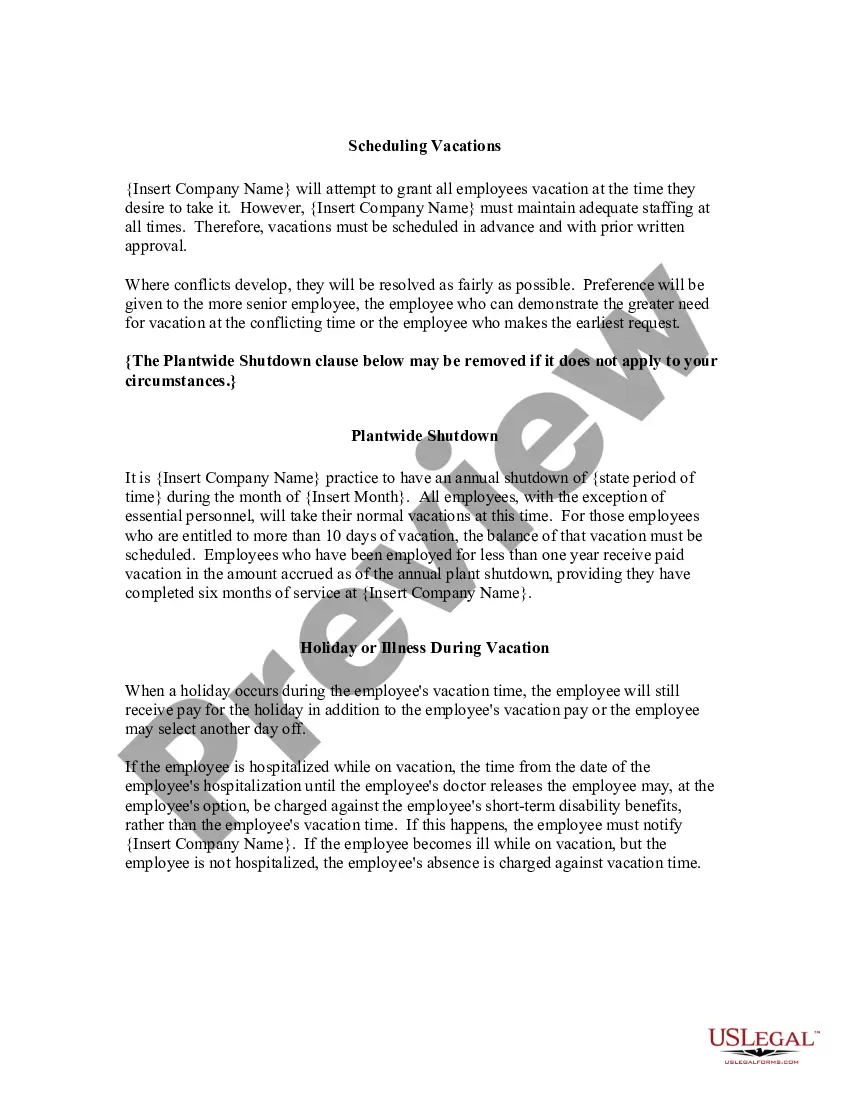
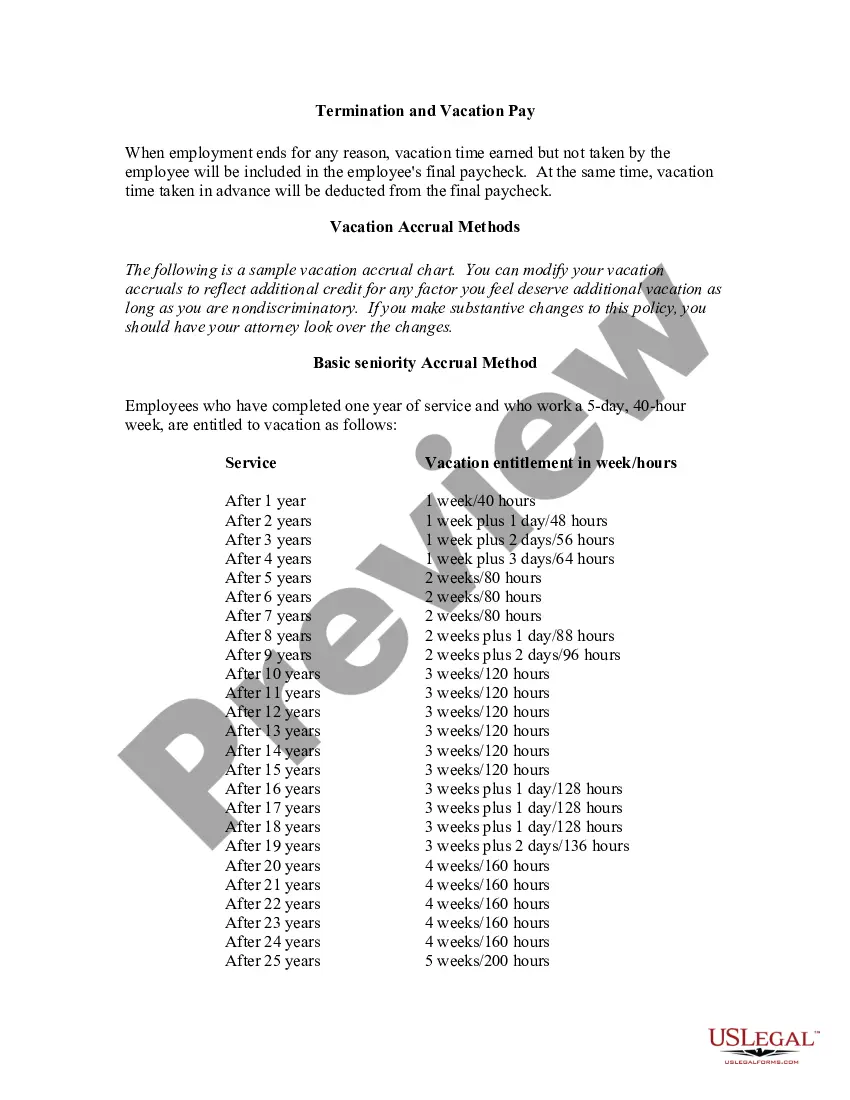
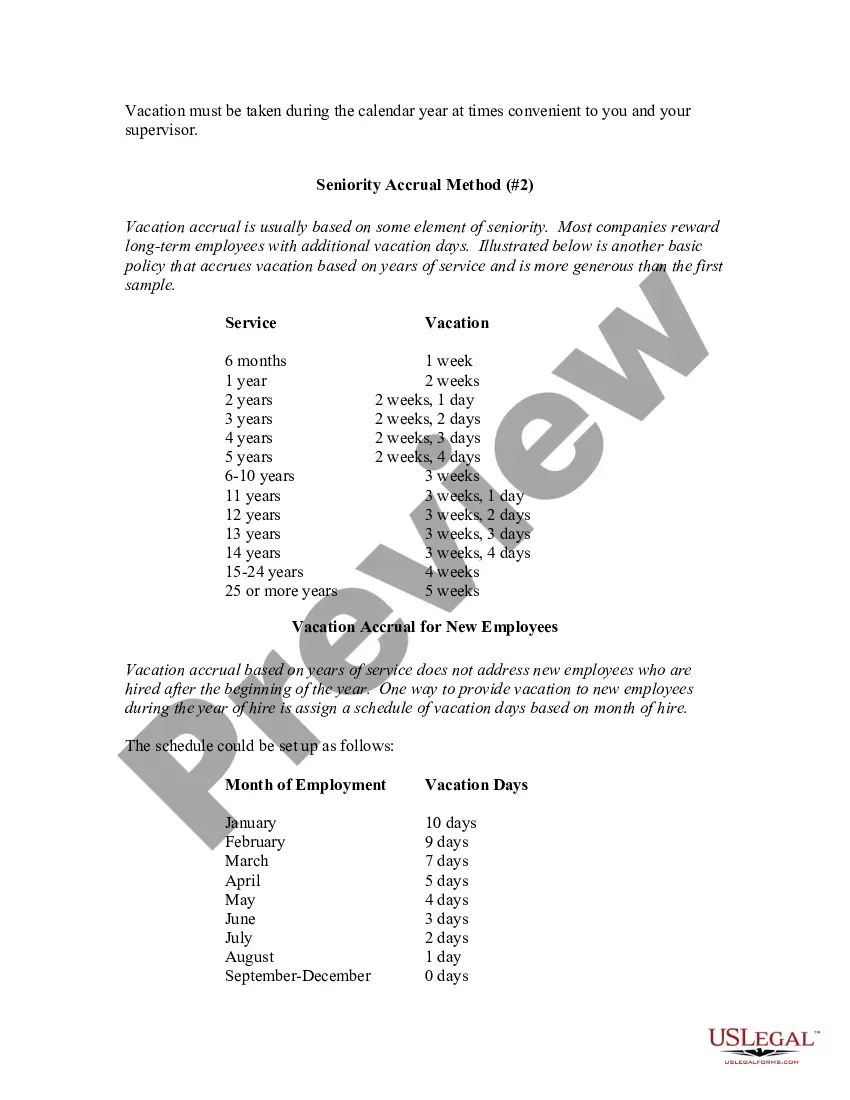
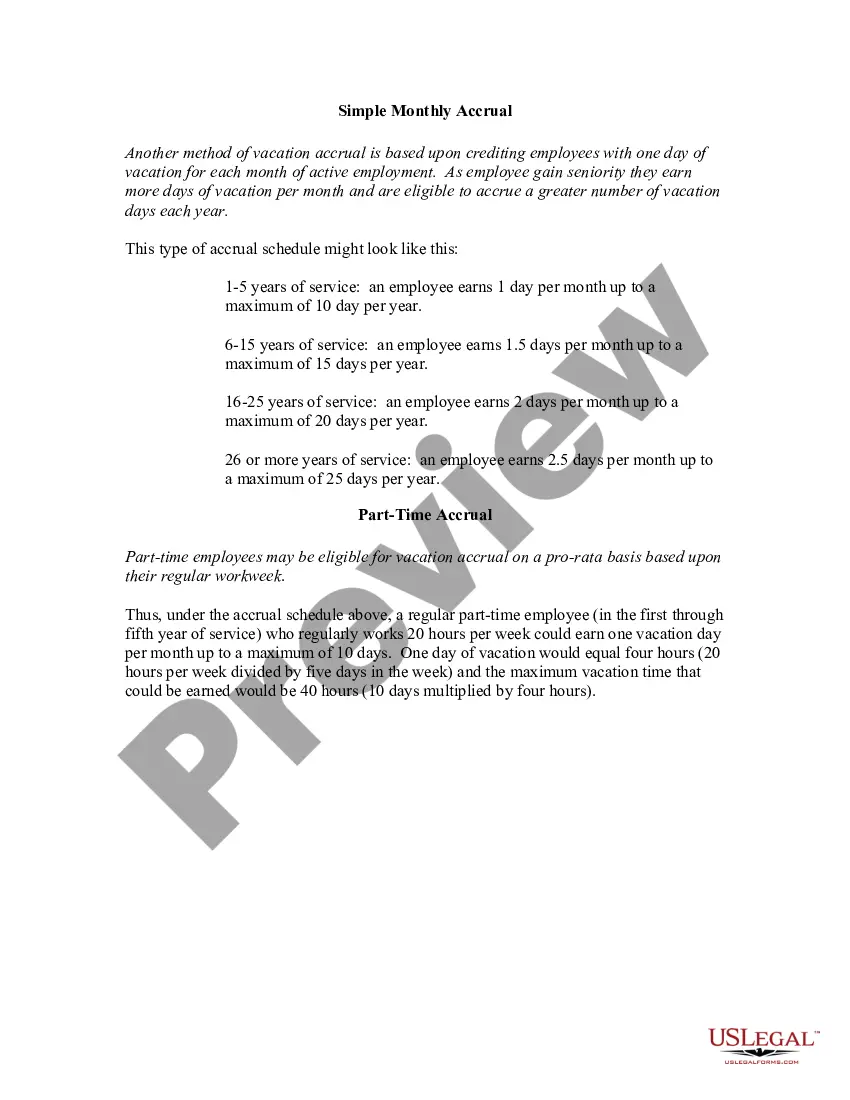


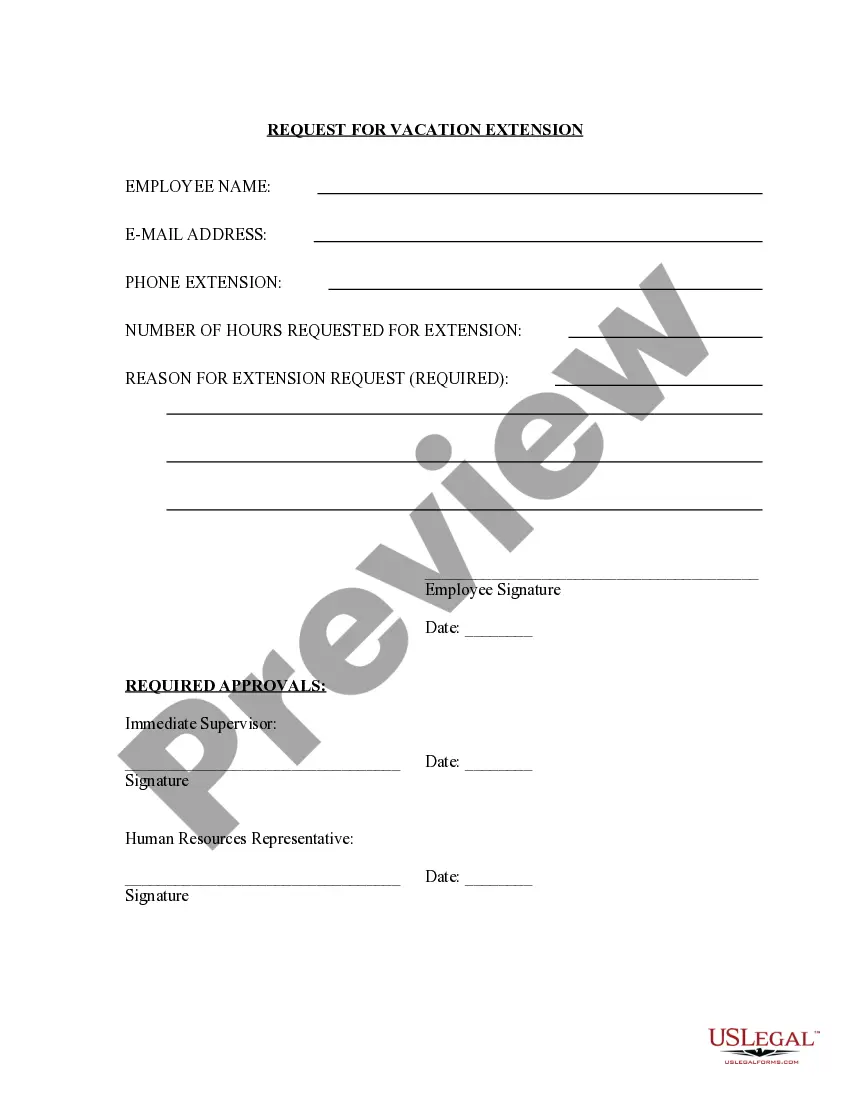
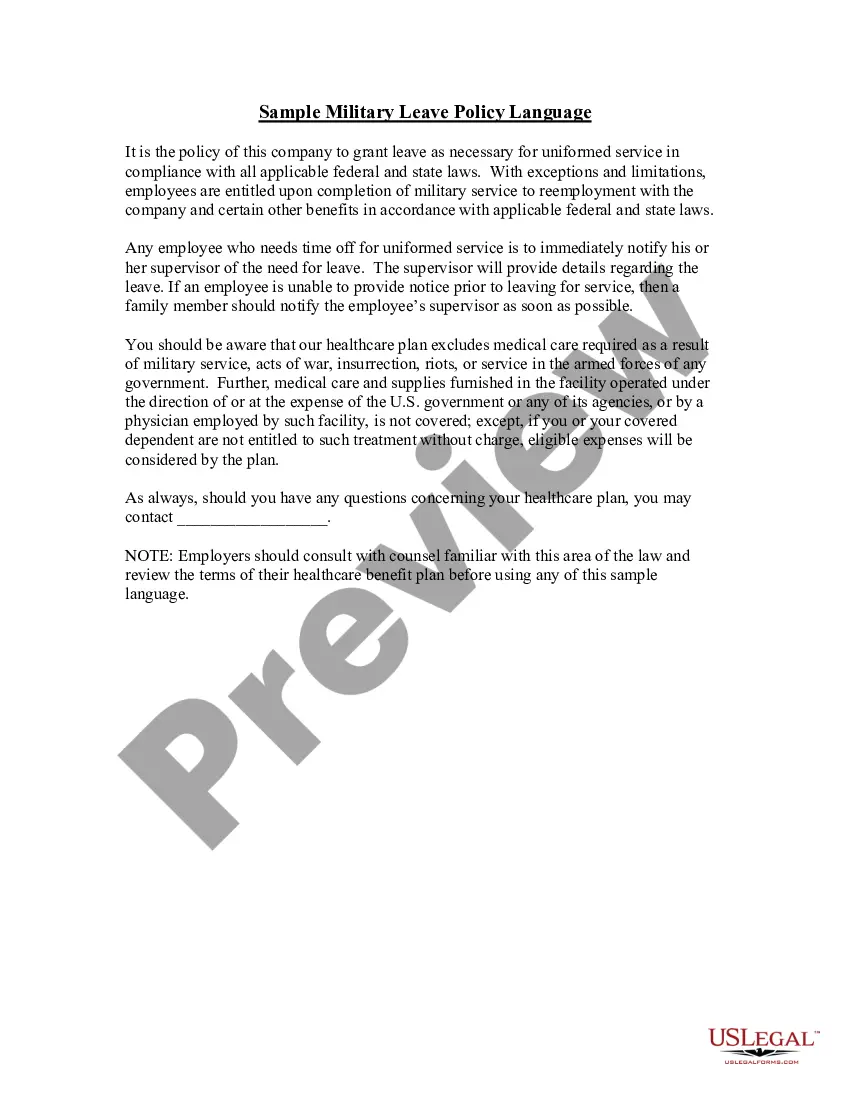
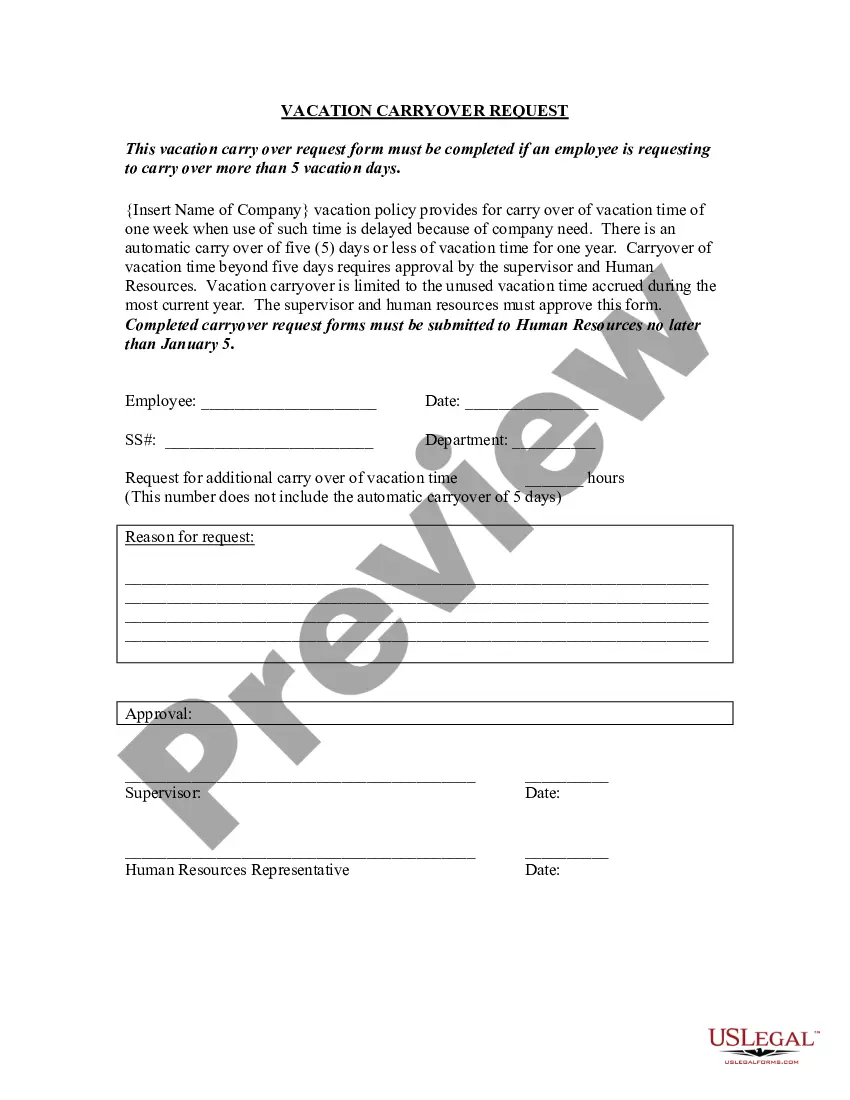
Get your form ready online
Our built-in tools help you complete, sign, share, and store your documents in one place.
Make edits, fill in missing information, and update formatting in US Legal Forms—just like you would in MS Word.
Download a copy, print it, send it by email, or mail it via USPS—whatever works best for your next step.
Sign and collect signatures with our SignNow integration. Send to multiple recipients, set reminders, and more. Go Premium to unlock E-Sign.
If this form requires notarization, complete it online through a secure video call—no need to meet a notary in person or wait for an appointment.
We protect your documents and personal data by following strict security and privacy standards.

Make edits, fill in missing information, and update formatting in US Legal Forms—just like you would in MS Word.

Download a copy, print it, send it by email, or mail it via USPS—whatever works best for your next step.

Sign and collect signatures with our SignNow integration. Send to multiple recipients, set reminders, and more. Go Premium to unlock E-Sign.

If this form requires notarization, complete it online through a secure video call—no need to meet a notary in person or wait for an appointment.

We protect your documents and personal data by following strict security and privacy standards.
Looking for another form?
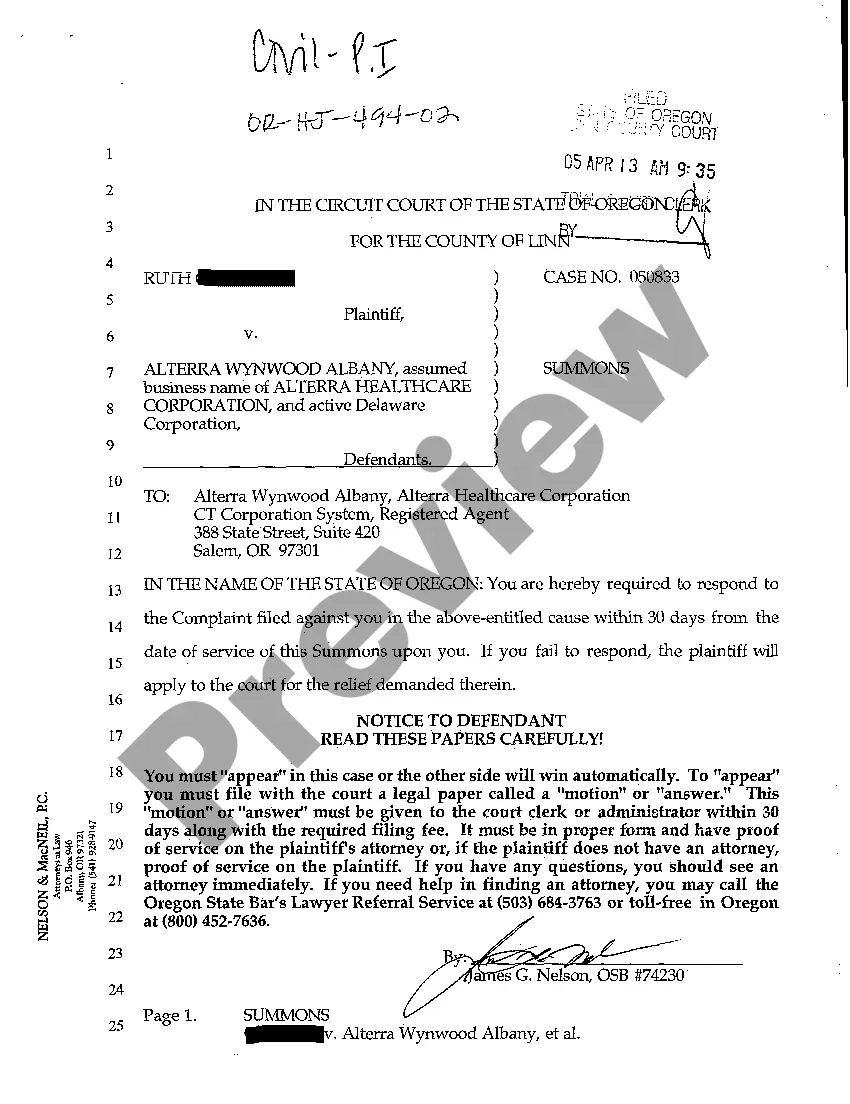




How to fill out Holiday Vacation Policy?
US Legal Forms - one of the largest collections of legal documents in the United States - offers a diverse selection of legal form templates that you can download or print.
By using the website, you can access thousands of forms for business and personal purposes, categorized by types, states, or keywords.
You can obtain the latest editions of forms such as the Guam Holiday Vacation Policy in just seconds.
If the form doesn’t meet your needs, use the Search box at the top of the screen to find one that does.
When you are satisfied with the form, confirm your selection by clicking the Buy now button. Then, select the pricing plan you prefer and provide your details to register for an account.
- If you have a monthly subscription, Log In to access the Guam Holiday Vacation Policy from the US Legal Forms library.
- The Download button will appear on each form you view.
- You can view all previously downloaded forms in the My documents section of your account.
- If you are a first-time user of US Legal Forms, here are some simple steps to get you started.
- Ensure you have selected the correct form for your city/region.
- Click the Review button to check the form's content.
Form popularity
FAQ
The BLS reports:Workers with one year of experience average 11 days of paid vacation.Employees with five years of experience average 15 days of vacation.Workers with 10 and 20 years of tenure average 17 and 20 days respectively.
Yes.
Full Time Employee: A full time employee is one who has been hired for a period of 26 consecutive weeks or more, for a minimum of 40 hours a week.
On average, Canadians receive 10 paid vacation days. All provinces guarantee 2 weeks, except for the province of Saskatchewan which guarantees 3 weeks. In general, the amount of paid vacation days an employee is entitled to increases based on the number of consecutive years they've been employed with the same employer.
1. You are entitled to a 1 day vacation leave and 1 day sick leave for every 24 days of actual service or a total of 15 days vacation leave and 15 days sick leave annually with full pay.
According to the Bureau of Labor Statistics, on average American workers receive 10 days of paid time off per year, after they've completed one year of service. That time doesn't include sick days and holidays. While the number goes up or down a bit, depending on industry and region, 10 is the national average.
This is usually calculated on a weekly basis and could be, for example, anything between 30 to 40 hours per week, although a full time worker will usually work 35 hours or more per week.
Most employers generally agree that full-time work is anything around 35 hours and above. However, there's actually no official amount of hours which classifies a job as being full-time, and it could drop as low as 30 hours per week for some roles (which is why this is often considered the minimum).
When an employee or worker takes holiday, they should get the same pay when they're on holiday as when they're at work whatever their working pattern. Some employers might offer better holiday pay schemes. You should check your contract.
The basic entitlement is 2 weeks of vacation for every completed "year of employment". After 5 consecutive years of employment with the same employer, the entitlement increases to 3 weeks of vacation. After 10 completed years, employees are entitled to 4 weeks of vacation.