Guam Affidavit of Both Domestic Partners to Employer in Order to Receive Benefits
Description
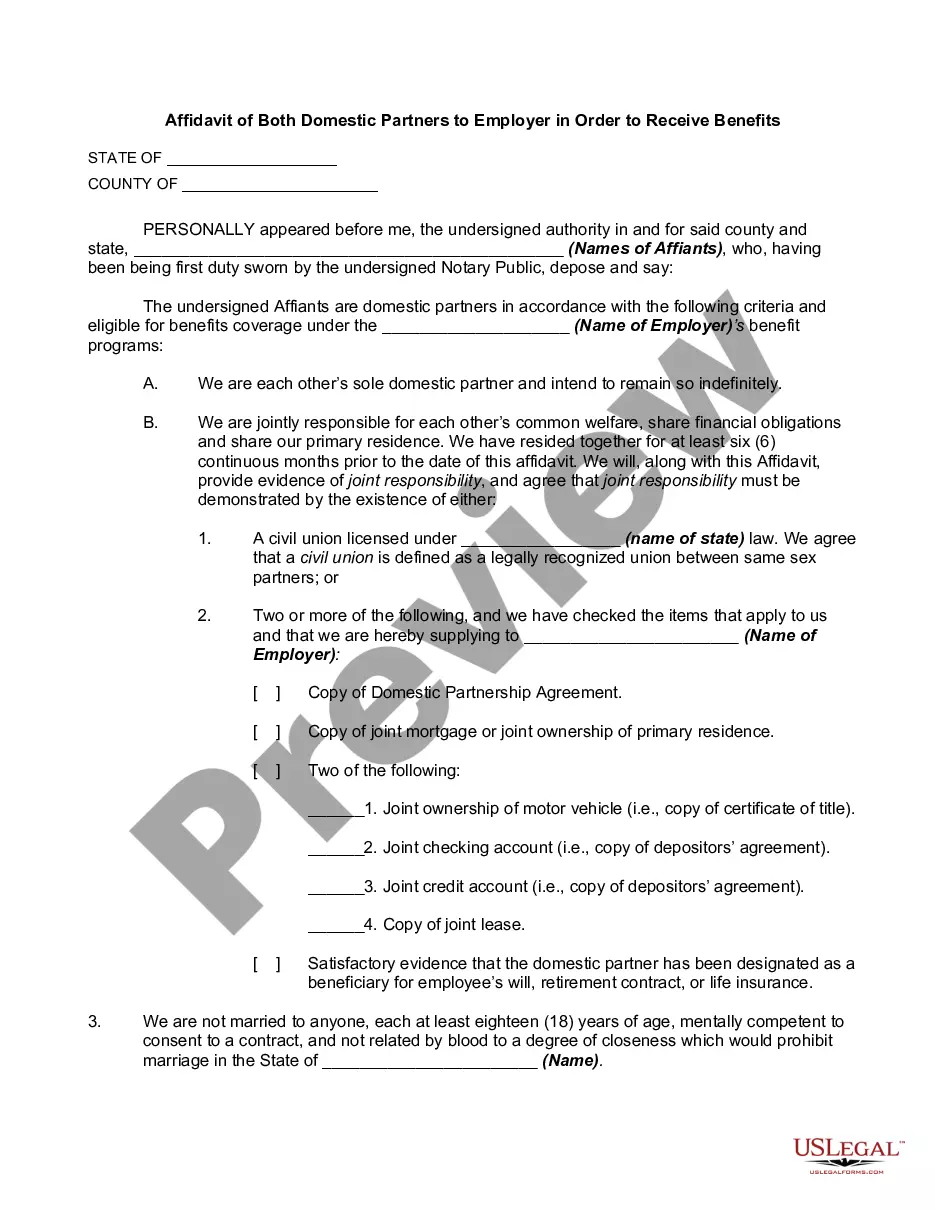
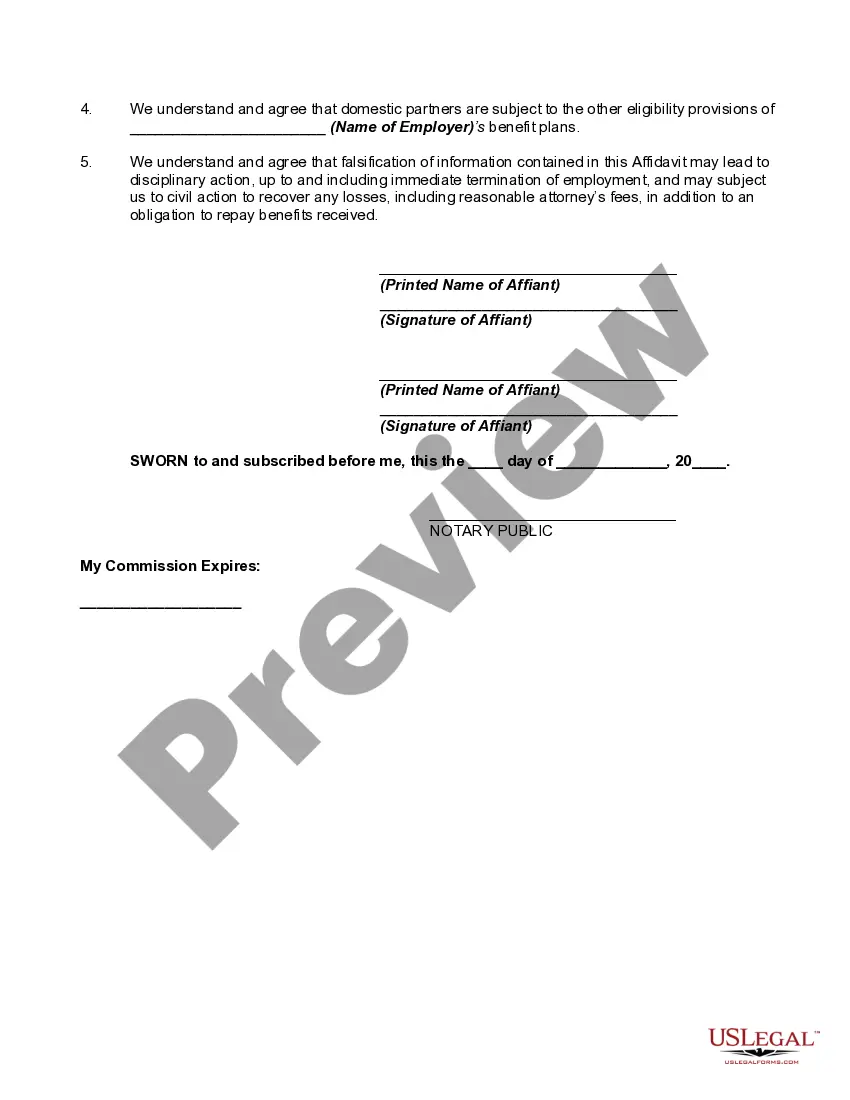
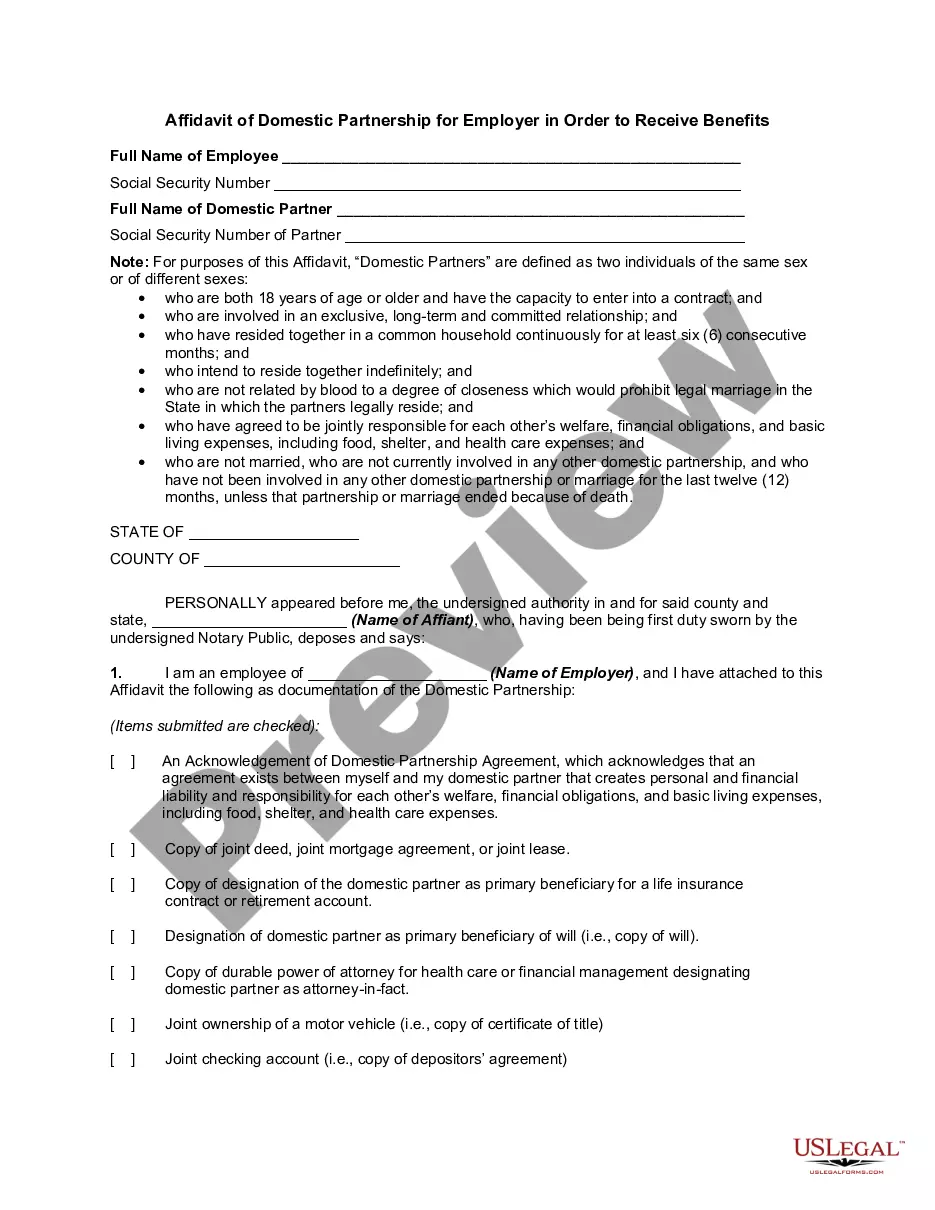
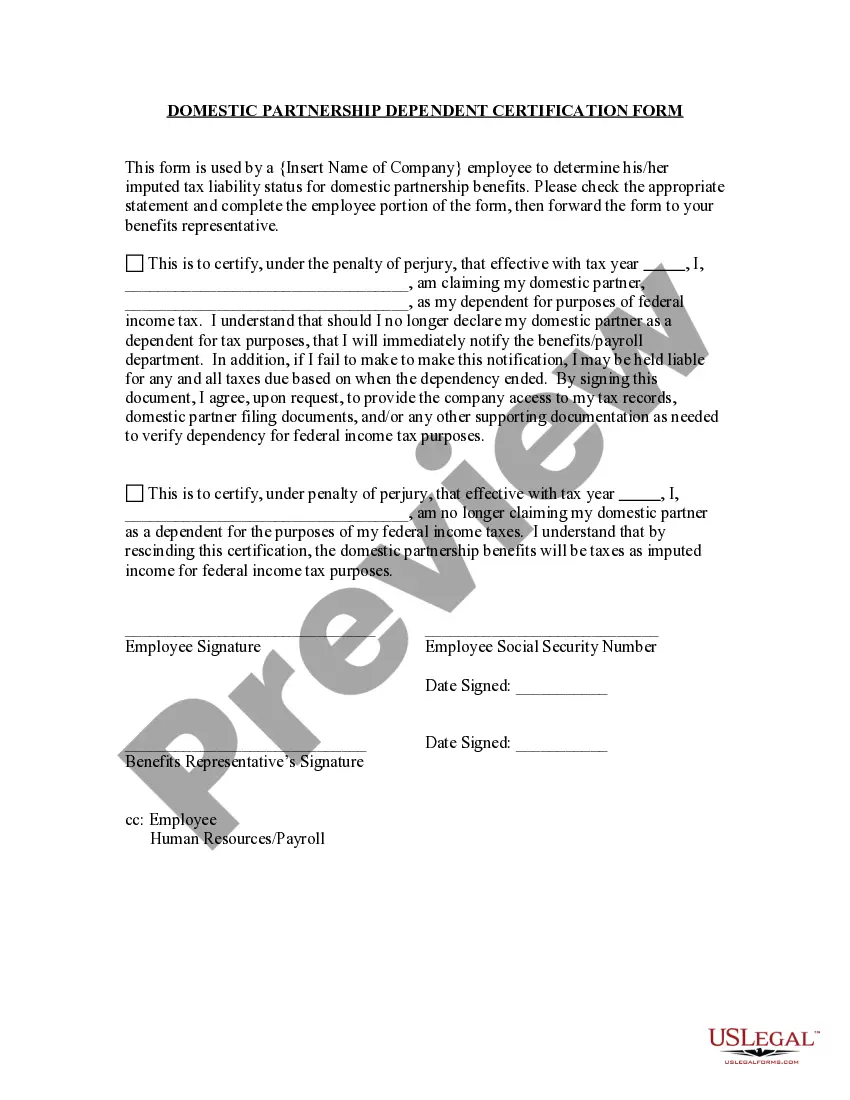
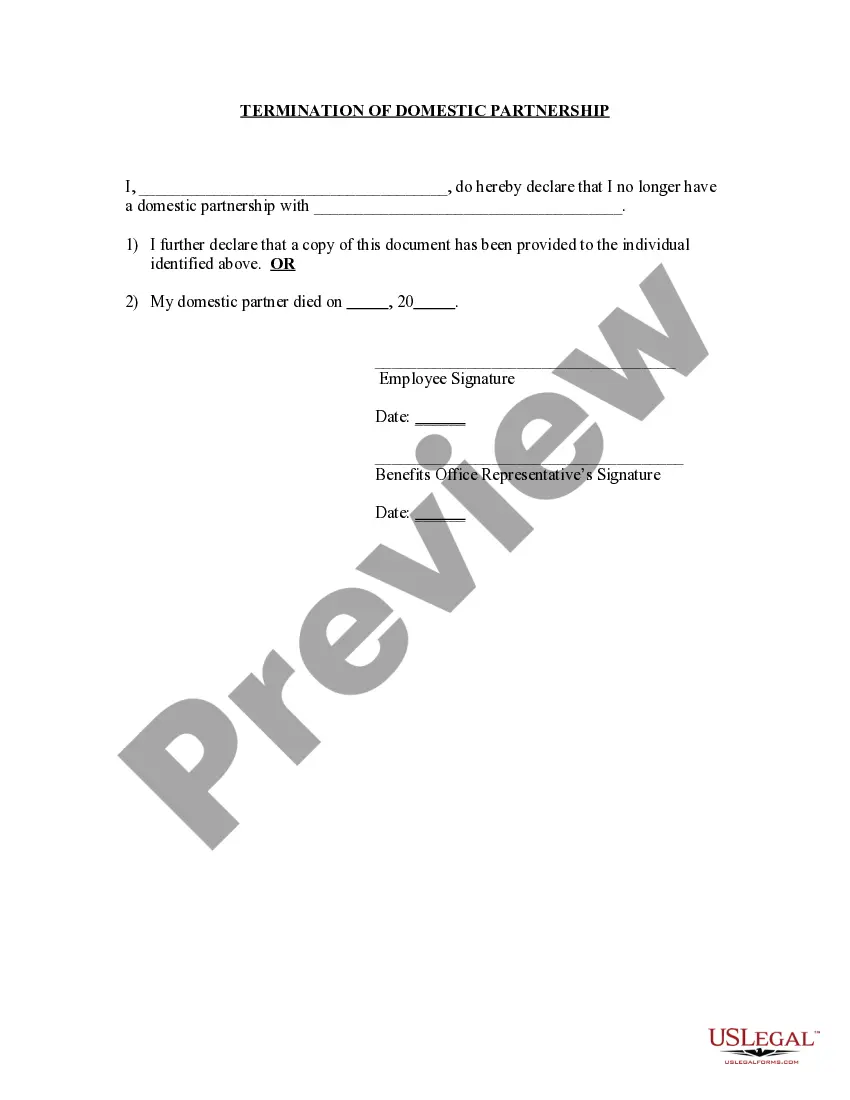
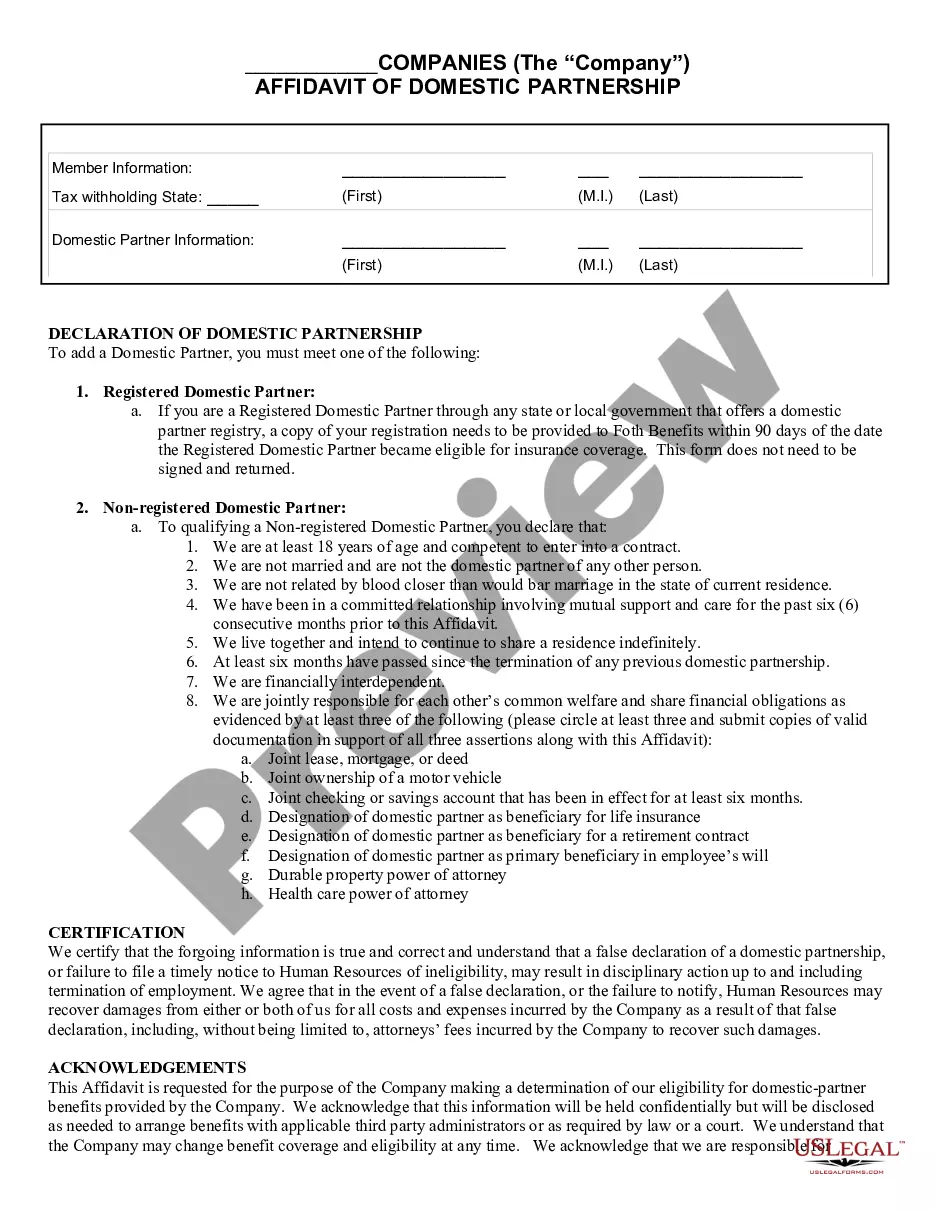
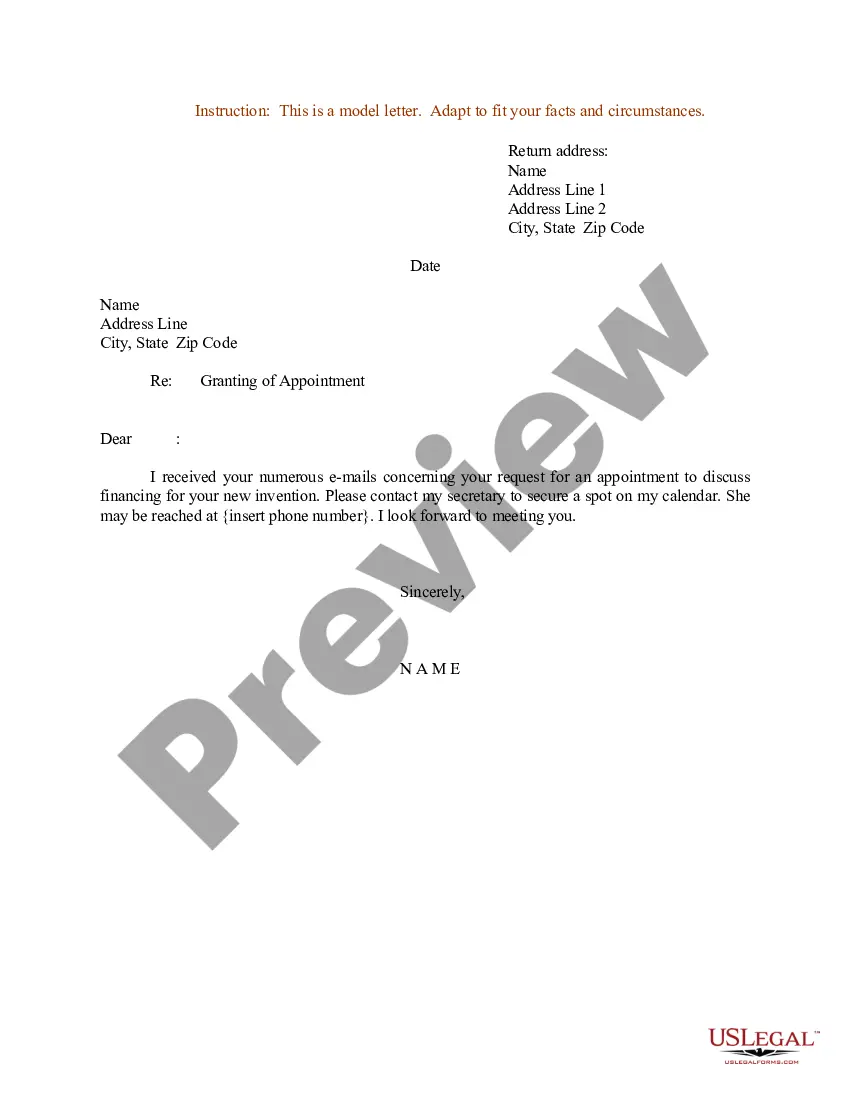

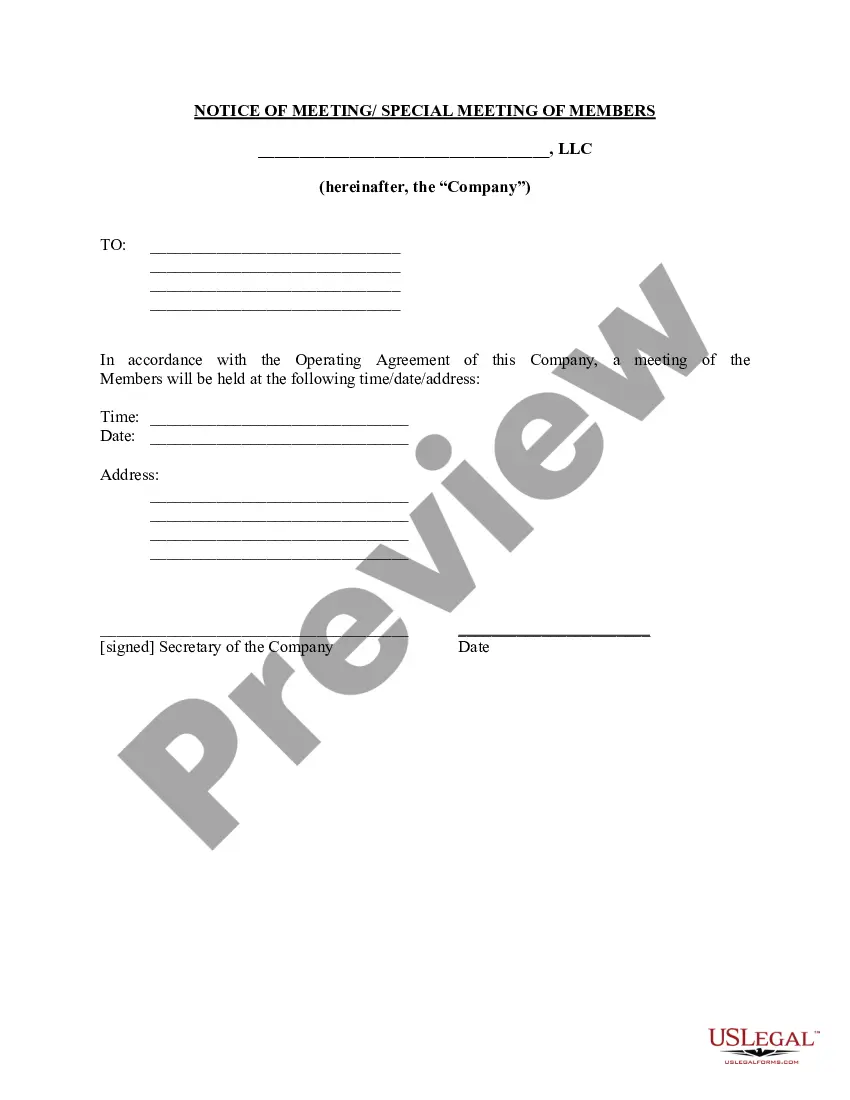
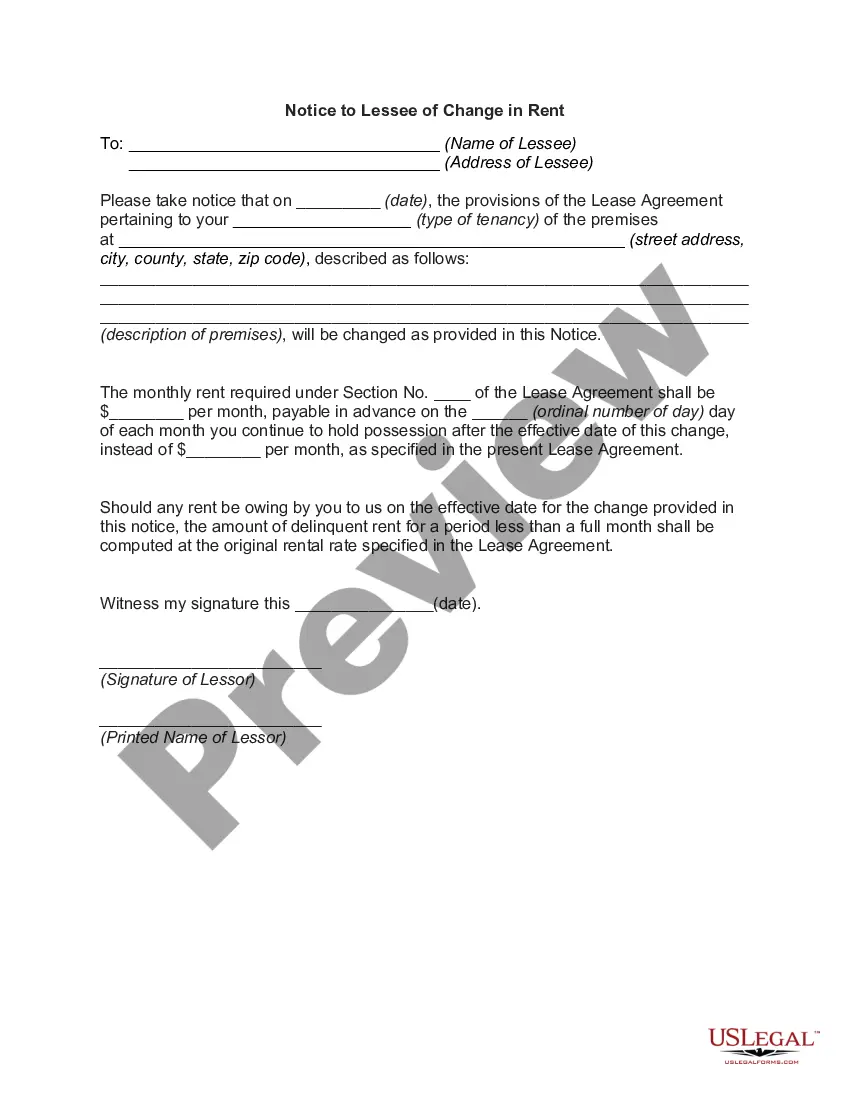
How to fill out Affidavit Of Both Domestic Partners To Employer In Order To Receive Benefits?
US Legal Forms - one of the largest collections of legal forms in the United States - offers a range of legal document categories that you can download or create.
By utilizing the website, you can access thousands of forms for business and personal use, categorized by groups, states, or keywords. You can find the most recent versions of forms like the Guam Affidavit of Both Domestic Partners to Employer for Benefits within minutes.
If you already have a subscription, Log In to download the Guam Affidavit of Both Domestic Partners to Employer for Benefits from the US Legal Forms library. The Download button will appear on every form you examine. You can access all previously downloaded forms from the My documents section of your account.
Edit. Fill out, modify, print, and sign the downloaded Guam Affidavit of Both Domestic Partners to Employer for Benefits.
Every document you save to your account does not have an expiration date, which means you own it forever. So, if you wish to download or print another copy, simply go to the My documents section and click on the form you need. Access the Guam Affidavit of Both Domestic Partners to Employer for Benefits with US Legal Forms, the most extensive collection of legal document templates. Utilize thousands of professional and state-specific templates that meet your business or personal needs.
- If you are using US Legal Forms for the first time, here are straightforward guidelines to help you get started.
- Ensure you have selected the correct form for your location/area. Click on the Preview button to review the form’s details. Check the form information to confirm you have selected the correct document.
- If the form doesn’t meet your needs, make use of the Search field at the top of the screen to find one that does.
- When you are satisfied with the form, confirm your choice by clicking the Buy now button. Then select your preferred payment plan and provide your details to sign up for an account.
- Complete the transaction. Use your credit card or PayPal account to finalize the purchase.
- Choose the file format and download the form onto your system.
Form popularity
FAQ
The benefits of a domestic partnership include access to various financial and legal benefits, such as healthcare coverage, tax advantages, and inheritance rights. Additionally, domestic partners often enjoy emotional and social recognition similar to married couples. For many, submitting a Guam Affidavit of Both Domestic Partners to Employer in Order to Receive Benefits is a crucial step in securing these advantages. It helps ensure that all partners receive fair treatment in their workplace benefits.
Whether your girlfriend counts as a domestic partner depends on the criteria set by your employer and the jurisdiction where you live. Generally, domestic partners are recognized based on shared commitments and living arrangements. If you both meet the necessary requirements, you might be able to submit a Guam Affidavit of Both Domestic Partners to Employer in Order to Receive Benefits to formalize your partnership for benefits. Always check your employer's policies for clarity.
Domestic partner benefits can vary widely by employer but often include health insurance, dental and vision coverage, retirement benefits, and family leave. Additionally, some organizations may extend these benefits to include sick leave, workplace perks, and insurance policies. To understand exactly what you can access, you may need to provide a Guam Affidavit of Both Domestic Partners to Employer in Order to Receive Benefits. This simplifies the process for both you and your employer.
Proving your domestic partnership for health insurance usually requires submitting specific documentation to your employer. This’s where the Guam Affidavit of Both Domestic Partners to Employer in Order to Receive Benefits comes into play. Typically, this affidavit confirms that you and your partner fulfill the requirements of a domestic partnership. Along with the affidavit, your employer may request additional documentation, such as shared bills or joint lease agreements.
While domestic partnership offers several benefits, there are some disadvantages to consider. For instance, not all employers recognize domestic partnerships, which can limit access to certain benefits. Additionally, some states may not provide the same legal protections as marriage, which can pose challenges. It's important to review your situation and decide if filing a Guam Affidavit of Both Domestic Partners to Employer in Order to Receive Benefits aligns with your needs.
Domestic partnership benefits refer to the advantages provided to partners who are in a committed relationship but are not legally married. These benefits often include health insurance, retirement plans, and other employer-sponsored benefits. To qualify for these benefits, you may need to submit a Guam Affidavit of Both Domestic Partners to Employer in Order to Receive Benefits. This affidavit serves as an official declaration of your domestic partnership, making it easier to access the benefits.
A domestic partner affidavit is a formal declaration that verifies the existence of a domestic partnership between two individuals. This affidavit often includes details about the relationship, shared responsibilities, and mutual commitment. For those seeking to access benefits, the Guam Affidavit of Both Domestic Partners to Employer in Order to Receive Benefits is vital in demonstrating the legitimacy of the relationship to employers.
A domestic relations affidavit is a legal document that provides essential information about your relationship status, especially in matters of custody, support, and benefits. This affidavit ensures that family courts have accurate data regarding parties involved in family law cases. If you need to submit a Guam Affidavit of Both Domestic Partners to Employer in Order to Receive Benefits, using a domestic relations affidavit can also clarify your relationship status in legal situations.
To prove domestic partnership for health insurance, you typically need to provide an affidavit that outlines your relationship, along with supporting documents, such as joint bank accounts or leases. The Guam Affidavit of Both Domestic Partners to Employer in Order to Receive Benefits can serve as the necessary proof for employers. Additionally, you may consider using resources like USLegalForms to streamline the process and ensure you meet all requirements.
In the US, a domestic partner generally qualifies based on shared residence, mutual support, and a commitment to a long-term relationship. Partners can be of the same or different genders, and they often have designated beneficiaries for legal or financial matters. To formalize this relationship, the Guam Affidavit of Both Domestic Partners to Employer in Order to Receive Benefits serves as a crucial document, allowing partners to access employer-sponsored benefits.