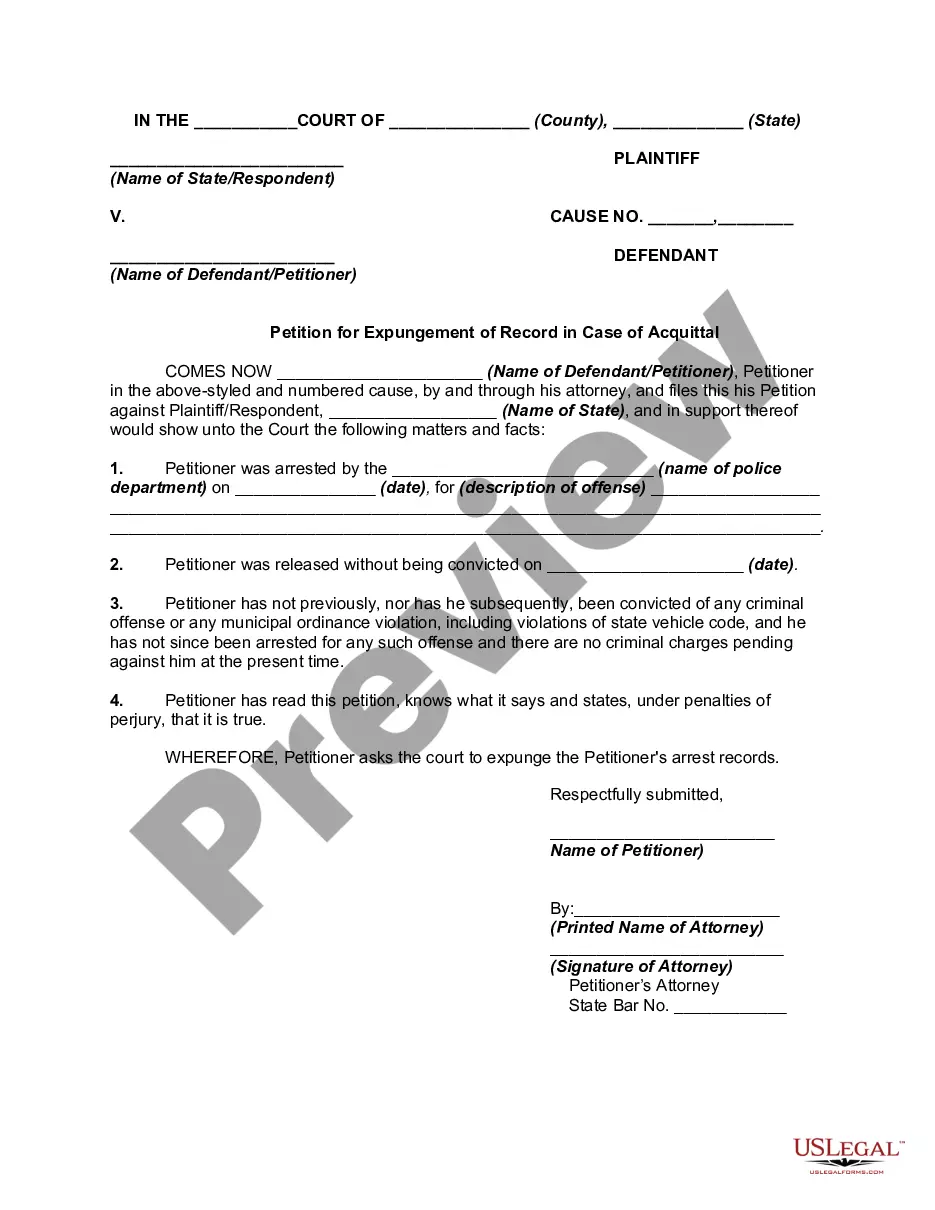
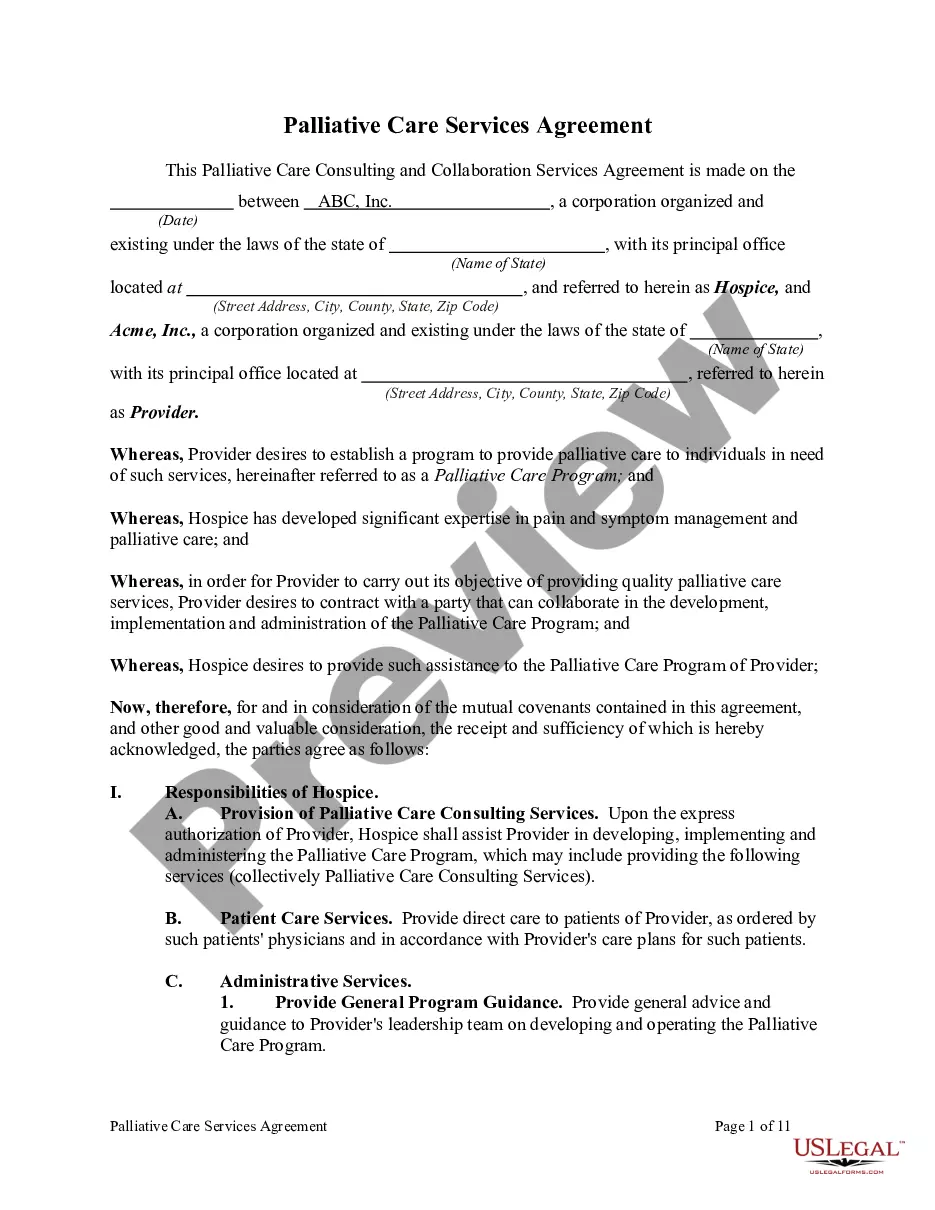
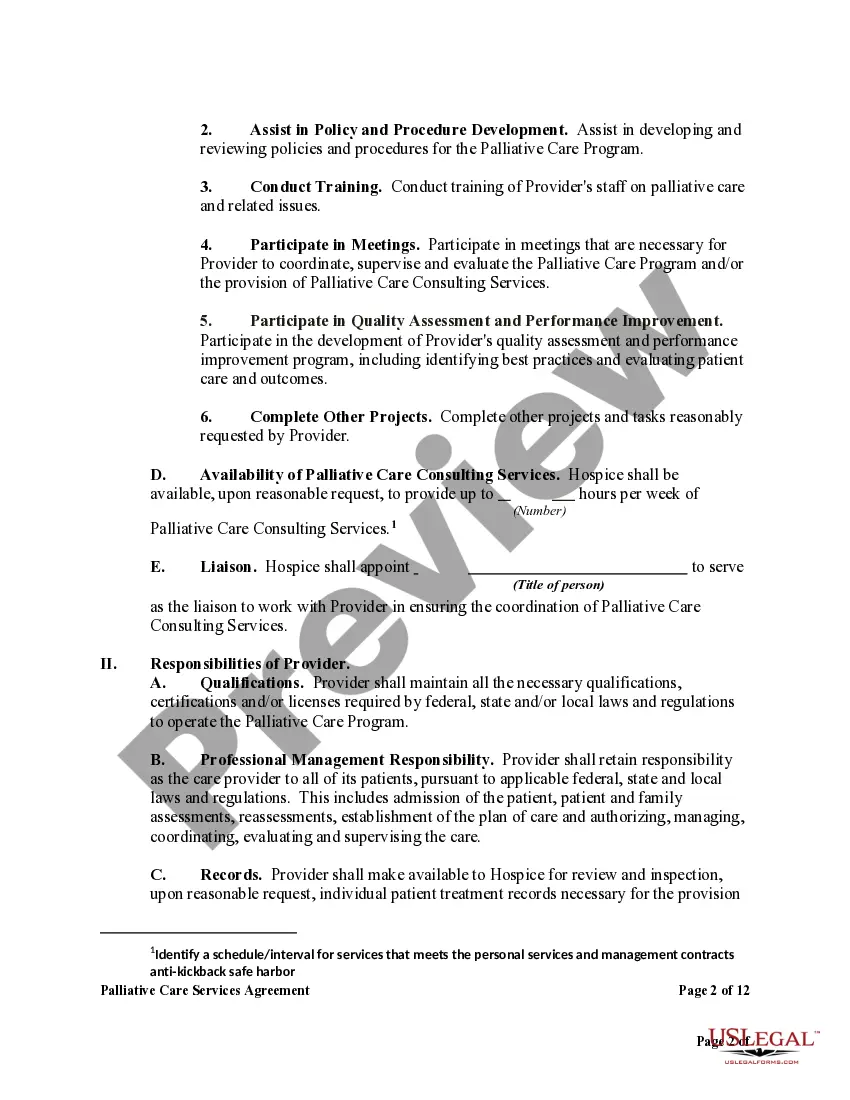
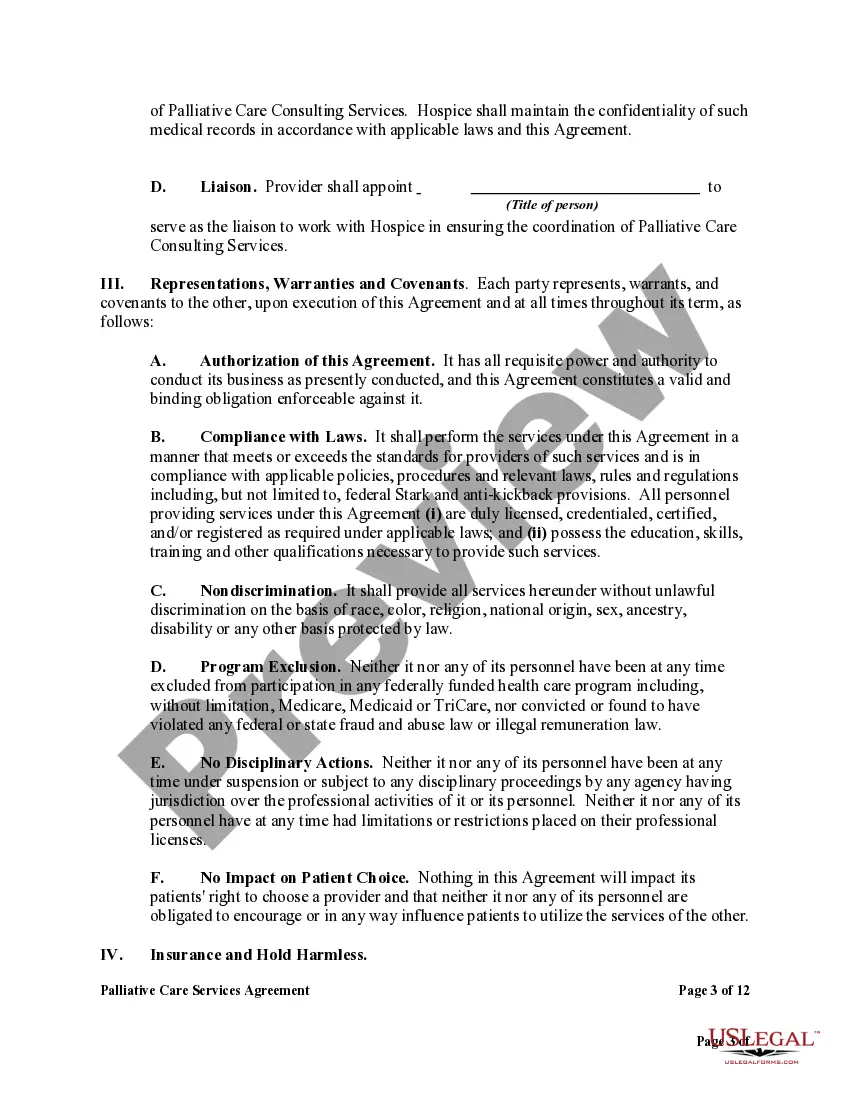
Guam Palliative Care Services Agreement
Description
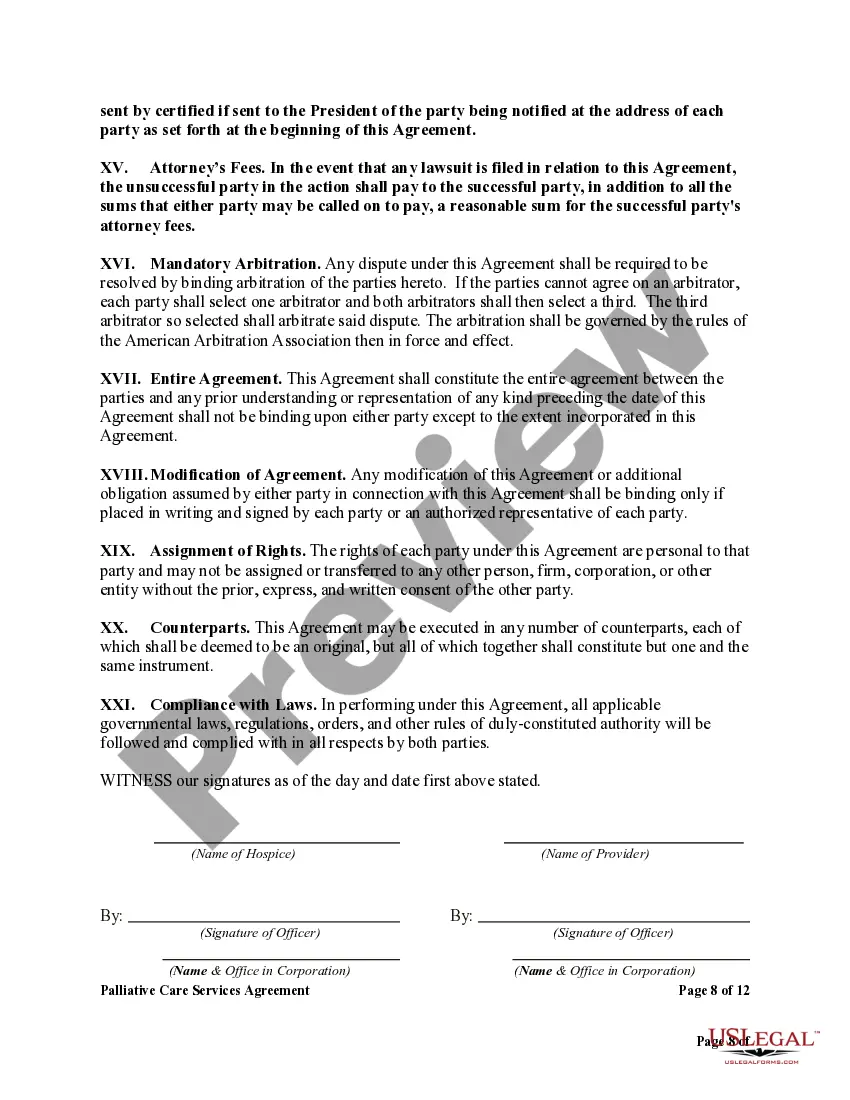

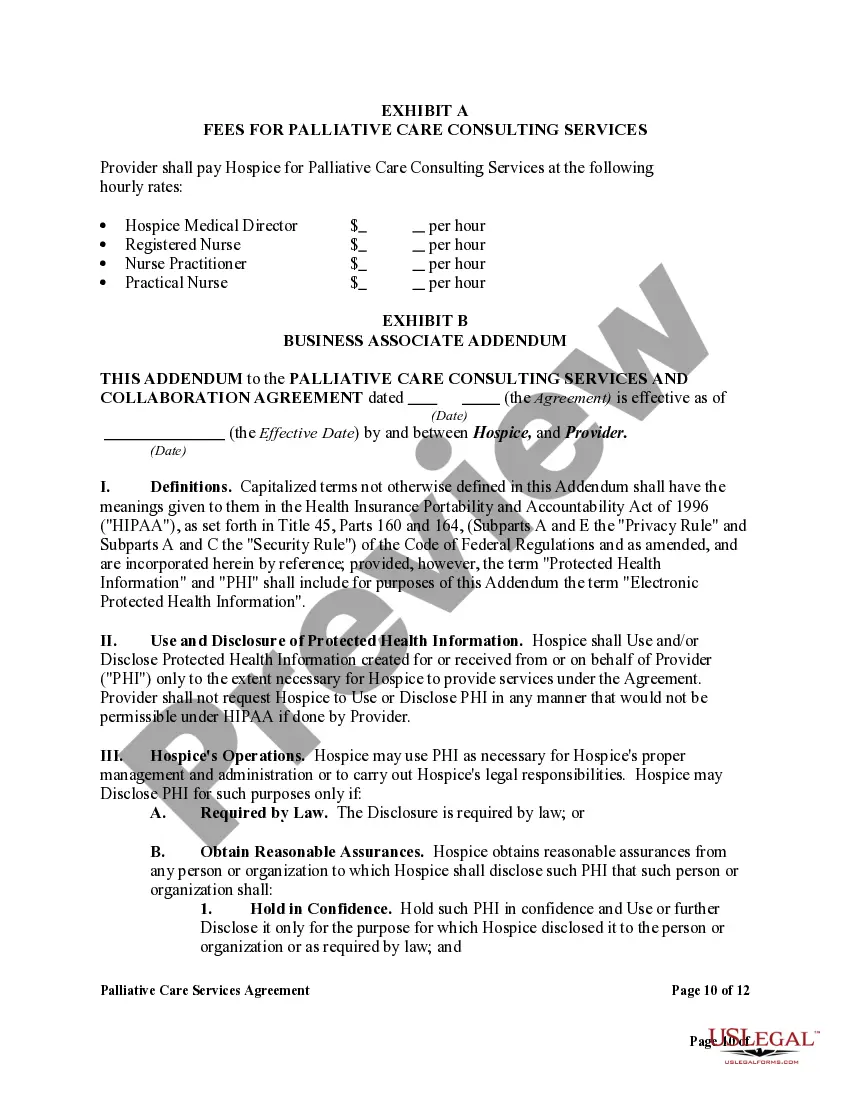



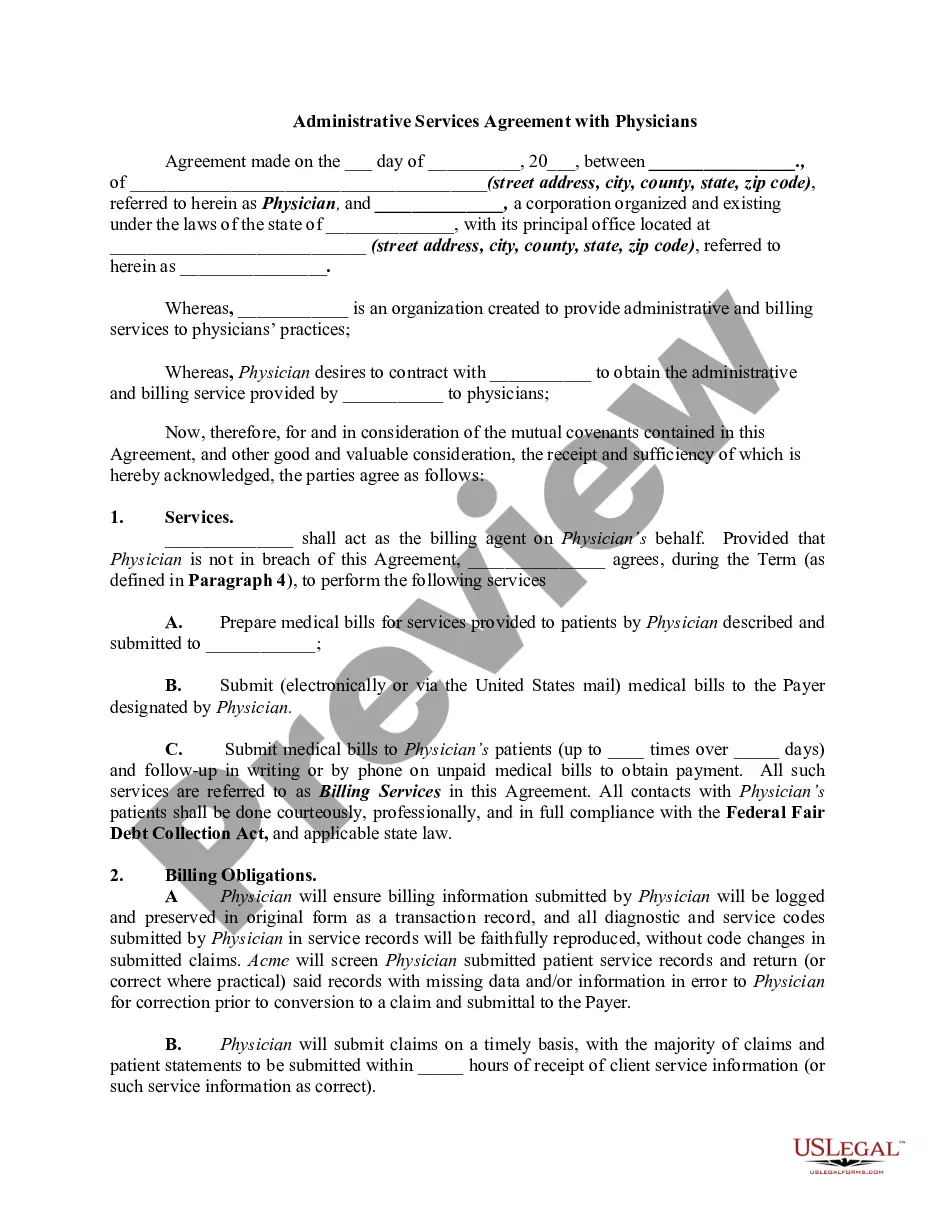
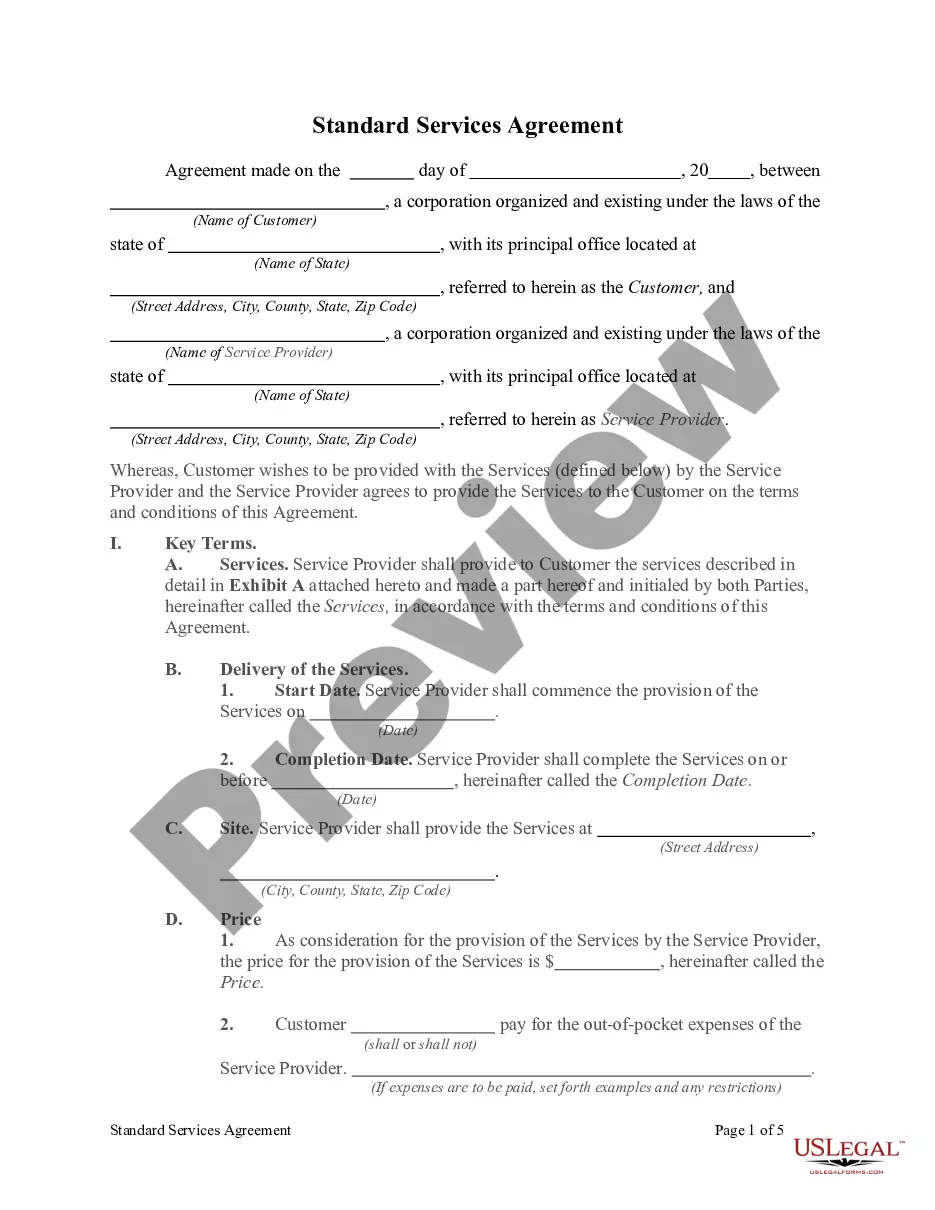
Get your form ready online
Our built-in tools help you complete, sign, share, and store your documents in one place.
Make edits, fill in missing information, and update formatting in US Legal Forms—just like you would in MS Word.
Download a copy, print it, send it by email, or mail it via USPS—whatever works best for your next step.
Sign and collect signatures with our SignNow integration. Send to multiple recipients, set reminders, and more. Go Premium to unlock E-Sign.
If this form requires notarization, complete it online through a secure video call—no need to meet a notary in person or wait for an appointment.
We protect your documents and personal data by following strict security and privacy standards.

Make edits, fill in missing information, and update formatting in US Legal Forms—just like you would in MS Word.

Download a copy, print it, send it by email, or mail it via USPS—whatever works best for your next step.

Sign and collect signatures with our SignNow integration. Send to multiple recipients, set reminders, and more. Go Premium to unlock E-Sign.

If this form requires notarization, complete it online through a secure video call—no need to meet a notary in person or wait for an appointment.

We protect your documents and personal data by following strict security and privacy standards.
Looking for another form?

How to fill out Palliative Care Services Agreement?
If you desire to be thorough, obtain, or print legal document templates, utilize US Legal Forms, the most extensive selection of legal forms available online.
Employ the site’s straightforward and user-friendly search to find the documents you require.
Various templates for business and personal purposes are categorized by type and state, or by keywords.
Every legal document template you purchase is yours indefinitely. You will have access to each form you saved within your account.
Browse through the My documents section and select a form to print or download again. Compete and obtain, and print the Guam Palliative Care Services Agreement with US Legal Forms. There are thousands of professional and state-specific forms you can utilize for your business or personal needs.
- Use US Legal Forms to obtain the Guam Palliative Care Services Agreement with just a few clicks.
- If you are already a US Legal Forms user, sign in to your account and click the Purchase button to obtain the Guam Palliative Care Services Agreement.
- You can also access forms you previously saved in the My documents section of your account.
- If you are using US Legal Forms for the first time, follow the instructions below.
- Step 1. Make sure you have chosen the form for the correct region/state.
- Step 2. Use the Preview option to review the form’s content. Don’t forget to view the details.
- Step 3. If you are not satisfied with the form, use the Search field at the top of the screen to find alternative versions of the legal form template.
- Step 4. Once you have found the form you need, click the Buy now button. Choose your preferred pricing plan and add your details to register for an account.
- Step 5. Complete the transaction. You can use your credit card or PayPal account to finalize the payment.
- Step 6. Select the format of the legal form and download it to your device.
- Step 7. Fill out, modify, and print or sign the Guam Palliative Care Services Agreement.
Form popularity
FAQ
Understanding the Four Levels of Hospice CareHospice Care at Home. Once a patient has accepted hospice care, they will receive routine care aimed at increasing their comfort and quality of life as much as possible.Continuous Hospice Care.Inpatient Hospice Care.
Areas where palliative care can help. Palliative treatments vary widely and often include:Social. You might find it hard to talk with your loved ones or caregivers about how you feel or what you are going through.Emotional.Spiritual.Mental.Financial.Physical.Palliative care after cancer treatment.More items...
Overview.1. Screening and identification.2. Triage.3. Comprehensive assessment.4. Care planning.5. Open and respectful communication.6. Symptom management.7. 24/7 access to support.More items...
Description Care Agreement PersonalHospices offer palliative and supportive care to the terminally ill, focusing on managing pain and other symptoms instead of seeking curative treatment for an illness.
Palliative care is specialized medical care for people living with a serious illness. This type of care is focused on providing relief from the symptoms and stress of the illness. The goal is to improve quality of life for both the patient and the family.
What is palliative care? Palliative care is specialized medical care for people living with a serious illness, such as cancer or heart failure. Patients in palliative care may receive medical care for their symptoms, or palliative care, along with treatment intended to cure their serious illness.
Although it can include end of life care, palliative care is much broader and can last for longer. Having palliative care doesn't necessarily mean that you're likely to die soon some people have palliative care for years. End of life care offers treatment and support for people who are near the end of their life.
A. Palliative care is whole-person care that relieves symptoms of a disease or disorder, whether or not it can be cured. Hospice is a specific type of palliative care for people who likely have 6 months or less to live. In other words, hospice care is always palliative, but not all palliative care is hospice care.
In all healthcare settings, informed consent is required. Hospice and palliative care is no different. In fact, in end-of-life care, the need for informed consent is crucial.