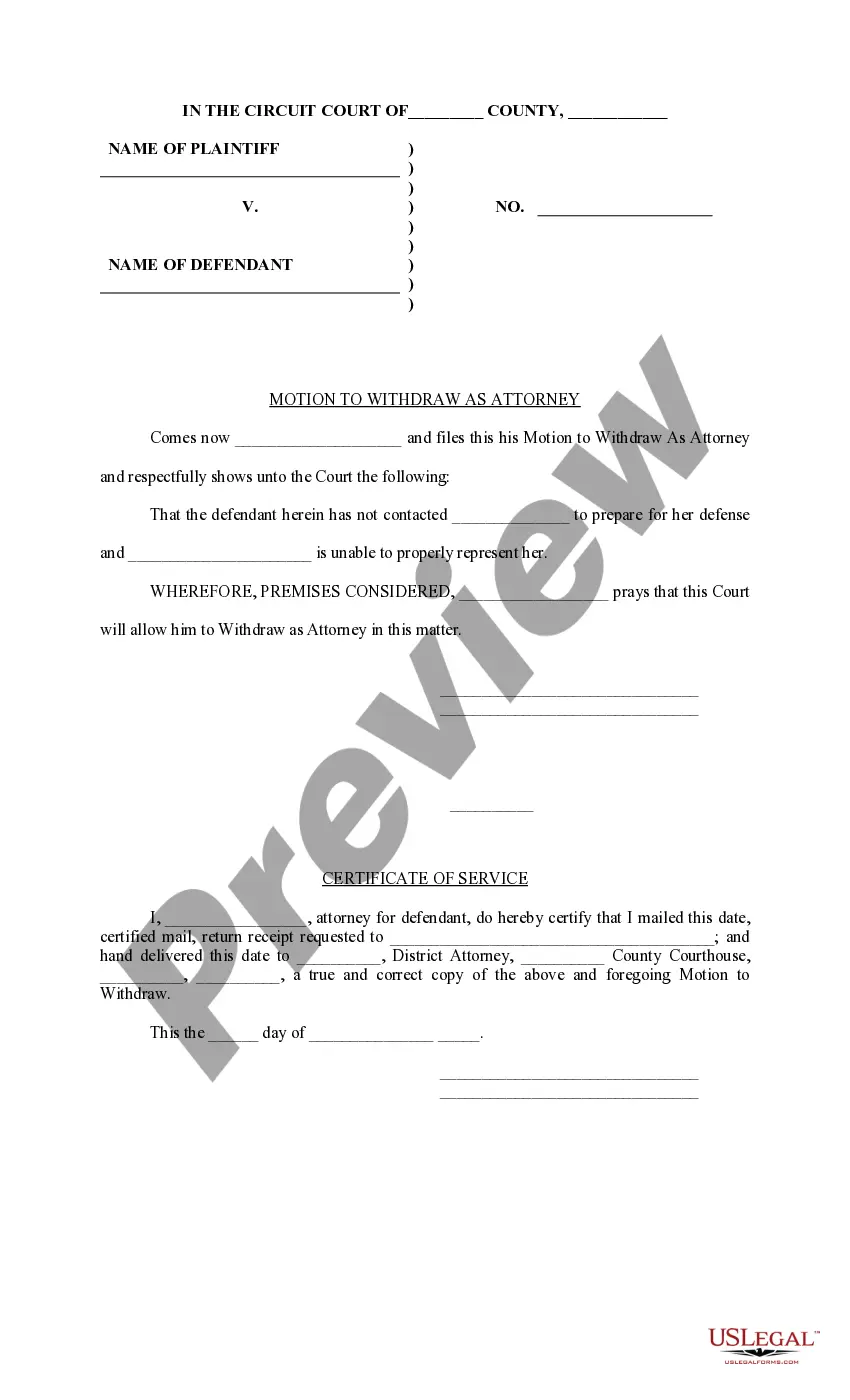
Guam Motion to Withdraw as Attorney
Description
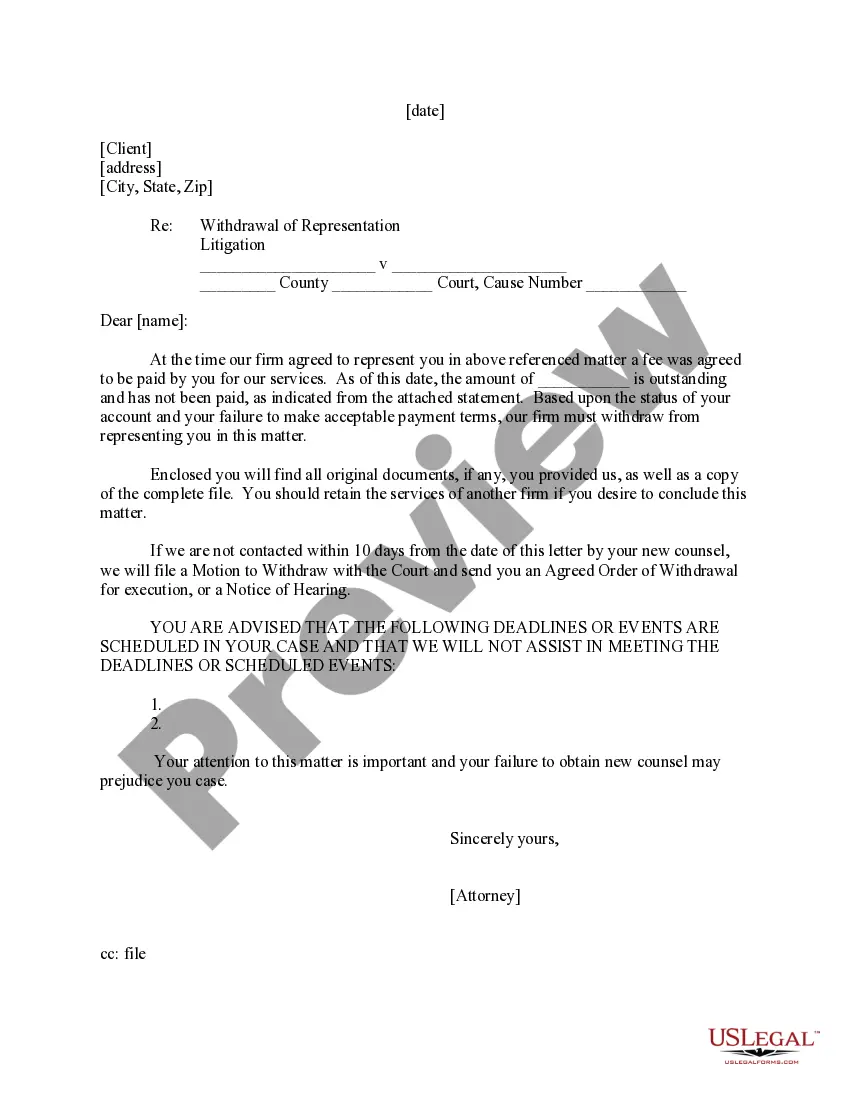
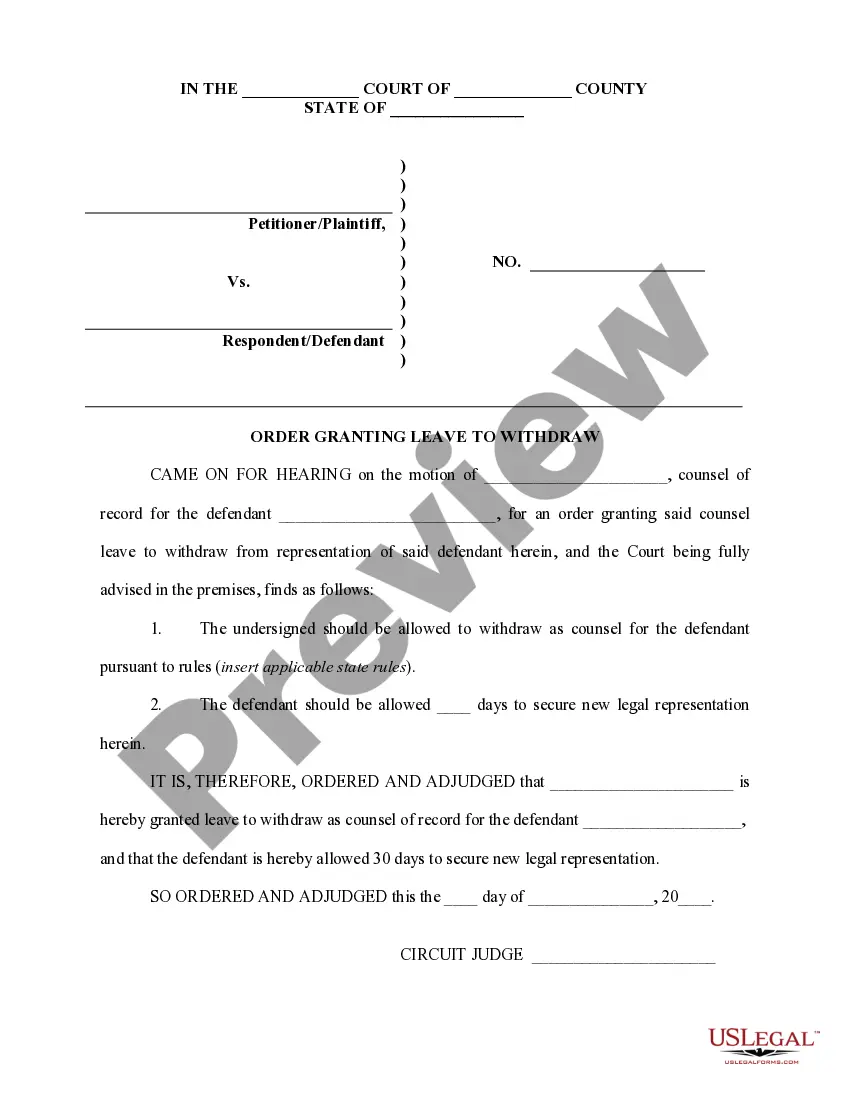



How to fill out Motion To Withdraw As Attorney?
Have you encountered the circumstance where you require documents for either business or personal purposes nearly every day.
There are numerous legitimate document templates accessible online, but finding versions you can rely on is not straightforward.
US Legal Forms offers a vast array of form templates, such as the Guam Motion to Withdraw as Attorney, which are designed to comply with state and federal regulations.
Once you find the correct form, click Get now.
Select the payment plan you desire, fill out the necessary information to create your account, and complete the transaction using your PayPal or Visa or Mastercard.
- If you are already acquainted with the US Legal Forms site and possess an account, simply Log In.
- After that, you can download the Guam Motion to Withdraw as Attorney template.
- If you do not have an account and wish to start using US Legal Forms, follow these steps.
- Find the form you need and ensure it is for the correct city/state.
- Utilize the Preview button to view the form.
- Check the description to ensure that you have selected the correct form.
- If the form is not what you're looking for, use the Search field to locate the form that suits your needs.
Form popularity
FAQ
The Guam Bar Examination is divided into three (3) parts: the Essay/Multistate Performance Test (MPT) questions; the Multistate Bar Examination (MBE); and the Multistate Professional Responsibility Examination (MPRE).
Admission to practice law is by examination only. The Florida Bar Examination consists of the General Bar Examination [Part A ? Florida-prepared Examination and Part B ? the Multistate Bar Examination (MBE)] and the Multistate Professional Responsibility Examination (MPRE).
POAs will also terminate automatically if the principal becomes mentally incompetent, unless the agent is given a durable POA. With a durable POA, the agent can continue to act on the principal's behalf, even if the principal becomes incapacitated. Guam law recognizes durable powers of attorney.
Guam does not use the UBE Bar exam. Applicants will need to pass the Guam Bar exam with a scaled score of 132.50 to qualify for licensure.
All members of the Guam Bar are admitted through a bar examination process, which generally includes the Multistate Professional Responsibility Examination (MPRE), Multistate Bar Examination (MBE), essays and character examination.
To become a licensed attorney in Georgia, you must graduate with a JD from an ABA-approved law school, pass the bar exam, and be admitted to the Georgia bar by The Georgia Office of Bar Admissions.
Tells the court and the parties that the attorney is no longer representing a party in the case after the court entered a final judgment of divorce, legal separation, or nullity.