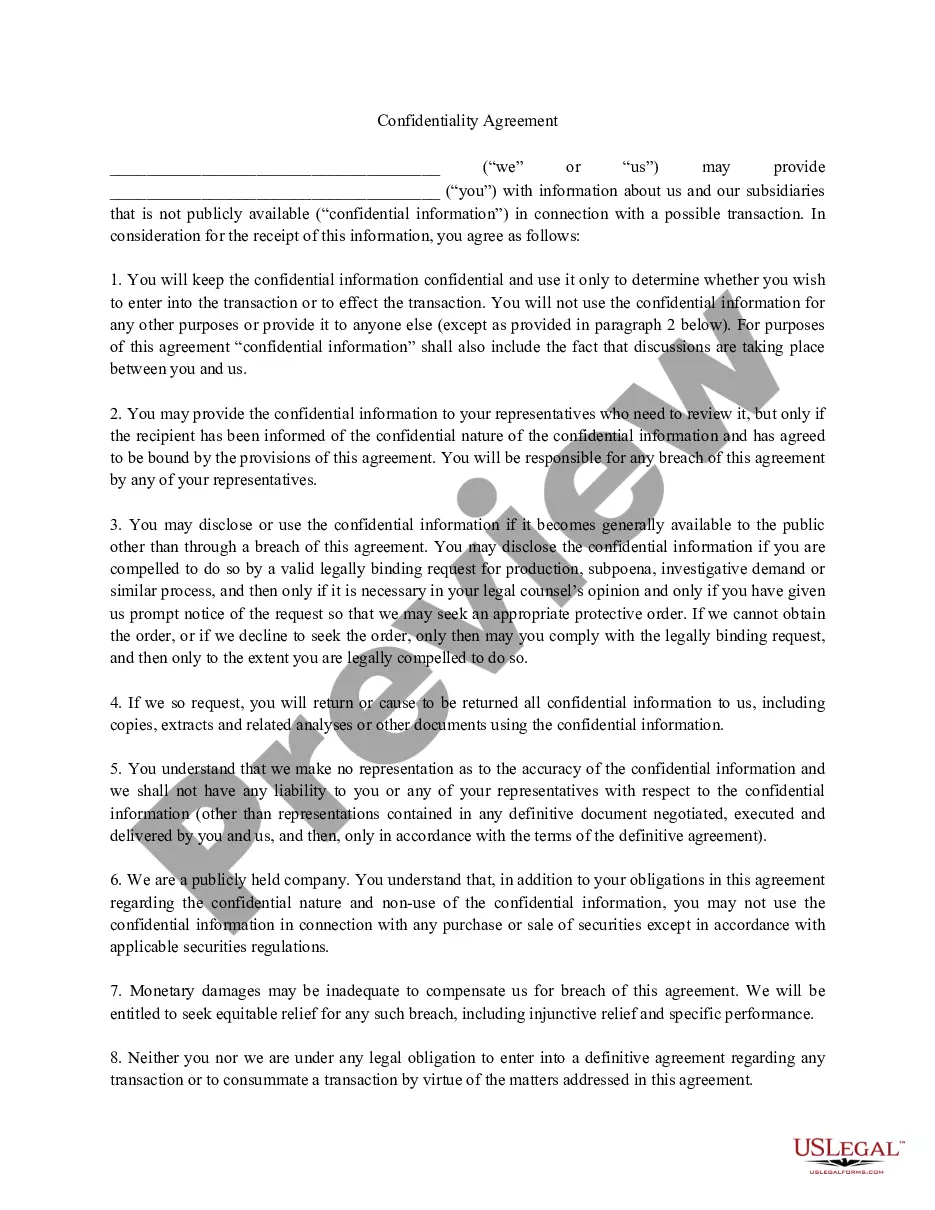
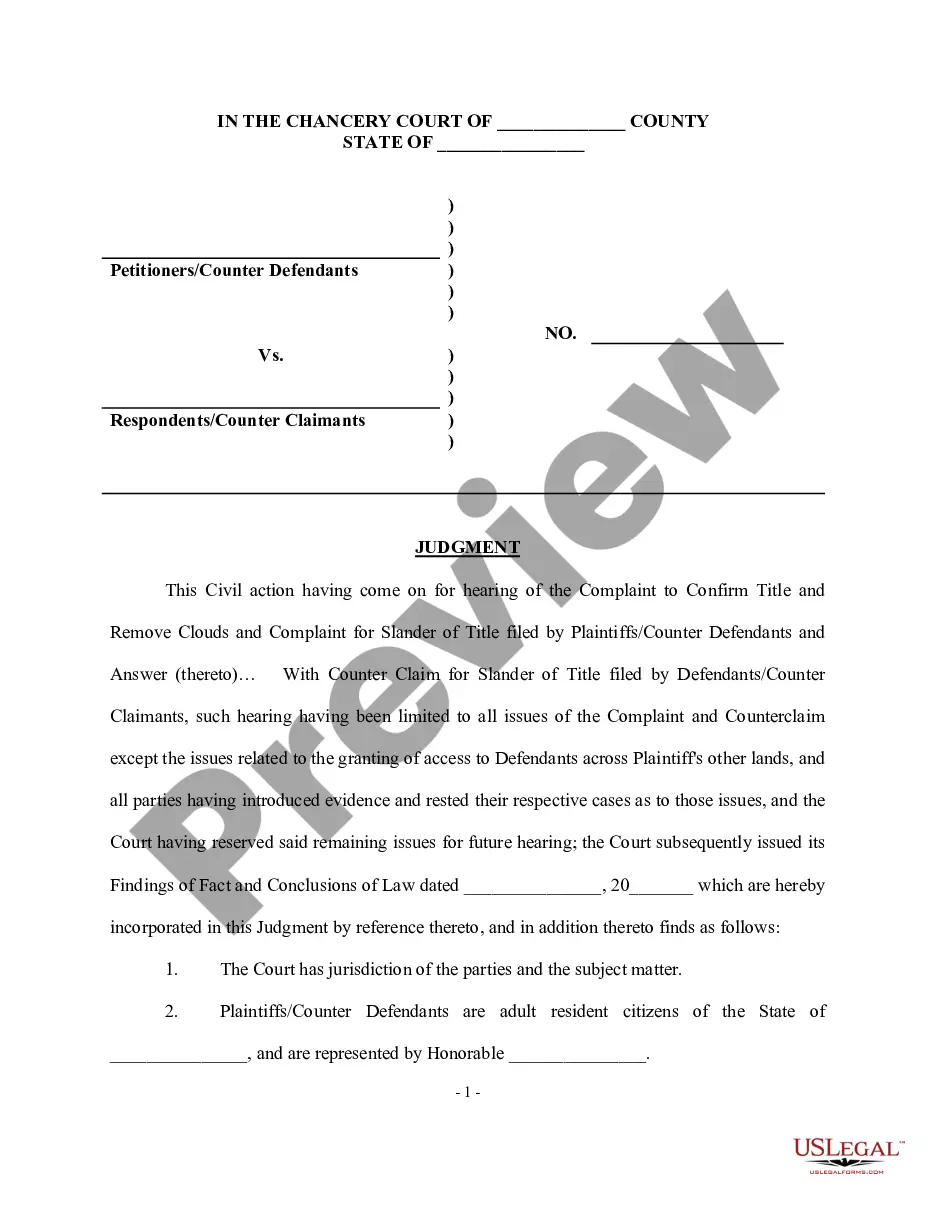
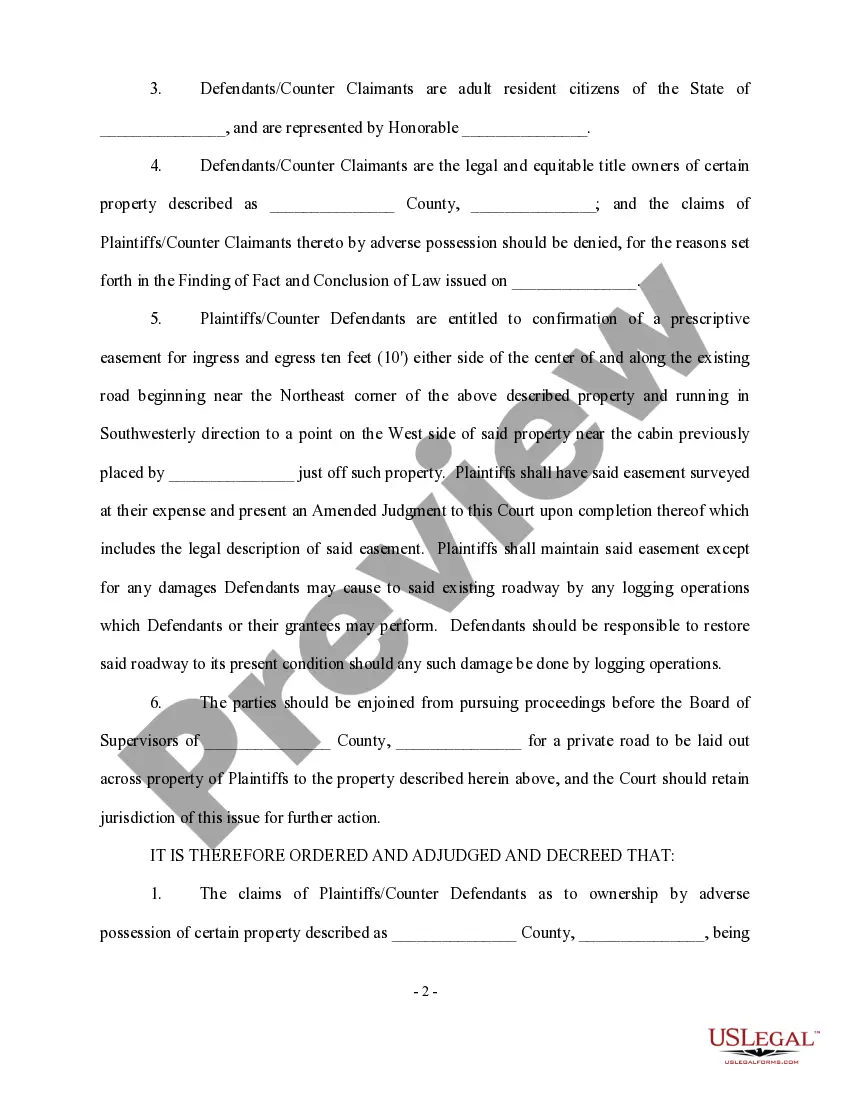
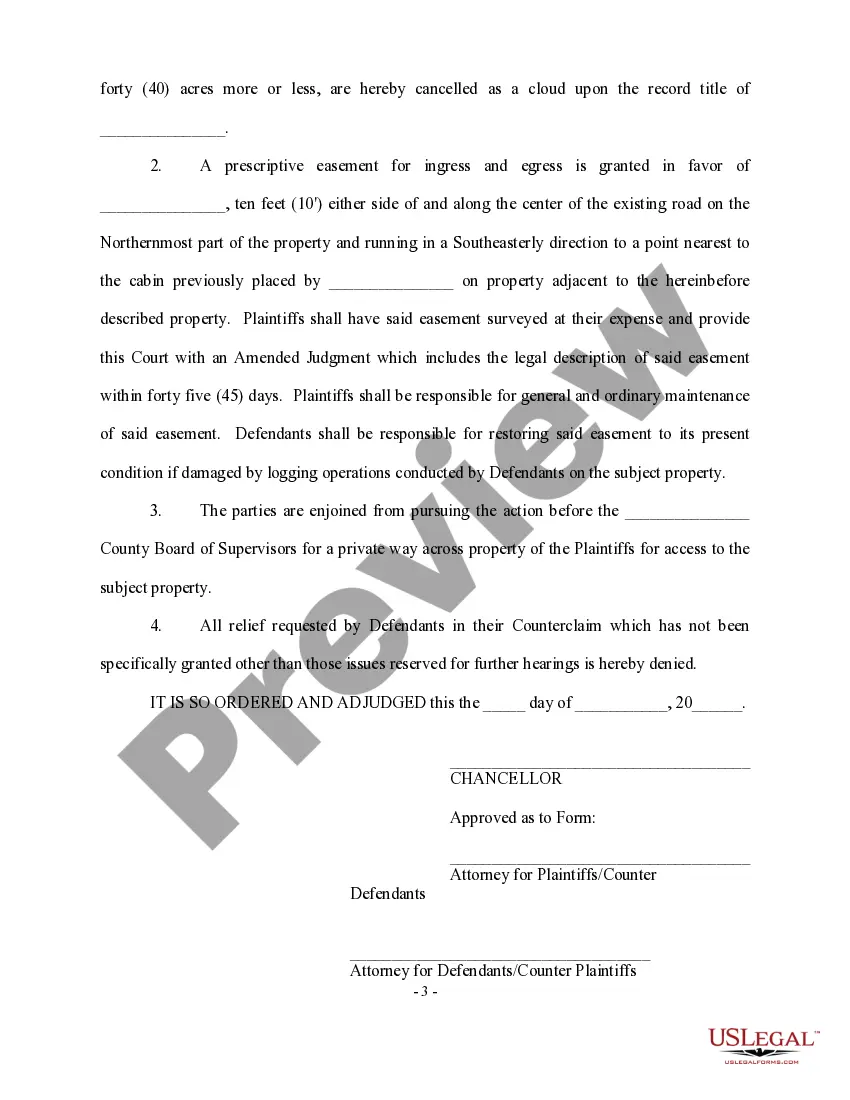
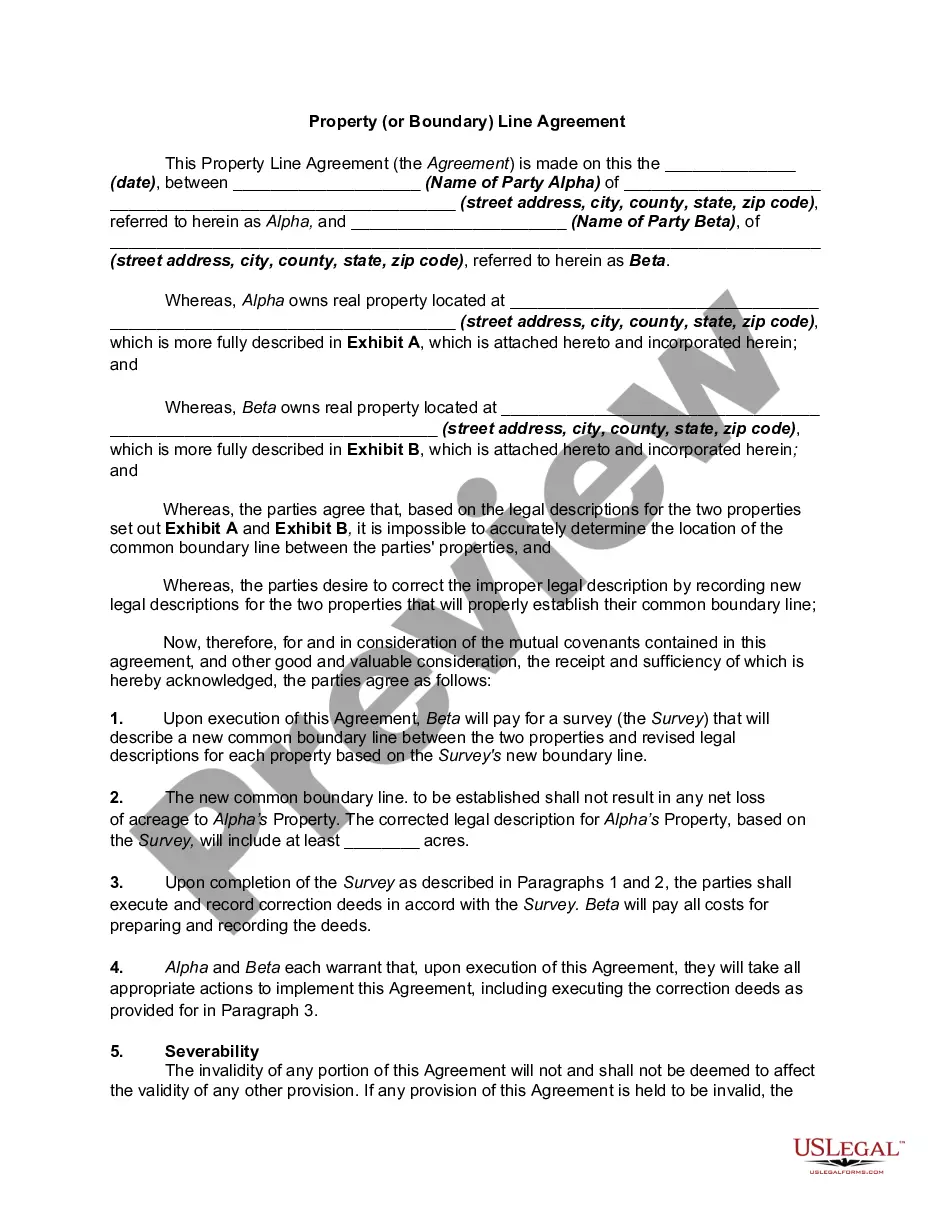
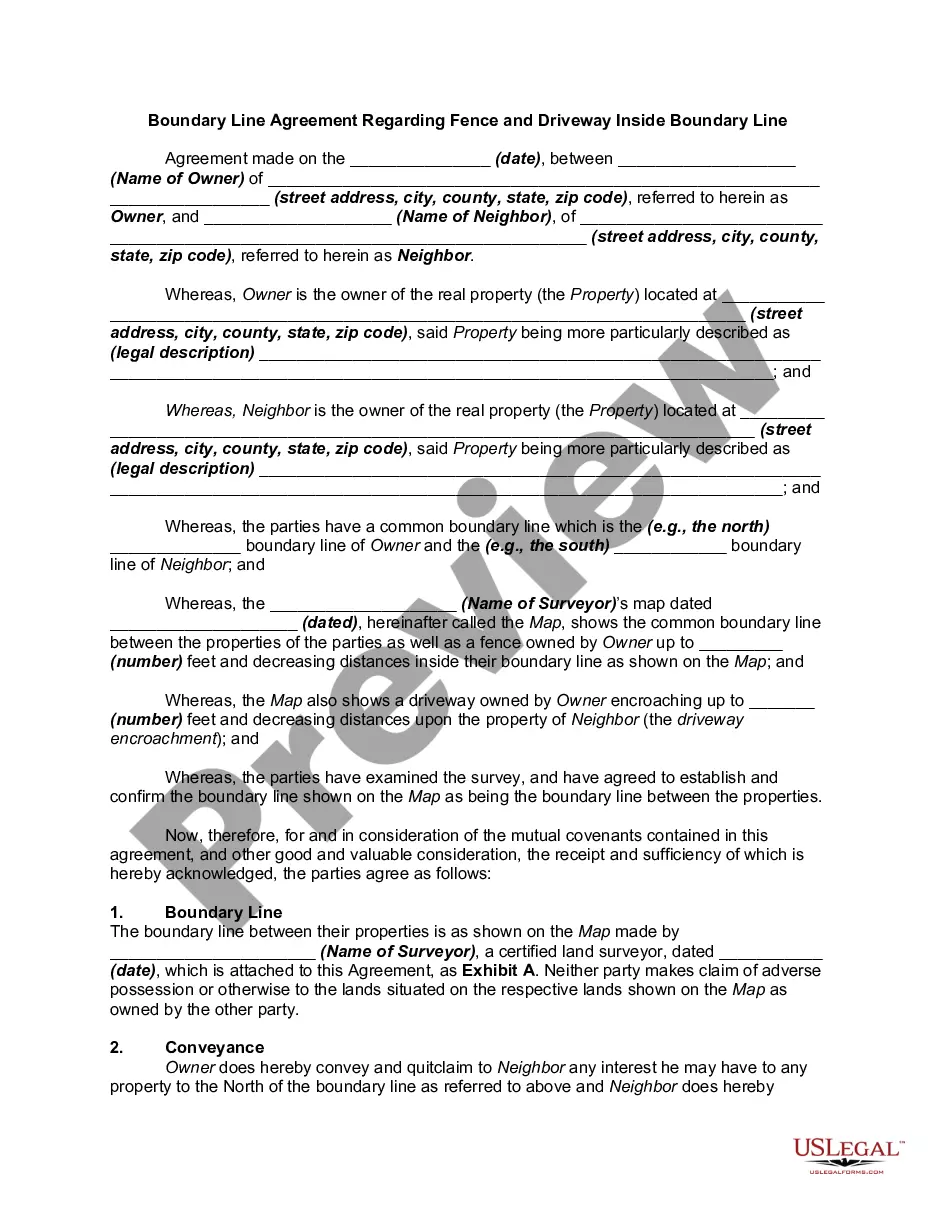
This form is a Judgment. The judgment provides that the plaintiffs/ counter defendants are entitled to a prescriptive easement for ingress and egress along an existing road. The judgment also provides that all relief requested by defendants in their counterclaim which was not specifically granted, other than those issues reserved for further hearing, are denied by the court.
Guam Judgment regarding Boundary Line Dispute
Category:
State:
Multi-State
Control #:
US-00748
Format:
Word;
Rich Text
Instant download
Description
Free preview

Get your form ready online
Our built-in tools help you complete, sign, share, and store your documents in one place.
Built-in online Word editor
Make edits, fill in missing information, and update formatting in US Legal Forms—just like you would in MS Word.
Export easily
Download a copy, print it, send it by email, or mail it via USPS—whatever works best for your next step.
E-sign your document
Sign and collect signatures with our SignNow integration. Send to multiple recipients, set reminders, and more. Go Premium to unlock E-Sign.
Notarize online 24/7
If this form requires notarization, complete it online through a secure video call—no need to meet a notary in person or wait for an appointment.
Store your document securely
We protect your documents and personal data by following strict security and privacy standards.

Make edits, fill in missing information, and update formatting in US Legal Forms—just like you would in MS Word.

Download a copy, print it, send it by email, or mail it via USPS—whatever works best for your next step.

Sign and collect signatures with our SignNow integration. Send to multiple recipients, set reminders, and more. Go Premium to unlock E-Sign.

If this form requires notarization, complete it online through a secure video call—no need to meet a notary in person or wait for an appointment.

We protect your documents and personal data by following strict security and privacy standards.
Looking for another form?

How to fill out Judgment Regarding Boundary Line Dispute?
You can spend several hours online trying to locate the authentic document template that meets the federal and state standards you need.
US Legal Forms offers a vast array of legal forms that are reviewed by experts.
You can easily obtain or create the Guam Judgment regarding Boundary Line Dispute from our services.
If available, utilize the Review button to preview the document template as well.
- If you already possess a US Legal Forms account, you can Log In and then click the Download button.
- After that, you can complete, modify, print, or sign the Guam Judgment regarding Boundary Line Dispute.
- Every legal document template you purchase is yours permanently.
- To obtain another copy of a purchased form, visit the My documents tab and click the corresponding button.
- If you are using the US Legal Forms site for the first time, follow the simple instructions below.
- First, ensure that you have selected the correct document template for your county/town of preference.
- Read the form description to confirm you have chosen the right template.
Form popularity
FAQ
The U.S. military owns about 49,000 acres of land on Guam, roughly a third of the island. Anderson Air Force Base and Naval Base Guam are already installed there and the military buildup will add a third: Marine Corps Base Camp Blaz.
Guam is an unincorporated territory of the United States. Most but not all federal laws apply to Guam. In addition to the U.S. Constitution, which is the supreme law of the U.S., federal laws include statutes that are periodically codified in the U.S. Code.
Guam has a unicameral legislature, named the Legislature of Guam. The Legislature is made up of 15 senators representing 15 at-large districts, serving two-year terms, without a term limit.
The Guam Code Annotated (GCA) establish the permanent laws of Guam relating to and in force in Guam.
Guam, an unincorporated United States territory, has not yet adopted a constitution. It was designated an unincorporated U.S. Territory by the "Guam Organic Act of 1950." The act serves as the governing document for Guam. It was approved the U.S. Congress and approved by the president on Aug. 1, 1950.
It is a petty misdemeanor for any minor to be or remain upon any of the alleys, streets or public places or places of business and amusement, including parks, playgrounds or other public places or grounds in the Territory of Guam between the hours of 10: 00 p.m. and 6: 00 a.m. of the following day.
On Guam, there are several different zones. The most common are: Agriculture, Residential, Multi-Family, Commercial, Light Industrial, Heavy Industrial, Hotel and Parking. Imagine being a farmer and having an industrial plant next to your crop. Or your house is dwarfed by a neighboring condominium complex.
On August 1, 1950, President Truman signed into law the Guam Organic Act of 1950, which gave the Chamorro people certain rights and protections under the U.S. Constitution. The people of Guam were afforded the opportunity to set and administer policy and laws for the island of Guam.