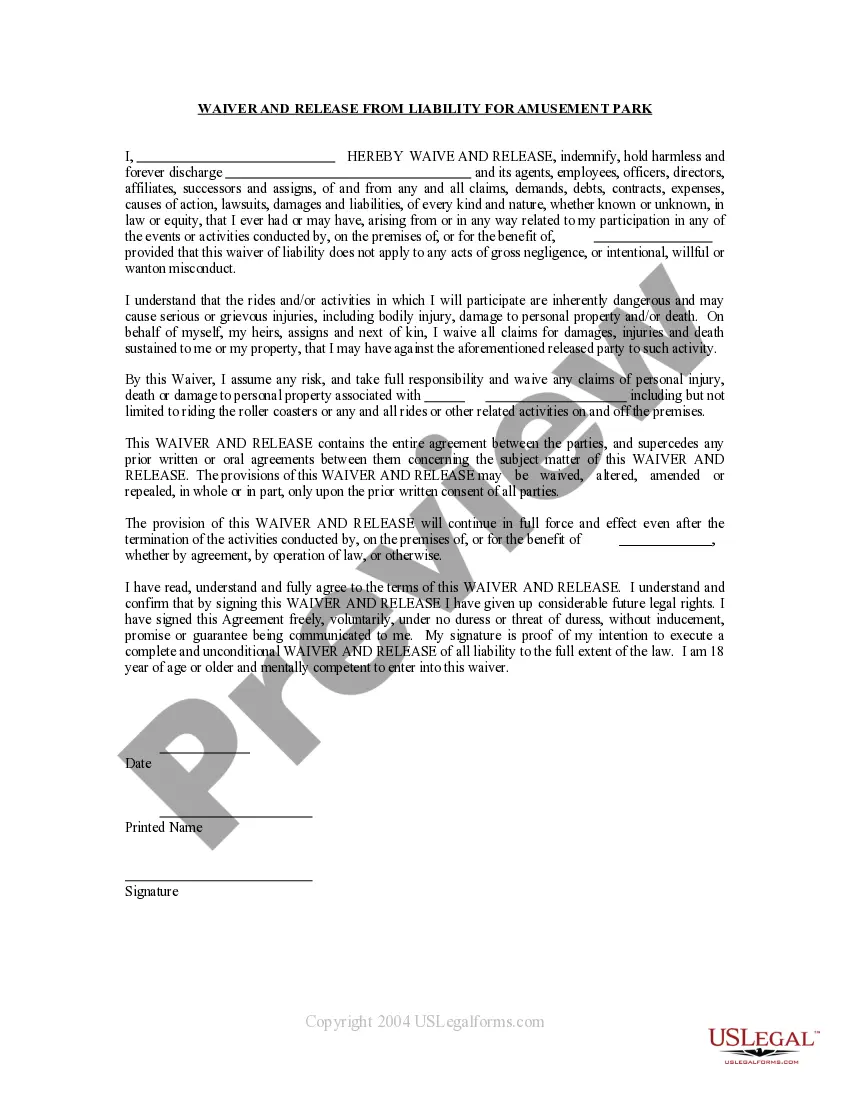
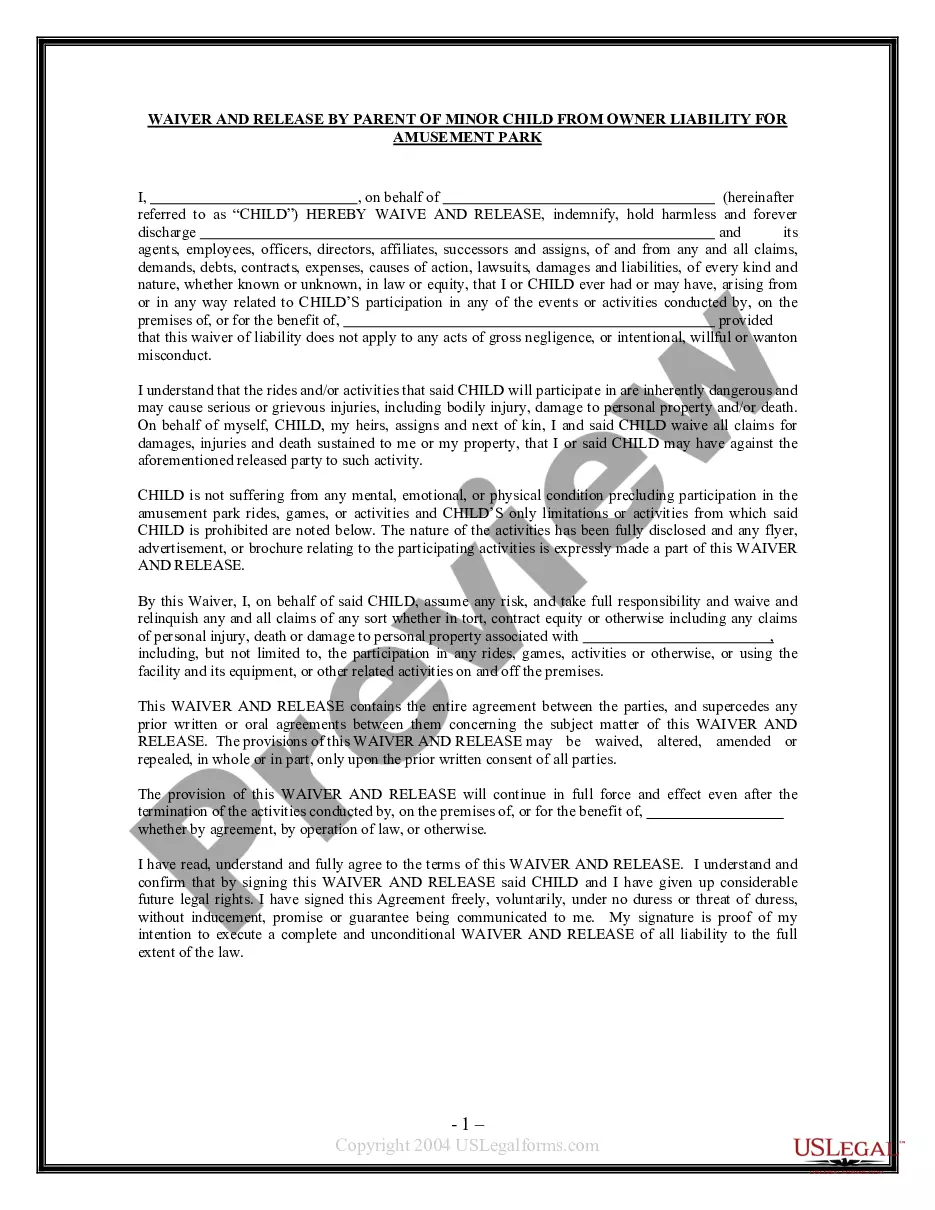
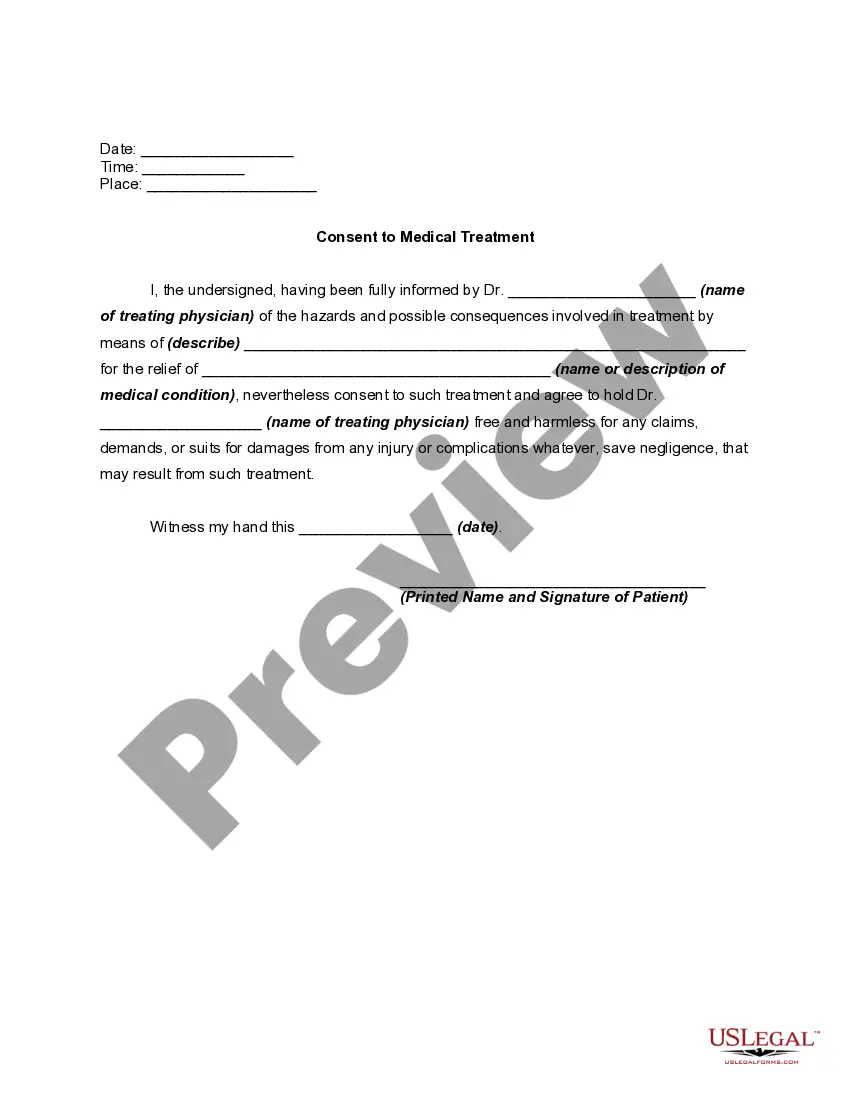
This form allows an adult to release an Amusement park from liability for injuries which may be incurred while on the premises, taking part in activities, etc.
Georgia Waiver and Release From Liability For Adult for Amusement Park
Category:
State:
Multi-State
Control #:
US-WAV-35A
Format:
Word;
Rich Text
Instant download
Description
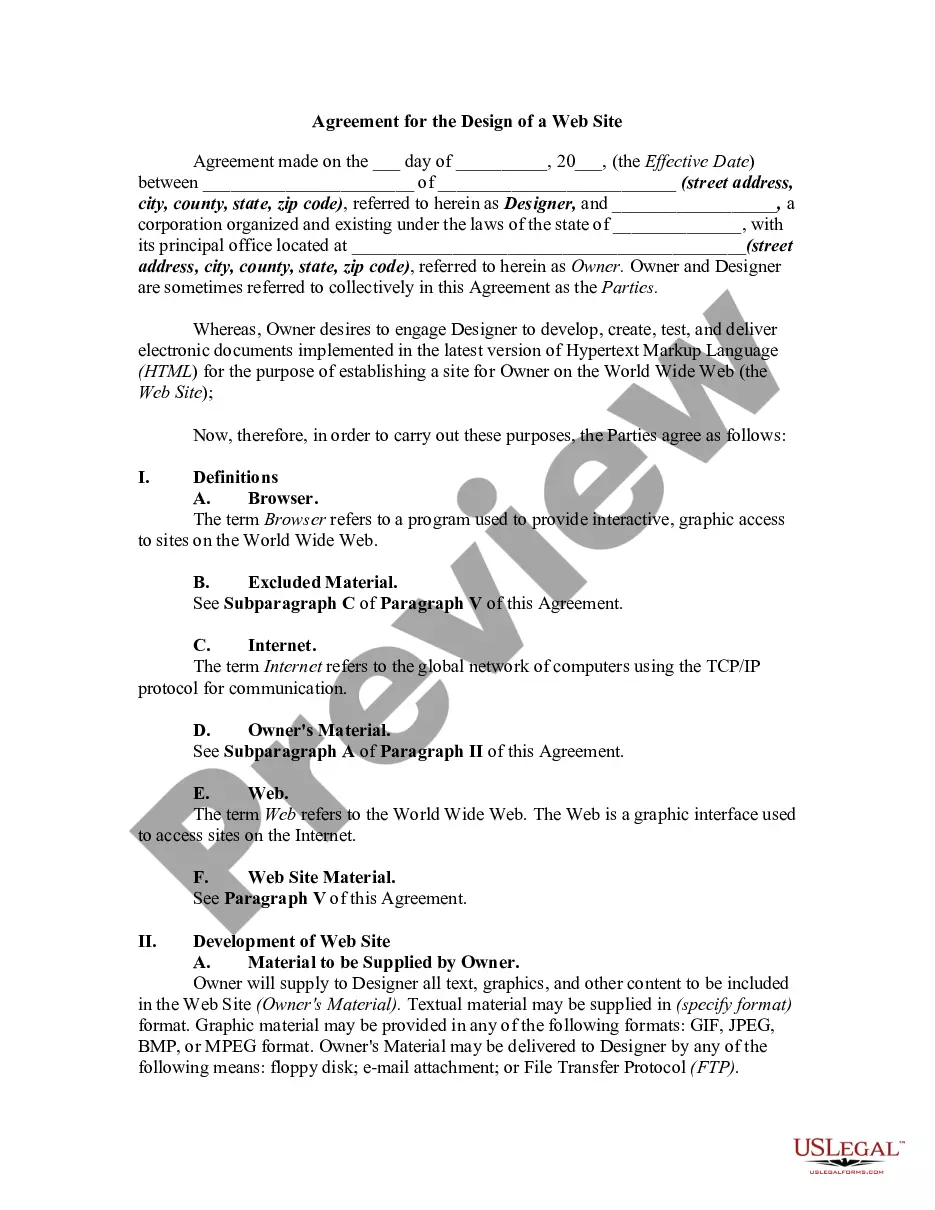
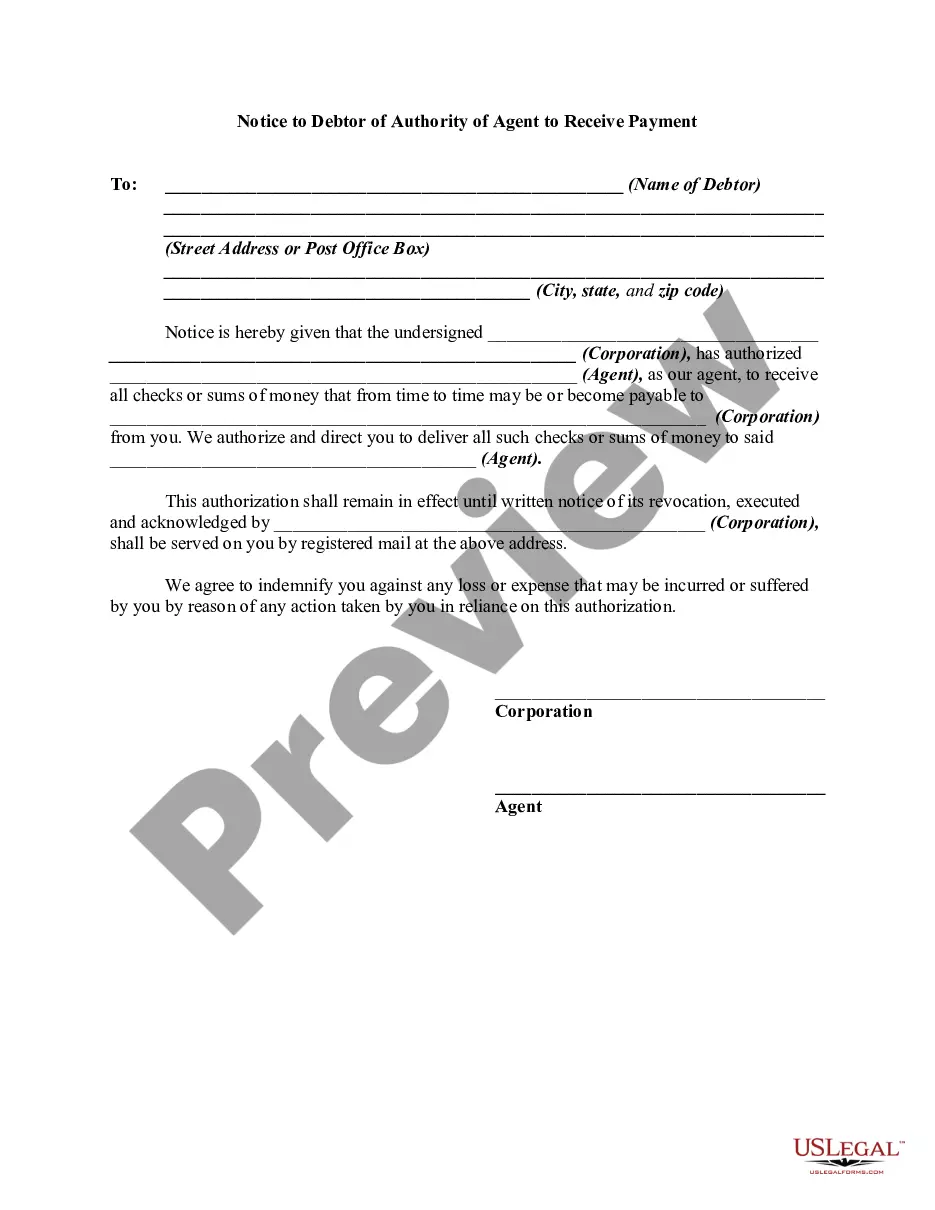
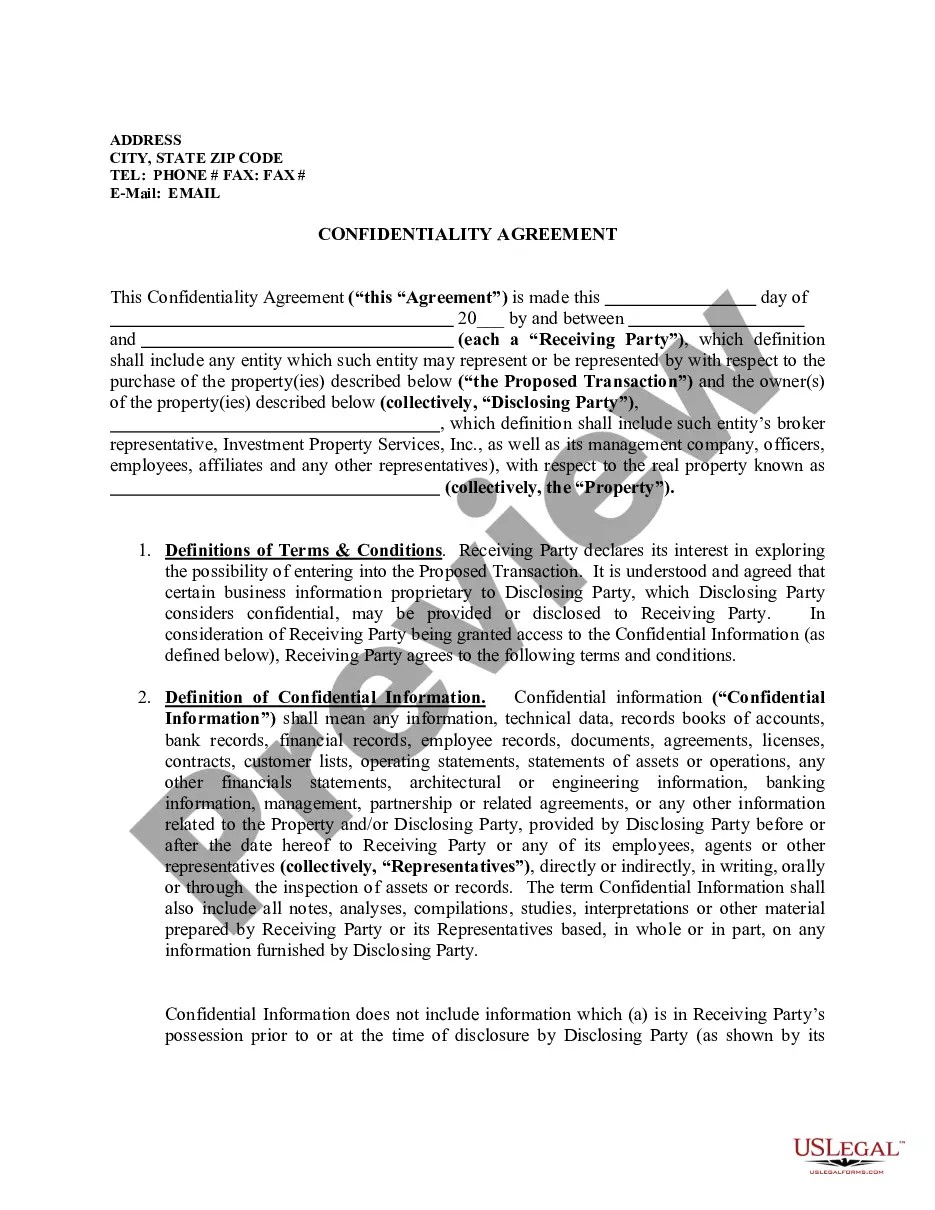
How to fill out Waiver And Release From Liability For Adult For Amusement Park?
Are you currently in a circumstance where you require documents for occasional business or personal reasons nearly every workday.
There are numerous legal document templates available online, but finding ones you can rely on is challenging.
US Legal Forms offers thousands of form templates, including the Georgia Waiver and Release From Liability For Adult for Amusement Park, designed to meet state and federal requirements.
When you find the correct form, click on Purchase now.
Choose the pricing plan you want, enter the necessary information to create your account, and pay for your order using PayPal, Visa, or Mastercard.
- If you are already familiar with the US Legal Forms website and have an account, simply Log In.
- Then, you can download the Georgia Waiver and Release From Liability For Adult for Amusement Park template.
- If you do not have an account and wish to start using US Legal Forms, follow these steps.
- Select the form you need and ensure it is for the correct city/region.
- Use the Review button to examine the form.
- Read the description to confirm that you have selected the right form.
- If the form is not what you are looking for, use the Lookup field to find the form that meets your needs and requirements.
Form popularity
FAQ
Yes, waivers are generally enforceable in Georgia, provided they meet certain legal requirements. The language must be clear, and the waiver must explicitly state the risks involved in the activities. To ensure your waiver adheres to Georgia laws, consider utilizing resources like uSlegalforms, which offer valuable templates and guidance for creating a Georgia Waiver and Release From Liability For Adult for Amusement Park that is enforceable.
Yes, amusement parks typically require participants to sign waivers before engaging in activities. These waivers serve to inform participants of the risks involved and protect the park from potential legal claims. If you need to understand more about these waivers, you can explore the options available on uSlegalforms, where you can find specific templates for a Georgia Waiver and Release From Liability For Adult for Amusement Park.
Yes, you can write your own liability waiver, but it is important to ensure that it meets legal standards. Your waiver should include essential elements such as the identification of parties, the scope of activities covered, and a clear statement of the assumption of risk. Consulting resources like uSlegalforms can provide you with templates and examples for creating a Georgia Waiver and Release From Liability For Adult for Amusement Park that is legally sound.
To write a release of liability waiver, begin by clearly stating the names of the parties involved, including the participant and the amusement park. Next, outline the specific activities that the waiver covers, ensuring it addresses potential risks associated with those activities. It's crucial to use clear language that explains that the participant releases the amusement park from liability for any injuries. You can use uSlegalforms to access templates and guidance for crafting a Georgia Waiver and Release From Liability For Adult for Amusement Park.
A waiver is an exculpatory contract. That means it's used to excuse a party from responsibility when the other contracted party is injured by either known or unknown risks in a particular activity. This includes inherent risks and ordinary negligence.
Examples of activities that require an additional waiver include:Operator or passenger of: snowmobile, farm equipment, motorcycles, trikes, scooters, quad bikes, ATVs, etc.;Handling of weapons (guns, air guns, bows, swords, knives etc.)Scuba diving (with proper certification)More items...?
A liability waiver, or release waiver, is a legal document that a company or organization requires members of the public to sign in order to protect their organization from being sued if you sustain an injury.
You might think that since you signed a waiver acknowledging the risks of the activity, you have no legal leg to stand on to file a personal injury lawsuit. Waivers can make personal injury lawsuits more complex, but you can still seek damages for injuries that could have and should have been prevented.
Liability waivers are enforceable in California solely to the extent they shift to the customer the risk of ordinary negligence. Under California law, a liability waiver cannot excuse an injury caused by a defendant's gross negligence, recklessness or intentionally wrongful act.
Liability waivers are enforceable in California solely to the extent they shift to the customer the risk of ordinary negligence. Under California law, a liability waiver cannot excuse an injury caused by a defendant's gross negligence, recklessness or intentionally wrongful act.