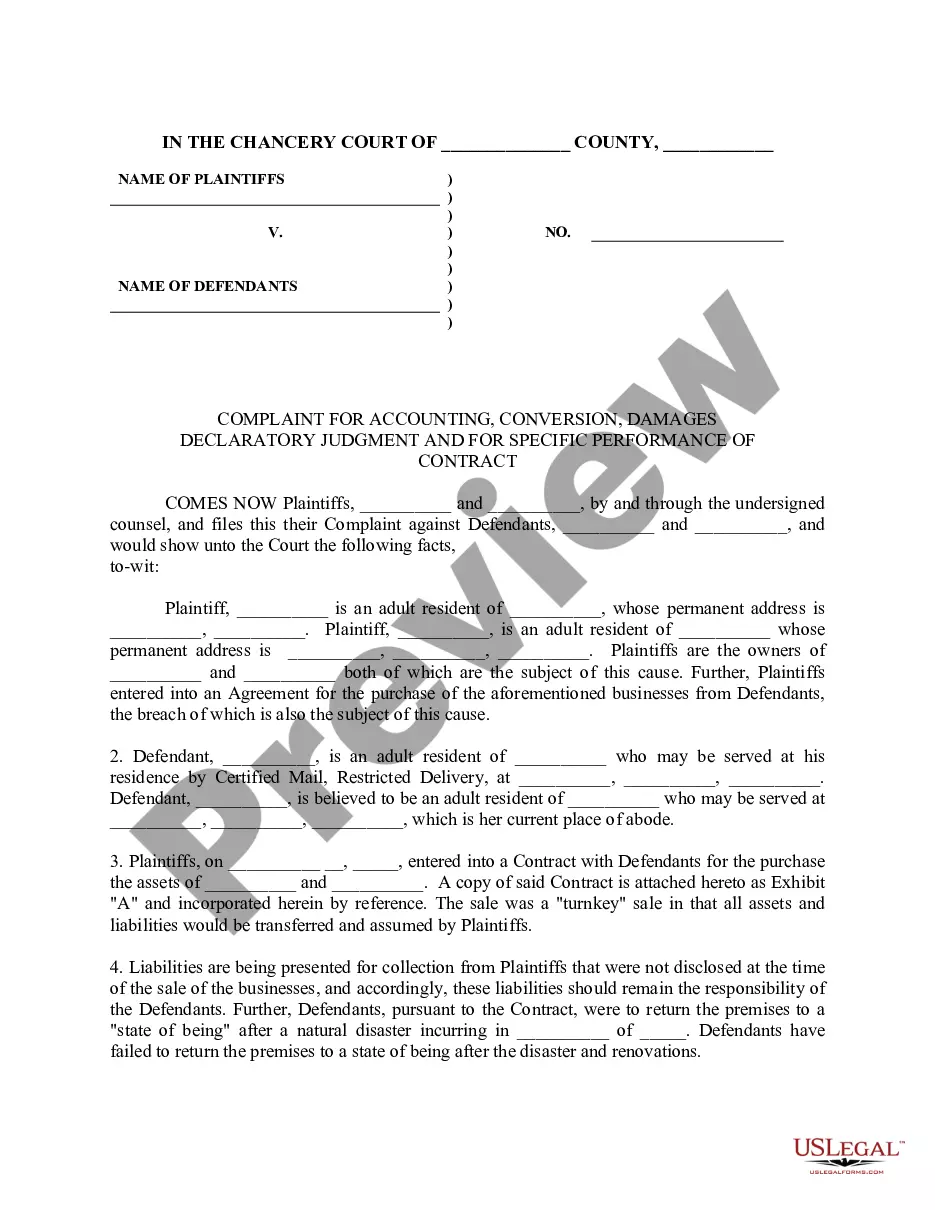
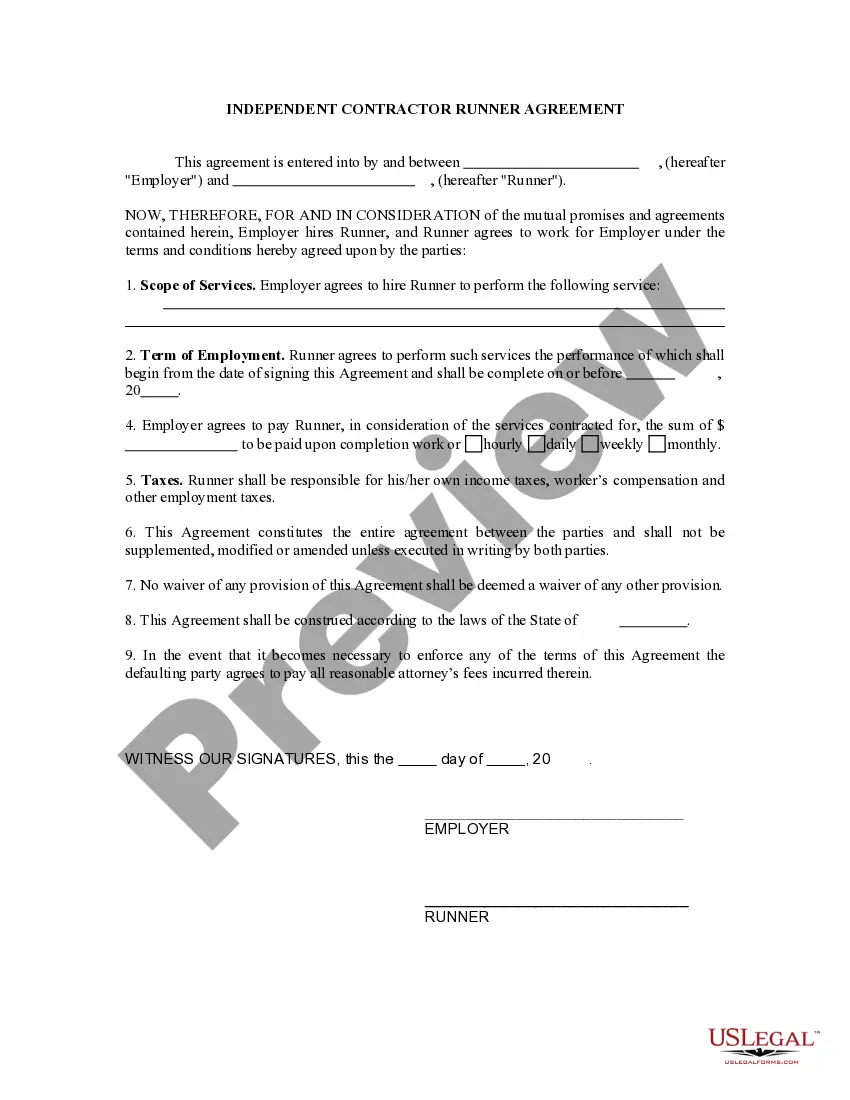
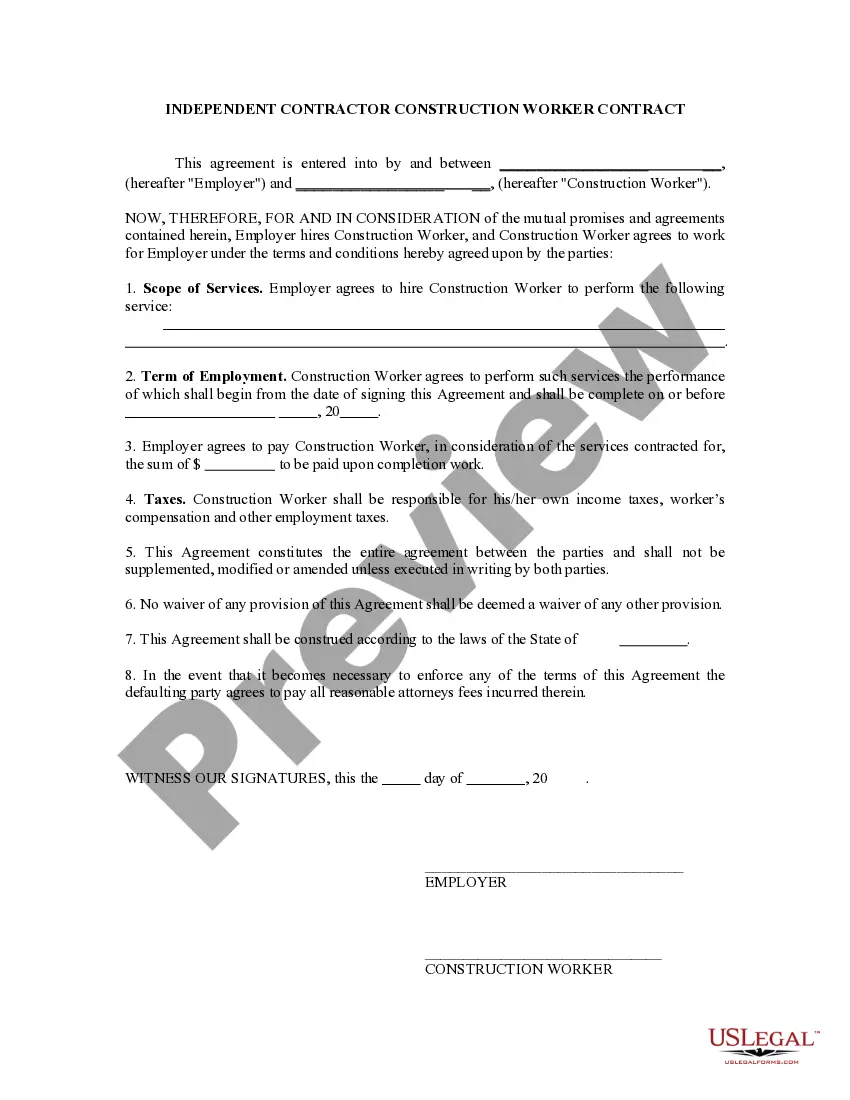
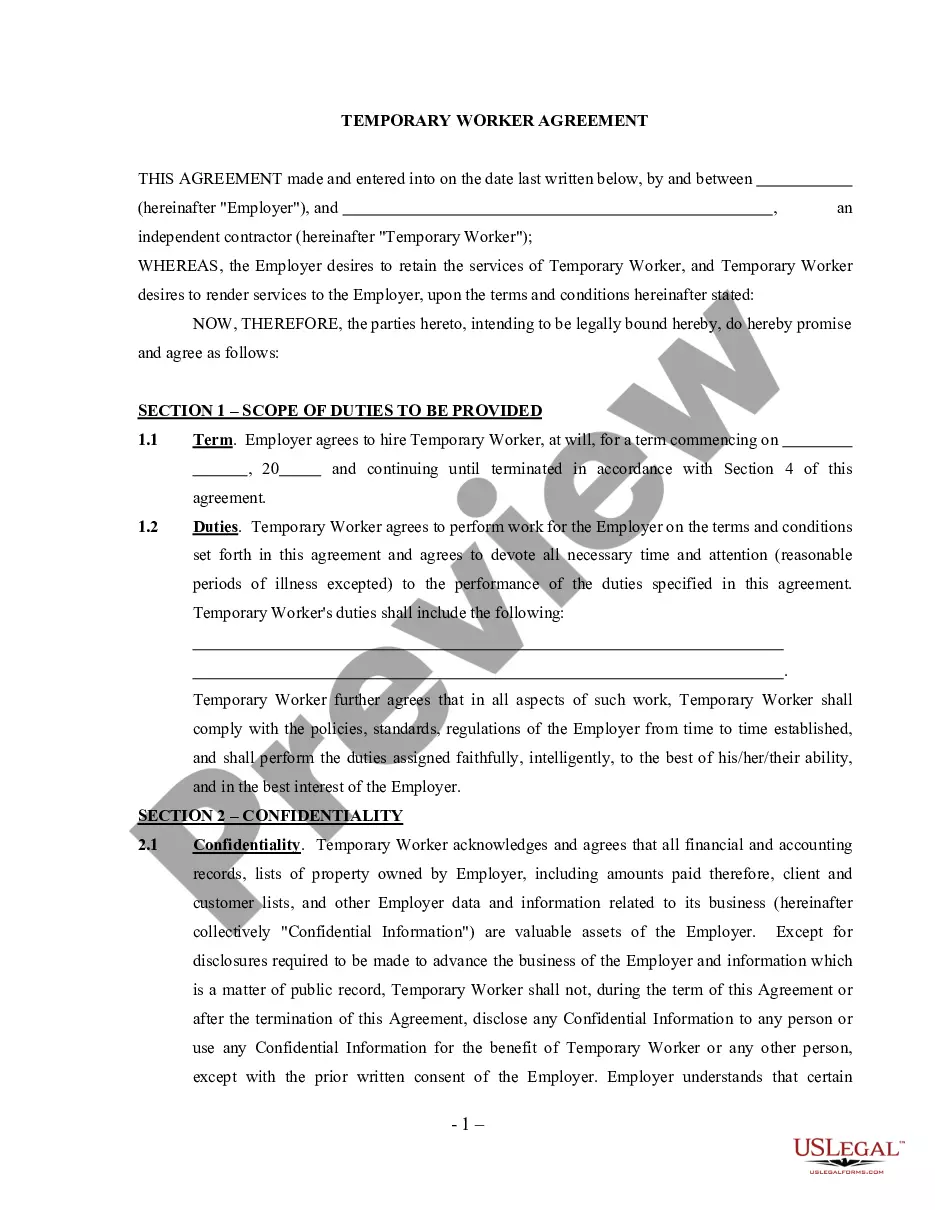
This is a contract between an employer and a runner to hire the runner as an independent contractor.
Georgia Runner Agreement - Self-Employed Independent Contractor
State:
Multi-State
Control #:
US-INDC-36
Format:
Word;
Rich Text
Instant download
Description



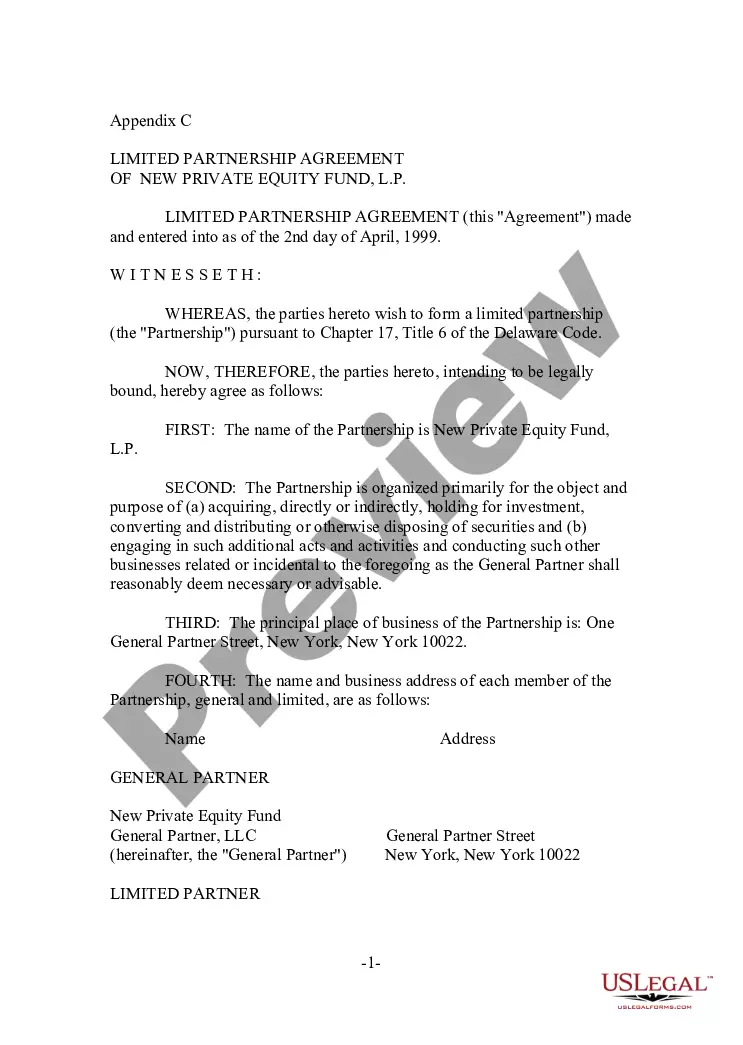
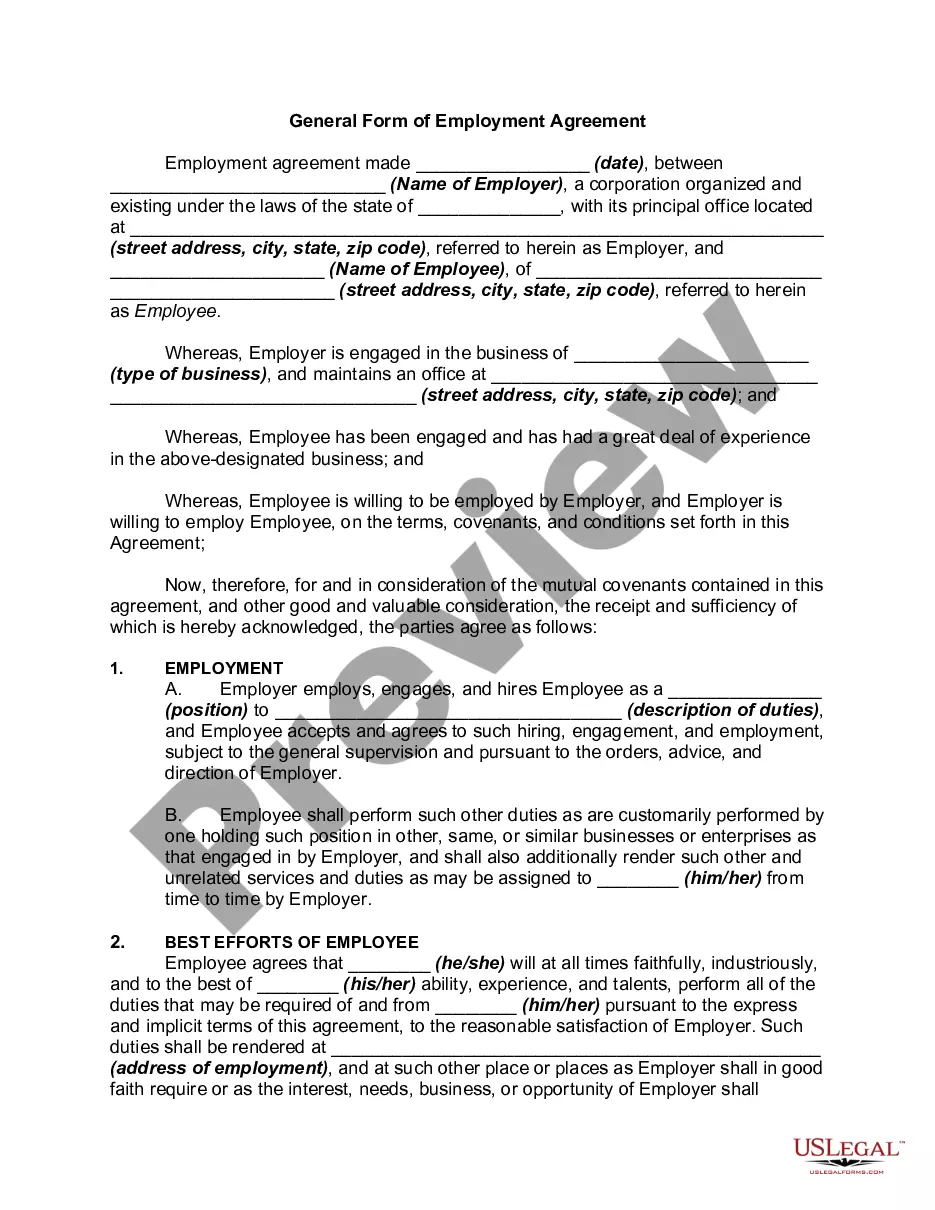
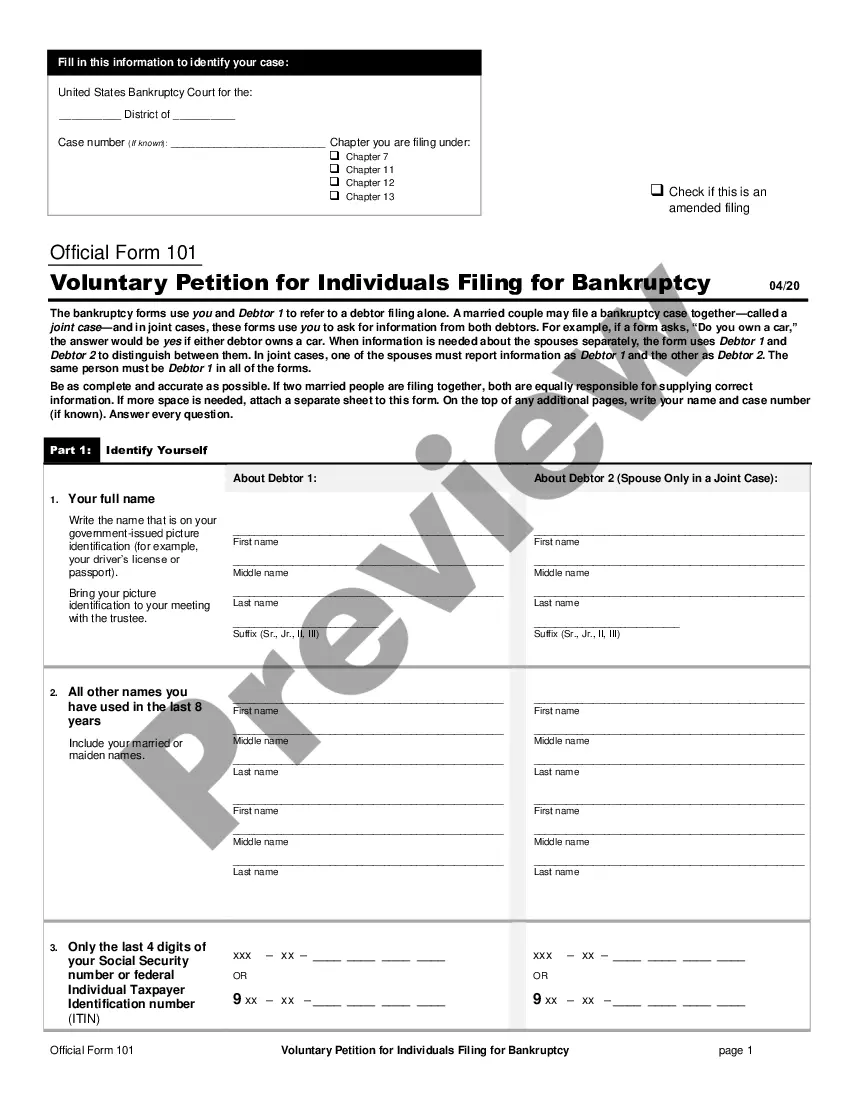

How to fill out Runner Agreement - Self-Employed Independent Contractor?
If you intend to compile, obtain, or print legal document templates, utilize US Legal Forms, the largest collection of legal forms available online.
Leverage the site's straightforward and user-friendly search to find the documents you need.
Numerous templates for business and personal purposes are organized by categories and states, or keywords. Utilize US Legal Forms to obtain the Georgia Runner Agreement - Self-Employed Independent Contractor in just a few clicks.
Step 5. Process the transaction. You can use your credit card or PayPal account to complete the transaction.
Step 6. Choose the format of your legal form and download it to your device.Step 7. Fill out, edit, and print or sign the Georgia Runner Agreement - Self-Employed Independent Contractor.
- If you are already a US Legal Forms customer, Log In to your account and click on the Download option to acquire the Georgia Runner Agreement - Self-Employed Independent Contractor.
- You may also access forms you previously downloaded from the My documents section of your account.
- If you are using US Legal Forms for the first time, refer to the instructions below.
- Step 1. Ensure you have chosen the form for the correct city/state.
- Step 2. Use the Preview option to review the content of the form. Do not forget to read the description.
- Step 3. If you are not satisfied with the form, utilize the Search area at the top of the screen to find other versions of the legal form template.
- Step 4. Once you have located the form you need, click on the Purchase now option. Select the pricing plan you prefer and enter your credentials to sign up for an account.
Form popularity
FAQ
A 1099 employee is a US self-employed worker that reports their income to the IRS on a 1099 tax form. Freelancers, gig workers, and independent contractors are all considered 1099 employees. In contrast, actual company employees are considered W-2 employees.
The general rule is that you will be: An employee if you work for someone and do not have the risks of running a business. Self-employed if you have a trade, profession or vocation, are in business on your own account and are responsible for the success or failure of that business.
Simply put, being an independent contractor is one way to be self-employed. Being self-employed means that you earn money but don't work as an employee for someone else.
Independent contractors report their income on Schedule C (Form 1040), Profit or Loss from Business (Sole Proprietorship). Also file Schedule SE (Form 1040), Self-Employment Tax if net earnings from self-employment are $400 or more.
How do I create an Independent Contractor Agreement?State the location.Describe the type of service required.Provide the contractor's and client's details.Outline compensation details.State the agreement's terms.Include any additional clauses.State the signing details.
If you are an independent contractor, then you are self-employed. The earnings of a person who is working as an independent contractor are subject to self-employment tax. To find out what your tax obligations are, visit the Self-Employed Individuals Tax Center.
Becoming an independent contractor is one of the many ways to be classified as self-employed. By definition, an independent contractor provides work or services on a contractual basis, whereas, self-employment is simply the act of earning money without operating within an employee-employer relationship.
Independent contractors are self-employed workers who provide services for an organisation under a contract for services. Independent contractors are not employees and are typically highly skilled, providing their clients with specialist skills or additional capacity on an as needed basis.
The three types of self-employed individuals include:Independent contractors. Independent contractors are individuals hired to perform specific jobs for clients, meaning that they are only paid for their jobs.Sole proprietors.Partnerships.
Remember that an independent contractor is considered to be self-employed, so in effect, you are running your own one-person business. Any income that you earn as an independent contractor must be reported on Schedule C. You'll then pay income taxes on the total profit.